
Indian Wedding Outfits for NRIs: A Complete Guide for the Global Diaspora
You've got a wedding in India — or a desi wedding abroad — and you need outfits. But you live in London, Dubai, New York, or Sydney. You can't walk into a Chandni Chowk shop and try things on. You're navigating time zones, shipping timelines, and the very real anxiety of ordering something you haven't touched or tried. This guide is for you.
The NRI Wedding Outfit Challenge
Shopping for Indian occasion wear from abroad comes with specific challenges that nobody talks about enough:
- You can't try before you buy. Fit anxiety is real, especially for structured pieces like lehengas and blouses.
- Shipping timelines. International shipping takes 7–14 days. If you're ordering made-to-order pieces with a 4–5 week production time, you need to plan months ahead.
- Multiple functions, multiple outfits. An Indian wedding has 4–7 events. That's 4–7 outfits — and you're packing them all in a suitcase.
- Climate shock. You might be flying from a British winter into a Delhi summer wedding. Fabric weight matters more than you think.
- Styling without context. You see a product photo but can't picture how the fabric falls, how the colour looks in natural light, or how heavy it feels on the body.
When to Start Shopping
This is the most important section of this guide. Start earlier than you think.
3–4 months before the wedding: Order made-to-order pieces. Handcrafted outfits take 4–5 weeks to produce, plus international shipping. Build in a buffer for alterations.
2–3 months before: Order ready-to-wear or semi-custom pieces. This gives you time for exchanges if sizing isn't right.
1 month before: Emergency zone. Only buy if the brand confirms expedited production and shipping. Don't risk it for statement pieces — use this window for accessories and dupattas only.
Building Your Wedding Wardrobe: The Strategic Approach
The smartest NRI wedding wardrobe isn't five completely separate outfits. It's a system of pieces that mix, match, and restyle:
1. One statement lehenga or saree — for the main wedding or reception. This is your big investment piece.
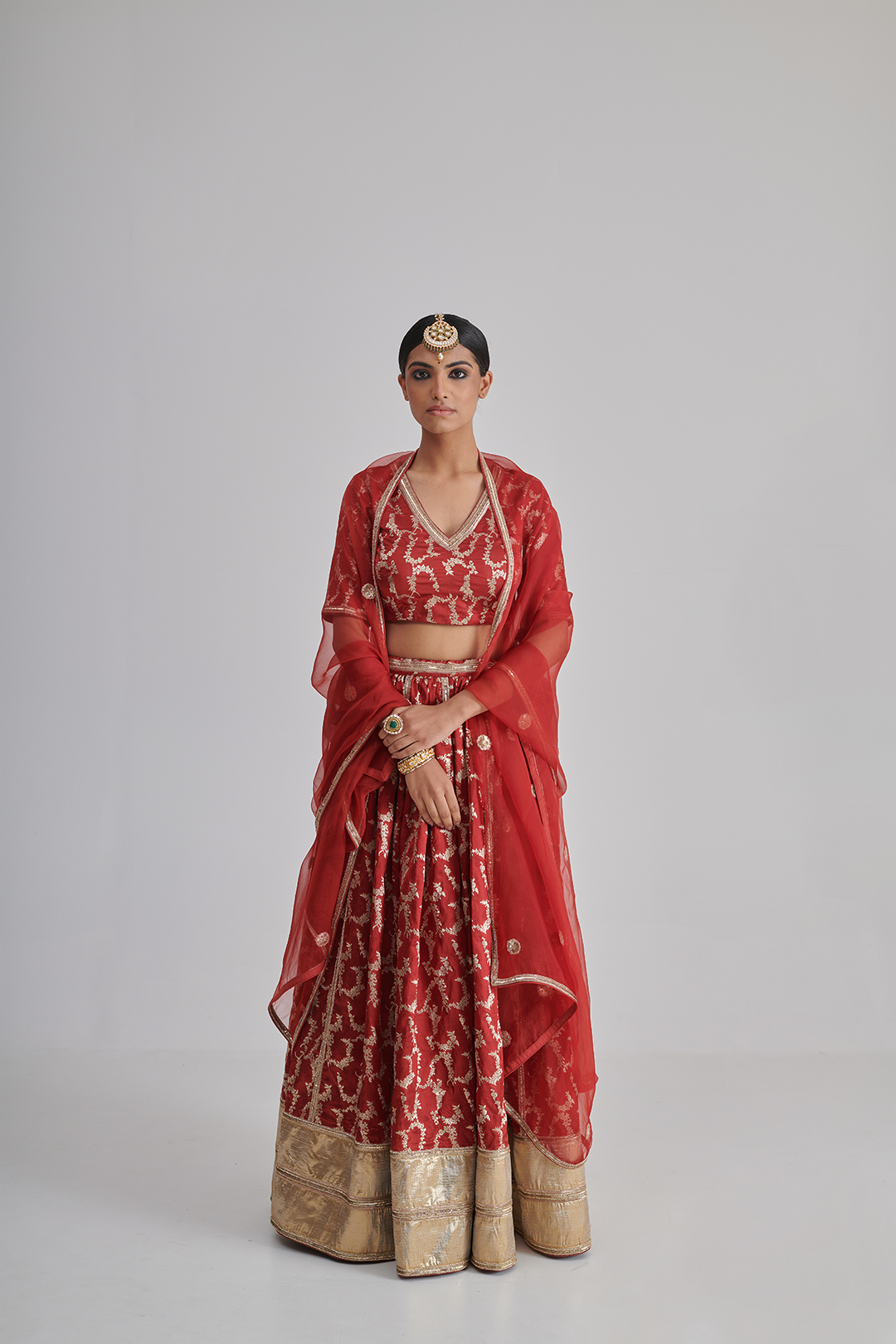
The Rehmat & Vasl lehenga and choli in Varanasi silk brocade features floral motifs drawn from Rajputana and Mughal architectural inlay designs — a piece that commands attention at any wedding.

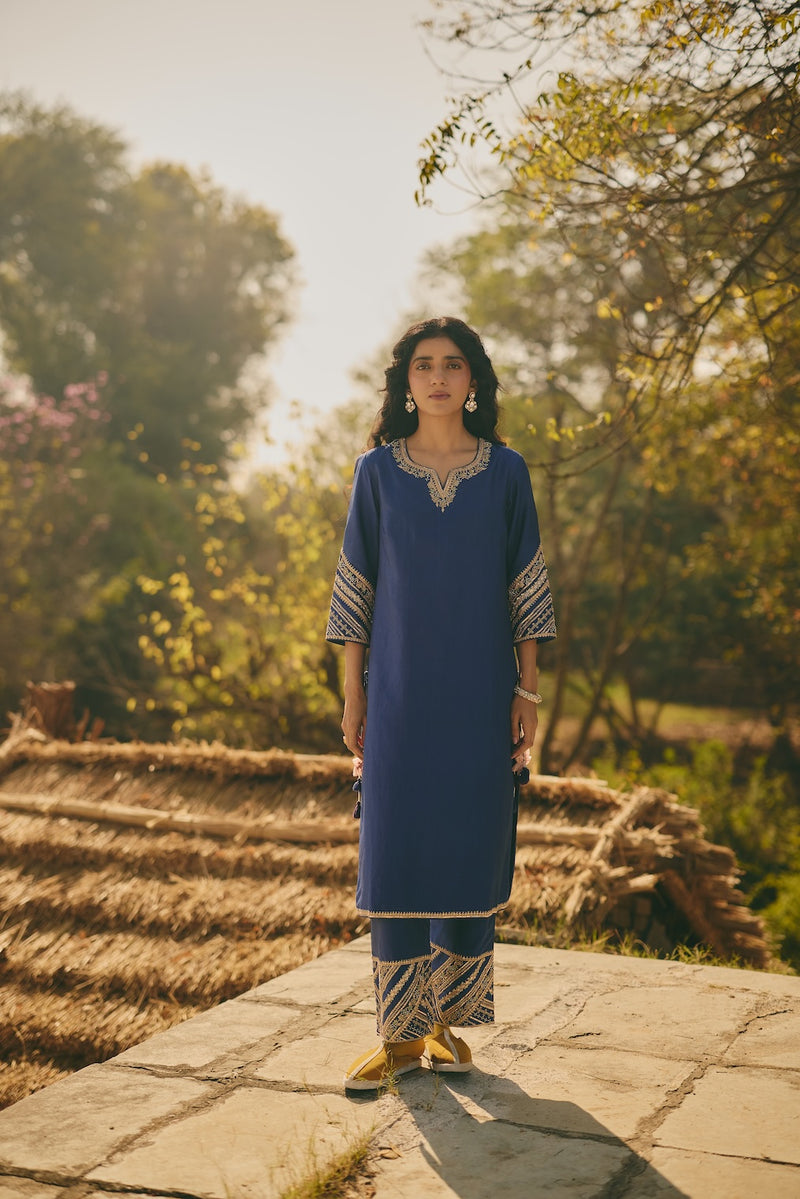
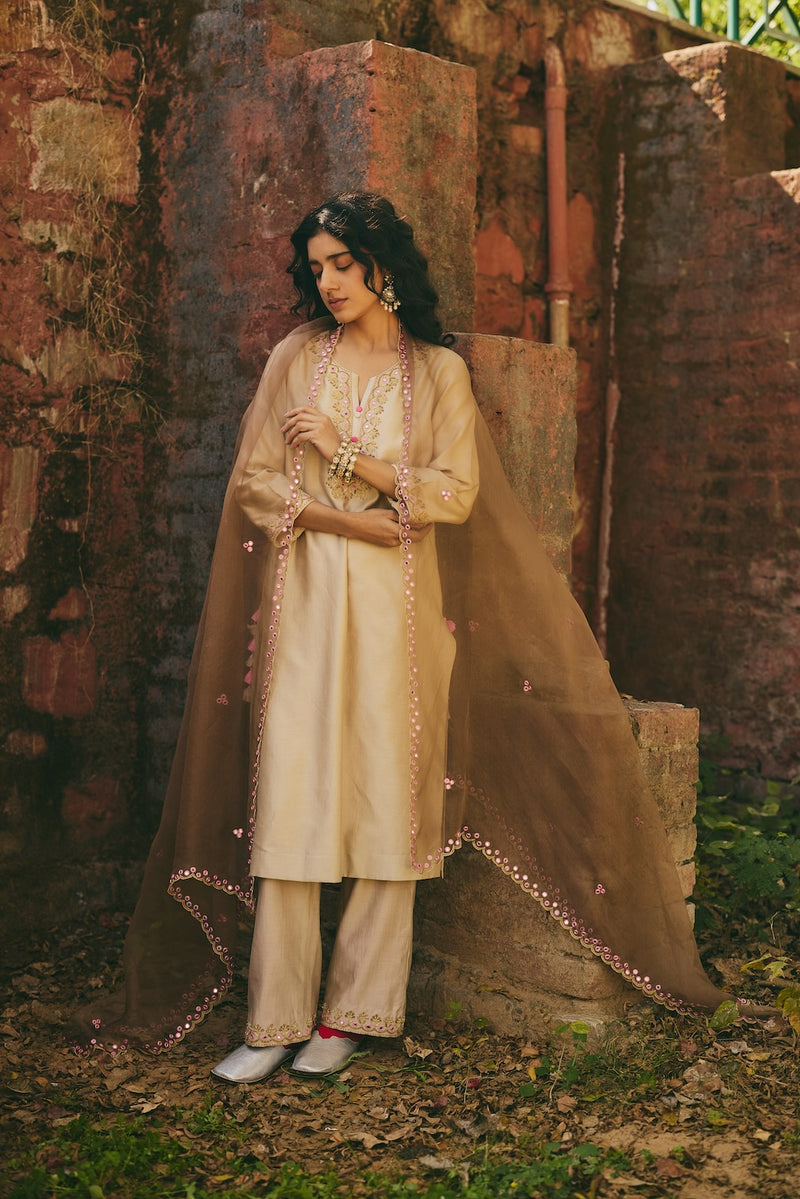
2. Two versatile kurta sets — for mehendi, haldi, or smaller functions. Choose pieces in different colour families so they feel distinct.


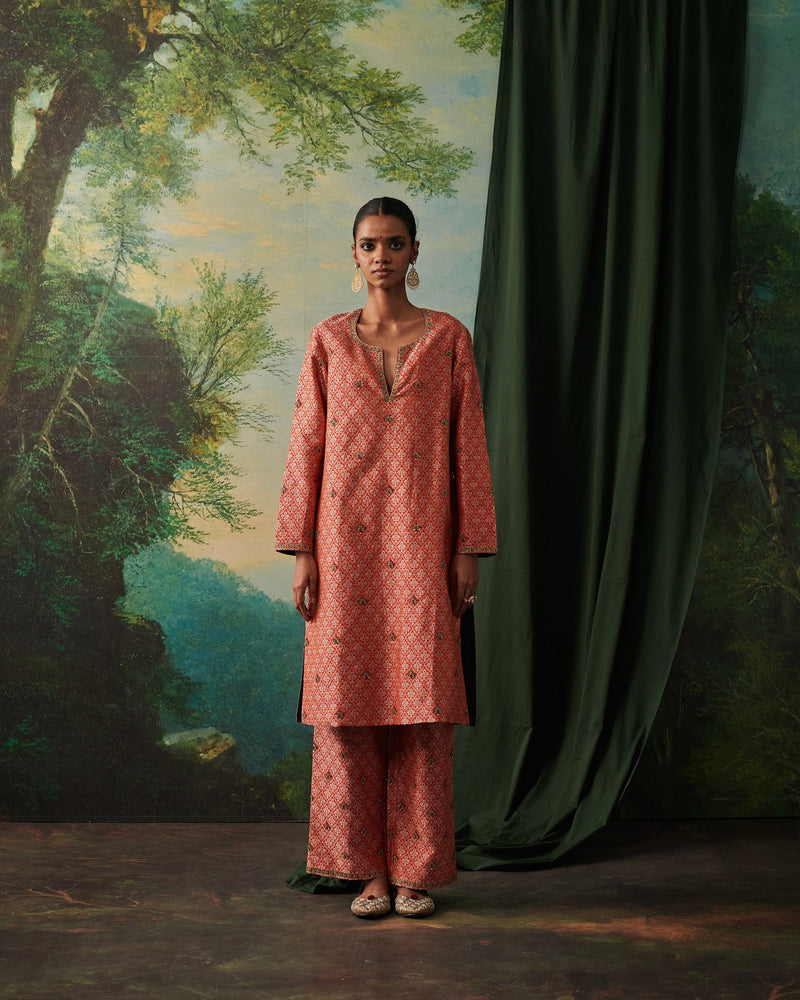
The Raha & Avni in gathered silk with gold sequins and tissue detailing gives you effortless glamour. The Naveli & Ruhi in dusty rose chanderi with aari and zardozi embroidery is refined and photograph-ready.
3. One sharara or anarkali — for sangeet or cocktail. Something that moves well, looks dramatic, and photographs beautifully.
The Ferozaan & Gulraaz anarkali captures the rhythmic beauty of vintage Persian tapestries — a vivid celebration of colour and movement that will be the most memorable outfit at any sangeet.

4. Two interchangeable dupattas — to restyle simpler outfits across functions.


Fabric Guide for NRI Wedding Shopping
When you can't touch the fabric, understanding material properties becomes critical:
Chanderi — lightweight, breathable, slight sheen. Perfect for daytime functions and warm weather. Doesn't crease badly in luggage. Best for: mehendi, haldi, day events.
Silk — medium weight, beautiful drape, holds embroidery well. The most versatile wedding fabric. Best for: sangeet, reception, main wedding.
Organza — sheer, lightweight, floaty. Beautiful for layering — capes, dupattas, overlays. Travels well. Best for: dupattas, capes, evening events.
Tissue — lightweight with a metallic shimmer. Catches light beautifully. Best for: evening functions, reception.
Brocade — heavier, structured, woven patterns. Statement fabric for your main outfit. Best for: wedding ceremony, reception.
Packing Indian Outfits for International Travel
This is where most NRIs struggle. Here's the practical guide:
Free Download
Get Our Measurement Guide
Step-by-step instructions with photos for perfect custom fit.
Download Free GuideRoll, don't fold. Heavy embroidered pieces should be rolled loosely in tissue paper to prevent crease lines across embroidery.
Carry the hero piece in hand luggage. Your main lehenga or saree should travel with you, not in checked baggage. Use a garment bag.
Dupattas are your best friend. An embroidered dupatta takes up almost no suitcase space but can transform any outfit. Pack 2–3 extras.
Ship ahead if possible. If you're visiting family before the wedding, have your outfits delivered to their address. This removes the packing anxiety entirely.
Sizing & Fit for International Orders
Provide measurements, not just dress sizes. Indian sizing doesn't map to US, UK, or EU sizing. Bust, waist, hip, shoulder width, and sleeve length measurements in centimetres give the best results for made-to-order pieces.
Get measured professionally. Visit a local tailor or alteration shop for accurate measurements. Don't measure yourself — the margin of error is too high for pieces you can't try on.
Communicate with the brand. Good brands will guide you through measurements and confirm details before production begins. If a brand doesn't offer this, reconsider.
Outfits That Transition Across Functions
Smart NRI shopping means fewer outfits, more combinations:
A beautifully embroidered shirt like the Aarya in dupion silk with gold vine embroidery works with a sharara for sangeet, with tailored trousers for a cocktail party, and even with jeans for a post-wedding brunch.
The Rang, Sasha & Tasha set — a black organza cape with multicolour embroidery, blouse, and dhoti pant — gives you three separate pieces that work independently with other outfits in your wardrobe.
Where to Wear Indian Outfits Abroad
For the diaspora, Indian occasion wear isn't just for trips home. Diwali parties, community gatherings, cultural events, and increasingly, Western formal occasions are all moments for handcrafted Indian fashion.
A Chandni black chiffon saree with sequin embroidery looks as striking at a London gala as at a Delhi reception. A beautifully embroidered kurta set works for Eid in Dubai as well as it does for Diwali in Toronto.
The beauty of handcrafted Indian wear is that it transcends geography. The craft speaks for itself.
Explore: lehengas · sarees · kurta sets · dupattas · shop all
Frequently Asked Questions
Do you ship internationally?
Yes. Most Indian designer brands ship worldwide. Delivery typically takes 7–14 business days after production. For made-to-order pieces, add the 4–5 week production time.
What if the outfit doesn't fit when it arrives?
With made-to-order pieces crafted to your measurements, fit issues are rare. For minor adjustments, find a local tailor before you leave — most alterations on Indian wear are straightforward. The key is providing accurate measurements upfront.
How many outfits do I need for an Indian wedding?
A typical Indian wedding has 4–7 functions. You don't need a separate outfit for each. 3–4 well-chosen pieces with interchangeable dupattas and accessories can cover every event. Quality over quantity.
Can I order last-minute?
For made-to-order pieces, you need at least 6–8 weeks including production and shipping. Plan ahead. For ready-to-wear pieces, 3–4 weeks is usually sufficient.
Ready to Order Custom?
WhatsApp us at +91 70423 11214 with what you're looking for. We'll guide you through measurements, customizations, and timeline.
Most pieces ready in 4-5 weeks. Bridal in 6-8 weeks.
Made to order in 4–5 weeks
Have an event date? We’ll tell you exactly when to order by.
We take a limited number of orders each month — secure your slot early.
Not sure where to start?
Tell us what you're dressing for and we'll help you choose — fabric, fit, colour, and timeline — over WhatsApp.
Your Cart
Pieces from this story
All pieces →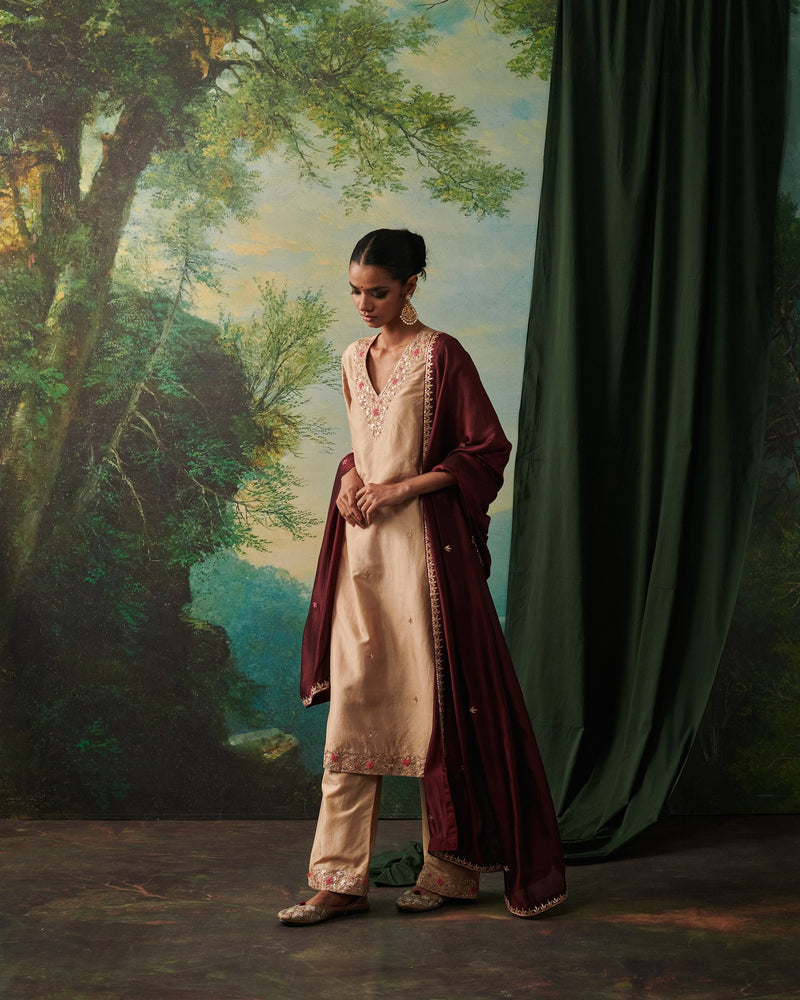
Keep reading
The journal →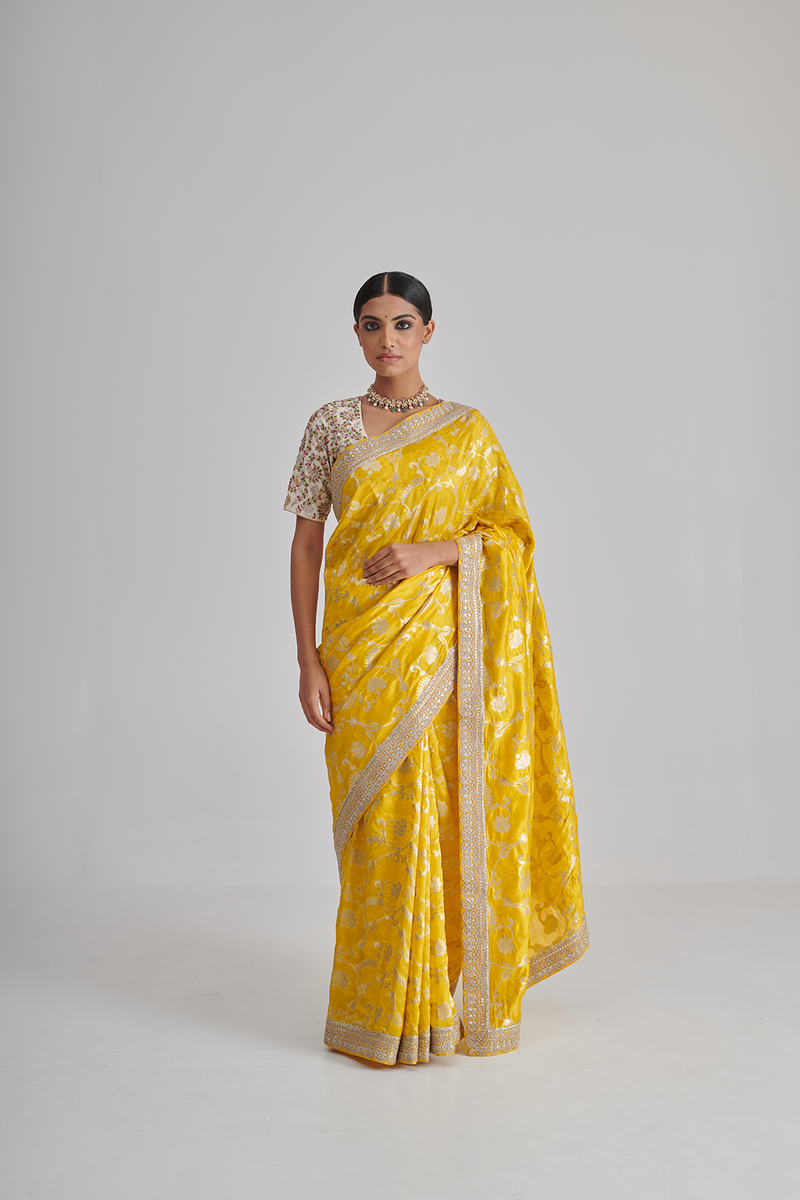
Best Banarasi Saree Brands in India 2026: Where to Buy an Authentic Banarasi
Handmade by karigars Made to your measurements Fit guarantee Ships worldwide As seen in GraziaElle Graduat...
14 September 2026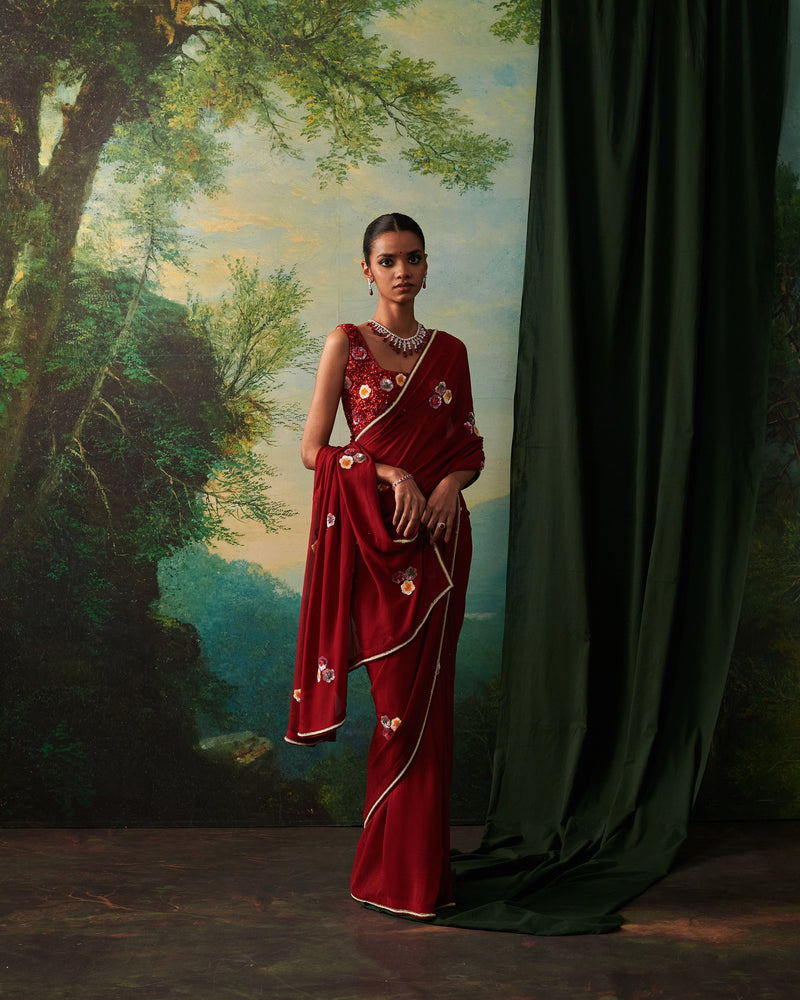
Gifts for Your Wife She'll Actually Wear: Indian Outfits for Karva Chauth, Diwali & Anniversaries
Handmade by karigars Made to your measurements Fit guarantee Ships worldwide As seen in GraziaElle Graduat...
14 September 2026
Designer Lehenga for Girls: A Parent's Buying Guide to Kids' Lehengas
Handmade by karigars Made to your measurements Fit guarantee Ships worldwide As seen in GraziaElle Graduat...
14 September 2026