
What to Wear to a Kerala Hindu Wedding: A Guest's Guide
Here is the thing nobody tells you about a Kerala Hindu wedding: it may be over before you have finished your first coffee. The muhurtham ceremony itself — the thalikettu, the exchange of garlands, the pudavakodukkal — can take minutes, held in the morning at a temple or hall, followed by the sadhya feast on banana leaves. What Kerala lacks in ceremony-length it makes up for in the most elegant dress code in India: cream and gold, worn by an entire hall at once.
What Actually Happens
- The muhurtham. The wedding proper, held at the auspicious morning hour — the groom ties the thali (the marriage pendant), garlands are exchanged, and the bride is presented the pudava, the wedding cloth. Short, dense with meaning, and punctual.
- The sadhya. The vegetarian feast served on banana leaves — dozens of dishes, eaten by hand, seated in rows. This is where you will spend most of the event.
- The reception. Often the same day or evening, sometimes in the groom's town — this is where the dressing becomes freer and more colourful.
The Palette: Kasavu Cream and Gold
Kerala's occasion dress is the kasavu — cream or off-white cotton and silk bordered in real gold zari. The bride is classically in a kasavu or a rich Kanchipuram silk; the hall around her is a sea of cream, ivory and gold with accents of deep green, red and magenta. For a guest, the instinct is simple: light base, gold detail, one clean accent colour if you want it.
Our usual honesty: the kasavu belongs to Kerala's handloom weavers — Balaramapuram, Chendamangalam, Kuthampully — and if you can wear the real thing, nothing is more correct. What we make are hand-embroidered ivory and gold pieces in the same register, for guests who want to dress in key without pretending to wear a kasavu.
Ivory and Gold Sarees
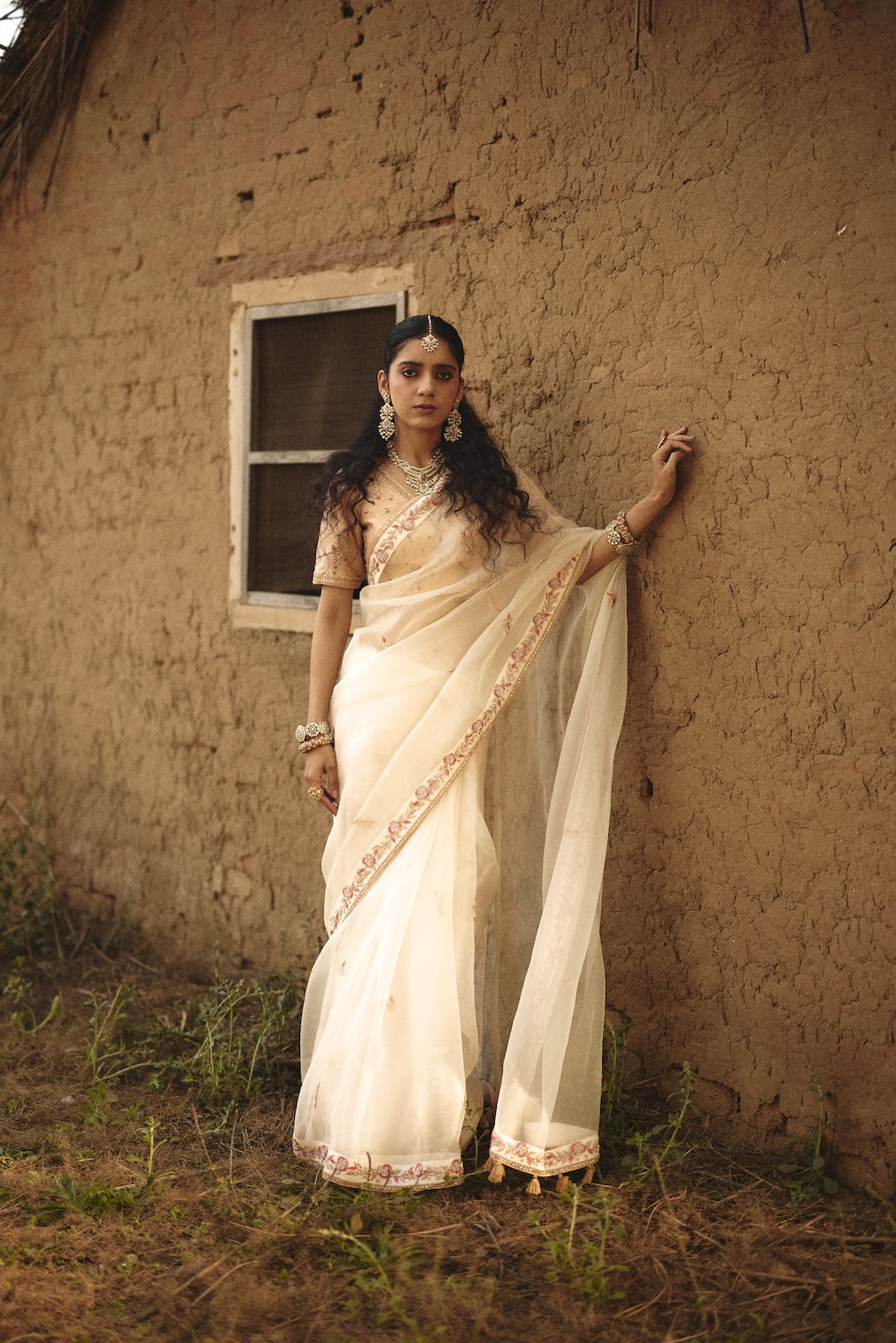
The Shanvi saree is soft ivory organza with a hand-embroidered border in gold zari, resham and beadwork running the full length of the drape — the cream-body, worked-border structure of a kasavu, arrived at with a needle. The Zohra saree in soft tissue carries a graceful shimmer with delicately hand-embroidered borders, catching the morning light the way the occasion deserves.


For gold itself, the Taraaz saree in lustrous golden-champagne tissue drapes with fluid grace and a delicate metallic sheen — essentially the kasavu border, expanded into a whole drape. The Bano moonga zari silk saree with Siya blouse in ivory with fine sequin florals and a rich border is the version for close family.
Not a Saree Person? Ivory Sets and Anarkalis
The Noor ivory anarkali with exquisite Mukesh work and hand-embroidered floral motifs gives the palette at anarkali ease — right for a guest who wants to eat a sadhya cross-legged without renegotiating pleats. The Anika ivory embroidered silk set, with vine and floral motifs drawn from Mughal artistry, is a quieter, tailored take.


If You Want Colour
Accent colours are welcome, particularly at the reception. The Humrahi green silk jacquard saree with Faridah blouse — an all-over jaal with hand-embroidered floral butas — nods to Kerala's own deep greens. The Zariya saree in soft mint green Banarasi with diagonal bands of sequins and gota in antique gold keeps the gold logic with a cooler base.
Etiquette Worth Knowing
- Be on time — actually on time. The muhurtham happens at its hour whether you are parked yet or not. Arrive early; the ceremony will not wait.
- Dress for humidity. Kerala is warm and damp most of the year. Organza, chiffon, light silk and cotton over anything heavy; skip the fully-lined heavy lehenga.
- Temple weddings have rules. If the muhurtham is at a temple, modest dress is required — covered shoulders, no shorts anywhere in the party, and some temples have specific dress codes. Ask your hosts.
- Eat the sadhya properly. Right hand, banana leaf, and let the servers keep serving — folding your leaf toward you when done says thank you.
- Do not out-dress the morning. Heavy sequins at 10 a.m. read out of key; save the shine for the reception.
For the wider southern tradition, see our South Indian wedding guide — and Kerala's own calendar gets its due in our Onam and Vishu guides.
Ivory and Gold, Hand-Embroidered to Order
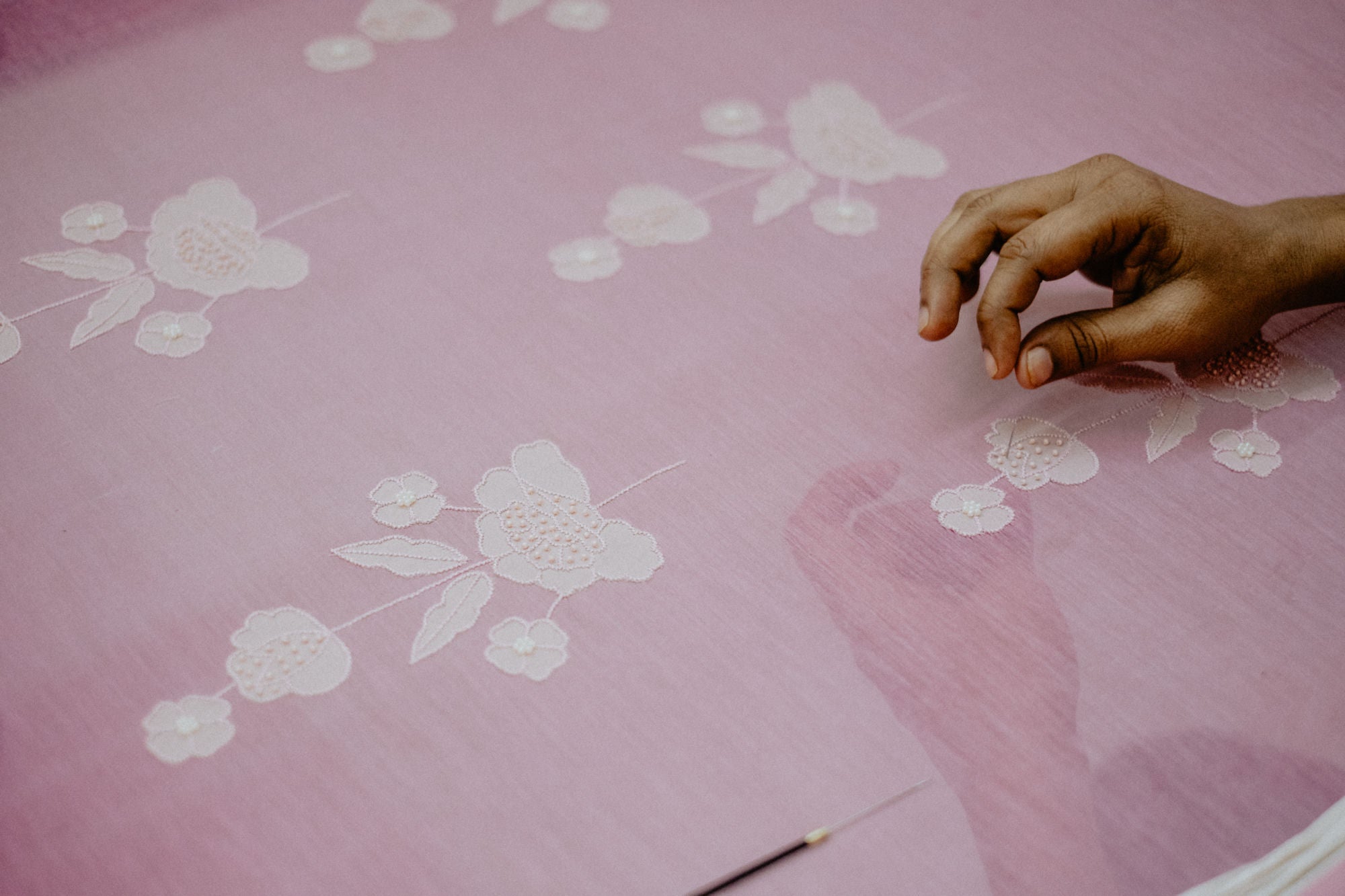
Every piece is hand-embroidered by karigars in Jaipur and made to your measurements over 4–5 weeks. Explore the full collection.
Shop the CollectionFrequently Asked Questions
What do guests wear to a Kerala Hindu wedding?
Cream, ivory and gold are the register — a kasavu saree if you have one, otherwise a light silk, organza or tissue saree or an ivory kurta set or anarkali with gold detail. Keep fabrics breathable for the humidity, dress modestly for a temple muhurtham, and save heavier shine for the reception.
What is a kasavu saree?
The kasavu is Kerala's traditional cream or off-white handloom bordered with gold zari, woven in centres like Balaramapuram, Chendamangalam and Kuthampully. It is worn as a saree or as the two-piece set-mundu, and it is the classic dress of Kerala's weddings and festivals.
How long is a Kerala wedding ceremony?
Often remarkably short — the muhurtham rituals themselves can be done within minutes to an hour, held at the auspicious morning hour, followed by the sadhya feast. Arrive on time; the ceremony happens at its muhurtham whether guests are seated or not.
Can guests wear white to a Kerala wedding?
Cream and off-white with gold are not just acceptable in Kerala — they are the tradition, unlike in North India where plain white reads sombre. The key is the gold: an ivory drape with a gold border is festive dressing; flat, unrelieved white with no border is not.
Made to order in 4–5 weeks
Have an event date? We’ll tell you exactly when to order by.
We take a limited number of orders each month — secure your slot early.
Not sure where to start?
Tell us what you're dressing for and we'll help you choose — fabric, fit, colour, and timeline — over WhatsApp.
Your Cart
Pieces from this story
All pieces →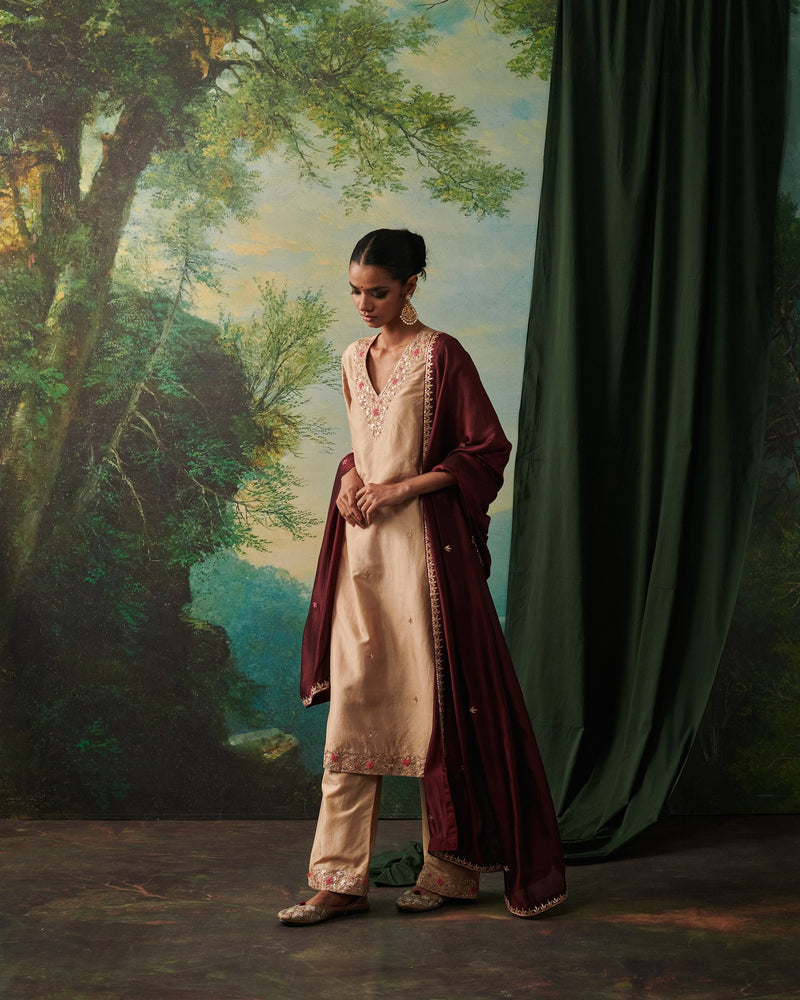

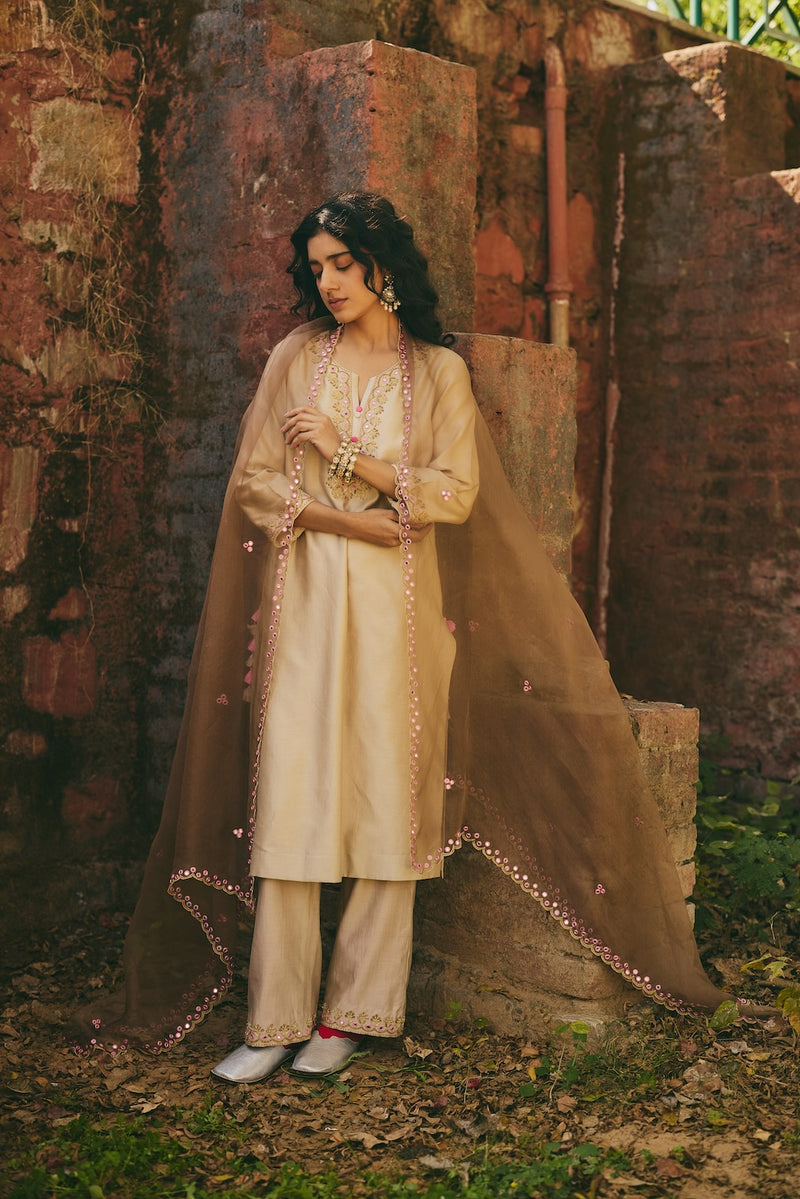
Keep reading
The journal →
Kids' Lohri & Makar Sankranti Outfit Ideas: Bonfires, Kites and Warm Layers
Handmade by karigars Made to your measurements Fit guarantee Ships worldwide As seen in GraziaElle Graduat...
5 September 2026
What Should Kids Wear to a School Annual Day or Function?
Handmade by karigars Made to your measurements Fit guarantee Ships worldwide As seen in GraziaElle Graduat...
5 September 2026
What to Wear to a Hyderabadi Wedding: A Guest's Guide
Handmade by karigars Made to your measurements Fit guarantee Ships worldwide As seen in GraziaElle Graduat...
5 September 2026