
How Many Festive Outfits Does a Child Actually Need? A Season Wardrobe Guide
Every year the same question arrives around September: Navratri, Diwali, two weddings, a birthday and a house puja are all coming, and someone has to decide how many outfits a seven-year-old needs to get through it. The instinct is to buy one per event. The honest answer is that a child needs about three good pieces for an entire season — and that buying more than that is usually a way of solving a planning problem with money.
Do the Maths on the Season First
Before you buy anything, write down the actual list. A typical Indian festive and wedding season for a child looks something like this:
- Navratri or Durga Puja — two or three evenings out, at most
- Diwali — a home puja, plus one or two family gatherings
- One or two weddings — of which the child properly attends maybe two functions each
- A birthday, a naming ceremony or a griha pravesh
That's roughly eight to ten appearances across three months, spread across different sets of people. Almost nobody at wedding number two saw what the child wore at Diwali. The overlap you're worried about mostly doesn't exist.
The Three-Piece Kids' Festive Capsule
Three pieces, each doing a different job, will cover an entire season comfortably.
1. The Hero Piece
One properly celebratory outfit for the two or three biggest moments — the wedding ceremony, the Diwali party, the day there'll be a family photograph everyone keeps. This is where a lehenga earns its place.
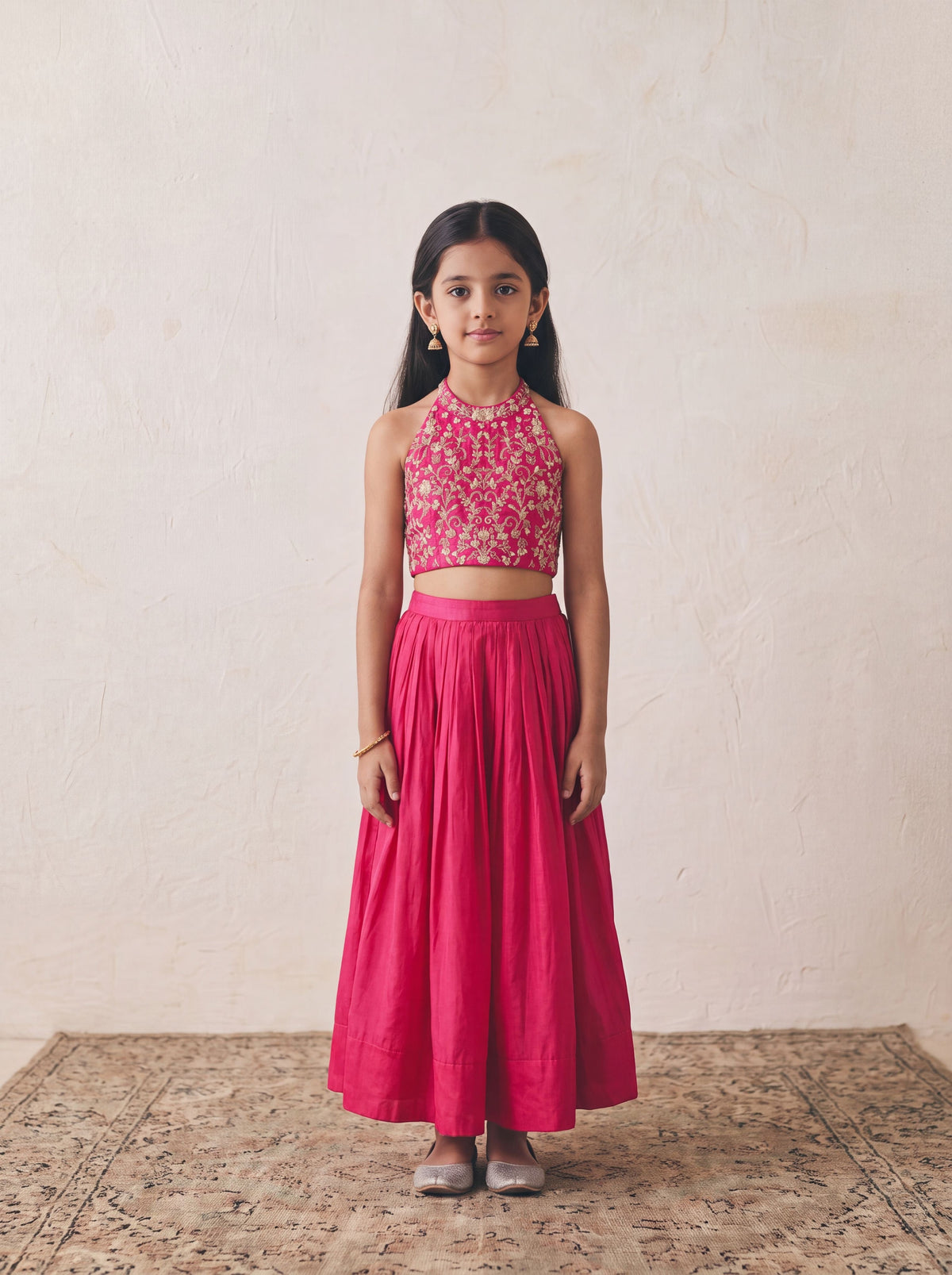
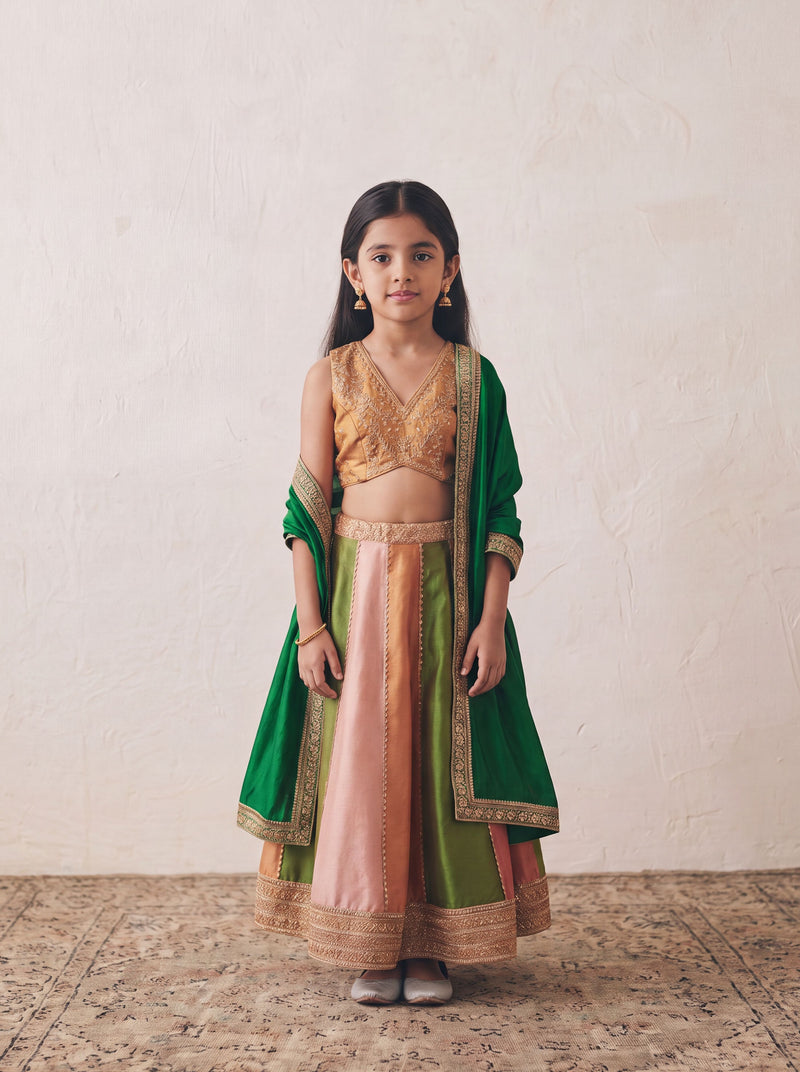
The Mehergul lehenga with Abroo blouse in striking rani pink silk, with the blouse intricately hand-embroidered in sequins, cutdana and thread work, is the classic version of this. For something softer, the Nyassa blouse with Elina lehenga in luminous rose tissue carries a natural sheen that makes the embroidery glow in evening light. And the Ishq-e-Gul lehenga with Inara blouse in soft tissue jacquard, with a multi-hued panelled skirt, is a celebration of colour and movement built for a child who intends to spin.


2. The Everyday-Festive Set
The piece that does the most work: bright, comfortable, easy to eat and run in, and appropriate for the six or seven medium-sized occasions in between. A kurta set, not a lehenga.
The Gia kurta with Cyraa pants in vibrant lime green silk — lightweight with a natural sheen, with floral embroidery along the neckline, sleeves and hem — is exactly this kind of piece. So is the Afreen kurta with Maahi pant in sunshine yellow Chanderi with delicate cutdana and bead embroidery, and the Sahira kurta with Fizza pant, a soft pistachio green kurta with a lime yellow pant, hand-embroidered in resham, sequins, cutdana, beads and aari in floral and paisley motifs.

3. The Understated Ceremonial Set
The one most families forget, and then scramble for. Pujas, temple visits, a griha pravesh, a namkaran, an early-morning wedding function — all occasions where bright and sparkly is the wrong register. A quiet, tonal set in a neutral covers all of them.
The Vanya kurta with Bani pant in a warm beige silk with a classic scoop neckline is made for exactly this: a sophisticated, understated ceremonial look. The Darya kurta with Keya pant in fine silk in a champagne-taupe hue does the same with a classic V-neckline and a straight, long-line silhouette, and the Anika ivory embroidered silk set, hand-embroidered in fine gold threads with vine and floral motifs from classic Mughal artistry, is the dressier end of the same idea.


A navy option like the Tara kurta with Pari pant in satin, with a rounded neckline and short sleeves, works the same way — sophisticated, tonal, and appropriate anywhere the mood is more ceremonial than celebratory.
Buying for a Body That's Changing
This is the real argument for buying fewer, better pieces. A child grows out of clothes on their own schedule, and four outfits bought in August may not all still fit by January.
- Order with a little room, not a lot. A slightly generous fit with a deep hem lasts a season and a half; an outfit two sizes too big looks like an outfit two sizes too big in every photograph.
- Favour kurta sets over fitted bodices for growth room — a kurta accommodates a few centimetres far more gracefully than a fitted choli.
- Pants and shararas can be re-hemmed; a lehenga skirt can usually be let down once at the waist.
- Buy the hero piece closest to the event, not six months ahead.
Our guide to buying ethnic wear for growing kids goes into sizing and what lasts in far more detail.
How to Repeat Without It Looking Repeated
The whole capsule idea depends on repeating pieces, which is much easier with children than with adults — nobody expects a child to debut a new outfit every evening, and children genuinely prefer wearing the thing they already like.
Change the dupatta or drop it entirely. Change the jewellery — jhumkas one evening, a small maang tikka the next. Change the hair. Wear the kurta of a set with a different pant. Between two events with different guest lists, none of it is even necessary.
When to Order
Everything we make is hand-embroidered by karigars and produced to measurement over four to five weeks, plus shipping. Working backwards from the 2026 calendar: for Sharad Navratri, which begins 11 October, order by early September. For Diwali on 8 November, order by the end of September. For a December wedding, October is comfortable and November is tight.
If you're dressing siblings or cousins together, our guide to coordinating outfits for siblings and cousins covers how to do it without matching everyone identically.
Make the Pieces Outlive the Season
Three well-made pieces are worth more than six mediocre ones for a reason beyond cost: hand-embroidered clothes are worth handing down. Stored properly — cleaned before they're put away, wrapped in muslin, never in plastic — a kurta set outgrown by one child is genuinely wearable by the next. Our guide to caring for kids' hand-embroidered clothes and handing them down covers how.
Kidswear, Hand-Embroidered and Made to Fit
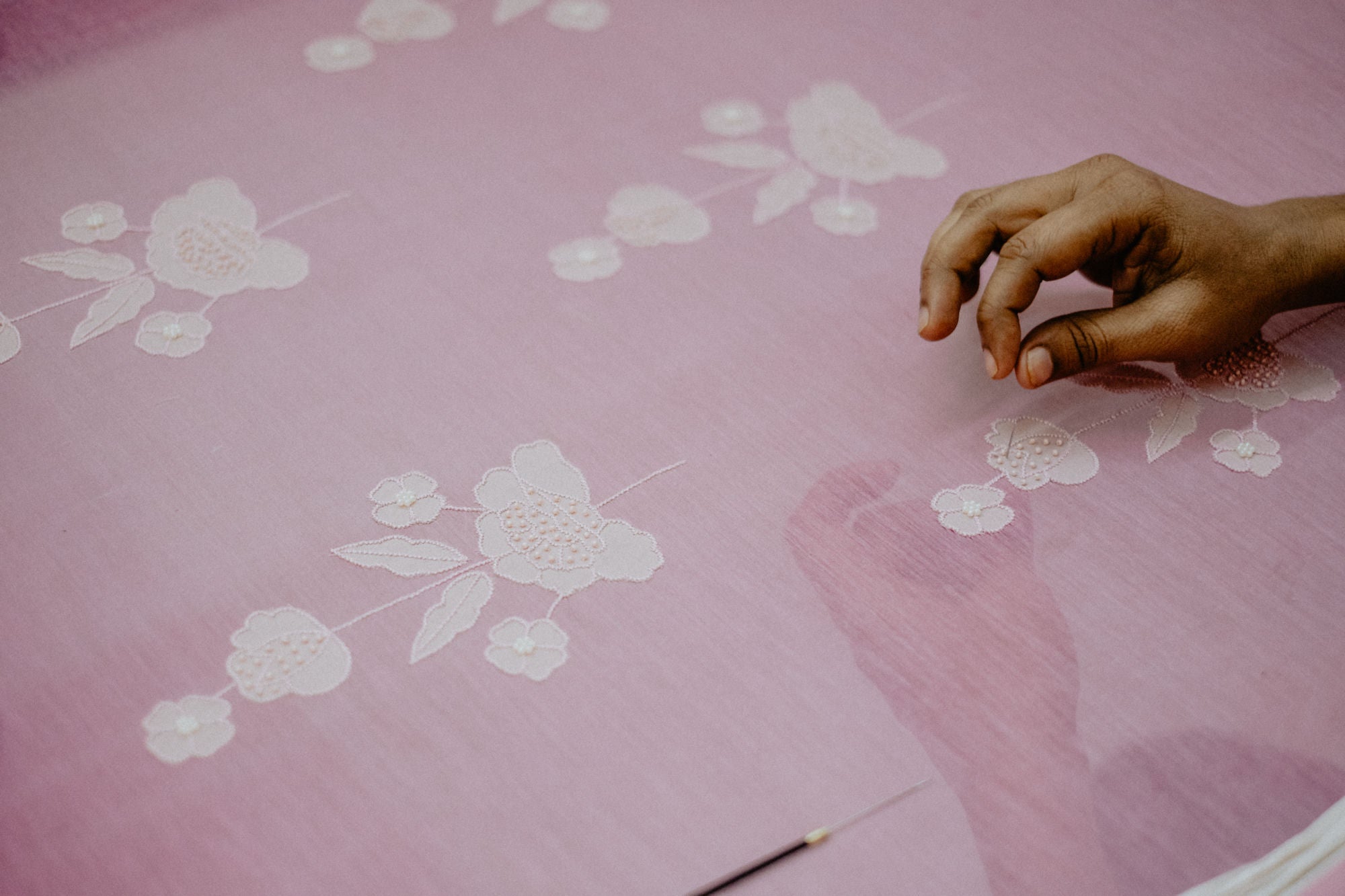
Every kids' piece is hand-embroidered by karigars in Jaipur and made to your child's measurements over 4–5 weeks — the same craft as our grown-up pieces, sized for little ones. Explore our kidswear collection.
Shop KidswearFrequently Asked Questions
How many festive outfits does a child need for the season?
Three is usually enough for an entire festive and wedding season: one celebratory hero piece for the biggest occasions, one bright everyday-festive kurta set for the many mid-sized events, and one understated tonal set for pujas and ceremonies. Different events almost always have different guests, so repeating goes unnoticed.
Should I buy kids' festive clothes a size bigger?
A little room with a deep hem is sensible and buys you an extra season. Two sizes too big is not — it reads as ill-fitting in every photograph. Kurta sets accommodate growth far better than fitted cholis, and pants and shararas can be re-hemmed as a child grows.
When should I order kids' outfits for Diwali 2026?
Diwali 2026 falls on 8 November. Since every piece is hand-embroidered and made to measurement over four to five weeks plus shipping, ordering by the end of September is comfortable. For Sharad Navratri, which begins 11 October, order by early September.
Is it fine for a child to repeat an outfit across festivals?
Completely. Different events usually mean different guests, and children are happiest in the outfit they already like. Changing the dupatta, the jewellery or the hairstyle is more than enough to make a repeated set look different in photographs.
Made to order in 4–5 weeks
Have an event date? We’ll tell you exactly when to order by.
We take a limited number of orders each month — secure your slot early.
WhatsApp me my order-by date + a shortlistNot sure where to start?
Tell us what you're dressing for and we'll help you choose — fabric, fit, colour, and timeline — over WhatsApp or on a video call.
Your Cart
Pieces from this story
All pieces →Not sure which piece, or need it by a date? Book a video consultation Ask us on WhatsApp




Keep reading
The journal →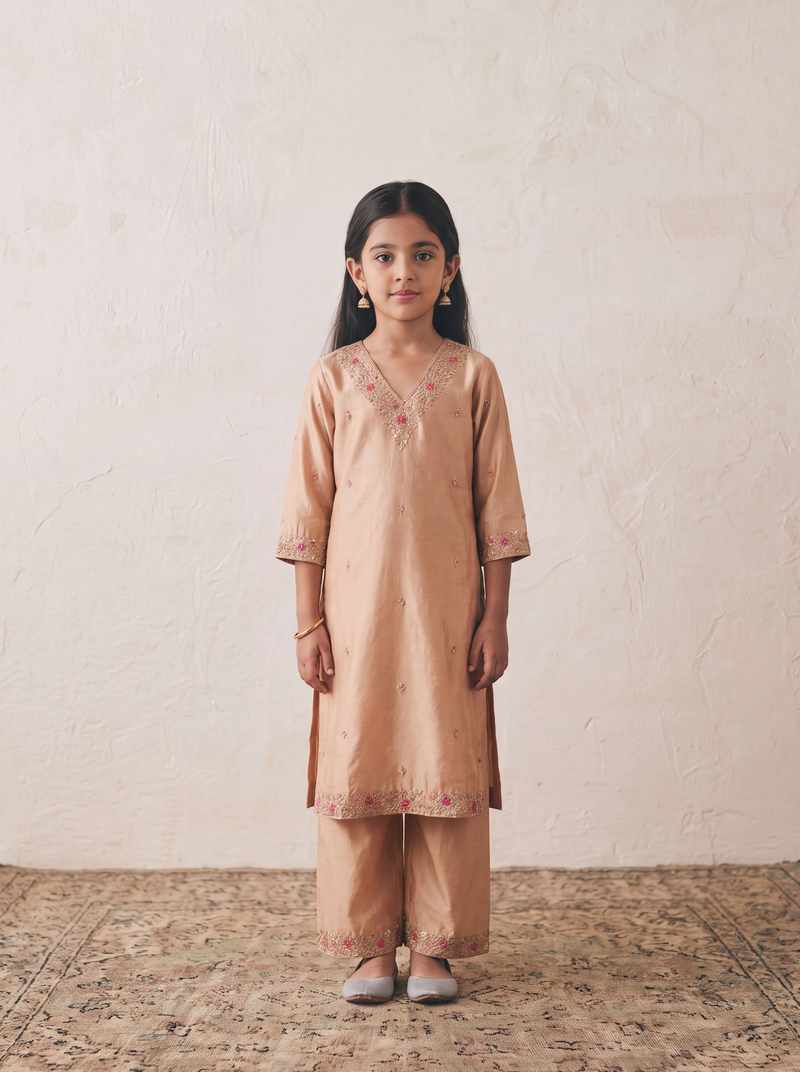
How to Buy Ethnic Wear for Growing Kids: Sizes, Custom Fits, and What Lasts
The hardest part of buying occasion wear for children is that children refuse to stay one size. A lehenga bought in S...
31 July 2026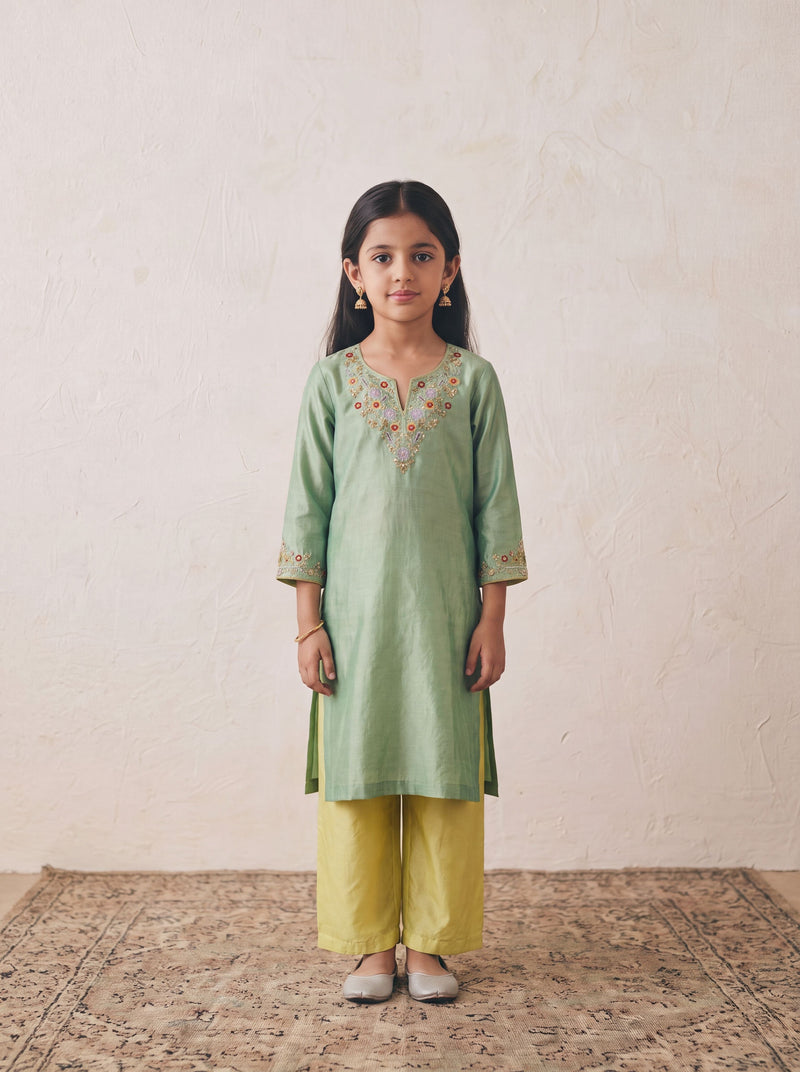
Twinning Kids: Coordinating Outfits for Siblings & Cousins
How to coordinate kids' ethnic outfits for siblings and cousins — twinning by colour and palette for weddings and fes...
31 July 2026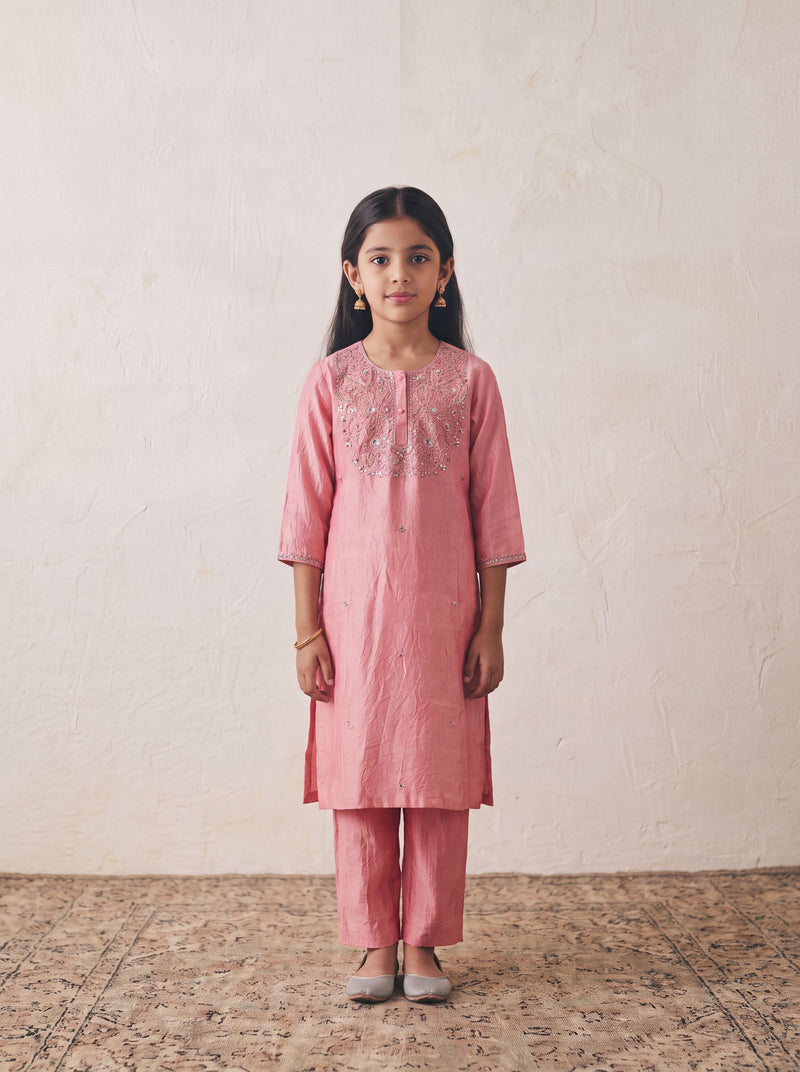
Caring for Kids' Hand-Embroidered Clothes (and Handing Them Down)
How to care for kids' hand-embroidered ethnic wear — cleaning food and grass stains, storing between wears, and passi...
31 July 2026