
How to Buy Ethnic Wear for Growing Kids: Sizes, Custom Fits, and What Lasts
The hardest part of buying occasion wear for children is that children refuse to stay one size. A lehenga bought in September fits differently by the December wedding. A kurta set that was perfect at the cousin's engagement is suddenly short at the wedding itself, three months later. Parents respond by buying big, which produces the other failure: an expensive outfit that looks borrowed.
This guide is how we think about sizing children's ethnic wear from our side of the measuring tape — how to measure, when to size up and when not to, when to go custom, how far ahead to order, and what actually makes a child's garment worth keeping rather than replacing.
Age sizes are averages, not promises
Our kids' pieces come in eighteen sizes, from 0–3 months to 15–16 years, and the size chart gives the body measurements behind every one of them — chest, waist, and shoulder-to-floor, in both inches and centimetres. But an age size describes an average child, and remarkably few children are average. Two seven-year-olds can be three sizes apart and both entirely normal. Growth also arrives in bursts rather than smoothly, so the size that was right in April can be wrong in July and right again by the following January.
So the rule is simple, and it is the only rule in this guide that has no exceptions: measure the child, not the birthday.
How to measure a child who will not stand still
You need three numbers and about ninety seconds. Chest: around the fullest part, tape snug but flat, arms down at the sides. Waist: at the point where the bottom's waistband will actually sit — for children this is usually at the navel rather than above it. Shoulder to floor: from the shoulder seam straight down to the floor, barefoot. That third number decides every length in the garment and it is the one parents most often skip.
Measure over a thin layer, never over a sweater or a padded dress. Keep the tape level — the most common error is a chest measurement that has drifted downward at the back. If the numbers land between two of our sizes, take the larger one, or better, take the custom option. And write the numbers down with the date beside them; in six months you will want to know how fast the child is growing, and you will not remember.
Ask us before you order
Not sure between two sizes? Send us the three measurements on WhatsApp and we will tell you which one we would cut — or whether we would cut to measurement instead.
When to choose the custom size
Because every piece we make is cut after you order it, a custom size is a first-class option rather than an alteration afterthought. You send your child's measurements, and the piece is cut to them with sensible ease already built in — our tailors have met children before and do not cut to the bone.
Choose custom in four situations: when the child falls between two sizes; when the child is unusually tall or petite for their age; when the function is more than two months away, so that you can order now and send measurements closer to the making; and when the piece is meant to last through two seasons of functions, which is a different instruction from simply cutting a size up.
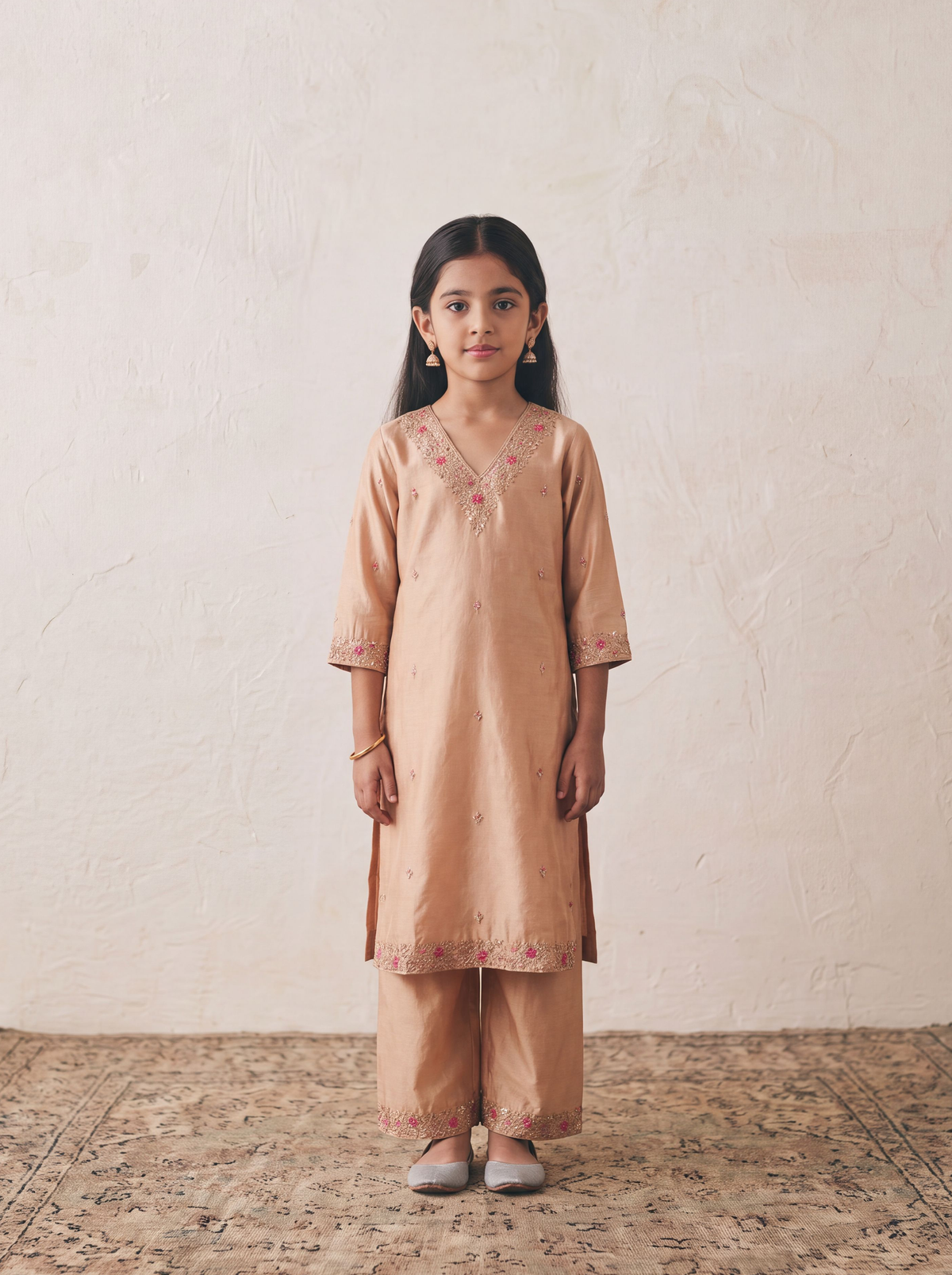
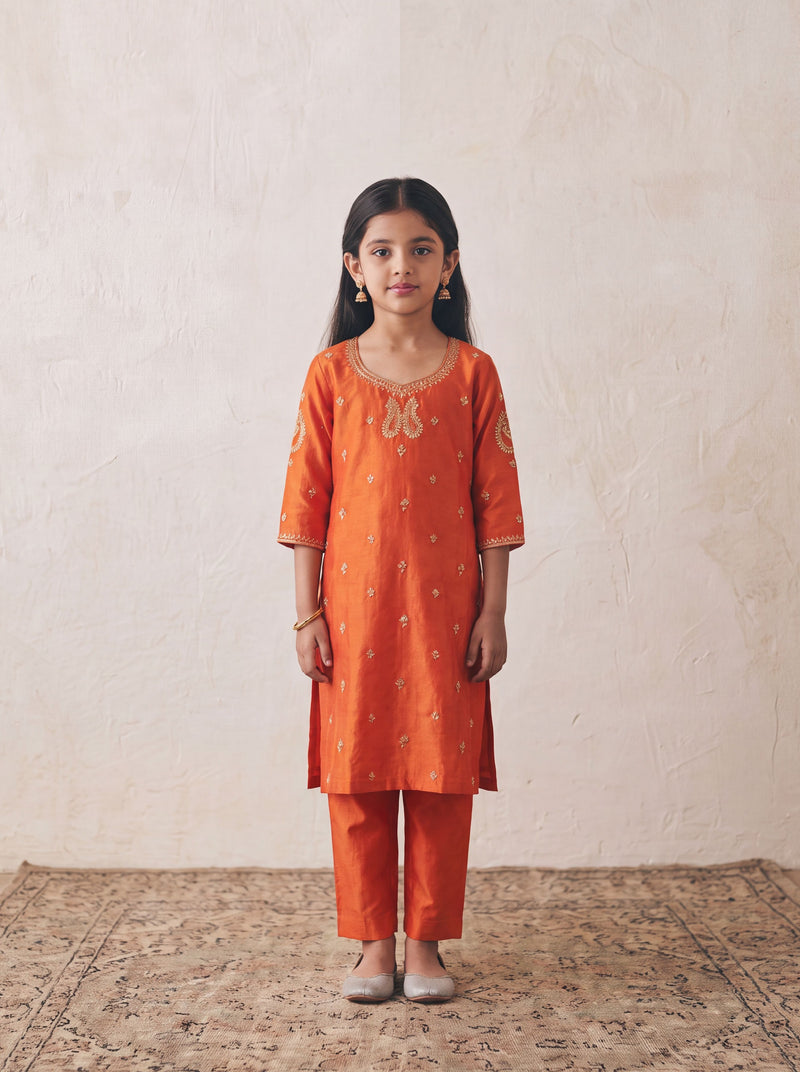
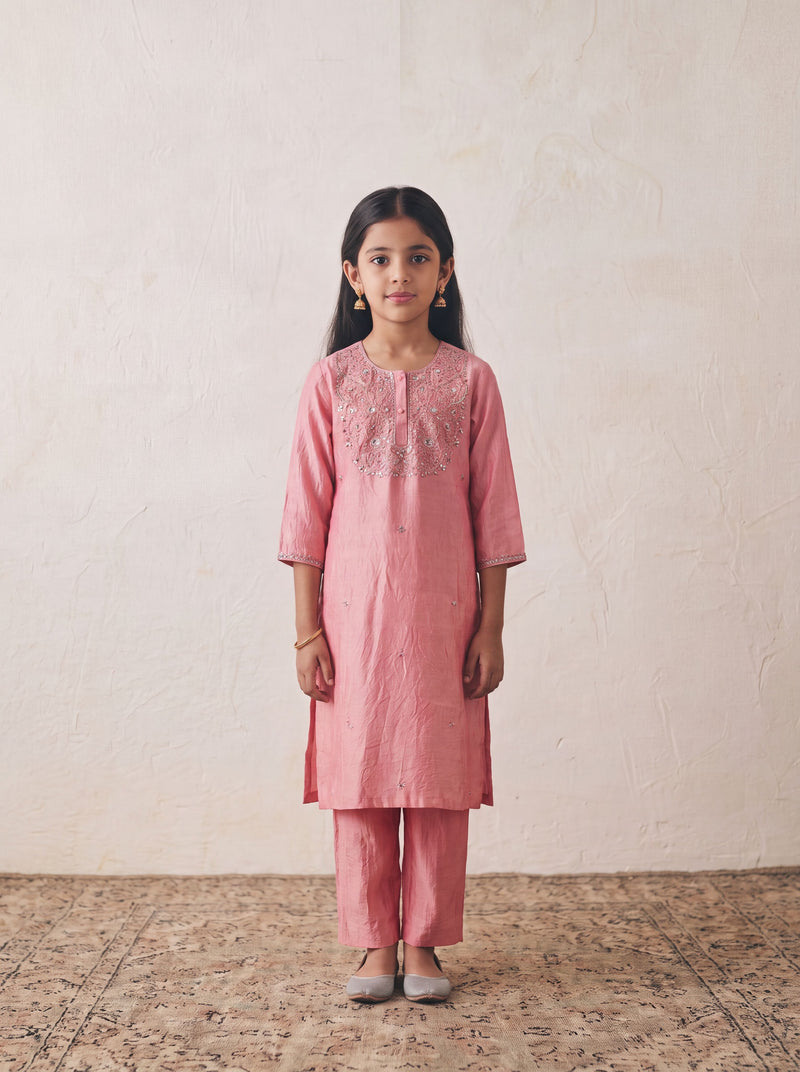
Pieces where the fit does most of the visible work are the ones where the custom option pays for itself. FAIZA & RIDA in cloud cream and DARYA & KEYA in camel are exactly that kind of quietly formal set — nothing loud to distract from the line, so the line has to be right.


How much growing room is actually right
The instinct is to buy big. Resist most of it. An oversized formal garment reads as borrowed in every photograph, and on shararas and gathered skirts an extra inch of length is a genuine tripping risk on a dance floor. Reasonable ease is already built into our cuts.
If you do want a piece to survive a growth spurt, add the room in length rather than width. A hem can carry an extra inch gracefully and can be let down later; shoulders cannot be adjusted after the fact, and shoulders are exactly where a garment visibly does not fit. If the intention is two seasons, tell us when you order and we will cut with that in mind — a deeper hem allowance, a waistband with give — which is a different piece of work from simply making everything bigger.
What survives a growing child
A well-made kurta set survives a season of functions. A well-made lehenga can survive a younger sibling. The difference is almost entirely in construction rather than price.
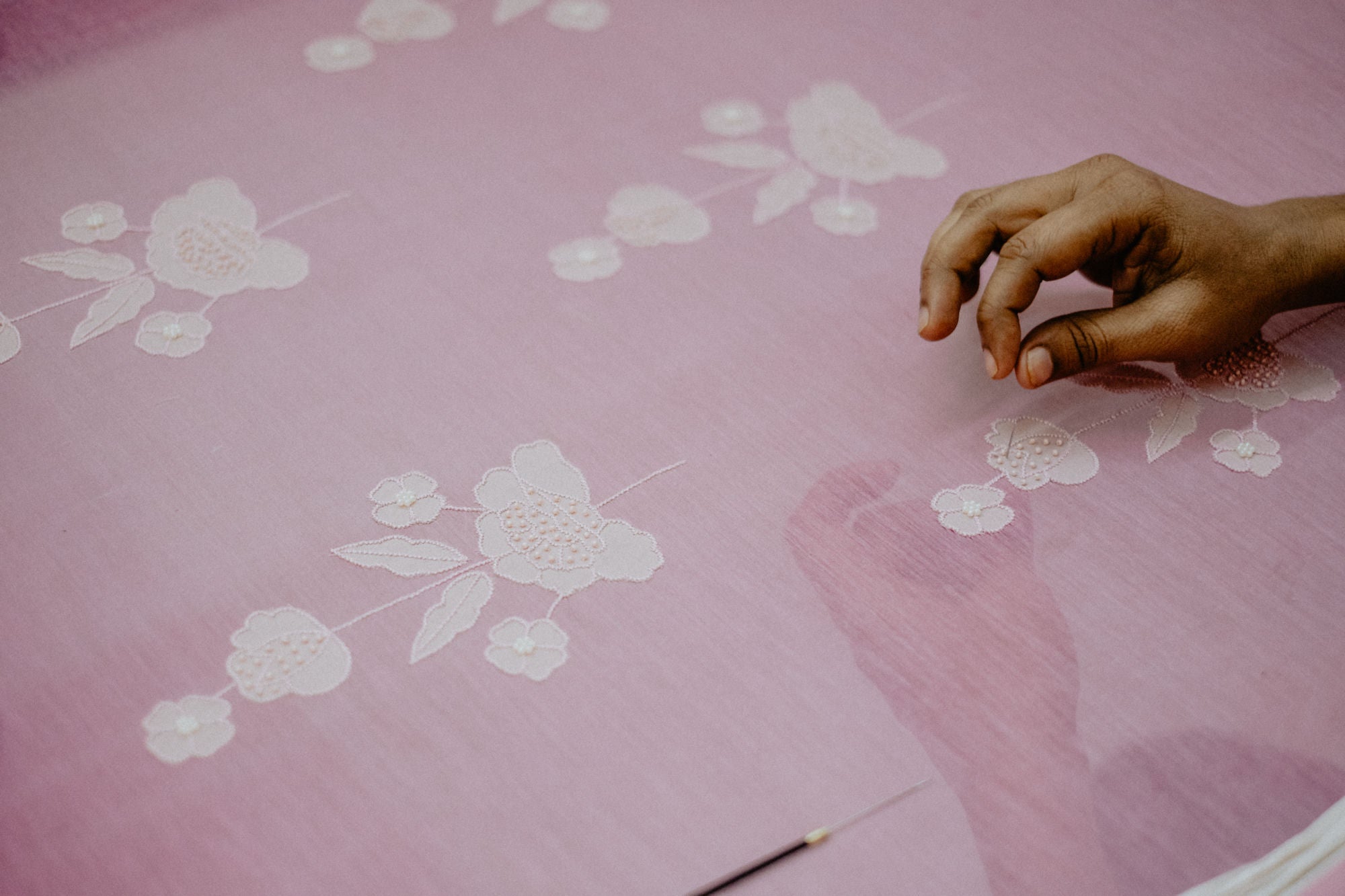
Hand embroidery ages better than machine work, which sounds counterintuitive until you have seen both fail. Handwork is applied stitch by stitch and can be repaired the same way; fused machine work is applied as a sheet, and when it goes it peels as a sheet. Natural fabrics soften with washing rather than pilling. Mulmul linings stay soft; synthetic linings stiffen. And restrained pieces last longest of all, because nobody can date a soft gold or an ivory to a particular season — the pieces most often handed down in our experience are the quiet ones.


Caring for it between functions
Dry clean, and say the words "hand embroidery" at the counter — a good cleaner will treat the piece differently once they know. Store folded with the embroidered face turned inward, wrapped in muslin rather than plastic, because plastic traps moisture and metal thread does not forgive that. Keep the outfit flat rather than on a hanger if it is heavily worked, since hanging pulls the weight of the embroidery down through the shoulder seam over months. And if a thread pulls, do not cut it — send us a photograph and we will tell you how to have it set right.
The ordering timeline, honestly
Every piece takes four to five weeks on the frame because the embroidery begins after you order, and then there is shipping on top of that. So: order six to eight weeks before the function; measure the child in the week you order rather than earlier; and for weddings in the peak season, order earlier still, because the frames fill and the karigars are only so many.
If you are already late, message the studio before deciding it cannot be done. Express making is sometimes possible depending on the piece and the density of its embroidery, and we would rather give you a straight answer about your date than have you order in hope.
A worked example: a six-year-old, a December wedding
It is October. The wedding is the second week of December, and there are three functions your daughter will attend. Here is what we would actually do.
Measure her this week and write the three numbers down with the date. Order now rather than in November, because four to five weeks of making plus shipping puts a November order uncomfortably close to the date, and peak season fills the frames. If she is between sizes — which at six she very likely is, since that is the age where children stretch fastest — take the custom option and send the measurements with the order. Choose one lighter piece for the daytime function and one deeper-coloured piece for the evening, rather than one expensive outfit worn twice, because children photograph in the same clothes twice and nobody enjoys that.
Then measure her again in late November. If anything has changed significantly, tell us — a hem is adjustable up to the last week in a way that a bodice is not.


Buying for two children at once
Siblings are easier than they look. Order both pieces in the same run so the colours are matched from the same dye lots, and resist dressing them identically unless they are close in age — a four-year-old and a ten-year-old in the same design mostly emphasises the gap. Coordinating by colour and letting the silhouettes differ is the version that works, and it also means the younger child can inherit the older one's piece later without it looking like a hand-me-down of an outfit everyone has already seen.
If you are also twinning with one of them, keep the twinning to a single pair and let the other child sit in the same palette. Two matched pairs in one photograph starts to look like a uniform.
What we would spend the money on
If you are choosing between two pieces at different prices, the questions worth asking are in this order: is it lined softly, is the embroidery hand-worked, is the fabric natural, and does it fit. Those four decide whether the garment is worn happily and whether it survives. Everything else — the density of the work, the shine, the number of pieces in the set — is preference rather than quality, and a simpler piece that satisfies all four will outlast a heavier piece that fails one.
Frequently asked questions
Should I buy a size up for a wedding three months away?
No. Order now and send the measurements a month before the wedding. Made-to-order means the cutting can wait for you, which is the whole advantage.
Is there an extra charge for a custom size?
The custom-size option is priced on each product page, slightly above the standard sizes, reflecting the individual pattern work it needs.
What if it does not fit when it arrives?
Talk to us and we will work it out. This is also exactly why we would rather have measurements before we cut than a size guess.
Can a piece be altered later as the child grows?
Length usually yes, width rarely, and never through embroidered panels. Tell us at the time of ordering if you want the piece cut with alteration in mind.
How do I wash hand-embroidered kidswear?
Dry clean only. Spot-clean nothing yourself on an embroidered panel — water marks metal thread permanently.
Not sure where to start?
Send us your child’s three measurements and the date of the function. We will tell you the size we would cut and whether the timeline works.
Pieces from this story
All pieces →
Keep reading
The journal →
Best Banarasi Saree Brands in India 2026: Where to Buy an Authentic Banarasi
Handmade by karigars Made to your measurements Fit guarantee Ships worldwide As seen in GraziaElle Graduat...
14 September 2026
Gifts for Your Wife She'll Actually Wear: Indian Outfits for Karva Chauth, Diwali & Anniversaries
Handmade by karigars Made to your measurements Fit guarantee Ships worldwide As seen in GraziaElle Graduat...
14 September 2026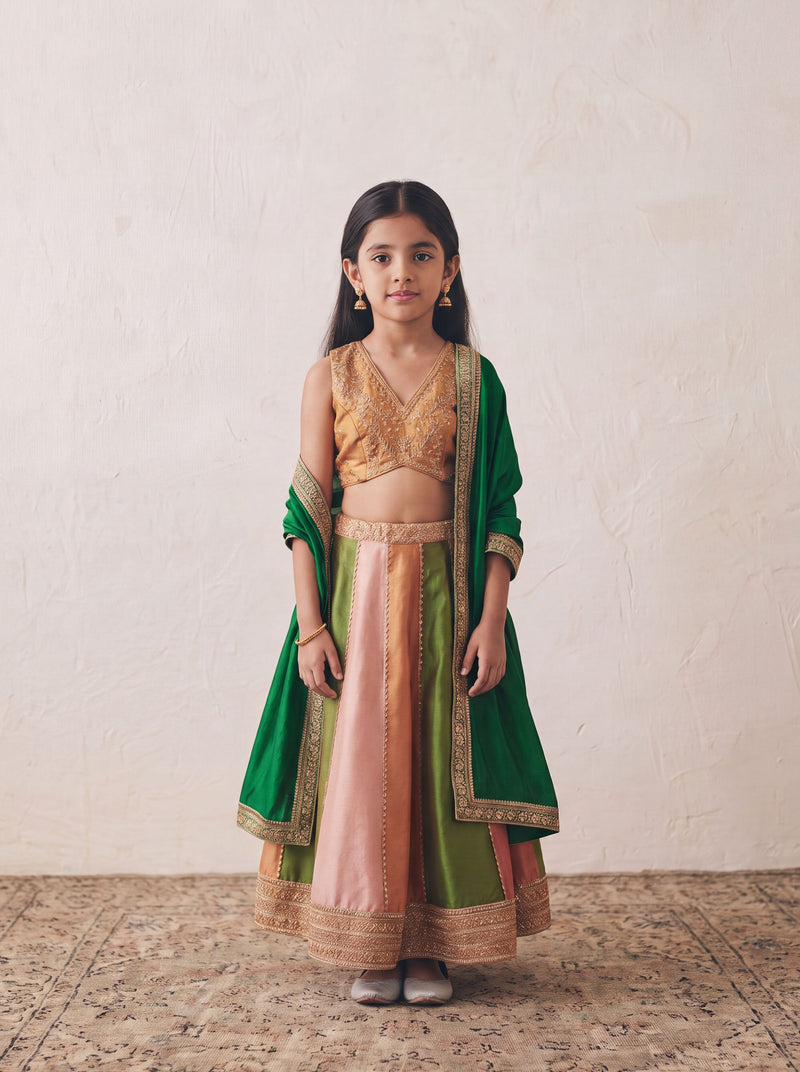
Designer Lehenga for Girls: A Parent's Buying Guide to Kids' Lehengas
Handmade by karigars Made to your measurements Fit guarantee Ships worldwide As seen in GraziaElle Graduat...
14 September 2026