
Moonga Silk: A Guide to India’s Luminous Wild Silk
Among India's many silks, moonga holds a quiet, golden glamour all its own. It is a wild silk with a natural warm sheen, a fine texture, and a richness that needs very little embellishment to feel special. Less talked-about than Banarasi or Kanjeevaram, moonga is a connoisseur's choice — and once you understand it, hard to resist. Here is your guide.
What Is Moonga Silk?
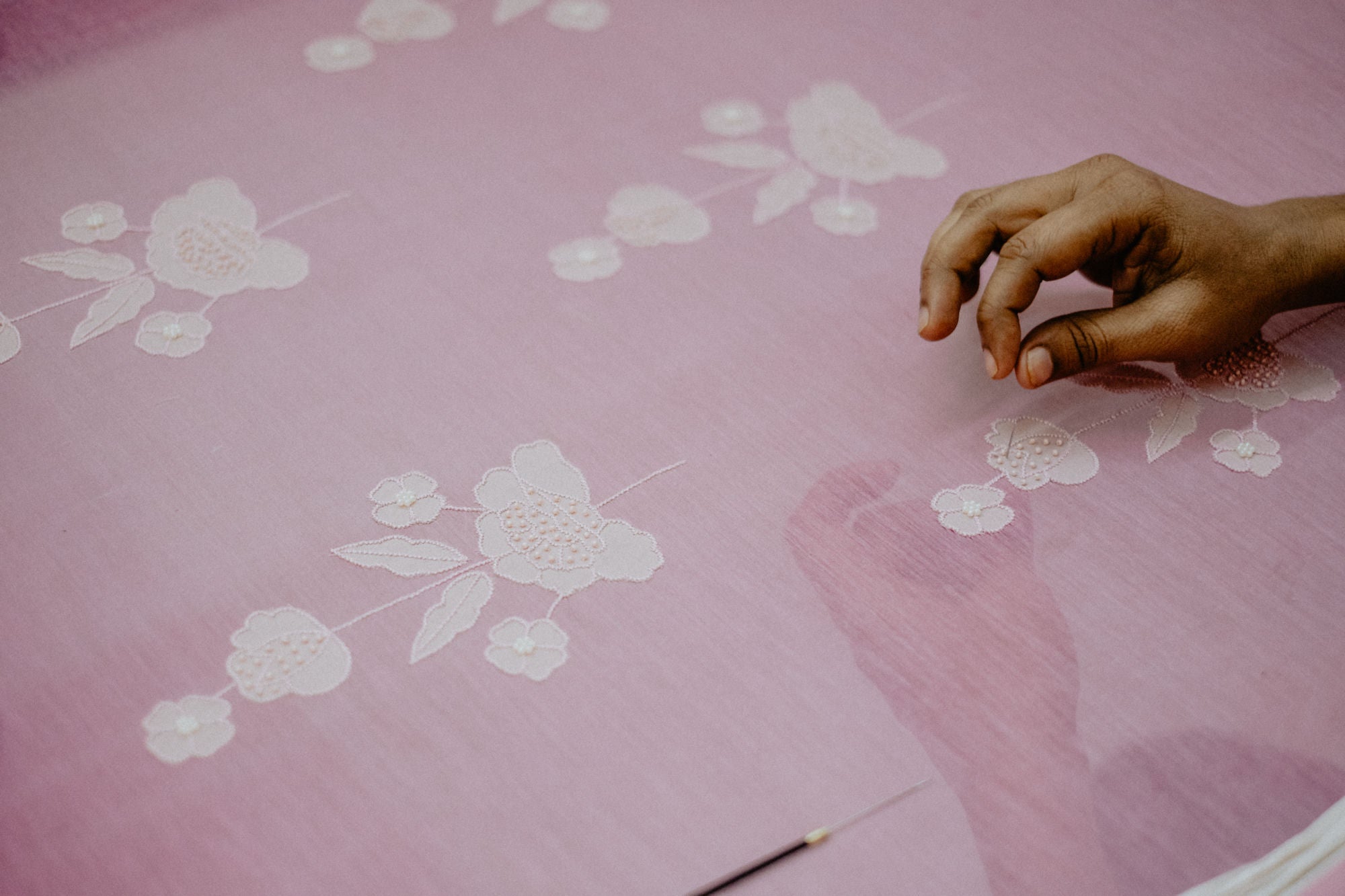
Moonga (also spelt munga) is a wild silk woven from the cocoons of silkworms that feed on aromatic leaves. Unlike cultivated mulberry silk, it has a naturally warm, golden tone and a distinctive fine slub that gives the fabric texture and body. It is durable, holds a beautiful structure, and carries a soft, luminous glow that grows richer with age — which is why moonga pieces are often treated as heirlooms.

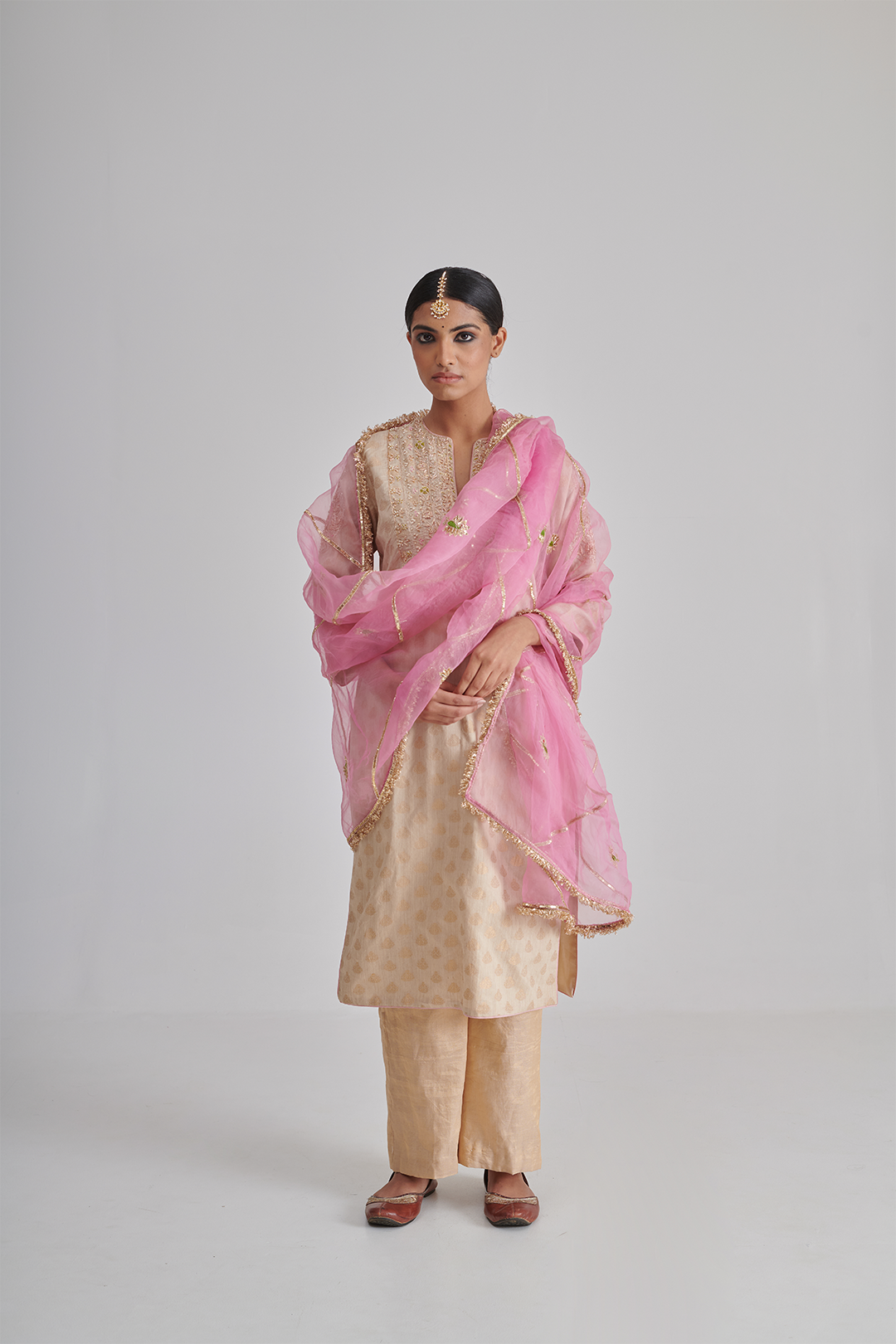
The Rangrez–Aliza Set shows the fabric in its most luxurious form — a moonga silk brocade kurta woven with intricate gold motifs, paired with silk pants in an all-over floral jaal, finished with Aari and Zardozi hand-embroidery and contrast piping.
Why Moonga Is So Prized
- A natural golden sheen. Moonga glows warmly on its own, with no need for heavy embellishment.
- Texture and body. Its fine slub gives the fabric structure and a tactile, artisanal feel.
- Durability. Moonga is one of the strongest silks — it ages beautifully and lasts for generations.
- It takes embroidery superbly. Zardozi, Aari and zari work sit richly against its textured base.
Want to know if moonga suits your occasion? WhatsApp us →
How to Wear Moonga Silk
As a refined shirt: the Noori–Nagma Shirt is a moonga check shirt with tiny hand-embroidered flowers in zardozi and aari, gold and silver threads, and a prominent motif on the back — paired with silk Chanderi pants.


As an elegant kurta set: the Sunheri–Sahana Set is a beige moonga zari silk jacquard kurta with an all-over floral pattern and hand-embroidery along the neckline and cuffs, paired with silk pants with subtle gold stripes.
As an heirloom saree: the Bano–Siya Saree is a moonga zari silk ivory drape with fine sequin work and intricate floral motifs, framed by a rich border — the kind of saree made to be kept and passed down.
Caring for Moonga Silk
Moonga is strong but, like all fine silk, rewards gentle care. Dry-clean only to preserve the natural sheen and any embroidery. Store wrapped in soft muslin rather than plastic, so the fabric can breathe, and re-fold along different lines occasionally to avoid permanent creases. Keep it away from direct sunlight and damp, and a moonga piece will only deepen in beauty over the years.
Drawn to moonga’s golden glow?
Each piece is made to order and tailored to you — message us to begin. WhatsApp us at +91 70423 11214
Standard production time is 4–5 weeks.
Frequently Asked Questions
What is the difference between moonga and mulberry silk?
Moonga is a wild silk with a natural golden tone, fine slub texture and exceptional durability, while mulberry silk is cultivated, smoother and more uniformly white. Moonga has more character and body.
Is moonga silk expensive?
Moonga is a premium silk because it is wild-harvested, durable and labour-intensive to weave. Its longevity and heirloom quality make it a worthwhile investment.
Can moonga silk be worn in summer?
Moonga is breathable and lighter than many heavy silks, so it can be worn in warmer weather, especially in shirt and lighter kurta forms — though it is most at home in festive and cooler-evening settings.
Explore our collections of heritage hand-embroidered silk.
Browse IntizaarMade to order in 4–5 weeks
Have an event date? We’ll tell you exactly when to order by.
We take a limited number of orders each month — secure your slot early.
WhatsApp me my order-by date + a shortlistNot sure where to start?
Tell us what you're dressing for and we'll help you choose — fabric, fit, colour, and timeline — over WhatsApp or on a video call.
Your Cart
Pieces from this story
All pieces →Not sure which piece, or need it by a date? Book a video consultation Ask us on WhatsApp


Keep reading
The journal →
A Guide to Indian Fabrics: 14 Weaves and Textiles, Explained
What Banarasi, Chanderi, tissue, organza, brocade, chiffon and the rest actually are — how each one drapes, what it s...
5 September 2026
Kids' Ethnic Wear Fabric Guide: What's Actually Comfortable
Which fabrics work for children's ethnic wear and which cause a meltdown — cotton, Chanderi, silk, tissue and satin c...
26 August 2026
Caring for Kids' Hand-Embroidered Clothes (and Handing Them Down)
How to care for kids' hand-embroidered ethnic wear — cleaning food and grass stains, storing between wears, and passi...
31 July 2026