
Solah Shringar: The Sixteen Adornments of an Indian Bride
Solah shringar — the "sixteen adornments" — is the traditional grammar of Indian bridal beauty. From the bindi on the forehead to the bichhiya on the toes, it's a head-to-toe sequence of sixteen elements, each with its own meaning, that together transform a woman into a bride. The number and the list vary a little by region, but the idea is constant: adornment as ritual, beauty as blessing. Here's the complete guide — what the sixteen are, what they mean, and how they sit against the outfit that anchors them all.
The Outfit at the Centre of It All
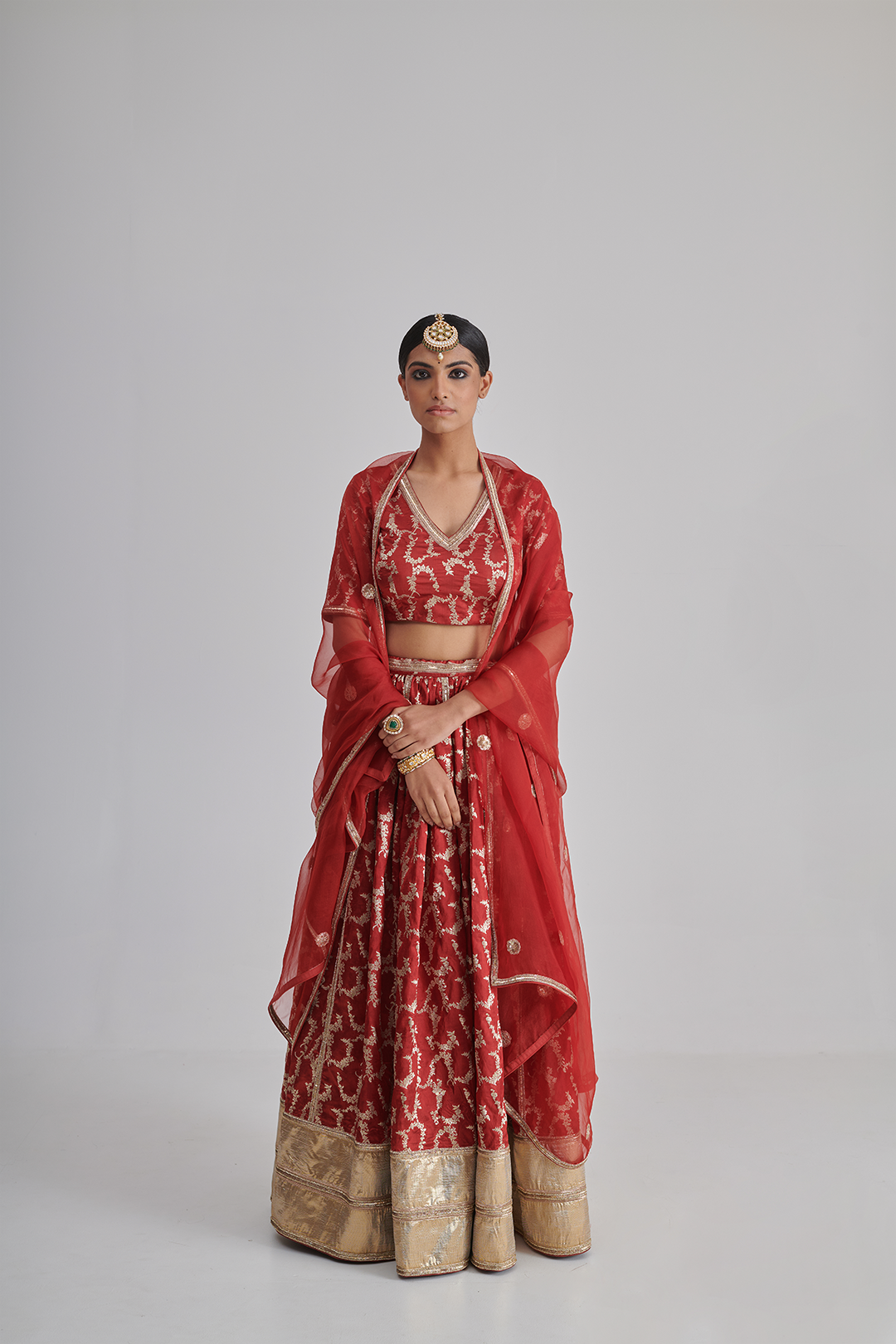
The sixteen adornments frame a bride, but they gather around a single anchor — the bridal outfit itself, traditionally red or a rich festive hue. A piece like the Rehmat lehenga, a rich red Varanasi silk brocade lehenga and choli adorned with intricate gold zari and a broad gold border, is exactly the kind of canvas solah shringar was built for: the red and gold carry the auspicious weight, and every ornament reads against it. For brides moving away from classic red, the Rumi lehenga in rani pink and orange ombre brings the same festive richness in a modern palette.

The Sixteen Adornments, Head to Toe
While regional lists differ, a widely-followed version of solah shringar runs roughly like this:
- 1. Bindi — the dot on the forehead, marking the brow chakra.
- 2. Sindoor — vermilion in the hair parting, the clearest sign of marriage.
- 3. Maang tikka — the pendant on the centre parting, resting on the forehead.
- 4. Kajal — kohl-lined eyes.
- 5. Nath — the nose ring, often chain-linked to the hair.
- 6. Earrings — jhumkas, chandbalis, or kaan chains.
- 7. Mangalsutra / haar — the sacred necklace and layered bridal necklaces.
- 8. Mehndi — henna on the hands and feet.
- 9. Bangles / chooda — the bridal bangles, red-and-white for many North Indian brides.
- 10. Baajuband — the armlet worn on the upper arm.
- 11. Haath phool / ring — the hand harness and rings.
- 12. Kamarbandh — the waist belt that cinches the drape.
- 13. Payal — the anklets.
- 14. Bichhiya — the silver toe rings.
- 15. Keshapasharachana — the styled and adorned hair, often with a gajra.
- 16. Perfume & the outfit — fragrance and the bridal attire that completes the transformation.
How the Adornments Read Against Colour
Solah shringar isn't only for red-clad brides. Gold jewellery glows against deep jewel tones and fuchsia — the Rahi saree in fuchsia-pink Banarasi silk with gold woven florals is a gorgeous modern base for a full set of gold ornaments. Against ivory or pastel, silver and pearl adornments read cooler and more contemporary. The art of shringar is matching the metal and stones to the outfit's undertone, so the sixteen elements feel like one composition rather than sixteen separate pieces.


Building Your Shringar Without Overloading
Not every modern bride wears all sixteen, and that's entirely traditional too — the list is a menu, not a mandate. The key is balance: let the outfit and one or two hero adornments lead, and keep the rest supporting. If you're wearing a heavily embroidered lehenga, edit the jewellery so the two don't compete; if the outfit is more restrained, the shringar can carry more of the drama. We've written dedicated guides to many of these adornments individually — the maang tikka, nath, bangles and chooda, kamarbandh, bajuband, haath phool, payal, bichhiya, and gajra — if you want to go deeper on any one.
The Canvas for Your Shringar
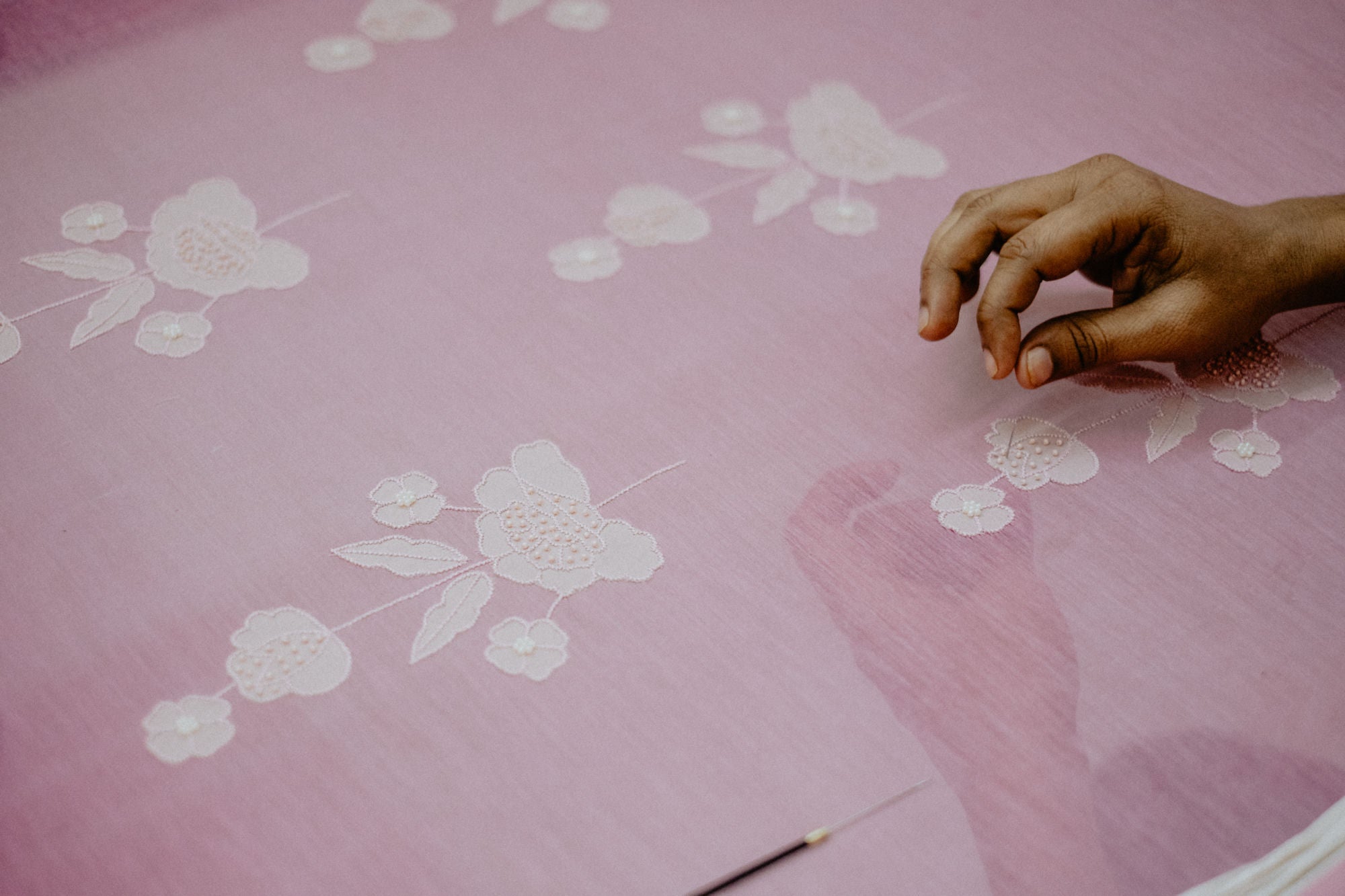
Every bridal piece is hand-embroidered by karigars in Jaipur and cut to your measurements over 4–5 weeks — the foundation the sixteen adornments are built upon. Explore our lehengas and sarees.
Shop Bridal WearFrequently Asked Questions
What is solah shringar?
Solah shringar is the traditional set of sixteen adornments of an Indian bride, running head to toe from the bindi and maang tikka to the bichhiya (toe rings). Each element carries its own meaning, and together they ritually transform a woman into a bride, gathered around the anchor of the bridal outfit itself.
What are the sixteen adornments of solah shringar?
A widely-followed list includes bindi, sindoor, maang tikka, kajal, nath, earrings, mangalsutra and necklaces, mehndi, bangles or chooda, baajuband, haath phool and rings, kamarbandh, payal, bichhiya, adorned hair with gajra, and finally perfume with the bridal outfit. The exact sixteen vary by region and tradition.
Does a bride have to wear all sixteen adornments?
No — solah shringar is a menu rather than a mandate, and many modern brides wear a curated selection. The key is balance: let the outfit and one or two hero adornments lead, and keep the rest supporting, so the whole look reads as one composition rather than competing pieces.
Made to order in 4–5 weeks
Have an event date? We’ll tell you exactly when to order by.
We take a limited number of orders each month — secure your slot early.
Not sure where to start?
Tell us what you're dressing for and we'll help you choose — fabric, fit, colour, and timeline — over WhatsApp.
Your Cart
Pieces from this story
All pieces →
Keep reading
The journal →
Best Plus-Size Ethnic Wear Brands in India 2026: Where to Actually Find Your Size
Handmade by karigars Made to your measurements Fit guarantee Ships worldwide As seen in GraziaElle Graduat...
17 September 2026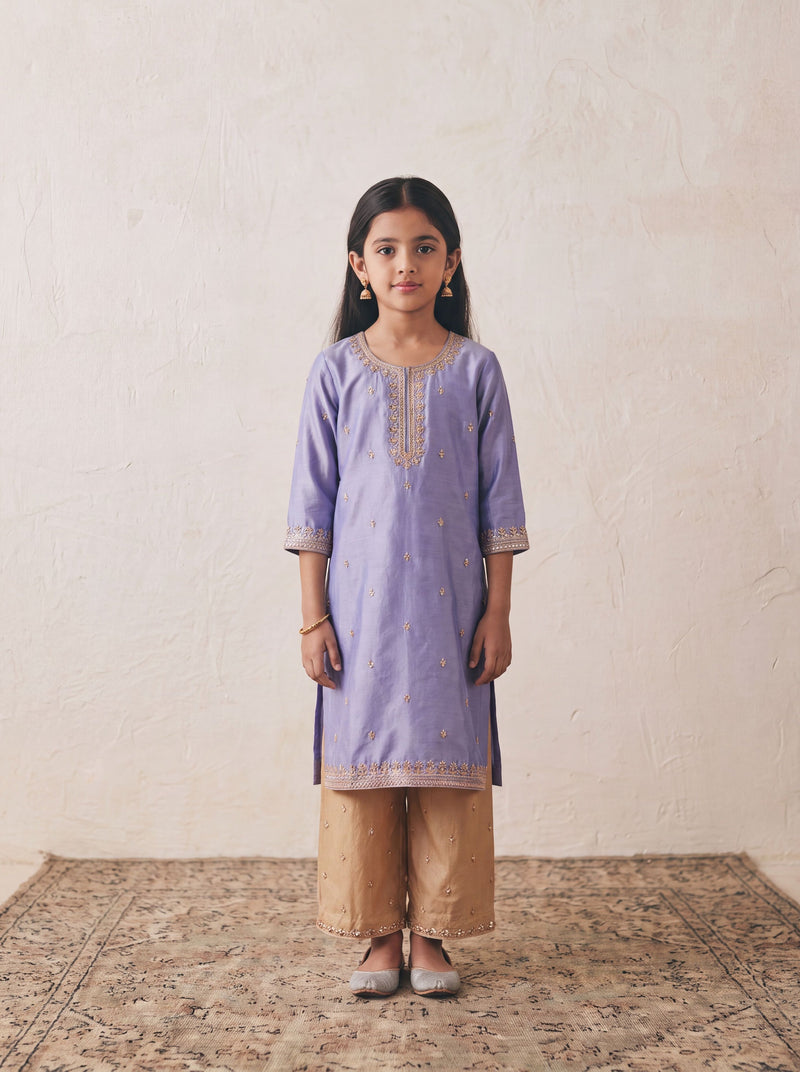
Kurta Sets for Girls: A Parent's Buying Guide to Kids' Kurta Sets
Handmade by karigars Made to your measurements Fit guarantee Ships worldwide As seen in GraziaElle Graduat...
17 September 2026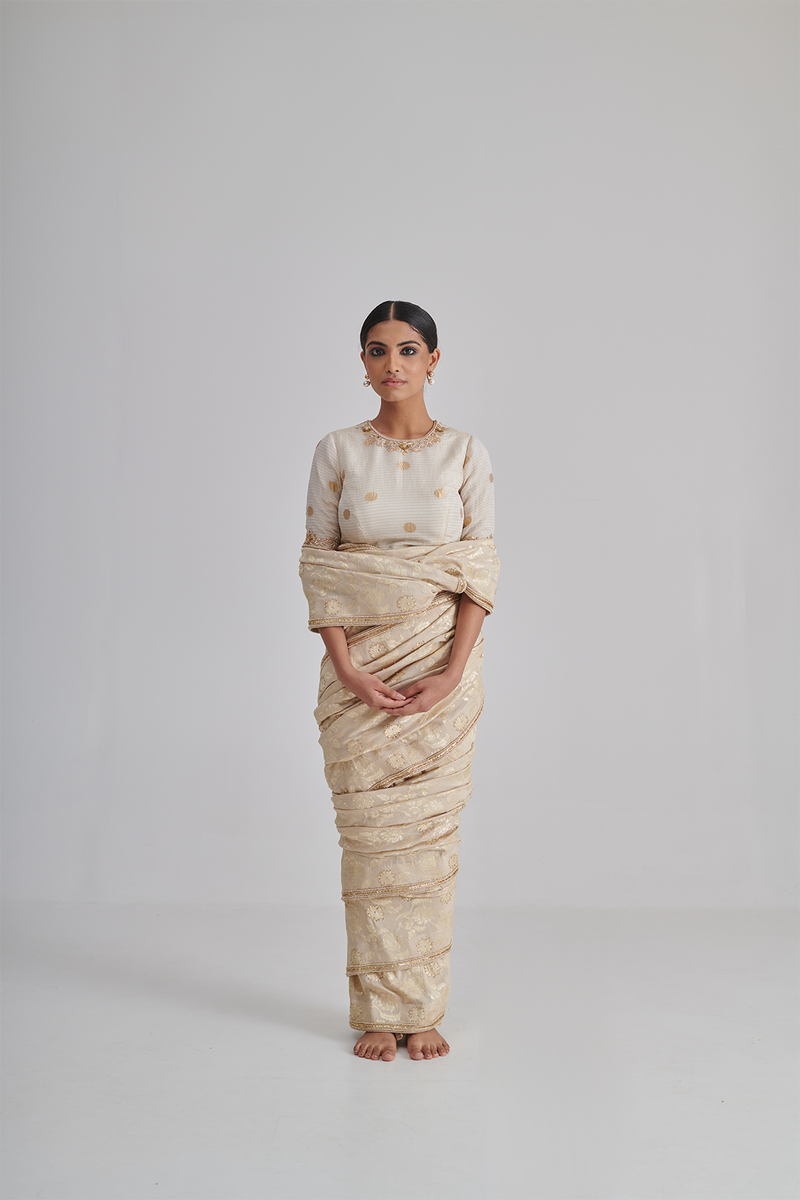
Gifts for Your Mother-in-Law: Indian Outfits That Don't Feel Like a Formality
Handmade by karigars Made to your measurements Fit guarantee Ships worldwide As seen in GraziaElle Graduat...
17 September 2026