Zari — the golden thread of Indian textile heritage — transforms fabric into wearable treasure. This metallic embroidery technique has adorned Indian garments for centuries, from royal courts to modern celebrations. Our handcrafted zari pieces continue this tradition with master karigars who have inherited this art through generations.
Zari work dates back to the Mughal era when gold and silver threads were woven into fabrics for royalty. The word "zari" comes from the Persian word "zar" meaning gold. Traditional zari was made from real gold or silver wire wrapped around a silk or cotton core. Today, both traditional and modern zari are used, but the technique remains the same — each thread is carefully placed by hand to create intricate patterns.
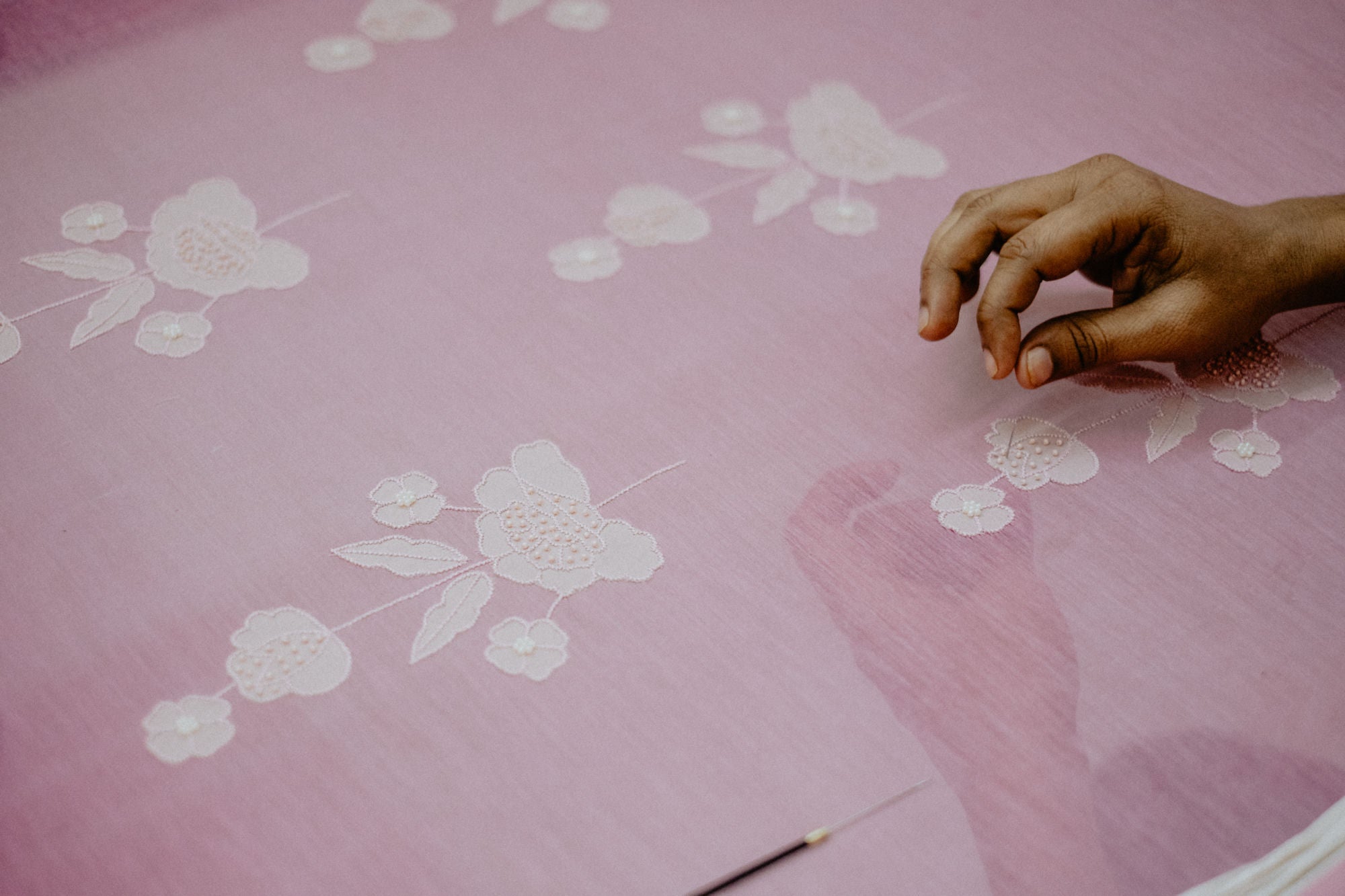
In our atelier, karigars work with fine metallic threads, weaving them through the fabric to create floral motifs, geometric patterns, and borders. Zari embroidery requires exceptional precision — a single mistake means unravelling hours of work. The metallic threads catch light from every angle, creating the characteristic golden shimmer that makes zari work unmistakable.
Every piece features authentic hand-embroidered zari work by master karigars in Jaipur. Made to order with 3-4 weeks of dedicated craftsmanship.
Zari work is inherently festive — the golden shimmer makes any outfit celebration-ready. For a classic look, pair a zari-embroidered saree with gold kundan jewellery. For modern styling, let the zari be the only metallic element — skip gold accessories and choose oxidised silver for contrast.
Zari work on darker fabrics (navy, emerald, maroon) creates a particularly regal effect. On lighter fabrics (ivory, blush), it adds subtle shimmer without overwhelming.
Zari embroidery requires careful handling. Always dry clean — moisture can tarnish metallic threads over time. Store wrapped in soft muslin away from humidity. Avoid spraying perfume directly on zari work. When ironing, always use the reverse side with a pressing cloth.
Is real gold used in zari work?
Traditional zari uses gold or silver-coated threads. Our pieces use high-quality metallic zari that provides the same lustre and longevity at a more accessible price point.
Does zari work tarnish over time?
With proper care and storage, quality zari retains its shine for decades. Keep away from moisture and direct sunlight when storing.
Can zari work be worn casually?
Light zari borders and minimal zari motifs work for semi-casual settings. Heavy all-over zari is best reserved for festive and formal occasions.
How long does it take to create zari embroidery?
Depending on the complexity, a single piece can take 2-6 weeks of dedicated hand embroidery. Our master karigars work on one piece at a time to ensure precision.