
What to Wear to an Assamese Wedding: A Guest's Guide
Our founder is from Tinsukia, in Upper Assam, which means we have opinions about this one. An Assamese wedding is quieter than most Indian weddings and considerably more beautiful for it — no baraat with a band, no all-night sangeet as standard, and a colour palette built almost entirely around one thing: the honey-gold of muga silk, a fibre produced nowhere else on earth.
If you have been invited to one and have no idea what to wear, this is the guide.
The Functions You Are Likely Invited To
- Juron / Joron. The groom's family visits the bride's home with gifts — the mekhela chador she will be married in, jewellery, sindoor, a whole betel-nut and paan tradition. Daytime, at home, family-heavy.
- Tel Diya and Nuoni. The ceremonial bath and oiling, with turmeric — the Assamese equivalent of the haldi, and much gentler than the North Indian version.
- Biya / Biya Xobha. The wedding itself, usually held at the bride's home or a community hall, in the evening. This is the main event.
- Ghor Uthowa / Khuba Khubi. The reception at the groom's home after the bride arrives.
Almost everything happens indoors or under a pandal, and there is far less of the marathon multi-day structure you get in Punjabi or Marwari weddings. Two or three outfits will usually cover you.
The Palette: Ivory, Cream and Gold
This is the crucial thing to know. Assamese wedding dressing is not built around red. The mekhela chador — the two-piece drape that is the traditional dress of Assam — is classically off-white, cream or ivory, with a woven border in muga gold, and often red or maroon detailing in the border and blouse rather than the body.
So the correct instinct for a guest is: light base, gold border, red or deep colour as an accent. Turning up in a full crimson-and-heavy-gold North Indian bridal-adjacent outfit will not offend anyone, but it will look conspicuously out of key.
A note of honesty before we go further: we do not weave mekhela chador, and we do not weave muga. Muga is produced only in Assam, by weavers there, and if you can source a real one for the occasion you should. What we do make are hand-embroidered ivory, cream and antique-gold pieces that sit comfortably in that palette — for guests who want to dress in key without pretending to wear Assamese dress.
Ivory and Muga-Gold Sarees
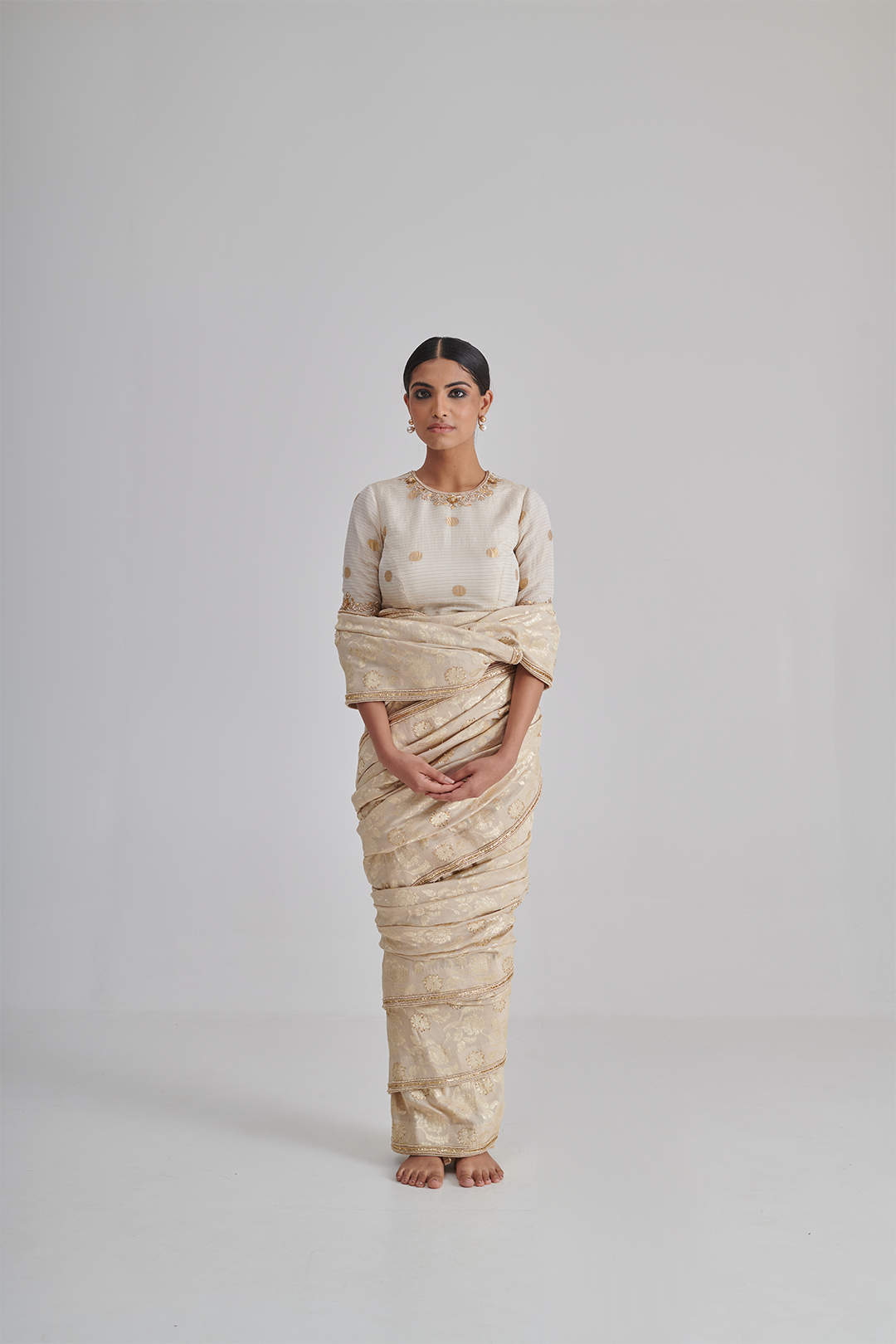
The Bano moonga zari silk saree with Siya blouse is the closest thing in our collection to the register of the day — ivory moonga zari silk with fine sequin work in floral motifs, delicate gold embroidery and a rich border, paired with a blouse in golden polka dots with embroidery around the neckline and sleeves. The ivory-with-a-gold-border structure is exactly the visual logic of a mekhela chador, arrived at from a different direction.
The Shanvi saree is soft ivory organza with a hand-embroidered border running the full length of the drape in marodi, gold zari, resham and beadwork in coral and gold, finished with tassels at the pallu corners.


For antique gold rather than ivory, the Taraana saree is luminous tissue in a soft antique gold with resham floral and paisley vine embroidery along the borders and pallu — a colour that is essentially the muga register, translated.
For the Daytime Functions
Juron and Nuoni are daytime, at home, and mostly seated on the floor. A saree is more effort than the occasion needs.
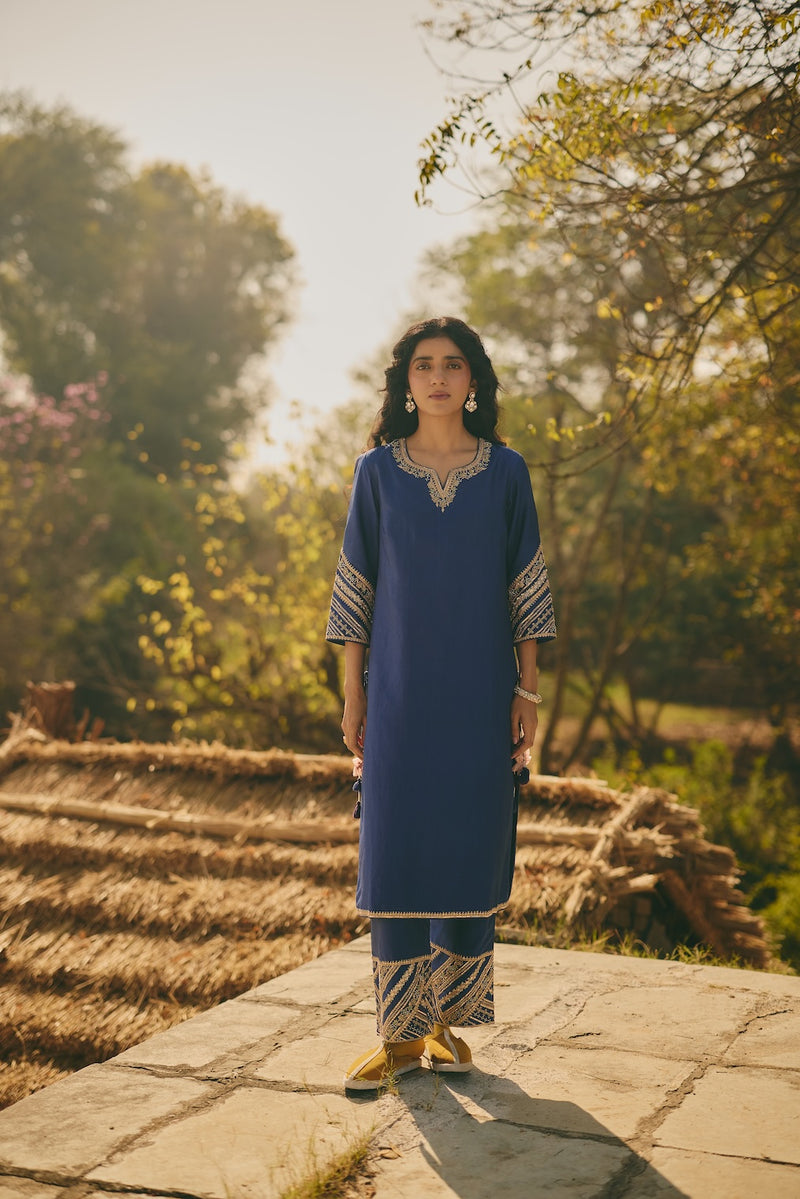
The Naina ivory cotton kurta with Ahalya pant is cotton with delicate hand-embroidered floral motifs at the neckline, cuffs and pant hem — light, appropriate, and easy to sit cross-legged in for two hours. The Eila ivory and gold kurta with Riya pant steps it up: silk-cotton jacquard with detailed gold embroidery in floral and vine motifs, a square neckline, and a zari-stripe pant with gold detailing at the hem.
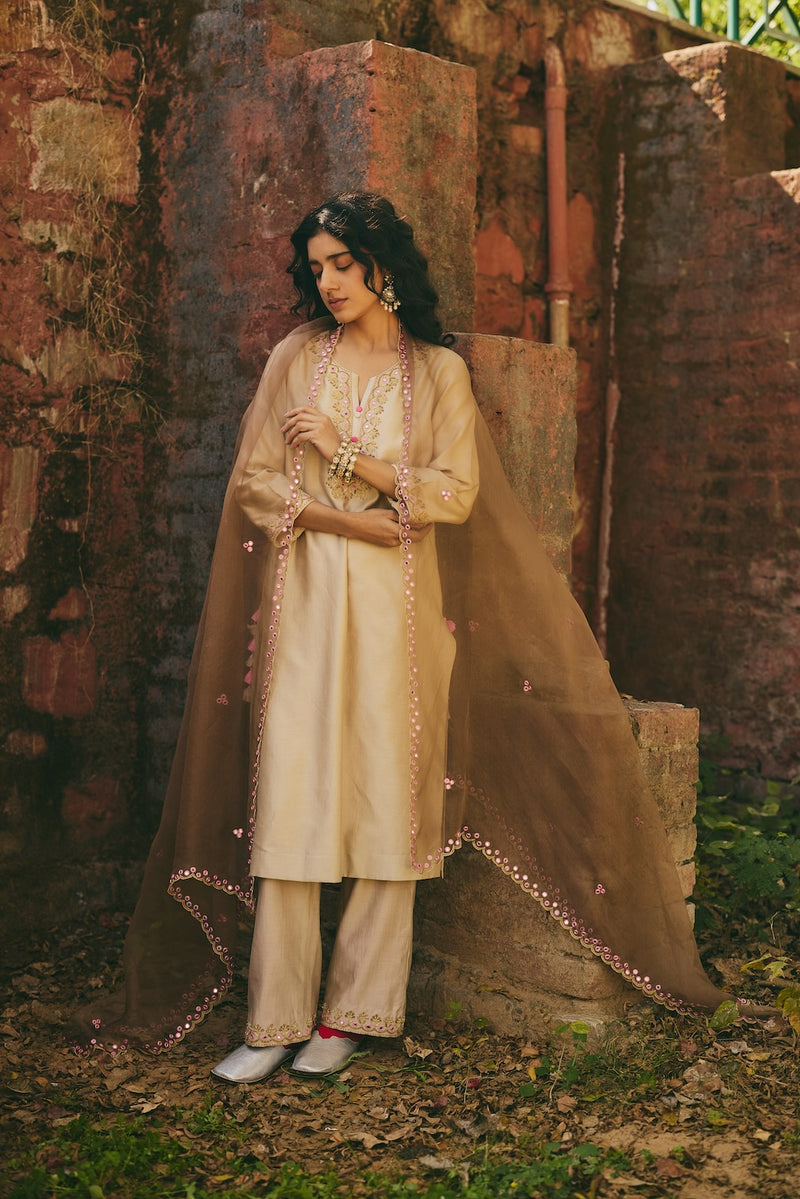
The Mirza ivory silk kurta with Raina pant carries zardozi floral and vine motifs in gold and pink with a rounded split neckline and matching embroidered borders at the cuffs — the version to wear if you are close family.

For the Biya Itself
The wedding evening is the one to dress properly for. If ivory feels too close to the bride, this is where a deeper colour with a gold border works — a red, a deep green or an antique-gold tissue.
The Chandbeli kurta with Badli sharara is soft ivory satin with an aari floral jaal, multicolour resham threadwork, French knots, sequins and cutdana, paired with a sheer organza sharara — festive without being loud, which is the right note for an Assamese wedding. The Zariya saree in a soft mint green Banarasi base with diagonal bands of sequins and gota in antique gold is a good alternative if you want colour with a gold structure.
Etiquette Worth Knowing
- You will be seated on the floor, often for long stretches. Choose a drape and blouse that allow it comfortably.
- It is not a shoes-on affair. Most functions are at home; you will leave footwear at the door repeatedly.
- The gamosa matters. The white-and-red woven towel-cloth you will see everywhere is a mark of respect and is offered to guests. Accept it with both hands.
- Weather is real. Assam is humid for most of the year and genuinely cold in December and January mornings. Check when you are travelling.
- Modesty is the default register. Covered shoulders, covered midriff, nothing deeply cut. Assamese weddings run more conservative than metro Indian weddings.
- Do not wear white alone. Ivory and cream with a gold or red border is the tradition; plain unrelieved white is not festive dressing anywhere in India.
If You Want to Wear a Mekhela Chador
Guests absolutely can, and Assamese families are delighted when outsiders do. Buy it in Assam if you can — Sualkuchi, the weaving town outside Guwahati, is where the real muga and pat silk comes from. Have someone show you how to pleat the mekhela at the waist properly before the day; it is not a saree and does not behave like one.
If you are travelling for the wedding, our packing guide covers getting embroidered pieces there uncreased, and our Bihu guide covers Assam's own festival calendar.
From Upper Assam to a Workshop in Jaipur
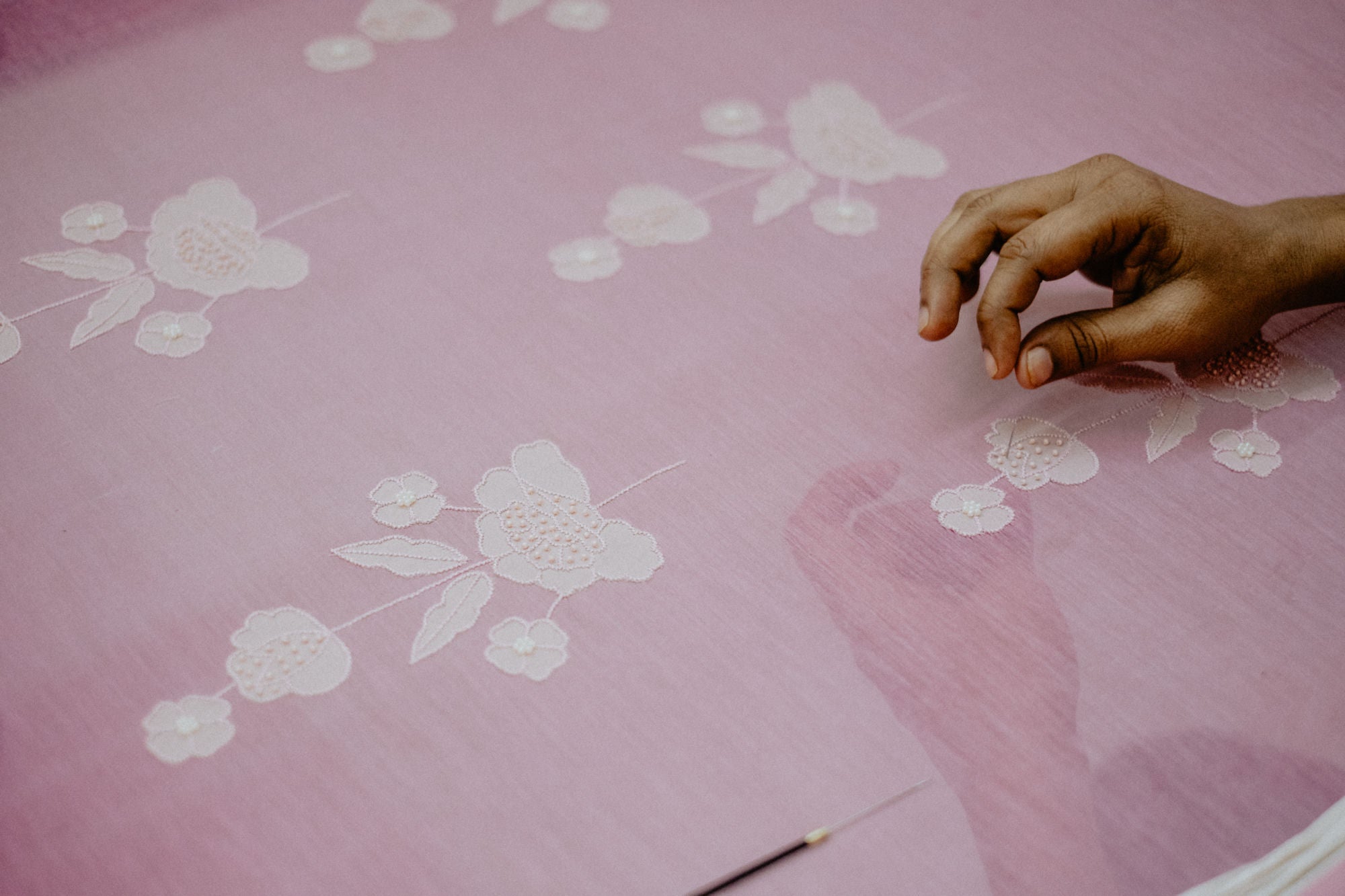
Rashika grew up in Tinsukia and now works with karigars in Jaipur. Every piece is hand-embroidered and made to your measurements over 4–5 weeks. Explore the full collection.
Shop the CollectionFrequently Asked Questions
What do guests wear to an Assamese wedding?
Ivory, cream or antique-gold outfits with a gold or red border are the register — a mekhela chador if you have one, otherwise a saree or embroidered kurta set in that palette. Keep shoulders and midriff covered; Assamese weddings run more conservative than metro Indian weddings.
What is a mekhela chador?
The mekhela chador is the traditional two-piece dress of Assam — the mekhela is a pleated wrap worn at the waist, the chador is the upper drape. It is classically woven in muga or pat silk in off-white or cream with a gold or red border, and it is pleated and worn differently from a saree.
What is muga silk?
Muga is a wild silk produced only in Assam, known for its natural golden colour, which deepens rather than fades with washing and age. It has a Geographical Indication tag and is woven principally in Sualkuchi, outside Guwahati.
Can a guest wear red to an Assamese wedding?
Yes, and red appears widely in borders, blouses and the gamosa. But the wedding palette overall is built around ivory and muga gold rather than red, so a full crimson-and-heavy-gold outfit will read out of key. Red as an accent against a light base is the more natural choice.
Made to order in 4–5 weeks
Have an event date? We’ll tell you exactly when to order by.
We take a limited number of orders each month — secure your slot early.
Not sure where to start?
Tell us what you're dressing for and we'll help you choose — fabric, fit, colour, and timeline — over WhatsApp.
Your Cart
Pieces from this story
All pieces →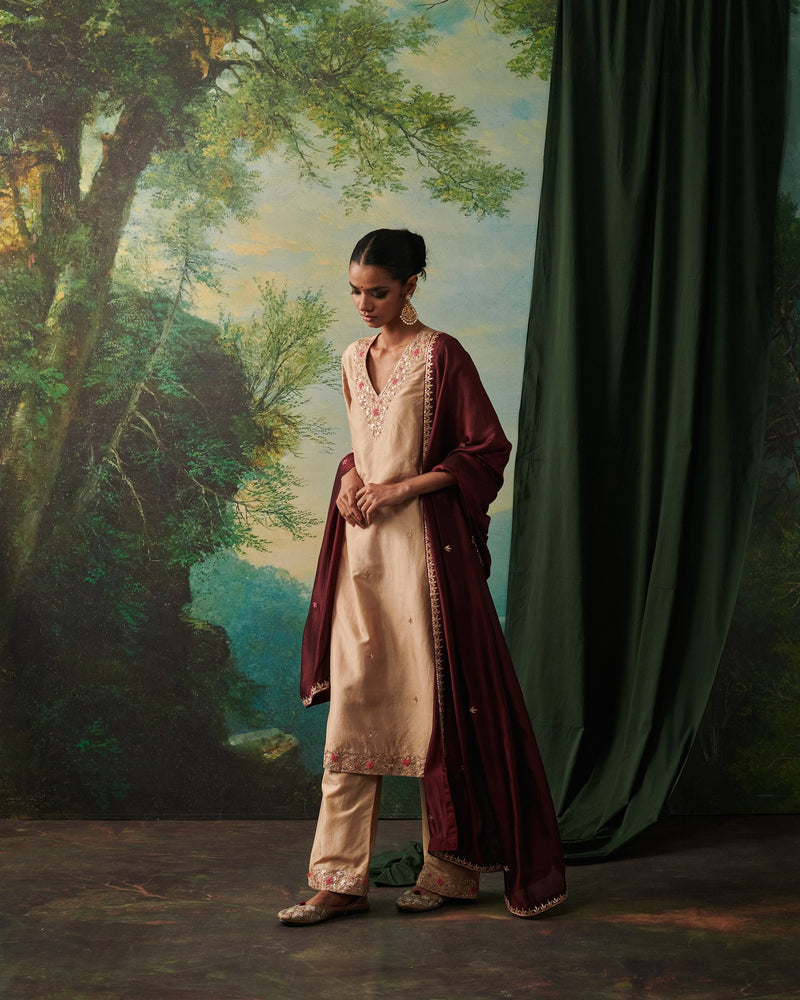
Keep reading
The journal →
Kids' Lohri & Makar Sankranti Outfit Ideas: Bonfires, Kites and Warm Layers
Handmade by karigars Made to your measurements Fit guarantee Ships worldwide As seen in GraziaElle Graduat...
5 September 2026
What Should Kids Wear to a School Annual Day or Function?
Handmade by karigars Made to your measurements Fit guarantee Ships worldwide As seen in GraziaElle Graduat...
5 September 2026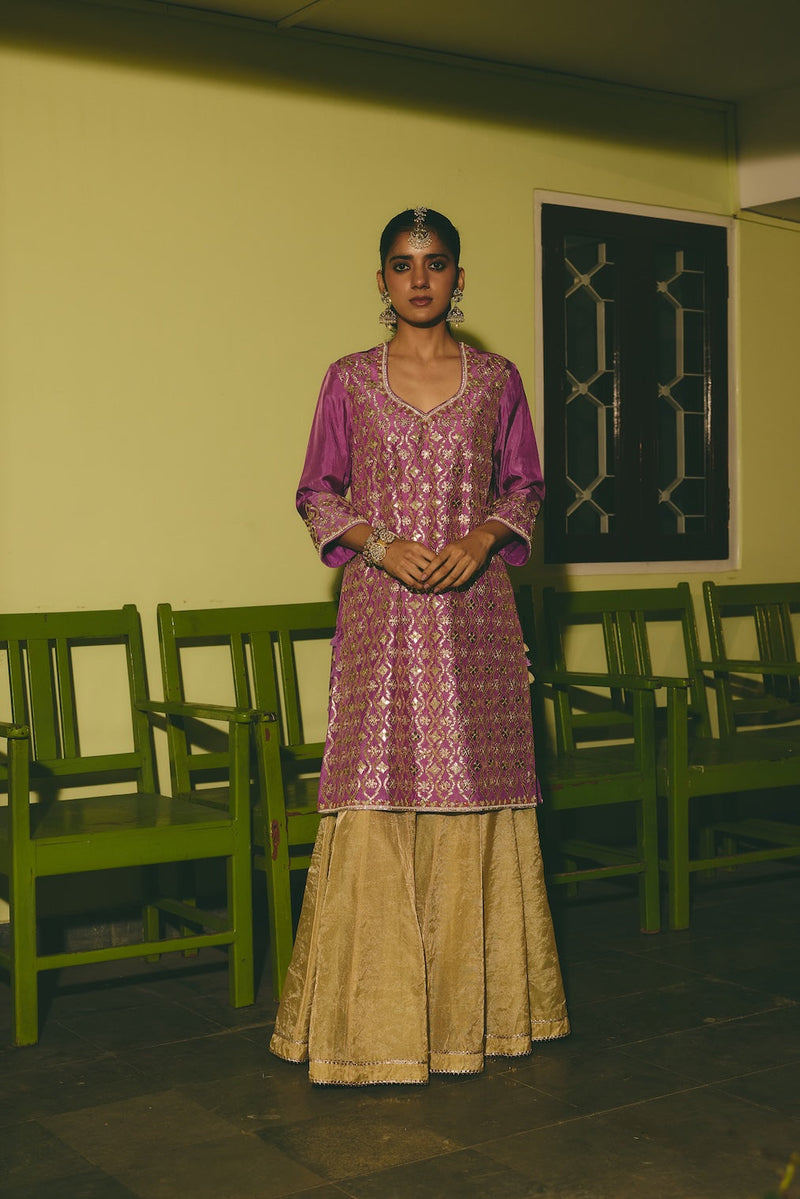
What to Wear to a Hyderabadi Wedding: A Guest's Guide
Handmade by karigars Made to your measurements Fit guarantee Ships worldwide As seen in GraziaElle Graduat...
5 September 2026