
What to Wear to a Hyderabadi Wedding: A Guest's Guide
Hyderabad dresses differently from the rest of Muslim India, and it does so on purpose. The Deccani court left the city a wardrobe of its own — the khada dupatta, the farshi pyjama, the gharara worn with a kurta rather than a shirt — and a set of functions with names you will not hear at a wedding in Delhi or Lucknow. If you have been invited to one and are not from the community, this is what you need to know before you pack.
A note on scope: this guide covers the Hyderabadi Muslim wedding, which is what most people mean by the phrase. For Hindu weddings in the Telugu states, see our Telugu wedding guest guide.
The Functions
- Mangni — the engagement, where rings and gifts are exchanged. Formal, usually daytime or early evening, moderately dressy.
- Manjha — the turmeric ceremony, held separately at both homes. Yellow, informal, and everything you wear will be marked. See our manjha and mayun guide.
- Sanchaq — the groom's family sends the bride her outfit, jewellery and gifts, presented on decorated trays. A women's gathering, warm and photographed.
- Mehendi — henna, music, and a long evening seated. Dress for sitting and for hands that will be out of action.
- Nikah — the marriage contract itself. The most formal and most conservative function of the week.
- Valima — the groom's family's reception, and the glamour event. See our walima outfit guide.
- Chauthi — the fourth-day visit, when the couple return to the bride's home. Small, family-only, and lightly dressed.
What the Bride Wears — and Why It Matters to You
The traditional Hyderabadi bride wears a khada dupatta: a six-yard dupatta draped in a specific standing style over a kurta and churidar, worn with the layered jewellery of the Deccan. It is genuinely spectacular, genuinely heavy, and almost impossible to mistake for anything else.
The reason this matters for a guest is simple: the bridal look at a Hyderabadi wedding is architectural and unmissable, so nobody expects guests to compete with it, and nobody appreciates the attempt. Guests wear ghararas, shararas, anarkalis and kurta sets — the gharara being the historically Hyderabadi choice, flared from the knee with the distinctive gota-worked joint at the knee. Our guide to sharara versus gharara versus palazzo explains the difference properly, because they are constantly confused.
Dressing for the Nikah
This is the function with actual rules. Cover your arms, cover your chest, and carry a dupatta you can put over your head — the nikah is a religious ceremony and heads are covered for it, guests included. Choose something you can sit modestly in on a floor or a low sofa.
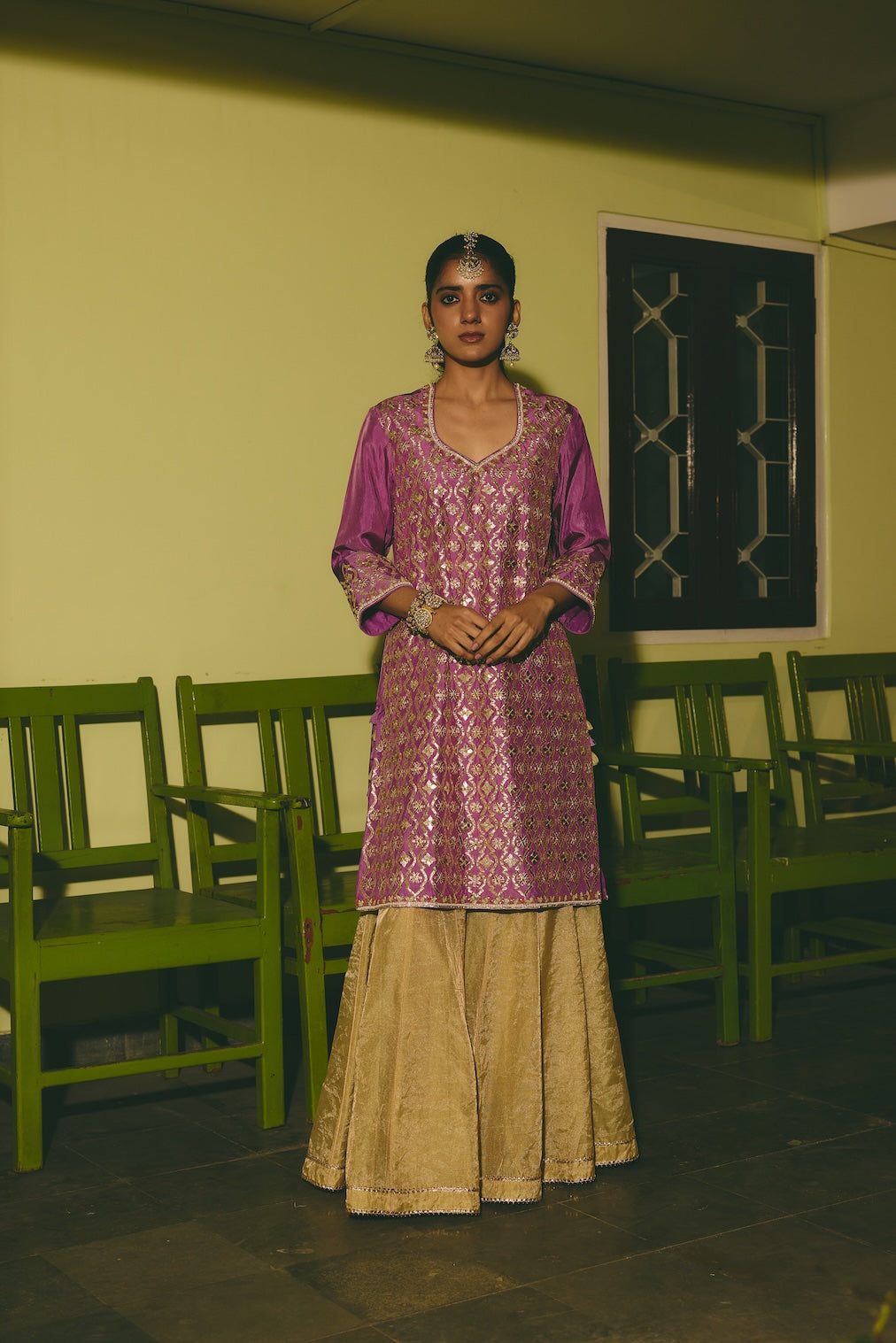
The Zehan kurta with Aabha sharara in majestic purple silk carries a dense landscape of hand-done gota appliqué, each metallic ribbon folded and stitched into rhombus and floral shapes — the Deccani instinct for gold-on-jewel-tone, in a silhouette that is entirely covered. The Noor anarkali in ivory with Mukesh work and sequin detailing is the quieter option, and reads perfectly at a morning nikah.


Dressing for the Valima
The valima is where Hyderabad shows off. Evening, formal, heavily photographed, and the one function where shimmer earns its keep.
The Ananya kurta with Tavishi sharara in luminous tissue, working an interplay of antique gold and muted green, is built exactly for banquet lighting. The Saadgi cape with Naaz blouse and Arzoo sharara in sheer black organza with scalloped edges and sequin and bead hand embroidery is the contemporary end of the same brief — black being entirely acceptable at a Hyderabadi valima, where it is read as elegant rather than inauspicious.


If you want the woven-fabric register rather than the embroidered one, the Suroor anarkali in bandhej Banarasi silk with woven gold bootis carries the festive nostalgia that Deccani dressing has always liked, and the Ferozaan anarkali in vivid fuchsia — drawn from vintage Persian tapestries — is the maximalist option for a family wedding where restraint is not the point.


Colour Notes
- Jewel tones are the Hyderabadi register. Deep purple, emerald, wine, sapphire and gold — the Deccani palette, and the one that photographs best against the city's wedding decoration.
- Pastels belong to the daytime functions — sanchaq, mangni, a morning nikah.
- Yellow for the manjha, and nothing you care about.
- Red and heavy gold are the bride's on the nikah day. At the valima she often changes to a lighter palette, but it is still not the day to arrive in bridal red.
- Black is fine at the valima and generally fine throughout, which is not the case at most Hindu weddings.
Six Things Guests Get Wrong
- Arriving at the nikah without a dupatta. The single most common error. Heads are covered; bring one even if you do not plan to use it.
- Sleeveless at the religious functions. Fine at the valima and the mehendi in many families, not at the nikah.
- Confusing gharara with sharara when ordering. They fall completely differently. Check which one you actually want.
- Underdressing the sanchaq. It reads as a small function on paper and is a significant women's gathering in practice.
- Ignoring the seating. Hyderabadi functions often involve dastarkhwan-style floor dining. A tight silhouette makes a long meal difficult.
- Forgetting the weather. Hyderabad is warm most of the year. Heavy velvet at an outdoor valima in April is a mistake you make once.
Shararas and Anarkalis, Made to Measure
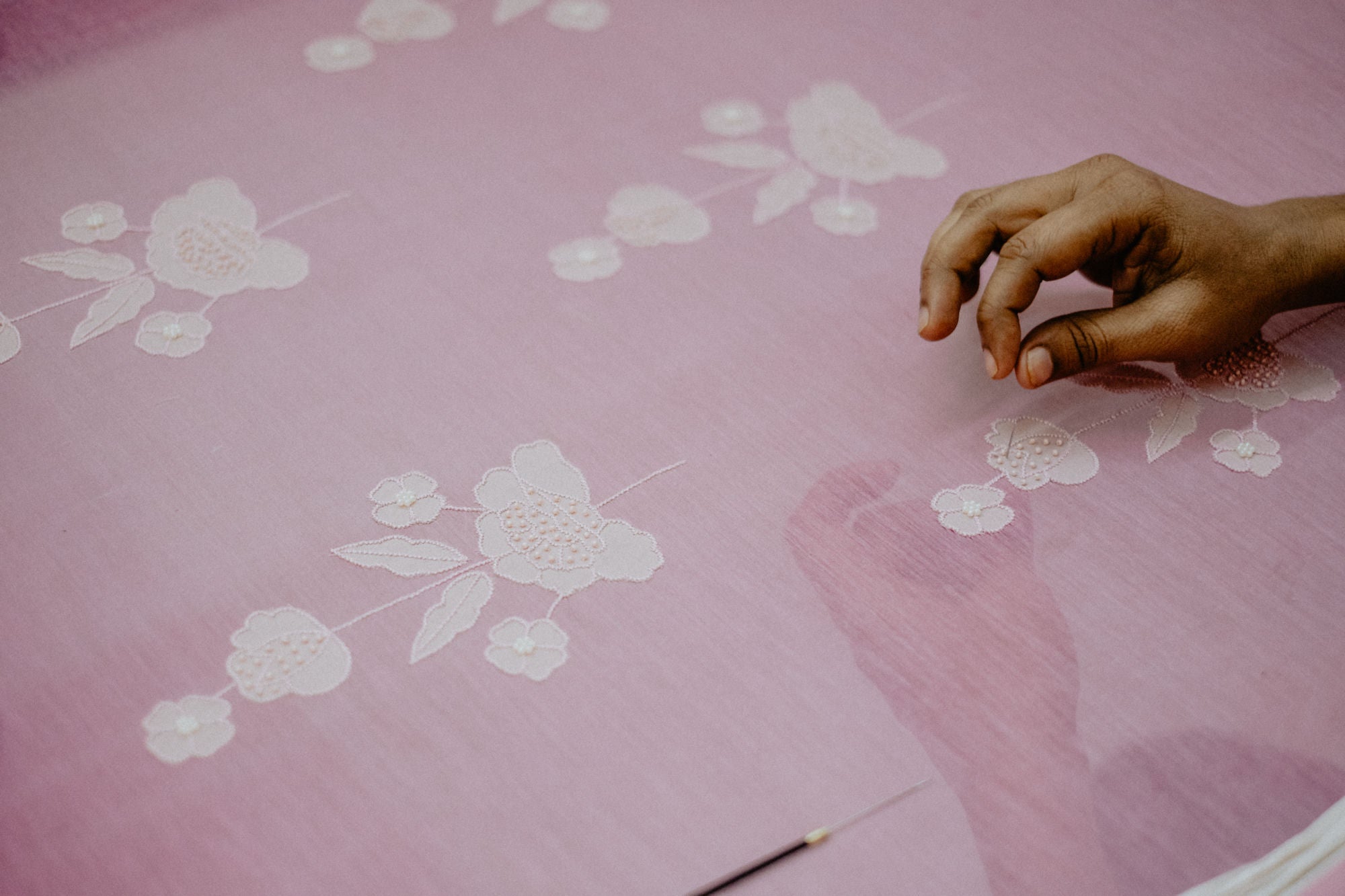
Every piece is hand-embroidered by karigars in Jaipur and cut to your measurements over 4–5 weeks — which matters on a sharara, where the fall from the knee is entirely a question of length. Browse the sharara edit, anarkalis or the nikah collection.
Shop ShararasAlso useful: our guides to what to wear to a nikah and styling a sharara set.
Frequently Asked Questions
What do guests wear to a Hyderabadi wedding?
Ghararas, shararas, anarkalis and kurta sets in jewel tones and gold. Cover the arms and carry a dupatta for the nikah, where heads are covered. The valima is the dressiest function, and black is perfectly acceptable there.
What is a khada dupatta?
The traditional Hyderabadi bridal drape — a six-yard dupatta arranged in a distinctive standing style over a kurta and churidar, worn with layered Deccani jewellery. It is a bridal garment, not a guest one.
What is sanchaq at a Hyderabadi wedding?
Sanchaq is the ceremony in which the groom's family sends the bride her wedding outfit, jewellery and gifts, presented on decorated trays. It is a women's gathering and is dressier than the name suggests.
Can you wear black to a nikah?
Generally yes — black carries no inauspicious association at Muslim weddings, and is common at the valima in particular. What matters at the nikah is coverage: arms covered, chest covered, and a dupatta over the head.
Made to order in 4–5 weeks
Have an event date? We’ll tell you exactly when to order by.
We take a limited number of orders each month — secure your slot early.
Not sure where to start?
Tell us what you're dressing for and we'll help you choose — fabric, fit, colour, and timeline — over WhatsApp.
Your Cart
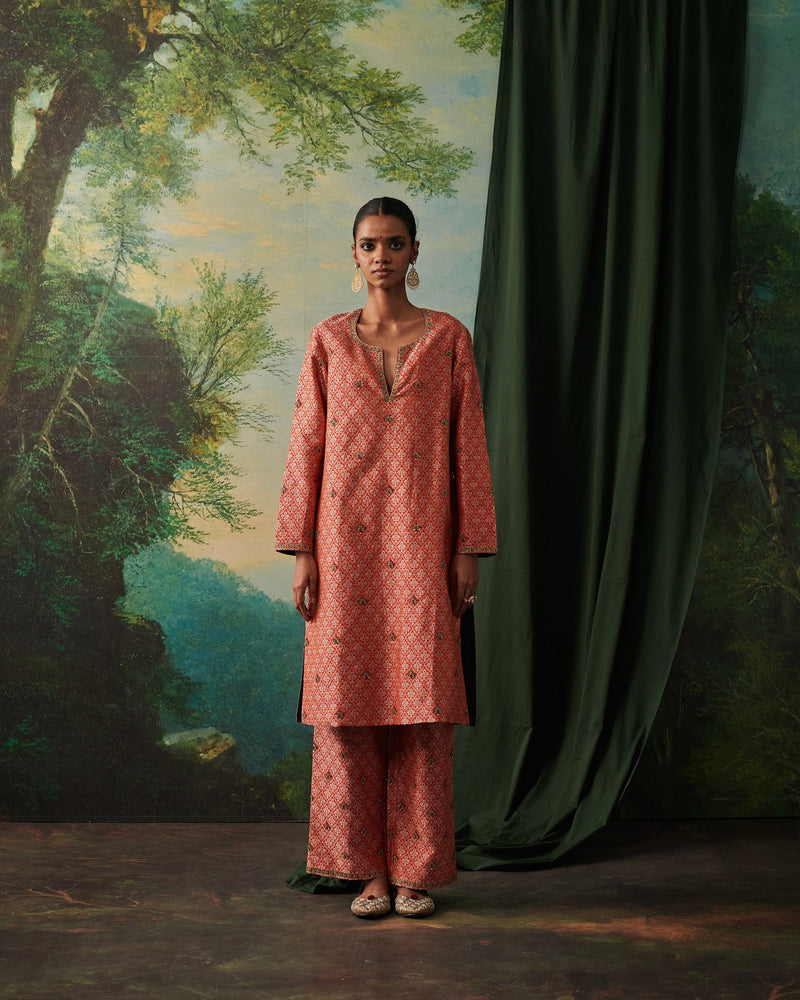
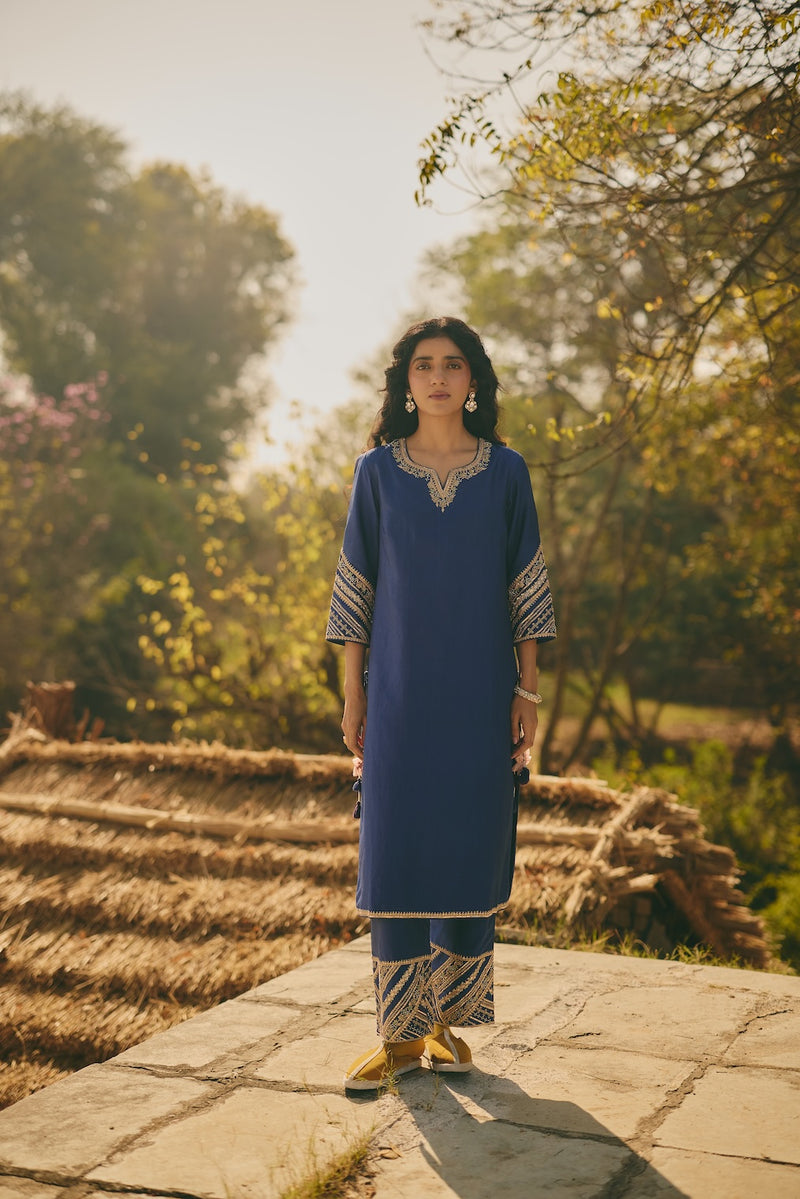
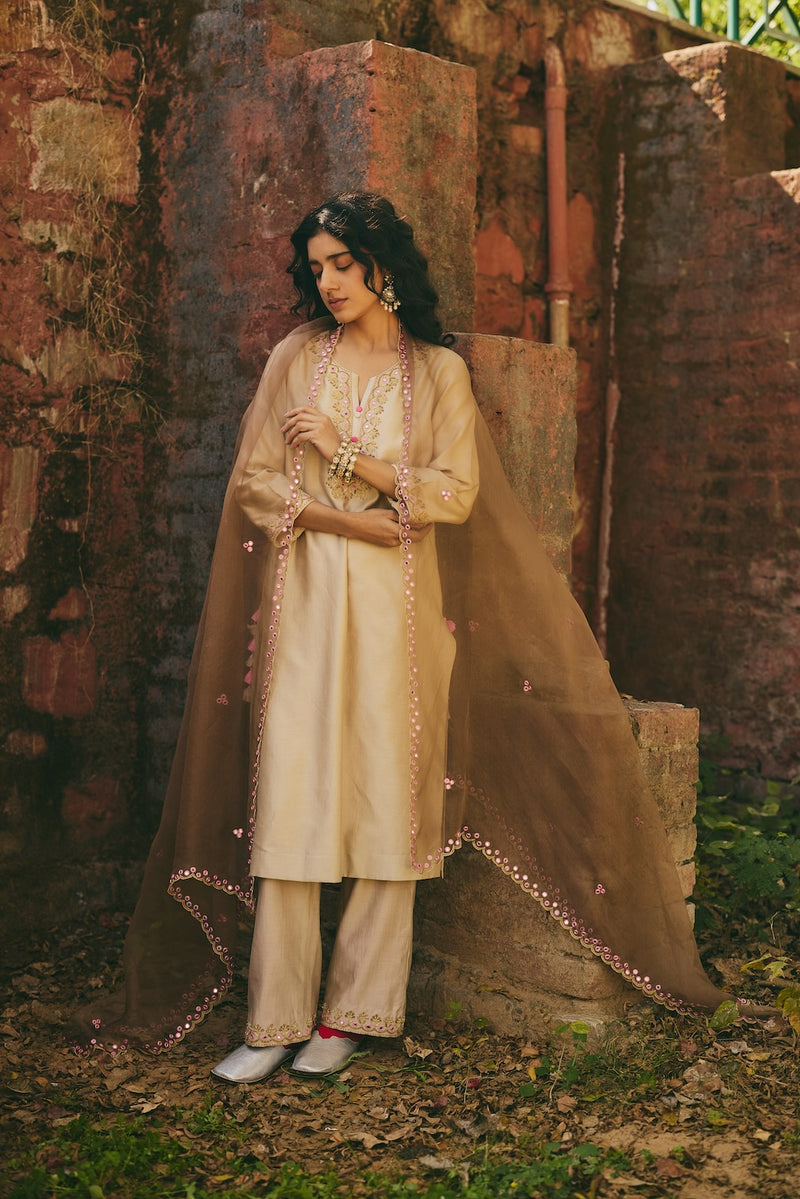
Pieces from this story
All pieces →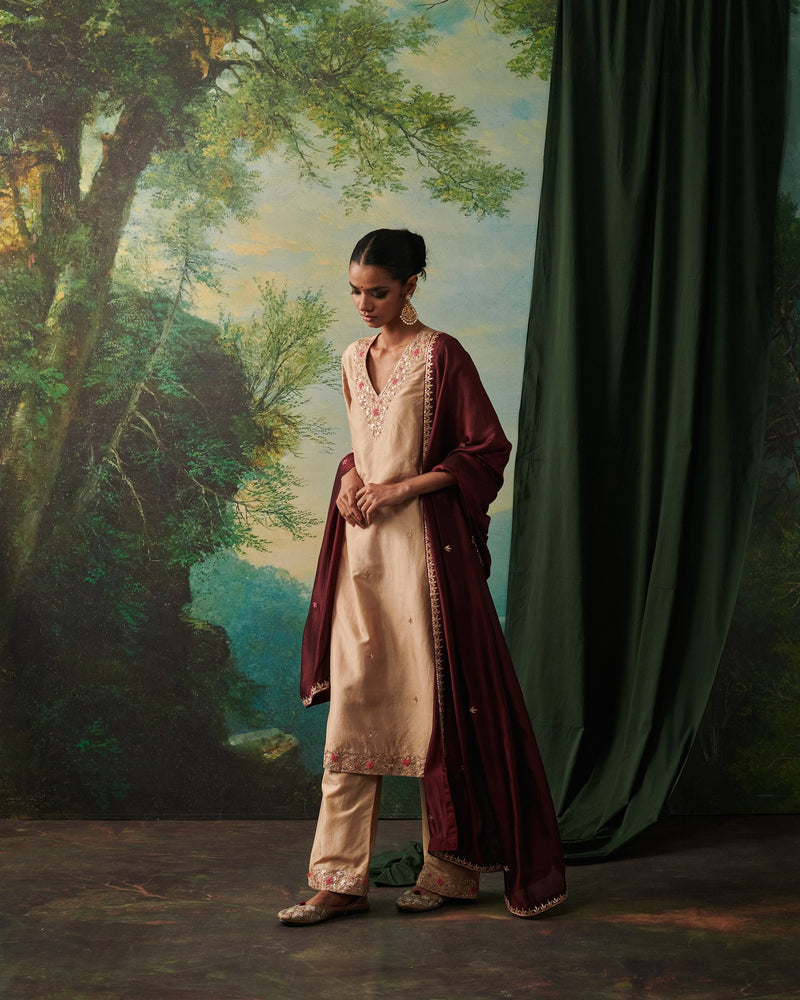
Keep reading
The journal →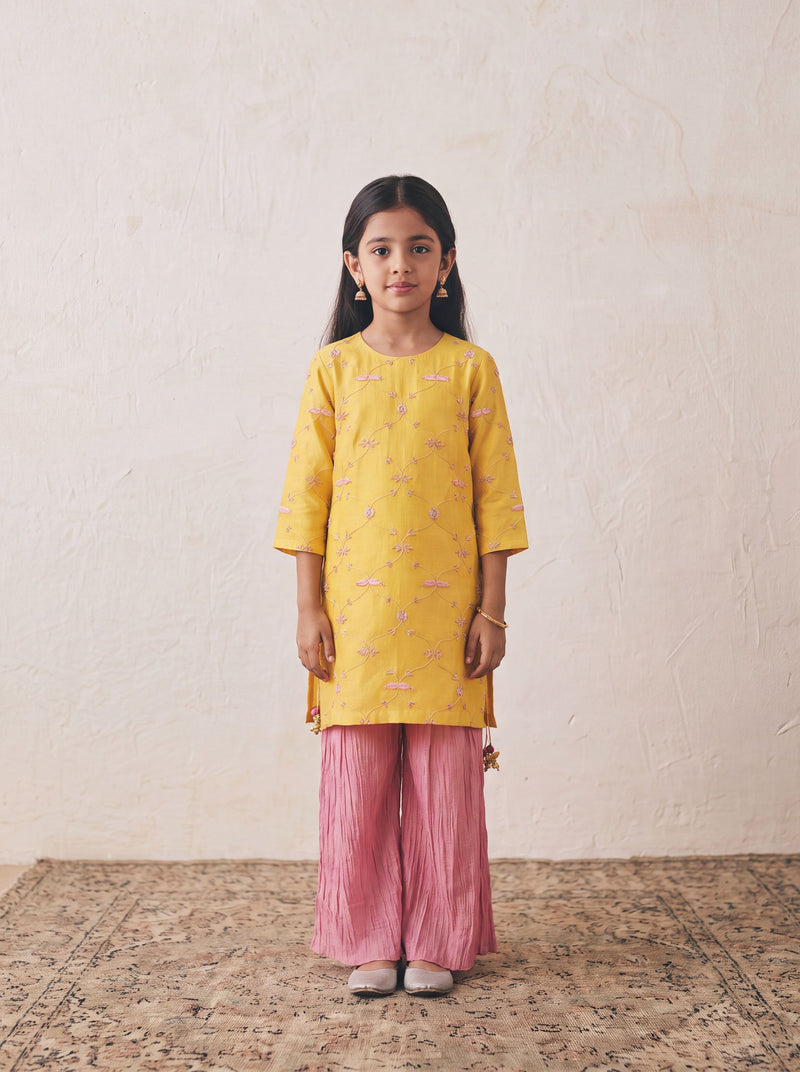
Kids' Lohri & Makar Sankranti Outfit Ideas: Bonfires, Kites and Warm Layers
Handmade by karigars Made to your measurements Fit guarantee Ships worldwide As seen in GraziaElle Graduat...
5 September 2026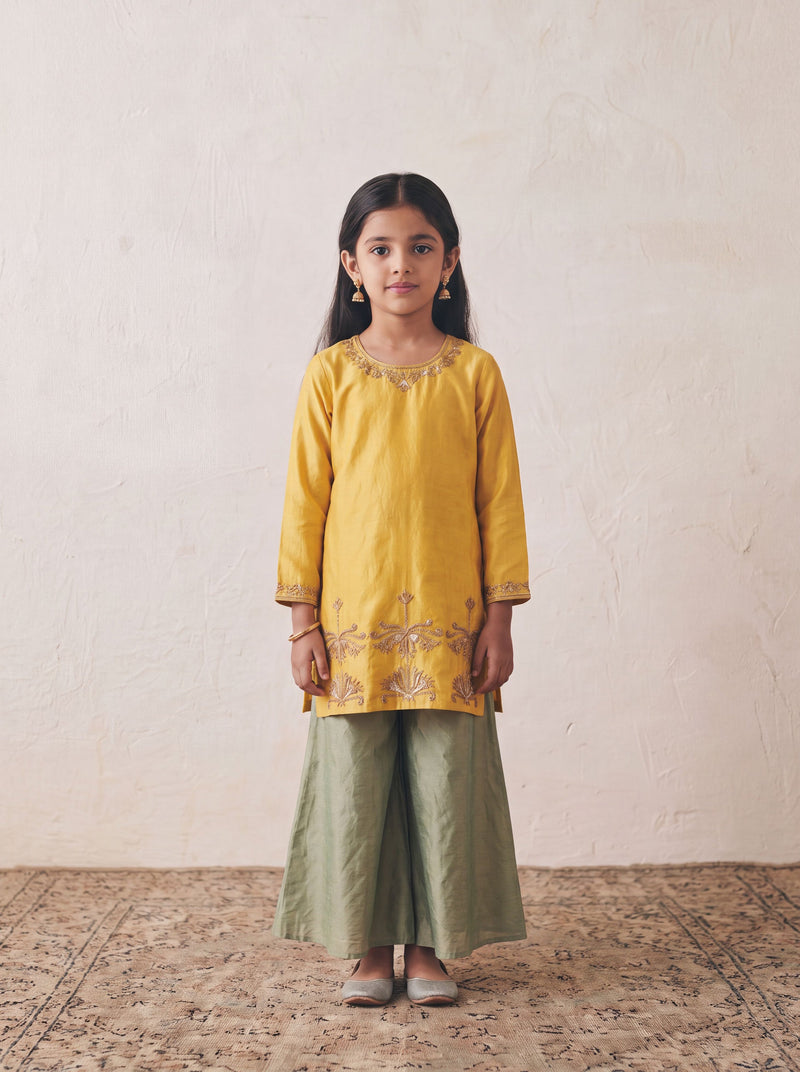
What Should Kids Wear to a School Annual Day or Function?
Handmade by karigars Made to your measurements Fit guarantee Ships worldwide As seen in GraziaElle Graduat...
5 September 2026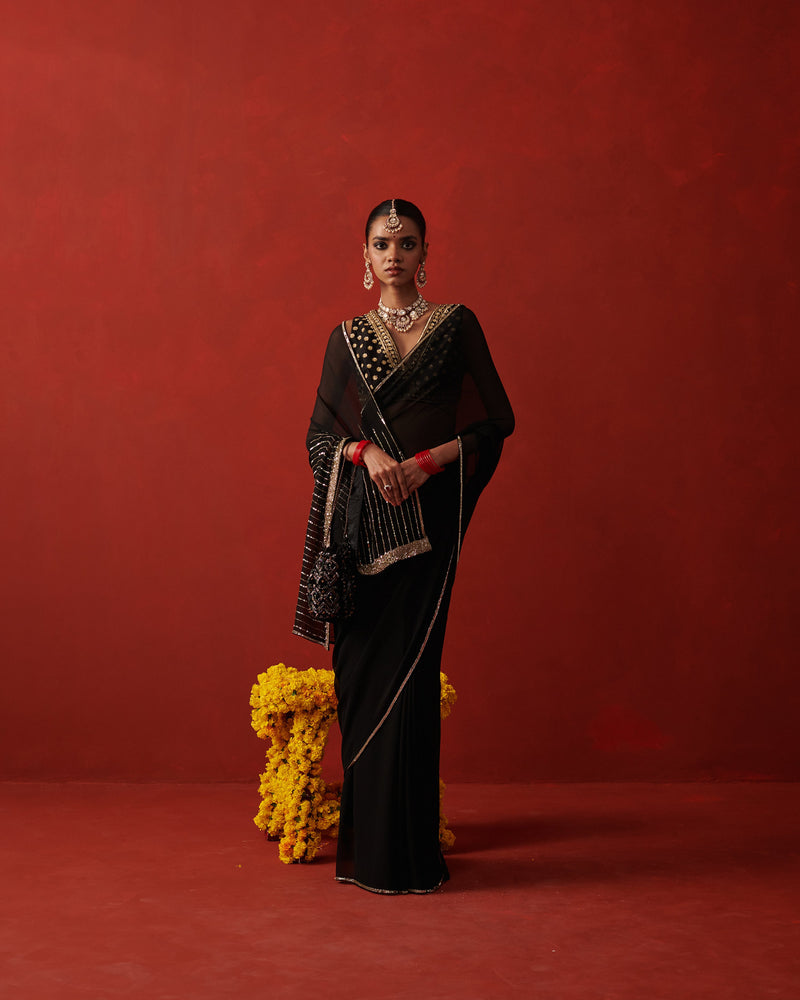
Where to Shop for Wedding & Festive Clothes in Mumbai: A Complete Guide
Handmade by karigars Made to your measurements Fit guarantee Ships worldwide As seen in GraziaElle Graduat...
5 September 2026