
What to Wear to a Buddhist Wedding in India: A Guest's Guide to Ambedkarite, Ladakhi and Sikkimese Weddings
For a Buddhist wedding in India, dress modestly and find out which tradition you are attending, because there is no single Buddhist wedding. At an Ambedkarite Buddhist wedding, common in Maharashtra, the couple often wear white for the ceremony, so white is not the taboo it is at many Hindu weddings; a guest in ivory with gold embroidery, or in a calm jewel tone, is right at home. In Ladakh or Sikkim, the couple wear their community's traditional dress and you will be dressing for the cold. Everywhere, cover your shoulders, keep the hem long, and wear shoes you can slip off quickly.
Buddhism in India is not one community but several, and their weddings look nothing alike. This guide takes three in turn: the Ambedkarite (sometimes called Navayana) wedding, the Ladakhi wedding, and the Bhutia wedding of Sikkim. Customs vary between families and regions, so ask your hosts what to expect.
First, an Honest Note on What We Make
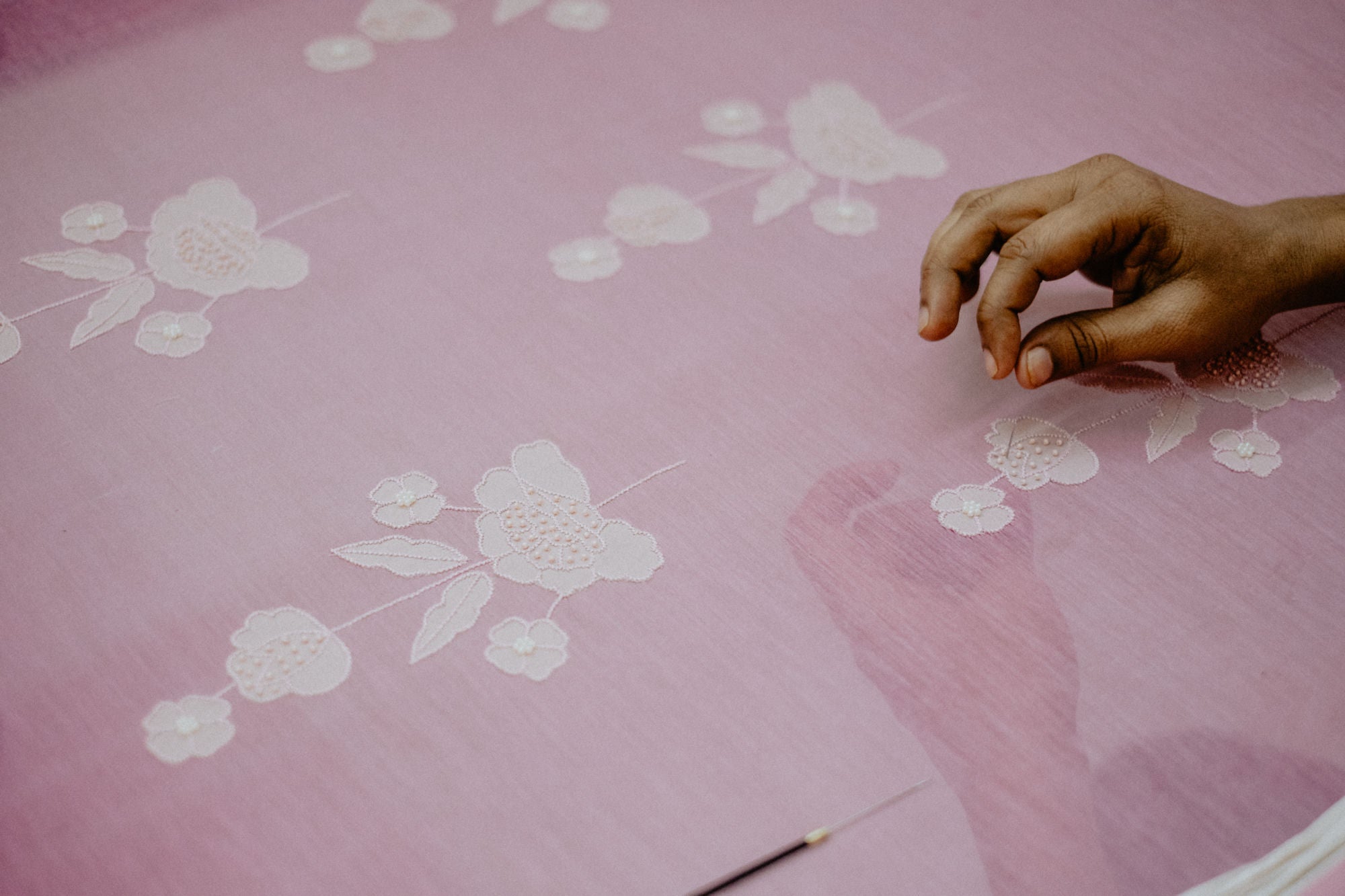
We do not make the goncha, the bakhu, the perak or any other community dress mentioned here, and we do not make white bridal saris specifically. We do not make velvet, shawls, jewellery or menswear, and we do not weave: we buy handwoven cloth and our karigars embroider it by hand in our Jaipur atelier. What we make are kurta sets, anarkalis, sarees, blouses, sharara sets and dupattas, and several of them suit a guest at each of these weddings.
Why White Can Be a Wedding Colour Here
In many Hindu families, white is associated with mourning, which is why most wedding guides tell you to avoid it. At an Ambedkarite Buddhist wedding the logic is reversed. Reporting on these weddings in Maharashtra describes couples wearing white for the ceremony itself and changing into colour for the reception. In the Himalayan traditions, the white silk scarf known as the khata (khatak or kathak in Ladakh, khada in Sikkim) symbolises purity and compassion, and it is offered at weddings, births and other turning points of life.
One caution: if the couple are in plain white, a guest in plain white can look matched. Ivory with visible gold or colour in the embroidery keeps you clearly a guest; if in doubt, ask the family. Our guide to ivory and white Indian outfits has more on wearing it well.
The Ambedkarite Buddhist Wedding
On 14 October 1956, Dr B.R. Ambedkar converted to Buddhism at Deekshabhoomi in Nagpur, along with hundreds of thousands of followers. The 2011 census counted about 8.4 million Buddhists in India, and roughly three in four of them live in Maharashtra, most of them Ambedkarite. Their weddings are deliberately simple, with no single fixed ritual code.
What you will often see, according to reporting from Maharashtra:
- Portraits of the Buddha and of Dr Ambedkar at the front, with candles lit before them at the start. Some couples also display a copy of the Indian Constitution.
- The Trisarana and Panchsheel: the couple take the Three Refuges in the Buddha, the Dhamma and the Sangha, and recite the Five Precepts. Other chants, including verses in praise of Dr Ambedkar, may follow.
- An earthen pot of water placed between the couple, with a cotton thread laid through it; the bride and groom each hold one end.
- An exchange of garlands to finish, often under a shower of petals.
The ceremony is usually led by a bhikkhu (monk) or a Bauddhacharya, though one officiant quoted in the press put it simply: any person of good character can conduct it. Families generally do away with horoscopes and auspicious timings, so these weddings are often held on a weekend, in a hall.
For the ceremony, ivory with gold is a lovely choice. The Mirza & Raina set (₹21,500) is an ivory silk kurta with floral and vine motifs in gold and pink, worked in zardozi with gold threads and zari, with a rounded split neckline and three-quarter sleeves, over matching silk pants embroidered at the hem.

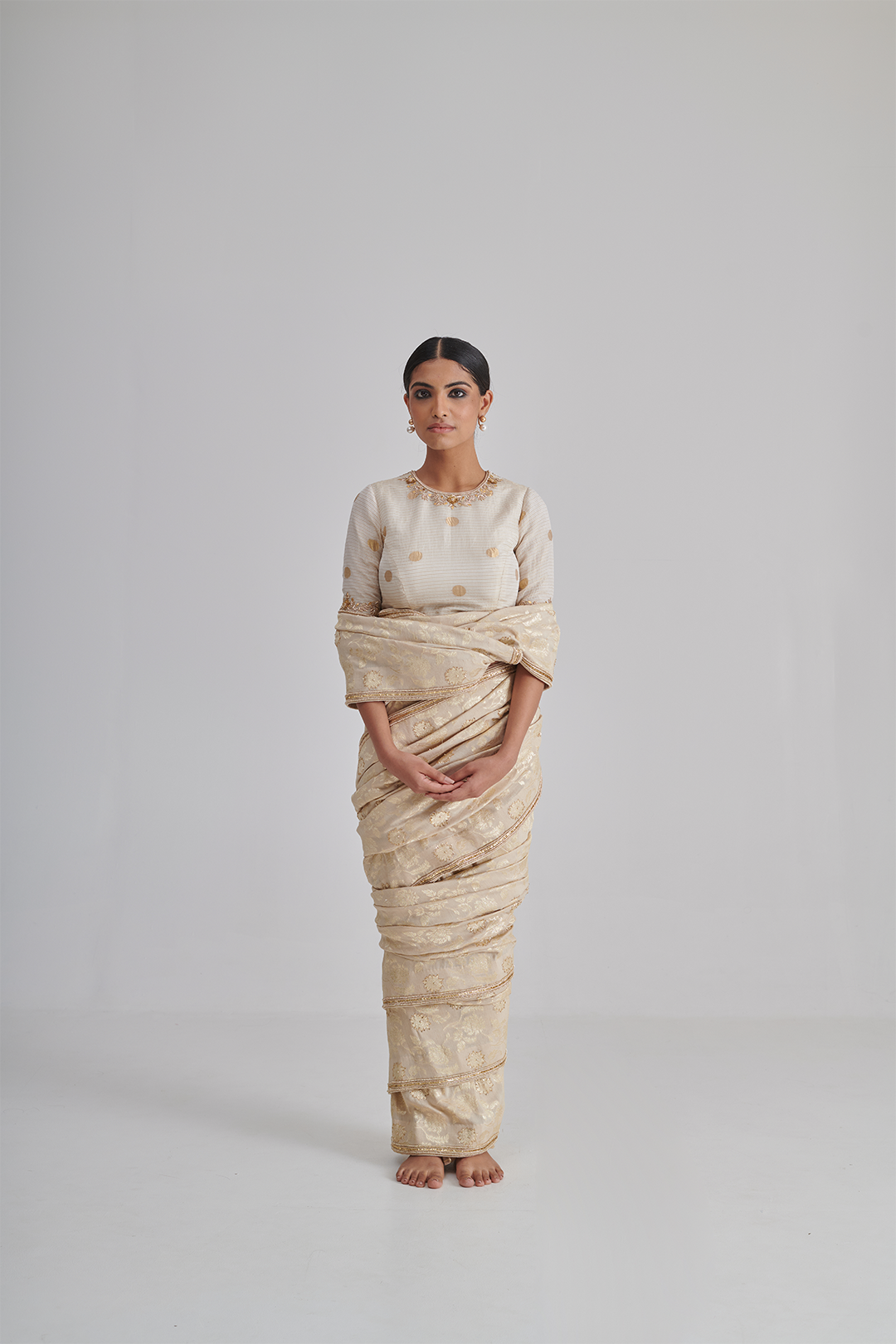
The Noor & Ahana set (₹14,500) is an ivory woven anarkali with Mukesh work, hand-embroidered florals and sequin detailing on the bodice and sleeves, worn with churidar pants. If you prefer a saree, the Bano & Siya saree (₹32,500) is ivory moonga zari silk with fine sequin work, gold embroidery and a rich border, paired with a blouse dotted in gold polka dots and embroidered at the neckline and sleeves.
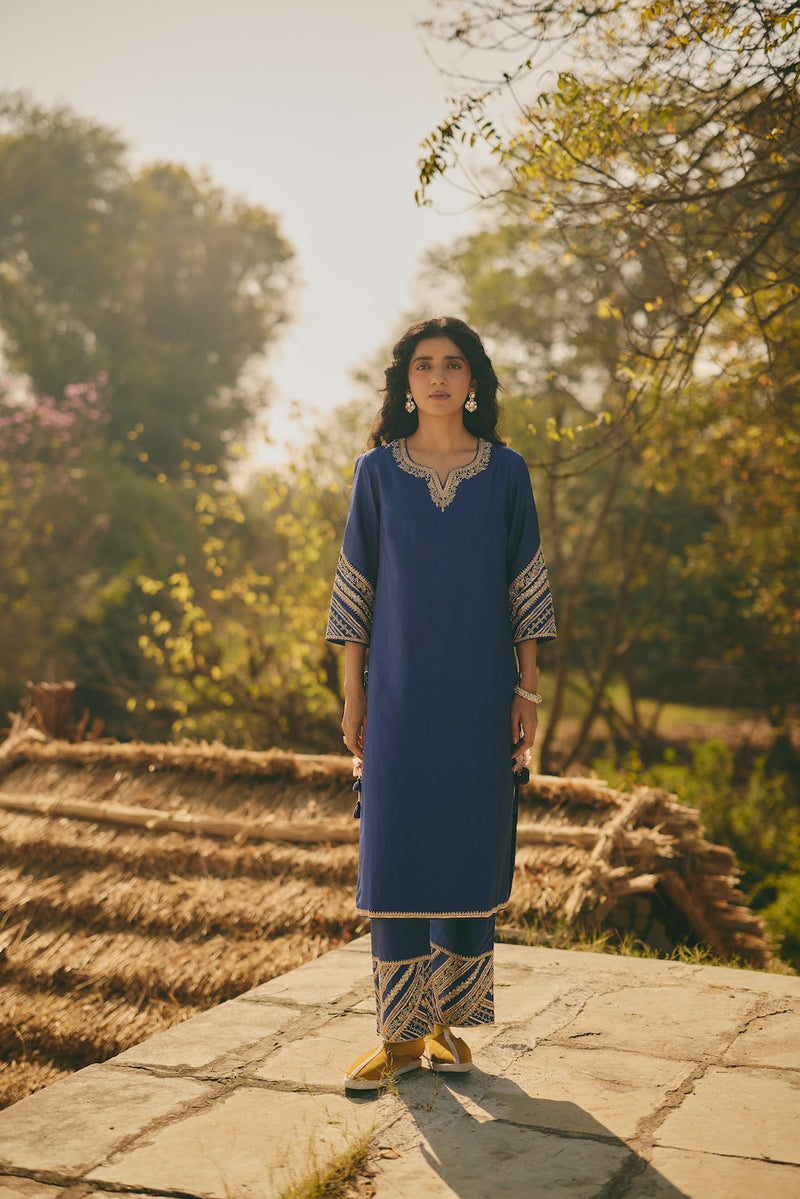
Blue carries meaning here too. Dr Ambedkar was known for his blue coat and gave a blue flag to the parties he founded, and blue has become the colour of the movement. A blue outfit is a warm, natural choice for the reception. The Ameera & Hoorain set (₹32,500) is rich silk in deep sapphire blue, with delicate florals at the neckline and geometric and linear patterns on the sleeves and pant hem in marodi, resham, sequins, cutdana, beads and aari. The Tara & Pari set (₹21,175) is deep navy satin with a contrast magenta yoke and resham, sequin and bead florals in ice blue and soft peach. It has short sleeves, so if you want more coverage, ask us on WhatsApp what is possible on that design.


Do not assume a Hindu format: there may be no pheras and no haldi, so ask which events you are invited to. Our Maharashtrian wedding guide is useful regional context.
The Ladakhi Buddhist Wedding
A Ladakhi Buddhist wedding celebration is called the bagston, and it is a village-wide affair, with the community contributing gifts, money and labour. Lamas are traditionally consulted to choose an auspicious date. Some accounts note that no lama is needed to solemnise the marriage itself, and that a bagston may come months or years after the couple decide to marry.
The heart of the day is the khatak. Guests drape white scarves around the couple and their close family, a gesture photographer Sephi Bergerson, who documented one bagston, describes as the village saying "we are witnesses to your marriage". Butter tea is served to everyone, and later chang, the local barley drink. Guests bring cash and practical gifts such as butter, sugar and wool. Expect a long day: celebrations can run from late morning into the night, and some accounts describe one day at the bride's home and the next at the groom's.
The couple wear Ladakhi dress. The goncha is a full robe, thick wool for everyday wear and brightly coloured silk, brocade or velvet for weddings, with the women's version flaring into fine pleats. Women may wear the perak, a long headdress of leather or lambskin studded with turquoise that runs from the forehead down the back, traditionally passed from mother to daughter. As a guest from outside the community, you are not expected to wear either.
Dressing for the Ladakhi cold
Leh sits above 3,000 metres. Climate averages put January daytime highs around freezing and nights at roughly minus 11°C, and colder in many villages. Choose silk and brocade over sheer fabrics, with thermals underneath; a straight kurta and pant hides them completely.
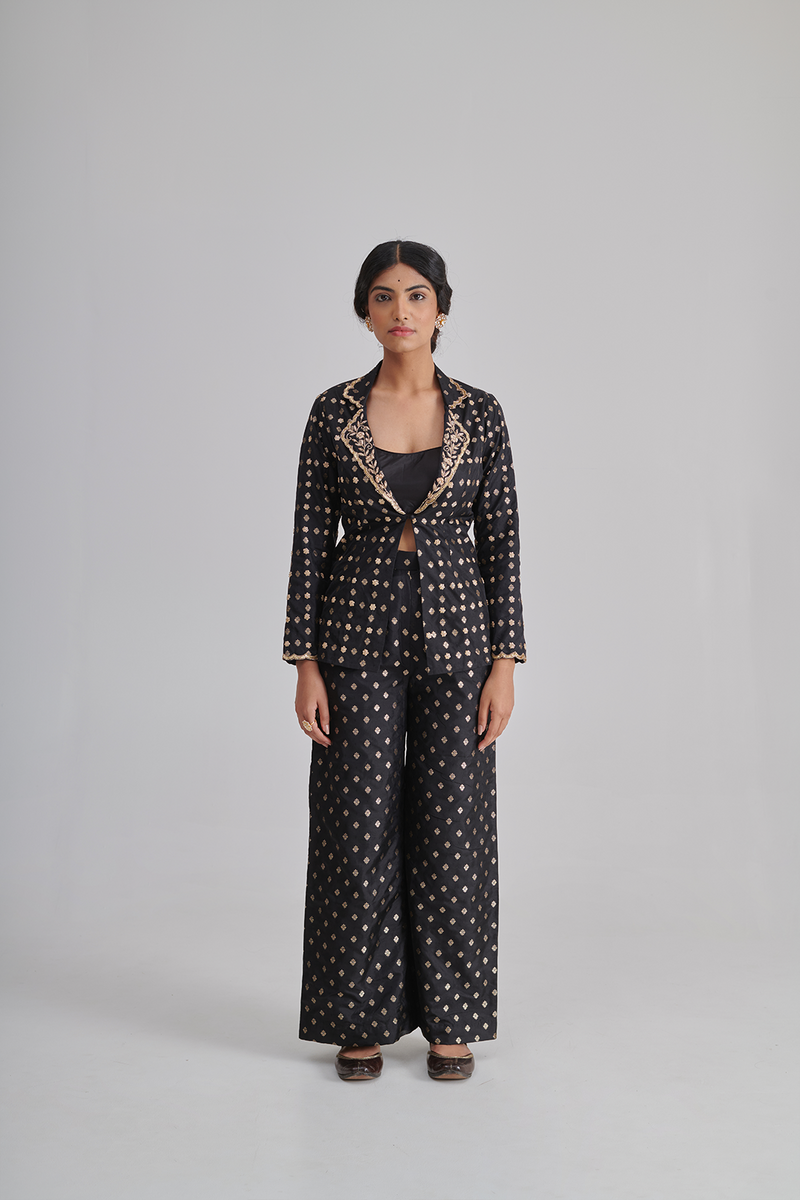
The Raat Rani, Vani & Kiyara set (₹16,500) is a fitted blazer and wide-leg pants in black Varanasi silk brocade with an all-over jaal of gold motifs and a hand-embroidered collar, over a dupion silk bustier. Buttoned over a fine thermal, it is festive and well covered. The Rangrez & Aliza set (₹18,750) is a moonga silk brocade kurta woven with gold motifs, over silk pants with a floral jaal print, aari and zardozi embroidery and contrast piping.


Bring a real coat or wool shawl as well (we do not make shawls, but a plain wool one sits well over almost anything), and flat, warm shoes you can slip off on icy ground. Our hill station wedding guide and winter wedding guide have more layering ideas.
The Sikkimese Bhutia Wedding
The Bhutias are one of Sikkim's major communities, and most follow Tibetan Buddhism. Their traditional dress is the bakhu, also called the kho: a loose, cloak-style robe fastened at the neck on one side and belted at the waist. Women wear it over a silk full-sleeved blouse called the honju, and married women tie on the pangden, a striped woollen apron. For her wedding, a Bhutia bride usually wears a bakhu in fine silk.
Accounts of Bhutia custom describe marriage in stages, from a formal enquiry and proposal to the wedding itself, with a khada accompanying gifts at almost every step. At the wedding, lamas offer prayers for the couple and family and guests present khadas to bless them. Sikkim's tribal research institute notes that the Bhutia dance Tashi Shabdo enacts this very custom. There is usually a generous feast, often with chang, a fermented millet drink.
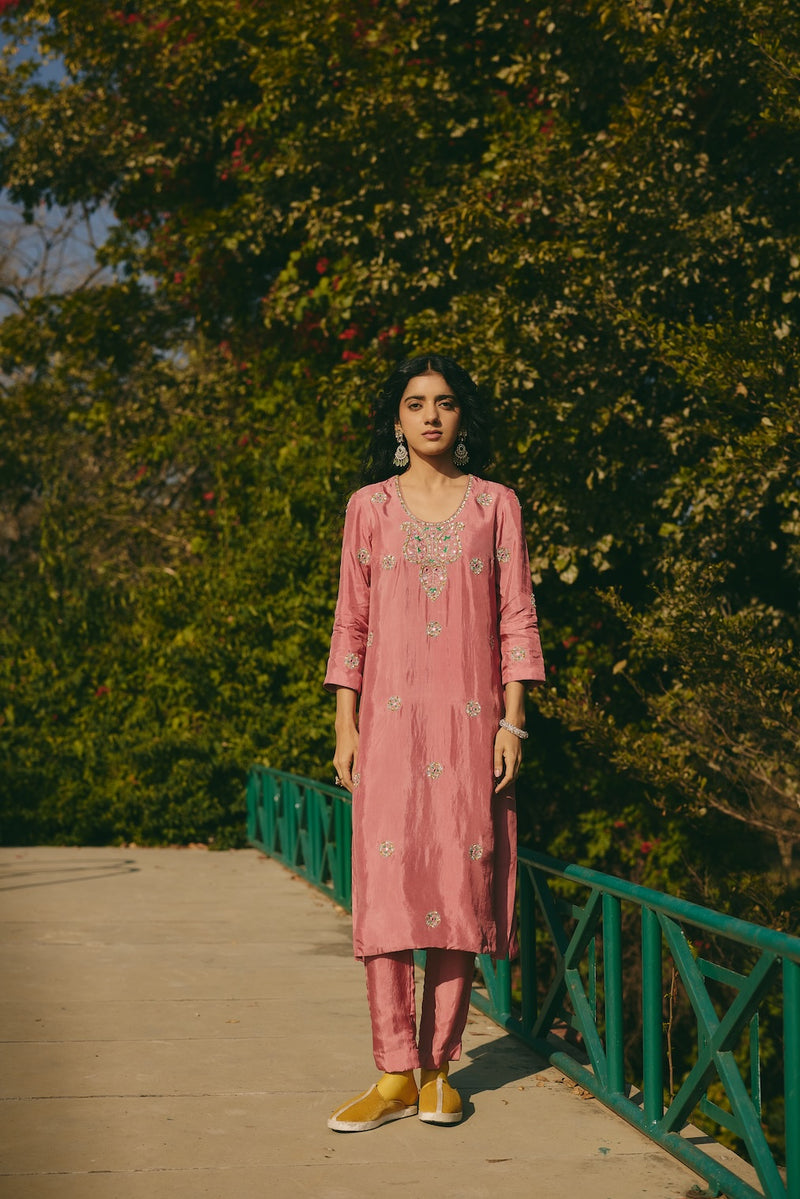
Gangtok is far milder than Leh but still cool in winter: averages suggest December days around 14°C and nights around 7°C, with January nights dropping to a couple of degrees above freezing. Silk with sleeves is the sweet spot. The Saher & Naazli set (₹32,500) is a soft rose-pink silk kurta with a scoop neckline and three-quarter sleeves, a central medallion and circular floral butis in green, orange and pink resham with mirror work, sequins and bead work, over straight rose-pink silk pants.

If you are wearing a saree, a full-sleeved blouse does most of the work of keeping you warm and covered. The Aashiqui saree (₹37,295) is deep royal blue chiffon with sequin and cutdana florals and a delicate border; the blouse shown with it is not included, so pair it with the Ziya blouse (₹6,500), jewel-toned silk with a round neckline and full-length sleeves embroidered with tonal sequin vines. For a statement, the Zehraat blouse (₹25,500) is deep wine-maroon silk with full-length sleeves, a bib-style neckline with navy silk bands worked in golden zari, and heavy banded cuffs. Browse all our blouses.


Monastery and Vihara Etiquette
Part of the wedding may take place in a monastery, a vihara or a home prayer room. The same courtesies apply in all of them:
- Take your shoes off at the entrance to any prayer hall. Easy slip-ons beat strappy heels.
- Cover shoulders and knees. A sleeved kurta or a saree with a sleeved blouse is ideal.
- Do not point your feet at the Buddha image or the altar. Feet are considered the lowest part of the body; if you sit on the floor, sit cross-legged or tuck your feet to the side.
- Walk clockwise around stupas, prayer wheels and sacred objects.
- Ask before photographing monks or prayer-hall interiors, and keep your voice low during prayers.
A silk dupatta is useful over your shoulders in a cool hall. The Gulnaaz dupatta (₹8,500) is bandhani silk in a muted brown, embroidered with zardozi, sequins and cutdana, with bold paisleys at the corners. See all our dupattas, and our temple wedding guide.
Going to a Buddhist Wedding This Season?
Every piece is made to order in our Jaipur atelier in 4–5 weeks, plus 3–7 days for shipping, and we cut it to your measurements at no extra charge. If you want longer sleeves or a higher neckline, ask us on WhatsApp what is possible on that design. An order placed today will reach you around the first week of December at the earliest, so a wedding in December, January or February is comfortably in range; a November wedding is not. Express is sometimes possible, depending on the piece and the month, so ask us on WhatsApp. Shipping is free on domestic orders above ₹30,000. Message us with the date and the events you are attending, and we will tell you honestly what can reach you in time.
Browse the CollectionMore wedding guides: Parsi weddings · Nepali weddings · Khasi weddings · Temple weddings · Winter weddings
Frequently Asked Questions
What should a guest wear to a Buddhist wedding in India?
Dress modestly, with covered shoulders and a long hem, and wear shoes you can slip off for the prayer hall. A silk kurta set, an anarkali or a saree with a sleeved blouse all work. Ivory with gold embroidery or a calm jewel tone suits an Ambedkarite wedding; in Ladakh or Sikkim, choose silk or brocade and layer for the cold.
Can you wear white to a Buddhist wedding?
Often, yes. At Ambedkarite Buddhist weddings the couple frequently wear white for the ceremony, and in Himalayan Buddhist traditions the white khata scarf is a symbol of purity offered at weddings. Because the couple may be in plain white, a guest is wise to choose ivory with gold or colour in the embroidery, and to check with the family if unsure.
What happens at an Ambedkarite Buddhist wedding?
Practice varies, but candles are typically lit before portraits of the Buddha and Dr B.R. Ambedkar, the couple recite the Trisarana and Panchsheel, and they hold the two ends of a cotton thread passed through an earthen pot of water. The ceremony usually ends with an exchange of garlands. A monk or a Bauddhacharya often leads it, and horoscopes and auspicious timings are generally not used.
What is a bagston?
The bagston is the Ladakhi Buddhist wedding celebration, a large gathering of the village, relatives and friends. Guests drape white khatak scarves around the couple as a sign that they witness the marriage, and the couple wear the goncha robe, the bride often with a turquoise-studded perak headdress.
What do Bhutia brides wear in Sikkim?
A Bhutia bride usually wears the bakhu, also called the kho, in fine silk: a loose robe fastened at the neck and belted at the waist, worn over a silk full-sleeved blouse called the honju. Married Bhutia women also wear the pangden, a striped woollen apron.
Made to order in 4–5 weeks
Have an event date? We’ll tell you exactly when to order by.
We take a limited number of orders each month — secure your slot early.
WhatsApp me my order-by date + a shortlistNot sure where to start?
Tell us what you're dressing for and we'll help you choose — fabric, fit, colour, and timeline — over WhatsApp or on a video call.
Your Cart
Pieces from this story
All pieces →Not sure which piece, or need it by a date? Book a video consultation Ask us on WhatsApp




Keep reading
The journal →
Ivory & White Indian Outfits: The Elegant Neutral You Can Wear Anywhere
How to wear ivory and white in Indian fashion — kurtas, ensembles and dupattas, plus styling tips for weddings and ev...
8 June 2026
Maharashtrian Wedding Outfit Ideas: What to Wear as a Guest
What to wear to a Maharashtrian wedding as a guest — paithani-inspired colours, the nauvari drape, and elegant outfit...
28 June 2026
Hill Station Wedding Outfit Ideas: What to Wear in the Mountains
What to wear to a mountain or hill station wedding — layering that photographs well, altitude, and the thirty-degree ...
12 September 2026