
What to Wear to a Khasi Wedding: A Guest's Guide to Shillong, the Church and the Jainsem
For a Khasi wedding in Shillong, dress first for church and then for the cold. Most Khasi families are Christian, so the wedding you are invited to is very likely a church service followed by a reception. Wear something you would happily sit through a service in: covered shoulders, a modest neckline, a hem to the ankle, and a rich colour that is clearly not bridal white. Then plan for the hills. Winter days in Shillong are mild, but evenings turn cold quickly, so choose silk over sheer fabrics, ask for full sleeves, and bring a jacket or shawl for the reception.
The Khasis are the largest community of Meghalaya, living across the Khasi Hills with Shillong as their capital city. They are also one of the best-known matrilineal societies in the world, and that shapes a wedding in ways a guest from elsewhere in India may not expect. This guide covers both the church weddings you are most likely to attend and the traditional ceremony some families still keep. Customs differ between families, denominations and villages, so treat it as a map rather than a rulebook, and ask your hosts what to expect.
First, an Honest Note on What We Make
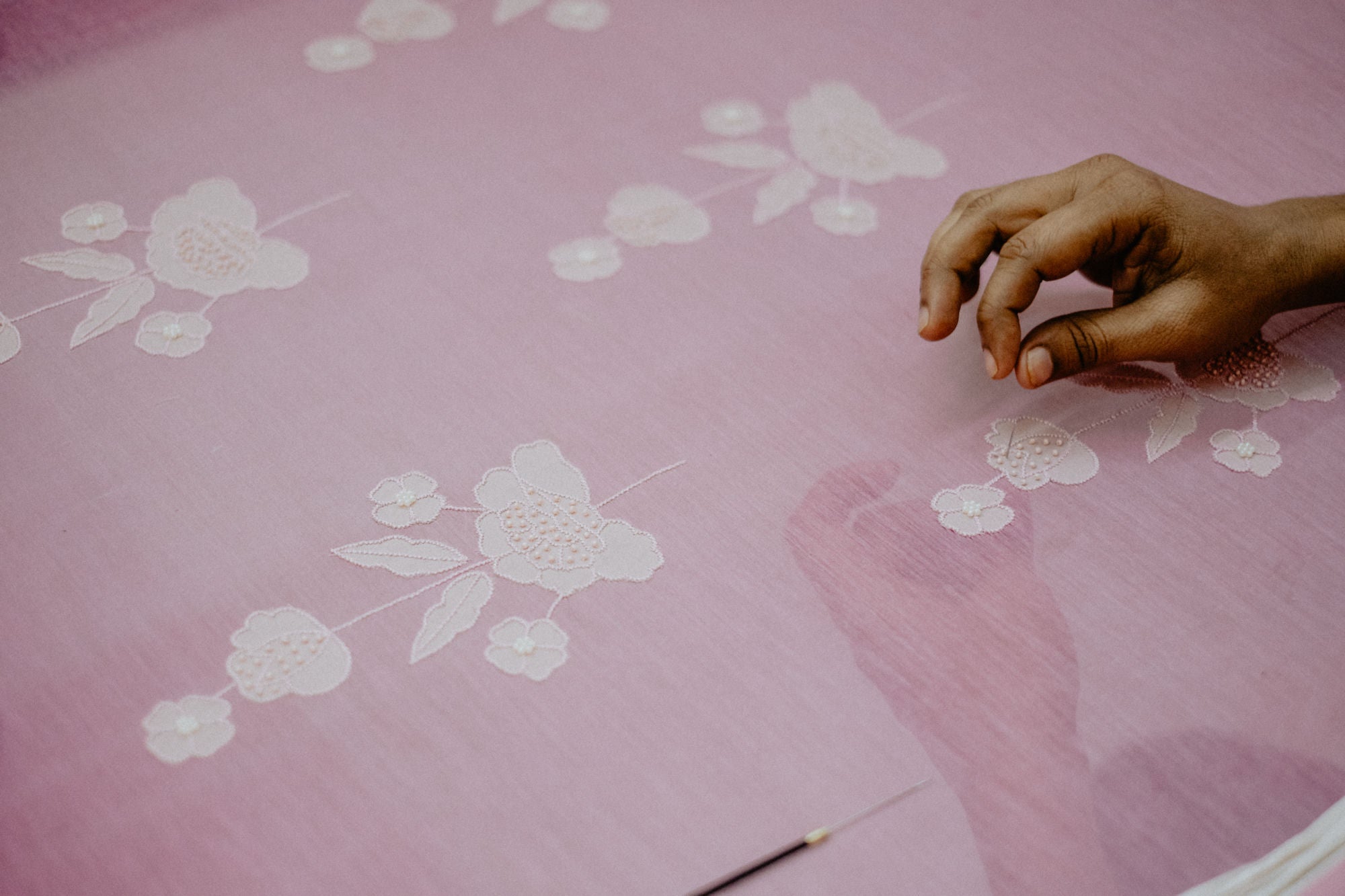
We do not make the jainsem or the dhara, the traditional dress of Khasi women, and we would not pretend to. We do not make the men's jymphong, gowns, shawls or jewellery either, and we do not weave: we buy handwoven cloth and our karigars embroider it by hand in our Jaipur atelier. What we make are kurta sets, anarkalis, sarees, blouses, sharara sets and dupattas, and several of them suit a guest at a Shillong church wedding very well.
A small personal note. Our founder, Rashika, grew up in Tinsukia in Upper Assam. Shillong is a neighbour, not home, and Khasi custom is not ours to speak for. But a northeastern winter evening, bright in the afternoon and cold soon after sunset, is something we know well, and much of this guide is about dressing for exactly that.
A Matrilineal Wedding: What It Means for the Day
In Khasi society, descent runs through the mother. Children take their mother's clan name, and marrying within your own clan is not allowed. The youngest daughter, the khadduh, traditionally inherits the ancestral home and the main share of the family property, and with it the duty of caring for her parents. When a man marries the khadduh, he traditionally moves into her family home; with an elder daughter, the couple more often set up a home of their own. Ethnographers also describe couples who begin married life in the bride's mother's house and move out after a child or two.
For a guest, the upshot is simple: the bride's family home is the centre of gravity, and her mother's side are very much your hosts.
The Church Wedding
The first Welsh missionary, Thomas Jones, reached Sohra in the Khasi Hills in 1841, and today more than four in five Khasis are Christian according to 2011 census figures, mainly Presbyterian and Catholic. Writers in Shillong note that traditional weddings have become rare and that, in the city especially, an elaborate church wedding is now the norm. Expect a full service with hymns, readings and vows, then a reception, often the same day.
Many brides wear a white gown for the church service; others choose the jainsem, and some wear both over the course of the day. Either way, white and ivory belong to the bride, so leave them at home. Our guide to Indian Christian weddings covers church etiquette more broadly.
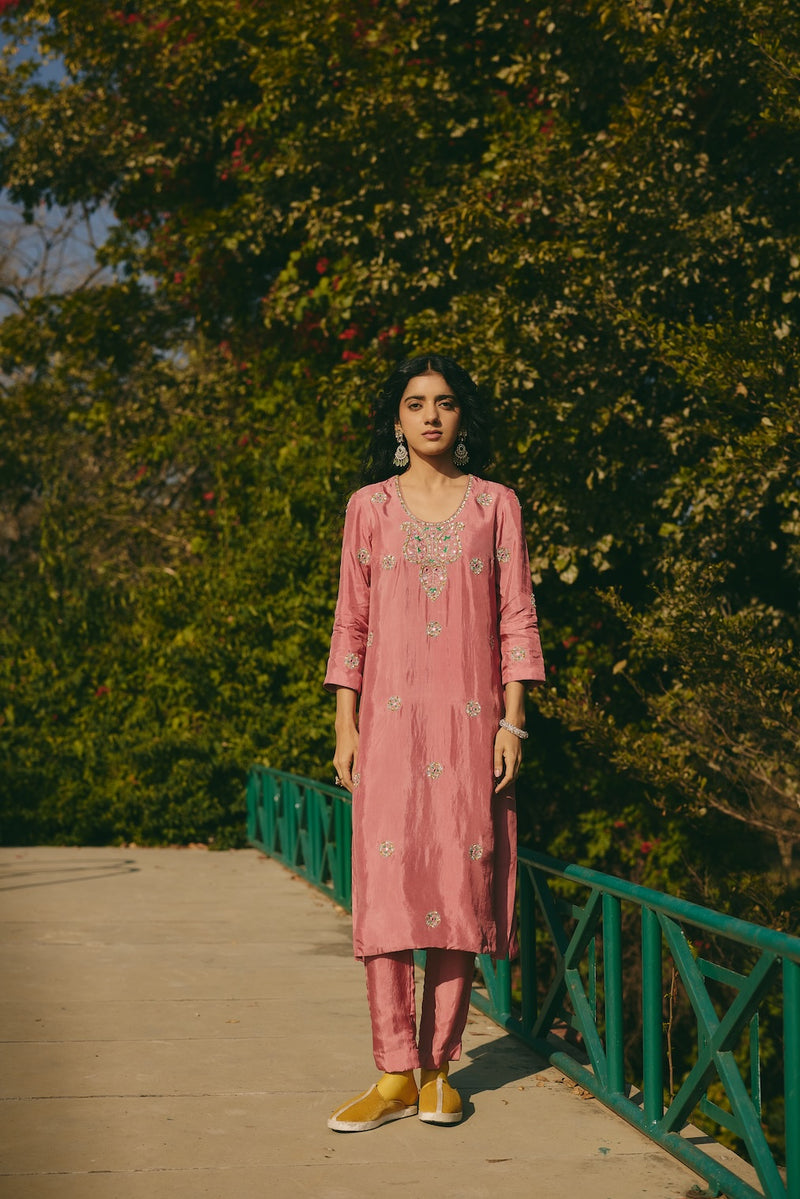
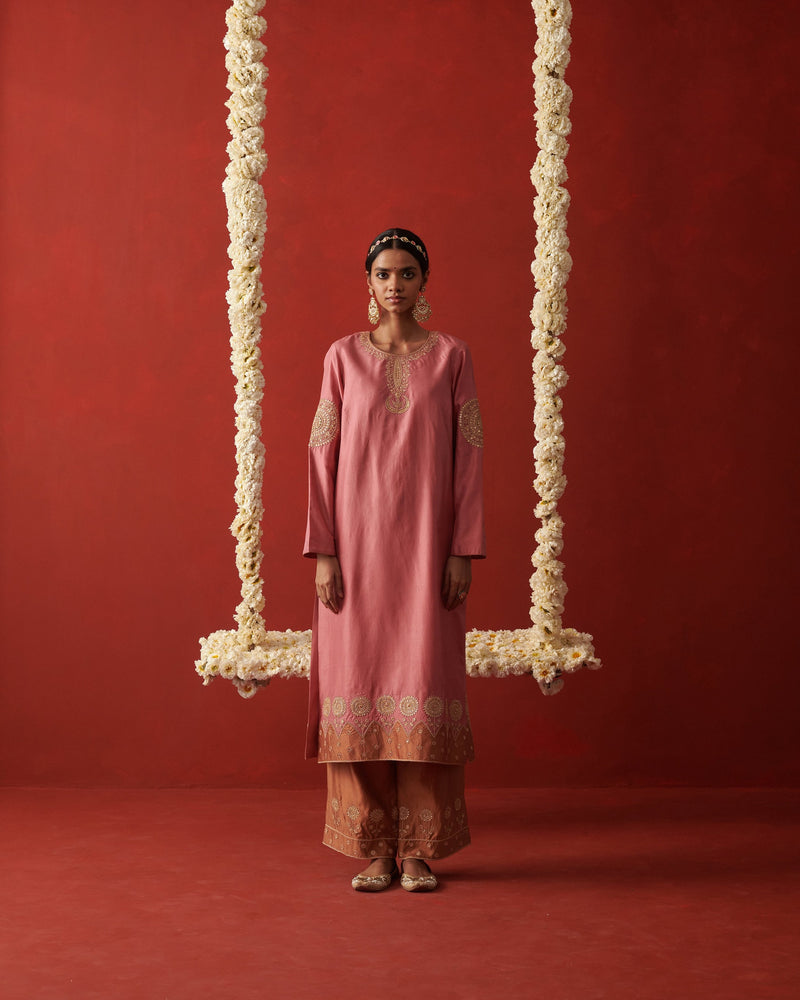
For the service, think rich, settled colour and coverage. The Saher & Naazli set (₹32,500) is a soft rose-pink silk kurta with a scoop neckline and three-quarter sleeves. An ornate medallion sits on the bodice, with circular floral butis in green, orange and pink resham, mirror work, sequins and fine bead work, over a straight rose-pink silk pant.

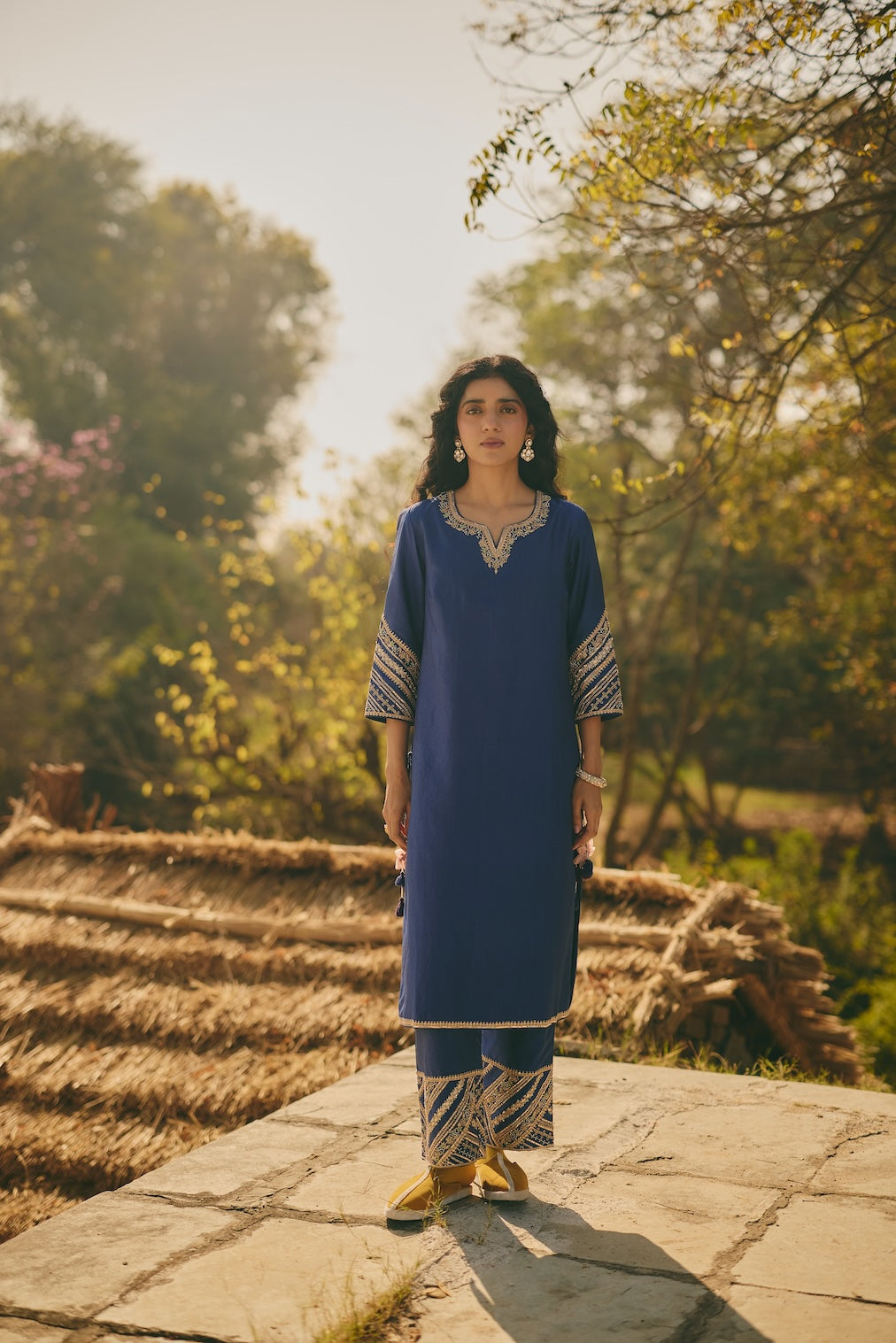
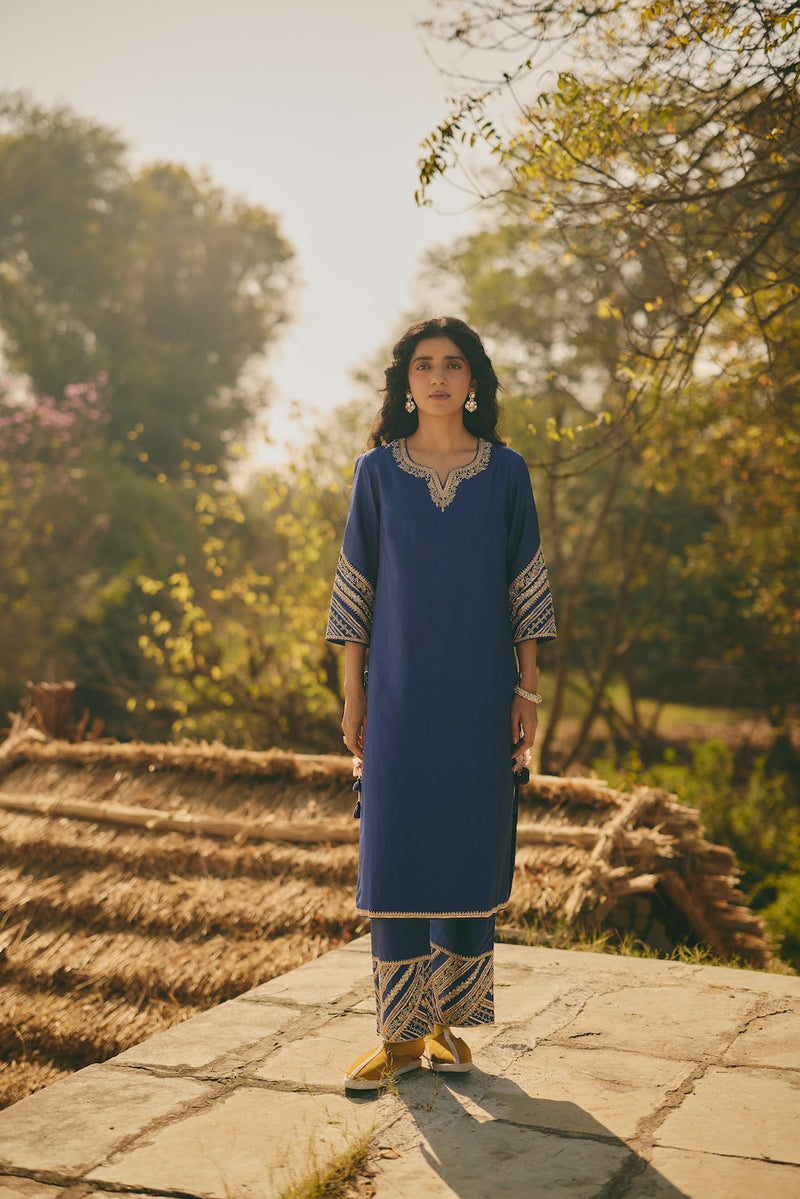
For a deeper tone, the Ameera & Hoorain set (₹32,500) is rich silk in deep sapphire blue. Its neckline carries delicate florals, and the sleeve hems and pant hem have structured geometric and linear patterns in marodi, resham, sequins, cutdana, bead and aari. The Jiya & Eshna set (₹29,500) is braver: a fuchsia silk kurta with a marodi yoke, three-quarter sleeves and a papaya-orange silk pant. And the Tara & Pari set (₹21,175) is deep navy satin with a contrast magenta yoke, embroidered in resham, sequins and bead work in ice blue and soft peach. It is cut with short sleeves, so for a winter church service, ask us to make them full length.


If You Prefer a Saree
A saree is perfectly at home in a Shillong church, provided the blouse does the modest work. Choose a sleeved, higher-cut blouse and keep the pallu over your shoulder. The Humrahi & Faridah saree (₹34,500) is green silk jacquard with an all-over jaal, hand-embroidered floral butas and a densely embroidered palla and border, with a contrasting pink mulberry silk brocade blouse.
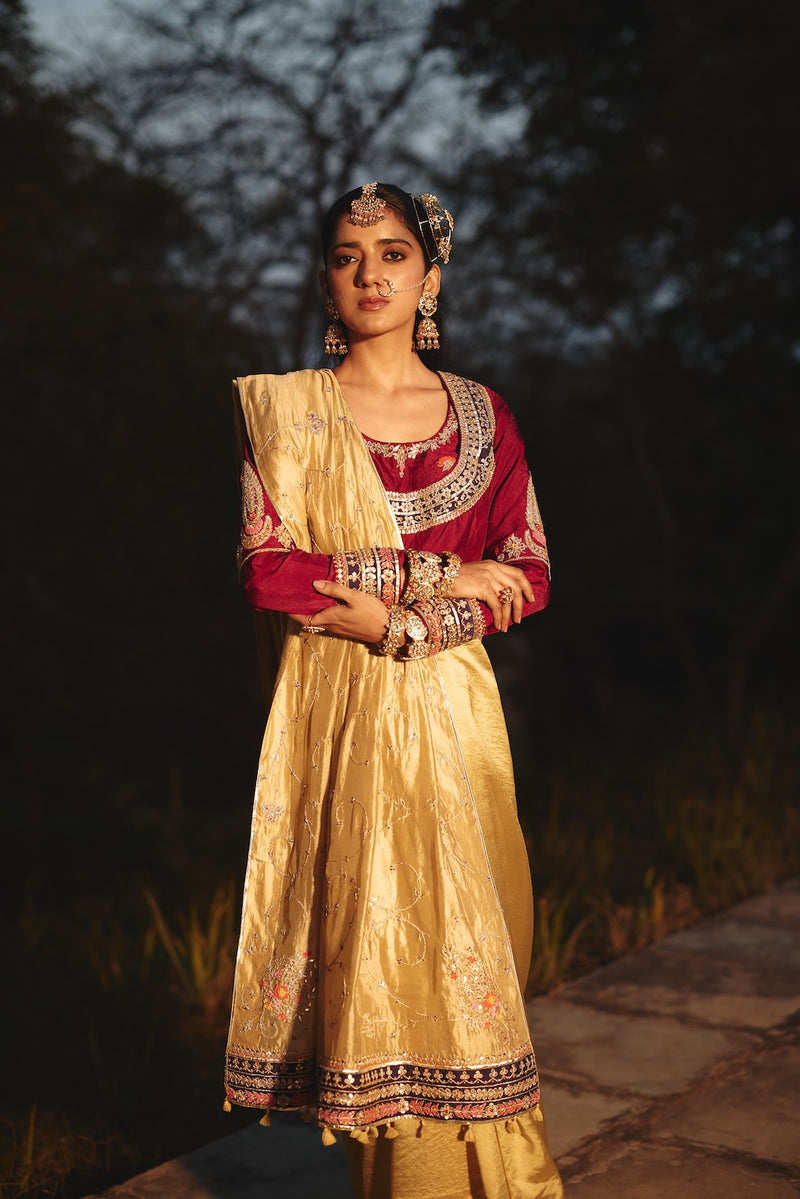
If you already own a saree you love, a full-sleeved blouse is the single most useful thing to add for a hill winter. The Ziya blouse (₹6,500) is jewel-toned silk with a round neckline and full-length sleeves, embroidered with tonal sequin vines. The Zehraat blouse (₹25,500) is the statement version: deep wine-maroon silk with full-length sleeves, a bib-style neckline with navy silk bands worked in golden zari, and heavy banded cuffs. Browse all our blouses.


The Traditional Khasi Ceremony
Some families, particularly those who follow the indigenous faith, Niam Khasi, keep a traditional ceremony. The Seng Khasi movement, founded in Shillong in 1899, was set up to preserve that faith and its culture, and around 15 per cent of Khasis followed it at the 2011 census. Accounts describe the ceremony taking place at the bride's home. Each side is represented by a ksiang, a spokesman (traditionally a maternal uncle) who speaks for his family and recites the marriage. One form of the ceremony includes an exchange of rings; another, the lamdoh, does not. There is a libation to the clan's first ancestress, and the couple share food from the same plate.
When the groom's party sets out, the bride's side traditionally meets them on the way with kwai: areca nut with betel leaf and lime. Kwai is the everyday Khasi gesture of hospitality, offered to visitors in homes across the hills, so if it is offered to you at any point, accept it graciously.
A home ceremony calls for something a little softer than the church look. The Nazmiya & Ruhma set (₹32,500) is a soft Chanderi kurta with an earthy rust pant, embroidered in marodi, sequins and thread across the neckline, sleeves, hem and back, with a floral bel and badla motifs. The Heeriye & Reva set (₹19,500) is a cinnamon-brown Chanderi anarkali with a tonal churidaar and a contrast border in scarlet and ivory.


The Jainsem, the Dhara and the Jymphong
You will see the traditional dress at a traditional ceremony, and often at church weddings and receptions too. The jainsem is made of two unstitched lengths of cloth pinned at each shoulder and worn over an inner garment. The dhara is a more elaborate ceremonial version. Over them, women may wear the tapmoh, a shawl. On her wedding day a Khasi bride traditionally wears the jainsem or dhara with gold or silver jewellery, often with a crown of gold or silver. The groom wears the jymphong, a long sleeveless coat without a collar, fastened at the front.
Jainsems are woven in many fibres, among them ryndia, the Khasi name for eri silk, which now carries a Geographical Indication tag. If a Khasi friend offers to dress you in a jainsem, it is a lovely gesture to accept; otherwise, a well-chosen kurta set or saree is entirely appropriate for a guest from outside the community.
The Shillong Winter: Dress for the Evening
Shillong sits at roughly 1,500 metres and above. India Meteorological Department normals give December days of around 16°C and nights of around 7°C, and January, the coldest month, about 15°C by day and under 6°C at night. November and February are a few degrees milder, and all four months are the dry season. A church service at noon may feel warm in the sun, but the reception after dark will not.
- Choose silk, Chanderi or satin over sheer georgette or organza for anything worn after sunset.
- Ask for full sleeves. We cut every adult piece to your measurements at no extra charge.
- Bring a real layer. We do not make shawls, but a plain wool shawl in a neutral tone sits well over almost anything.
- Wear a fine thermal underneath. A straight kurta and pant hides one completely.
- Mind your footwear. Shillong is a city of slopes and steps; a block heel is kinder than a stiletto.
Our hill station wedding guide and winter wedding guide go further.
The Reception: Jackets and Deeper Colour
The evening reception is where a structured layer earns its place. The Raat Rani, Vani & Kiyara set (₹16,500) is a fitted blazer and wide-leg pants in black Varanasi silk brocade with an all-over jaal of gold motifs and a hand-embroidered collar, over a dupion silk bustier. Keep the blazer on and it is warm, polished and entirely right for an evening in the hills.

For a close friend or family member, the Laalsa & Ravaya set (₹73,450) is a front-open jacket and sharara in vermilion silk. The jacket is covered in floral and botanical jaal in marodi, zari, resham, sequins, cutdana, beads and aari, with finely cut gota appliquéd into petals and leaves. The Rafia anarkali (₹28,500) is black silk with a square neckline and a flared silhouette, with pink and peach resham sprays and gold marodi borders. Black is widely worn at evening receptions, but if you are unsure how the family feels, pick the sapphire or the vermilion instead. Our guide to layering with jackets and capes has more ideas.
A silk dupatta is more substantial over your shoulders than a sheer one. The Gulnaaz dupatta (₹8,500) is bandhani silk in a muted brown, with zardozi, sequins and cutdana and bold paisleys at the corners. See all our dupattas.
Three Things Worth Knowing
- Do not assume a Hindu wedding format. There may be no mehndi, no sangeet and no pheras. Ask which events you are invited to.
- Leave white and ivory to the bride. At a church wedding, that is the one colour rule almost everyone shares.
- If you are travelling from elsewhere in the Northeast, a Khasi wedding is a different world from an Assamese wedding or a Manipuri wedding, so read up on the one you are going to.
Going to a Khasi Wedding This Winter?
Every piece is made to order in our Jaipur atelier in 4–5 weeks, plus 3–7 days for shipping, and we cut it to your measurements at no extra charge. If you want full sleeves or a higher neckline for a church service, ask us on WhatsApp what is possible on that design. An order placed today will reach you around the end of November or the first week of December at the earliest, so a wedding in December, January or February is comfortably in range; a November wedding is not. Shipping is free on domestic orders above ₹30,000. Message us on WhatsApp with the date and the events you are attending, and we will tell you honestly what can reach you in time.
Browse the CollectionMore guides: Assamese weddings · Manipuri weddings · Christian weddings · Hill station weddings · Winter weddings
Frequently Asked Questions
What should a woman wear to a Khasi wedding as a guest?
Most Khasi weddings are church weddings, so dress modestly: covered shoulders, a modest neckline and an ankle-length hem, in a rich colour rather than white or ivory. A silk kurta set, an anarkali or a saree with a sleeved blouse all work. In winter, add full sleeves and a jacket or shawl for the evening reception.
What is a jainsem?
The jainsem is the traditional dress of Khasi women: two unstitched lengths of cloth pinned at each shoulder and worn over an inner garment, often with a shawl called the tapmoh. The dhara is a more elaborate ceremonial version. A Khasi bride traditionally wears the jainsem or dhara on her wedding day, often with a gold or silver crown.
Are Khasi weddings Christian or traditional?
Both exist, but church weddings are now by far the most common, since more than four in five Khasis are Christian, mainly Presbyterian and Catholic. Families who follow the indigenous faith, Niam Khasi, may hold a traditional ceremony at the bride's home, with a ksiang speaking for each family. Ask your hosts which kind of wedding you are attending.
Does the groom move to the bride's house in a Khasi marriage?
Traditionally, yes, when he marries the youngest daughter, the khadduh, who inherits the ancestral home and cares for her parents. Couples marrying an elder daughter more often set up their own home. Khasi society is matrilineal, so children take their mother's clan name.
How cold is Shillong for a winter wedding?
India Meteorological Department normals put December at around 16°C by day and 7°C at night, and January at about 15°C by day and under 6°C at night. Days are dry and pleasant, but evenings are cold, so wear silk with full sleeves and bring a jacket or shawl.
Made to order in 4–5 weeks
Have an event date? We’ll tell you exactly when to order by.
We take a limited number of orders each month — secure your slot early.
WhatsApp me my order-by date + a shortlistNot sure where to start?
Tell us what you're dressing for and we'll help you choose — fabric, fit, colour, and timeline — over WhatsApp or on a video call.
Your Cart
Pieces from this story
All pieces →Not sure which piece, or need it by a date? Book a video consultation Ask us on WhatsApp


Keep reading
The journal →
What to Wear to an Indian Christian Wedding: A Guest's Guide
What to wear to an Indian Christian wedding as a guest — church ceremony etiquette, colours to avoid, and elegant sar...
8 July 2026
Hill Station Wedding Outfit Ideas: What to Wear in the Mountains
What to wear to a mountain or hill station wedding — layering that photographs well, altitude, and the thirty-degree ...
12 September 2026
Winter Wedding Outfit Ideas: Luxe Indian Outfits for Cold Weather Celebrations
What to wear to a winter wedding in India. Heavy silk, brocade, and velvet outfit ideas with layering tips — jackets,...
12 March 2026