
How to Tell Hand Embroidery From Machine Work: A Buyer's Guide
In a market full of fast fashion, "hand-embroidered" has become a label that's easy to claim and harder to verify. Yet the difference between genuine handwork and machine embroidery is enormous — in the way it looks, the way it lasts, and the hands and hours behind it. Here's how to tell the two apart, so you always know exactly what you're buying.
Look at the Back of the Fabric
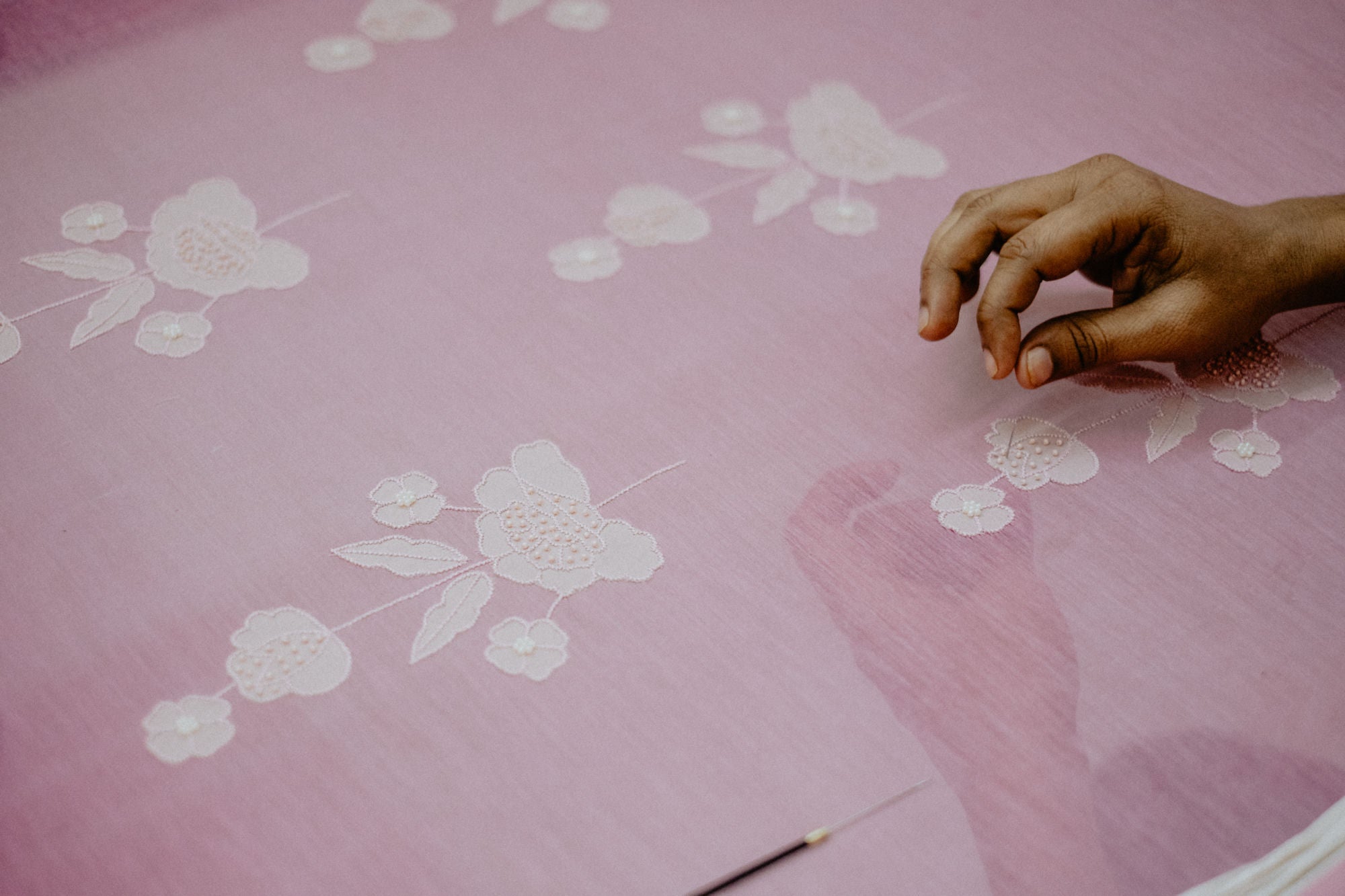
This is the single most reliable test. Machine embroidery leaves a neat, uniform, almost printed-looking reverse, often with a backing or visible bobbin thread running in straight lines. Hand embroidery has a more organic back — small knots, thread tails, and slight irregularity that tell you a person, not a machine, made each stitch.

Watch for Beautiful Irregularity
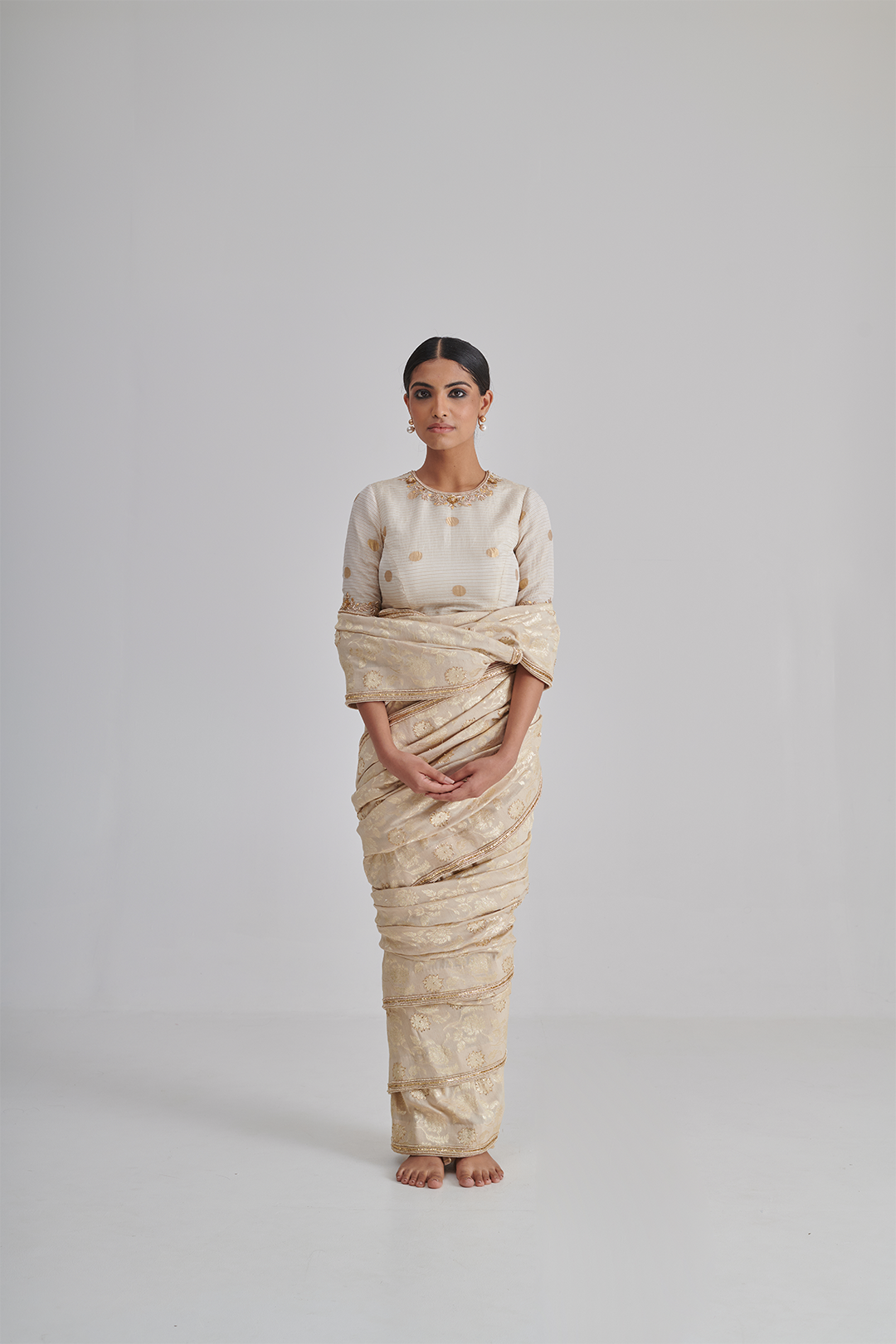
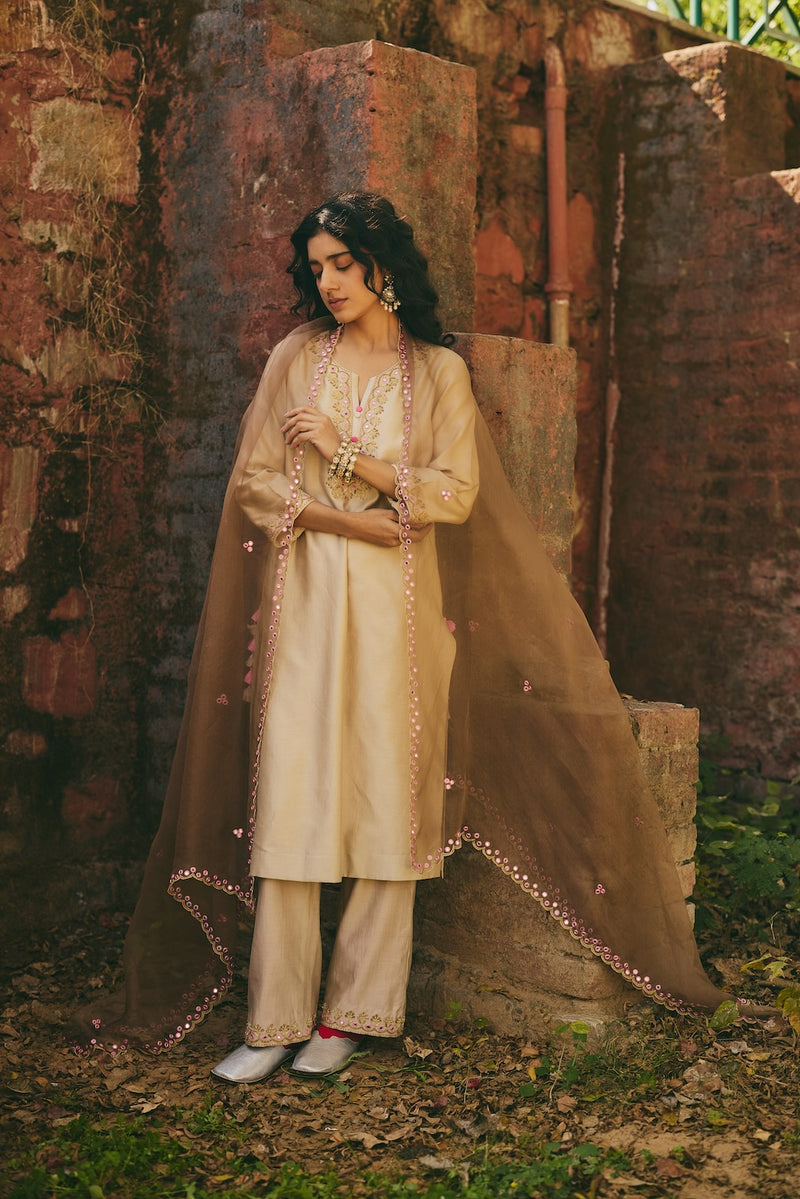
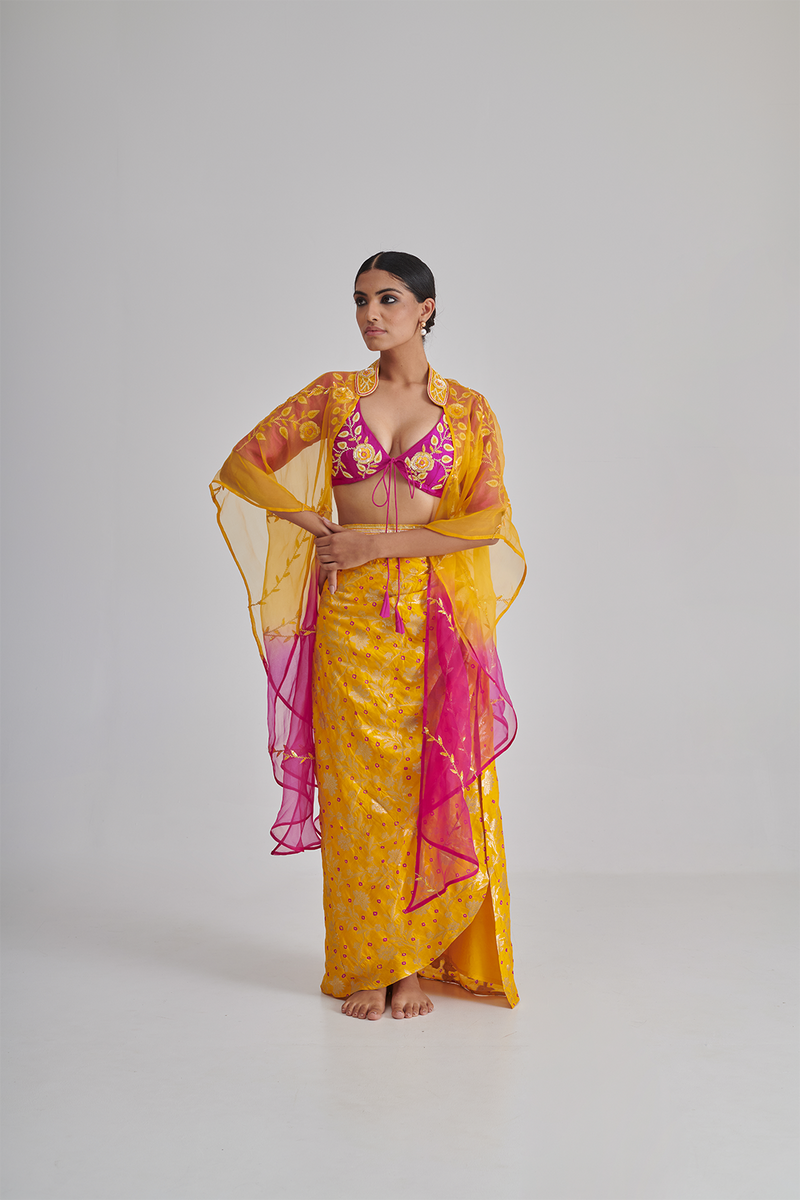
Machine work is perfectly, identically repeated — every motif a clone of the last. Hand embroidery has tiny, beautiful variations: a flower slightly larger here, a stitch angled a touch differently there. That subtle irregularity is the signature of a human hand. You can see it in the fine hand-sequin work of a Bano moonga zari saree or the Mukesh embroidery of a Noor anarkali.
Know the Techniques That Can Only Be Done by Hand
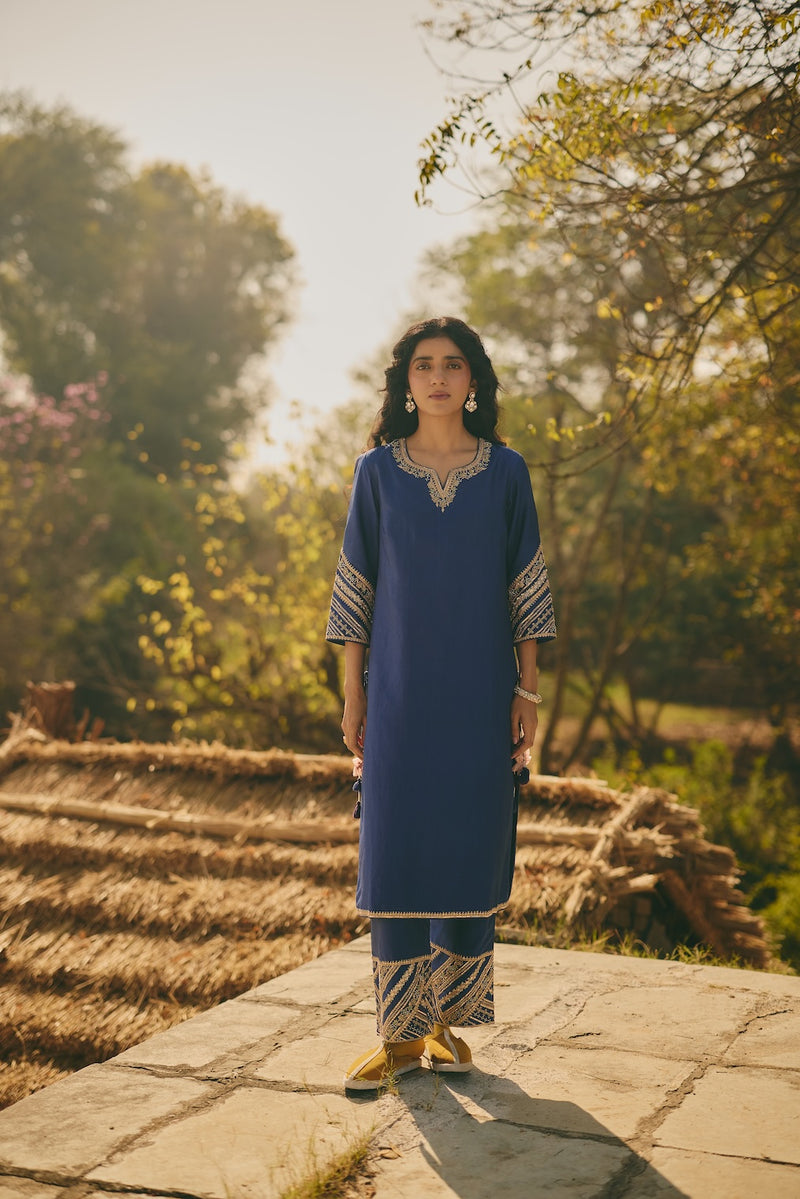
Some techniques simply cannot be replicated by machine. Real zardozi and gota patti are built up with metallic wire and appliqué by hand; aari work is hooked stitch by stitch; Mukesh and marodi are painstaking metal-thread crafts. If a piece features these, genuine versions carry a depth and dimensionality flat machine embroidery can't match — as in the gota and marodi work of an Inara kurta set or the marodi and beadwork of a Jhoomar set.


Feel the Weight and Dimension
Hand embroidery sits on the fabric with real texture and weight — you can feel the raised wirework, the layered beads, the dimensional knots. Machine embroidery tends to feel flatter and more uniform, often fused tightly to the base cloth. Run your fingers across the surface; genuine handwork has a tactile richness.
Quick Checklist Before You Buy
- Turn it over — an organic, slightly irregular back with knots means handwork; a neat, backed reverse suggests machine.
- Compare the motifs — identical, cloned repeats point to machine; subtle variation points to hand.
- Feel the surface — raised, dimensional texture is the mark of genuine handwork.
- Ask about the technique — true zardozi, gota patti, aari, and Mukesh are hand-only crafts.
- Consider the price and time — genuine handwork takes days or weeks per piece, which is reflected honestly in the price.
Why Handcraft Is Worth It
Beyond beauty, hand embroidery keeps centuries-old crafts and the livelihoods of karigars alive. Every piece we make is fully handmade by our artisans in Jaipur — which is why no two are ever exactly alike, and why each one carries the quiet signature of the hands that made it.
Genuine Handcraft, Every Time
Every Rashika Mittal piece is fully hand-embroidered by karigars in Jaipur — real zardozi, gota patti, aari, and Mukesh, never machine work. Explore our full collection and kurta sets.
Shop Handcrafted PiecesFrequently Asked Questions
How can I tell if embroidery is done by hand or machine?
The most reliable test is to look at the back of the fabric: hand embroidery has an organic reverse with small knots and slight irregularity, while machine work looks neat, uniform, and often has a backing. Hand embroidery also shows subtle variation between motifs, has raised, dimensional texture you can feel, and uses techniques like zardozi, gota patti, aari, and Mukesh that can only be done by hand.
Which embroidery techniques can only be done by hand?
Zardozi, gota patti, aari, Mukesh, and marodi are traditional techniques that can only be done by hand. Zardozi and gota patti are built up with metallic wire and appliqué, aari is hooked stitch by stitch, and Mukesh and marodi are intricate metal-thread crafts. Genuine versions carry a depth and texture that flat machine embroidery cannot replicate.
Why does hand embroidery cost more?
Hand embroidery takes days or even weeks of skilled work per piece, compared to minutes for machine embroidery. The price reflects the time, the mastery of the karigars, and the materials. It also supports centuries-old crafts and artisan livelihoods. The result is a unique, dimensional, longer-lasting piece — no two ever exactly alike.
Made to order in 4–5 weeks
Have an event date? We’ll tell you exactly when to order by.
We take a limited number of orders each month — secure your slot early.
Not sure where to start?
Tell us what you're dressing for and we'll help you choose — fabric, fit, colour, and timeline — over WhatsApp.
Your Cart
Pieces from this story
All pieces →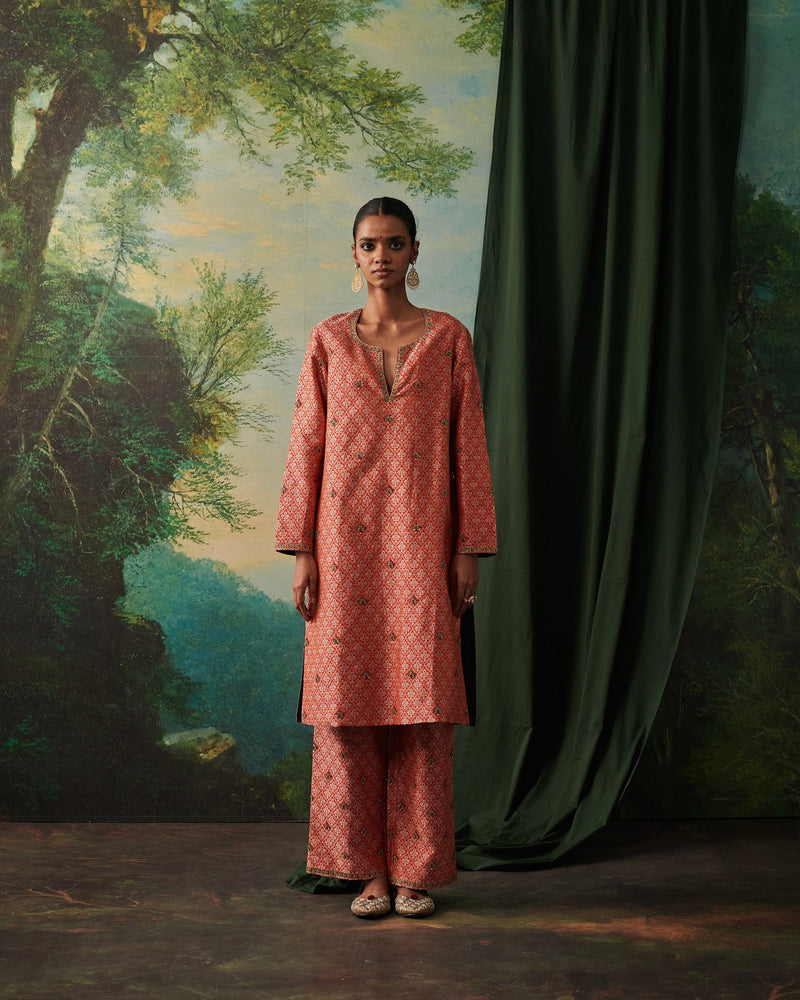
Keep reading
The journal →
Dholki Night Outfit Ideas: What to Wear to the Ladies' Dhol
Handmade by karigars Made to your measurements Fit guarantee Ships worldwide As seen in GraziaElle Graduat...
27 July 2026
Mayra & Bhaat Outfit Ideas: Dressing for the Maternal Gift Ceremony
Handmade by karigars Made to your measurements Fit guarantee Ships worldwide As seen in GraziaElle Graduat...
27 July 2026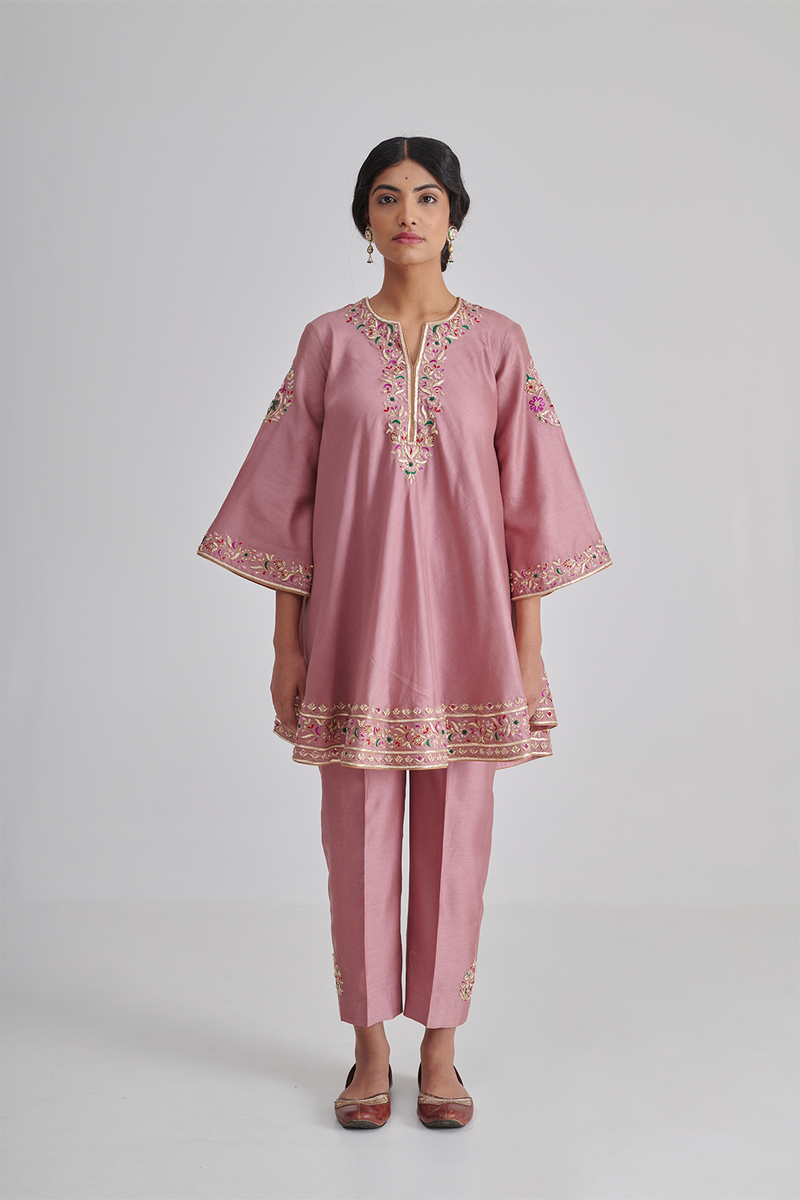
Pag Phera Outfit Ideas: What to Wear for the Bride's Homecoming
Handmade by karigars Made to your measurements Fit guarantee Ships worldwide As seen in GraziaElle Graduat...
27 July 2026