
Haseena Handwork: Mirror Work, Marodi, Moti and the Craft Behind the Collection
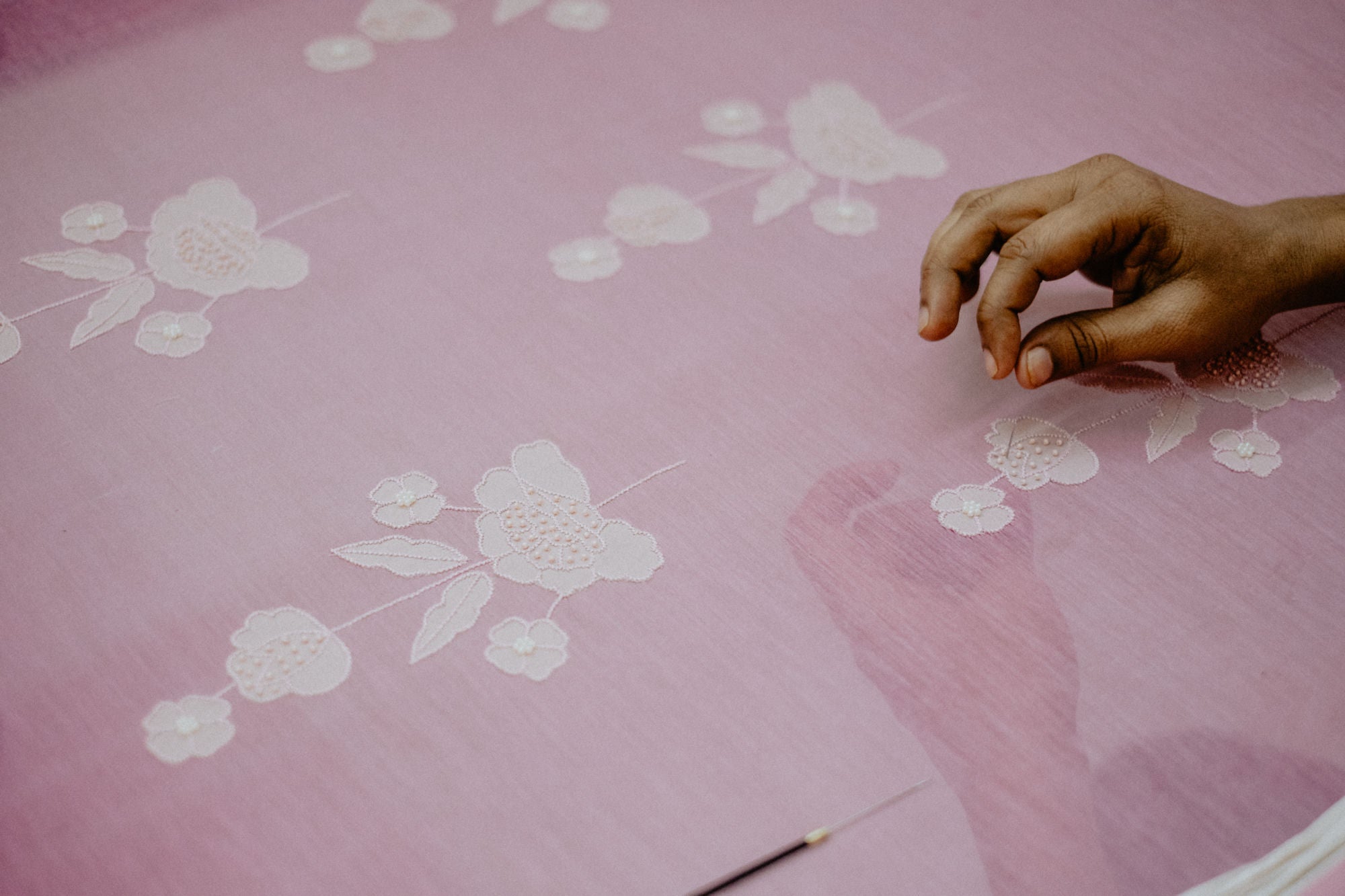
The short answer: the handwork in Haseena, our new collection, is built from a small vocabulary of techniques. Mirror work catches the light on Mehrab, Rangmahal and Arunima. Marodi, a twisted cord laid and stitched onto the cloth, draws the lines on the Zarnoon cape and the Gulal kurta. Moti, cutdana and resham make the flowers on Saba and its Pankhuri dupatta. And Meghna brings beads, sequins, aari and cutdana together on one neckline. This guide explains what each technique actually is, where it appears in the collection, and, just as importantly, what we do not claim.
Haseena launched on 28 October 2026. In our own words it is "a woman you remember": an ode to ada, quiet confidence and the romance of another era. Purani filmon ka jaadu, aaj ki haseena ka andaaz. The mood comes from old Hindi cinema, but the language the mood is written in is embroidery, and embroidery is easy to describe badly. So here it is, one technique at a time, told through the pieces. If you have not met the collection yet, start with Introducing Haseena, then come back.
A Note Before We Begin: How We Name a Technique
Every claim in this article comes from the product description of the piece it mentions. If a description names mirror work, marodi, moti, cutdana, resham, aari, sequins or beads, we say so here. If a description says "gold-toned embroidery", we say gold-toned embroidery, and we do not call it zari, because none of the Haseena descriptions use that word and we will not guess at metal content. Nor do we call anything zardozi. It is a small discipline, but it is the difference between a craft explainer and a sales pitch.
One more honest line: we do not weave. The Chanderi, silk, satin, organza, georgette, tissue and brocade in Haseena are bought as cloth, and the embroidery is what our karigars add in the atelier in Vaishali Nagar, Jaipur.
Mirror Work: Mehrab, Rangmahal and Arunima
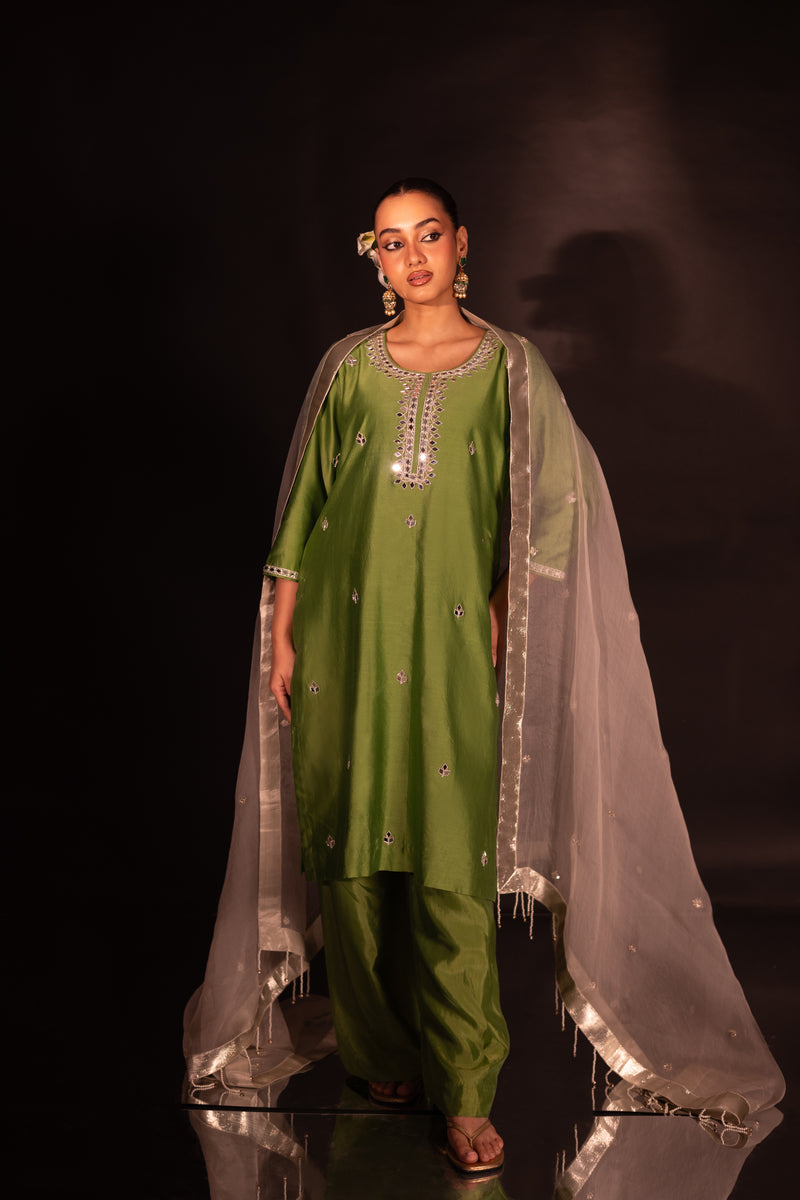
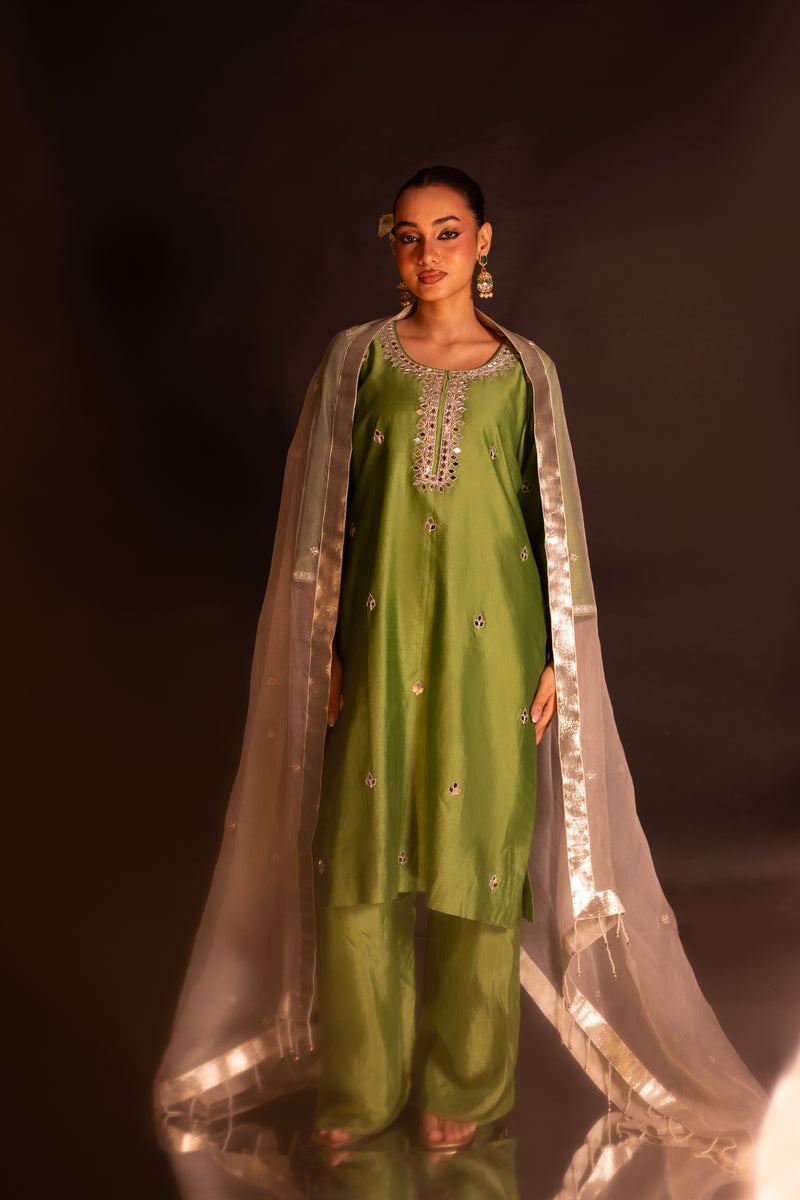
Mirror work is known as shisha, from the Persian word for glass or mirror, and in Hindi and Gujarati as abhla bharat. Small pieces of mirror or reflective material are held onto the cloth by stitching alone, with no glue and no hole: the embroiderer builds a cage of thread across the face of the mirror to hold it, then frames it with a second ring of stitches. Before manufactured mirror discs were common, mica and even beetle wings were used for the same effect. The craft is most closely associated today with Gujarat and Rajasthan. Our sequin and mirror work guide covers how to wear it, and the mirror work brands roundup covers Kutch craft and how to judge shisha.
The Mehrab kurta set (₹23,500) is the clearest example in the collection. The kurta is mehendi green Chanderi, with mirror work embroidery along the round neckline and front placket, small scattered mirror motifs across the body, and matching mirror work on the sleeve borders, over coordinating Chanderi pants. The effect is a subtle shimmer rather than a blaze, which suits the collection's quiet-confidence brief. In the photographs it is styled with the Chaandi dupatta (₹16,500), sold separately, which we come to below.

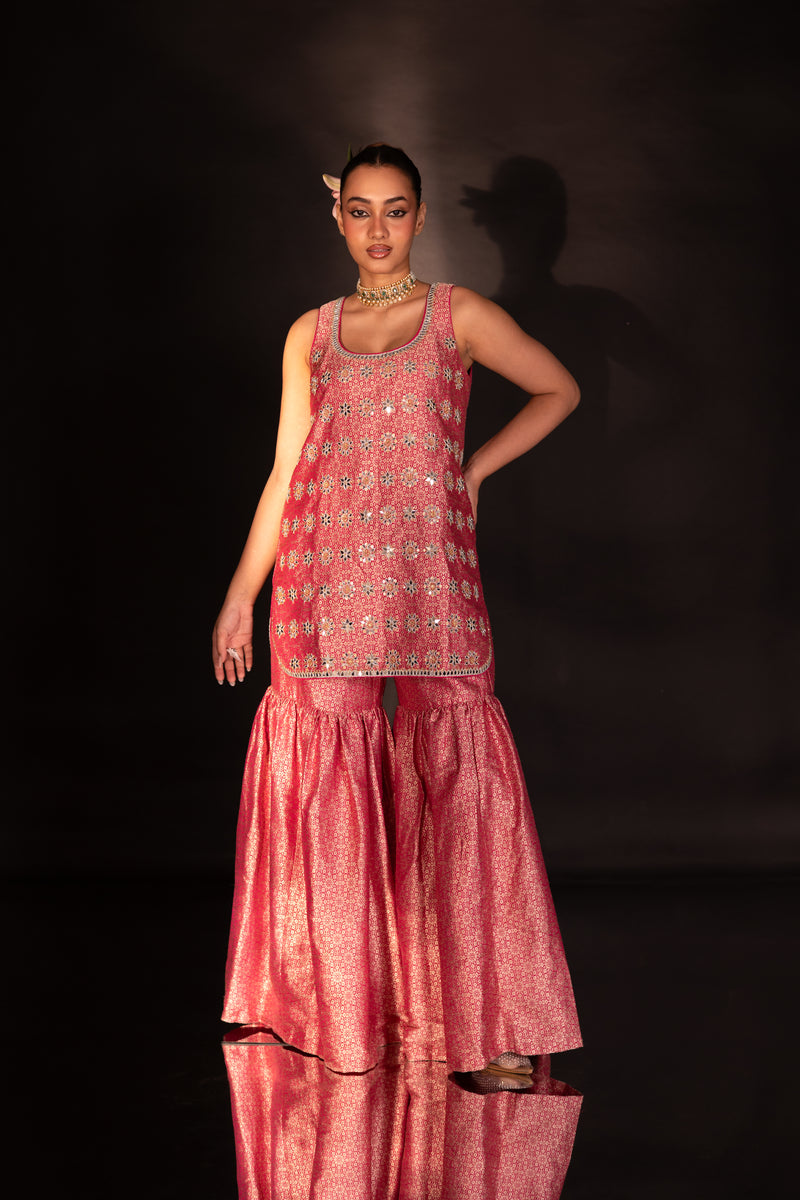
The Rangmahal sharara set (₹32,500) is the most interesting pairing of craft and cloth. It is berry pink brocade, pure handwoven, with an intricate woven pattern of its own, and the sleeveless scoop-neck kurta has mirror work embroidery across the front. Here two crafts sit on top of each other: the pattern was made by a weaver on a loom, and the mirrors were stitched on afterwards by hand. Mirrors on brocade are a deliberate restraint; the cloth already has texture, so the mirror only has to add the light.
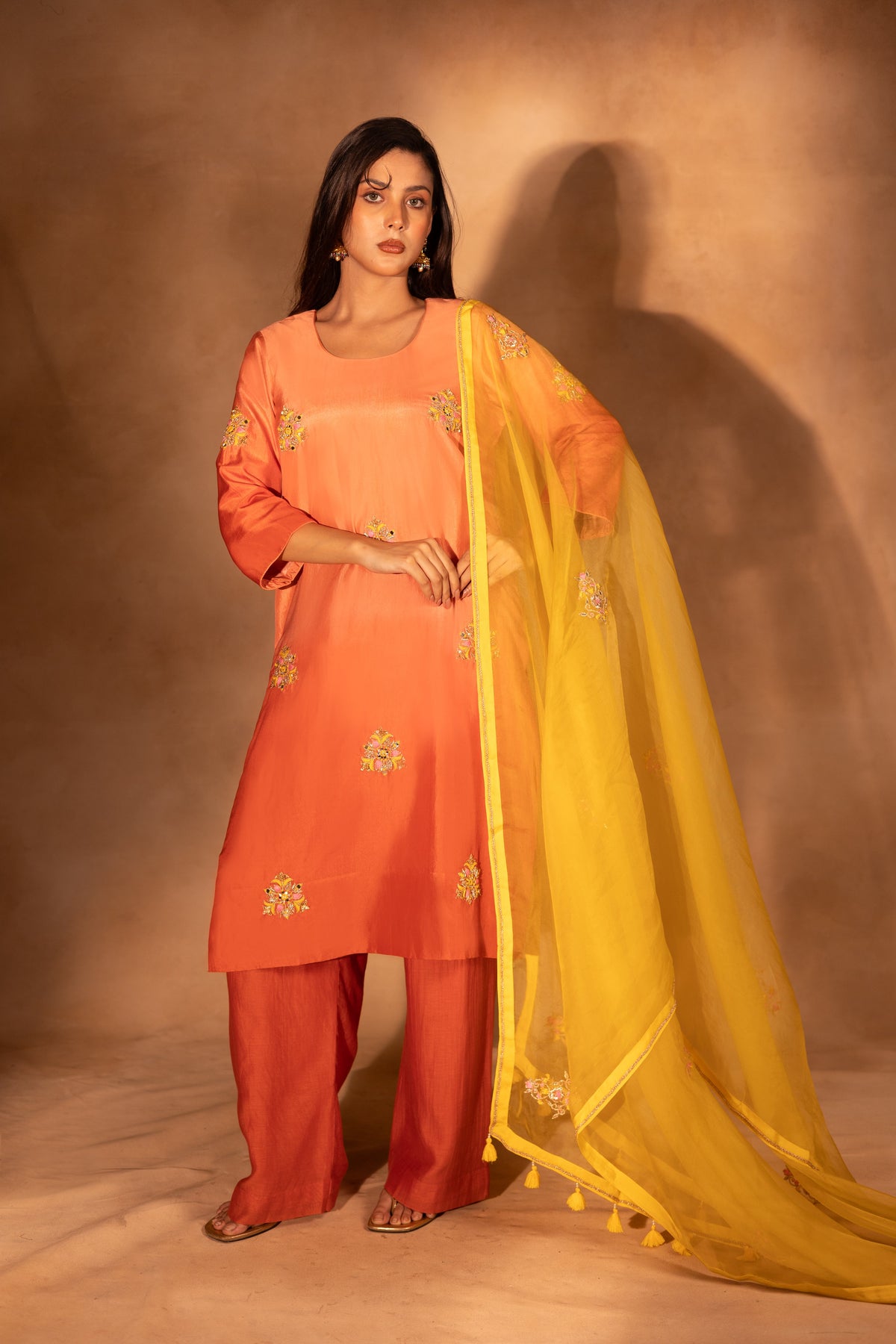
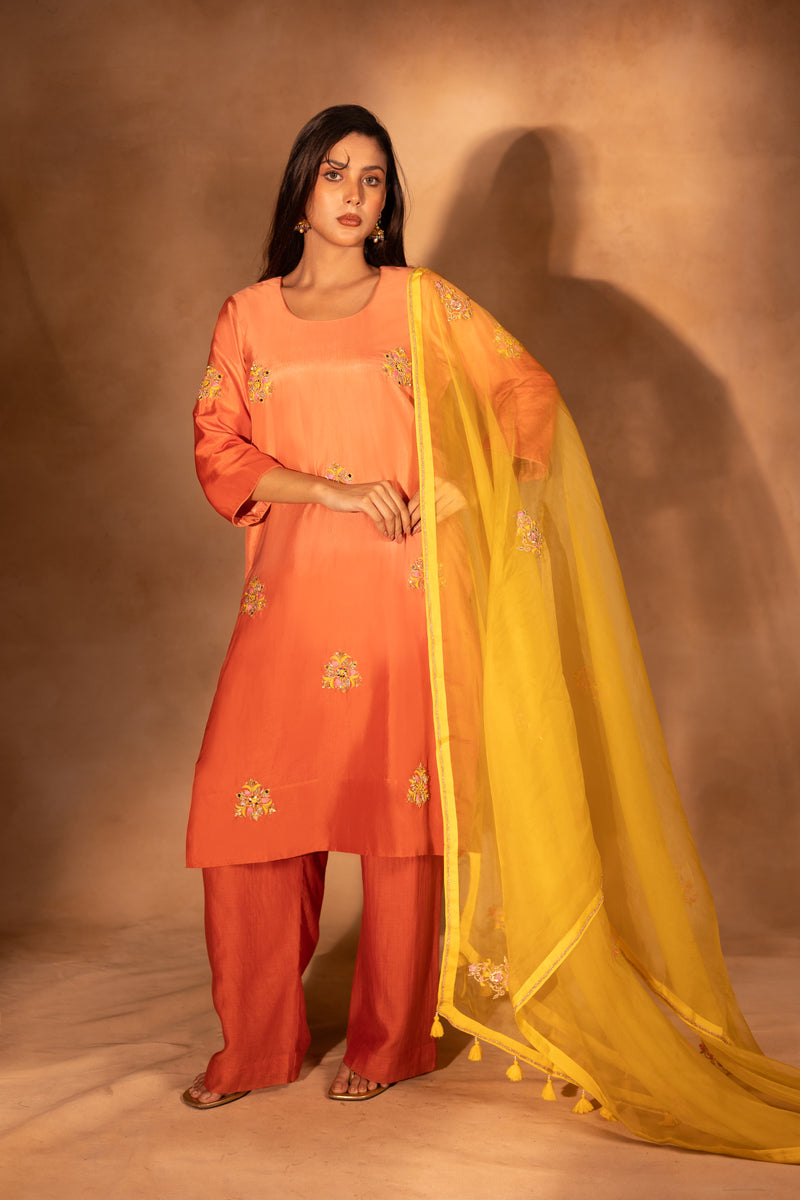
The Arunima kurta set (₹29,500) uses mirror as one voice among several. The kurta is shaded burnt peach silk, scattered with floral motifs crafted with mirror, dori, nakshi, sequins and resham work, over terracotta orange Chanderi pants. Dori is a cord made by twisting finer threads together; nakshi is metallic wire coiled like a fine spring, so it glints as you move. Our hand embroidery materials glossary sets them beside the rest. Arunima's components are the kurta and pant; the Peeli dupatta is sold separately.


Marodi: Zarnoon and Gulal
Marodi takes its name from marod, to twist. Yarns are twisted by hand into a cord, and the cord is then laid onto the cloth in repeated loops and couched down with a second, often contrasting, thread, so the line has a raised, rope-like texture. The motifs tend to have curved contours, and unlike fully padded zardozi the work stays slightly open. You will sometimes see marodi described simply as a chain-stitch effect; the look is related, but the twisted-and-couched cord is what gives it its depth. Our marodi guide goes further.
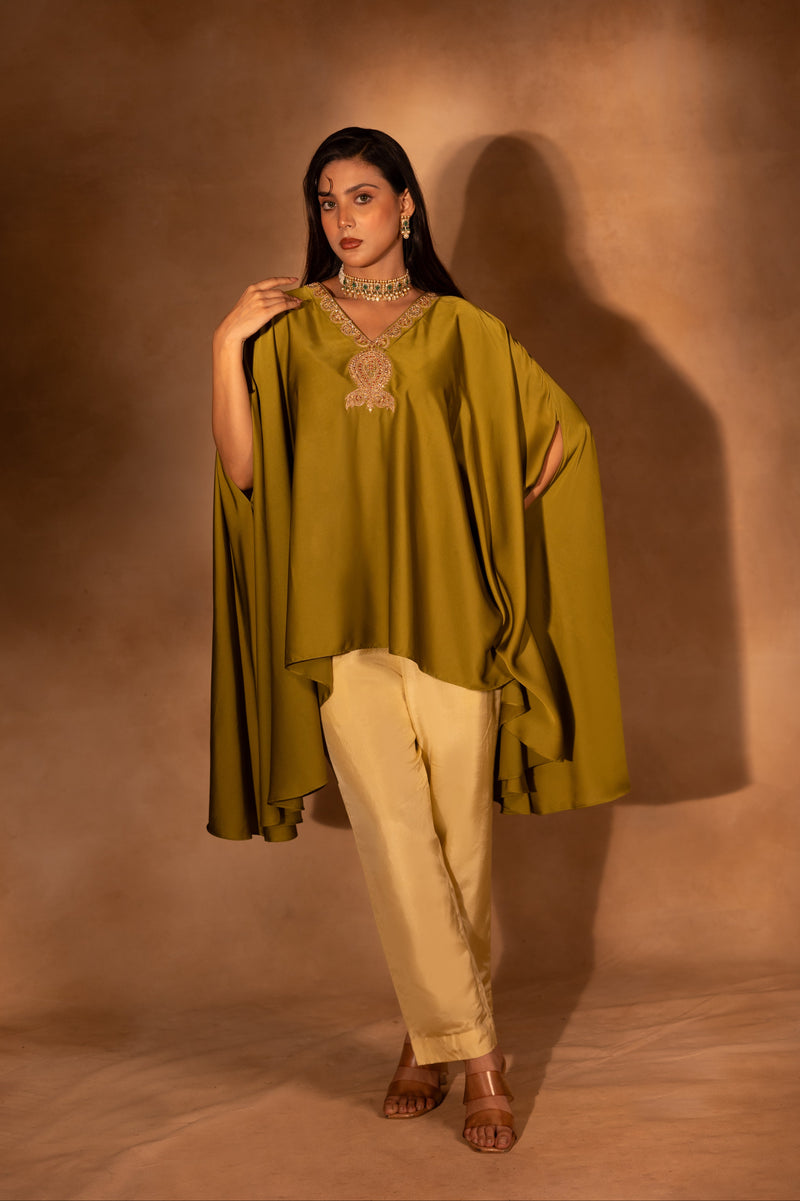
The Zarnoon cape set (₹18,500) is the collection's one cape, and it lets marodi do all the talking. A mehendi green satin cape with a fluid, draped silhouette and cascading layers carries gold-toned Marodi embroidery along the V-neckline and a statement motif at the centre; it comes with straight-fit lemon yellow satin pants. Because a cape needs no dupatta, it is also the most self-contained look in Haseena.
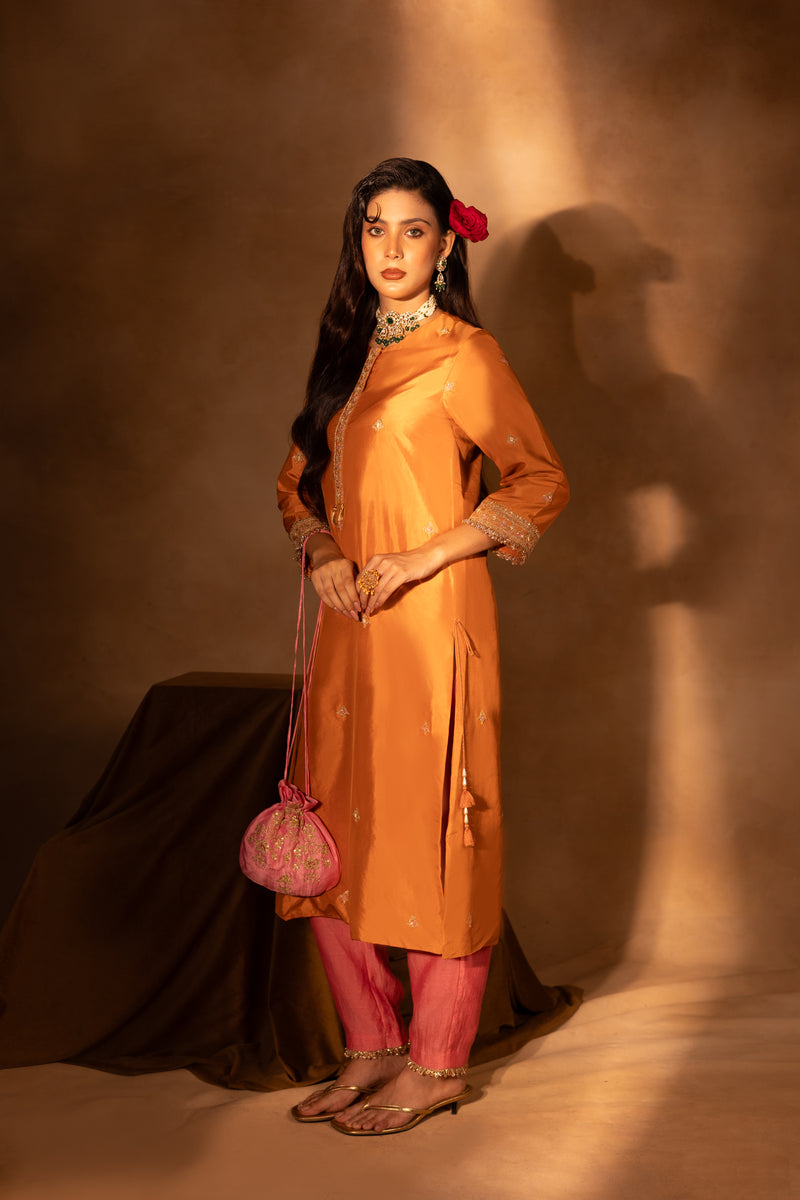
On the Gulal kurta set (₹23,500), marodi works as architecture. The kurta is marigold orange silk with Marodi embroidery running down the front placket, complemented by scattered embroidered motifs and tassel detailing, over dusty coral pink Chanderi pants. It is styled with the deep green Panna dupatta, sold separately.


Moti, Cutdana and Resham: Saba and Pankhuri
These three are the softest-spoken techniques in the collection, and they almost always travel together.
- Moti simply means pearl. In embroidery it is a pearl bead sewn on by hand, and it gives a soft glow rather than a sparkle. Our product descriptions name moti as a technique but do not state the bead material, so we do not claim natural or cultured pearls. The moti work guide explains the difference.
- Cutdana is cut glass bead work: small beads with flat, faceted faces, stitched on one at a time so they throw light in several directions at once. See the cutdana and bead embroidery guide.
- Resham means silk, and in embroidery it is the silk-floss thread that carries colour. It is how a karigar builds a petal in several shades, almost painting with a needle. More in our resham thread work guide.
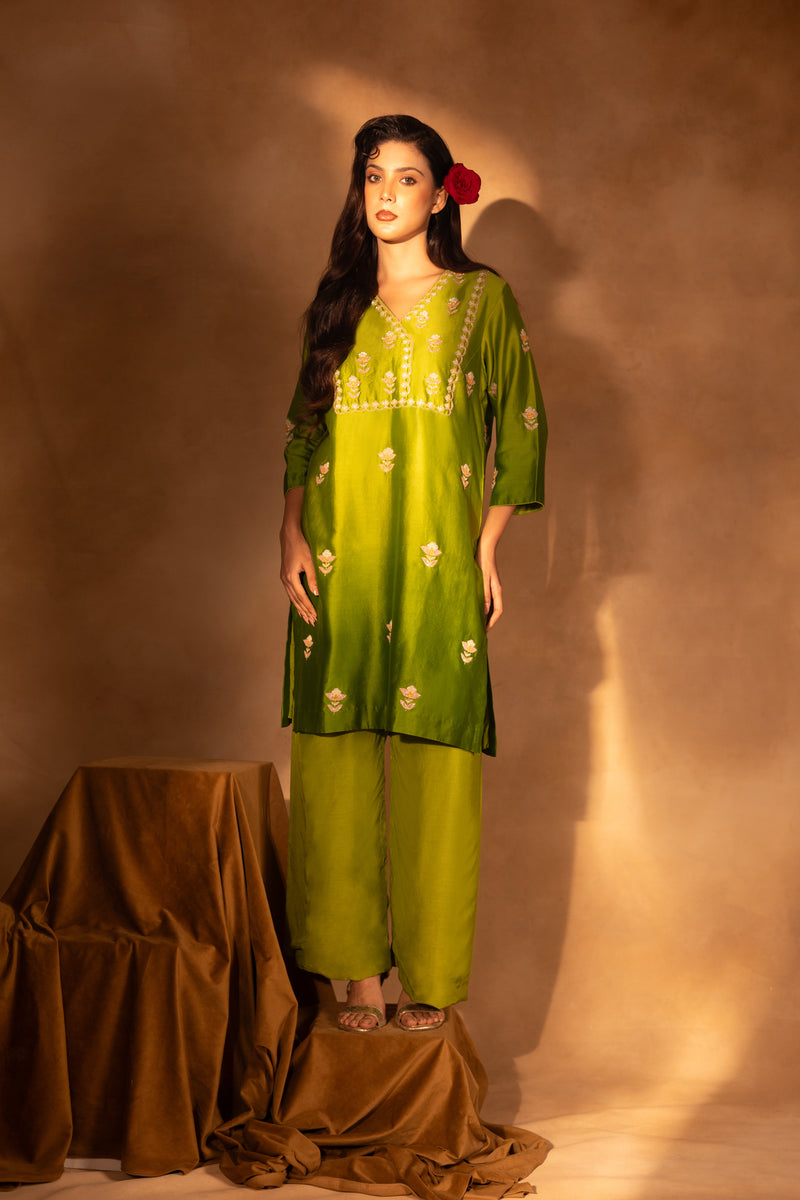
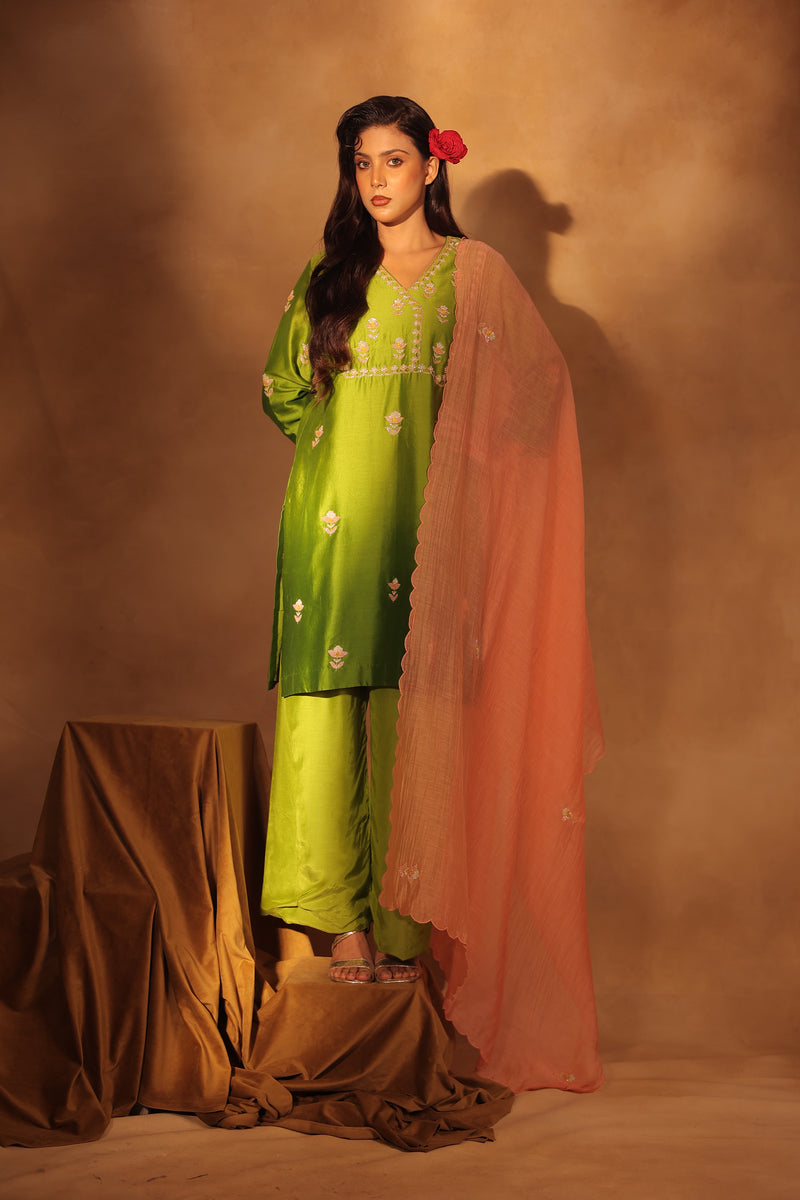
Put together, resham draws the flower, cutdana catches the light and moti softens it. That is exactly the recipe on the Saba kurta set (₹25,500): a parrot green Chanderi kurta with floral embroidery in soft pink and gold tones crafted using moti, cutdana and resham, detailed across the yoke and scattered in floral motifs throughout, with a V neckline, three-quarter sleeves and straight-fit pista green pants.
Its partner, the Pankhuri dupatta (₹12,500), sold separately, repeats the language on peach pink Chanderi: scattered floral motifs embroidered with moti, cutdana and resham, finished with a scalloped edge. Together they make the only Haseena look where the set and the dupatta share the same three techniques, and the pair comes to ₹38,000. Pankhuri is also the easiest way to bring Haseena's handwork to a kurta you already own.

Aari, Cutdana, Beads and Sequins: Meghna
Aari is chain stitch made with a hooked needle rather than an ordinary one. The cloth is stretched on a frame, the karigar works the hook from above and feeds the thread from below, and each loop is pulled up through the last, so a fine, continuous line forms on the surface. It is associated with Kashmir and with Gujarat, where the Mochi community's chain-stitch embroidery is famous. Our aari embroidery guide explains the tradition.
The Meghna kurta set (₹24,500) is the most layered neckline in the collection. The dusty blue Chanderi kurta has V-neckline embroidery crafted using beads, sequins, Aari and cutdana, with delicate floral motifs scattered across the front and detailed embroidered borders on the sleeves, over powder blue silk pants. Aari gives the outline, cutdana and beads give the texture, and sequins add the flicker. It is styled with the Sonchampa dupatta (₹14,500), sold separately: mustard yellow georgette with delicate scattered motifs and a sequins-embellished border, a vivid counterpoint to all that blue.

Gold-Toned Embroidery, Patchwork and Tassels
A large part of Haseena is described simply as gold-toned embroidery, and we keep that wording. It tells you the colour and character of the work, not the metal in the thread.
The Gulbadan kurta set (₹27,500) is the tonal one: dusty rose Chanderi with gold-toned embroidery in a flowing vine pattern across the front and sleeves, a round neckline and a straight silhouette, over matching dusty rose Chanderi pants. The Angaar kurta set (₹22,500) is rust orange Chanderi with gold-toned embroidery around the neckline, a keyhole detail, scattered motifs, embroidered sleeve borders and colourful tassels along the sides.
Two pieces add patchwork, which the descriptions name plainly. The Raktima kurta set (₹26,500) is red orange silk with gold-toned embroidery around the neckline extending into a statement motif at the centre, embroidered bootis with colourful patchwork detailing scattered across the kurta, and embellished sleeve borders, over matching silk pants. The Dastaan kurta set (₹29,500) is copper coin tissue with paisley embroidery along the neckline, highlighted with single-colour patchwork and gold-toned embellishments, a matching paisley boota on the sleeve, and pants in pure handwoven brocade.
Tassels, or latkans, are the collection's punctuation. They appear on Angaar and Gulal, and on dupattas such as the Chaandi: silver organza with delicate scattered motifs, a silver gota border and fine tassels. Gota is a woven metallic ribbon, Rajasthan's signature trim; here it is used as an edging, not the folded appliqué of gota patti.
What We Do and Do Not Claim
- No zari or zardozi claims. Haseena descriptions say "gold-toned", so we do.
- No pearl claims. Moti here means a pearl bead; ask us on WhatsApp if the material matters to you.
- No weaving claims. The brocade, tissue and Chanderi are bought cloth; the handwork is ours.
- Every piece is handmade and made to order in our Jaipur atelier, so no two will be identical. If you want to check, our hand vs machine embroidery guide shows what to look for on the reverse.
A timing note: each piece takes 4–5 weeks to make, plus 3–7 days shipping, so anything ordered today arrives around the first week of December at the earliest. That is too late for Diwali on 8 November, but comfortable for December to February weddings. Express is sometimes possible, depending on the piece and the month; ask us on WhatsApp. Custom measurements are free; design changes are not automatic, so ask what is possible on a given design. Dupattas are sold separately, and our Haseena dupatta pairing guide lists which one is styled with which set.
Haseena, Embroidered by Hand in Jaipur
Kurta sets, sharara sets, a cape set and dupattas in mirror work, marodi, moti, cutdana, resham and aari, from ₹12,500 to ₹32,500. Each piece is made to order in our Jaipur atelier over 4–5 weeks, with custom measurements at no extra charge, and we ship worldwide. Free shipping applies to domestic orders above ₹30,000. Browse the Haseena collection.
Shop HaseenaMore Haseena stories: introducing Haseena · the fashion of Hindi cinema's golden age · the Haseena colour palette · the dupatta pairing guide
Frequently Asked Questions
What embroidery techniques are used in the Haseena collection?
Mirror work (Mehrab, Rangmahal, Arunima), marodi (Zarnoon, Gulal), moti, cutdana and resham (Saba and the Pankhuri dupatta), and aari with cutdana, beads and sequins (Meghna). Arunima also uses dori and nakshi. Many other pieces use gold-toned embroidery, and some add patchwork and tassels.
What is the difference between marodi and aari?
Aari is chain stitch made with a hooked needle on a framed cloth, producing a fine continuous line. Marodi uses yarn twisted into a cord, which is laid on the cloth in loops and couched down with a second thread, giving a raised, rope-like line. The two can look related, but marodi has more depth.
How are the mirrors attached in mirror work?
By stitching alone. The embroiderer makes a cage of thread across the face of each small mirror to hold it to the cloth, then frames it with a second ring of stitches. No glue and no hole are needed.
Is the gold embroidery in Haseena zari?
We describe it as gold-toned embroidery, because that is what our product descriptions say, and we do not claim zari or any particular metal content. If it matters to you, ask us on WhatsApp about a specific piece before you order.
How long does a Haseena piece take to make?
Every piece is made to order in our Jaipur atelier over 4–5 weeks, plus 3–7 days shipping. Custom measurements are free, and express is sometimes possible depending on the piece and the month, so ask us on WhatsApp.
Made to order in 4–5 weeks
Have an event date? We’ll tell you exactly when to order by.
We take a limited number of orders each month — secure your slot early.
WhatsApp me my order-by date + a shortlistNot sure where to start?
Tell us what you're dressing for and we'll help you choose — fabric, fit, colour, and timeline — over WhatsApp or on a video call.
Your Cart
Pieces from this story
All pieces →Not sure which piece, or need it by a date? Book a video consultation Ask us on WhatsApp
Keep reading
The journal →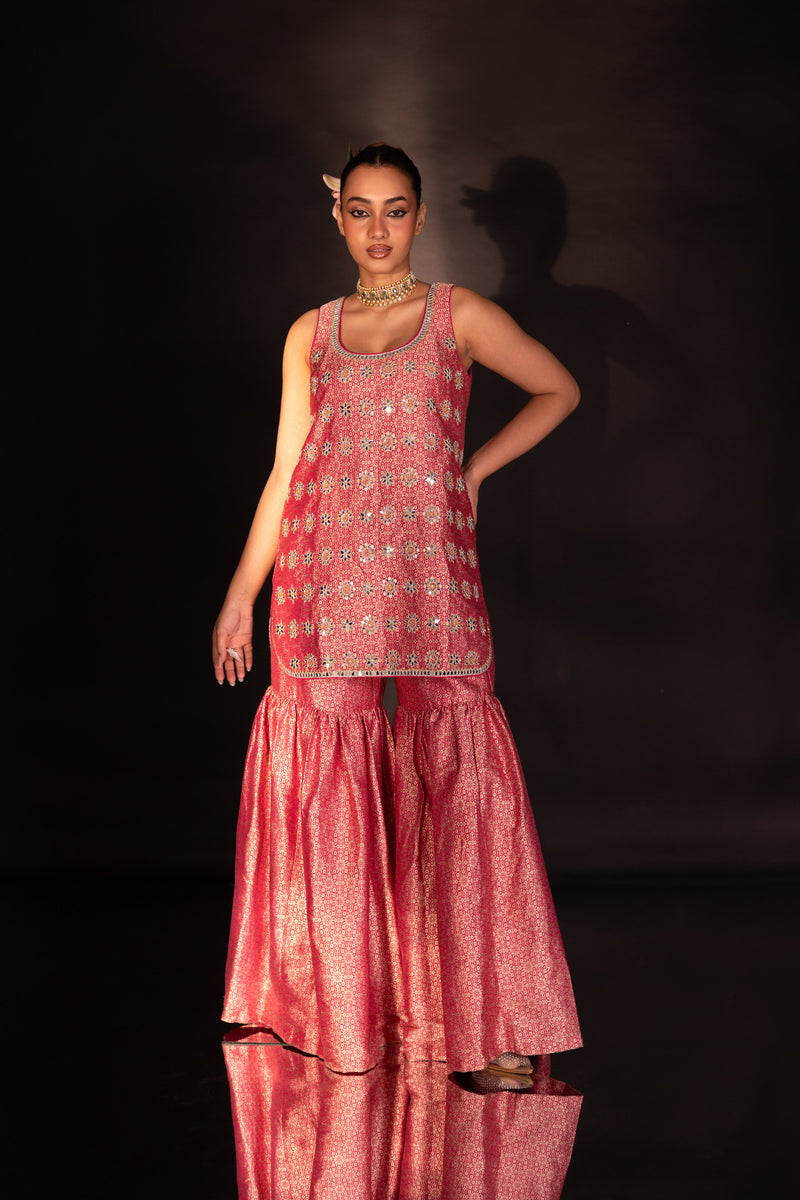
Introducing Haseena: A Collection for the Woman You Remember
Haseena is our new collection: kurta sets, sharara sets, a cape set and dupattas in Chanderi, silk and organza, inspi...
28 October 2026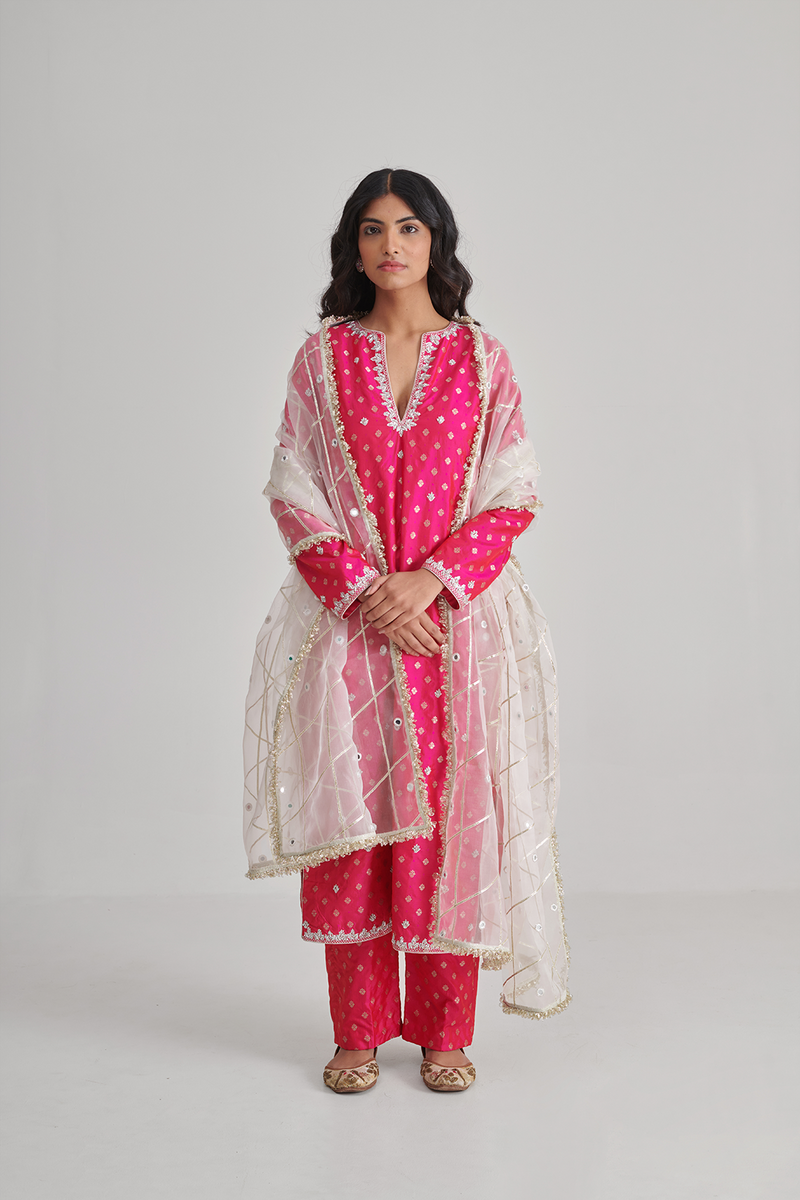
Sequin & Mirror Work in Indian Fashion: A Complete Guide
Everything about sequin and mirror work in Indian fashion — mukaish, shisha, cutdana techniques. How to wear, style, ...
3 April 2026
Best Mirror Work Ethnic Wear Brands in India 2026: Designers, Kutch Craft & How to Judge Shisha
Where to buy mirror work (shisha) ethnic wear in India: designer labels, Kutch craft collectives and Jaipur ateliers,...
1 October 2026