
How Many Outfits Do You Need for an Indian Wedding? A Guide by Role and Function
The short answer: one look per function you attend — but far fewer actual pieces than that. A guest at a one-day wedding needs one or two outfits. A guest at a two- or three-day wedding needs three or four looks, which can come from two or three pieces worn cleverly. Close family usually needs four or five, the sister of the bride five or six, and the mother of the bride four to six. The bride's trousseau is a separate list altogether.
The rest of this guide is about how to get there without buying eleven outfits you will each wear once. It covers how to count your functions, what each role actually needs, how to repeat without anyone noticing (or caring), what to spend per piece, and — because everything we make is made to order — when you need to order to have it in hand.
The Quick Answer, by Role
- Guest at a one-day wedding (ceremony and reception on the same day): 1–2 outfits. One if it is a single event; two if there is a day ceremony and an evening reception and you are staying for both.
- Guest at a two- or three-day wedding: 3–4 looks from 2–3 pieces. Mehendi or haldi, sangeet, and the wedding are the usual three; the reception is often where a guest repeats.
- Close family (cousins, aunts, the couple's close friends): 4–5 looks, because you are invited to the smaller functions too — the puja, the haldi, sometimes a roka or engagement dinner.
- Sister of the bride or groom: 5–6 looks. You are at everything, you are in every photograph, and you are often on stage at the sangeet.
- Mother of the bride or groom: 4–6 looks, fewer changes per day than the sister, but each one needs to hold up through hours of hosting.
- The bride: a different question entirely — see our bridal trousseau checklist.
Step One: Count the Functions You Are Actually Invited To
Before you buy anything, get the list. A typical North Indian wedding runs some version of a puja, haldi, mehendi, sangeet, the wedding itself and a reception; a South Indian wedding may compress most of this into a morning muhurat and a reception; many families now fold the mehendi and sangeet into one evening. Customs vary enormously between communities and between families, so ask the hosts, or look at the invitation cards — the number of cards in the box is usually the honest answer.
Then sort the functions into three kinds:
- Daytime and messy — haldi, puja, a morning mehendi. Light fabrics, nothing precious. Often something you already own.
- Evening and festive — mehendi night, sangeet, cocktail. This is where colour and movement matter.
- The main event — the wedding ceremony and, for close family, the reception. The one piece worth spending on.
Most people need one hero piece for the main event and one or two supporting pieces that can be worn more than one way. Everything else can come from your cupboard.
Guests: One-Day and Multi-Day Weddings
At a one-day wedding, buy one good outfit and let it carry you from the ceremony to dinner. If there is a long gap between the two, change your dupatta and jewellery rather than your whole outfit — it reads as a different look in photographs and costs nothing.
At a two- or three-day wedding, the maths changes. A useful plan: something yellow or light for the haldi, one piece with movement for the sangeet, and your best piece for the wedding. For the haldi, the Afreen & Maahi set (₹15,875) is sunshine-yellow Chanderi with hand-embroidered flowers in cutdana and bead work and a beaded neck and sleeve hem — soft, easy and light enough for a daytime function. (Our haldi dress code guide has more.)
For the wedding itself, a lehenga is still the classic guest choice. The Mehergul & Abroo lehenga (₹25,000) is rani pink silk, the lehenga cut with fluid gathers and the blouse hand-embroidered in sequins, cutdana and thread work in floral and vine motifs. For a day wedding, the Bano & Dilruba lehenga (₹28,500) is soft pistachio silk tissue with a voluminous flare and a wide border of roses and vines in sequins and beads, with hints of coral and rose gold. Neither includes a dupatta — which, as you will see below, is an advantage.


Close Family and the Sister of the Bride
This is where the count climbs, and where repeating smartly matters most. As a cousin or aunt you are likely at the smaller family functions too, so plan for four or five looks. As the sister of the bride or groom, plan for five or six — and expect to be photographed from every angle at each one. Our sister of the bride guide goes function by function.
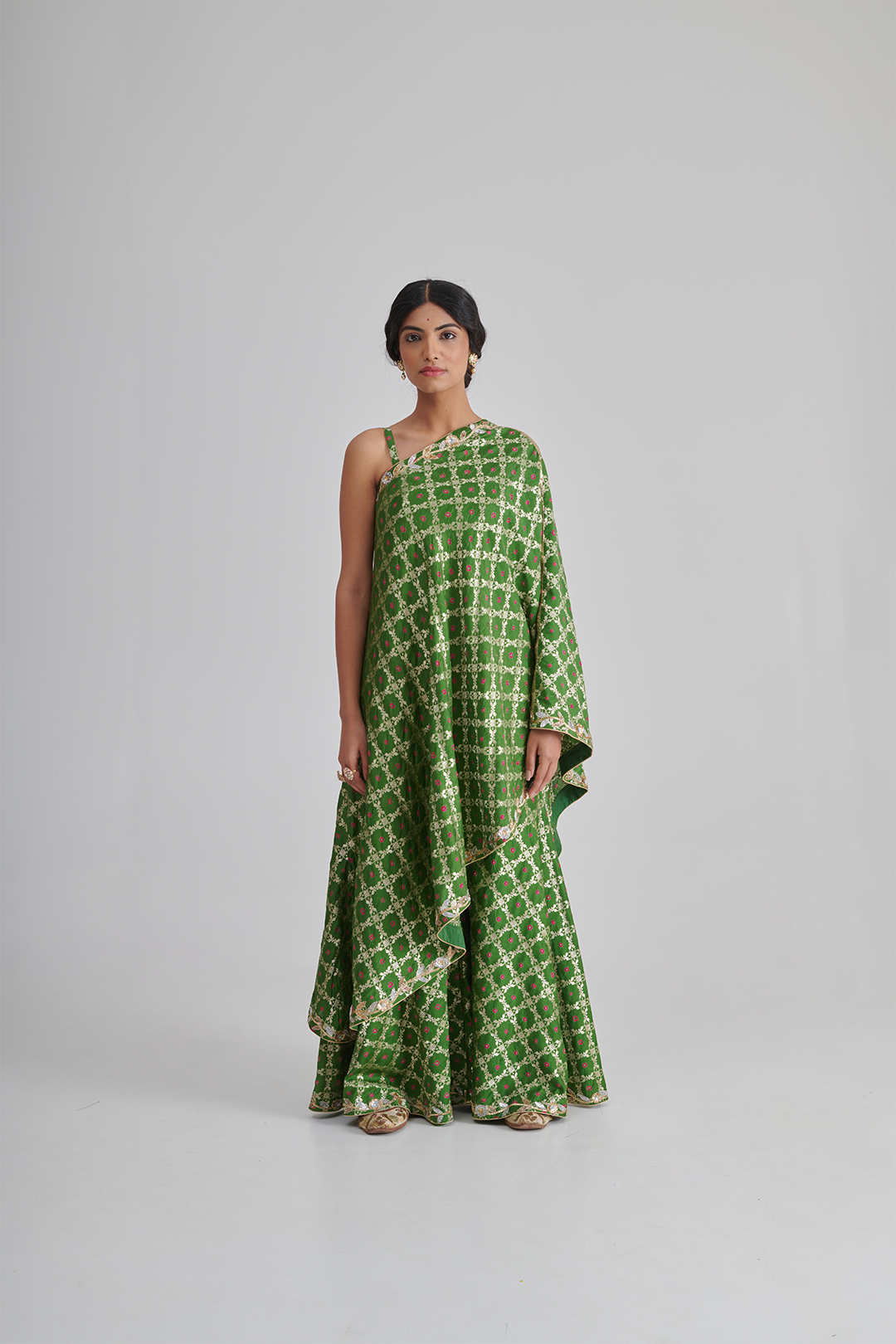
The trick for both is the multi-piece set: one purchase that becomes two distinct looks. The Mastani, Leyla & Nalini set (₹21,500) is emerald cheniya bandhani jacquard silk with floral motifs woven in gold and silver thread, and it comes as three pieces — a one-shoulder cape with a hand-embroidered floral border and sequin work, a strap bustier, and a sharara. Worn complete, it is a sangeet look. On another evening, leave the cape off and drape a dupatta over the bustier and sharara, and it reads as a different outfit.
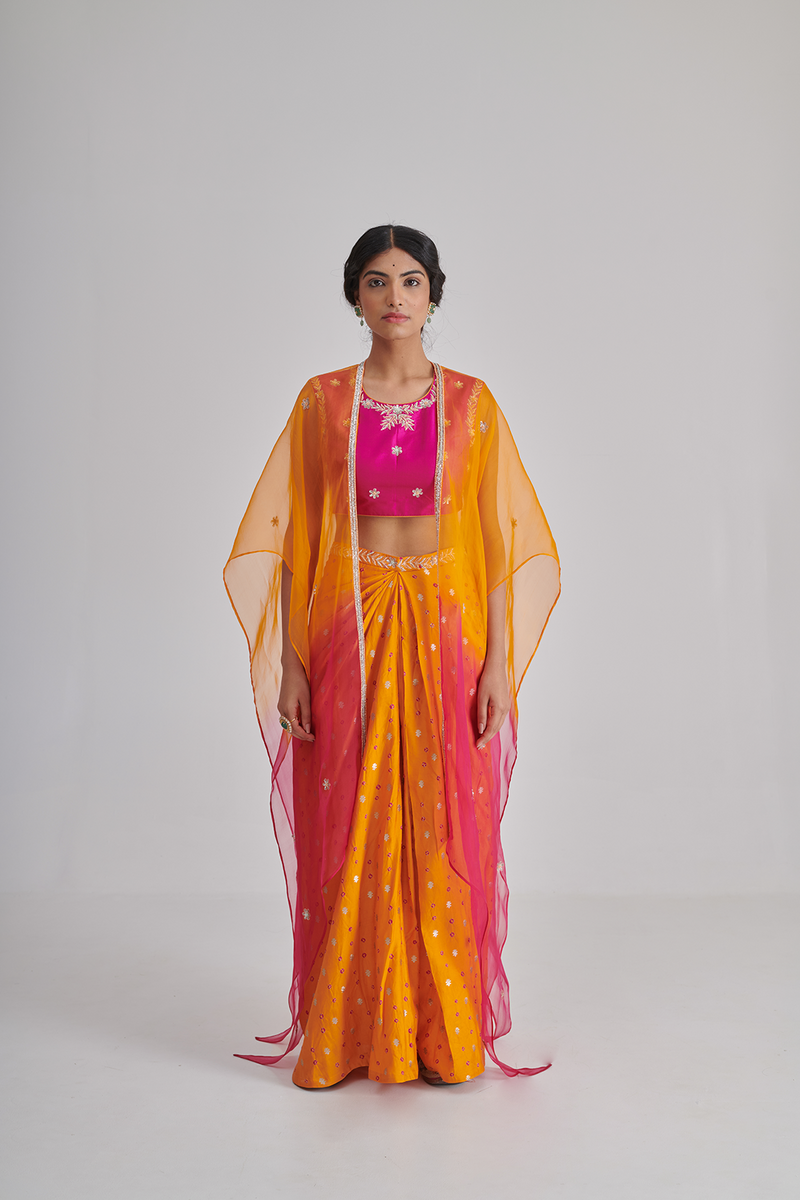
The Rumi, Akira & Vihana set (₹16,500) works the same way: a rani pink dupion silk blouse, an orange ombre cheniya bandhani brocade silk draped skirt, and a sheer organza cape shading from pink to orange. Cape on for the sangeet; cape off with a dupatta for the mehendi.

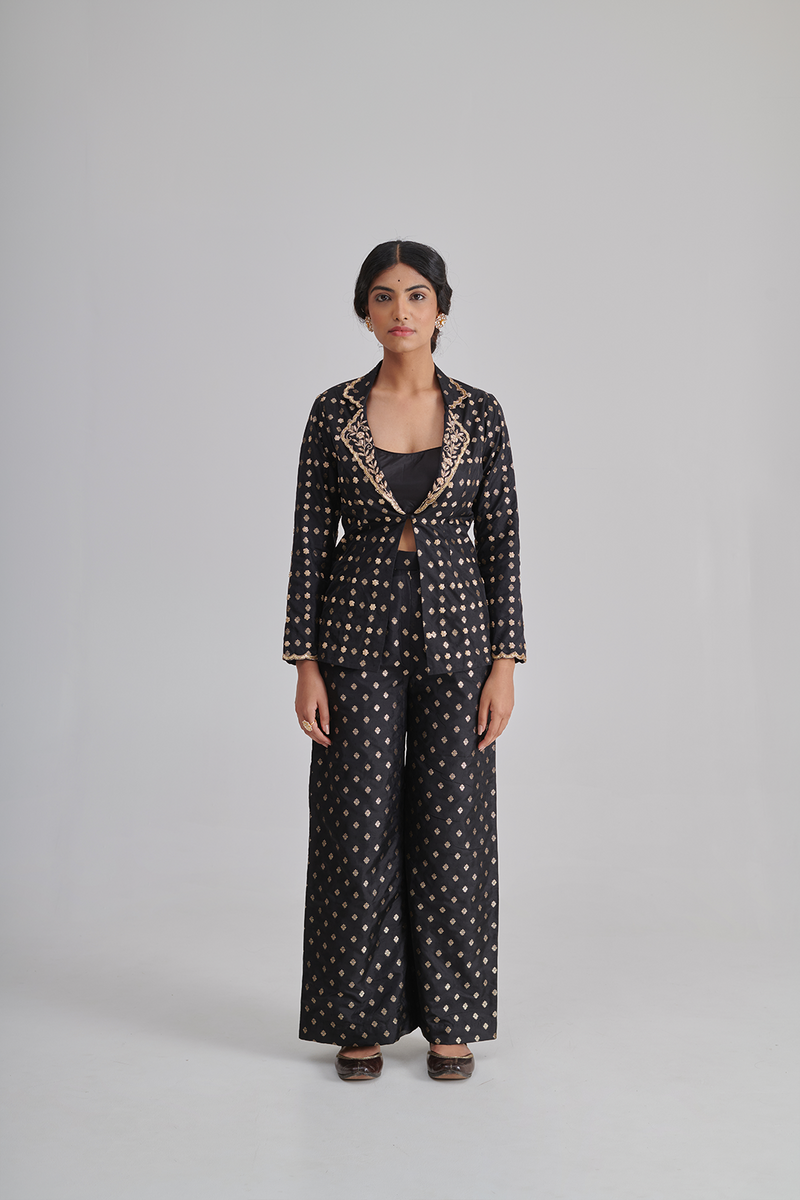
For a cocktail night or a reception that calls for something sharper, the Raat Rani, Vani & Kiyara set (₹16,500) is a fitted blazer and wide-leg pants in black Varanasi silk brocade with an all-over gold jaal and hand-embroidered borders and collar, over a dupion silk bustier. One caution: some families still avoid black at weddings, so keep it for the cocktail rather than the pheras. The blazer, on its own, will also sit over plenty of what is already in your cupboard.
Mother of the Bride or Groom
Mothers need slightly fewer looks than sisters but more endurance from each one: you will be receiving guests, doing rituals, sitting through the pheras and standing at the reception, often on very little sleep. Plan four to six, and put the most money into the wedding day itself. The Taraana saree (₹51,800) is soft antique-gold tissue, embroidered entirely in resham with floral and paisley vines along the borders and pallu, scattered bootis across the body and a fine line of sequins along the border — rich without being heavy, and exactly the kind of piece a mother wears again at every family wedding after. Our mother of the bride and groom guide covers the rest of the week.
How to Repeat Without It Looking Repeated
Repeating is not a compromise any more; it is how most well-dressed women handle a busy season. (Our guide to outfit repeating makes the full case.) Three methods do most of the work.
1. One saree, two blouses
A saree changes character entirely with its blouse. The Zariya saree (₹22,595) is soft mint-green Banarasi with diagonal bands of sequins and gota in antique gold and a fine pink selvedge. Pair it with the Ruhani blouse (₹7,500) — deep rani pink silk sprinkled with sequin floral bootis, with gota-inspired borders — and the pink selvedge suddenly makes sense; it is a bright, festive daytime look. Pair the same saree with the Ojasvi blouse (₹18,500), champagne-gold brocade embroidered in marodi, gold zari, resham and beadwork with a tie-up back and handcrafted tassels, and it becomes an evening look. The saree is sold without a blouse, so you are choosing the blouse anyway.


2. The dupatta swap
The cheapest outfit change there is. A plain or lightly worked kurta set becomes three different looks with three dupattas. The Kainaat dupatta (₹9,750) is sheer organza with circular medallions of gota patti, sequins, resham and beadwork running its length and a gota-finished border — drawn from the old phool jhaal odhanis. The Bageecha dupatta (₹12,500) is wide colour-blocked panels of yellow and rani pink in organza silk, with aari and sequin flowers and a soft silver zari border. The same trick works on a lehenga: the Mehergul and Bano sets above come without dupattas, so each can be worn with two different ones. Our dupatta collection has the full range.
3. Separates across functions
A cape set, a blazer set or a lehenga with a separate blouse is really a small wardrobe. A bustier from one set can go under a different cape; a sharara can go with a different kurta; a lehenga skirt can be worn with a statement blouse you already own. Before you order, ask yourself which pieces you could mix with things in your own cupboard. Our re-styling guide has more ideas.
What to Spend per Outfit
Budget for the whole wedding, not per function, and put the money where the photographs will be. A sensible split for a close-family member attending four or five functions:
- One hero piece for the wedding or reception — this is where hand embroidery and a proper fit earn their price. In our range, lehengas and sharara sets for this role start around ₹16,500 and most sit between ₹21,500 and ₹40,000.
- One or two versatile sets that can be worn two ways — cape sets, sharara sets, a saree with two blouses.
- Two or three dupattas or blouses to refresh what you already own — in our range, dupattas start at ₹4,500 and blouses at ₹6,250.
- Your own cupboard for the haldi and the puja.
Guests at a single wedding can usually stop at the hero piece plus a dupatta. For the full breakdown of what each price tier buys, see how much to spend on a wedding guest outfit.
When to Order: Count Back From the First Function
This is where most wedding wardrobes go wrong. Everything we make is made to order: 4–5 weeks to make, plus 3–7 days to ship. Add a week of buffer to try everything on, sort the jewellery and have any small adjustment done before you travel. That is roughly seven weeks — counted back from the first function you are attending, not from the wedding day.
- Wedding in late November: order now, in the first days of October.
- Wedding in December: order by mid-to-late October.
- Wedding in January or February: order in November or December and relax.
If you are cutting it closer than that, message us before ordering. Express production is sometimes possible, depending on the piece and the month — we will tell you honestly whether your dates can be met. Our order-early guide has the full planning calendar, and if you are dressing children for the same wedding, how many festive outfits a child needs does the same maths for them.
What We Make — and What We Don't
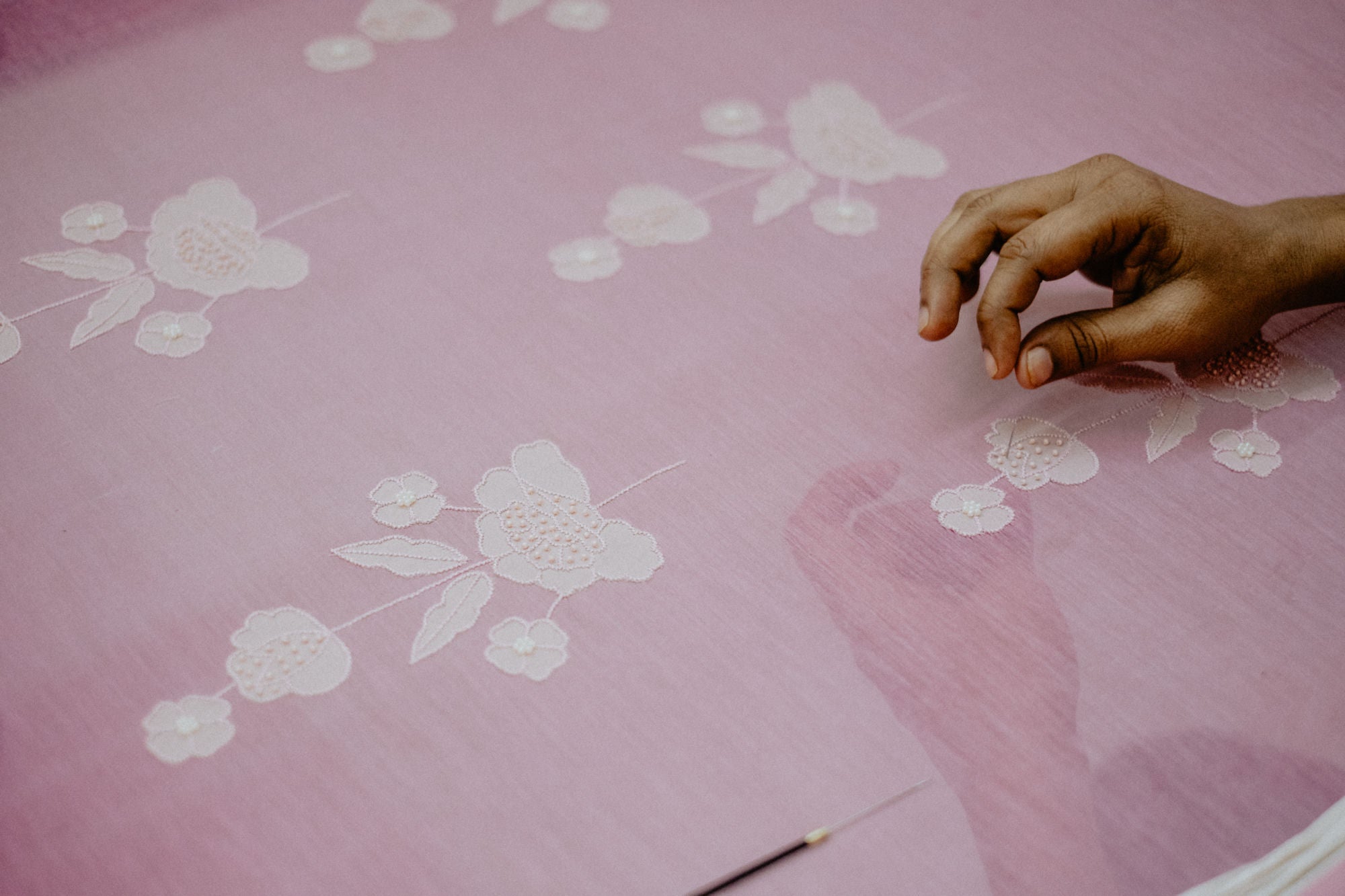
We make women's clothing only: lehengas, sharara sets, sarees, kurta sets, cape sets, blouses and dupattas, all hand-embroidered in our Jaipur atelier and cut to your measurements at no extra charge. We make shararas, not ghararas. We do not make menswear, jewellery or footwear, so the men of the family and your accessories will need to come from elsewhere. And we do not weave: our Banarasi, Chanderi and tissue are handwoven cloth that we buy and then embroider.
Planning a Whole Wedding Wardrobe?
Send us the list of functions, your role and your dates on WhatsApp, and we will help you plan the fewest pieces that cover the most looks. Every piece is made to order in 4–5 weeks, plus shipping, and cut to your measurements at no extra charge.
Browse the CollectionMore wedding planning guides: What to wear to every function · How much to spend · Outfit repeating · When to order
Frequently Asked Questions
How many outfits do I need for a 3-day Indian wedding as a guest?
Usually three or four looks: one for the haldi or mehendi, one for the sangeet and one for the wedding, plus the reception if you are invited. Those looks can come from two or three pieces if you repeat smartly, for example with a multi-piece set worn two ways or a dupatta swap.
How many outfits does the sister of the bride need?
Plan for five or six looks, one for each function. The sister is at every event and in most photographs, so put the most money into the sangeet and wedding looks and cover the smaller functions with repeats and dupatta swaps.
Is it okay to repeat an outfit at an Indian wedding?
Yes. Repeating across different weddings is completely normal, and even within one wedding a piece can be restyled with a different dupatta, blouse or layer so it reads as a new look. The only place to avoid an exact repeat is two consecutive functions with the same guests and photographers.
How far in advance should I order wedding outfits?
For made-to-order pieces, about seven weeks before the first function: 4 to 5 weeks to make, 3 to 7 days to ship, and a week to try everything on. Count back from the first function you are attending, not the wedding day.
What is the cheapest way to change an outfit between functions?
Change the dupatta. A new dupatta over the same kurta set or lehenga changes the colour story and the silhouette in photographs. Changing the blouse under a saree does the same for a drape.
Made to order in 4–5 weeks
Have an event date? We’ll tell you exactly when to order by.
We take a limited number of orders each month — secure your slot early.
WhatsApp me my order-by date + a shortlistNot sure where to start?
Tell us what you're dressing for and we'll help you choose — fabric, fit, colour, and timeline — over WhatsApp or on a video call.
Your Cart
Pieces from this story
All pieces →Not sure which piece, or need it by a date? Book a video consultation Ask us on WhatsApp




Keep reading
The journal →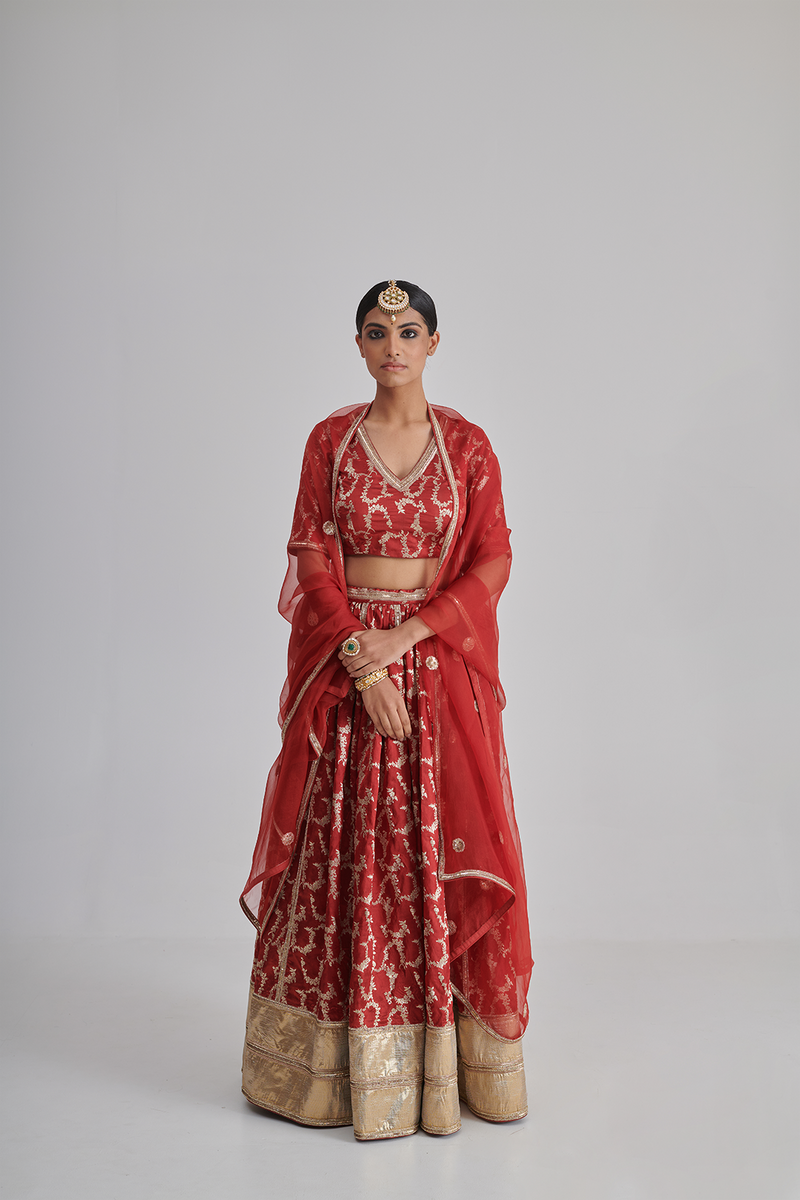
The Complete Bridal Trousseau Checklist for 2026 Brides
Begin with the showstoppers — the outfits that anchor each major event. The modern approach is fewer, better: one exq...
17 June 2026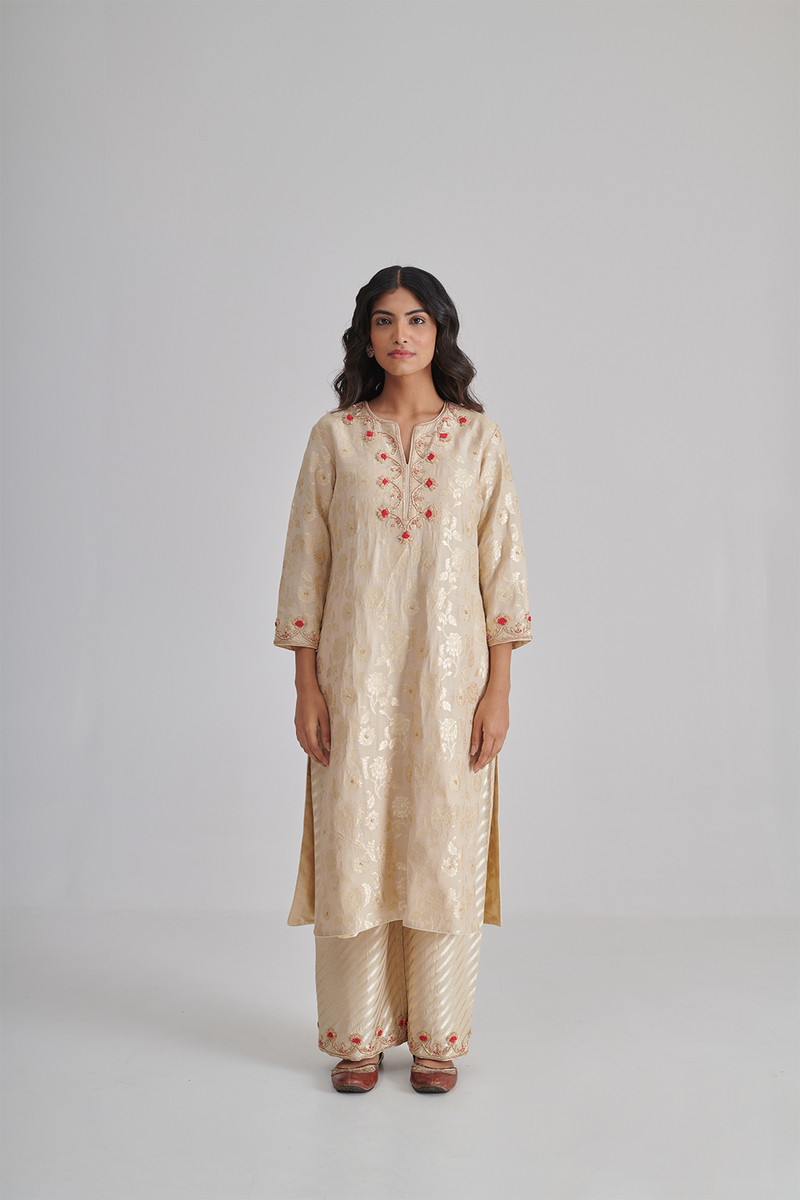
Haldi Ceremony Dress Code: Yellow Outfits, Alternatives & What to Wear
Complete haldi dress code guide - best yellow shades, alternative colours, outfit ideas for bride, sisters & guests, ...
19 May 2026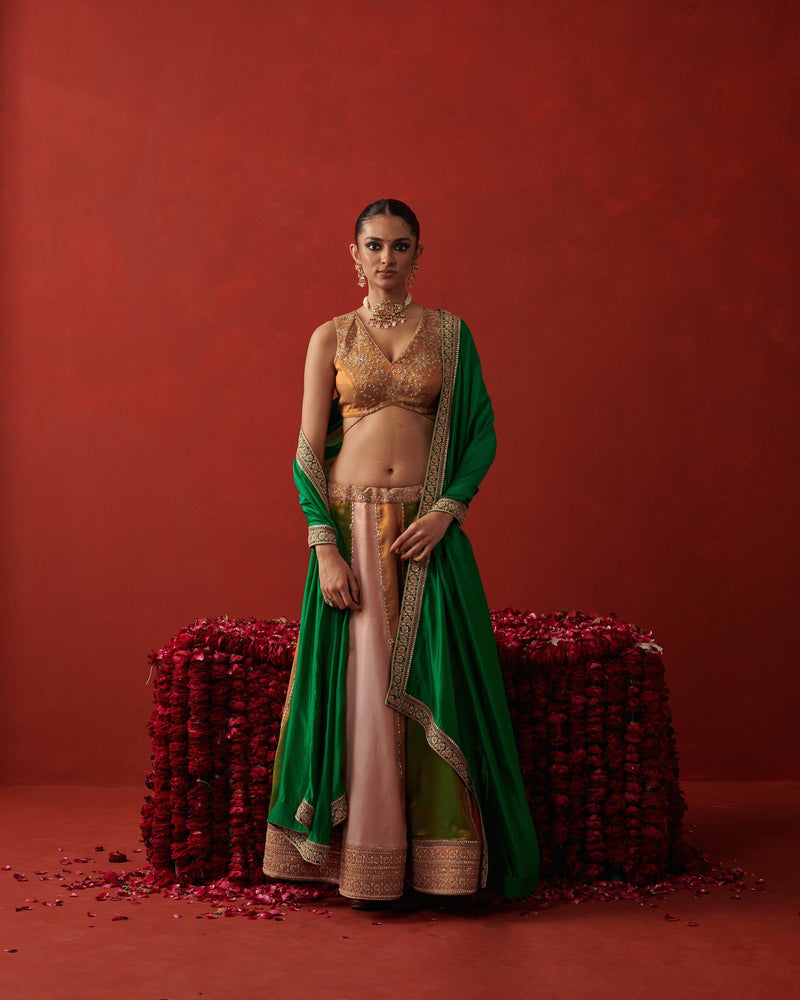
Sister of the Bride: Outfit Ideas for Every Wedding Function
Complete sister of the bride outfit guide for haldi, mehendi, sangeet, wedding & reception. Colour suggestions, styli...
19 May 2026