
How to Get Indian Clothes Altered (and What Genuinely Can't Be Fixed)
The outfit arrives, you try it on, and something is off — the blouse gapes at the armhole, the lehenga pools on the floor, the anarkali is loose exactly where it should be fitted. This is where most people hand the piece to whoever stitches their curtains and hope. Some of what you want is easy and cheap; some of it will destroy the garment. Knowing which is which before you brief anyone is the whole game.
The One Rule That Governs Everything
Alter through plain fabric, never through embroidery.
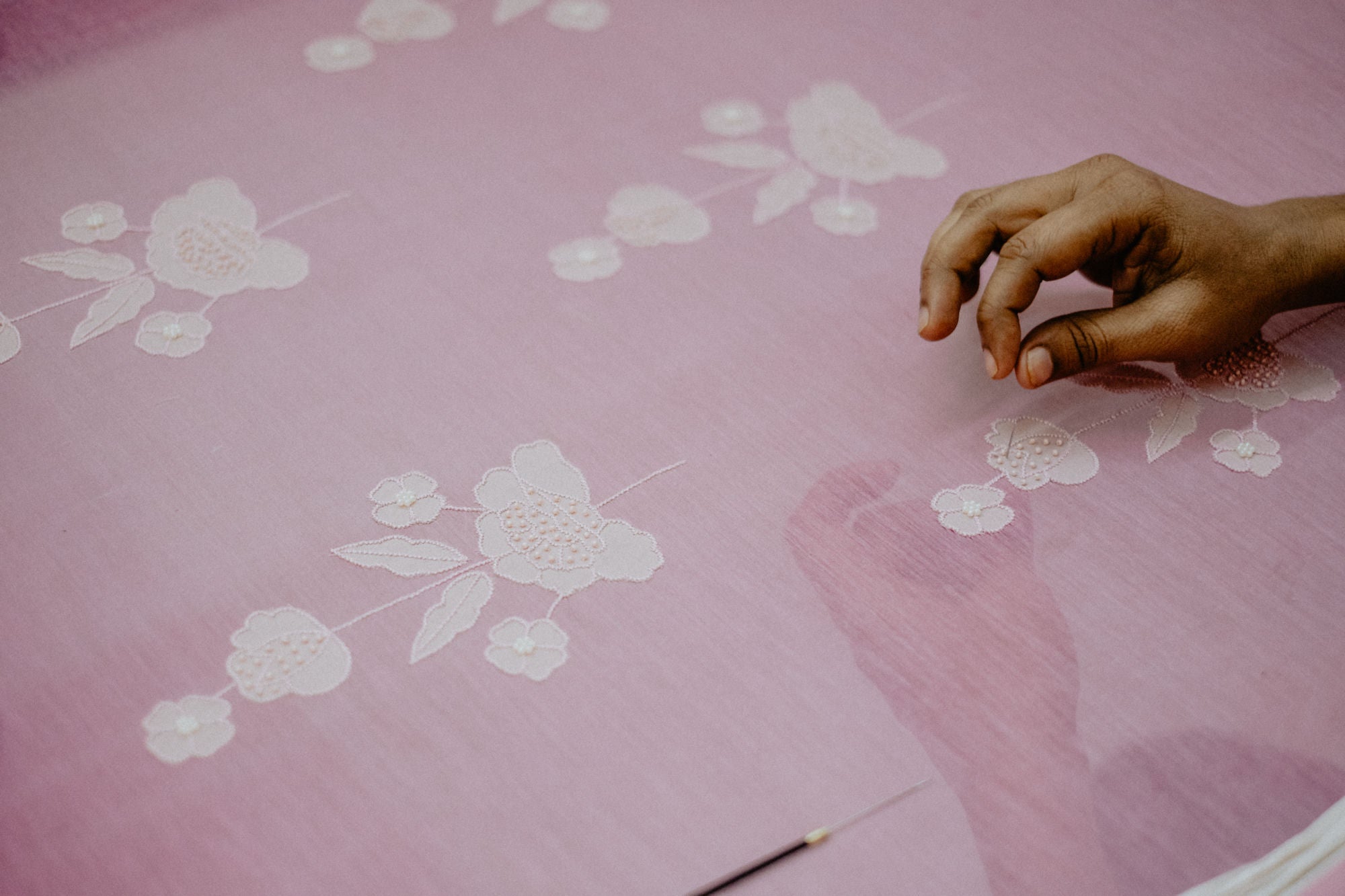
A hand-embroidered garment is worked after the panels are cut but before they're joined, and the design is placed for that specific shape. Cutting into an embroidered area severs threads that were anchored across the whole motif, and there is no clean way to reverse it. A tailor who opens an embroidered yoke to take in a shoulder will hand you back something that unravels.
So the useful question is never "can this be made smaller?" It's "is there plain fabric where the change needs to happen?"
What's Genuinely Easy
- Taking in side seams. Up to about two inches on a kurta or anarkali, more on a straight silhouette. This is the standard, low-risk alteration.
- Shortening sleeves where the cuff isn't embroidered, or where the embroidered cuff can be detached and reattached higher.
- Hemming pants and churidars. Almost always straightforward.
- Adjusting a lehenga or sharara waist, which usually has a plain waistband with real seam allowance built in.
- Adding or moving hooks, and adding a canvas or lining layer to a blouse for structure.
- Taking in a blouse at the side seams and back darts. The most common alteration there is, and usually fine.
What's Hard, Risky, or Simply Not Possible
Letting anything out beyond the seam allowance. Most garments carry half an inch to an inch. Past that, there is no fabric. This is the single most common disappointment, and the reason to size up rather than down if you're between sizes.
Shortening a lehenga or anarkali from the hem when the hem is bordered. The border is the design. Cutting it off leaves you with a plain edge and a garment that reads as unfinished. The correct fix is to shorten from the waist — remove length at the top, reattach the waistband — which is more work and more expensive, and which most street tailors won't suggest because it's harder.
Changing a neckline on an embroidered yoke. Effectively impossible without redoing the embroidery. Deepening a boat neck into a V cuts straight through placed motifs.
Narrowing shoulders on an embroidered blouse or kurta. The shoulder seam usually sits inside the worked area. Risky at best.
Resizing a fully worked lehenga skirt. Panelled, embroidered skirts are engineered — reducing the flare means opening every kali and re-matching the pattern across each seam. Occasionally worth it on a very good piece. Usually not.
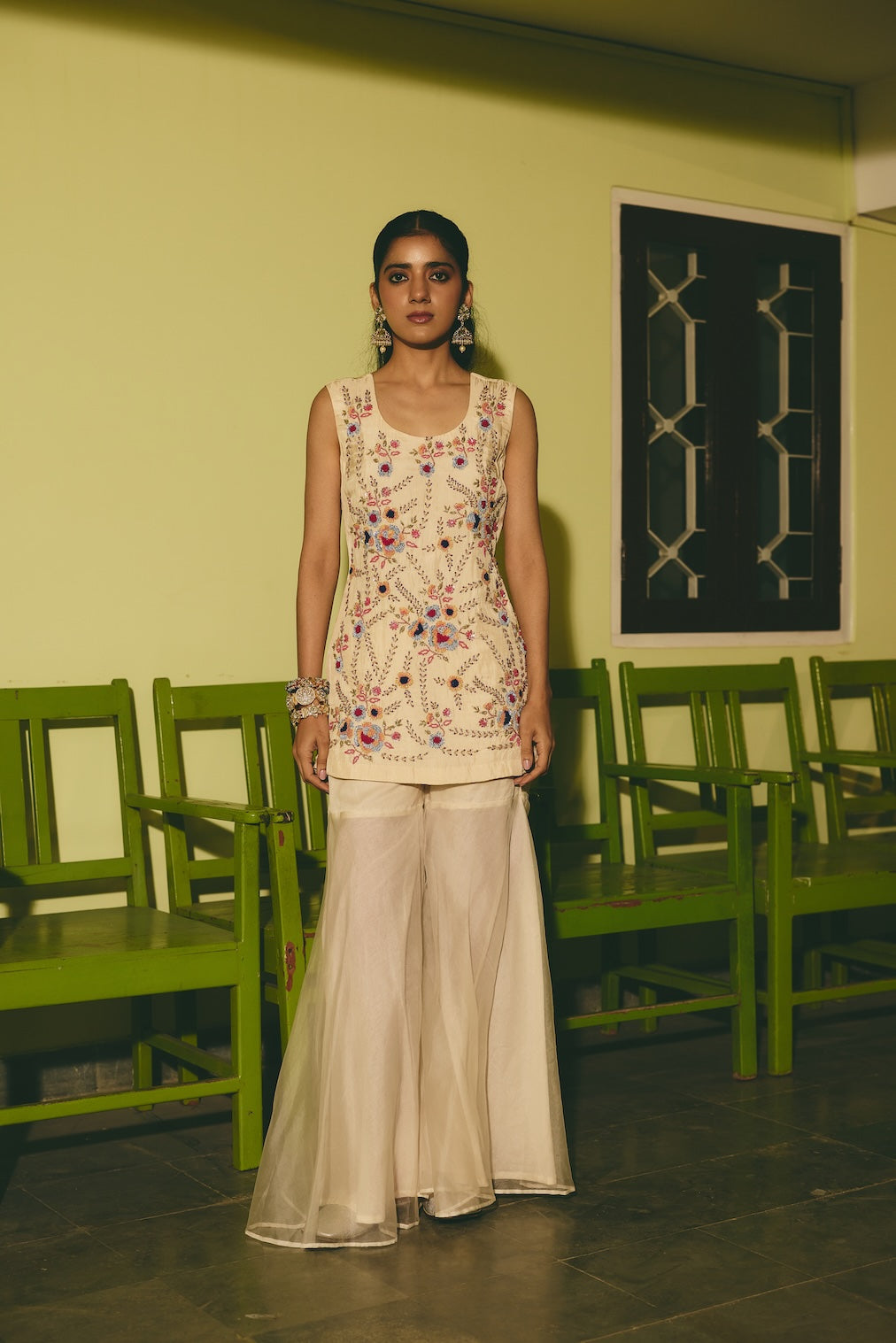
The Chandbeli sharara set illustrates why: crafted in soft ivory satin with a delicate floral jaal, its aari work forming graceful vines and blooming florals enriched with multicolour resham threadwork, French knots, sequin highlights and cutdana. Every one of those elements is placed relative to the finished shape. There's nowhere to cut without cutting through it.

How to Brief a Tailor Properly
Most bad alterations are communication failures, not skill failures.
- Wear the actual footwear you'll wear on the day. Hem length is meaningless otherwise, and the difference between flats and heels is three inches.
- Wear the actual undergarments, including any shapewear or padded blouse. A blouse fitted over the wrong bra fits nothing.
- Bring the dupatta. How it's draped and pinned changes how the blouse sits.
- Point at what's wrong, don't name a measurement. "This gapes here when I raise my arm" is far more useful than "take it in by an inch".
- Ask what they'd do before agreeing. If the answer to a too-long bordered lehenga is "we'll cut the bottom", walk away.
- Ask to see their embroidered work. The shop that hems office trousers well is not necessarily the shop for a zardozi blouse.
Timing and Cost
Allow two weeks for anything meaningful, and a month if the piece needs to go back to whoever made it. Never plan an alteration for the week of the wedding — that is when mistakes happen and when there's no time to fix them.
As a rough guide: simple hemming and taking in side seams is inexpensive almost anywhere. Reconstructing a blouse, restructuring a waist, or shortening a bordered garment from the top is skilled work and priced accordingly — often ₹1,500–5,000 at a good atelier. If a quote for structural work on an embroidered piece sounds too cheap, it is.
The Alteration You Don't Have to Make
All of the above is the cost of buying to a size chart. A garment cut to your measurements from the start doesn't need any of it — the embroidery is placed for your proportions, the yoke sits where your shoulders actually are, and the hem is cut to your height in your shoes.
That is genuinely the argument for made-to-order rather than a marketing line: the alterations budget and the two-week turnaround simply disappear. Our guides to measuring yourself correctly and what can be changed on any design cover how that works from the other direction — asking for the change before the piece is made, when it costs nothing.
If It's Already Too Small
Before you give up on a piece that no longer fits, a few things are worth trying. Side panels in a contrasting or tonal fabric can add up to three inches on a kurta and, done well, look deliberate. A too-tight blouse can be converted to a back-tie or a lace-up. A lehenga that won't close can take a hook-and-eye extension hidden under the dupatta. And a piece that's genuinely beyond saving can be recut — a heavy lehenga skirt into a saree, an old blouse into a bustier. Our guide to re-styling and repurposing Indian outfits covers that route.
Cut for You, Not for a Size Chart
Every piece is hand-embroidered by karigars in Jaipur and made to your measurements over 4–5 weeks — with the embroidery placed for your proportions from the start. Explore the collection.
Shop the CollectionFrequently Asked Questions
Can a heavily embroidered lehenga be altered?
The waist usually can, because it sits on a plain waistband with real seam allowance. The skirt itself is much harder — panelled embroidered skirts are engineered, and reducing the flare means opening every kali and re-matching the pattern across each seam. Length should be taken from the waist, never cut off a bordered hem.
How much can an Indian outfit be let out?
Usually only half an inch to an inch — that's the seam allowance most garments carry. Beyond that there simply isn't fabric to work with, which is why sizing up rather than down is the safer choice when you're between sizes.
What should I take with me to an alteration fitting?
The exact footwear you'll wear on the day, the undergarments and shapewear you'll wear with it, and the dupatta. Hem length measured in the wrong shoes is meaningless, and a blouse fitted over the wrong bra fits nothing.
How long do alterations take?
Allow two weeks for anything meaningful, and a month if the piece has to go back to the maker. Never schedule an alteration for the week of the event — that is when mistakes happen and when there's no time left to correct them.
Made to order in 4–5 weeks
Have an event date? We’ll tell you exactly when to order by.
We take a limited number of orders each month — secure your slot early.
WhatsApp me my order-by date + a shortlistNot sure where to start?
Tell us what you're dressing for and we'll help you choose — fabric, fit, colour, and timeline — over WhatsApp or on a video call.
Your Cart
Pieces from this story
All pieces →Not sure which piece, or need it by a date? Book a video consultation Ask us on WhatsApp



Keep reading
The journal →
How to Measure Yourself for Indian Clothes: A Complete Guide
Learn how to take accurate measurements for Indian clothes: blouses, kurtas, lehengas, and more. Step-by-step measuri...
13 April 2026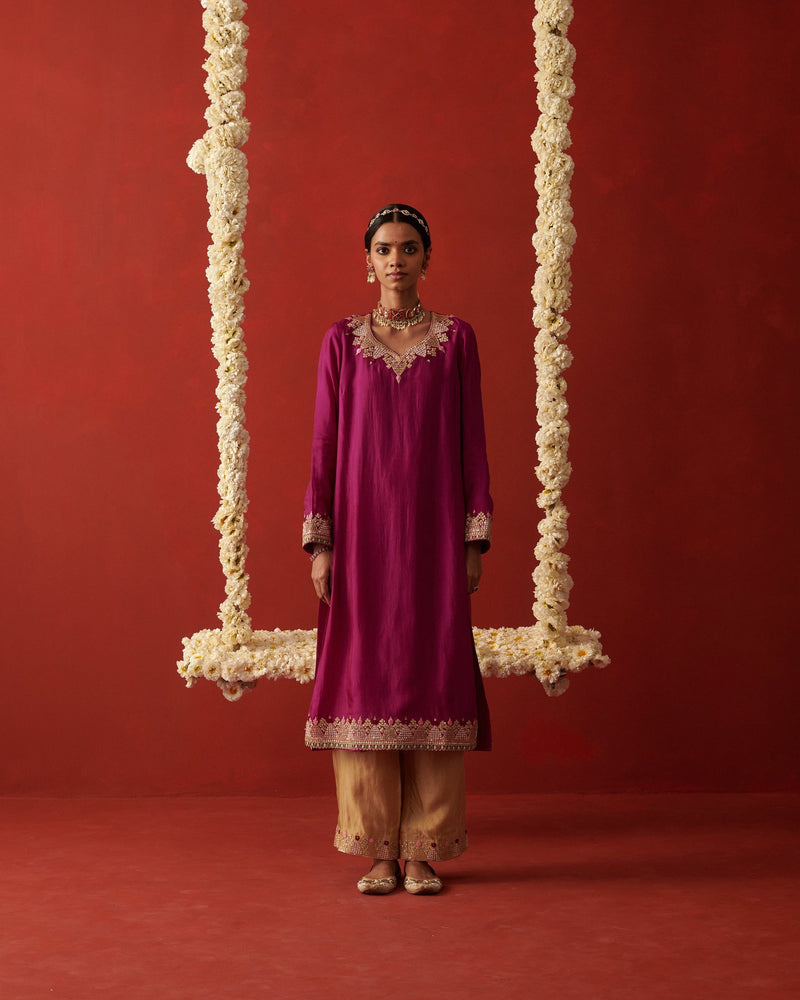
Custom Modifications: What Can Be Changed on Any Design
Guide to modifying custom Indian wear designs. What changes are possible—colours, sleeves, necklines, lengths, embroi...
11 May 2026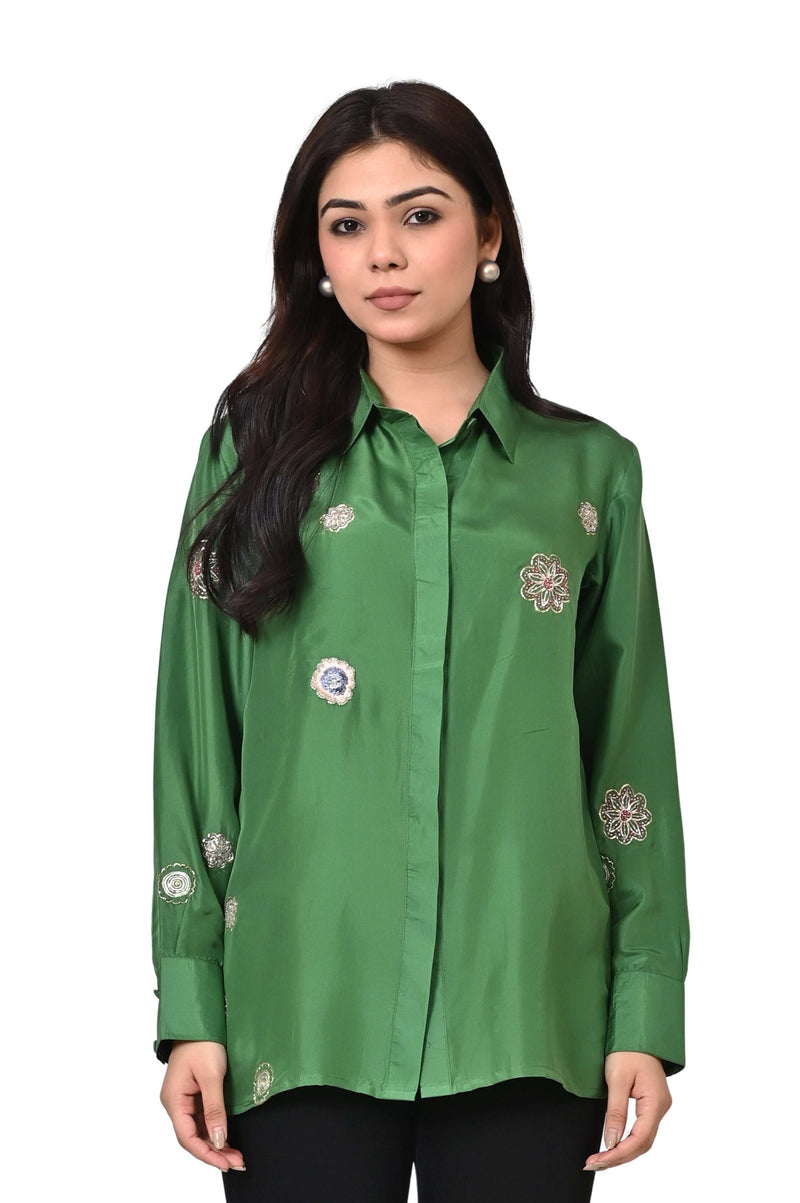
How to Re-Style and Repurpose Your Indian Outfits: Get More From Every Piece
Smart ways to re-style and repurpose your Indian outfits — mix sets, swap dupattas, build a capsule wardrobe, and get...
22 March 2026