
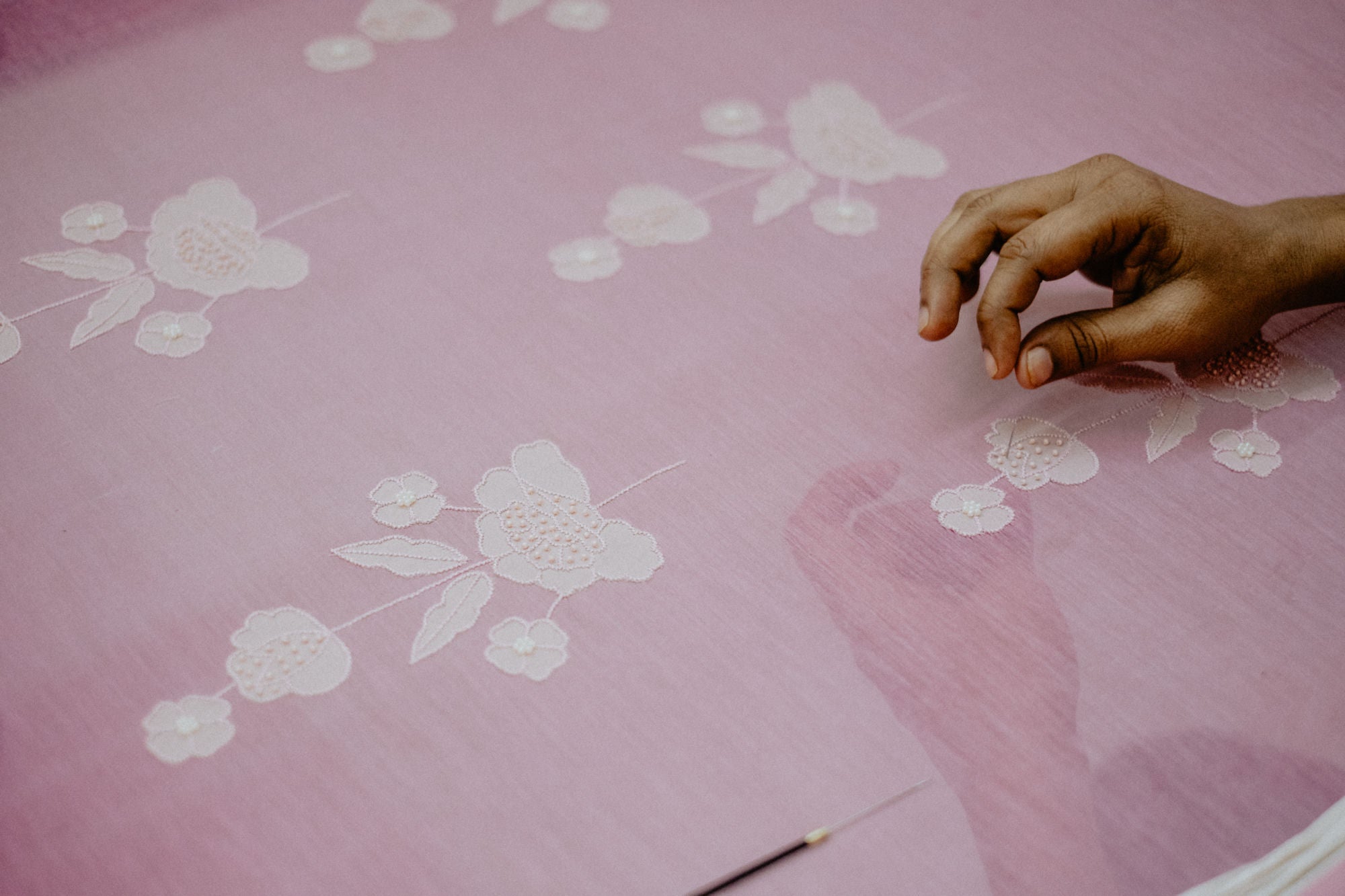

How to Remove Stains From Indian Clothes Without Ruining the Embroidery
Someone hands you a plate of haldi-yellow curry at a wedding, a waiter turns too fast, or your foundation transfers onto an ivory neckline as you pull the kurta over your head. It happens to everyone, and what you do in the next sixty seconds decides whether the piece survives. The bad news: most instinctive reactions — scrubbing, hot water, soap, a wet wipe — make hand-embroidered clothes worse. The good news: the right response is usually simpler and gentler than what you were about to do.
Three Rules Before You Touch Anything
1. Blot, never rub. Rubbing pushes the stain deeper into the weave, frays fine silk, and can lift sequins, cutdana and zari clean off the surface. Press a clean, dry cloth or tissue straight down, lift, repeat with a fresh section.
2. Work from the outside in. Always move towards the centre of the stain. Working outwards spreads a small mark into a large halo — which is far harder to fix than the original.
3. Never take an embroidered piece near heat with a stain still in it. No iron, no hair dryer, no steamer, no leaving it in a hot car. Heat sets most stains permanently. Our guide to steaming and ironing embroidered clothes covers the rest of that hazard.
Know What You're Dealing With First
The fabric decides how much you can safely attempt at home.
- Cotton and cotton-blends are the most forgiving. Most home methods are safe here.
- Chanderi, chiffon and georgette tolerate careful blotting and a light touch of water, but water-mark easily — treat a whole panel rather than one spot if you must dampen anything.
- Silk, tissue and organza water-spot readily and lose their sheen with friction. Do the minimum, then hand it to a professional.
- Anything with zari, gota, Mukesh, sequins, cutdana or beadwork should be treated as untouchable at home beyond dry absorption. Metallic threads tarnish with moisture, and sequin adhesives dissolve with alcohol.
A Chanderi set like Banni kurta with Aayat pant, hand-embroidered with sequins, nakshi, cutdana and thread work across the yoke, cuffs and hem, falls squarely in that last category — you can absorb a fresh spill from the plain fabric, but nothing wet goes near the embroidered panels.

Stain by Stain
Haldi and Turmeric
The hardest of the lot, and the one most likely to hit you at a wedding. Turmeric is oil-soluble and stains on contact, and — critically — ordinary soap makes it worse: alkaline detergent turns a yellow turmeric mark orange-red. Scrape away any solid with the edge of a spoon, blot the oil with a dry tissue, and stop there. On white cotton only, indirect sunlight over a few hours genuinely helps fade what remains. On silk or anything embroidered, go straight to a specialist and tell them it's turmeric.
Oil, Ghee and Curry
Lift the solids gently. Then cover the mark generously with cornflour, talcum powder or plain white chalk dust and leave it for at least thirty minutes — the powder draws the oil out of the fibres. Brush it off with a soft, dry brush. Repeat once if needed. Do not add water: water and oil together on silk create a ring far more visible than the original spot.
Foundation, Lipstick and Makeup
Almost always a transfer stain from dressing. Never rub — pigment spreads instantly on light fabric. Lift what sits on the surface with the flat edge of a clean spoon or a piece of sticky tape pressed down and pulled straight up. Then leave it. Makeup responds well to professional solvent cleaning and very badly to home improvisation.
Sweat and Deodorant Marks
Prevention beats cure here entirely: let deodorant dry completely before dressing, and use stick-on underarm shields for a long function. On cotton, a diluted white-vinegar solution dabbed on and rinsed can lift a fresh mark. On silk, don't — the yellowing that builds up in the underarm of a silk kurta is a job for a dry cleaner, and it gets much harder the longer it sits in storage.
Wine, Juice and Chai
Blot immediately and thoroughly with a dry cloth — most of the damage from a liquid spill is done by how much you leave sitting in the fibre. On cotton, cool water from the reverse side of the fabric pushes the stain back out rather than through. On silk, chiffon or anything embroidered, blot dry and let a professional handle the rest. Never use hot water on any of them; heat sets tannin stains permanently.
Mehendi
Wet mehendi paste that lands on fabric should be lifted off — carefully, not smeared — with a spoon edge, then the area blotted dry. Do not wet it, because the dye is designed to bind. Once dry, brush the residue off gently and take it in. If you're attending a mehendi, this is a strong argument for wearing something you've already worn once rather than the newest piece you own.
Mud, Rain Splash and Water Marks
Let mud dry completely first. Wet mud spreads; dry mud brushes off. For a water mark on silk — that faint tide line after a rain splash — resist the urge to dab more water on it. This is one of the things a good dry cleaner can genuinely fix and one of the easiest to make permanent at home.
What Never to Do
- Never use hand sanitiser or any alcohol-based liquid on sequins or beadwork. It dissolves sequins and the adhesive holding embellishment in place. This is the single most common piece of well-meant wedding advice that destroys an outfit.
- Never use bleach or a bleach-based stain pen on anything coloured, on silk, or anywhere near zari.
- Never scrub with a wet wipe. The alcohol and the friction together are a worst case for hand embroidery.
- Never machine wash a hand-embroidered piece "just to see". Zari tarnishes, threads snag, and sequins shear off in the drum.
- Never put it away stained. An invisible sugar or sweat mark oxidises into a permanent brown patch over a season in storage — which is how most outfits are actually lost.
When to Go Straight to a Specialist
For anything hand-embroidered, anything in silk, tissue or organza, and any stain larger than a coin, the honest answer is: don't experiment. Take it to a dry cleaner who handles couture and hand embroidery — not the corner shop that presses office shirts — and tell them three things: what the stain is, when it happened, and what you've already tried. That last one matters more than people realise, because a failed home attempt changes what the cleaner can safely use.
Bring the piece in as soon as you can. A three-day-old spill is a very different job from a three-month-old one.
Prevent Most of It in Sixty Seconds
- Dress last. Perfume, hairspray, makeup and deodorant all go on before the outfit does, and all need to be dry.
- Use a scarf over your face when pulling a kurta or blouse over your head — it takes two seconds and prevents most foundation transfers.
- Carry a small kit: a few dry tissues, a sachet of talc, safety pins and a pair of stick-on underarm shields. Our outfit emergency kit guide has the full list.
- Store it clean. The storage and care guide covers muslin wrapping, folding and why plastic covers are a mistake.
For the everyday side of looking after these pieces — washing, drying, folding and seasonal storage — our complete laundry and storage guide covers each fabric in turn.
Made by Hand, Meant to Last
Every piece is hand-embroidered by karigars in Jaipur and made to your measurements over 4–5 weeks. Looked after properly, these are clothes that outlive the occasion they were bought for. Explore the full collection.
Shop the CollectionFrequently Asked Questions
How do you remove a turmeric stain from a silk saree?
Scrape off any solid with a spoon edge, blot the oil with a dry tissue, and stop there. Do not use soap — alkaline detergent turns a yellow turmeric mark orange-red — and do not use water on silk. Take it to a specialist dry cleaner and tell them the stain is turmeric.
Can I use hand sanitiser to clean a stain on an embroidered outfit?
No. Alcohol dissolves sequins and the adhesives holding beadwork and embellishment in place, and it can strip colour from silk. It is one of the most common pieces of on-the-spot advice at weddings and one of the most damaging.
How do you get an oil or ghee stain out of Indian clothes?
Lift the solids gently, then cover the mark with cornflour or talcum powder and leave it for at least thirty minutes so the powder draws the oil out of the fibres. Brush off with a soft dry brush and repeat once if needed. Never add water, which creates a visible ring on silk.
Should I store an outfit that has a small stain on it?
Never. Invisible sugar, sweat and oil marks oxidise into permanent brown patches over months in storage, and this is how most festive outfits are actually ruined. Have the piece cleaned before it goes away for the season.
Made to order in 4–5 weeks
Have an event date? We’ll tell you exactly when to order by.
We take a limited number of orders each month — secure your slot early.
Not sure where to start?
Tell us what you're dressing for and we'll help you choose — fabric, fit, colour, and timeline — over WhatsApp.
Your Cart
Pieces from this story
All pieces →



Keep reading
The journal →
Gangaur Outfit Ideas: What to Wear for Rajasthan's Festival of Gauri
Handmade by karigars Made to your measurements Fit guarantee Ships worldwide As seen in GraziaElle Graduat...
22 August 2026
Kids at a Destination Wedding: What to Pack and How to Survive It
Handmade by karigars Made to your measurements Fit guarantee Ships worldwide As seen in GraziaElle Graduat...
22 August 2026
A Baby's First Festival: How to Dress an Infant for Diwali and Family Functions
Handmade by karigars Made to your measurements Fit guarantee Ships worldwide As seen in GraziaElle Graduat...
22 August 2026