
Kids' Ganesh Chaturthi Outfit Ideas: What to Dress Them In for Ganpati
Ganesh Chaturthi is the festival children genuinely like. There is a visitor in the house for ten days, there are modaks, there is a bell to ring at aarti twice a day, and at the end of it there is a procession with drums. It also runs in early September, which in most of the country means heat and humidity — so the outfit question is less about how festive it looks and more about what a child can wear at eleven in the morning without wanting it off by noon.
Ganesh Chaturthi 2026 falls on Monday 14 September, with Anant Chaturdashi and the big visarjan on Friday 25 September. Families keep Ganpati for one and a half, three, five, seven or ten days, so the number of outfits you need depends entirely on which your household observes.
The Days That Actually Need an Outfit
Sthapana day — the installation
The idol arrives, the pran pratishtha is performed, and the house fills with people. This is the photographed day and the one to dress properly for. Morning, warm, and involving a lot of sitting on the floor near the mandap.
The aarti days
Twice a day, every day, for however long Ganpati stays. Children ring the bell, hold the plate, get handed the prasad. These do not need a new outfit each time — they need one or two comfortable festive sets that can be worn repeatedly and washed in between.
Modak-making and the kitchen afternoons
Steamed ukadiche modak means rice flour, jaggery, coconut and small hands. Whatever they wear will be worn into the kitchen. This is a cotton day.
Visarjan
The immersion procession — outdoors, crowded, loud, with drums, colour and often water. Dress for movement and for getting wet, not for photographs. Our Anant Chaturdashi and visarjan guide covers the day in detail for adults, and most of it applies to children with the volume turned up.
Colour
- Yellow, marigold orange and saffron are the festival's colours — the flowers, the modak, the decoration. They photograph beautifully against a Ganpati mandap and they suit children.
- Red and pink sit in the same warm family and are traditional for pujas.
- Green is associated with durva grass, offered to Ganesha, and works well on children who find the brighter yellows overwhelming.
- Avoid black for the puja and aarti. It is not forbidden so much as noticed, particularly by grandparents.
- Do not overthink white. White and cream are fine, but they will not survive haldi-kumkum thumbprints, modak filling or a visarjan crowd.
Outfits for the Sthapana and Aarti Days
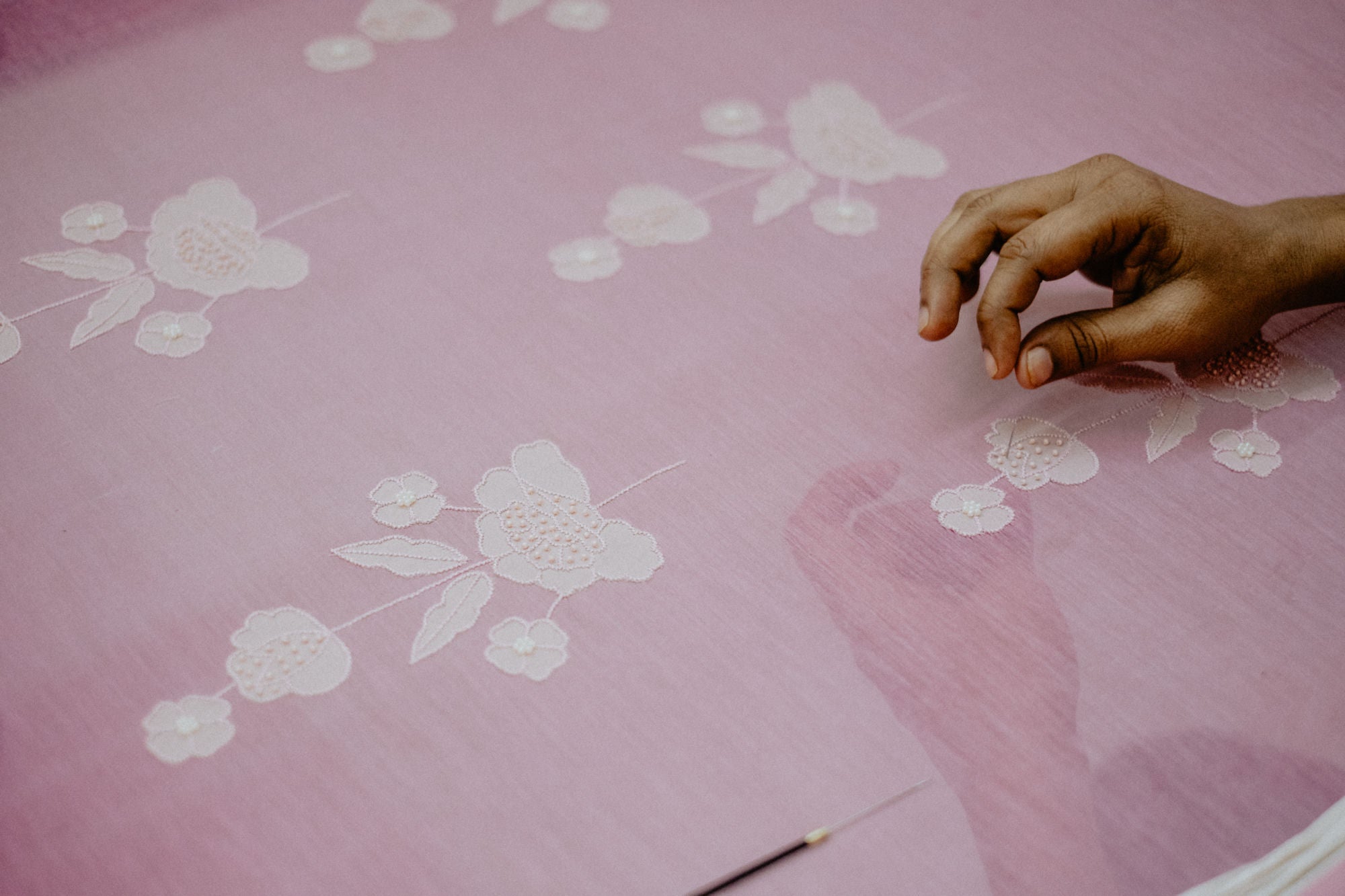
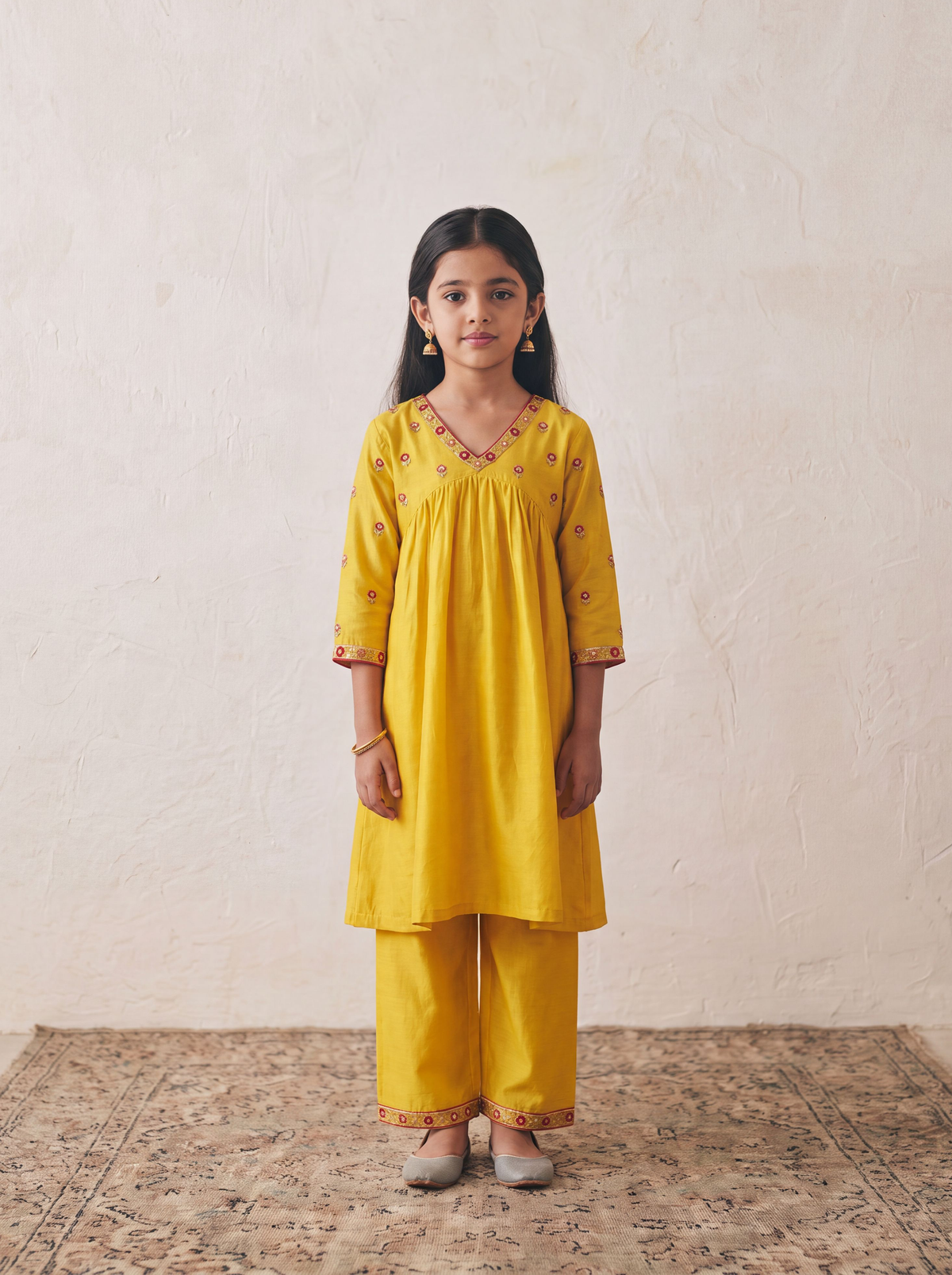
The Afreen kurta with Maahi pant — Kids is sunshine yellow chanderi with delicate cutdana and bead embroidery, each flower hand-embroidered, with soft gathers at the bust falling into an easy shape. Chanderi is the right call for September: it looks festive and it breathes, which is more than most silk does in a room full of people and an oil lamp.

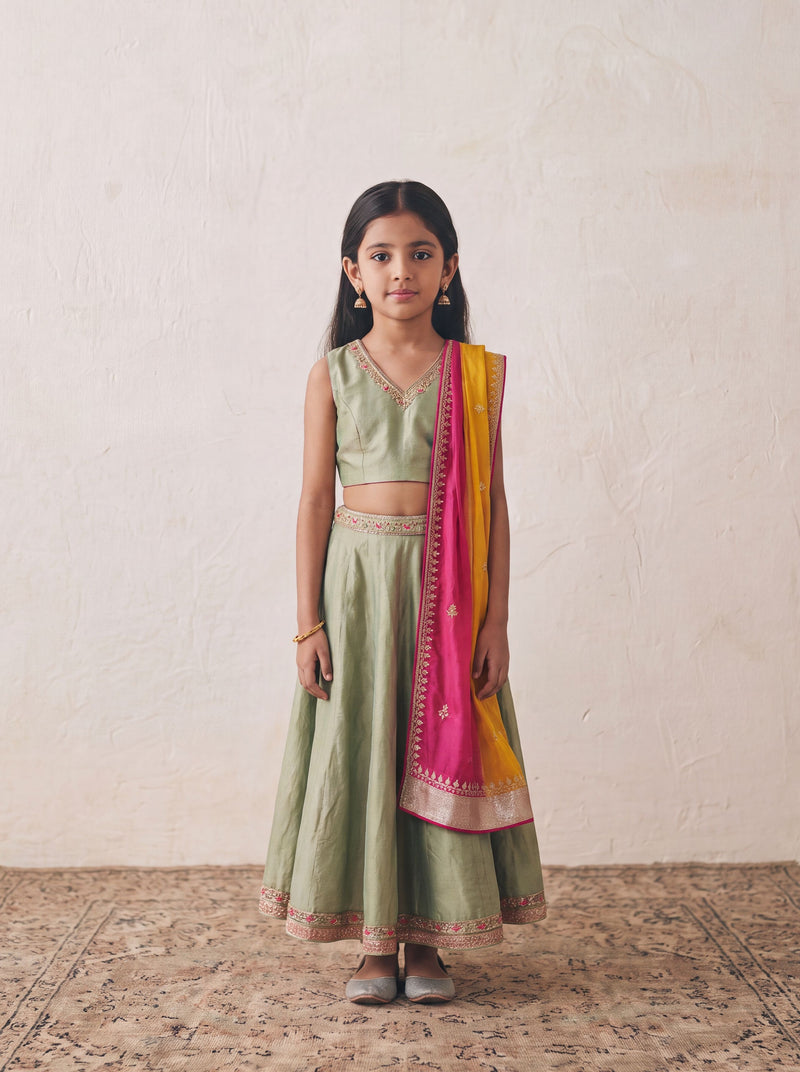
The Roshni kurta with Nazreen sharara — Kids pairs cheerful mustard yellow with soft blossom pink — built for daytime festivities, which is exactly what the aarti hours are. The Gia kurta with Cyraa pant — Kids is a vibrant lime green in lightweight silk with floral embroidery in rose gold and deep fuchsia along the neckline, sleeves and hem.


If You Want One Properly Dressed-Up Look
For the sthapana morning or a family gathering during the ten days, the Faiza kurta with Rida pant — Kids in soft gold silk — a gentle V neckline, three-quarter sleeves, gota and thread work trailing in rose and coral tones — is festive without being fussy, and gold reads correctly against a mandap.
The Mehergul lehenga with Abroo blouse — Kids in striking rani pink silk, hand-embroidered with sequins, cutdana and thread work in floral and vine motifs, is the one for a child who wants to twirl — and a lehenga survives a crowded room better than you would expect, because there is nothing to come undone.


Seven Things That Make the Ten Days Easier
- Two good sets beat six mediocre ones. Aarti happens twice a day for days on end. Two rotating festive outfits get worn properly; six get worn once each and outgrown. Our guide to how many festive outfits a child actually needs works through the arithmetic.
- September is hot and humid. Chanderi, cotton and light silk. Anything heavily lined will be abandoned by the second aarti.
- Floor seating, every day. A fitted narrow silhouette makes an hour of aarti miserable. Wide pants, shararas and lehengas all sit better cross-legged.
- Oil lamps and open flame. Keep long dupattas away from the aarti thali, and tie back anything trailing when a child is holding the plate.
- Sleeves that push up. Modaks, prasad, hand-washing. Three-quarter sleeves are the practical length.
- Visarjan is a separate wardrobe decision. Water, crowds, colour, gulal. Send them in something washable, not in the sthapana outfit.
- Order in time. Everything in our kidswear line is hand-embroidered in Jaipur and cut to your child's measurements over 4–5 weeks — so a September festival is a July conversation. Our ordering-early guide covers planning a season.
Kidswear, Hand-Embroidered to Their Measurements
Twenty-five pieces, in sizes from 0–3 months to 15–16 years, plus custom sizing. The same karigars, the same hand embroidery, cut small. Browse the kidswear collection or read our guide to buying ethnic wear for growing children.
Shop KidswearFrequently Asked Questions
What should kids wear for Ganesh Chaturthi?
Light, breathable festive wear in yellow, marigold orange, saffron, red or green — chanderi, cotton or light silk rather than anything heavily lined, because Ganesh Chaturthi falls in September heat. Choose a wide silhouette they can sit cross-legged in for aarti, with sleeves that push up for prasad and modaks.
When is Ganesh Chaturthi in 2026?
Ganesh Chaturthi 2026 falls on Monday 14 September, and Anant Chaturdashi — the day of the largest visarjan processions — falls on Friday 25 September. Families keep Ganpati for one and a half, three, five, seven or ten days depending on household tradition.
How many outfits does a child need for the ten days?
Two festive sets in rotation is usually enough, plus one washable cotton outfit for visarjan. Aarti happens twice a day, so what matters is having something comfortable that can be worn repeatedly and laundered, rather than a different outfit for every day.
What colours are best for Ganpati?
Yellow, marigold orange and saffron are the festival's own colours, drawn from the flowers and the decoration. Red and pink are traditional for pujas, and green carries the association with durva grass offered to Ganesha. Black is best kept away from the puja and aarti.
Made to order in 4–5 weeks
Have an event date? We’ll tell you exactly when to order by.
We take a limited number of orders each month — secure your slot early.
Not sure where to start?
Tell us what you're dressing for and we'll help you choose — fabric, fit, colour, and timeline — over WhatsApp.
Your Cart
Pieces from this story
All pieces →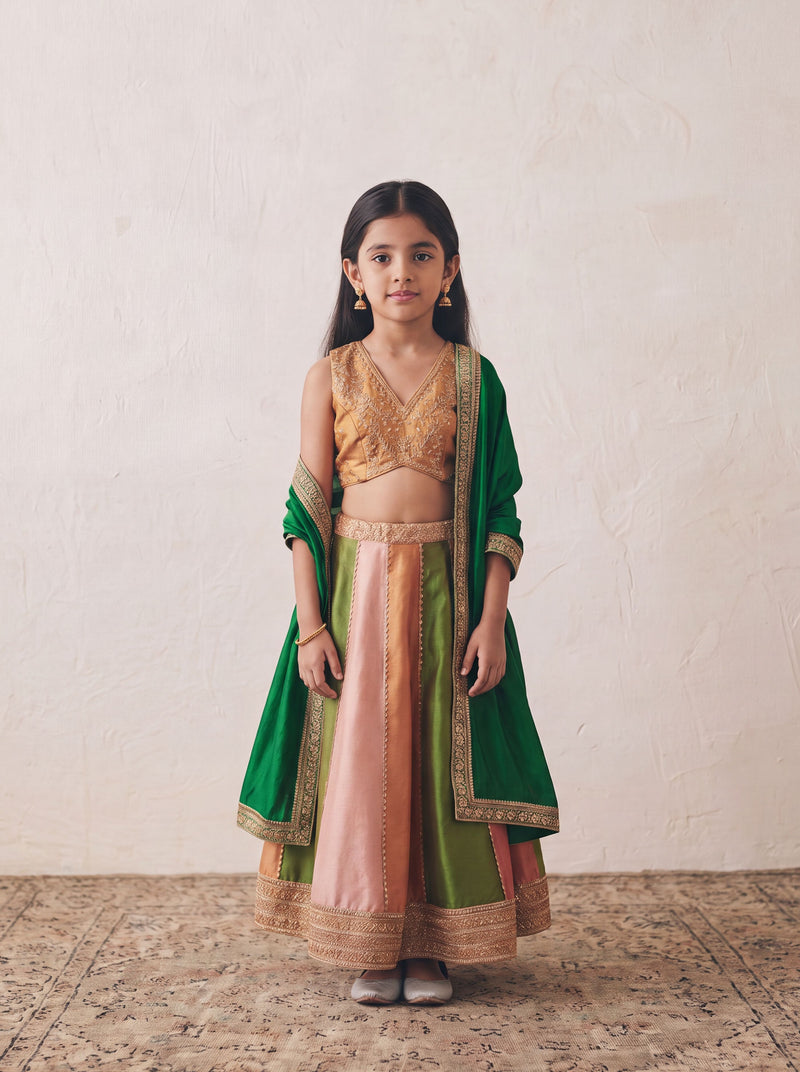
Keep reading
The journal →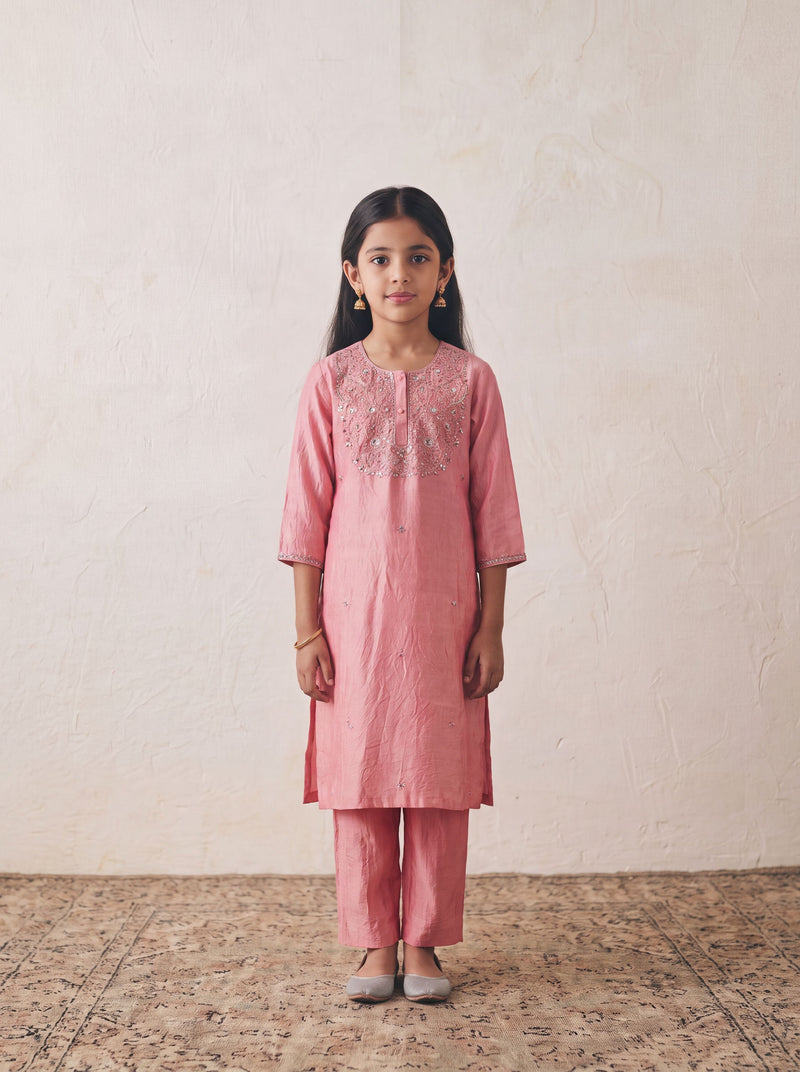
Kids' Bhai Dooj Outfit Ideas: What to Dress Them In for Tika Day
Handmade by karigars Made to your measurements Fit guarantee Ships worldwide As seen in GraziaElle Graduat...
7 September 2026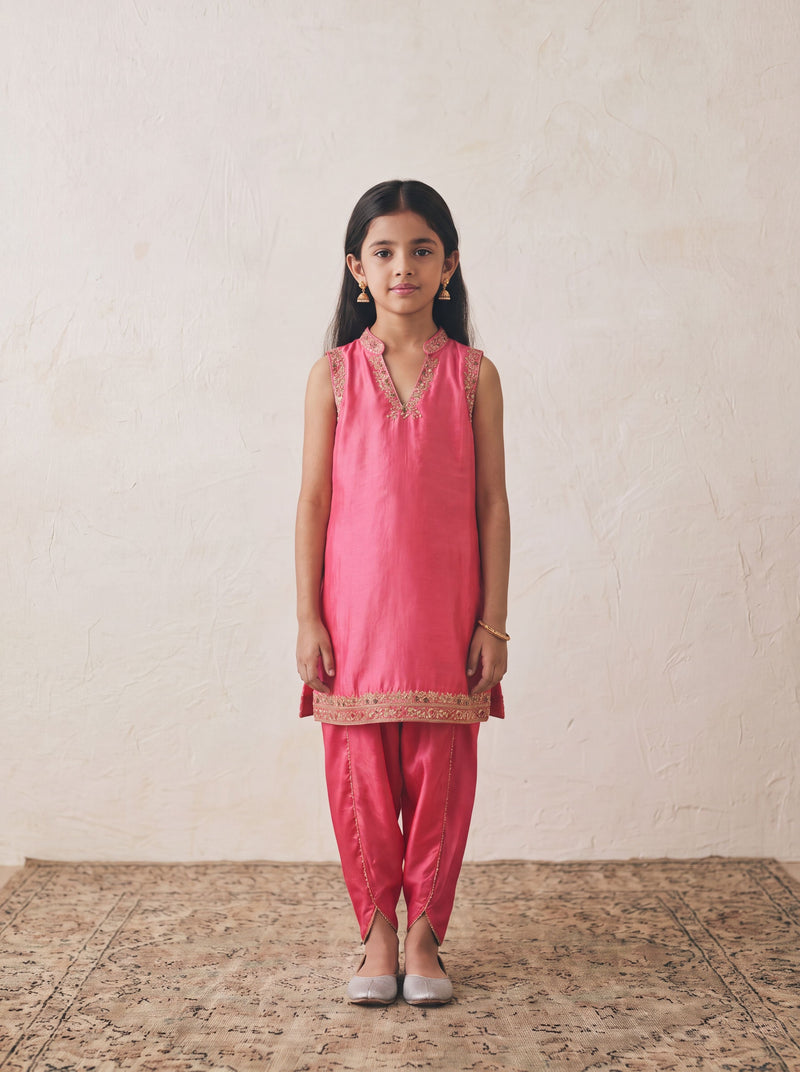
Kids at Chhath Puja: What to Dress Them In for the Ghat
Handmade by karigars Made to your measurements Fit guarantee Ships worldwide As seen in GraziaElle Graduat...
7 September 2026
Best Sharara & Gharara Brands in India 2026: Where to Buy a Good One
Handmade by karigars Made to your measurements Fit guarantee Ships worldwide As seen in GraziaElle Graduat...
7 September 2026