
What Should Kids Wear to a Temple Visit or Puja?
Dressing a child for a temple is a quieter problem than dressing them for a wedding, and a surprisingly easy one to get wrong. The instinct is to reach for the brightest, most embroidered thing in the cupboard — and that is usually the exact opposite of what the occasion, and the child, needs. Temple visits and home pujas ask for modest, soft, comfortable clothes that a child can sit on a stone floor in for forty minutes. Here's how to think about it.
What Makes Temple Dressing Different
Four practical facts shape everything:
- Shoes come off. Floors are stone — freezing in January, blistering in May. Bare feet for the whole visit.
- Children sit on the floor, cross-legged, often for longer than they'd like. Anything stiff, tight at the waist, or voluminous becomes a problem within ten minutes.
- Modesty is the convention. Covered shoulders and knees are expected at most temples, and many gurudwaras and dargahs expect covered heads too.
- There's usually a queue. Standing, crowds, incense smoke, and no space to fuss with an outfit.
Which narrows the answer considerably: a soft kurta set in a calm colour, with sleeves, that a child can move in without thinking.
Go Tonal, Not Bright
Temple visits are the one occasion where understated dressing reads as more appropriate, not less. Soft neutrals, warm gold, ivory and muted tones all feel right in a way that magenta and lime don't.
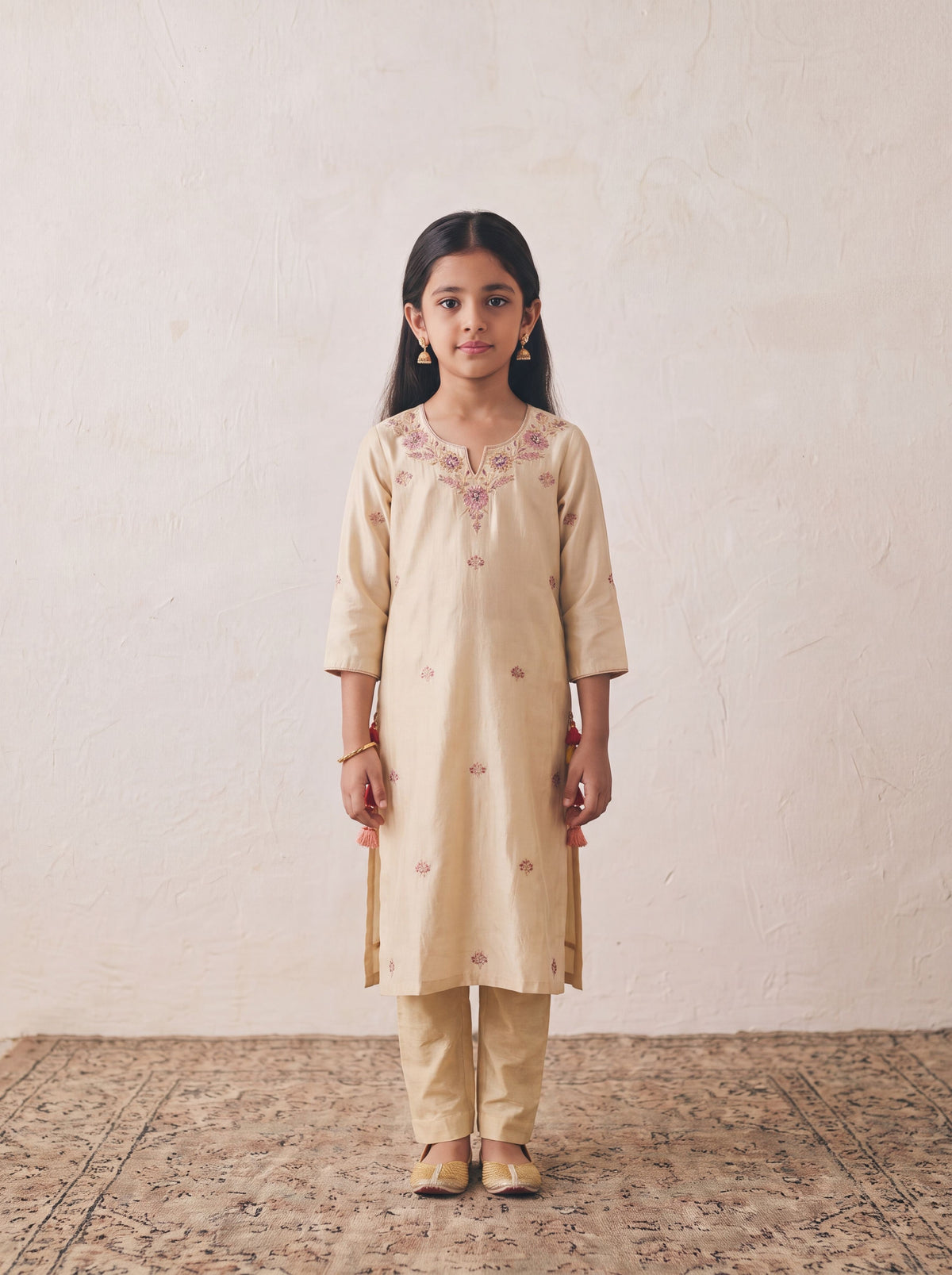
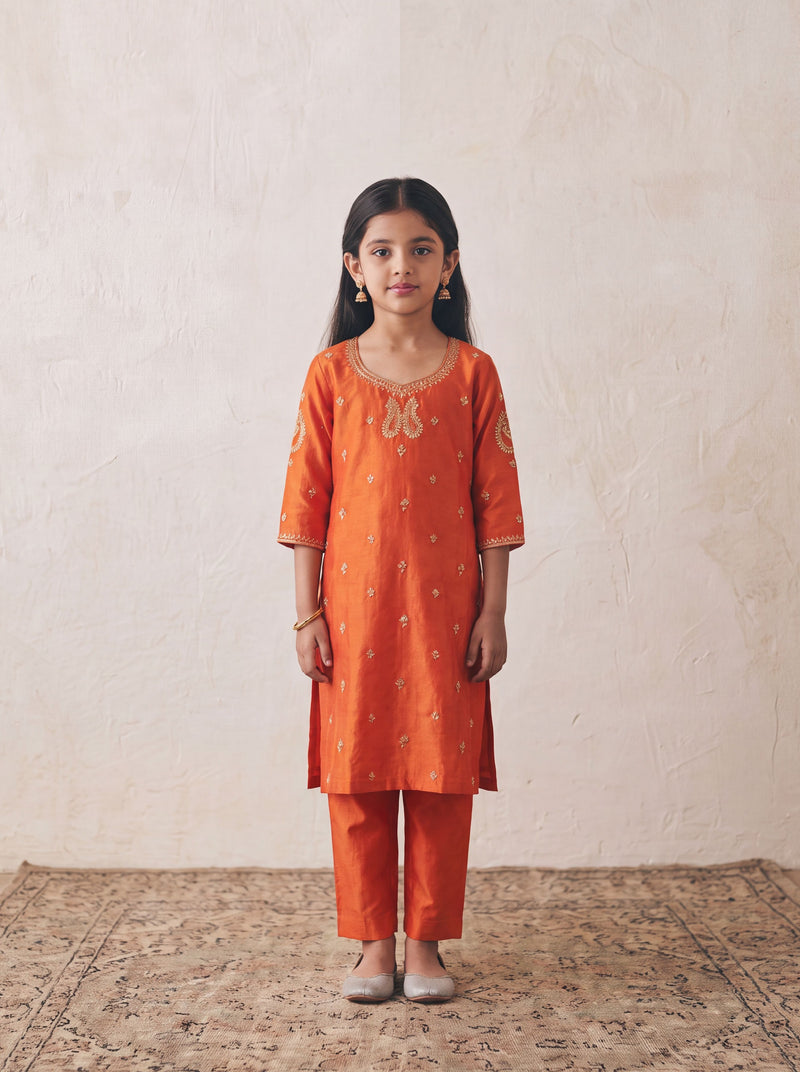
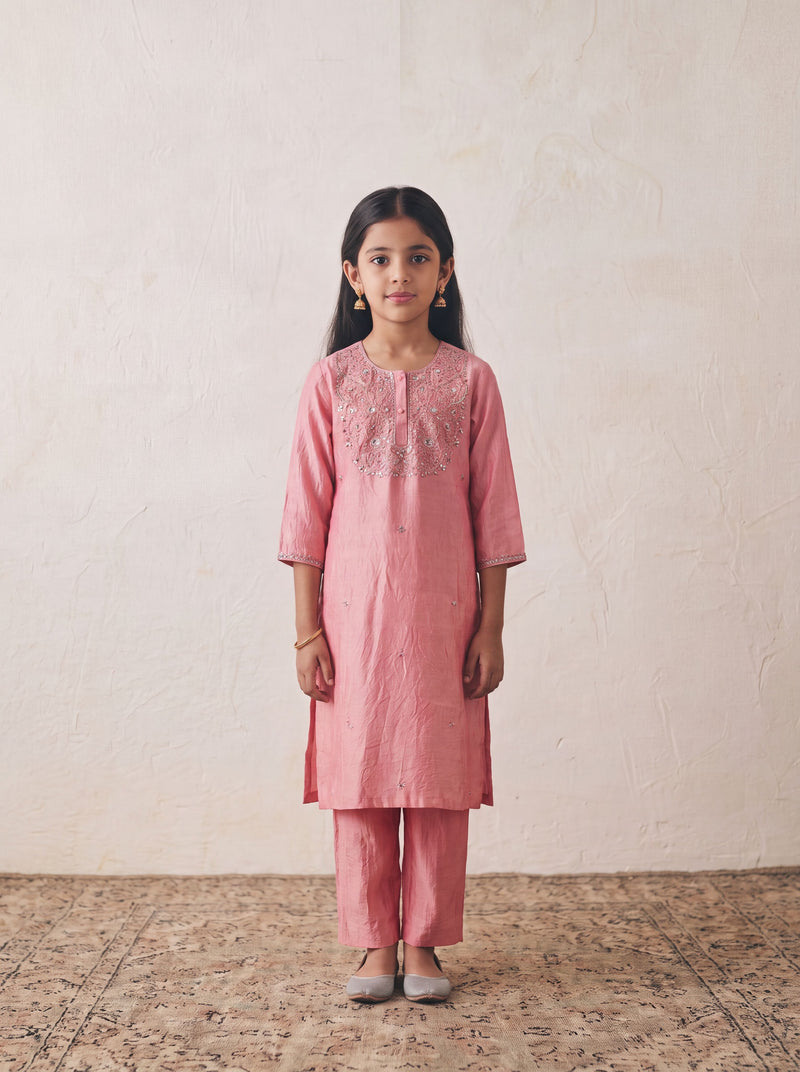
The Vanya kurta with Bani pant in a warm beige silk, with a classic scoop neckline and matching tonal pant, is made for exactly this register — sophisticated and understated in a way that suits a ceremonial morning. The Darya kurta with Keya pant in fine silk in a champagne-taupe hue does the same, with a classic V-neckline and a straight, long-line silhouette that stays neat through a long visit.


For a temple visit that's part of a larger celebration — a first Navratri darshan, a Ganesh Chaturthi visit, a namkaran held at a mandir — a little more is appropriate. The Anika ivory embroidered silk set, hand-embroidered in fine gold threads with vine and floral motifs drawn from classic Mughal artistry, is dressed-up without being loud. So is the Faiza kids kurta in soft gold silk, with a gentle V neckline, three-quarter sleeves and gota and thread work in subtle rose and coral tones.

Yellow deserves a special mention, because it belongs to so many observances — Vasant Panchami, Varalakshmi Vratham, a Thursday temple visit. The Afreen kurta with Maahi pant in sunshine yellow Chanderi, with each flower hand-embroidered in cutdana and bead work, is light enough for a warm morning and traditional in exactly the right way.
Choose the Fabric for the Floor
Chanderi, cotton and soft silk are the fabrics that work here. They breathe, they don't scratch, and they don't crumple into a mess after a child has been sitting cross-legged on stone. Avoid stiff tissue, heavy net linings and anything with a rigid waistband — all fine for an hour at a party, all miserable during a katha.
The Nazakat kurta with Saanwli pant in Chanderi, with floral bootis delicately scattered across the surface and bold paisley motifs anchoring the design, is a good example: regal and rooted in feel, wide-legged and easy to sit in. The Raas kurta in silk — tonal diagonal lines woven through the base, with multicolour embroidery at the neckline and cuffs drawing from traditional phool-patti motifs — is another that stays comfortable through a long morning.
Silhouette: Kurta Sets Over Lehengas
A lehenga is the wrong tool for a temple. The skirt drags on floors people are walking barefoot on, it's difficult to sit cross-legged in, and the fitted choli is uncomfortable through a long ceremony. A kurta with pants or a sharara solves all three, covers the legs properly, and lets a child kneel, stand and sit repeatedly without adjustment.
If your family covers heads at the gurudwara or for aarti, a light dupatta the child can manage themselves matters more than a beautiful one they can't keep on. Pin it, or choose a set where the dupatta is genuinely lightweight.
For a Quieter, More Tonal Look
Some families prefer something deeper and more understated for temple mornings, particularly for older children. The Tara kurta with Pari pant in deep navy satin, with a rounded neckline and short sleeves, is calm and unshowy. The Ayesha kurta with Mehr pant in deep black silk, hand-embroidered with marodi, sequins and thread work with jaali-inspired borders, offers the same restraint in a darker register — worth noting that some families avoid black for temple visits, so follow your own convention.
What to Leave at Home
- Heavy jewellery. Small studs and a couple of bangles. Nothing that can be pulled, lost in a crowd, or sat on.
- Sharp embellishment. Large sequins and beadwork at the knee or seat catch on stone floors and dig in when sitting.
- Anything strappy or sleeveless at a temple that expects covered shoulders — or carry a light layer if you're unsure.
- Brand-new white. Prasad, kumkum, oil lamps and flowers all end up on clothes. Ivory and cream are safer than crisp white.
- Trailing hems. They collect everything on a temple floor.
A Small Practical Checklist
- A pair of socks in your bag — stone floors in winter are genuinely painful for small feet.
- A cloth bag for shoes, so nobody's hunting for them afterwards.
- Hair tied back, away from diyas and camphor.
- Slip-on footwear only. Buckles and laces at a temple door are a mistake you make once.
- A small snack for after — not before, and not inside.
For the grown-up version of this question, our guide to temple visit and pooja outfits covers the same ground for adults. And if the visit is part of a ceremony, our function-by-function kids' guide may be more useful.
Soft, Hand-Embroidered Kidswear
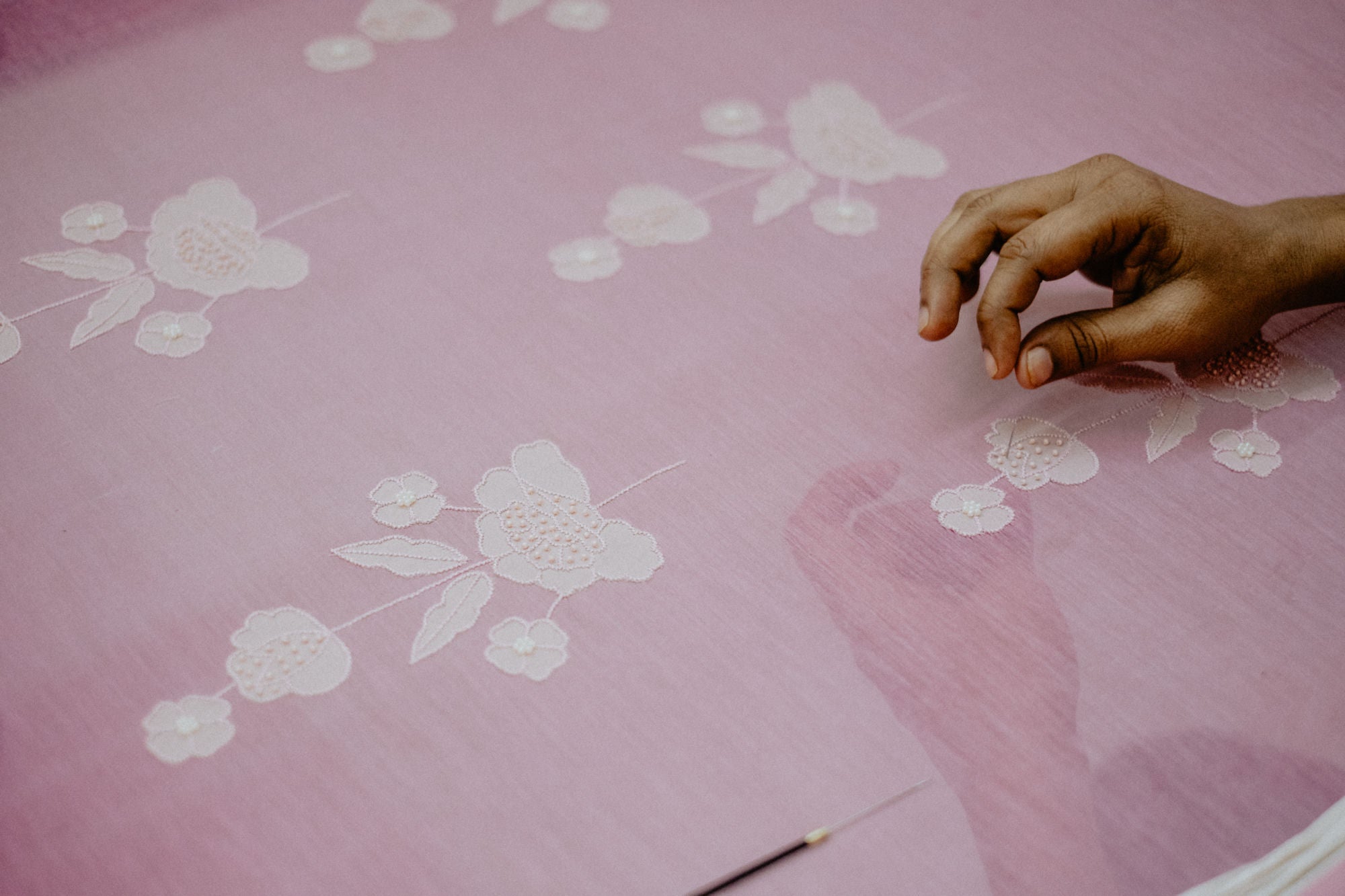
Every kids' piece is hand-embroidered by karigars in Jaipur and made to your child's measurements over 4–5 weeks, in fabrics chosen to sit gently against the skin. Explore our kidswear collection.
Shop KidswearFrequently Asked Questions
What should a child wear to a temple?
A soft kurta set with pants or a sharara, in a calm tonal colour like beige, ivory, gold or yellow, with covered shoulders and knees. Chanderi, cotton and soft silk work best because children sit cross-legged on stone floors, often for a long time.
Can kids wear a lehenga to a puja?
It's usually the wrong choice. The skirt drags on floors people walk barefoot on, it's hard to sit cross-legged in, and a fitted choli is uncomfortable through a long ceremony. A kurta set covers the legs properly and lets a child move freely throughout.
What colours are appropriate for a temple visit?
Soft, tonal colours suit the occasion best — beige, ivory, champagne, warm gold and yellow are all traditional and appropriate. Yellow is particularly fitting for observances like Vasant Panchami. Crisp white is best avoided, since kumkum, prasad and oil lamps mark it easily.
Should children wear jewellery to a temple?
Keep it minimal — small studs and a couple of bangles at most. Anything heavy can be pulled, lost in a crowd, or become uncomfortable when a child is sitting on the floor for a long ceremony.
Made to order in 4–5 weeks
Have an event date? We’ll tell you exactly when to order by.
We take a limited number of orders each month — secure your slot early.
Not sure where to start?
Tell us what you're dressing for and we'll help you choose — fabric, fit, colour, and timeline — over WhatsApp.
Your Cart
Pieces from this story
All pieces →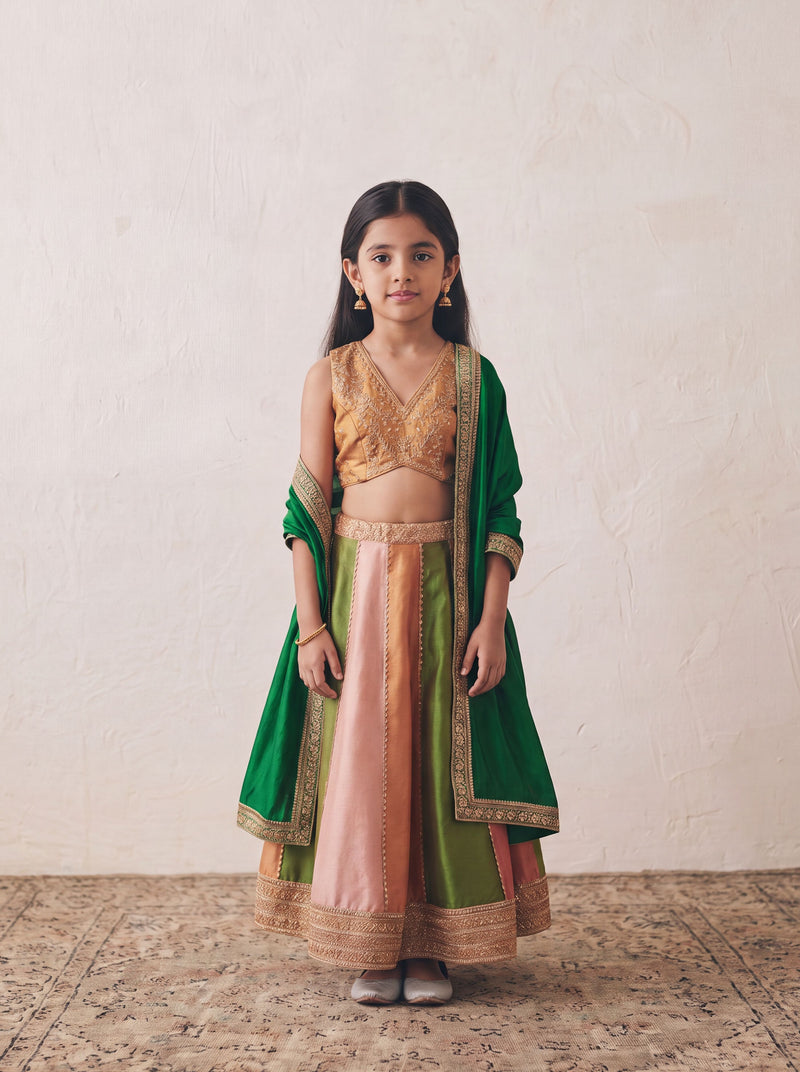
Keep reading
The journal →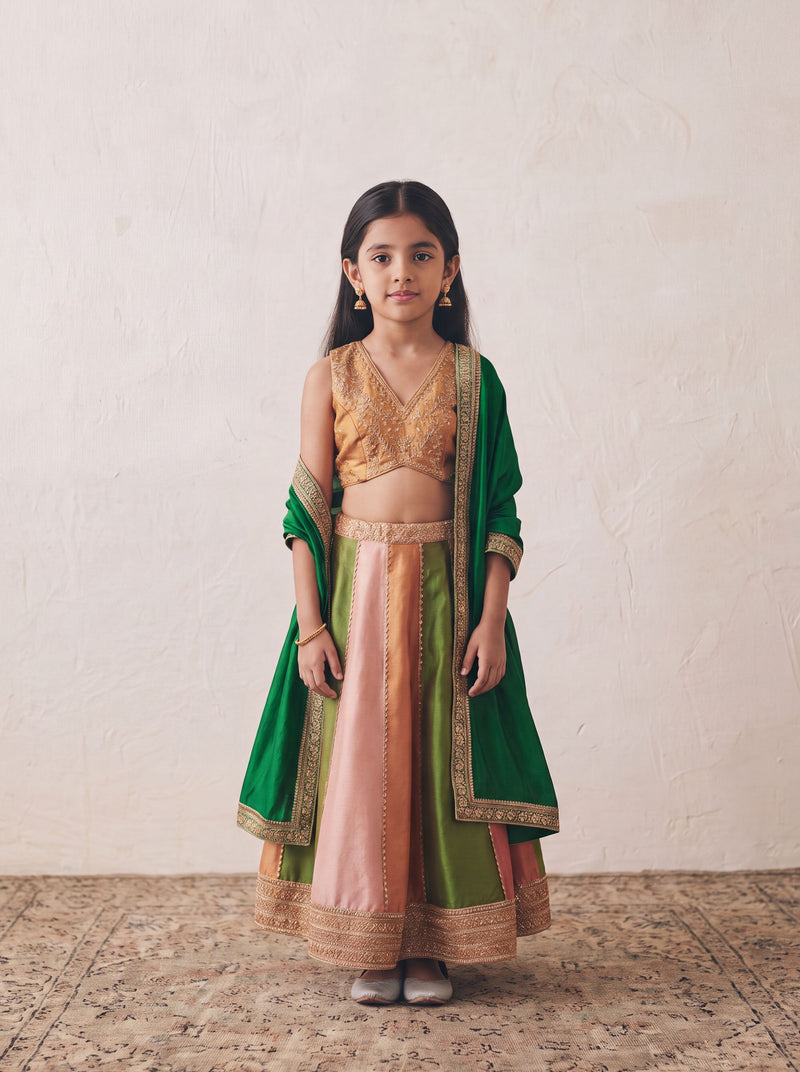
What Should Kids Wear to Perform at the Sangeet?
Handmade by karigars Made to your measurements Fit guarantee Ships worldwide As seen in GraziaElle Graduat...
31 August 2026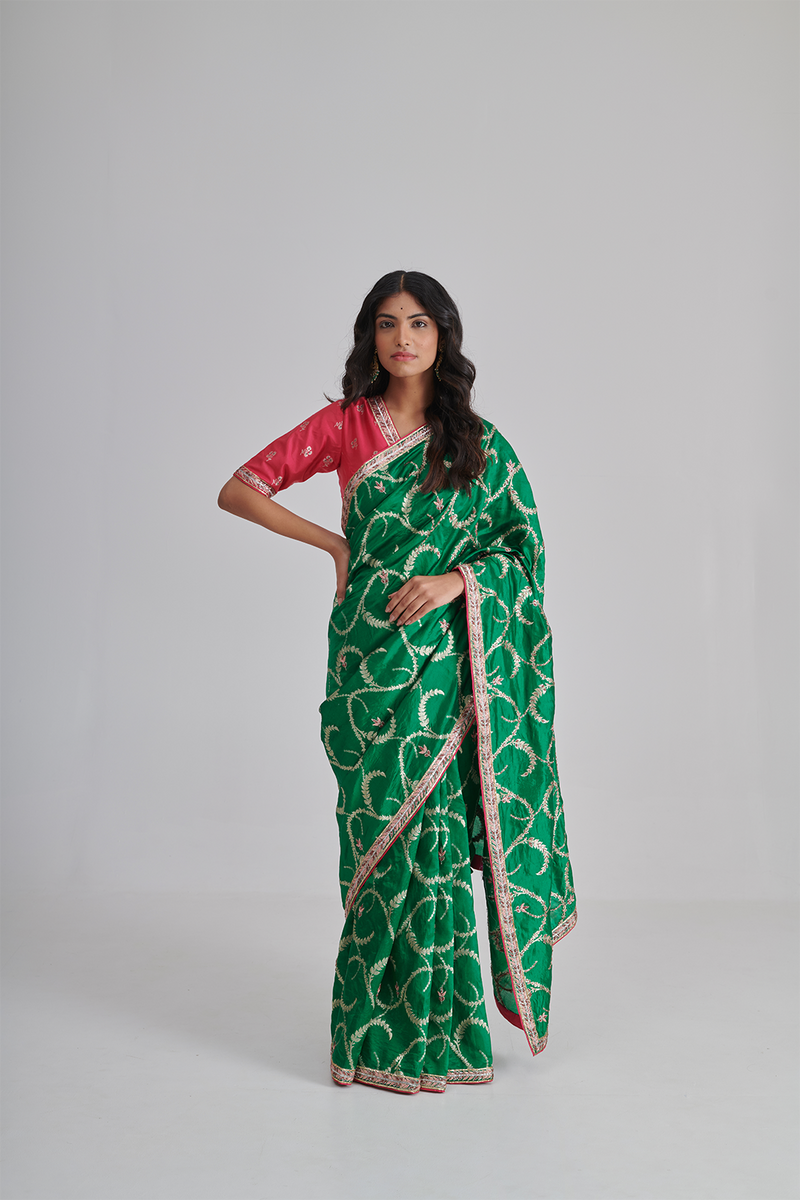
Temple Wedding Outfit Ideas: What to Wear as Bride or Guest
Handmade by karigars Made to your measurements Fit guarantee Ships worldwide As seen in GraziaElle Graduat...
31 August 2026
What to Wear as a Bride at Your Second Wedding
Handmade by karigars Made to your measurements Fit guarantee Ships worldwide As seen in GraziaElle Graduat...
31 August 2026