
Kids' Ethnic Wear for Indian Weddings: A Function-by-Function Guide
Children attend Indian weddings differently to the way adults do. They run between the chairs during the sangeet, sit cross-legged on the floor when the singing runs long, eat with both hands, and fall asleep on somebody's shoulder well before the pheras. Almost no children's occasion wear is designed with any of this in mind. Stiff fabrics, machine embroidery backed with fusing that scratches, cancan skirts that make sitting down a negotiation — the outfit photographs beautifully for twenty minutes and then becomes the family's problem for the rest of the evening.
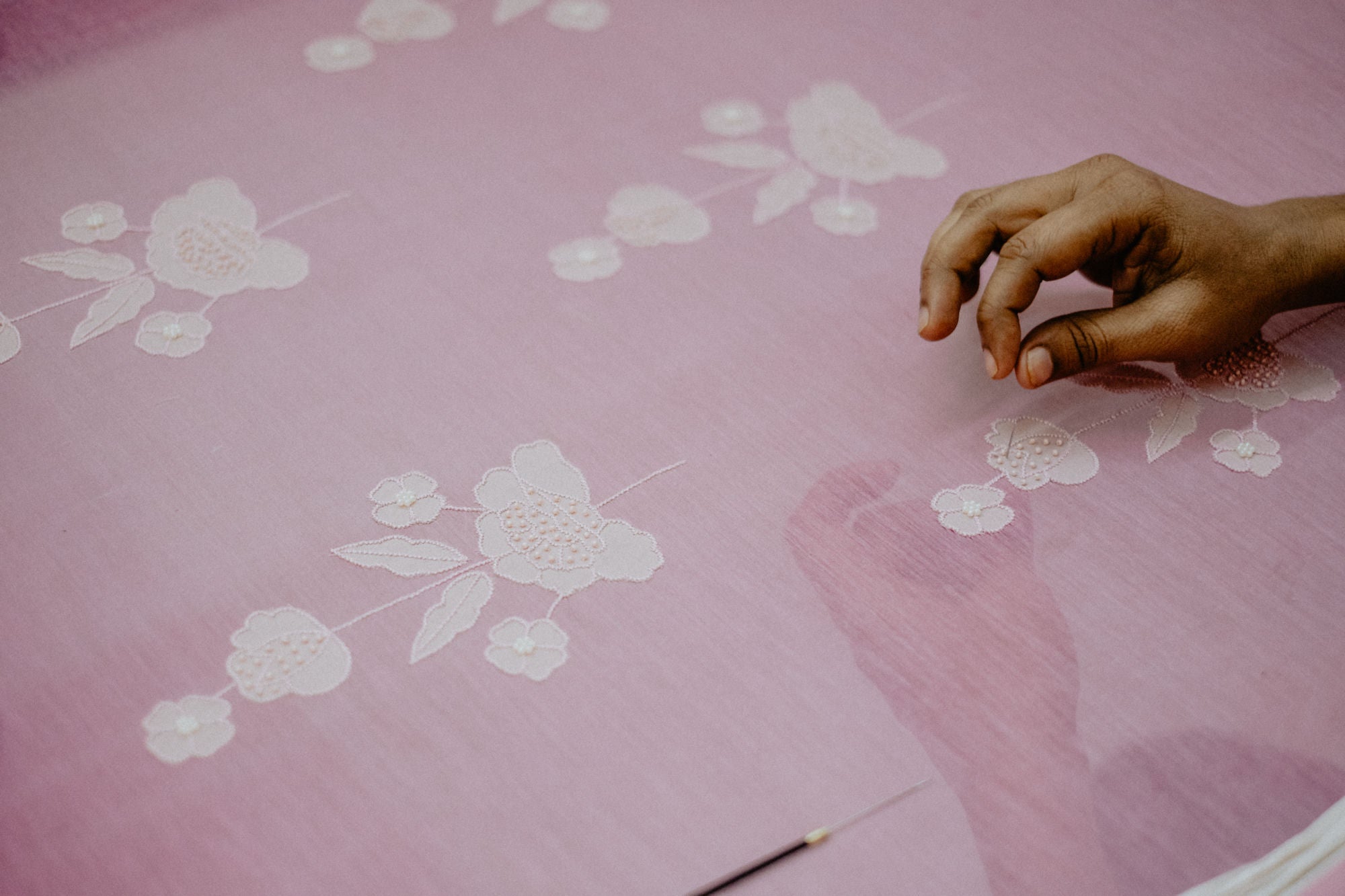
This guide goes function by function through an Indian wedding — roka, haldi, mehendi, sangeet, the ceremony, the reception — and covers what a child should actually wear to each: the silhouette, the colour, the fabric, and the practical details of sizing and lead time that decide whether the outfit works on the day. Everything here comes from making children's clothes in the same Jaipur atelier as our women's line, and from the questions parents ask us on WhatsApp every wedding season.
What changes when the guest is six years old
The design brief for a child is not a smaller version of the adult brief. Three things change. First, weight: a garment that an adult carries comfortably for four hours will exhaust a child in one, so density of embroidery has to come down and heavier techniques have to move to the borders. Second, contact: an adult tolerates a slightly rough lining; a child will simply take the garment off. Every piece in our kids' line is lined in mulmul or soft Shantone so that the working back of the embroidery never touches skin. Third, movement: children sit on the floor, climb onto laps, and dance without warning, so hems, waistbands, and armholes have to allow all of that without pinning or adjusting.
Everything below follows from those three constraints. When you are looking at any children's occasion wear — ours or anyone else's — turn it inside out before you look at the front. The inside is the truth.
Roka and engagement: the easiest function to dress for
The roka is usually the smallest, most family-heavy function of the wedding, often in daylight and often at home. It is the one function where a child can be dressed simply and still be correct. A light kurta set in silk or Chanderi with embroidery kept to the neckline is enough; there is no reason to bring out anything heavier this early in the calendar.
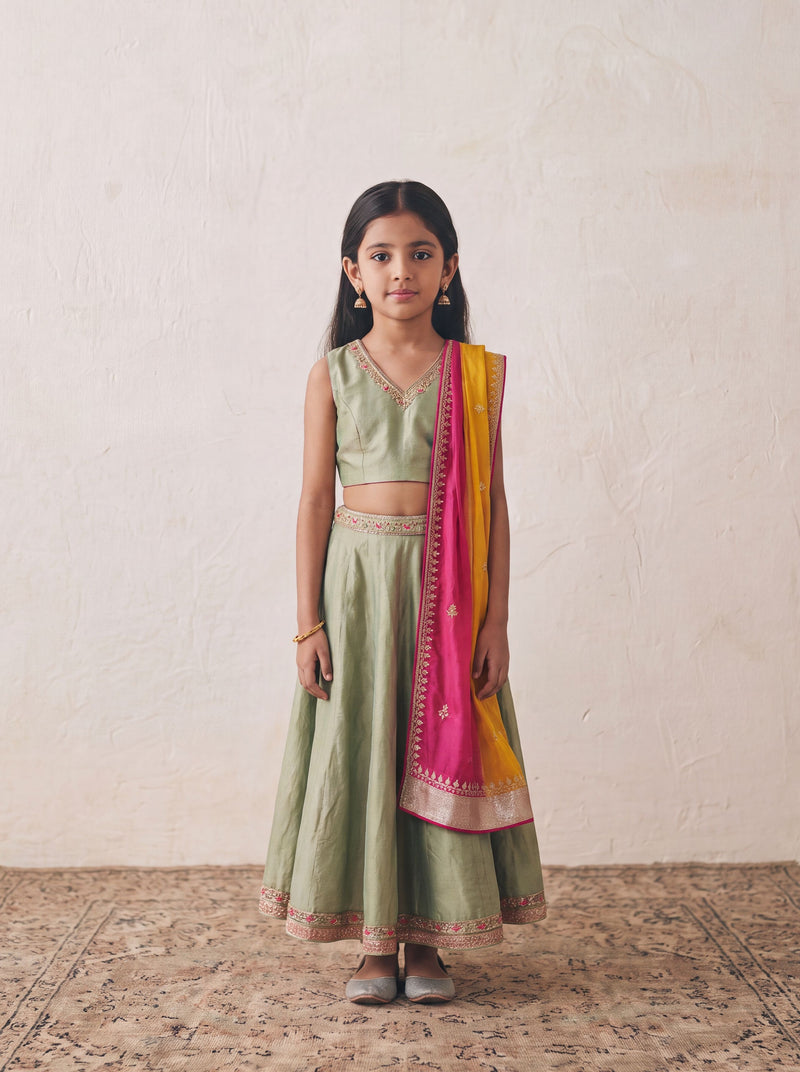
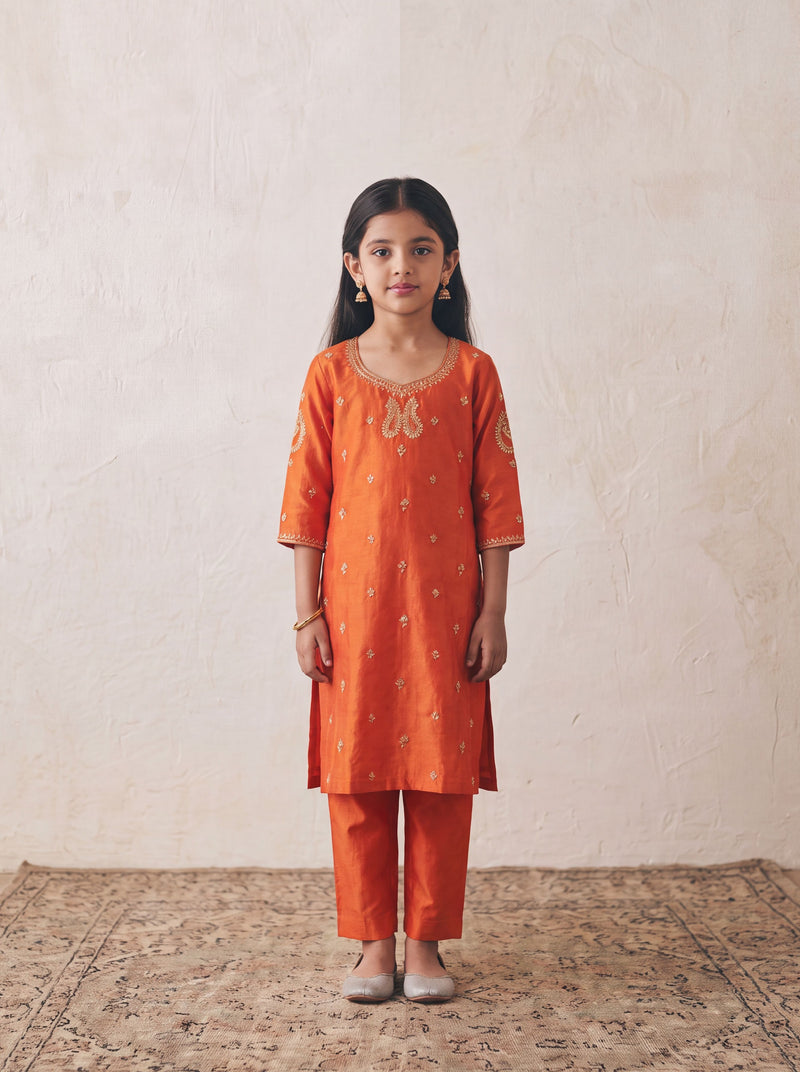
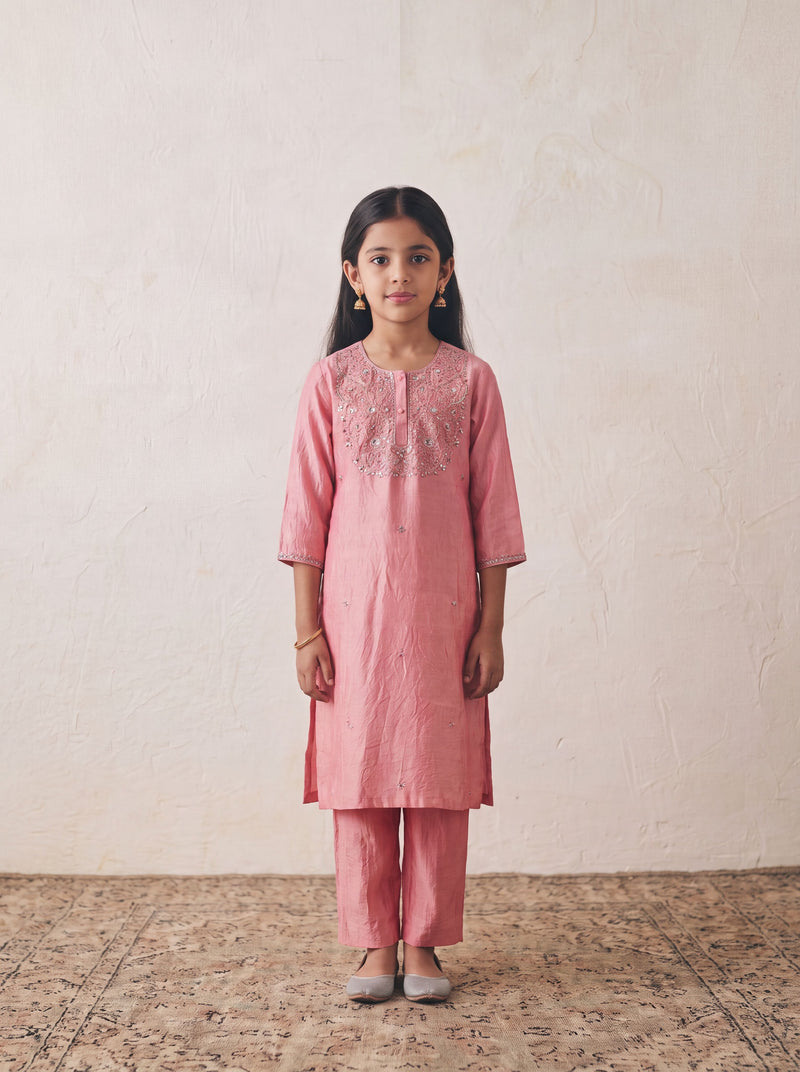
Soft, quiet colours work best here because the photographs tend to be close-up and family-group — creams, soft pinks, dusty greens. FAIZA & RIDA in cloud cream and VANYA & BANI in beige are exactly this register: pieces that look considered rather than dressed-up, and that will get worn again at the next function or the next wedding.


Haldi and mehendi: colour, daylight, and things that stain
The daytime functions are the easiest ones to dress a child for and the easiest ones to ruin. The setting is informal, the light is golden, and there is turmeric and henna within staining distance of everything. Choose light silks and Chanderi in the happy end of the palette — yellows, limes, soft pinks, corals — with embroidery at the neckline and hem rather than across the whole surface.
AFREEN & MAAHI in sunshine-yellow Chanderi is the piece we recommend most often for a mehendi: hand-beaded flowers, gathers that move, and a weight a child forgets about by the second hour. GIA & CYRAA in lime green silk is its louder cousin, with rose-gold florals at the neckline and scattered bootis. ROHI & ZOEY pairs a yellow tissue kurta with a pale sharara that flows in wide pleats, which is exactly what you want for a function where the child will be spinning for photographs.
Skip the dupatta entirely at these functions. Nobody enjoys re-pinning a dupatta on a seven-year-old, and the child enjoys it least. If you want the outfit to feel complete, a pair of small jhumkis does more than a drape ever will. Our longer guide on what kids should wear to a mehendi goes deeper into the daytime palette.


The sangeet: a little shine, and room to dance
Evening functions can carry more — deeper colour, some sequin work, a fuller silhouette. The one non-negotiable is movement. A sharara or a gathered skirt lets a child dance without managing the hem, and a kurta set beats a gown for anyone who plans to sit on the stage steps between performances.
GHAZAL & PARCHHAI is a three-piece set in navy silk with floral vines at the neckline that holds its own in photographs while weighing almost nothing. TARA & PARI in navy-purple satin, with a magenta yoke and a garden of ice-blue and peach florals, is the piece for the child who wants to match the drama the adults are in. AYESHA & MEHR in black Chanderi is the quietest and, in our opinion, the most grown-up — proof that children's clothes can hold serious design without holding weight.


The wedding ceremony: the miniature formal
For the ceremony itself, a child's version of proper occasion wear — a lehenga with an embroidered border, or a set in a deeper silk or tissue — photographs beautifully beside adult finery. This is the function where made-to-order construction earns its money: formalwear that actually fits needs no cancan, no safety pins, and no compromises at the last minute.
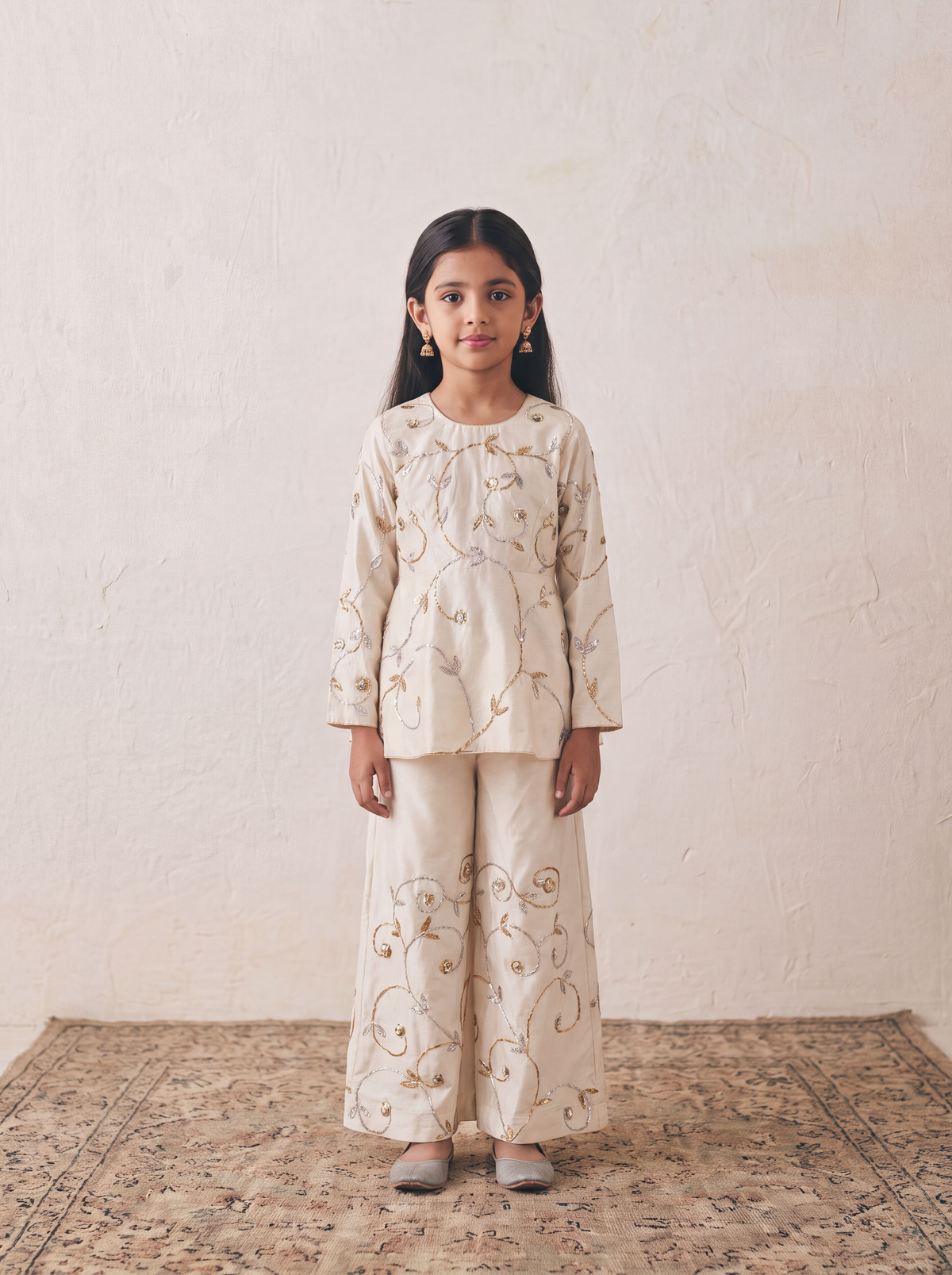
NYASSA & ELINA in rosewood tissue is the most formal piece in the kids' line, with an all-over embroidered blouse and skirt that still weigh a fraction of what they appear to. ANIKA & MAHBOOB in ivory silk, with Mughal vine embroidery in gold and silver, is the choice for families dressing in a coordinated ivory-and-gold palette. ISHQ-e-GUL & INARA is the piece for a child who wants colour on the biggest day.


The reception: the last function, and usually the latest night
Receptions run late, which means the outfit has to survive a long evening and, quite often, a car ride home with a sleeping child in it. Choose something with a soft waistband, avoid anything that has to be held, and let the colour do the work. MEHERGUL & ABROO in rani pink silk carries sequin and cutdana florals with fluid gathers made for twirling. BANO & DILRUBA and GULRUKH & LEHER are the softer alternatives for a family palette that leans pastel.


Ask us before you order
Tell us the function, the date, and the child’s age. We will tell you honestly what will work, what will be too heavy, and whether the timeline is possible.
Fabric and lining: the part nobody photographs
Every piece in our kidswear line is cut in natural fabric — silk, Chanderi, tissue, satin — and lined in mulmul or soft Shantone. Chanderi is the coolest of the four and the best choice for daytime functions in a warm month. Silk holds colour most deeply and photographs best under evening light. Tissue carries the most shine and is the natural choice for the ceremony. Satin has the most fluid drape, which is why it moves so well on a dancing child.
The lining matters more than any of that. Hand embroidery, however fine, has a working back, and mulmul — the same soft muslin newborns are wrapped in — is what sits between every stitch and every small back. It is the single most reliable indicator of whether a child will wear the outfit for the whole function or campaign to take it off by dinner.
Sizes, custom fits, and how early to order
Our kids' pieces come in eighteen sizes, from 0–3 months to 15–16 years, and the size chart gives the body measurements behind each one. Every piece can also be cut to a child's exact measurements through the custom-size option, which is worth choosing whenever the child is between sizes or unusually tall or petite for their age.
Making takes four to five weeks, because the embroidery happens after you order — nothing sits in a warehouse. The arithmetic is simple: for a December wedding, order in October. Measure the child in the week you place the order rather than the month before; children change faster than paperwork does. If your dates are tighter than that, message us before assuming it is impossible — express making is sometimes available, and we would rather tell you honestly than have you find out late. There is more detail in our guide on buying ethnic wear for growing kids.
Packing for a multi-day wedding
Weddings are five days long and children's outfits are the first things to go missing. Pack each function's outfit together in its own muslin bag, with the jewellery for that function inside it — this single habit removes most of the morning panic. Carry a spare pair of comfortable shoes, because festive footwear will be abandoned by day two, and a plain kurta for the hours between functions. Steam rather than iron anything embroidered, and never fold a garment with the worked face outward.
Five mistakes worth avoiding
Buying the age instead of measuring the child. Choosing surface-heavy embroidery that a child will sit against for four hours. Ignoring the lining because the outside looks good. Ordering three weeks before the wedding and hoping. And matching the child to the decor rather than to the family — the photographs that last are of people together, in colours that speak to each other, not to the mandap.
Frequently asked questions
What should a two-year-old wear to an Indian wedding?
Softness above everything: a light kurta set or gathered skirt set in silk or Chanderi with mulmul lining, minimal surface embroidery, and no dupatta. Our sizes begin at 0–3 months, so even the smallest guest can be dressed properly.
Are the kids' pieces the same designs as the women's line?
Most of them, yes — scaled and re-engineered for children, in the same atelier. That is what makes mother-daughter twinning possible; see our mini-me guide for the pairs.
How long does a made-to-order kids' outfit take?
Four to five weeks on the frame, plus shipping. Order six to eight weeks before the function to be comfortable.
Can the outfit be made to my child's measurements?
Yes. Every piece carries a custom-size option — send the measurements when you order and it is cut to them.
Do you ship internationally?
We ship worldwide, insured, and we are stocked in Dubai and London as well. Write to us with your date and we will confirm the timeline including transit.
Not sure where to start?
Tell us the function, the date, and the child’s age — we will help you choose fabric, colour, and size, and confirm the making timeline.
Pieces from this story
All pieces →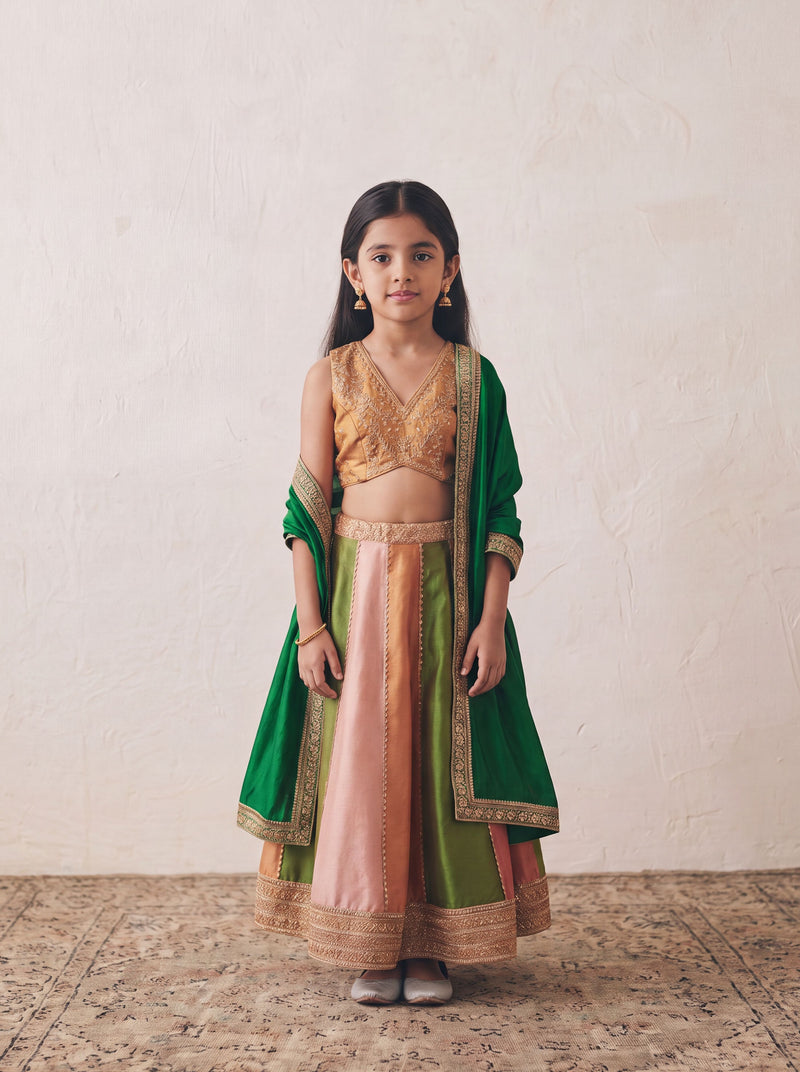
Keep reading
The journal →
Best Plus-Size Ethnic Wear Brands in India 2026: Where to Actually Find Your Size
Handmade by karigars Made to your measurements Fit guarantee Ships worldwide As seen in GraziaElle Graduat...
17 September 2026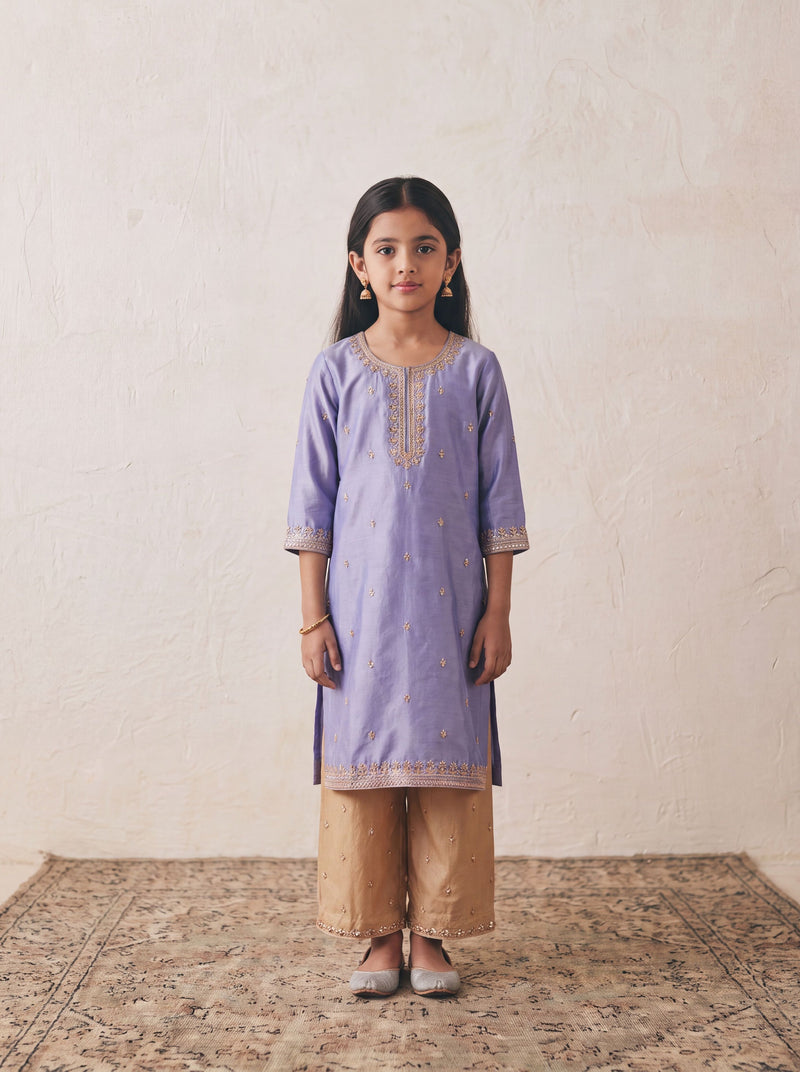
Kurta Sets for Girls: A Parent's Buying Guide to Kids' Kurta Sets
Handmade by karigars Made to your measurements Fit guarantee Ships worldwide As seen in GraziaElle Graduat...
17 September 2026
Gifts for Your Mother-in-Law: Indian Outfits That Don't Feel Like a Formality
Handmade by karigars Made to your measurements Fit guarantee Ships worldwide As seen in GraziaElle Graduat...
17 September 2026