
Mother-Daughter Matching Outfits: The Mini-Me Guide to Indian Wedding Twinning
There is a photograph that exists in almost every family album now: a mother and a daughter at a wedding, dressed as echoes of each other. Done badly, it looks like a costume party. Done well, it is one of the loveliest things Indian occasion wear can do — two generations in the same design language, photographed together at an event that is itself about family.
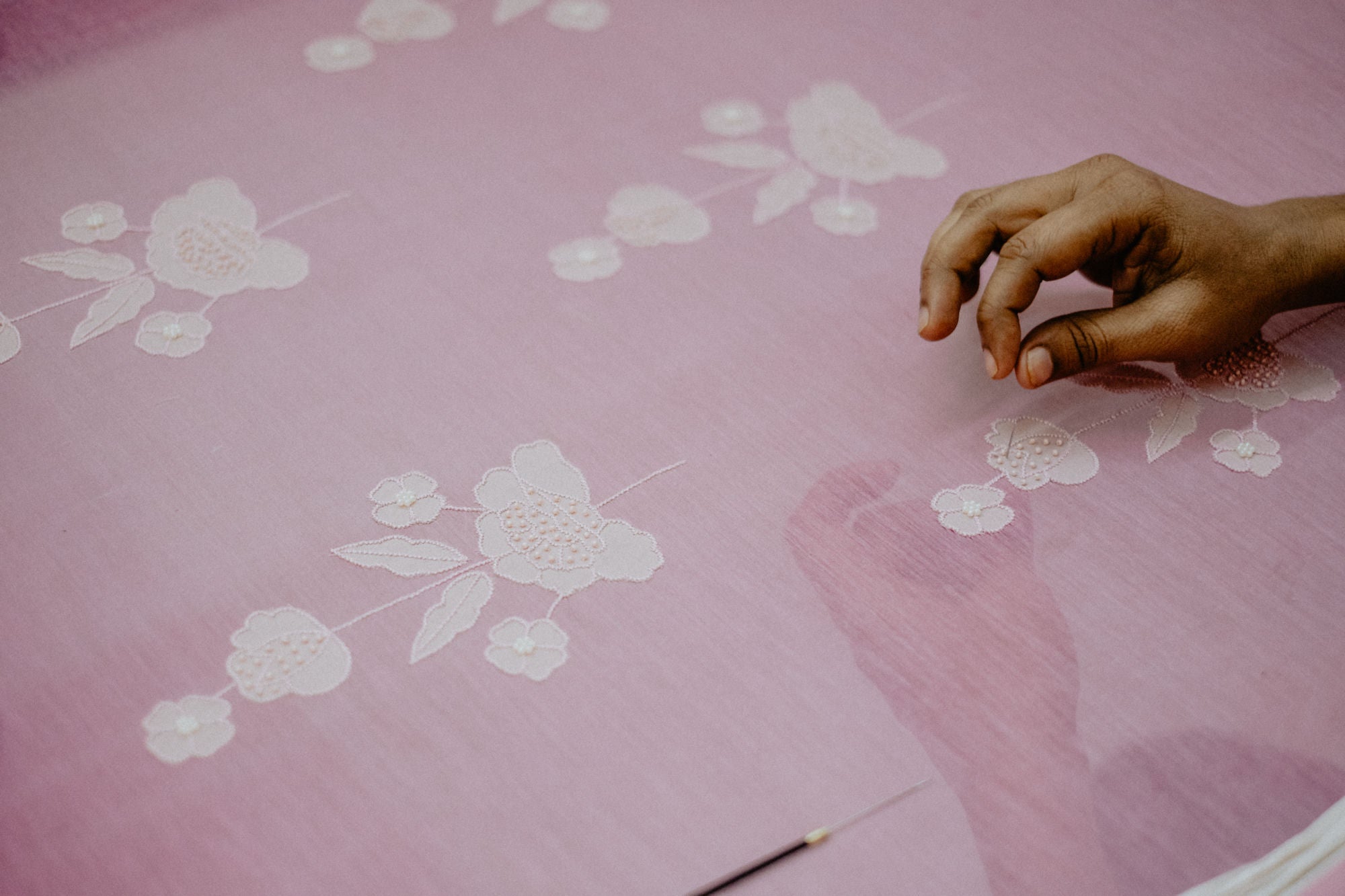
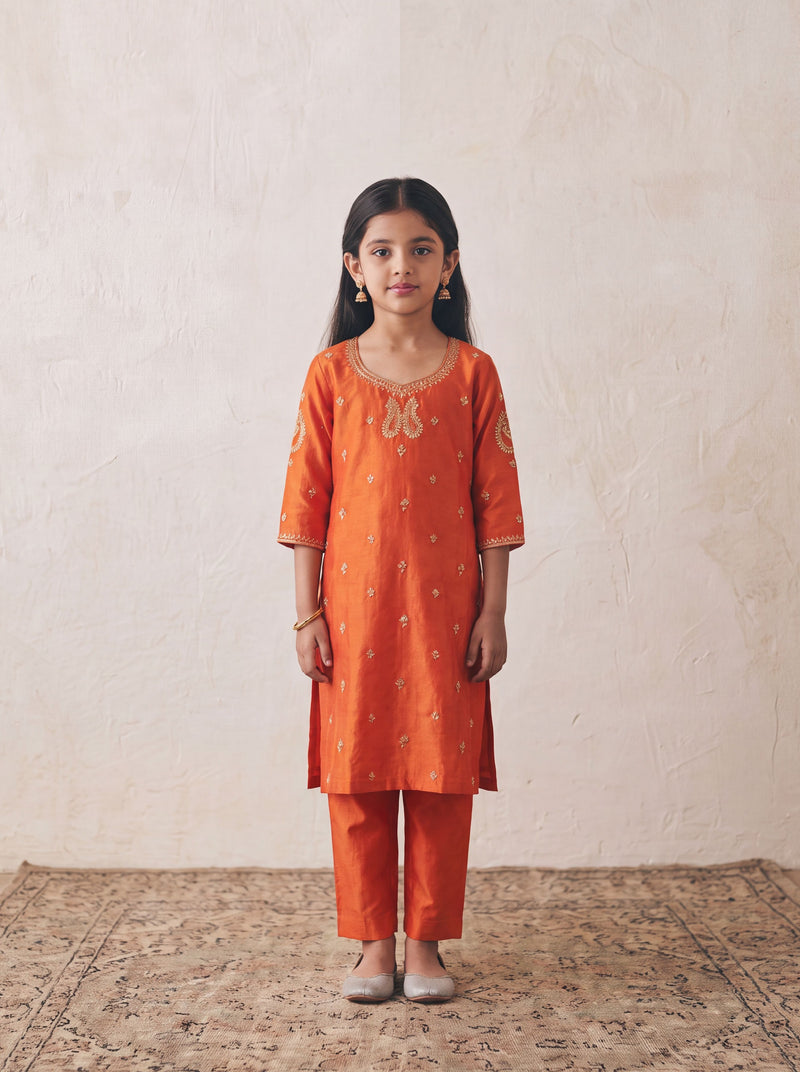
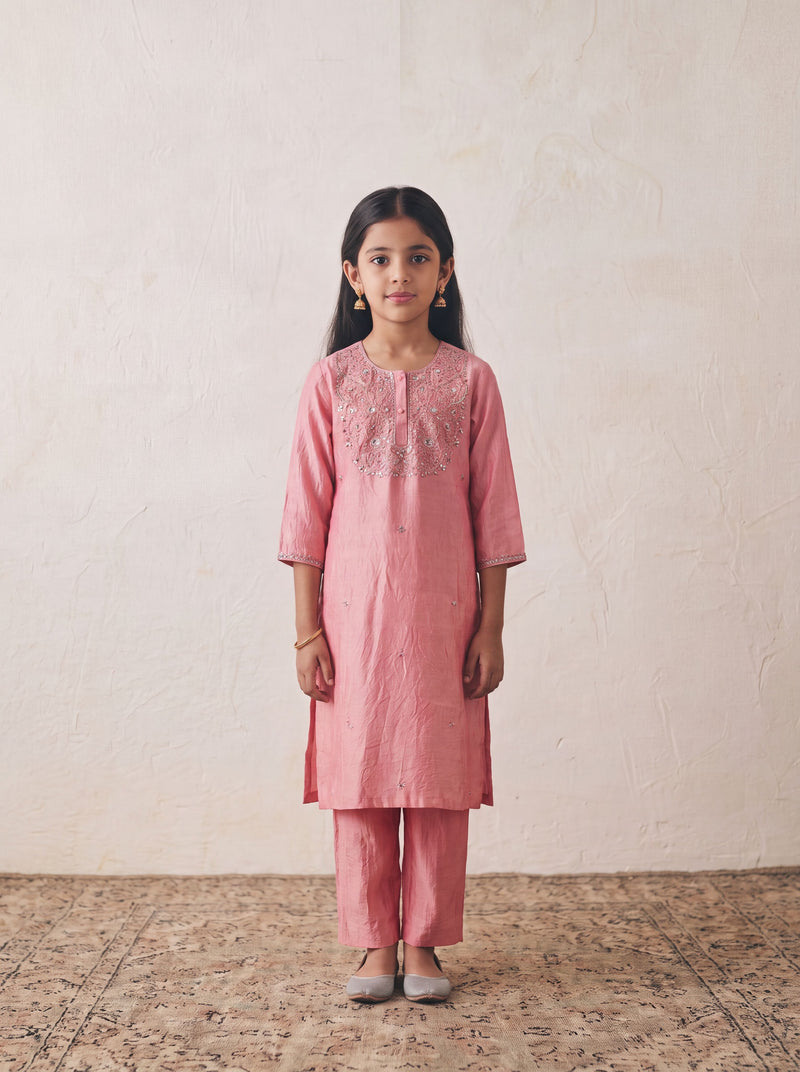
Our kidswear line was made for exactly this. Most of the children's pieces are the same designs as our women's line, cut and re-engineered for small bodies, embroidered by the same hands in the same Jaipur atelier. This guide covers how to twin without matching into absurdity: the pairs we make, the three different ways to do it, how to choose by function, and the practical business of ordering both together.
Where mini-me dressing came from
Coordinated family dressing is not an Instagram invention. Indian families have dressed to a shared palette for generations, because a wedding is a family portrait stretched over five days — the saris were chosen together, the jewellery was borrowed across the family, the men wore the same colour on the wedding day. What has changed is precision. Instead of accidentally similar clothes, a design can now be cut at two scales on purpose, so the connection is in the design rather than in the coincidence.
That is why it works when it works. The design carries the relationship, so neither wearer is in costume. The mother wears a piece that is entirely hers. The daughter wears a piece that is entirely hers. The photograph does the rest.
Match the piece, not the costume
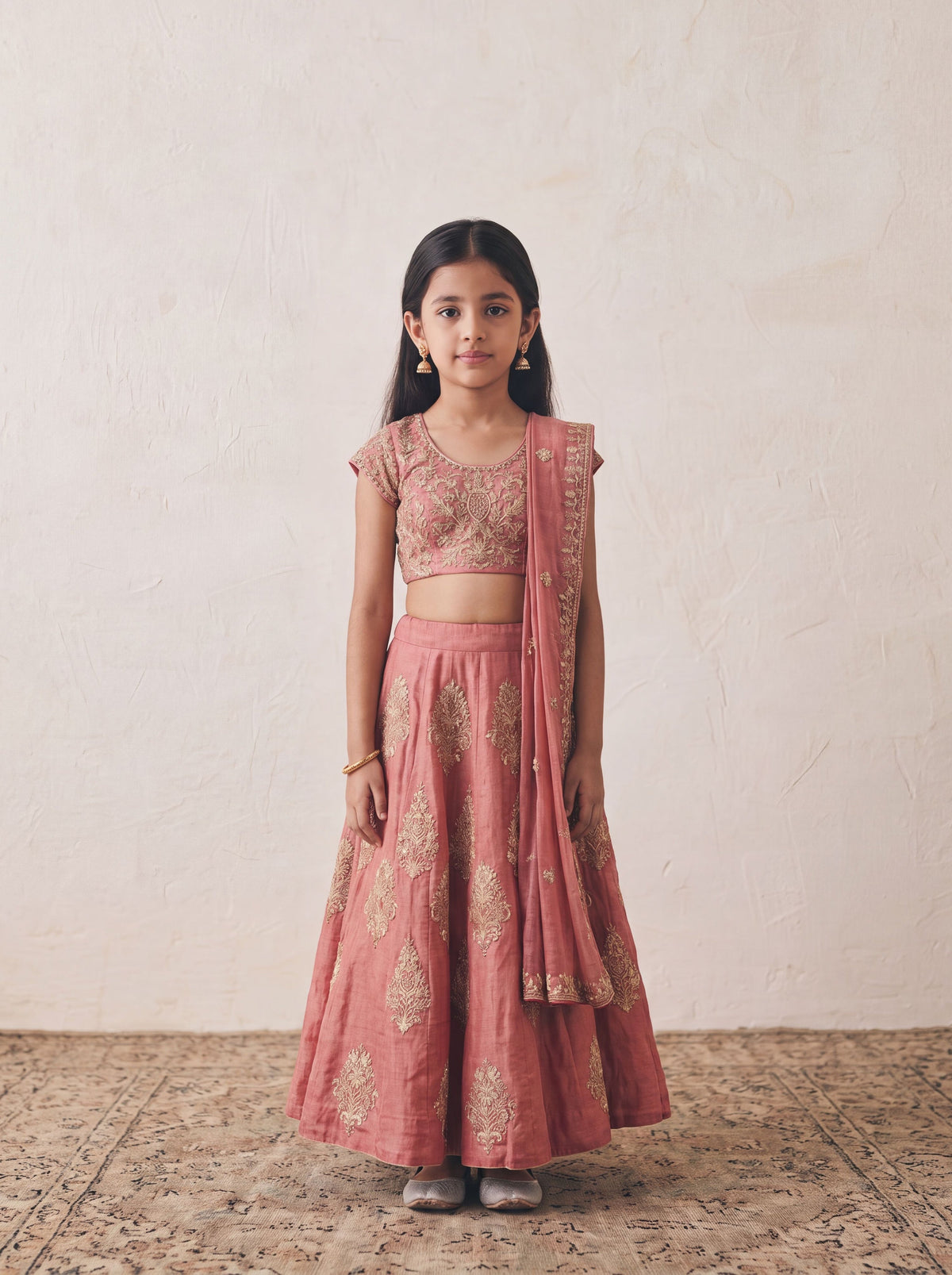
True twinning is not two identical outfits in different sizes. When we cut one of our designs for a child, four things change. The motifs are redrawn at a smaller scale so the proportions stay correct — a paisley shrunk photographically looks wrong, while a paisley redrawn for a smaller panel looks inevitable. The density drops, because weight tires a small frame. The heavier techniques move away from where a child sits and leans, to the neckline, the cuffs, and the hem. And the lining becomes mulmul, always.
What carries across is the design language: the same colour, the same motif family, the same hand. Side by side, the two pieces read unmistakably as a pair. Worn separately, nobody would guess either one was half of anything.
The pairs we make
These designs exist in both lines. Each women's piece below has a child's version made in the same atelier, in the same colour, with the embroidery redrawn to scale.
Anika & Mahboob in ivory silk carries Mughal vine embroidery in gold and silver — the quietest and most formal of the pairs, and the one that works best when the whole family is dressing in ivory. Nyassa & Elina in rosewood tissue is the most dressed of them, all-over embroidered in zari and marodi; the child's version keeps the border logic and drops the density.


Roshni & Nazreen puts pink Chanderi against an aari trellis that reads beautifully in daylight, which makes it a mehendi and haldi pair rather than an evening one. Tara & Pari in navy-purple satin with the magenta yoke is the boldest pair we make and the one that photographs best under evening light. Mehergul & Abroo in rani pink is the pair for families who want the twinning to be visible from across the room.


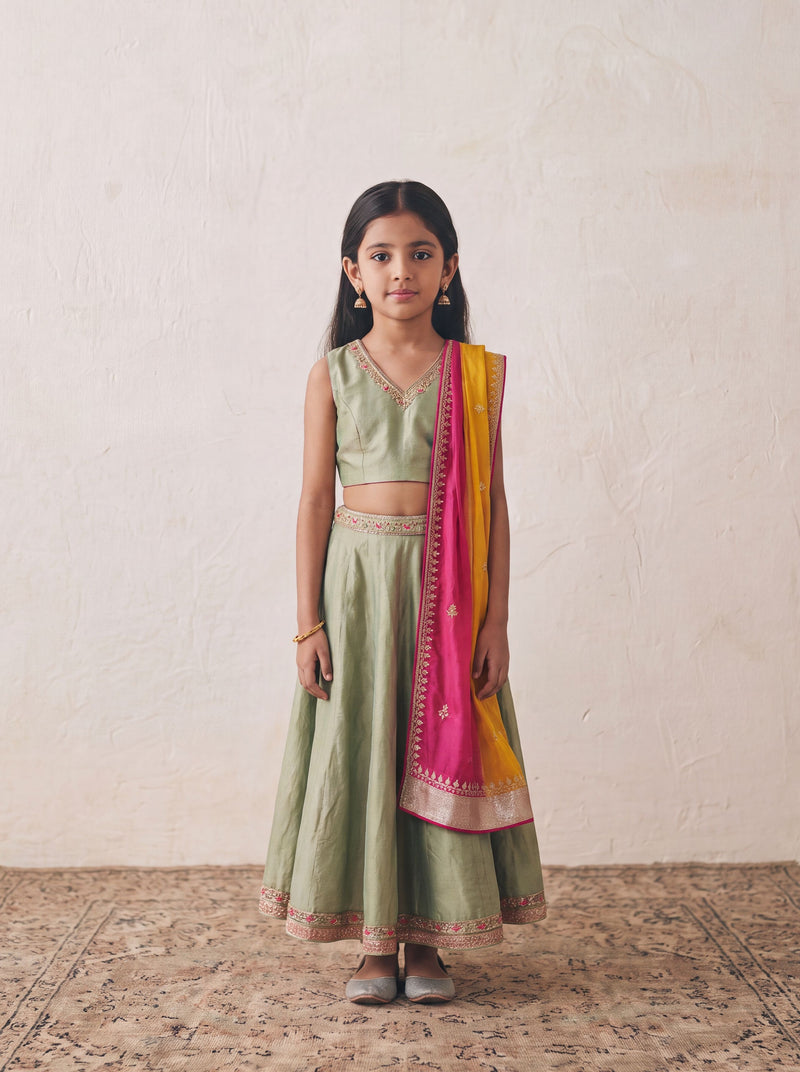
The full set is in the kidswear collection — every piece whose name you recognise from the women's line has a matching design at child's scale.
Three ways to twin
The literal match — the same piece in both sizes — is for the biggest functions, where the photographs matter most: the wedding itself, the reception, a sister's sangeet. It is the boldest version and the one people notice immediately. Use it once across a wedding rather than every day; repeated, it stops being a moment.
The colour match — her lehenga in the same rani pink family as your saree — reads elegant rather than staged, and lets each of you wear the silhouette that actually suits you. This is the safest version and the one we recommend for most families, particularly when the child is old enough to have opinions about what she wears.
The motif match is the quietest and, we think, the most sophisticated: the same gota flowers or the same paisley border on completely different garments in different colours. Only the people who look closely will see it, which is precisely the point. It also survives a growing child better, because the connection does not depend on the two pieces being cut alike.
Ask us before you order
Send us what you are wearing — a photograph of your piece is enough — and we will tell you which of the kids’ designs will pair with it, and in which of the three ways.
Choosing by function
For a mehendi or haldi, twin in the yellow-green-pink register. Those colours flatter every age and photograph beautifully outdoors, and the daytime setting is forgiving of a match that is only approximate. For a sangeet, go deeper — navy, rani pink, emerald, plum — and let the child's version carry a little more shine than yours, because children get away with sparkle that adults have to earn.
For the wedding ceremony itself, consider the motif match in softer tones so that neither of you competes with the bride. Unless the bride is you — in which case the daughter in your exact colour is one of the most photographed choices a bridal party can make, and the one guests remember.
Twinning with the whole family
The mother-daughter pair is the most common version, but it is not the only one. Two or three cousins in the same design at different sizes is a wonderful group photograph and much easier to coordinate than it sounds, since everything is made to order anyway. A grandmother, mother, and daughter in the same colour family across three different silhouettes is the version that tends to end up framed. And if there is a brother in the picture, match him by colour rather than by design — a kurta in the same tone does the job without anybody looking like a set.
Photographing it properly
Take one posed frame and then stop posing. The posed one is worth doing carefully: same stance, child in front and slightly to one side, frame low enough to include both hems. Everything after that should be candid, because twinning earns its keep in the unposed pictures — the two of you talking, walking, adjusting each other's clothes. Tell your photographer the twinning exists before the function starts; they will build a short shot list around it and you will not have to ask on the day.
Ordering both together
Both versions are made to order in Jaipur, four to five weeks on the frame, and both can be cut to measurements. Ordering them together is worth doing, because pieces made in the same run are colour-matched from the same dye lots wherever the design shares cloth — a difference that is invisible in a shop and very visible in a photograph of two people standing together.
If you already own the women's piece and want the child's version made to match it — including pieces from earlier seasons — write to the studio. Matching across orders is something we do often, and a photograph of your piece in daylight is usually enough for us to confirm what is possible.
What twinning costs, and how to keep it sensible
The honest arithmetic is that twinning means buying two pieces instead of one, and the child's version is not half the price of the adult's — the embroidery is redrawn and worked by hand either way, so the saving is in cloth rather than in labour. Families who twin well tend to do it once across a wedding rather than at every function, and put the budget into the function where the photographs matter most.
The cheaper version of the same idea, and often the more elegant one, is the colour match. Your saree and her lehenga in the same family of pink read as a pair in every group photograph without either piece being made to match the other. If the budget is the constraint, do that at three functions rather than the literal match at one.


When not to twin
There are functions where it does not work, and it is worth naming them. At somebody else's wedding, a literal match with your daughter can read as competing with the bridal party — save it for the functions your own family is hosting. With a child old enough to have strong opinions, forcing a match usually produces a photograph of a child who does not want to be in the photograph, which is worse than no twinning at all.
And if the two of you are in genuinely different silhouettes — a heavily worked saree and a light kurta set — matching the colour exactly can flatten both. In that situation, the motif match is the better instrument: the same gota flowers, different colours, different garments, one quiet thread of connection between them.
A note on the boys
Twinning is usually written about as a mother-and-daughter thing, but a brother left out of a coordinated family photograph notices. The simplest fix is colour rather than design — a kurta in the same tone as the girls' pieces, with no attempt to mirror the embroidery. It keeps the group coherent without putting anybody in a matching set, and it is the version that ages best when the photographs are looked at again in ten years.
Frequently asked questions
Do all your women's designs exist in kids' sizes?
Not all of them. The kidswear line currently mirrors about two dozen designs, chosen for how well they scale down. The collection grows each season, and if the piece you want is not in it, ask — some designs can be made to order at child's scale.
Can you match a piece I already own?
Usually yes, since everything is made to order. Send a photograph of your piece taken in daylight and we will confirm what we can match.
What ages do the kids' sizes cover?
0–3 months to 15–16 years, plus made-to-measurement custom sizing for children who fall between sizes.
Is twinning appropriate at somebody else's wedding?
Entirely — as a guest, the colour match or the motif match is the graceful version. Save the literal match for the functions where your family is hosting.
Not sure where to start?
Send us your function, your colour, and your child’s age — we will help you pick the pair and confirm the timeline for both pieces.
Pieces from this story
All pieces →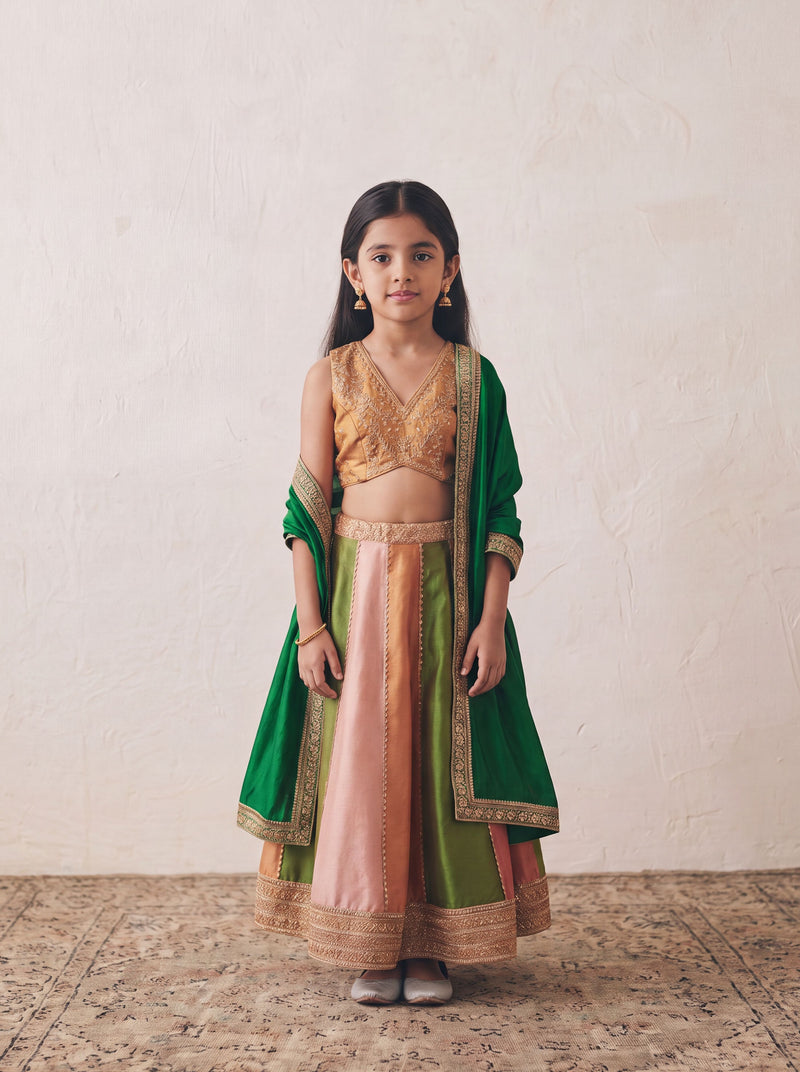
Keep reading
The journal →
Best Banarasi Saree Brands in India 2026: Where to Buy an Authentic Banarasi
Handmade by karigars Made to your measurements Fit guarantee Ships worldwide As seen in GraziaElle Graduat...
14 September 2026
Gifts for Your Wife She'll Actually Wear: Indian Outfits for Karva Chauth, Diwali & Anniversaries
Handmade by karigars Made to your measurements Fit guarantee Ships worldwide As seen in GraziaElle Graduat...
14 September 2026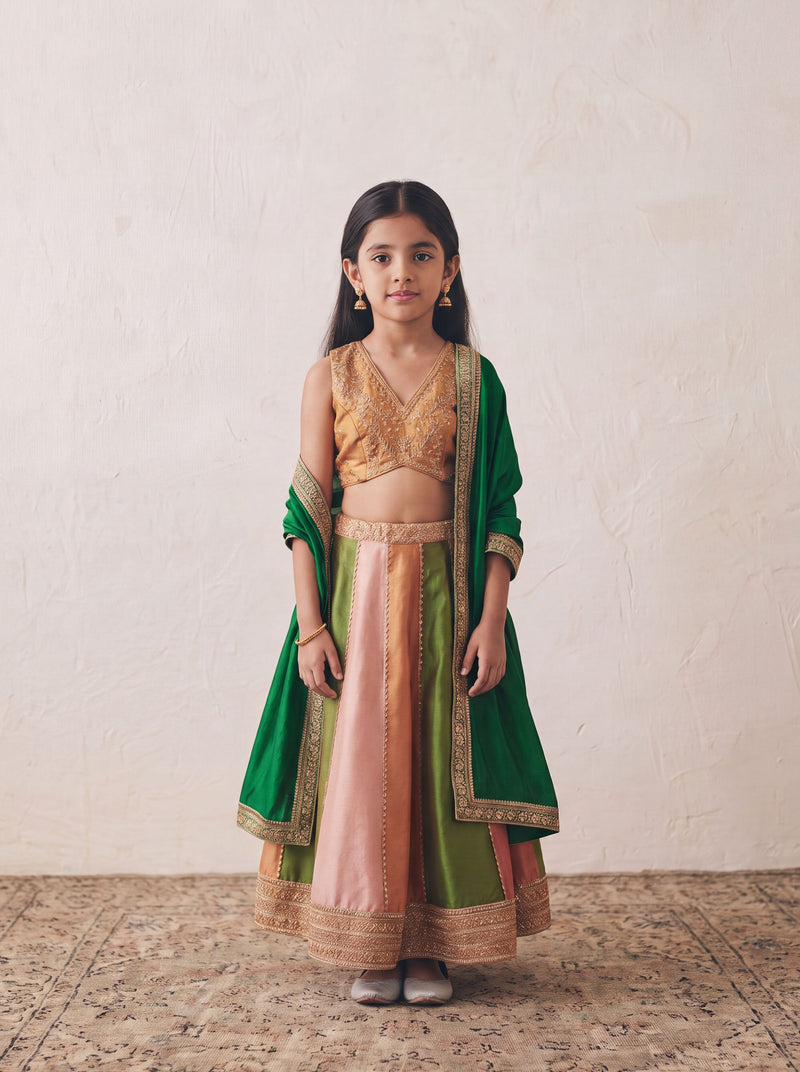
Designer Lehenga for Girls: A Parent's Buying Guide to Kids' Lehengas
Handmade by karigars Made to your measurements Fit guarantee Ships worldwide As seen in GraziaElle Graduat...
14 September 2026