

Kids' Haldi Outfit Ideas: Yellow for the Photos, Old Cotton for the Paste, and How to Get Turmeric Out
At a haldi, the turmeric paste is meant for the bride or groom — but anyone under ten who gets near the bowl will end up wearing some of it. So dress a child for the haldi in two halves: a pretty yellow or marigold set for the family photographs before the paste comes out, and something old, washable and cotton for the messy part, with a clean change for afterwards. Turmeric is one of the hardest stains there is, and hand-embroidered silk is the last thing you want it on. This guide covers what to wear for each half, the colours that work, and what to do when the paste lands anyway.
What Actually Happens at a Haldi
The haldi is a pre-wedding ritual held, in most families, the day before the wedding or on the morning of it. A paste of turmeric — often blended with things like sandalwood, rose water, milk or oil, depending on the family — is applied to the bride or groom by relatives and friends, one by one, usually starting with the face and moving to the arms and feet. It is a blessing, a beauty ritual and, in many homes, protection against the evil eye. The ceremony goes by different names: mayian in Punjabi families, pithi in Gujarati ones, gaye holud ("yellow on the body") in Bengal, among others, and the details vary as much as the names.
For a child, what matters is this: it is usually daytime, often outdoors or on a terrace, there are marigolds everywhere, and the paste does not stay where it's put. Cousins smear each other; aunties dab a cheek for luck; a toddler puts both hands in the bowl. Plan for that and nobody's day is spoiled.
The Colours: Yellow, Marigold and Everything Near Them
Yellow is the classic haldi colour for everyone, and on a child it photographs beautifully against marigold garlands. But you don't need a perfect match to the family. Mustard, lime, pistachio, soft gold, burnt orange and coral all sit happily in a haldi picture, and a two-tone set — yellow with mint, green with lime — keeps it from looking like a uniform. Our haldi outfit ideas for the grown-ups covers the wider palette if you are coordinating the whole family, and our guide to twinning siblings and cousins helps if there is a whole row of children to dress.
The one colour to think twice about is white or pale ivory for the messy part. It shows every fingerprint of turmeric, and you will spend the afternoon looking at it.
Half One: The Photographs, Before the Paste
Ask the photographer or the family to do the children's pictures — with the bride or groom, with grandparents, with cousins — before the ritual starts. That is when a proper festive set earns its place, and it can be taken off and folded away, spotless, before anyone picks up a bowl.
For a younger child, the Rohi & Zoey set (₹16,500) is about as haldi as kidswear gets: a soft, luminous yellow tissue kurta with rose-gold and pistachio embroidery at the neckline and sleeves, Mughal-floral motifs at the hem in zardozi, sequins, cutdana and beads, over a pale mint-green sharara in wide pleats. A sharara is easy to sit in on a durrie and easy to run in between photographs.

For something lighter, the Afreen & Maahi set (₹12,750) is sunshine-yellow Chanderi with hand-embroidered cutdana and bead flowers, soft gathers at the bust and beaded neck and sleeve hems. Chanderi is light, which matters on a warm terrace. The Roshni & Nazreen set (₹21,500) is the richer choice: a mustard-yellow Chanderi kurta covered in a trellis of vines in fine aari and golden thread, with soft pink resham flowers, sequins, nakshi work and tiny moti, over a soft pink Chanderi sharara — described in our own notes as designed for daytime festivities.
If yellow isn't your child's colour, look at the green end:
- Sahira & Fizza (₹16,500) — a pistachio-green silk kurta with a lime-yellow silk pant, embroidered with floral and paisley motifs in resham, sequins, cutdana, beads and aari.
- Gia & Cyraa (₹18,500) — vibrant lime-green silk with rose-gold and deep-fuchsia florals in marodi, gota, sequins and thread work.
- Ananya & Tavishi (₹21,500) — an antique-gold and muted-green tissue kurta with clustered resham, sequin, cutdana and bead florals, over a matching green tissue sharara.


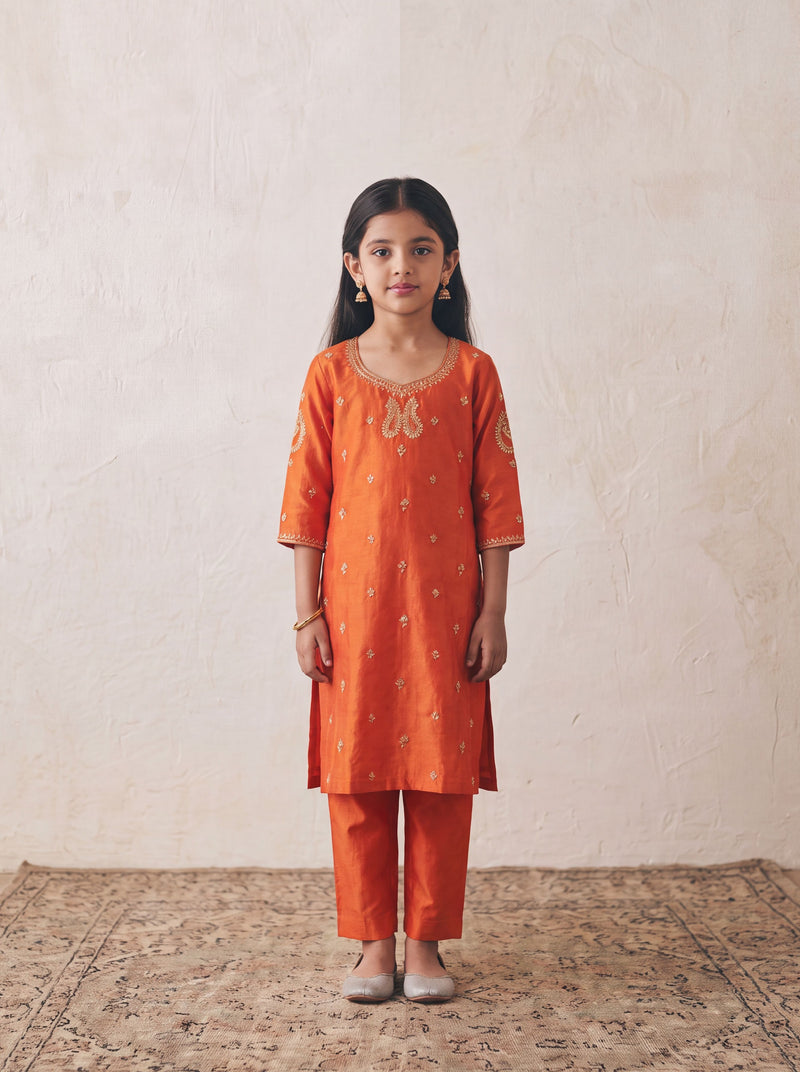
And for the marigold-and-orange end of the palette, the Shaista & Sufi set (₹15,500) is a rich burnt-orange kurta and pant with marodi, sequin and bead embroidery, while the Anahita & Amira set (₹14,500) pairs a magenta silk kurta with a burnt-orange silk pant — colours our notes trace to gulal and marigold strings.
Half Two: The Messy Part — Wear Something You Don't Mind Losing
We make hand-embroidered festive clothes, and we'd still tell you plainly: don't put a child in hand-embroidered silk, tissue or Chanderi while the turmeric paste is going round. The pigment bonds quickly to silk, sequins and threadwork can't be scrubbed, and a stain that sets in a delicate piece may not come out at all. For this part of the morning:
- An old cotton kurta and pyjama, or a cheap yellow cotton top. Our kidswear is silk, Chanderi, tissue and satin, so this is the one part of the haldi we'd tell you to dress them for from somewhere else — or from the back of the cupboard.
- Short or rolled sleeves. Sleeves drag through the bowl first.
- No dupatta. It will trail in the paste and the petals within minutes.
- Bare feet or washable sandals. Floors at a haldi get covered in paste, water and crushed marigolds; save the juttis for the photographs.
- A towel and wet wipes in your bag, and keep the paste away from eyes.
- Sensitive skin? Turmeric can leave a yellow tint on skin for a while. If your child has eczema or reacts easily, skip the paste for them or try a small dab first.
Half Three: A Clean Change for Afterwards
The haldi is often followed by lunch, more guests, or another function later in the day, and nobody wants a child in turmeric-streaked cotton for the rest of it. Wash them down, then put them into a second outfit — either back into the festive set from the photographs, or into something lighter.
The Faiza & Rida set (₹14,500) works well here: soft gold silk with a gentle V-neck, three-quarter sleeves and rose-and-coral gota and thread work along the neckline, sleeves and hem — warm enough in tone to stay in the haldi picture, quiet enough for lunch. If the evening is the mehendi, our guide to what kids should wear to a mehendi picks up from there, and the function-by-function kids' wedding guide covers the rest of the week.
For an older girl who wants the full yellow-green picture for the whole day, the Bano & Dilruba lehenga (₹22,500) is soft pistachio silk tissue with a wide border of roses and vines in sequins and beads in coral and rose gold, and a sleeveless V-neck blouse — strictly for the photographs and after, not the paste.
When Turmeric Lands Anyway: Stain Care
Turmeric's colour comes from curcumin, a strong natural dye, and the longer it sits the harder it is to shift. Cleaning guides broadly agree on the first steps, though they differ on the details — so treat what follows as general advice, and always check the fabric first.
On washable cotton
- Act quickly. Scrape off excess paste with a spoon or blunt knife rather than rubbing it in.
- Rinse with cold water from the back of the fabric, to push the pigment out rather than through. Avoid hot water at this stage; most guides warn it can help set the stain.
- Work in a little dish soap or liquid detergent and leave it for 15–30 minutes, then wash as the care label allows. Curcumin is partly oil-soluble, which is why dish soap helps.
- Don't panic if it turns red. Curcumin reacts to alkaline soap and can flash reddish-orange; it's a pH reaction, not a new stain, and it usually turns back as you rinse.
- Dry white cotton in the sun. Sunlight helps fade turmeric on whites. On coloured clothes, detergent makers including Ariel advise against direct sun and bleach, which can fade the dye along with the stain.
- Repeat before you tumble-dry or iron, since heat tends to set whatever is left.
On silk, tissue or anything embroidered
- Blot, don't scrub. Lift what you can with a dry cloth, then dab very gently with a damp one, keeping water away from the embroidery.
- Skip the home remedies. Lemon juice, bleach and sunlight are often suggested for turmeric, but they can damage or fade silk and dull metallic thread.
- Take it to a dry cleaner quickly, tell them it's turmeric, and point out the embroidery. We can't promise any cleaner will get it all out, which is exactly why the good set comes off before the paste.
Our care guide for kids' embroidered clothes covers storing pieces between functions, and our kids' fabric guide explains which fabrics are coolest for a daytime ceremony.
Sizes and Timing
Our kidswear runs from 0–3 months to 15–16 years, and every piece is made to order to your child's measurements; a fully custom size is ₹2,000 extra. Production takes 4–5 weeks, plus 3–7 days of shipping, so anything ordered in early October arrives in mid-to-late November at the earliest — fine for a December or January wedding, too late for anything sooner. Express is sometimes possible, depending on the piece and the month; ask us on WhatsApp before you count on it. Measure your child close to the order date, and allow a week at home for a trial run.
Dressing the Little Ones for a Haldi?
Send us the wedding dates, the family's colours and your child's measurements on WhatsApp. We'll suggest a piece for the photographs — and tell you honestly whether it can be made in time.
Browse KidswearFrequently Asked Questions
What should kids wear to a haldi ceremony?
A yellow, marigold or green festive set for family photographs before the ritual, then an old washable cotton outfit for the part where the turmeric paste is applied, and a clean change for afterwards. Avoid putting a child in hand-embroidered silk while the paste is going round.
Do kids have to wear yellow to a haldi?
No. Yellow is traditional, but mustard, lime, pistachio, soft gold, coral and burnt orange all sit well in haldi photographs. White and pale ivory are the colours to avoid for the messy part, because they show every mark.
How do I get haldi stains out of my child's clothes?
On washable cotton, scrape off the excess, rinse with cold water from the back, work in dish soap or liquid detergent, then wash; white cotton can be dried in the sun to fade what's left. On silk or embroidered pieces, blot gently and take it to a dry cleaner quickly, telling them it's turmeric.
Why did the turmeric stain turn red when I used soap?
Curcumin, the pigment in turmeric, changes colour in alkaline conditions, and soap is alkaline. The reddish tinge is a reaction rather than a new stain, and it usually fades back as you rinse.
How early should I order a kids' haldi outfit?
Six to seven weeks before the wedding. Our kidswear is made to order in 4–5 weeks, plus 3–7 days of shipping, and a week at home for a trial is worth having. Message us on WhatsApp if your date is tighter.
More kids' wedding guides: kids’ pieces under ₹20,000 · mehendi · performing at the sangeet · flower girls · function by function
Made to order in 4–5 weeks
Have an event date? We’ll tell you exactly when to order by.
We take a limited number of orders each month — secure your slot early.
WhatsApp me my order-by date + a shortlistNot sure where to start?
Tell us what you're dressing for and we'll help you choose — fabric, fit, colour, and timeline — over WhatsApp or on a video call.
Your Cart
Pieces from this story
All pieces →Not sure which piece, or need it by a date? Book a video consultation Ask us on WhatsApp



Keep reading
The journal →
Haldi Outfit Ideas: What to Wear to a Haldi Ceremony
The best haldi ceremony outfits — yellow kurtas, sarees, and lehengas for brides, sisters, and guests. Styling tips, ...
5 March 2026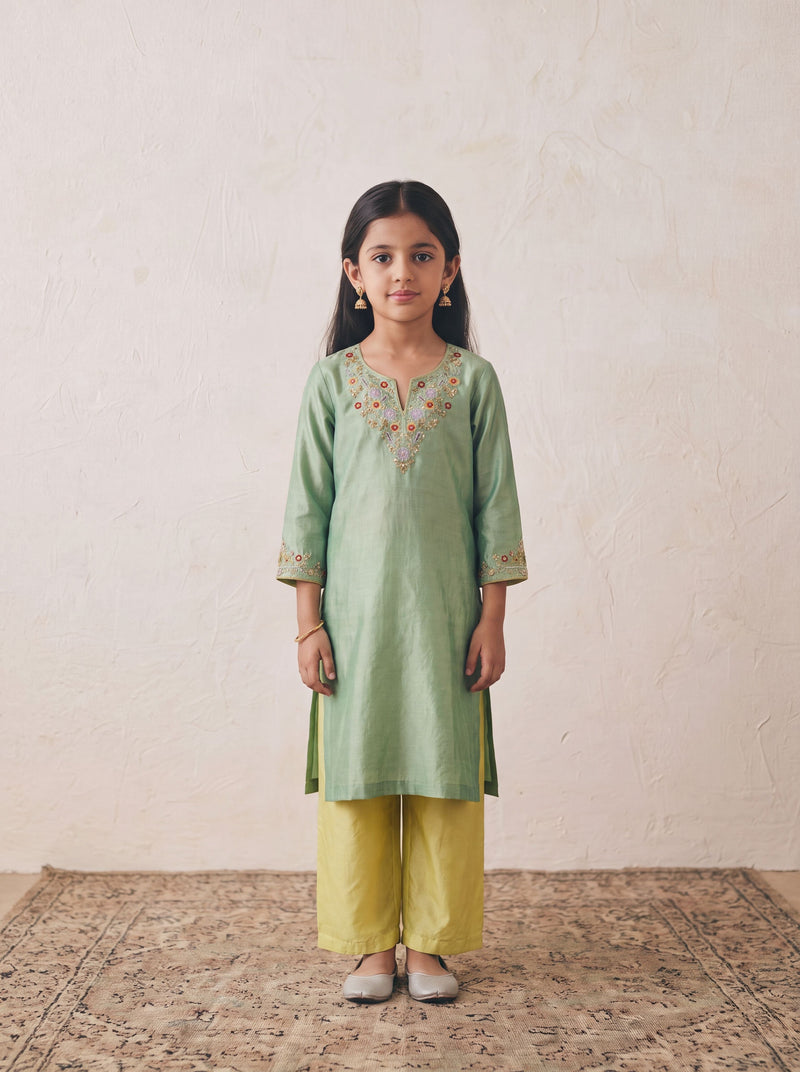
Twinning Kids: Coordinating Outfits for Siblings & Cousins
How to coordinate kids' ethnic outfits for siblings and cousins — twinning by colour and palette for weddings and fes...
31 July 2026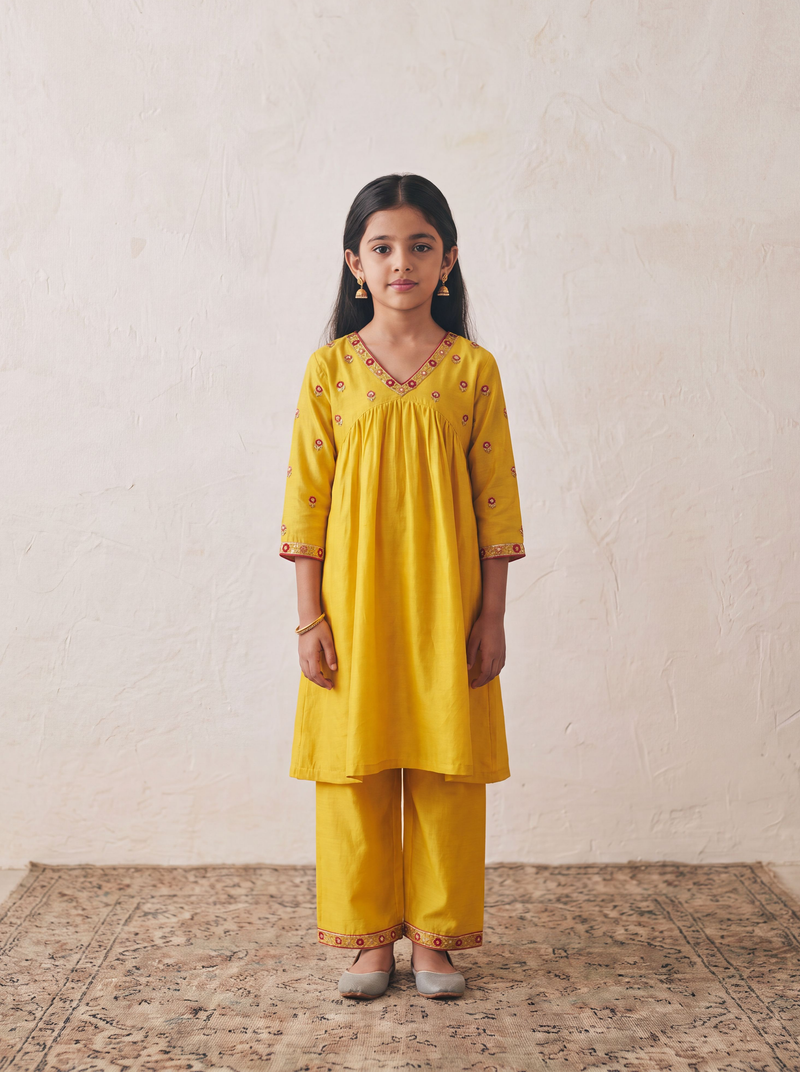
What Should Kids Wear to a Mehendi? Colours, Comfort, and a Little Gota
The mehendi is the best function to be a child at. It is in the daytime, it is outdoors more often than not, there is...
31 July 2026