
What Should Kids Wear to a Mehendi? Colours, Comfort, and a Little Gota
The mehendi is the best function to be a child at. It is in the daytime, it is outdoors more often than not, there is music, there is food within reach, and the adults are too busy having their hands painted to enforce sitting still. Dressing a child for it is therefore its own small art: festive enough for the photographs, easy enough for the mayhem, and forgiving enough to survive henna, haldi, and a plate of chaat.
This guide covers the mehendi specifically — the colours that work in daylight, the fabrics that survive an afternoon on the floor, what to wear by age, what to skip entirely, and how to coordinate a child with the rest of the family without dressing anybody in a costume.
What makes a mehendi different
Every other wedding function runs to a schedule. The mehendi runs to a mood. Children will sit cross-legged on durries, chase each other between the marigold strings, get henna somewhere unintended, and be photographed constantly and without warning. The dress code that survives all of that is specific: light natural fabrics, colours that hold up in daylight, embroidery kept away from the sitting-and-leaning zones, and absolutely nothing that requires management. No trailing dupattas, no delicate drapes, nothing that comes with instructions.
It is also the function where a child is most likely to be in the photographs, because the mehendi is when everybody's guard is down. Which is a good argument for dressing them properly and then leaving them alone.
Colour first: the mehendi palette
Mehendi palettes are the happiest in the wedding calendar — yellows, greens, pinks, oranges, the colours of haldi and of the garden the function is usually held in. For children these are effortless in a way they sometimes are not for adults. No six-year-old has ever been washed out by sunshine yellow.
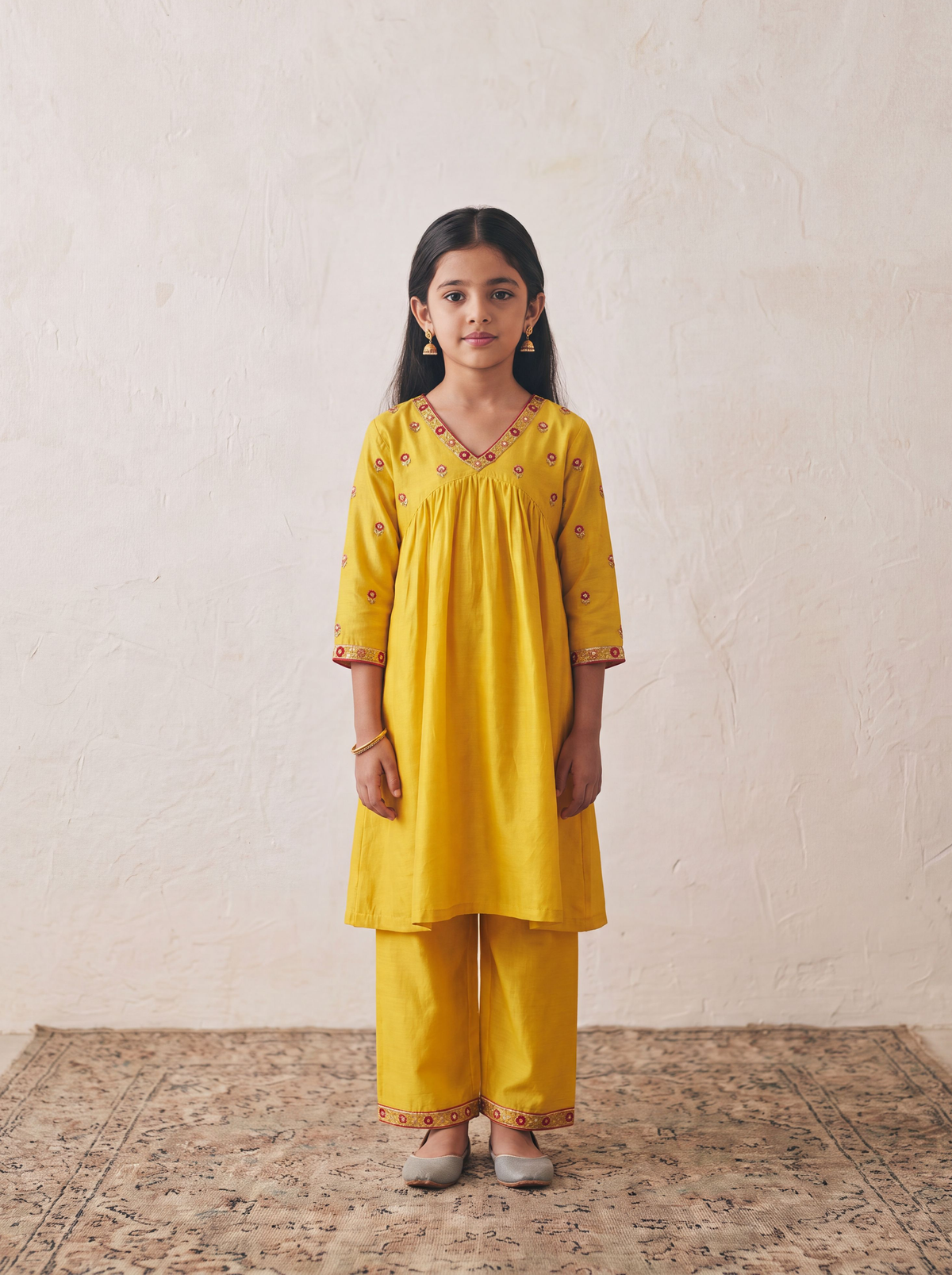
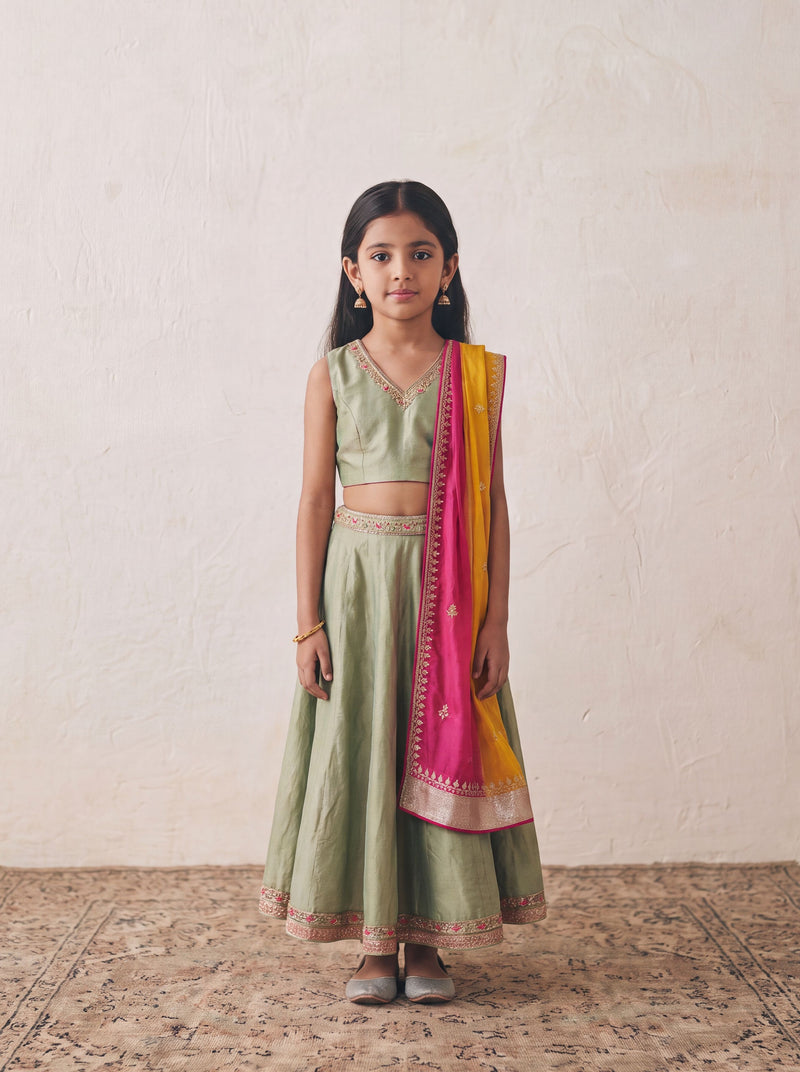
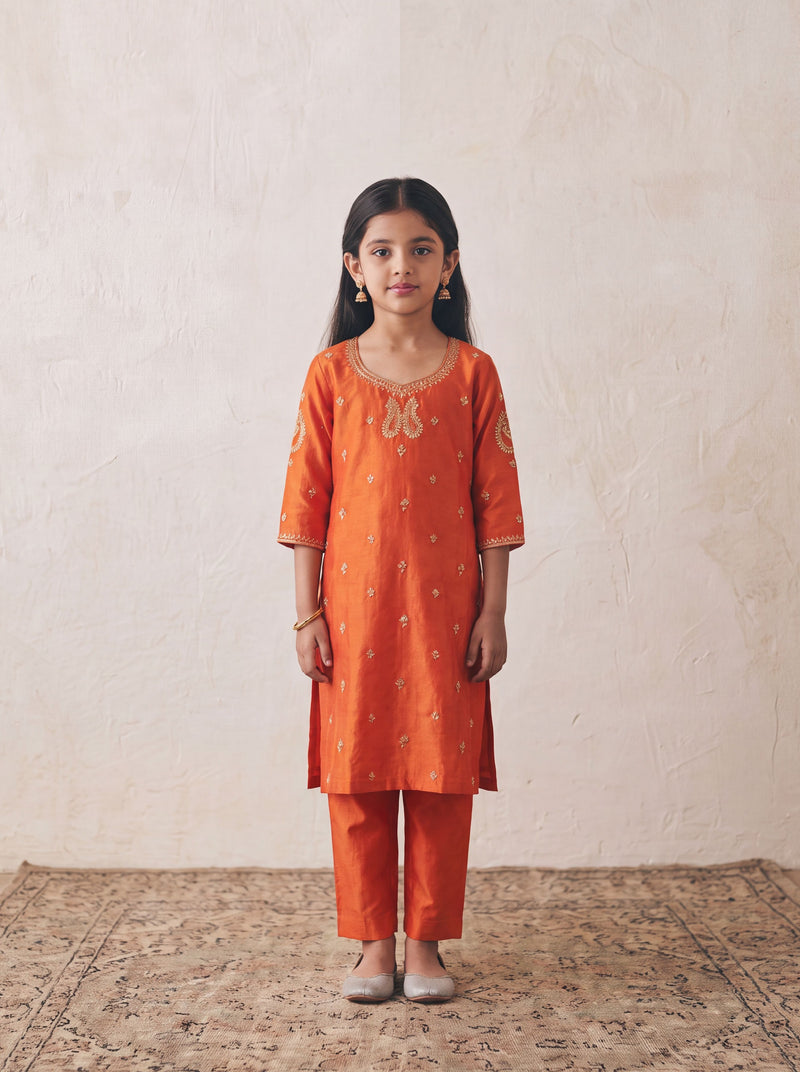
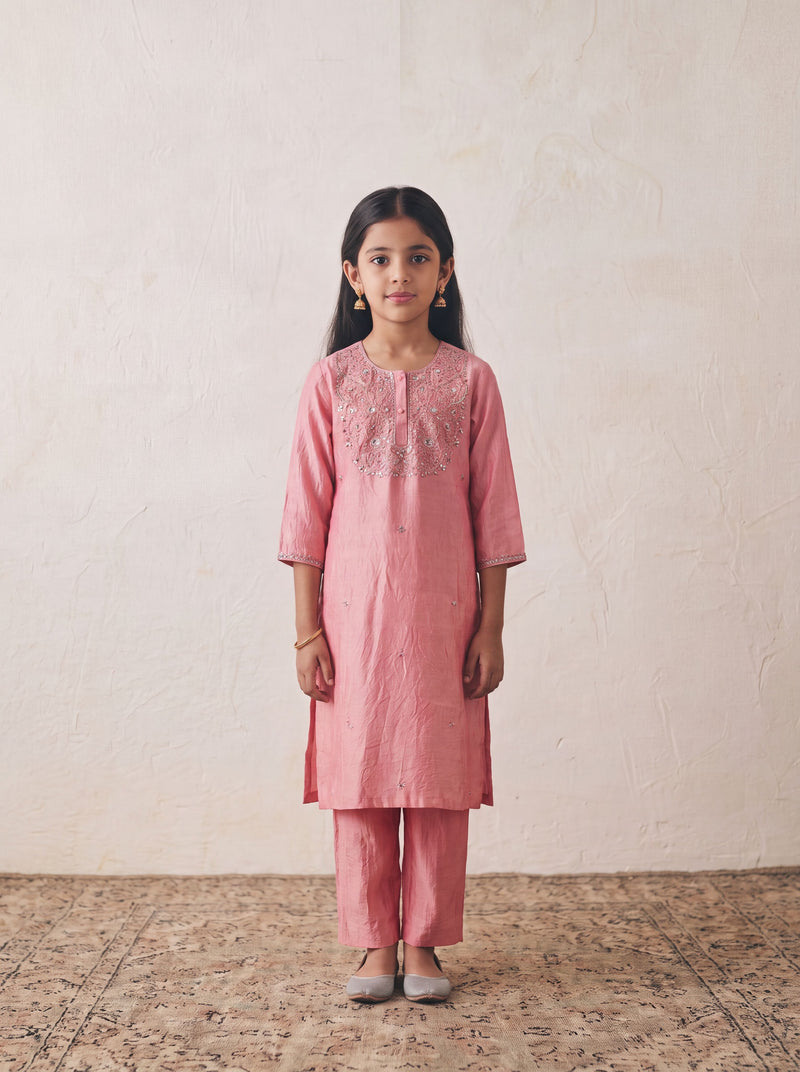
AFREEN & MAAHI in sunshine-yellow Chanderi belongs at a mehendi the way marigolds do: hand-beaded flowers, gathers that move, beaded hems that catch the light every time the child turns. GIA & CYRAA in lime green silk is the bolder pick, with rose-gold and fuchsia florals at the neckline. RAAS & ZEBA in burnt orange is the one for families whose palette leans warm rather than bright.


If the family is coordinating to the bride's palette, the softer pinks sit beautifully in group photographs without pulling attention. RUHANI & NILOFER keeps its zardozi florals at the neckline, where they are seen and not felt. ROHI & ZOEY pairs a luminous yellow tissue kurta with a pale mint sharara that flows in wide pleats — built, essentially, for twirling. GULRUKH & LEHER in pink Chanderi is the lightest of the three on a warm afternoon.


The comfort rules that are not negotiable
Light fabrics only. Chanderi first for a daytime function, then light silk — both breathe, both photograph well in daylight, and neither crushes badly when a child sits on the floor for two hours. Keep embroidery at the neckline and hem rather than across the surface, so there is nothing to press against. And insist on a soft lining: every piece in our kids' line is lined in mulmul, which is the difference between a child who wears the outfit all afternoon and one who starts negotiating to take it off before lunch.
The last rule is about sleeves, and it is really a rule about children rather than clothes. A child who dislikes sleeves will renegotiate the outfit halfway through the function, in public. Ask first; the answer takes ten seconds and saves the afternoon.
Ask us before you order
Tell us the date of the mehendi and your child’s age. We will suggest three pieces in the right weight for the weather and confirm whether the timeline works.
What to wear, by age
Toddlers, one to three. One soft piece, no accessories, and colours the parents want in photographs, because the child has no opinion yet and will not be consulted. Skip anything with a waistband that fastens tightly. A gathered skirt set in Chanderi is close to unimprovable at this age.
The middle years, four to ten. This is the golden age of mehendi dressing. They want to look festive, they will actually dance, and they are old enough to keep an outfit intact for a few hours. Kurta-sharara sets and gathered skirt sets both win here; this is also the age where a little shine is enjoyed rather than tolerated.
Tweens, eleven and up. Offer two options you have already approved and let them pick. The outfit they chose is the outfit they will wear happily for six hours, and the outfit you chose is the one you will hear about. At this age a simple dupatta becomes viable if they want one, because they will manage it themselves.
Jewellery, hair, and footwear
Keep jewellery to one thing. A pair of small jhumkis is usually enough, and floral jewellery — a fresh flower bracelet or a small hathphool — suits a mehendi better than anything metal, costs nothing, and is genuinely fun for a child to wear. Skip the maang tikka on a child under eight; it will be removed within the hour.
Hair should be off the neck and secured properly rather than styled elaborately, because an afternoon function in a warm month is not the place for something that has to be re-pinned. And footwear should be broken in before the day — a new pair of juttis at a mehendi means a barefoot child by the second hour, which is fine, but not if the floor is stone.
What to skip
Dupattas, mostly. Heavy jewellery. Cancan skirts, which make sitting on the floor impossible and are the single most common reason a child is unhappy in an outfit. Anything white or very pale ivory, because henna and turmeric both have opinions about pale fabric. And shoes bought that morning. The outfit should do the dressing up entirely on its own.
Coordinating with the family
If the adults are dressing to a palette, put the children in the brightest version of it. Children carry saturated colour in a way adults usually have to mute, and a group photograph benefits from having one or two high notes in it. If you are twinning with your daughter, the mehendi is the function for the colour match rather than the literal match — our mini-me guide explains the difference and when each works. And for the rest of the wedding, our function-by-function guide covers the sangeet, the ceremony, and the reception.
Getting through the day: heat, henna, and the hours in between
Most mehendis run from late morning into the evening, which for a child is a long time in one outfit. Three things make the difference. Dress them slightly later than you think — an hour in festive clothes before the function starts is an hour of the outfit's life spent at home. Carry a plain cotton kurta for the gap between the ceremony and the evening, if there is one. And keep something cold to drink within reach, because a warm afternoon in silk is the most common reason a child asks to change.
Henna itself is manageable if you plan for it. Wet henna transfers, so if your child is getting her hands done, do it before she changes rather than after, or put her in something with sleeves that can be pushed well up. Turmeric is less forgiving than henna and does not come out of pale silk, which is the real argument against ivory at a daytime function.


Photographs at a mehendi
The mehendi produces the best photographs of children at any wedding function, because the light is natural and nobody is posing. What helps: dress the child in a colour that is not in the decor, so she reads against the marigolds rather than into them. Avoid very pale outfits in strong afternoon sun, which blow out. And let the photographer know early which child belongs to which family — at a large mehendi, children get photographed beautifully and then nobody can identify them afterwards.
If you want one posed frame, take it in the first hour, before the outfit has met the food. Everything after that should be candid, which is where children are best anyway.
Buying for a mehendi specifically
If you are buying one piece for a wedding and it has to work hardest at the mehendi, buy for daylight. That means Chanderi or a light silk, a colour in the yellow-to-pink range, embroidery at the neckline and hem, and a silhouette with movement in it. A piece bought to those rules will also carry a haldi and a daytime roka, which is three functions out of one purchase — considerably better value than an evening piece that only suits one night.
Frequently asked questions
Can kids wear white or ivory to a mehendi?
They can, but henna and haldi have strong opinions about pale fabric. Save the ivories for the wedding day and give the mehendi its colour.
What fabric is best for an outdoor daytime mehendi?
Chanderi first, then light silk. Both breathe, both photograph well in daylight, and neither creases badly when a child sits on the floor.
Should a child wear a dupatta to a mehendi?
Under about eleven, no. It will need re-pinning within the hour and it interferes with everything a child wants to do at a mehendi.
How early should I order?
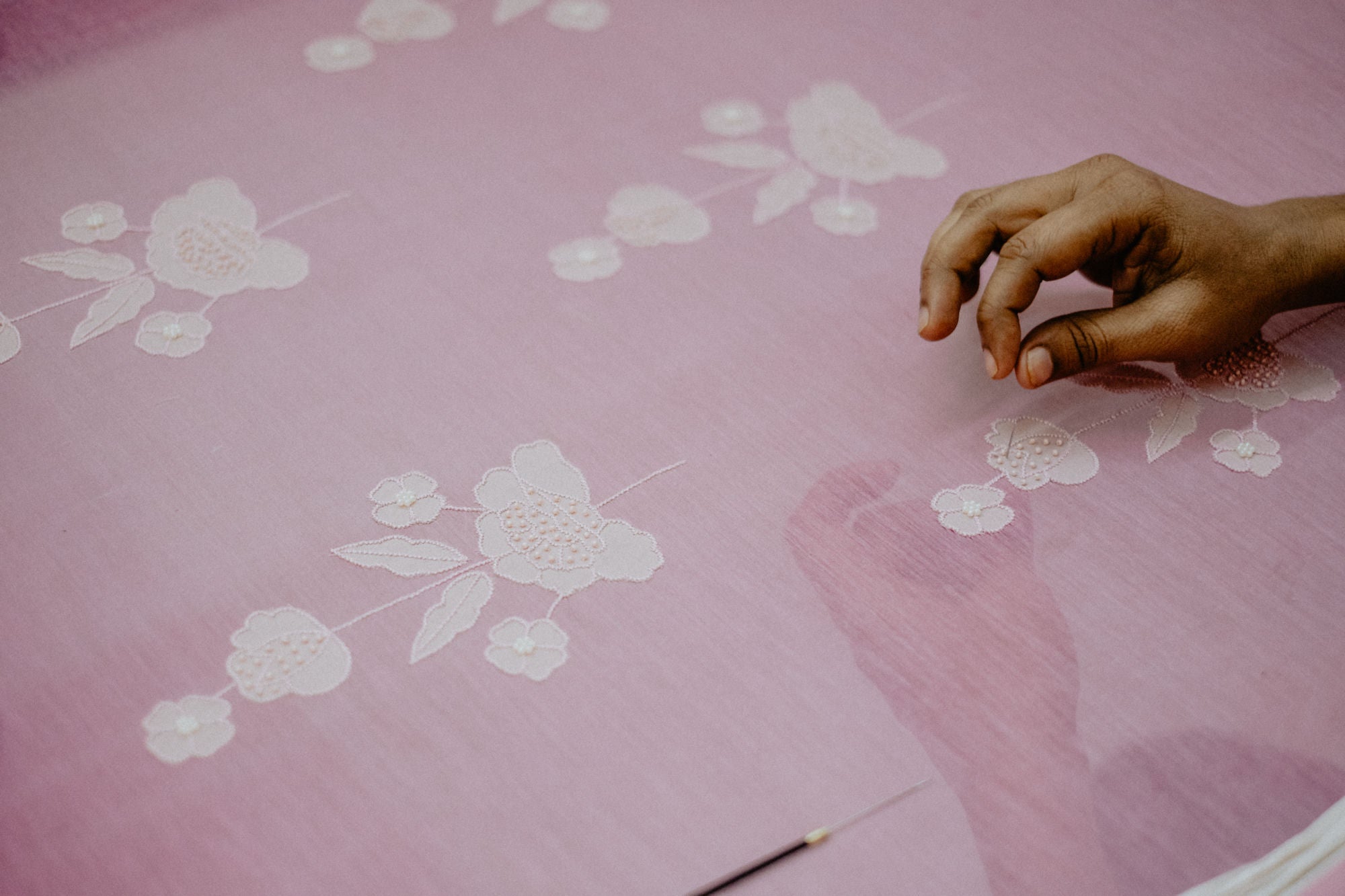
Six to eight weeks before the function. Every piece is made to order and takes four to five weeks on the frame.
Is there an adults' version of this guide?
Yes — our mehendi outfit ideas guide covers brides, bridesmaids, and guests.
Not sure where to start?
Send us the date and your child’s age and we will suggest pieces in the right weight for the weather — and tell you honestly if the timeline is tight.
Pieces from this story
All pieces →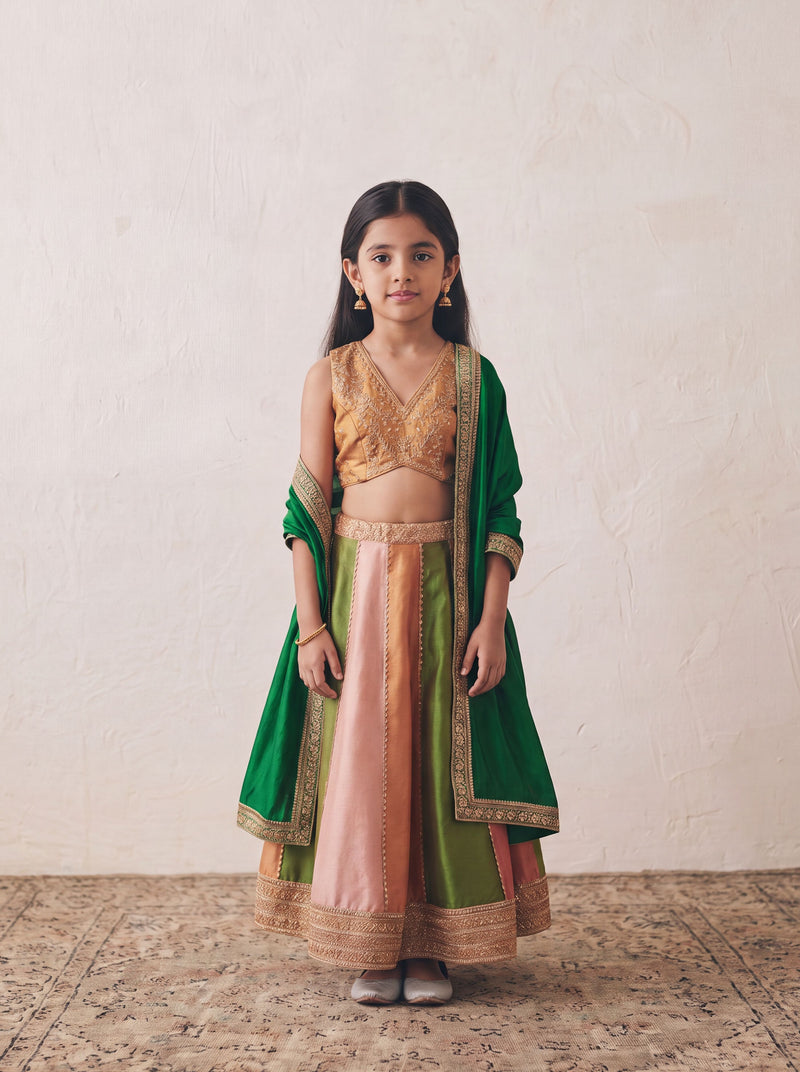
Keep reading
The journal →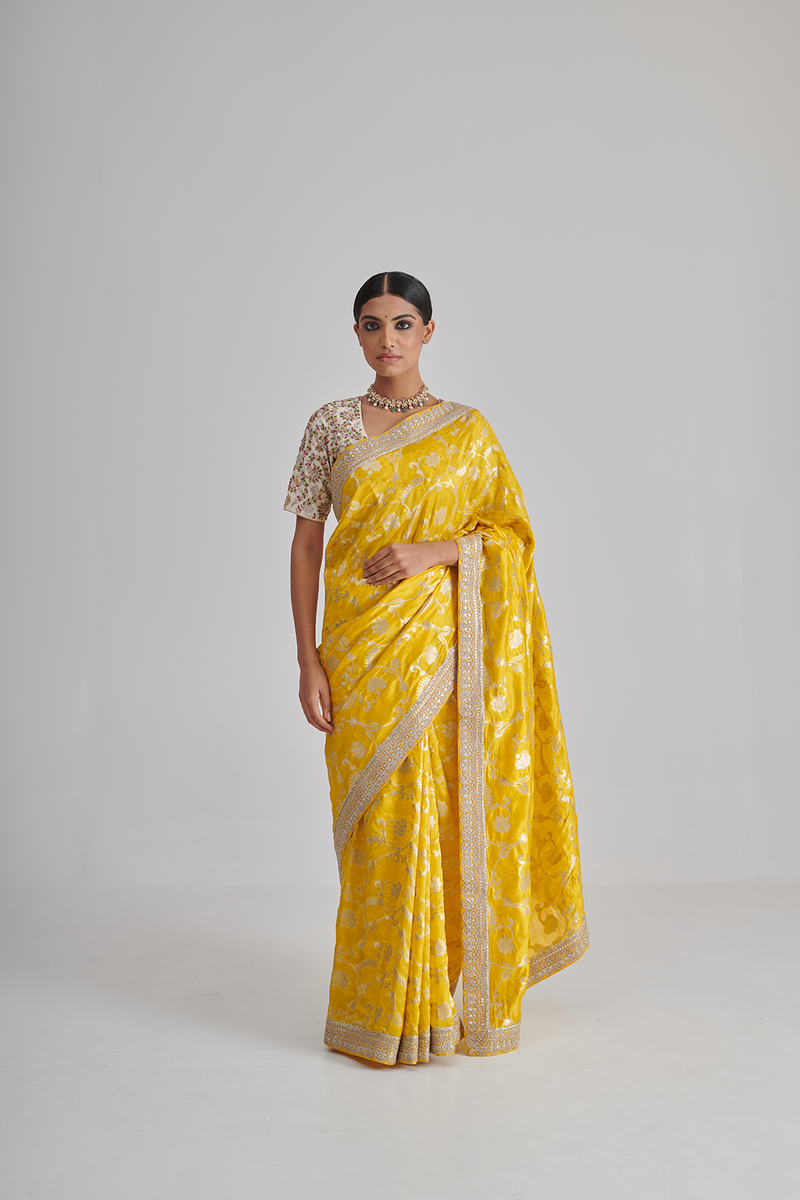
Best Banarasi Saree Brands in India 2026: Where to Buy an Authentic Banarasi
Handmade by karigars Made to your measurements Fit guarantee Ships worldwide As seen in GraziaElle Graduat...
14 September 2026
Gifts for Your Wife She'll Actually Wear: Indian Outfits for Karva Chauth, Diwali & Anniversaries
Handmade by karigars Made to your measurements Fit guarantee Ships worldwide As seen in GraziaElle Graduat...
14 September 2026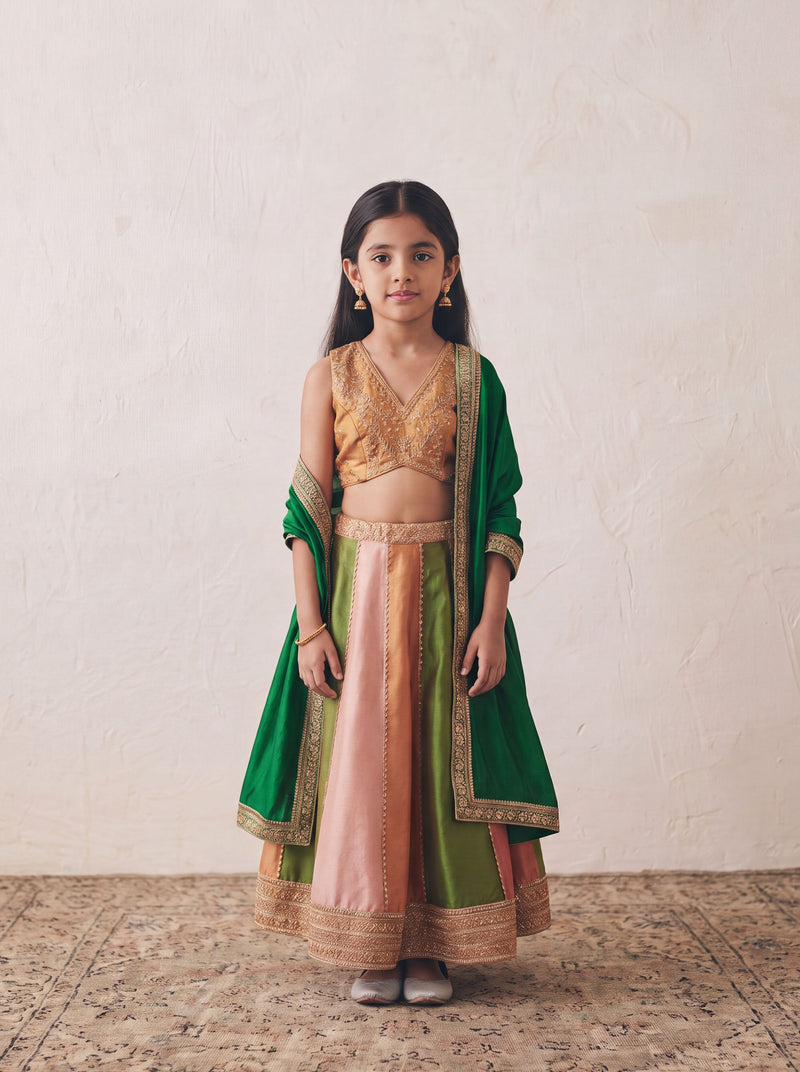
Designer Lehenga for Girls: A Parent's Buying Guide to Kids' Lehengas
Handmade by karigars Made to your measurements Fit guarantee Ships worldwide As seen in GraziaElle Graduat...
14 September 2026