
Floral Motifs in Indian Fashion: A Timeless Design Language
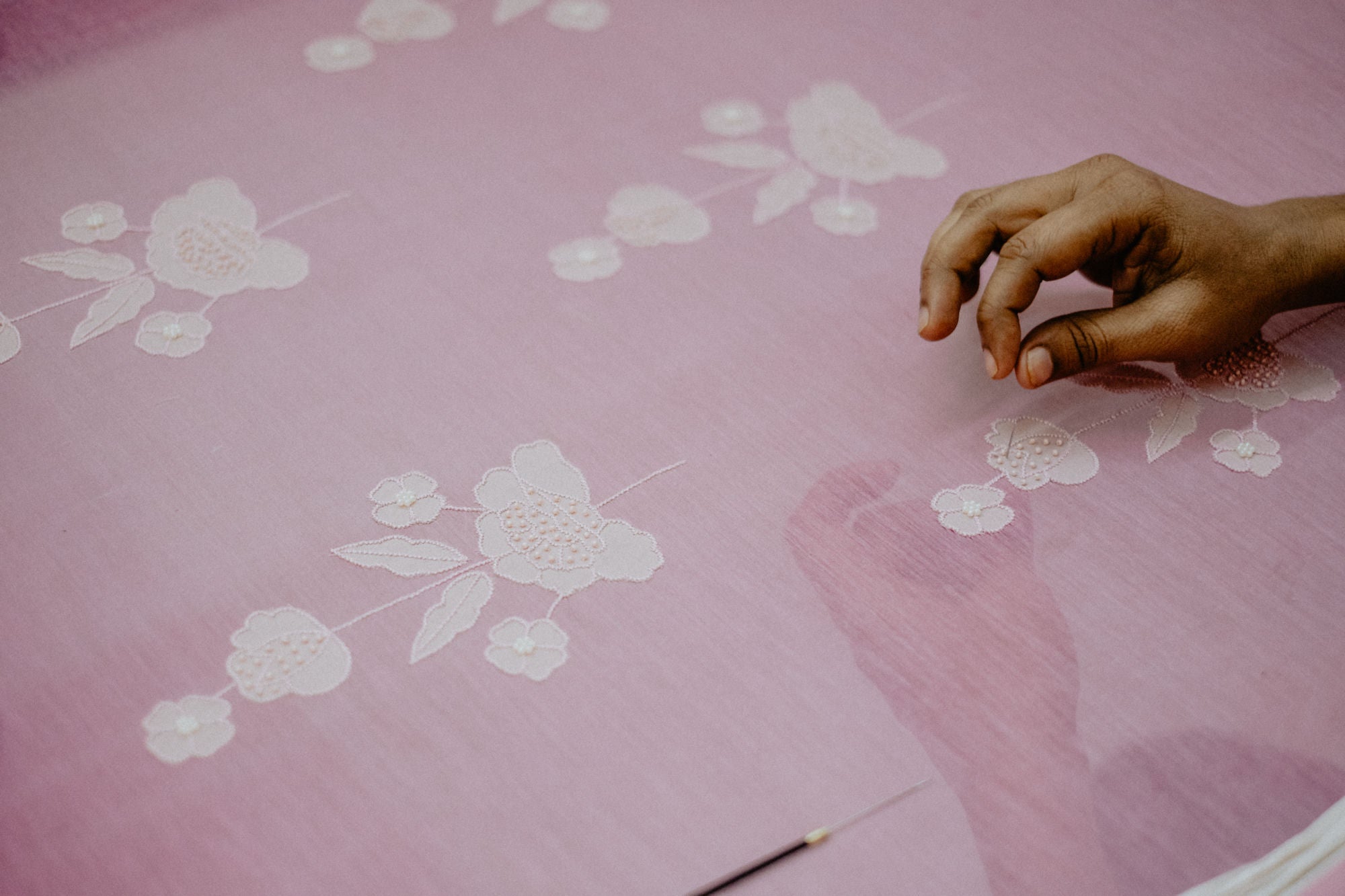
Flowers have adorned Indian textiles for millennia. From the intricate butis of Banarasi weaves to the bold blooms of contemporary embroidery, floral motifs remain the most beloved pattern in Indian fashion. They transcend trends, seasons, and occasions — eternally romantic, universally flattering, and deeply rooted in our artistic heritage.
The History of Floral Motifs in Indian Textiles
Floral patterns in Indian clothing trace back to Mughal influence, when Persian garden motifs — roses, lilies, and irises — merged with indigenous flowers like lotus and jasmine. Each region developed its own floral vocabulary: the paisley-inspired boteh of Kashmir, the marigold chains of Gujarat, the jasmine garlands of South India.
Types of Floral Work in Indian Fashion
Zari Floral Embroidery
Gold and silver zari thread brings florals to life with metallic shimmer. The LAAL ISHQ red organza saree features abstract floral motifs in zari work — a technique that catches light beautifully and adds dimension to any fabric.

Resham Thread Work
Silk thread embroidery creates softer, more painterly florals. The CHANDNI black chiffon saree uses buta motifs — small, repeating floral elements that create rhythm across the fabric.
Gota Patti Florals
Gold ribbon work creates dimensional petals that seem to bloom from the fabric. Combined with sequins and beadwork, gota patti florals bring festive energy to any outfit.
Floral Sarees for Every Aesthetic
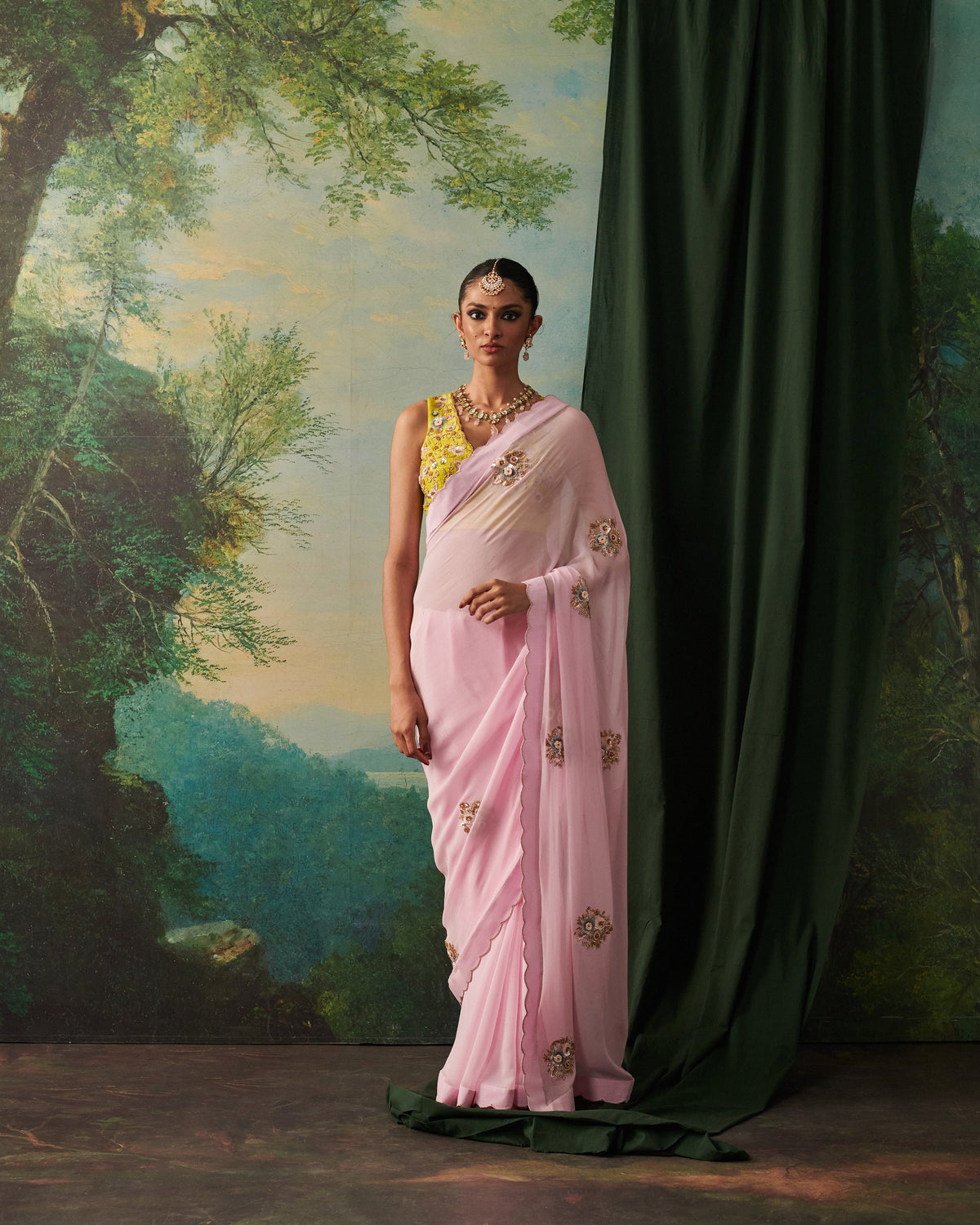
Floral sarees range from delicate to dramatic. The SAJNI blush chiffon saree features soft floral motifs perfect for day events, while the GULMOHAR black georgette saree brings bold blooms that command attention at evening functions.


Floral Kurta Sets: Everyday Elegance
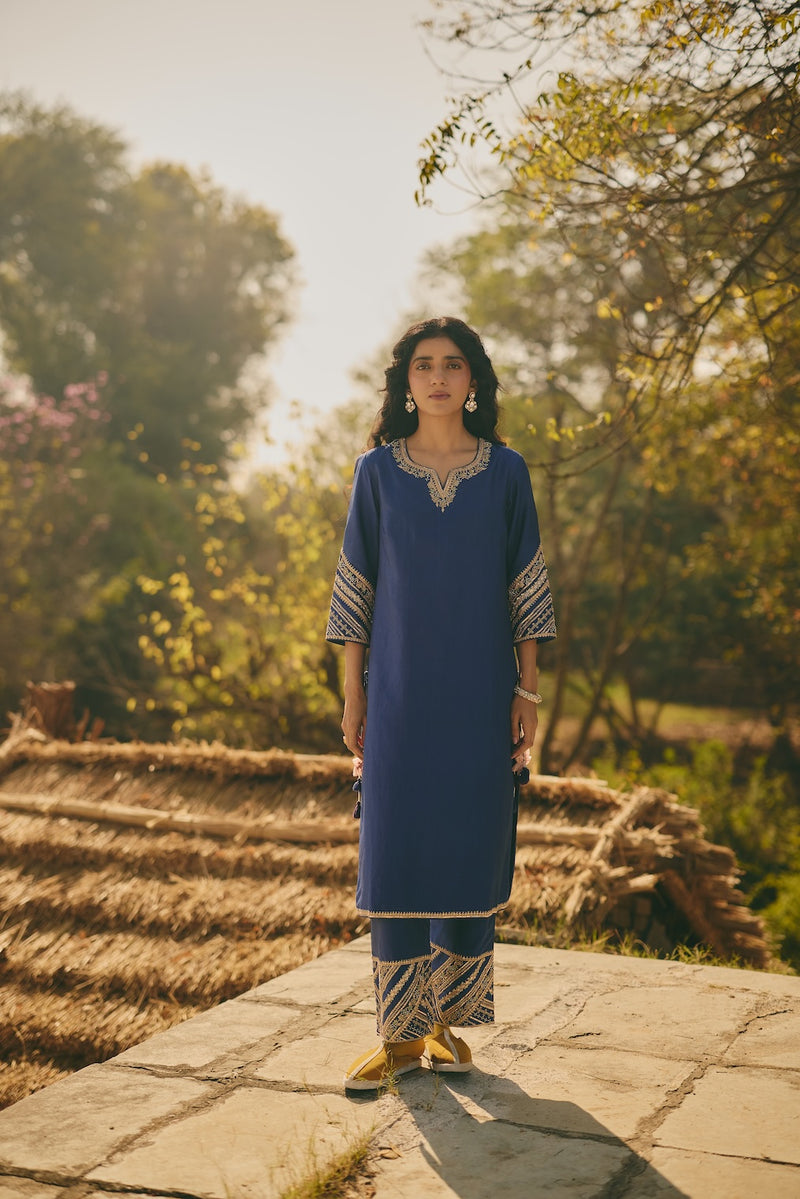
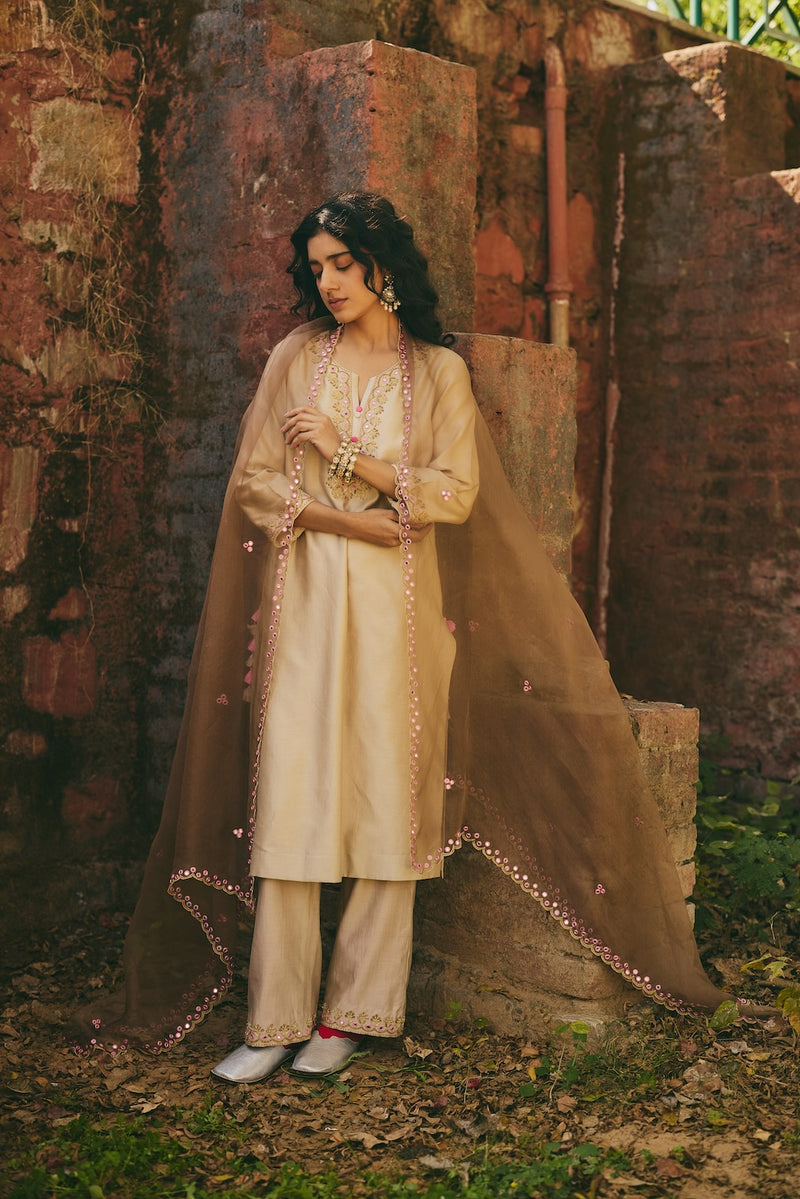
Floral kurta sets bring garden-inspired beauty to daily wear. The POETRY KURTA SET in chanderi features delicate florals that elevate casual occasions, while the BLOOM KURTA SET in cotton offers comfortable everyday elegance with floral charm.


Floral Dupattas: The Finishing Touch
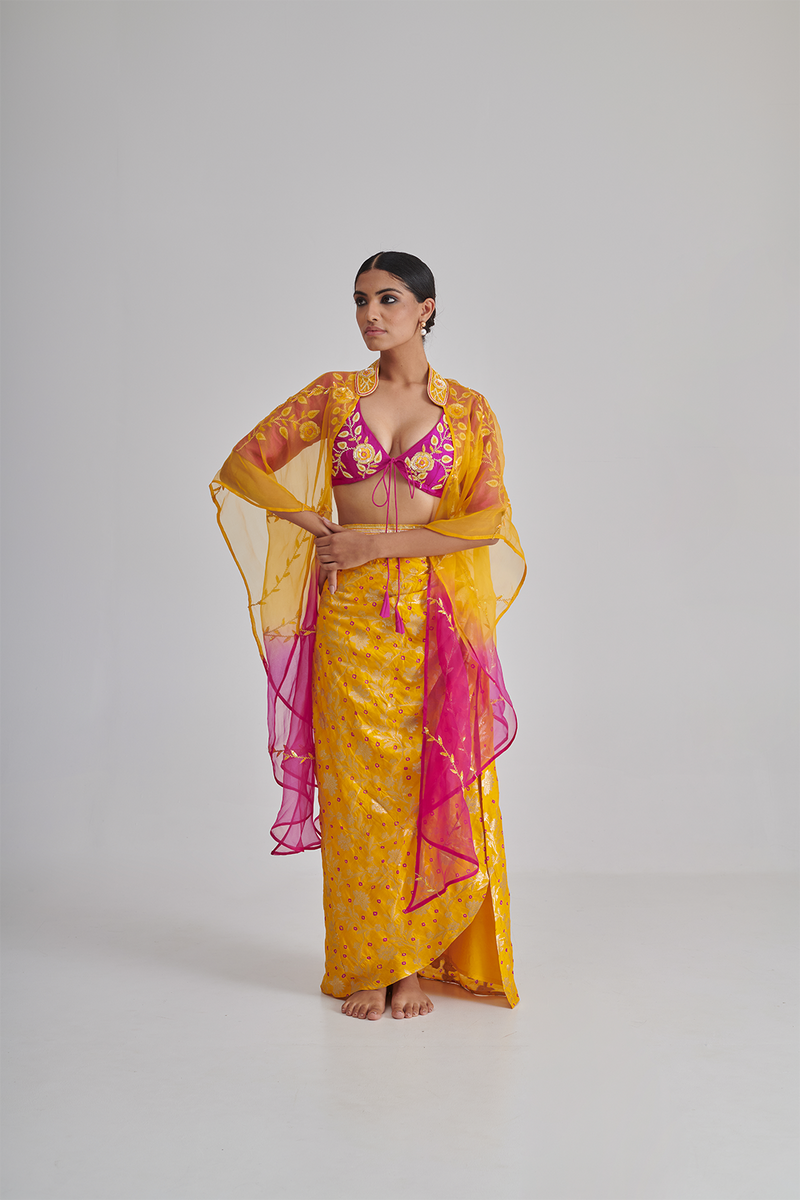
A floral dupatta transforms any outfit. The NAISHA peach organza dupatta features scalloped borders and intricate floral embellishments, while the MORNII pink organza dupatta brings peacock motifs intertwined with florals.
Free Download
Get Our Measurement Guide
Step-by-step instructions with photos for perfect custom fit.
Download Free Guide

Styling Floral Indian Outfits
Let the pattern breathe: With heavily embroidered florals, keep jewellery minimal. Let the work speak for itself.
Coordinate without matching: Pull one colour from the floral motifs for your jewellery, bag, or footwear. This creates cohesion without looking too matchy.
Mix floral scales: If your outfit has small floral motifs, a dupatta with larger blooms creates visual interest. Avoid pairing similar-sized patterns.
Floral Motifs by Occasion
Intimate gatherings: Delicate, scattered florals in soft colours
Day weddings: Medium-scale florals with subtle embroidery
Evening events: Bold blooms with metallic accents
Festive occasions: Rich, all-over floral work with heavy embellishment
Frequently Asked Questions
Are floral motifs suitable for formal events?
Absolutely. The key is in the execution — zari florals on silk read formal, while printed florals on cotton feel casual. Choose rich fabrics and detailed embroidery for formal occasions.
Can I wear floral patterns to winter weddings?
Yes. Opt for darker backgrounds — black, navy, burgundy, or emerald — with metallic floral work. The blooms bring warmth without feeling seasonally inappropriate.
How do I choose the right floral scale for my body type?
Smaller motifs with all-over patterns are universally flattering. Large, bold florals work best when strategically placed. Consider where the largest motifs fall and how they draw the eye.
Ready to Order Custom?
WhatsApp us at +91 70423 11214 with what you're looking for. We'll guide you through measurements, customizations, and timeline.
Most pieces ready in 4-5 weeks. Bridal in 6-8 weeks.
Made to order in 4–5 weeks
Have an event date? We’ll tell you exactly when to order by.
We take a limited number of orders each month — secure your slot early.
Not sure where to start?
Tell us what you're dressing for and we'll help you choose — fabric, fit, colour, and timeline — over WhatsApp.
Your Cart
Pieces from this story
All pieces →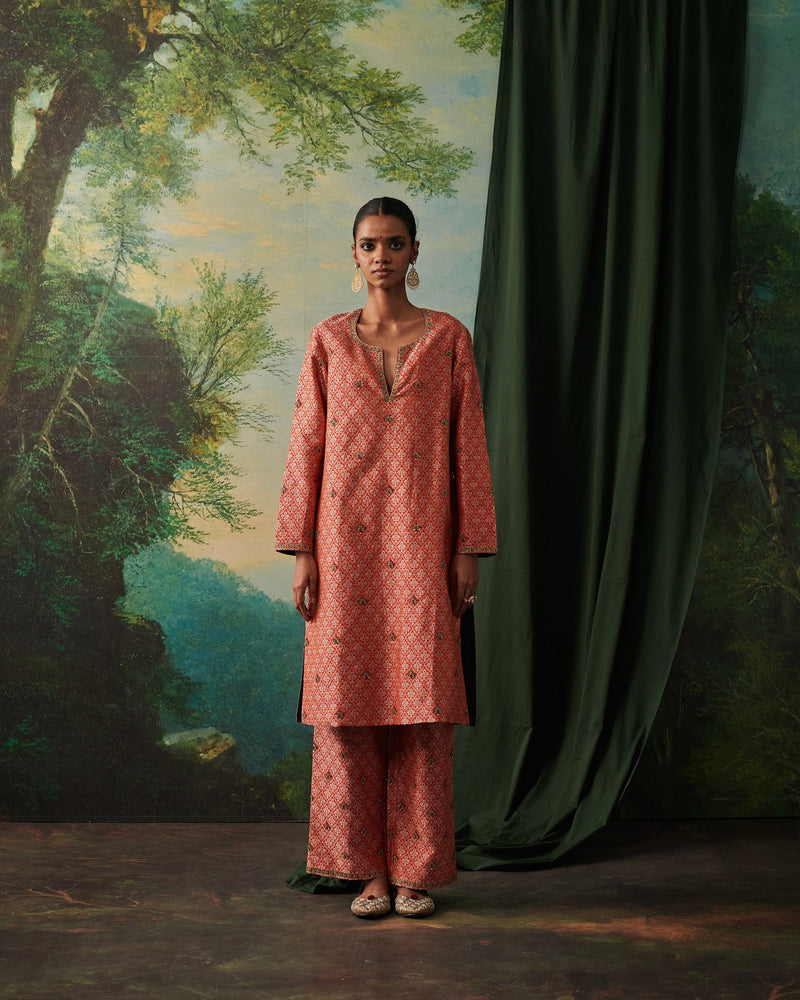
Keep reading
The journal →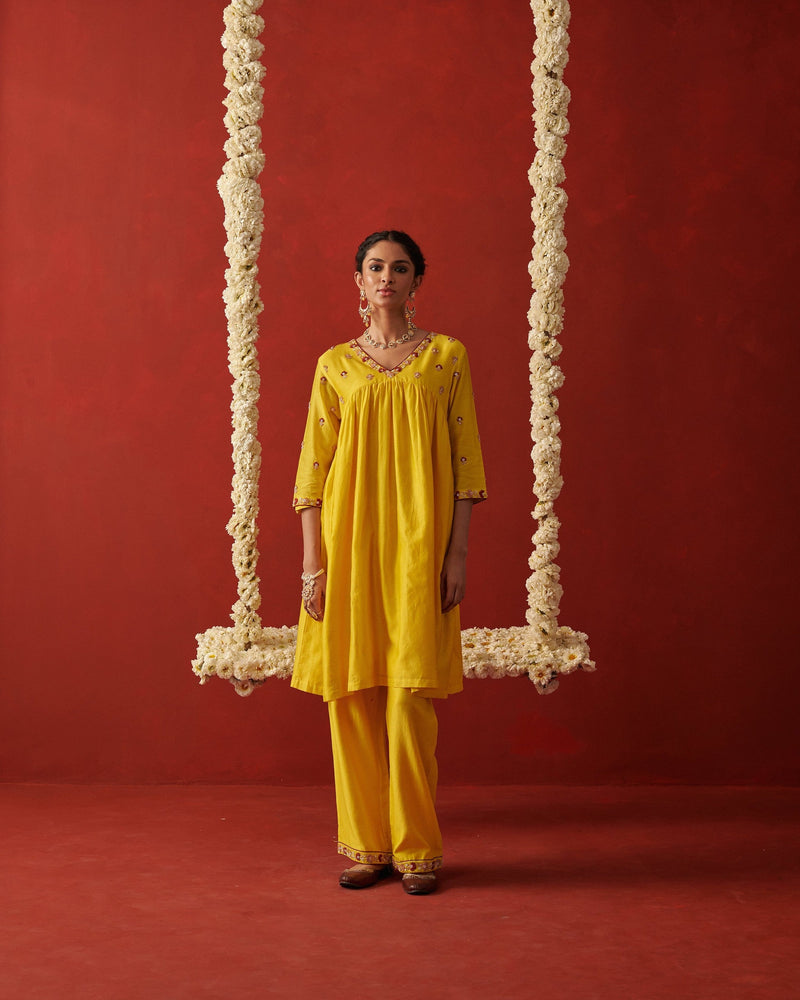
Dholki Night Outfit Ideas: What to Wear to the Ladies' Dhol
Handmade by karigars Made to your measurements Fit guarantee Ships worldwide As seen in GraziaElle Graduat...
27 July 2026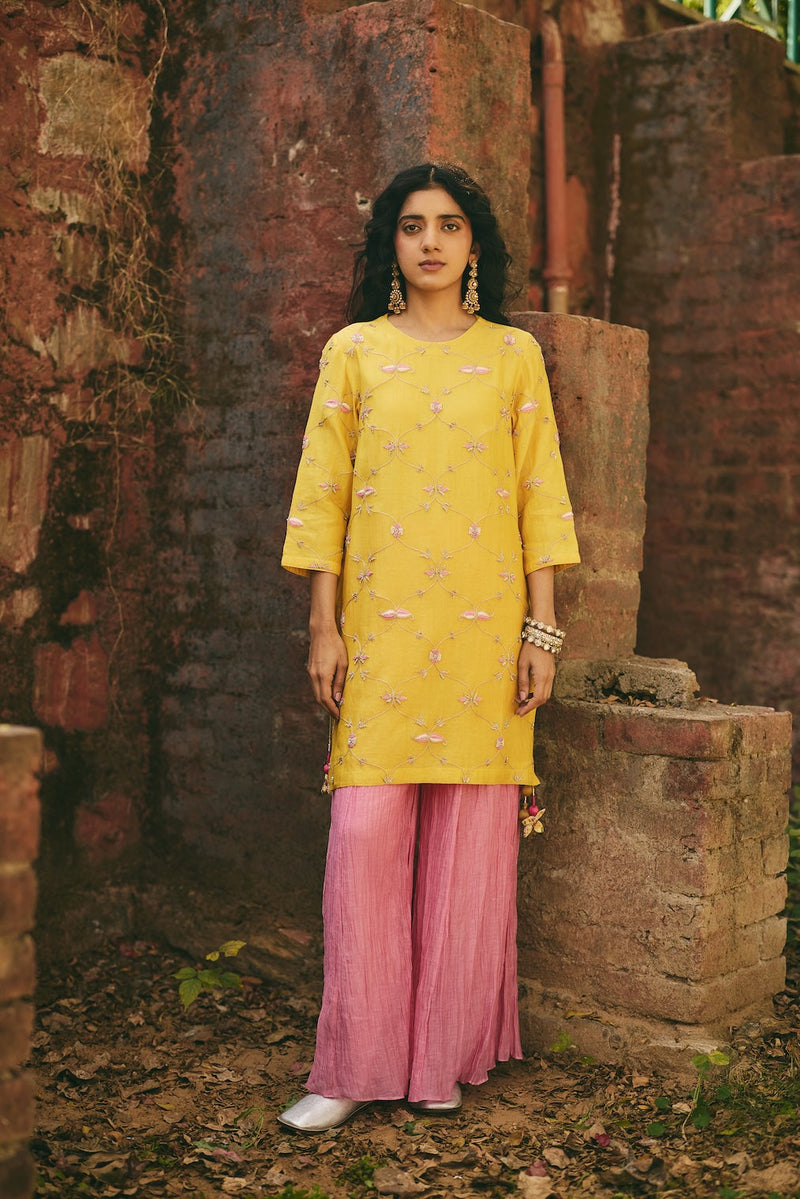
Mayra & Bhaat Outfit Ideas: Dressing for the Maternal Gift Ceremony
Handmade by karigars Made to your measurements Fit guarantee Ships worldwide As seen in GraziaElle Graduat...
27 July 2026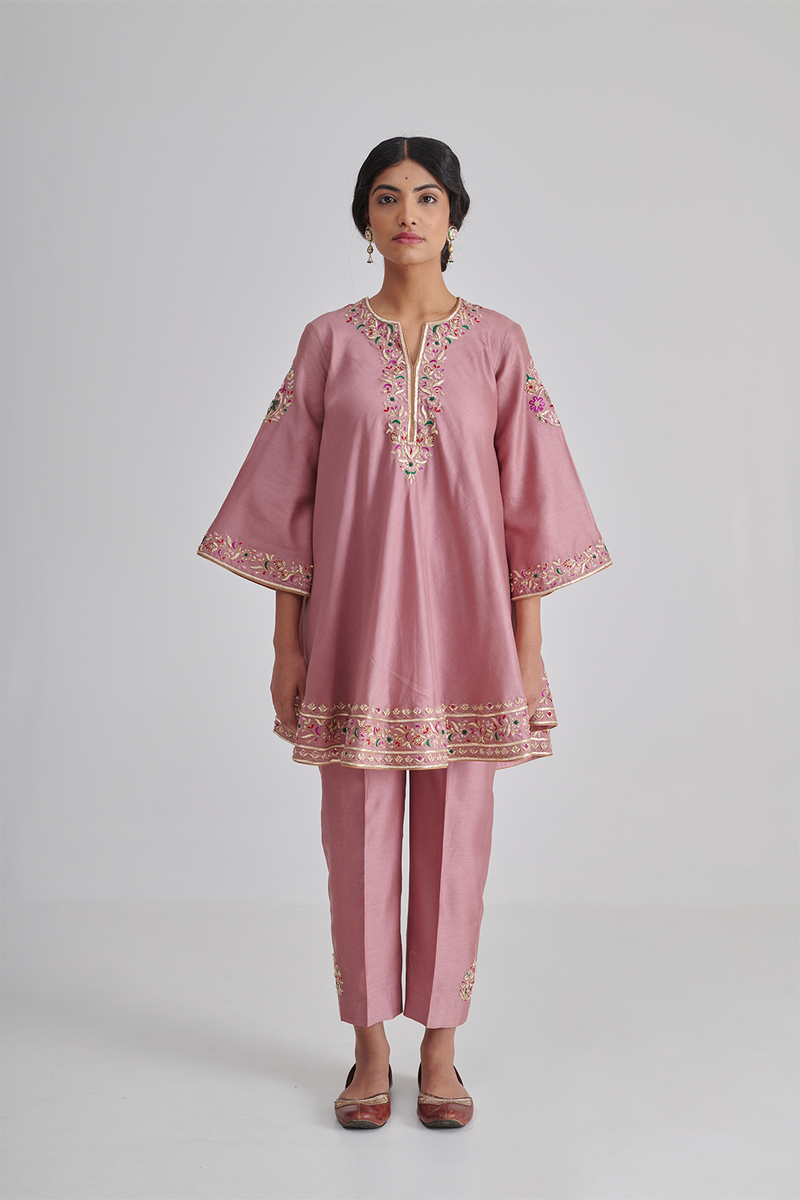
Pag Phera Outfit Ideas: What to Wear for the Bride's Homecoming
Handmade by karigars Made to your measurements Fit guarantee Ships worldwide As seen in GraziaElle Graduat...
27 July 2026