

Flower Girl Outfits for an Indian Wedding: What Your Little One Should Wear for the Bridal Entry
In a traditional Indian bridal entry, it is the bride's brothers or cousins who carry the phoolon ki chadar — the floral canopy held over her head as she walks to the mandap. Increasingly, though, there is someone smaller walking in front of them: a niece or a little cousin with a basket of rose petals, borrowed from Western weddings and now a fixture at fusion, NRI and plenty of home-grown shaadis too. She will be the most photographed four-year-old in the room, and she will be wearing her outfit for five or six hours. This guide is about getting both of those right.
What a Flower Girl Actually Does All Evening
Before you choose anything, walk through her evening. She will stand still while the entry is lined up (often longer than planned), walk down an aisle or a path of petals scattering flowers, then sit — or be held — through the pheras or the ceremony, pose for family photographs, eat, and finally dance until someone carries her to the car. An outfit that only works for the thirty seconds of the walk is the wrong outfit.
That gives you four things to check, in this order:
- The neckline. The single biggest cause of a meltdown is scratchy embroidery against the neck and underarms. Look for work that sits on the outside of a soft lining, and ask what the lining is.
- The hem. A lehenga for a child who is walking an aisle should clear the floor — ankle length, not puddled. She needs to see her feet, and she needs to climb mandap steps.
- The weight. A small child cannot carry a heavy skirt for hours. Tissue, Chanderi and light silk move easily; dense all-over embroidery is for the photographs, not the dance floor.
- The fastening. Can she go to the toilet with one adult's help, quickly? Back closures are neat but need a grown-up; practise before the day.
Our guide to comfortable fabrics for kids goes further on linings and weights.
Matching the Bride Without Copying Her
The flower girl is part of the bridal picture, so her colour should be chosen with the bride's outfit in mind — ideally a lighter or softer tone from the same family. If the bride is in red, blush and rose look lovely beside her; if she is in pastel, the flower girl can pick up one colour from the embroidery. Avoid an exact match: a mini version of a bridal lehenga tends to look like a costume, and it takes attention from the bride at the one moment it shouldn't.
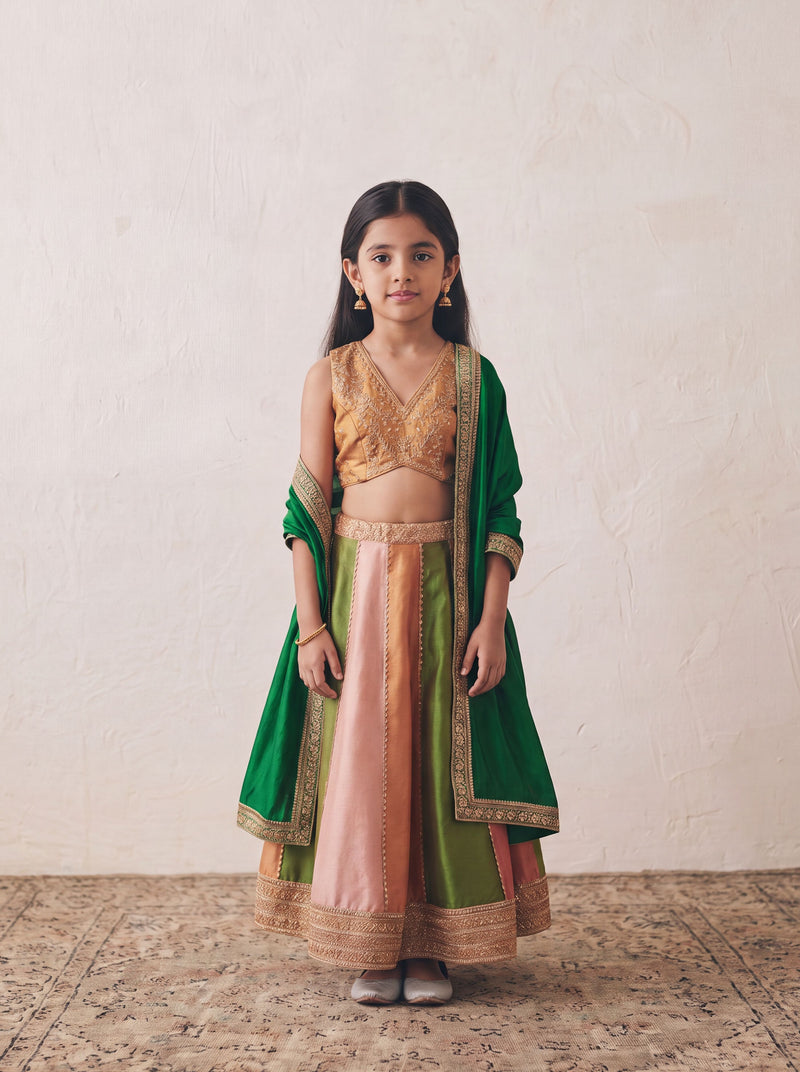
For a more colourful wedding, a multi-hued piece lets her tie in with everyone. The Ishq-e-Gul & Inara lehenga (₹27,500) is soft tissue jacquard in panels of pink, gold, peach, ivory and green, each edged with sequin-lined gota and finished with a gota-patti and marodi border in gold, with an antique-gold blouse embroidered in sequins and resham vines. It picks up almost any bridal palette, and the soft sheen of the tissue catches the light as she walks.

Lehenga or Sharara?
A lehenga is the classic flower-girl choice — it twirls, it photographs beautifully, and a flared skirt holds a basket at her hip without catching. A sharara is the practical alternative for a younger child or a restless one: no skirt to trip on, easier to sit cross-legged in during a long ceremony, and far easier to dance in. Our lehenga buying guide for girls covers the age-by-age detail.
For a pastel or daytime wedding
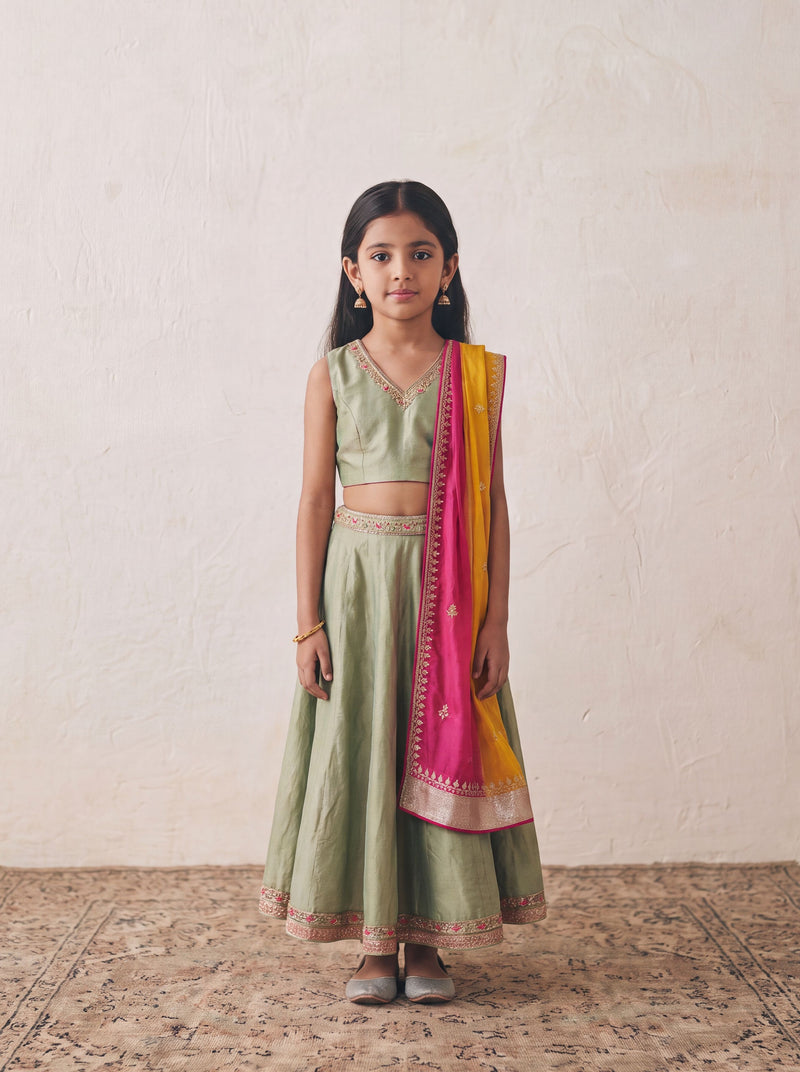
The Bano & Dilruba lehenga (₹22,500) is soft pistachio-toned silk tissue with a voluminous flare and a wide embroidered border of roses and vines in sequins and bead work, hinting at coral and rose gold. The blouse is sleeveless with a gentle V-neckline — cool under the lights, and nothing to rub at the underarms. For a sharara, the Rohi & Zoey set (₹16,500) pairs a soft, luminous yellow tissue silk kurta with a pale mint-green sharara in wide pleats, embroidered in zardozi, sequins, cutdana and bead work, and lined in mulmul.


Beside a bride in red or pink
The Mehergul & Abroo lehenga (₹19,500) is rani-pink silk with fluid gathers and a blouse hand-embroidered in sequins, cutdana and thread work — bright enough to belong in the bridal party, soft enough in cut to move in. (The dupatta in the photographs isn't included, and for a flower girl carrying a basket, you won't miss it.) For the niece who is also the bride's shadow for the whole weekend, the Nyassa & Elina lehenga (₹35,000) is the heirloom option: romantic rose tissue with dense hand embroidery in zari, marodi, gota patti, sequins, cutdana, bead and aari work. It is the richest piece in our kidswear, so keep it for the ceremony and plan a change for later.


For a fusion or NRI wedding with a white theme
Where the bridal party wears ivory — common when an Indian ceremony sits alongside a church or civil wedding — the Anika & Mahboob set (₹14,500) is an ivory silk peplum top and wide-legged trousers hand-embroidered in gold and silver thread with Mughal-inspired vines, lined in mulmul. It reads as festive without being a party dress, and wide-leg trousers are far easier than a long skirt on a church aisle.

Plan the Change for Later
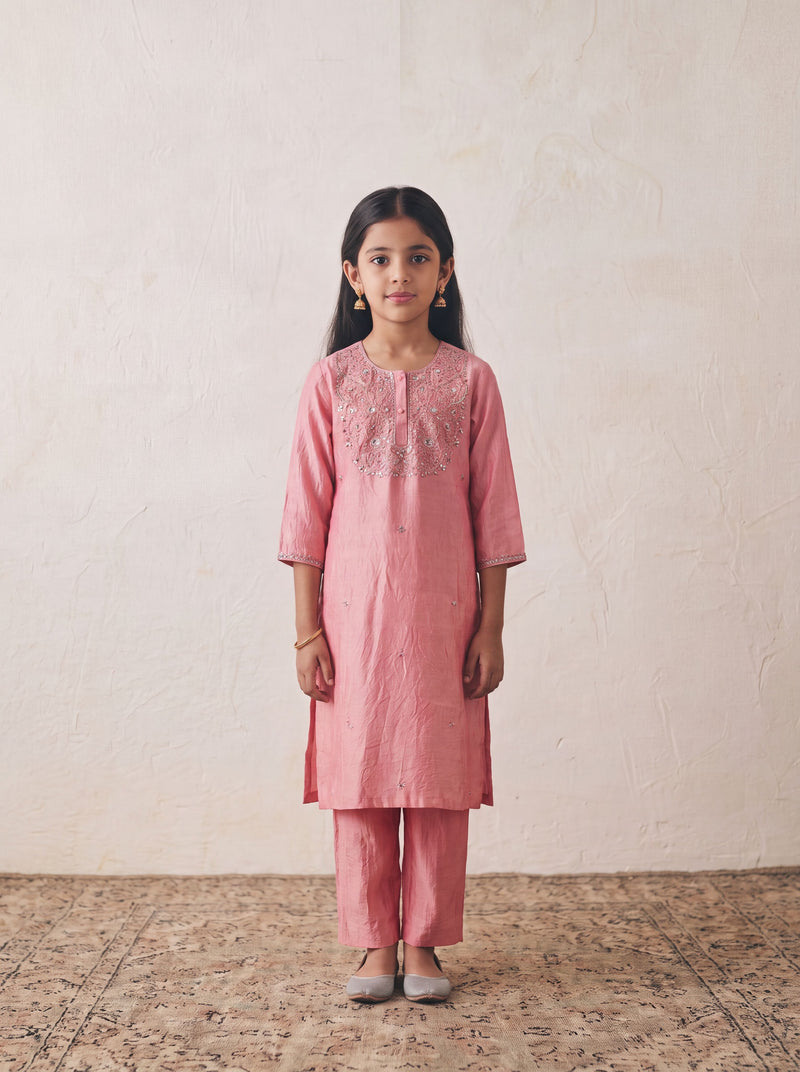
The usual story: she lasts beautifully until the photographs, then wants to take it all off. Pack a second, lighter set for dinner and dancing. The Afreen & Maahi set (₹12,750) is sunshine-yellow Chanderi with cutdana and bead flowers and soft gathers that fall into an easy silhouette, lined in mulmul; the Ruhani & Nilofer set (₹14,500) is a soft pink silk kurta and straight pant with a zardozi, sequin and cutdana floral neckline. Either still looks right in the family photographs taken later in the night.


And If There's a Ring Bearer?
Some couples pair the flower girl with a small boy carrying the rings or walking beside her. We don't make a dedicated boyswear range, but two of our kids sets are understated and tonal enough that some families choose them for a little boy: the Tara & Pari set (₹18,500), a deep navy satin kurta and straight pant with a contrast magenta yoke and resham, sequin and bead florals; and the Ayesha & Mehr set (₹18,500) in deep black with jaali-inspired marodi, sequin and thread borders and a medallion at the back. Message us before ordering and we'll talk through whether either suits. For coordinating a whole group of children, see our guide to sibling and cousin twinning.
Sizing, Timing and the Day Itself
- Order by measurements, not age. Our kidswear runs from 0–3 months to 15–16 years, and every piece is made to order — send her measurements and we'll make it to fit. A fully custom size is available for ₹2,000 more. Children grow fast, so measure within a few weeks of ordering, not months. Our guide to buying for growing kids explains how much room to leave.
- Allow six to seven weeks. Production takes 4–5 weeks, plus shipping — and you want a week for a trial at home.
- Do a dress rehearsal. Let her wear the outfit for an hour at home, walk up and down stairs, sit on the floor, and carry the basket. You will find the itchy seam now, not at the mandap.
- Petals and silk. Wet rose petals can stain pale silk. Use dry petals in the basket, and keep hands wiped before the entry.
- Afterwards: air the outfit before storing it, and see our care guide for kids' embroidered clothes — the good pieces get handed down.
For the rest of the family's functions, our function-by-function kids' wedding guide covers mehendi to reception, and bridal entry ideas will help you plan the moment she's part of.
Dressing a Flower Girl?
Send us the bride's colours and your little one's measurements on WhatsApp. We'll suggest pieces that sit beside the bridal look without copying it, and tell you honestly whether one can be made in time for the wedding.
Browse KidswearFrequently Asked Questions
What should a flower girl wear to an Indian wedding?
A light lehenga or sharara in a softer shade from the bride's palette, with a soft lining at the neckline, an ankle-length hem she can walk in, and embroidery that isn't too heavy to wear for several hours. Pack a lighter second outfit for dancing.
Do Indian weddings have flower girls?
Traditionally the bride's brothers or cousins carry the phoolon ki chadar over her during the bridal entry. Many couples now also have a young niece or cousin walk ahead scattering petals, especially at fusion and NRI weddings.
Should the flower girl match the bride?
Coordinate rather than match. Choose a lighter or softer tone from the same colour family, or pick up one colour from the bride's embroidery. An exact miniature of the bridal lehenga tends to look like a costume.
What sizes do your kids' lehengas come in?
Our kidswear runs from 0–3 months to 15–16 years, and every piece is made to order to your child's measurements. A fully custom size is available for ₹2,000 extra.
How early should I order a flower girl outfit?
Six to seven weeks before the wedding: production takes 4–5 weeks plus shipping, and a week at home for a trial run is worth having. Measure your child close to the order date, since children grow quickly.
Made to order in 4–5 weeks
Have an event date? We’ll tell you exactly when to order by.
We take a limited number of orders each month — secure your slot early.
WhatsApp me my order-by date + a shortlistNot sure where to start?
Tell us what you're dressing for and we'll help you choose — fabric, fit, colour, and timeline — over WhatsApp or on a video call.
Your Cart
Pieces from this story
All pieces →Not sure which piece, or need it by a date? Book a video consultation Ask us on WhatsApp


Keep reading
The journal →
Kids' Ethnic Wear Fabric Guide: What's Actually Comfortable
Which fabrics work for children's ethnic wear and which cause a meltdown — cotton, Chanderi, silk, tissue and satin c...
26 August 2026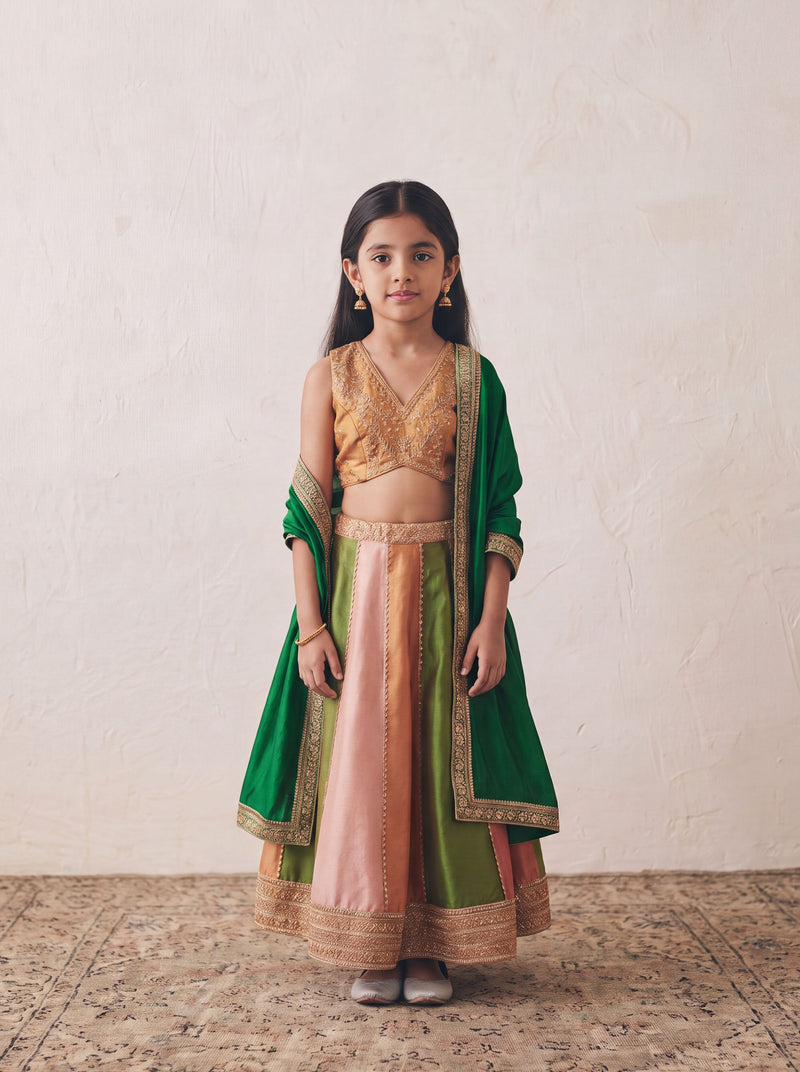
Designer Lehenga for Girls: A Parent's Buying Guide to Kids' Lehengas
How to buy a designer lehenga for girls in 2026 — sizes, fabrics that don't itch, age-by-age silhouettes, prices, and...
14 September 2026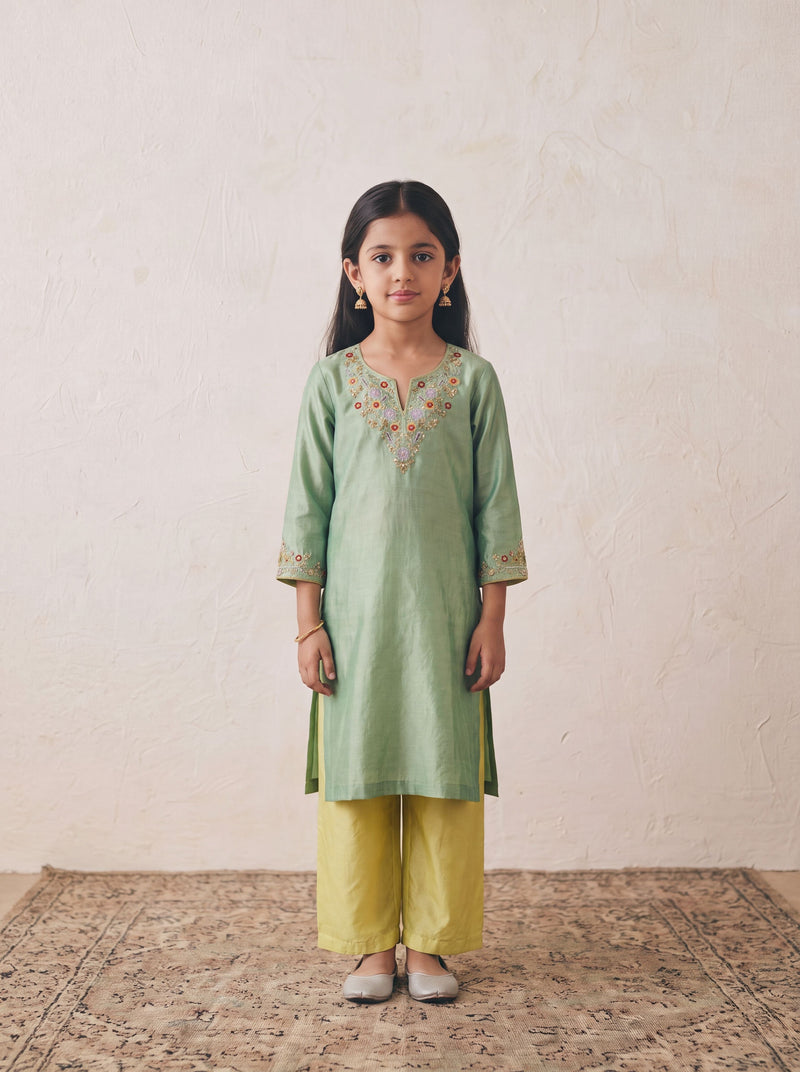
Twinning Kids: Coordinating Outfits for Siblings & Cousins
How to coordinate kids' ethnic outfits for siblings and cousins — twinning by colour and palette for weddings and fes...
31 July 2026