
The Haath Phool Guide: Styling the Hand Harness with Indian Outfits
Of all the pieces in a bride's jewellery box, none is more photographed than the haath phool — the "hand flower" that drapes the back of the palm, linking rings to bracelet in a web of chain and stone. It's the jewel the camera finds during the mehendi close-up, the varmala, the first look at the ring. And like the kamarbandh and the nath before it, it has stepped out of the bridal trunk into festive wardrobes everywhere. Here's how to choose one and wear it well.
What Exactly Is a Haath Phool?
A haath phool is hand jewellery that covers the back of the hand: typically one or more rings connected by fine chains to a bracelet at the wrist, often with a central motif — a flower, a kundan medallion, a spray of pearls — resting on the palm's back. It's counted among the solah shringar, the sixteen traditional adornments of a bride, and appears across regions under different names, including the panja in the north and the ratanchur in Bengal.
Delicate or Statement: Choosing Your Style
- Single-ring, single-chain — the minimal version; one fine chain from ring to bracelet. Wearable with almost anything festive, even a cotton kurta.
- Central medallion — a kundan or polki bloom on the back of the hand; the classic bridal register.
- Multi-finger harness — chains to two or more fingers; maximum drama, best kept for the mehendi and the wedding day itself.
- Pearl and floral versions — softer than metal-heavy pieces; lovely for daytime functions and lighter outfits.
The Mehendi: The Haath Phool's Home Ground
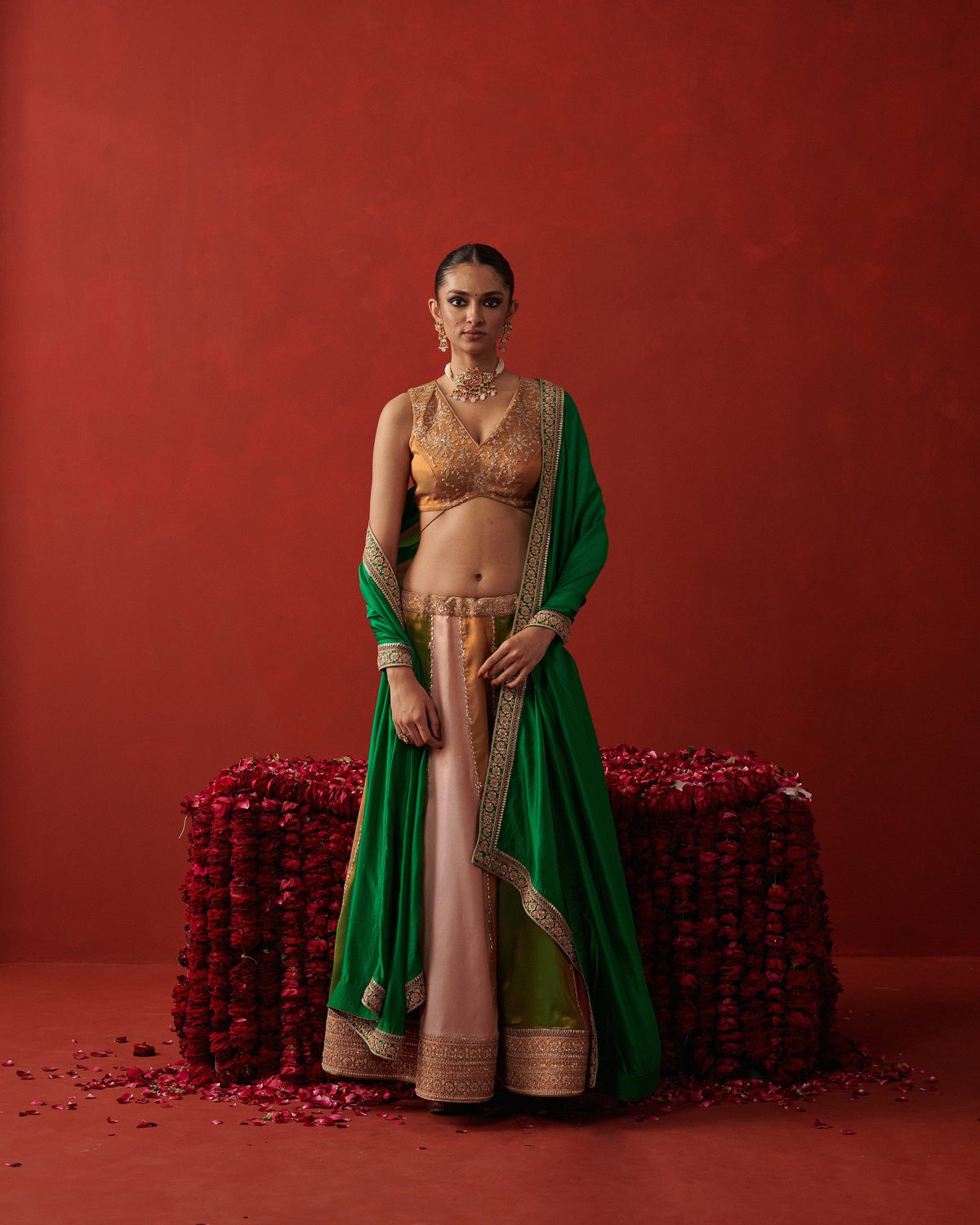
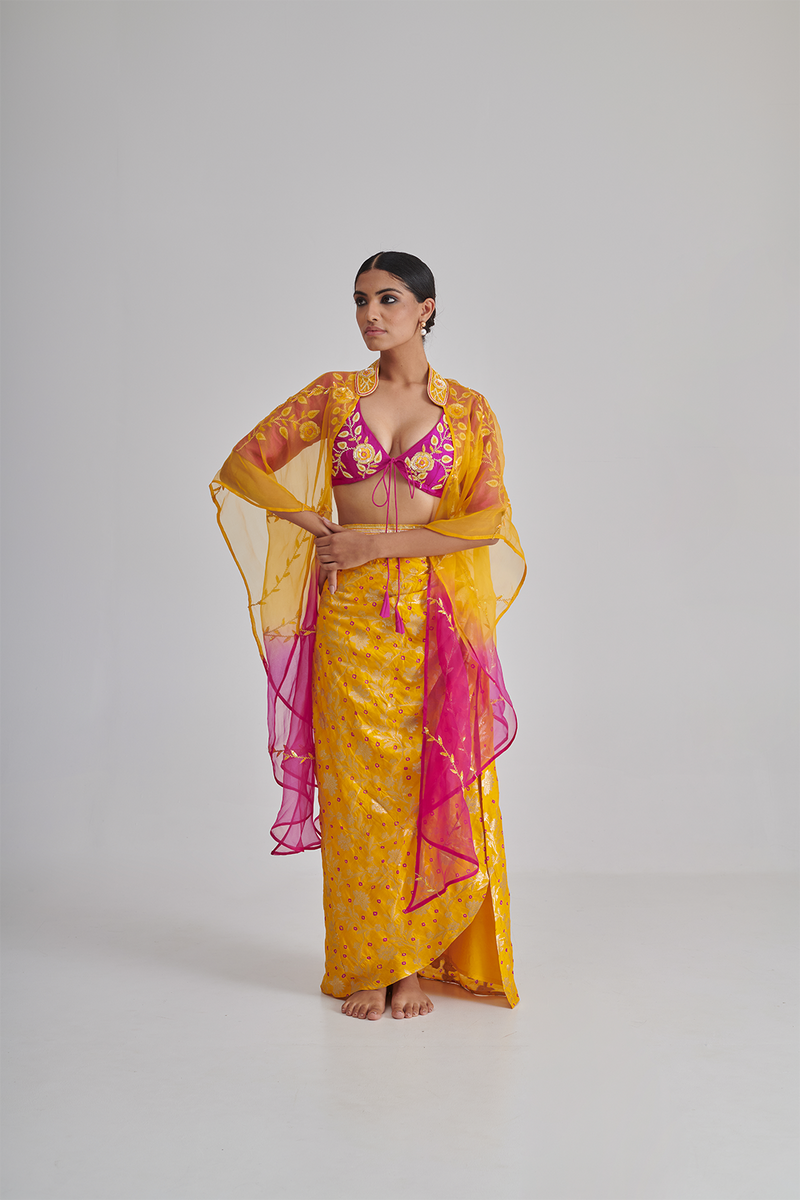
No function suits the haath phool like the mehendi — the entire event is about hands. Gold-toned pieces sit beautifully over fresh henna, framing the pattern rather than hiding it; choose an open, chain-based design and skip chunky bracelets that press on the drying paste. Pair it with a joyful, multi-hued outfit like the Ishq-e-Gul lehenga in soft tissue jacquard, its panelled skirt moving through pink, gold, peach, ivory, and green — every colour in it gives the hand jewellery something to echo.

Beyond the Bride: Festive Styling
A delicate haath phool has become the wedding guest's secret weapon — it reads as considered without competing with the bride's jewellery. With a sequin-scattered set like the Raha kurta set — gathered silk with gold tissue detailing and hand-embroidered neckline — a single-chain gold haath phool completes the look with no necklace needed. The one-hero-piece rule applies: if the hand is doing the talking, keep earrings small and the neck bare.

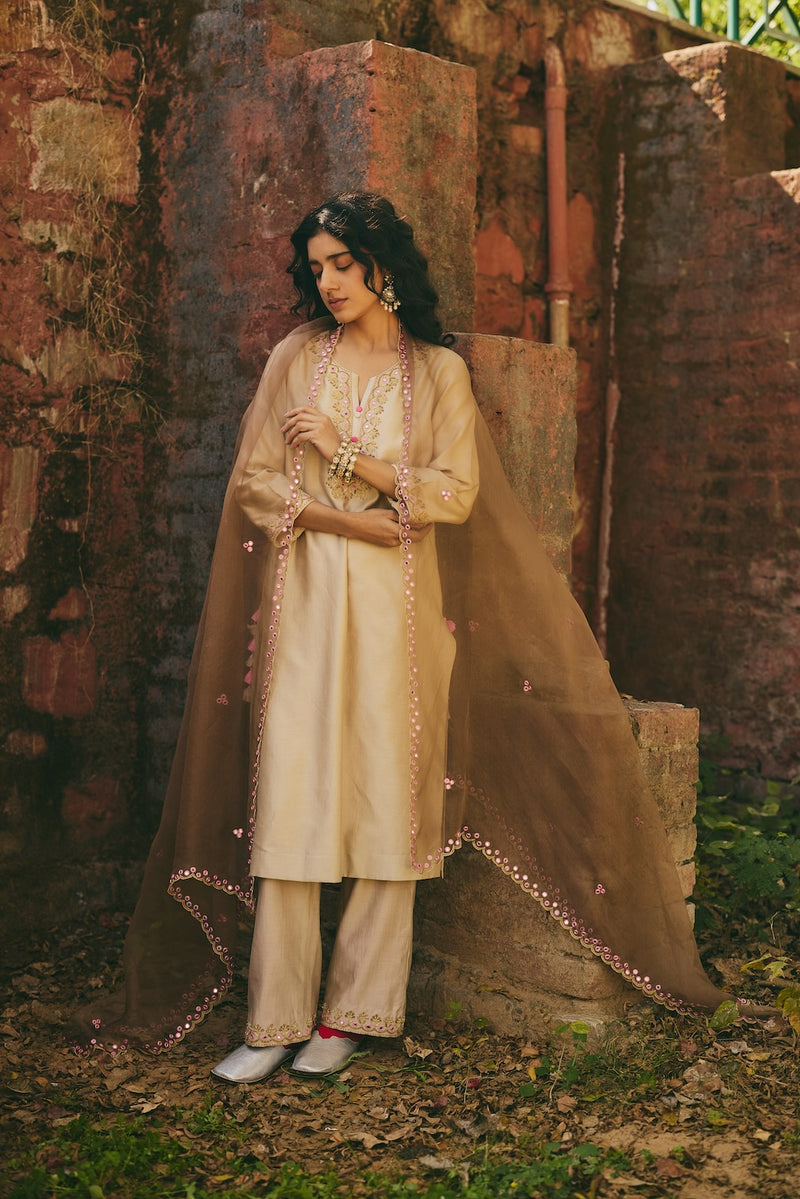
It also loves a dupatta moment. Hands lift and frame the face every time you adjust a drape — with a piece like the Mornii dupatta in pink organza, its gold zari peacock motifs edged in sequins, a matching gold haath phool makes even that small gesture ornamental.

Getting It Right
- Size the ring and wrist separately — a haath phool that fits at both ends sits flat; one that hangs loose twists and tangles.
- Mind the dupatta — fine chains catch on organza and net; drape first, jewellery last.
- One hand or two? — brides traditionally wear both; for guests, one hand is more modern and half the maintenance.
- Match the metal to your other jewellery — gold with gold, silver or oxidised with contemporary looks; mixing reads as accidental.
Outfits That Deserve Beautiful Hands
Every Rashika Mittal piece is handcrafted by karigars in Jaipur and made to order. Explore our lehengas, kurta sets, and dupattas.
Shop Mehendi EditFrequently Asked Questions
What is a haath phool?
A haath phool — literally "hand flower" — is jewellery for the back of the hand: one or more rings joined by fine chains to a bracelet, often with a central floral or kundan motif. It is one of the solah shringar, the sixteen traditional bridal adornments, and is also known as the panja in North India and ratanchur in Bengal.
Can I wear a haath phool if I'm not the bride?
Yes — a delicate single-chain haath phool has become a favourite of wedding guests and festive dressers. Keep it lighter than bridal versions, wear it on one hand, and let it be the hero piece: small earrings, bare neck. Save multi-finger statement harnesses for the bride herself.
Does a haath phool work over mehendi?
Beautifully — gold chains frame henna patterns rather than hiding them, which is why the mehendi function is the haath phool's signature moment. Choose an open, chain-based design, avoid wide bracelets that press on drying henna, and put the jewellery on after the paste has fully set.
Made to order in 4–5 weeks
Have an event date? We’ll tell you exactly when to order by.
We take a limited number of orders each month — secure your slot early.
Not sure where to start?
Tell us what you're dressing for and we'll help you choose — fabric, fit, colour, and timeline — over WhatsApp.
Your Cart
Pieces from this story
All pieces →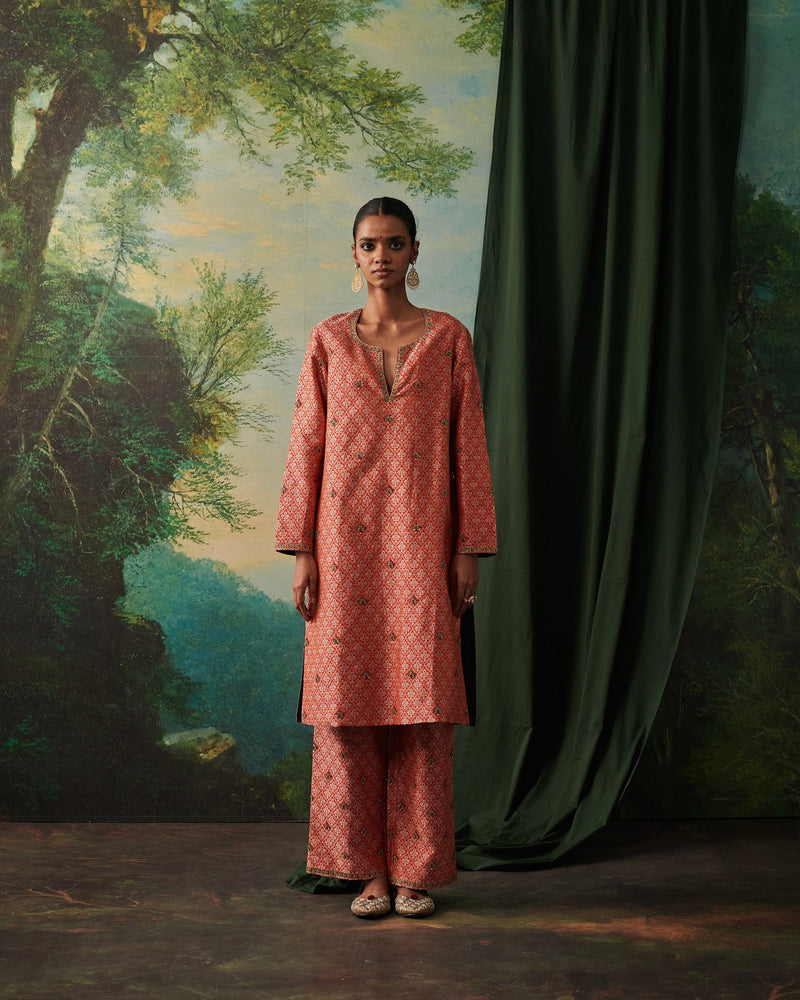
Keep reading
The journal →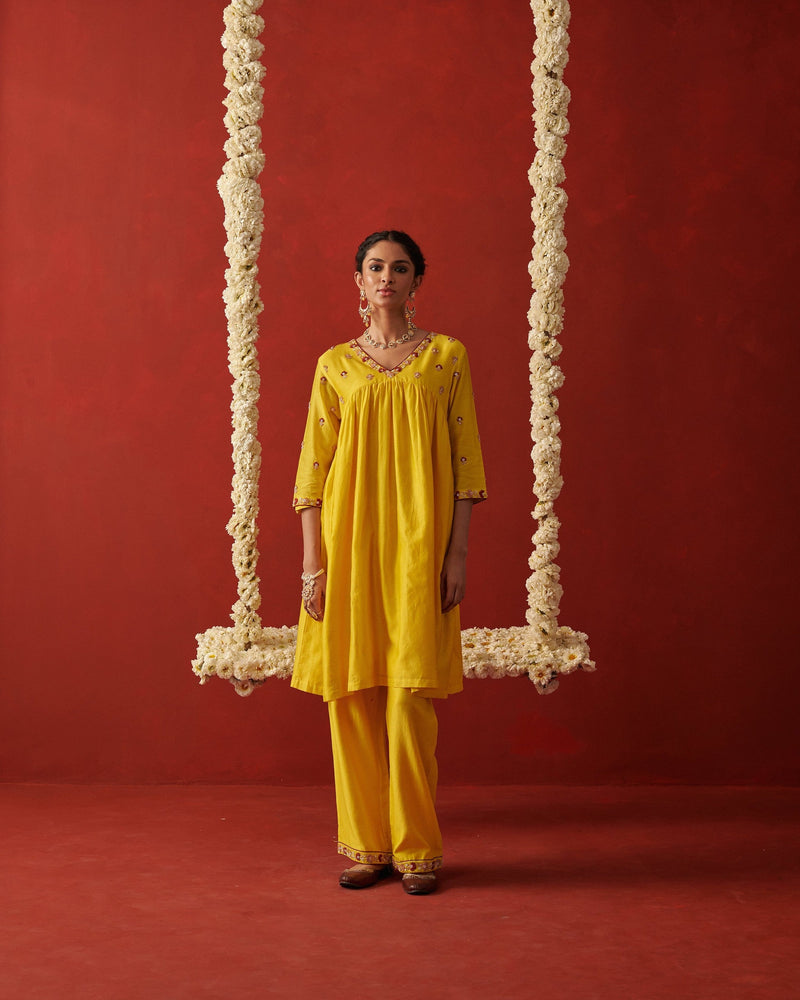
Dholki Night Outfit Ideas: What to Wear to the Ladies' Dhol
Handmade by karigars Made to your measurements Fit guarantee Ships worldwide As seen in GraziaElle Graduat...
27 July 2026
Mayra & Bhaat Outfit Ideas: Dressing for the Maternal Gift Ceremony
Handmade by karigars Made to your measurements Fit guarantee Ships worldwide As seen in GraziaElle Graduat...
27 July 2026
Pag Phera Outfit Ideas: What to Wear for the Bride's Homecoming
Handmade by karigars Made to your measurements Fit guarantee Ships worldwide As seen in GraziaElle Graduat...
27 July 2026