
Holi 2027 Colours and Their Meaning: What Each Shade Stands For, and What to Wear
Holi 2027 falls on Monday 22 March, with Holika Dahan on the evening of Sunday 21 March (Drik Panchang, New Delhi). The colours carry old associations rather than fixed rules: red for love, fertility and marriage, yellow for turmeric and an auspicious start, green for spring and new beginnings, blue for Krishna, and saffron and orange for the tesu flowers that coloured Braj's Holi water. Pink has no old meaning of its own, and white is simply what most people wear to play. Unlike Navratri, Holi has no official colour of the day. You can wear any of these, and most people end up wearing all of them by noon.
One honest rule first: please don't play rang in a hand-embroidered piece. Our clothes are for Holika Dahan, Holi milan and the lunch once the colour is washed off.
When Is Holi in 2027?
- Holika Dahan (Chhoti Holi): Sunday 21 March 2027. Drik Panchang gives a New Delhi muhurat of about 6:33 PM to 8:55 PM. Purnima tithi runs from about 6:21 PM on 21 March to 4:13 PM on 22 March.
- Rangwali Holi / Dhulandi: Monday 22 March 2027. The day of colour.
- Dol Jatra (Bengal): listed on Monday 22 March 2027 in the West Bengal holiday calendar. Some Assamese calendars put Dol Purnima on Sunday 21 March, so check your local panchang.
Timings change by city. Abroad, community Holi events are often held on a nearby weekend, so check with your local temple or society.
Holi Colours at a Glance
| Colour | What it is linked with | Old natural source | How to wear it (our pick) |
|---|---|---|---|
| Red | Love, fertility, marriage | Palash flowers, red sandalwood, hibiscus, madder | A vermillion or deep red sari for Holi milan |
| Yellow | Auspicious; turmeric | Haldi, amaltas, marigold | A sunshine-yellow sharara for a daytime lunch |
| Green | Spring, new beginnings | Mehendi, dried gulmohur leaves | Mehendi or lime green kurta set |
| Blue | Krishna, who is shown dark or blue-skinned | Indigo, jacaranda, blue hibiscus | Dusty blue by day, sapphire by night |
| Saffron / orange | Tesu (palash) colour of Braj; spring at Shantiniketan | Tesu flowers, turmeric with lime | Marigold or burnt saffron with a contrast dupatta |
| Pink / magenta | No old fixed meaning; the modern gulal shade | Beetroot (magenta) | Rani pink or magenta for the evening party |
| White | A custom, not a rule: colour shows on it | n/a | Old cotton whites to play; ivory for the bonfire |
Where Holi's Colours Come From
Two stories sit behind Holi. The bonfire belongs to Prahlad and Holika: Holika tried to burn the boy Prahlad, she burned and he survived through his devotion to Vishnu, so Holika Dahan marks good over evil and the old giving way to the new. The colour belongs to Krishna and Radha. In the best-known version, the young Krishna worries that fair Radha won't like his dark skin, and his mother Yashoda tells him to colour her face in whatever shade he likes. Rina Arya, in The Conversation (March 2024), calls Holi "a symbolic celebration of spring, the harvest, new life and the triumph of good over evil."
The colours were once made from plants. Wikipedia's Holi entry lists palash (tesu, "flame of the forest"), neem, kumkum, haldi and bilva among the traditional sources, and links them with Ayurvedic medicine. Beetroot gave magenta, indigo gave blue, mehendi gave green. Today, as Arya notes, most powders are synthetic. That matters for your clothes, and we come back to it below.
Red: Love, Fertility and Marriage
Red is the colour most bound up with married life in India: sindoor, alta, the bridal sari. Arya calls it "the colour of fertility" and links it with marriage. In the old palette it came from palash flowers, red sandalwood, dried hibiscus, madder and pomegranate.
For a Holi milan or an evening at a friend's, the Laal Ishq vermillion organza silk saree (₹19,500) is our tribute to red: deep vermillion organza silk embroidered with sequin vines and abstract florals along the body. Its description pairs it with a violet silk blouse for a "deep red and royal violet" contrast drawn from Rajput styling (the blouse is not included).

The Rangrez deep red chiffon saree (₹22,500) could have been named for Holi. It is "dyed in a colour reminiscent of alta on a bride's feet", with floral bootis in sequins and beads in ivory, saffron, plum and rose, and it is named for the rangrez, the dyers "who brought life to white fabric with just colour and handwork." That is Holi in one line.
Yellow: Turmeric and an Auspicious Start
Yellow is "regarded as an auspicious colour," Arya writes. In the old Holi palette it was haldi, sometimes mixed with chickpea flour, or amaltas, bael and marigold. Turmeric has a long place in Ayurveda, one reason yellow is often linked with health. It is also the colour of the season: Vasant Panchami, a few weeks before Holi, is the festival of yellow mustard flowers (see our Vasant Panchami guide).
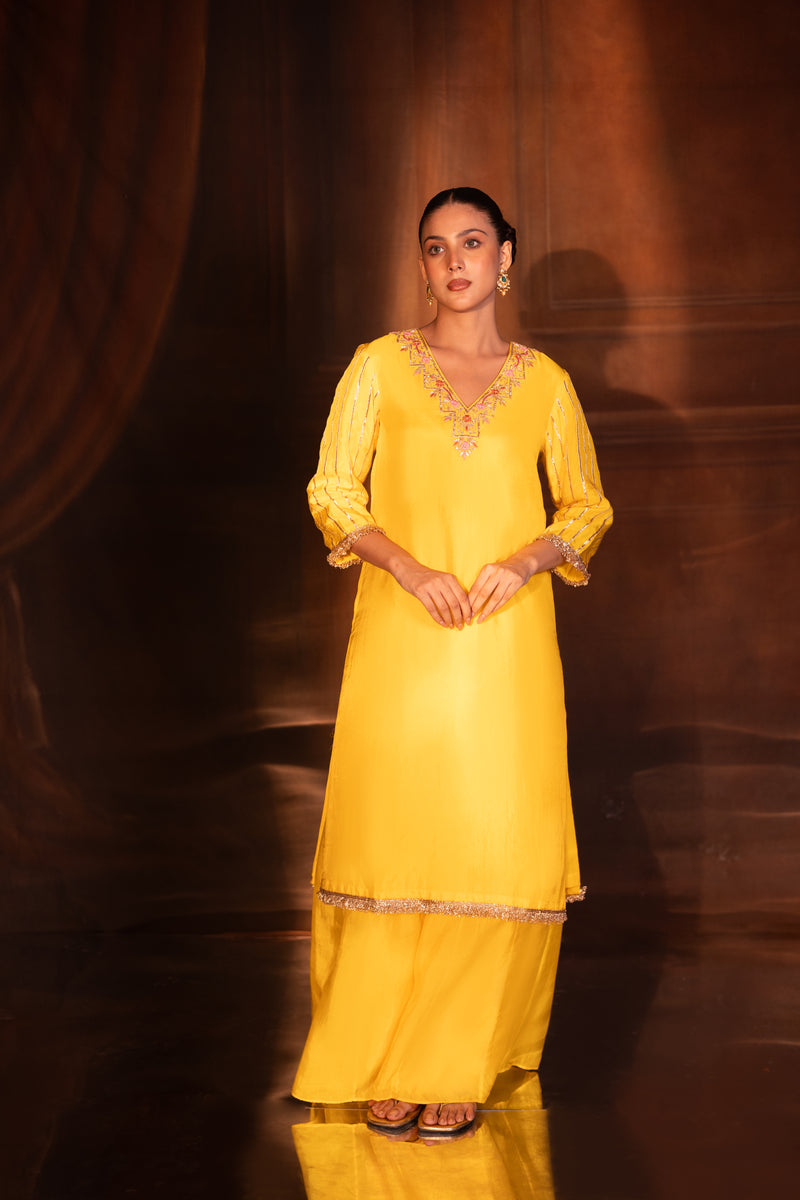
From our Haseena collection, the Kanchan sharara set (₹29,500) is sunshine yellow silk with pink and gold-toned embroidery along the V neckline, embellished stripes on the sleeves and a matching flared sharara. Wear it to a Holi lunch once the colour is washed off.

More yellows are in our yellow and mustard guide.
Green: Spring and New Beginnings
Holi comes at the turn of the season, and green, in Arya's words, "symbolises new beginnings." The natural green came from mehendi and dried gulmohur leaves. It also sits easily beside pink, yellow and orange.
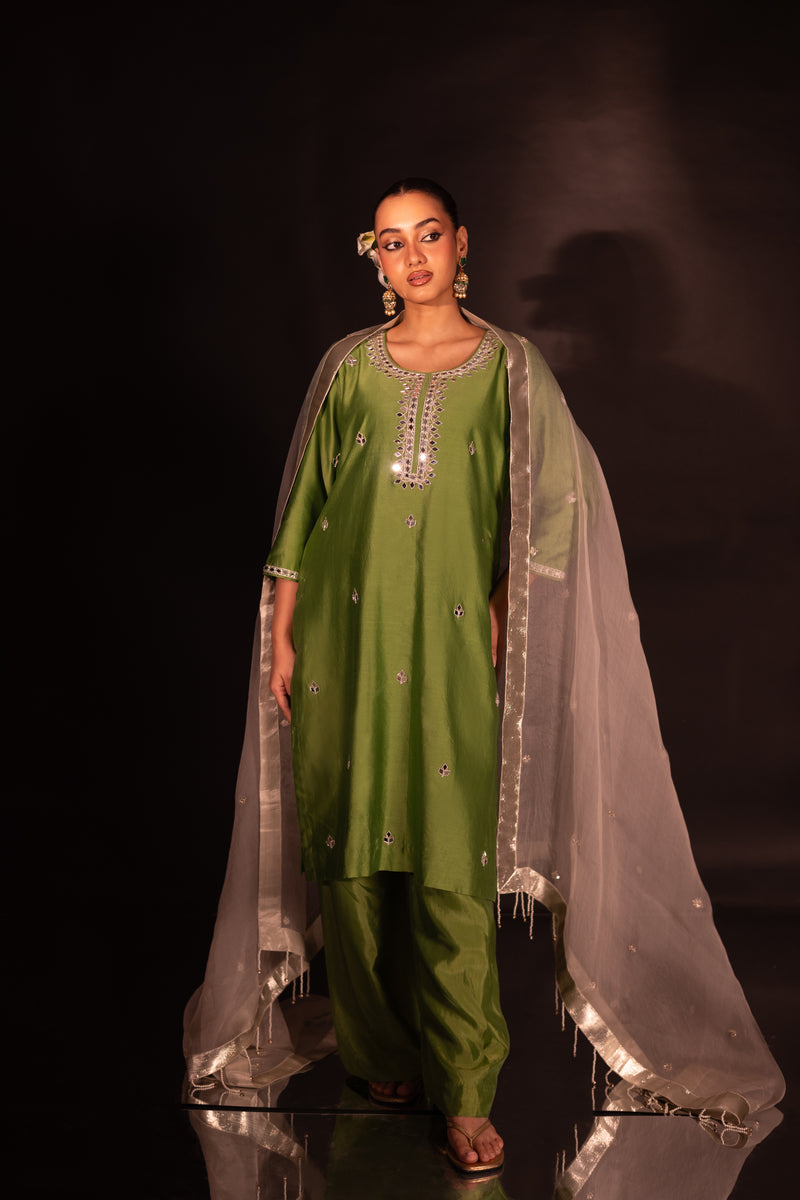
The Mehrab kurta set (₹23,500) is mehendi green Chanderi with mirror work along the round neckline and front placket, scattered mirror motifs and mirror-work sleeve borders, styled with a silver-bordered dupatta (sold separately). For a brighter green, the Gia and Cyraa lime green silk set (₹28,500) has floral embroidery in rose gold and deep fuchsia along the neckline, sleeves and hem, worked in marodi, gota, sequins and thread.


Blue: The Colour of Krishna
Blue belongs to Krishna, who is traditionally shown with dark or blue skin, and Holi is his festival. The old blue came from indigo, jacaranda and blue hibiscus. In our experience blue is rarer at Holi parties than the warm colours, which is why it stands out in the evening.
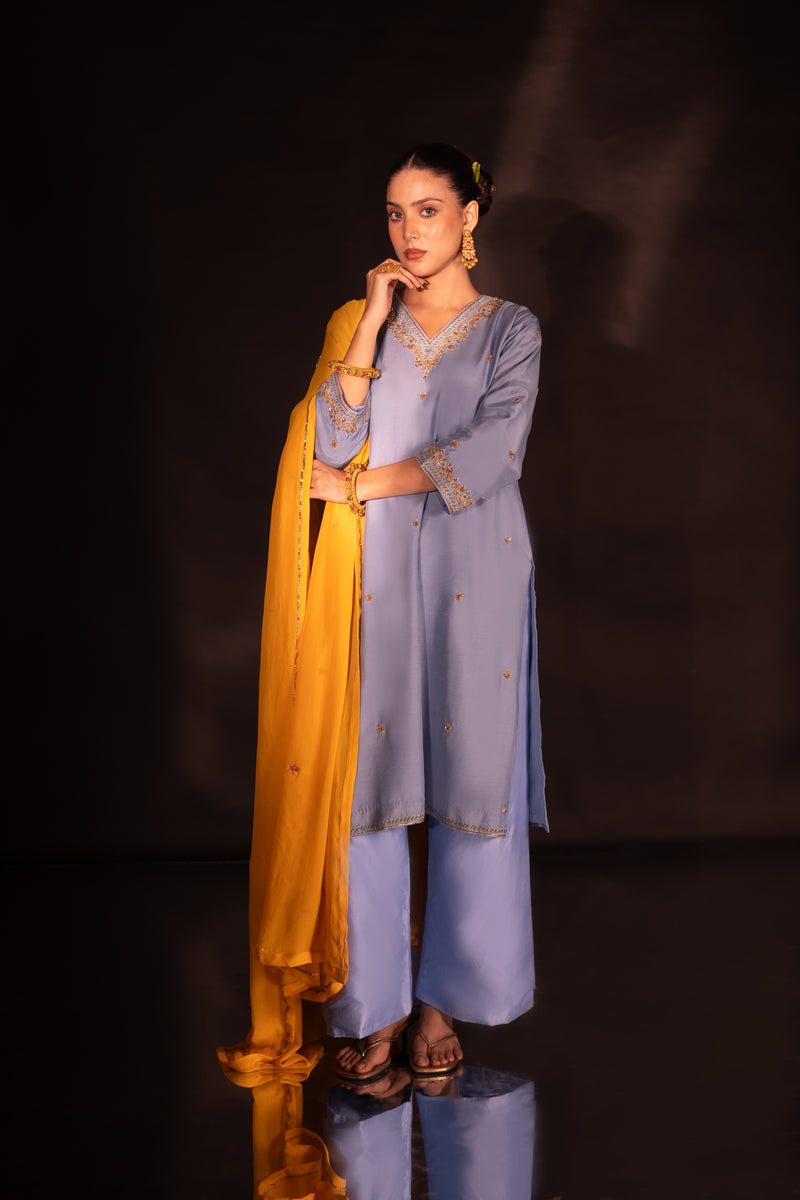
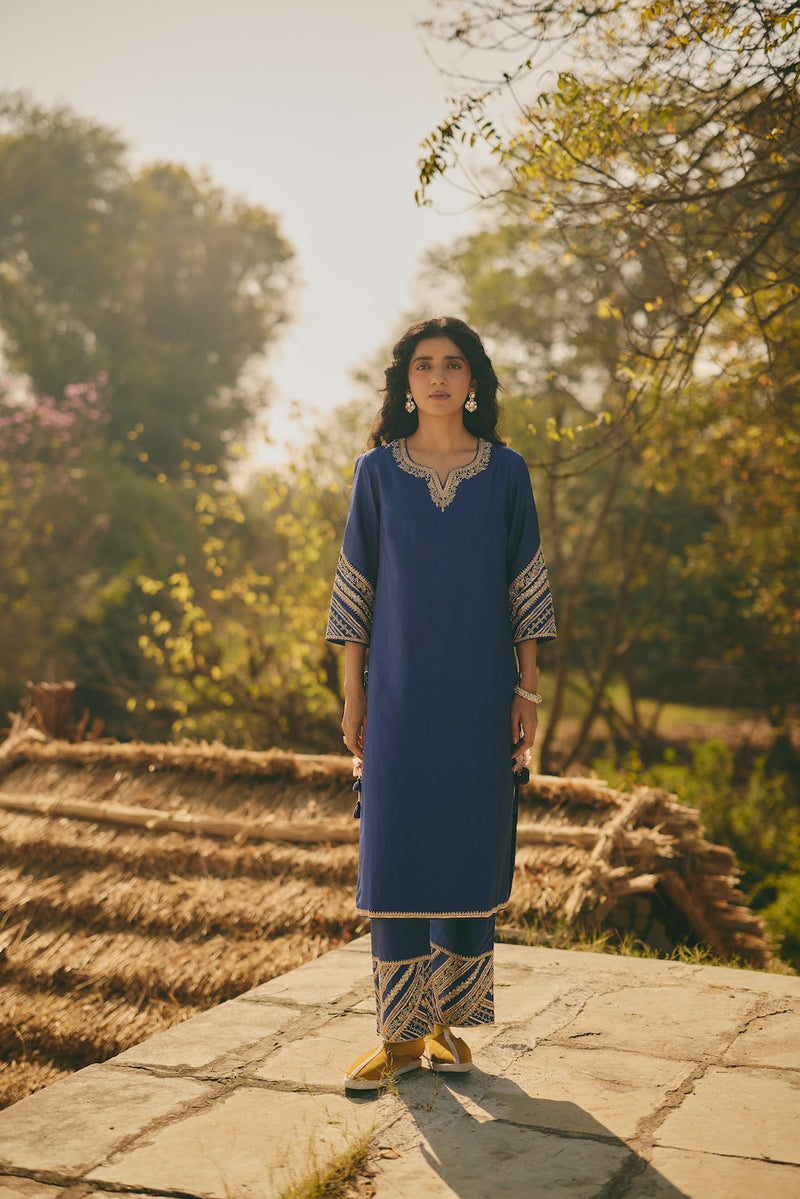
The Meghna kurta set (₹24,500) is dusty blue Chanderi with V-neckline embroidery in beads, sequins, aari and cutdana, scattered florals and powder blue silk pants. It is styled with a mustard yellow dupatta (sold separately), and blue with yellow is a cheerful pairing for the day. For night, the Ameera and Hoorain sapphire blue silk set (₹32,500) is deep sapphire blue silk embroidered with marodi, resham, sequins, cutdana, bead and aari, with florals at the neckline and linear patterns on the sleeves and pant hem.

Saffron and Orange: The Tesu Flower
Before packets of gulal, Braj played Holi with tesu, the saffron-coloured flower of the palash tree, soaked in warm water the day before. A Drik Panchang report notes the local belief that Krishna played Holi with tesu flowers, which is why many Krishna temples in Mathura and Vrindavan still use them. Turmeric mixed with lime also gave orange. At Shantiniketan's Basanta Utsav, the government's Incredible India site says students "dress in bright yellow and saffron attire, symbolising the colours of spring."
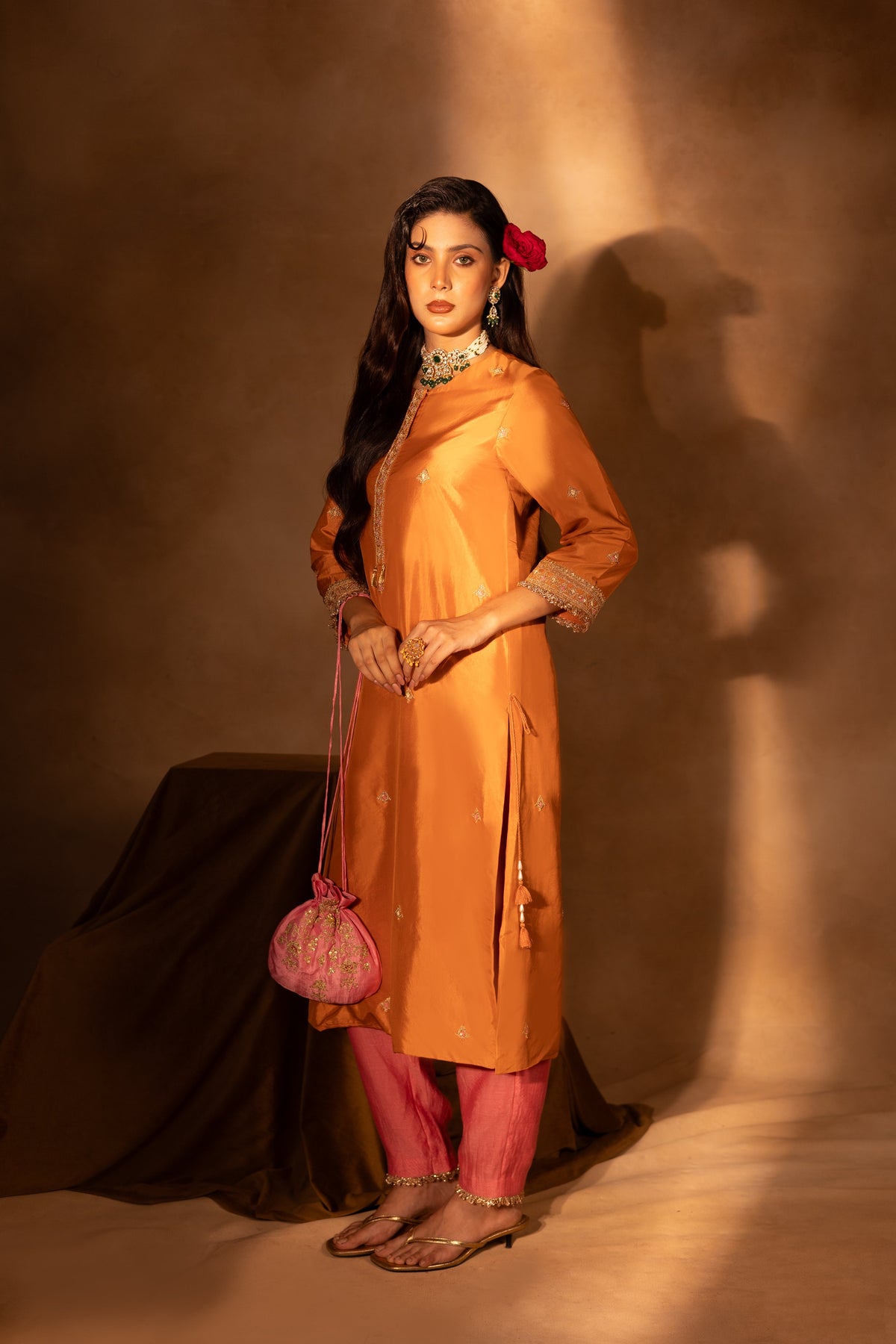
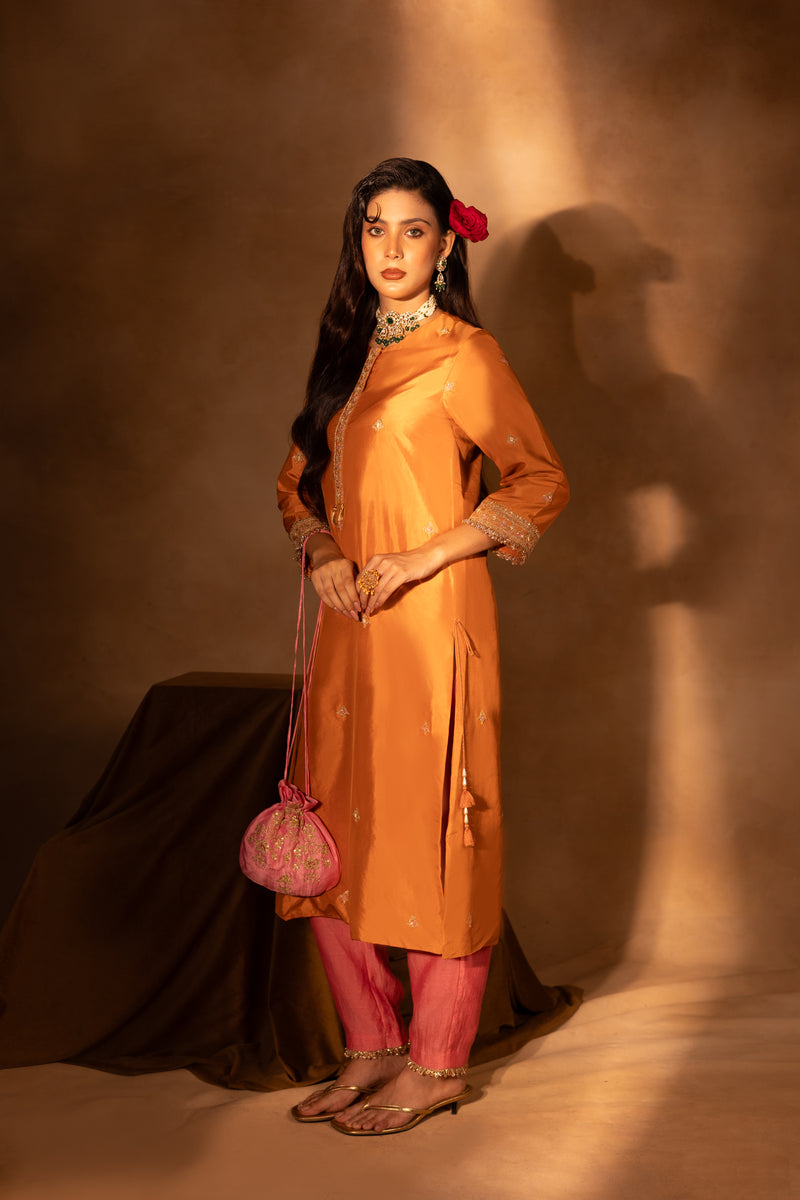
The Gulal kurta set (₹23,500) is named for Holi's powder. It is marigold orange silk with marodi embroidery along the front placket, scattered motifs and tassels, paired with dusty coral pink Chanderi pants and styled with a deep green dupatta (sold separately). The Basanti sharara set (₹25,500) is burnt saffron Chanderi with gold-toned floral embroidery across the front and sleeves and a matching flowy sharara. Both are from Haseena, whose colours we explain in our Haseena palette story.


Pink and Magenta: Today's Gulal
An honest note: we could not find an old tradition that gives pink its own meaning at Holi. Magenta came from beetroot, and the bright pink of modern gulal is mostly a synthetic shade. Pink's place at Holi today is about joy and the look of the day, not scripture.
The Anahita and Amira set (₹19,500) is the piece in our catalogue whose description talks about Holi's colours directly: rich magenta silk with sequin and bead florals in pink, blue and ivory, and burnt orange silk pants. Its colours "draw from festive rituals-gulal powders, marigold strings, and fresh blossoms tied onto swings." For an evening Holi party, the Mehergul and Abroo rani pink silk lehenga (₹25,000) has a blouse embroidered with sequins, cutdana and thread in floral and vine motifs, and a lehenga with fluid gathers.

If you'd rather wear Holi on one piece, the Bageecha dupatta (₹12,500) is organza silk in wide colour-blocked panels of yellow and rani pink, with aari and sequin embroidery and a silver zari border. Throw it over a plain ivory kurta. Our pink colour guide covers the rest of the range.
Why People Wear White on Holi
There is no scriptural rule. White is a custom, and a practical one: colour shows best on it, and most families play in old cottons they will never wear again. It does have regional roots. Wikipedia notes that Kumaon's Khari Holi singers wear white churidar pyjamas and kurtas, and that Shantiniketan students wear saffron or pure white.
The classic white Holi kurta is often chikankari. We don't make chikankari. For the evening before, around the bonfire, the Naina ivory cotton kurta with Ahalya pant (₹12,500) has hand-embroidered florals at the neckline, cuffs and pant hem. Being cotton, it is the sensible choice near a fire. Keep dupattas pinned and away from the flames.
Please Don't Play Rang in Hand Embroidery
Wet colour, most of it synthetic now, soaks into silk and Chanderi and can stain them permanently. Hand-dyed bases can bleed, and powder lodges in sequins and marodi. Play in old cottons and keep the good pieces for afterwards: the Holika Dahan puja, the Holi milan, the lunch and the evening party. If something gets hit, our guide to removing stains from embroidered clothes explains what to try and what to leave to a specialist.
Already Own Something? Restyle It
- Red sari from a wedding: wear it to Holi milan with a violet, green or yellow blouse.
- Ivory or beige kurta set: add one bright dupatta in yellow, pink or orange. That is a full Holi look.
- Yellow from a haldi: swap the gold jewellery for flowers and wear it to lunch.
- Something blue: pair it with yellow or orange for a Krishna-and-tesu contrast.
Regional Holis, Briefly
- Lathmar Holi, Barsana and Nandgaon: in the Radha Rani temple compound at Barsana, women playfully beat men with long lathis while the men defend themselves with shields. Tourism listings expect it around 16–17 March 2027, with Nandgaon a day later.
- Phoolon wali Holi, Vrindavan: at the Banke Bihari temple, Holi is played with flowers. Outlook Traveller describes priests showering rose and marigold petals on the Ekadashi before Holi, which Drik Panchang lists as Thursday 18 March 2027.
- Basanta Utsav, Shantiniketan: introduced by Rabindranath Tagore at Visva-Bharati, in yellow and saffron. In 2025, ETV Bharat reported that it was held early, outsiders were kept off campus and abir and dust colours were banned.
- Dol Jatra, Bengal and Odisha: the swing festival, when images of Radha and Krishna are carried on decorated palanquins and swung. It also marks the birth of Chaitanya Mahaprabhu.
- Hola Mohalla, Anandpur Sahib: Guru Gobind Singh turned the day after Holi into a festival of martial arts. The USC Sikh calendar lists it as 23–25 March 2027, but treat that as provisional until it is officially announced.
Ordering for Holi 2027: The Honest Timeline
Everything above is made to order in our Jaipur atelier: 4–5 weeks of making, plus 3–7 days of shipping. Holi is comfortably reachable. Order by early February and your piece arrives before Holika Dahan on 21 March. Adult custom measurements cost nothing extra. Design changes are not included the same way, so ask us on WhatsApp what is possible on a design. Domestic orders above ₹30,000 ship free. For families, our kidswear has smaller versions of some of our designs.
Sources: Drik Panchang (Holika Dahan 2027 muhurat; Amalaki Ekadashi 2027; tesu in Braj), The Conversation (Rina Arya, March 2024), Wikipedia (Holi), Incredible India (Vasanta Utsav), Outlook Traveller (Phoolon ki Holi), ETV Bharat (Basanta Utsav, March 2025), Office Holidays (West Bengal Doljatra 2027), USC Office of Religious and Spiritual Life (Hola Mohalla 2027).
Holi Colours, Hand-Embroidered in Jaipur
Made to your measurements over 4–5 weeks, plus 3–7 days shipping. Order by early February for Holi 2027. Browse our kurta sets, sharara sets and dupattas, or message us on WhatsApp with any questions.
Shop AllFrequently Asked Questions
When is Holi in 2027?
Rangwali Holi (Dhulandi) is on Monday 22 March 2027. Holika Dahan is on the evening of Sunday 21 March 2027, with a New Delhi muhurat of about 6:33 PM to 8:55 PM according to Drik Panchang. Timings vary by city.
What colour should I wear on Holi?
There is no official Holi colour. To play with colours, most people wear white or old cotton clothes, because colour shows on white and the clothes may be ruined. For Holika Dahan, Holi milan or a party afterwards, wear any festive shade: red, yellow, green, blue, saffron or pink all have a place at Holi.
What do the colours of Holi mean?
These are associations, not rules. Red is linked with love, fertility and marriage; yellow with turmeric and auspiciousness; green with spring and new beginnings; blue with Krishna; and saffron with the tesu flowers once used to colour Holi water in Braj. Pink has no traditional meaning of its own and is mostly a modern gulal shade.
Why do people wear white on Holi?
Mostly for practical reasons: colours show up best on white, and people play in old clothes. It is a custom, not a scriptural rule.
Can I order an outfit now for Holi 2027?
Yes. Our pieces are made to order over 4–5 weeks plus 3–7 days shipping, so ordering by early February gets your outfit to you before Holika Dahan on 21 March 2027. Adult custom measurements are free.
More colour guides: Navratri 2026 nine colours · Diwali colours · Makar Sankranti colours · Pongal colours · Lucky colours by zodiac sign · Holi outfit ideas
Made to order in 4–5 weeks
Have an event date? We’ll tell you exactly when to order by.
We take a limited number of orders each month — secure your slot early.
WhatsApp me my order-by date + a shortlistNot sure where to start?
Tell us what you're dressing for and we'll help you choose — fabric, fit, colour, and timeline — over WhatsApp or on a video call.
Your Cart
Pieces from this story
All pieces →Not sure which piece, or need it by a date? Book a video consultation Ask us on WhatsApp



Keep reading
The journal →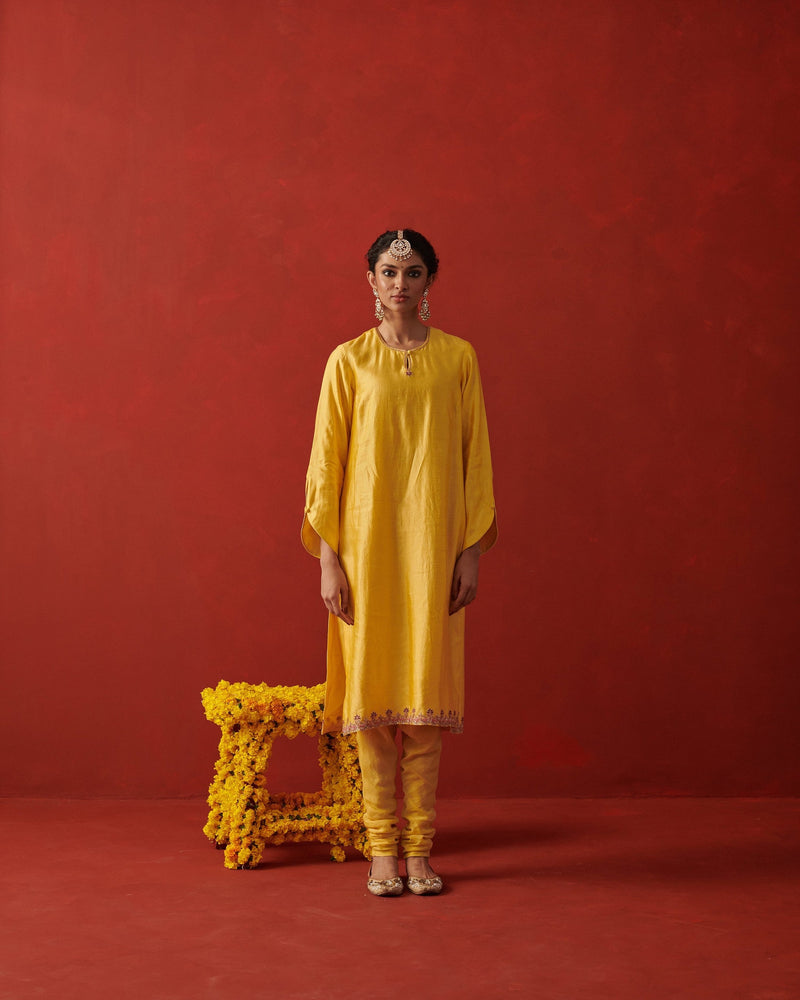
Vasant Panchami & Saraswati Puja Outfit Ideas: Wear Yellow
Vasant Panchami and Saraswati Puja outfit ideas — why yellow is the colour of the day, plus the prettiest sunshine, m...
30 June 2026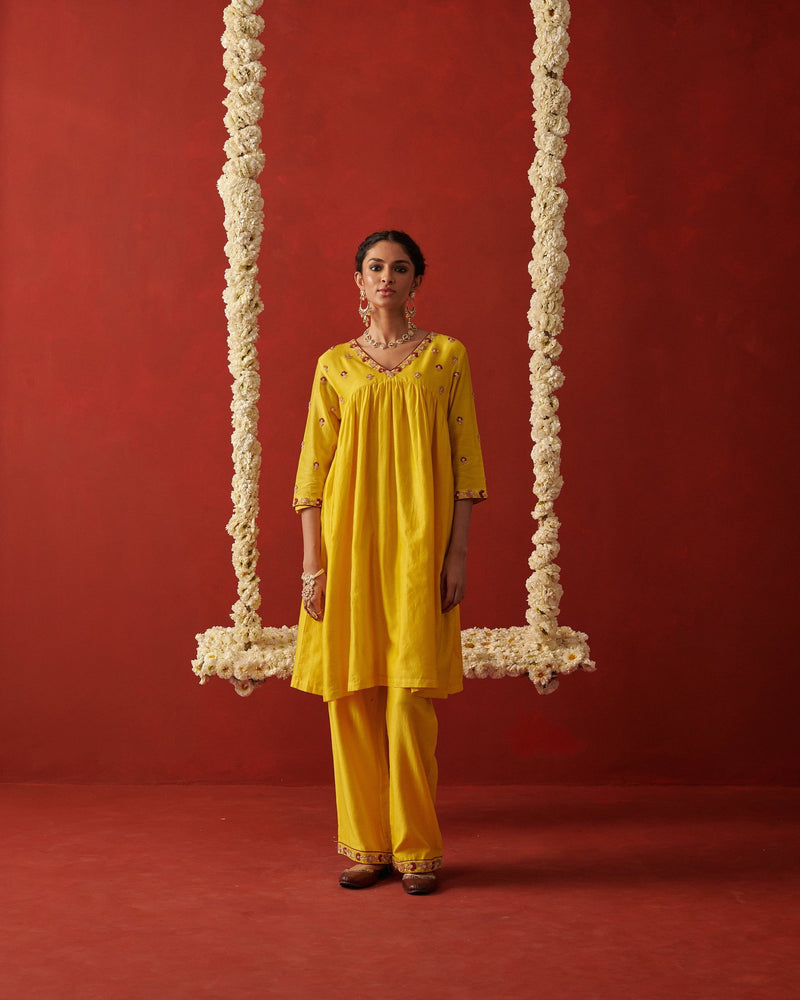
Yellow & Mustard Indian Outfits: A Colour Guide for Every Occasion
How to wear yellow and mustard in Indian fashion — sarees, kurtas, dupattas and contrast sets, plus styling tips. A c...
4 June 2026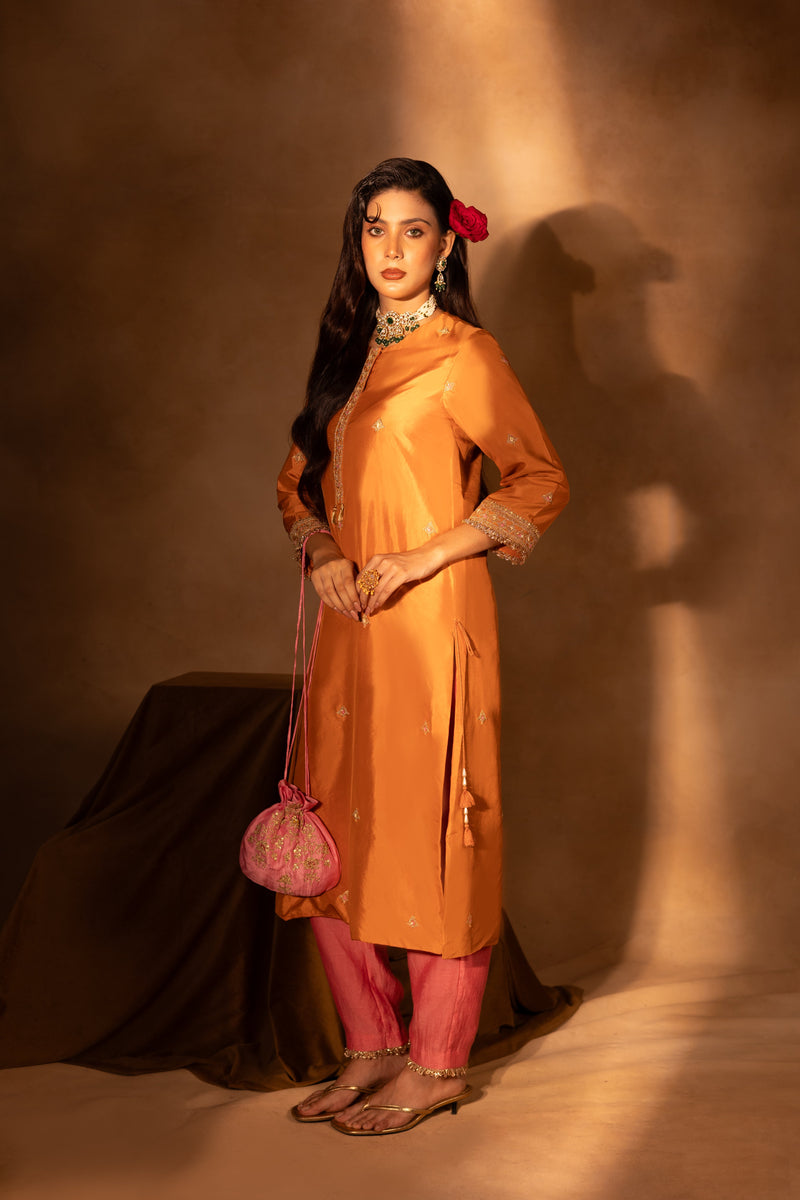
The Haseena Palette: Marigold, Mehendi Green, Rose and Silver
The colours of our Haseena collection: marigold and saffron, mehendi and emerald greens, berry and dusty rose, beige,...
28 October 2026