
The Haseena Palette: Marigold, Mehendi Green, Rose and Silver
The Haseena collection is built on five families of colour: marigold, saffron and sunshine yellow; mehendi, parrot, emerald and teal greens; berry, coral and dusty rose pinks; beige, silver and copper neutrals; and a single dusty blue. Almost none of them is worn alone. A marigold kurta comes with dusty coral pants and is styled with an emerald dupatta; a tangerine sharara set is styled with teal; a mehendi green set with silver. This is the story of those colours: each piece's shade as its description names it, what some of these colours have meant in Indian festivals, and why we kept putting warm and cool side by side.
A Palette Borrowed From Another Era
Haseena, in our own words, is "a woman you remember": an ode to ada, quiet confidence and the romance of another era. "Vintage romance. Modern confidence." Or, as the campaign put it in Hindi, «पुरानी फ़िल्मों का जादू, आज की हसीना का अंदाज़।» (purani filmon ka jaadu, aaj ki haseena ka andaaz: the magic of old films, the style of today's haseena). It is inspired by the mood of old Hindi cinema, not a copy of any costume, and the colours follow that mood. They are warm, saturated and a little sentimental, the shades of marigold strings, henna paste and rose-pink walls, kept from looking costume-like by soft pastel partners and plain, clean cuts. For the full launch story see Introducing Haseena.
One thing to know before we begin: the names do a lot of the colour work. Kanchan is Sanskrit for gold, Panna is the Hindi word for emerald, Chaandi means silver, Mayura means peacock and Gulal is the name for the coloured powder of Holi.
Marigold, Saffron and Sunshine Yellow
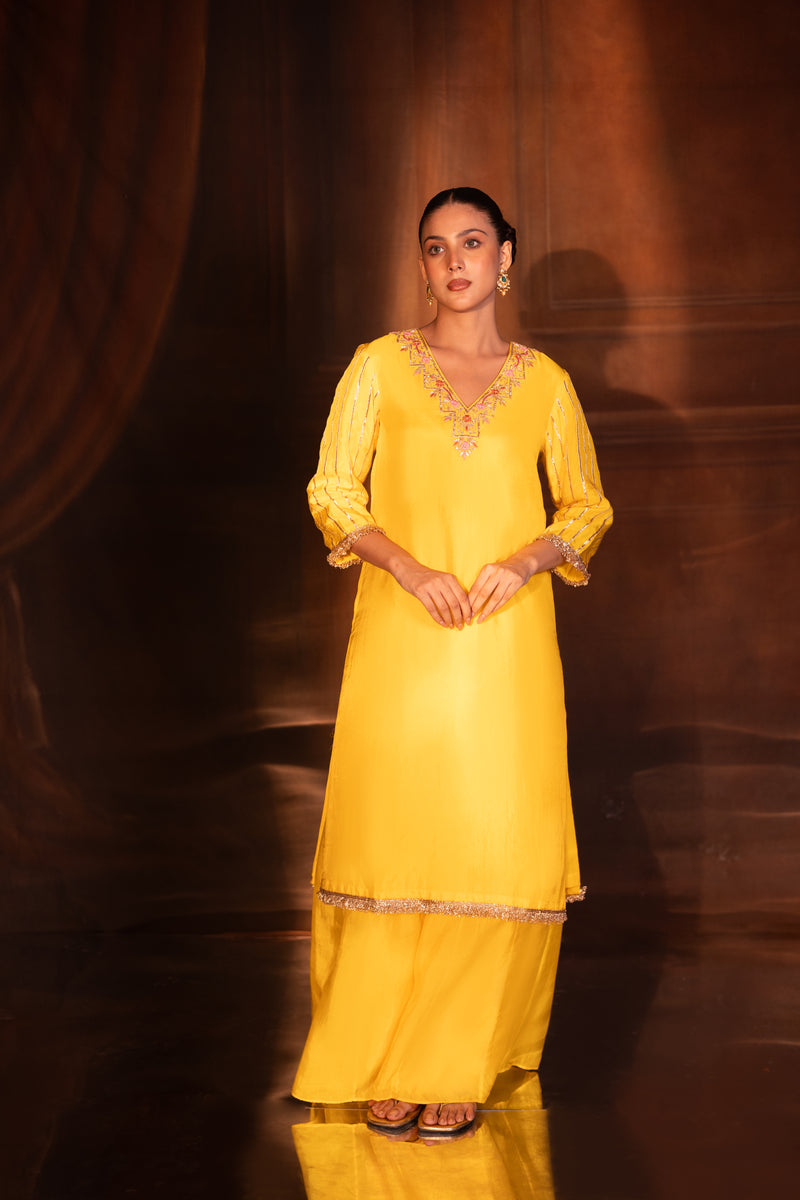
The warmest corner of the collection is also its largest. The Kanchan sharara set (₹29,500) is sunshine yellow silk, with pink and gold-toned embroidery along the V neckline, vertical embellished stripes on the three-quarter sleeves and a matching flared sharara.

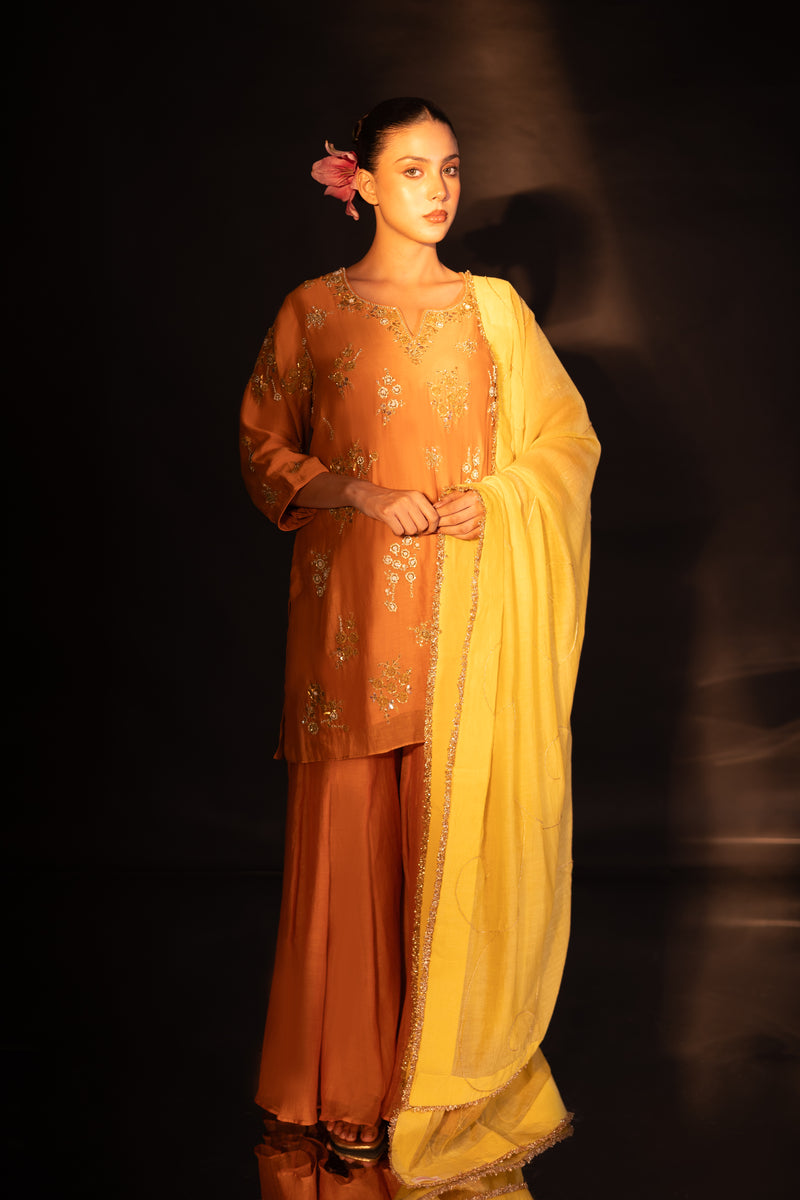
Yellow has deep roots in Indian celebration. At a haldi, a paste of turmeric is applied to the bride and groom, and in many families everyone dresses in yellow for it, though customs vary and plenty of haldis have no dress code at all (we have written about the haldi and its yellows separately). Yellow is also the colour of spring. Wikipedia's entry on Vasant Panchami notes that the festival celebrates the blooming of yellow mustard flowers and that in Punjab people wear yellow clothes and eat yellow rice "to emulate the yellow mustard (sarson) flower fields". That season is called basant, which is where the Basanti sharara set (₹25,500) gets its name. It is a deeper shade, burnt saffron Chanderi with gold-toned floral embroidery scattered across the front and sleeves, a notched neckline and a matching flowy sharara. Its description styles it with the sun-kissed ochre Rimza dupatta from our Ruhaniyat collection, sold separately.
Saffron carries a heavier meaning than yellow. Hinduism, Jainism and Buddhism associate it with the renunciation of material life, it is the colour worn by many Hindu ascetics, and "India saffron", standing for courage and sacrifice, is the top band of the national flag. In a festive kurta it reads warmer and earthier, but that gravity is why burnt saffron feels grown-up beside a brighter yellow.
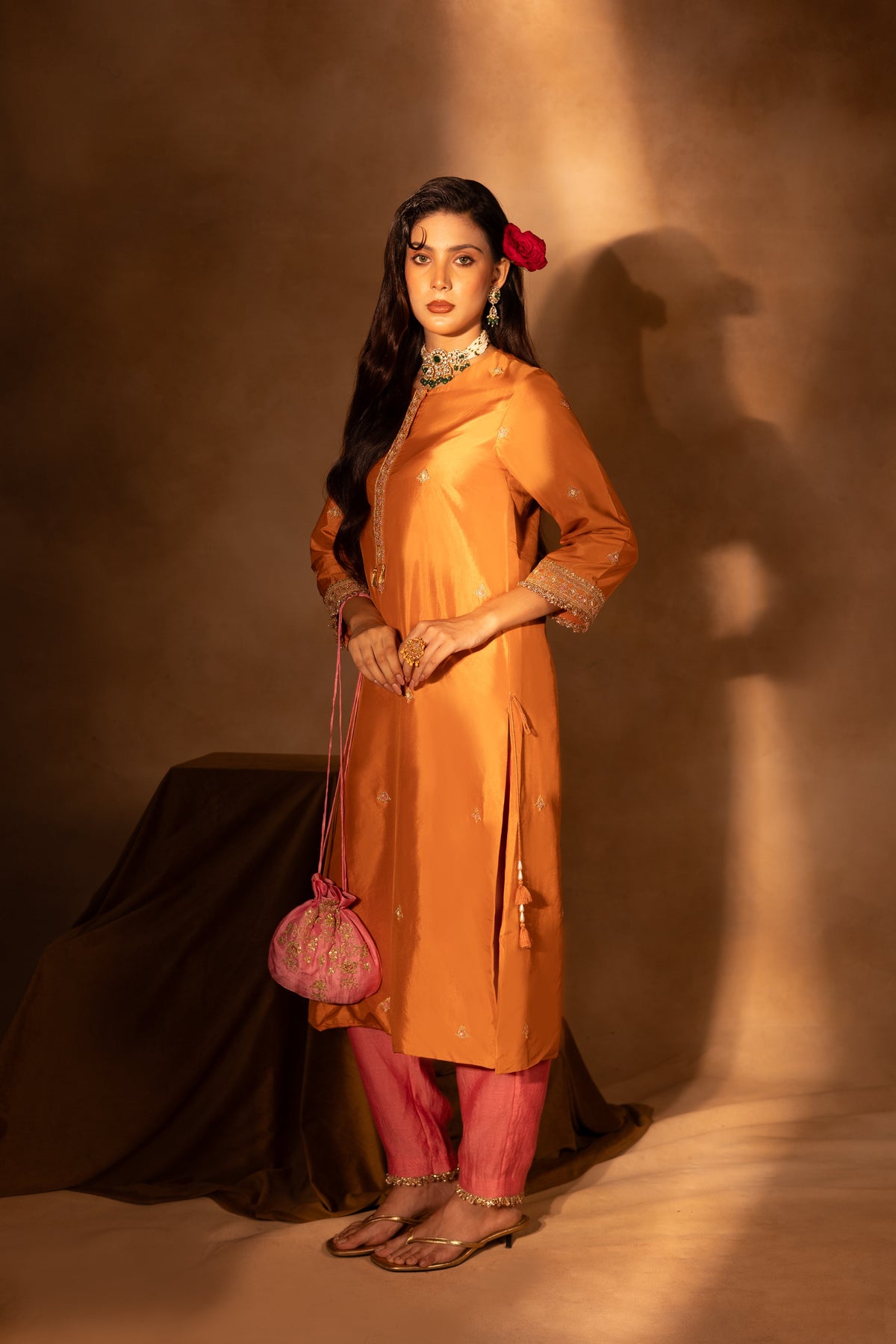
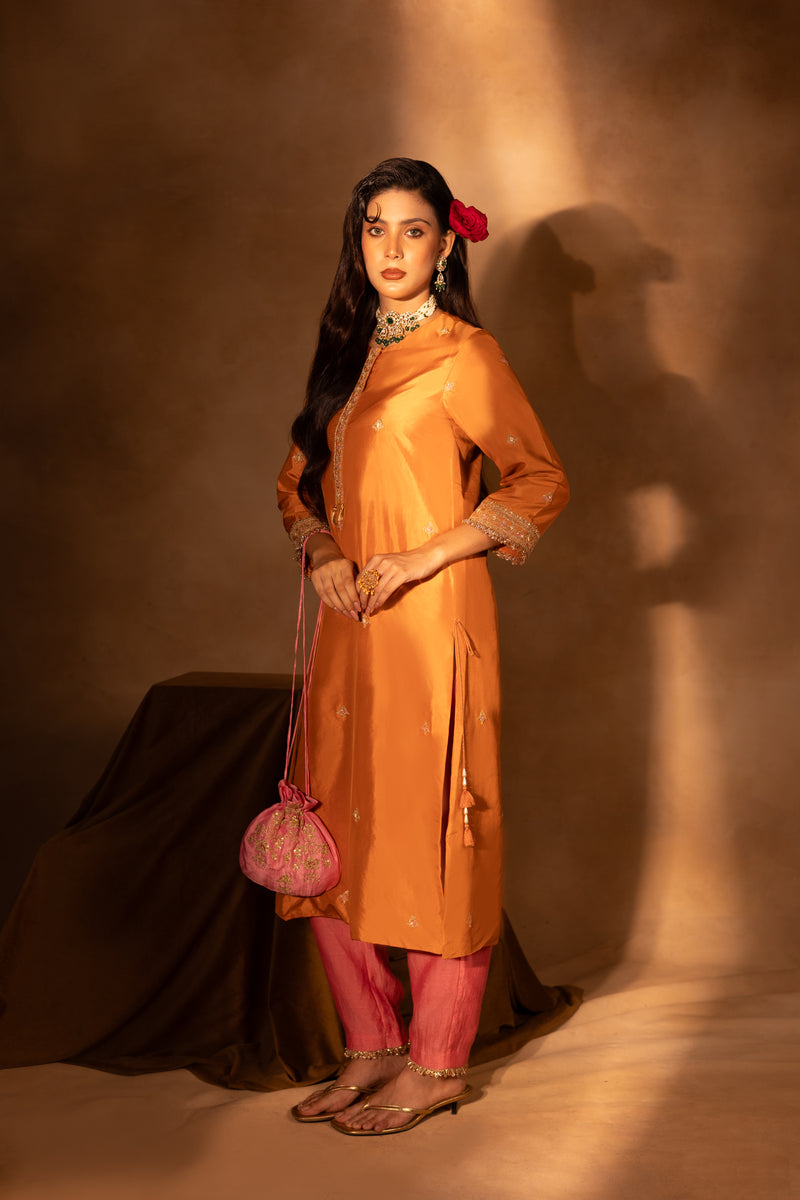
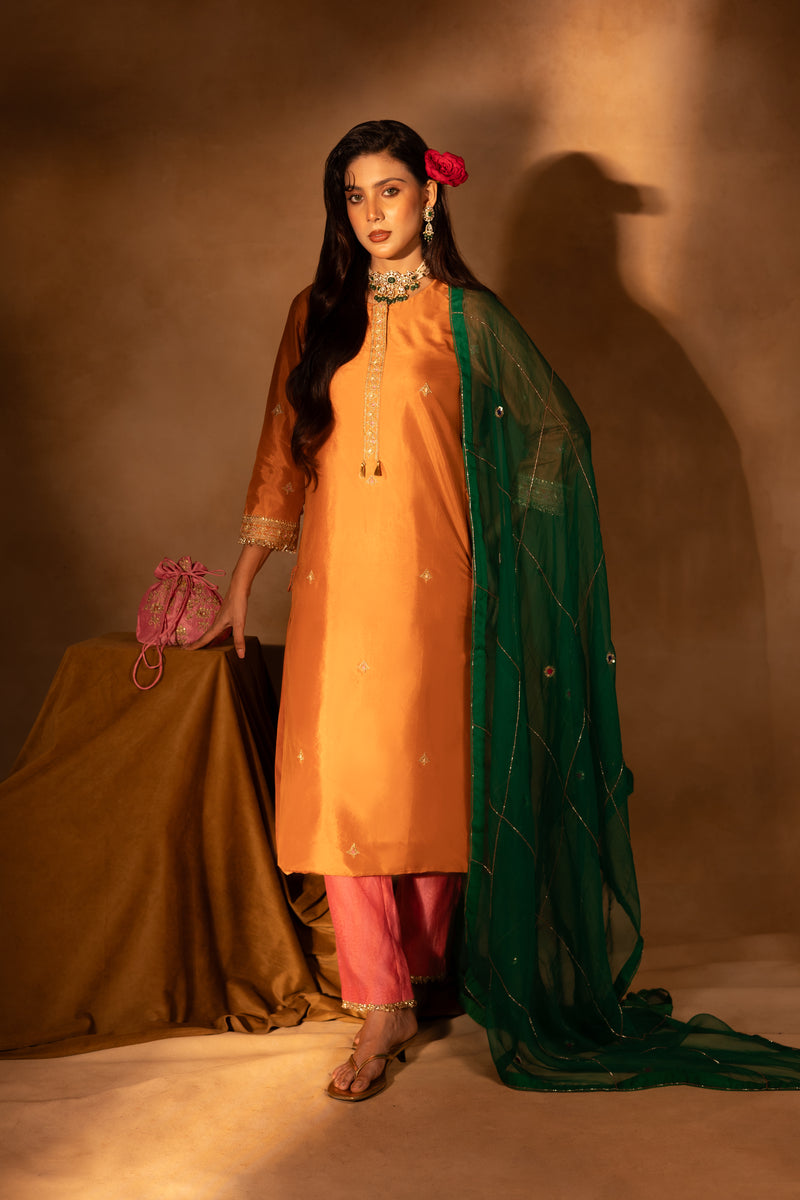
Then marigold itself. The Gulal kurta set (₹23,500) is marigold orange silk with Marodi embroidery along the front placket, scattered embroidered motifs and tassel detailing, paired with dusty coral pink Chanderi pants. Its description styles it with the deep green Panna dupatta, sold separately, and it is the clearest example of the whole palette's logic: hot orange, soft coral and a cool green in one look. The marigold is so bound up with Indian ritual, strung into garlands for doorways, temples and weddings, that it is easy to forget it is a newcomer. National Geographic (October 2022) notes that Spanish and Portuguese traders first brought marigolds to India more than 350 years ago; they now hang in doorways for Diwali across India and the diaspora.
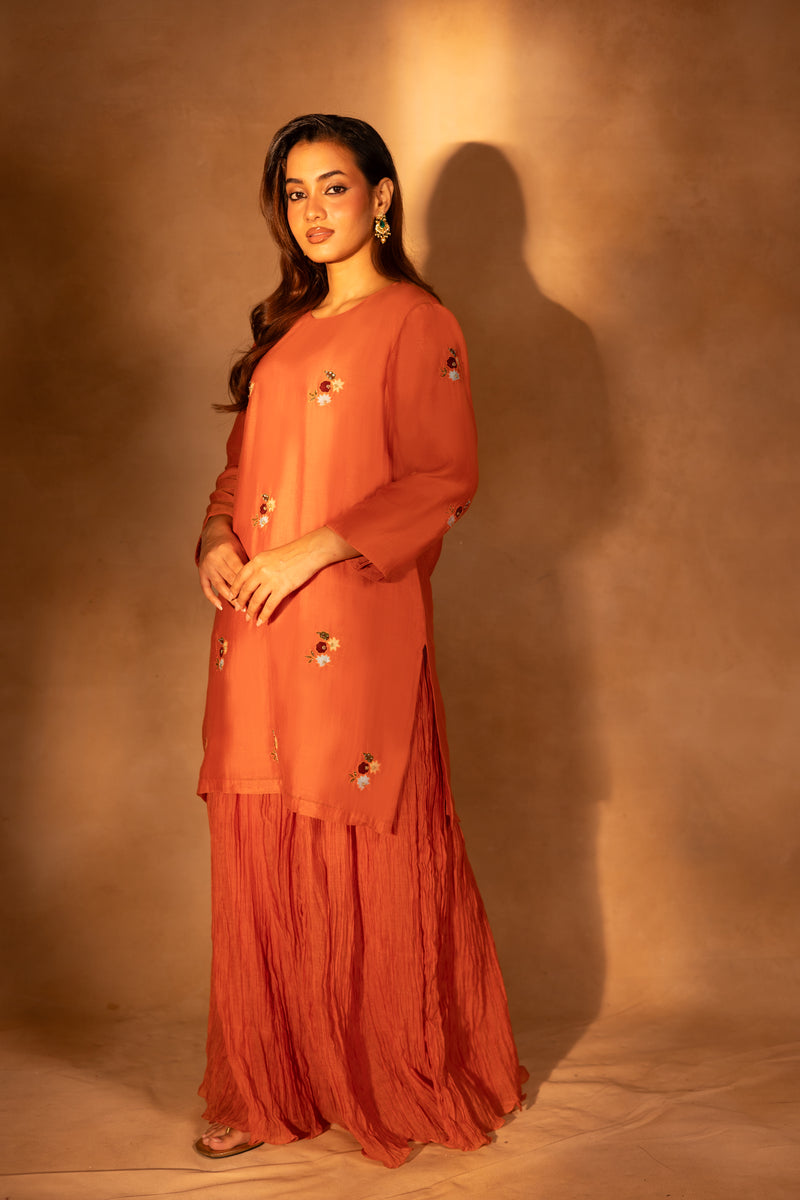
The Morbagh sharara set (₹27,500) takes the orange towards citrus: tangerine orange Chanderi with floral embroidery in contrasting tones across the front and sleeves, and a matching crushed sharara. Mor is peacock and bagh a garden, a nice fit for the dupatta its description styles it with: the teal Mayura, sold separately (more on that below).
Mehendi, Parrot, Emerald and Teal
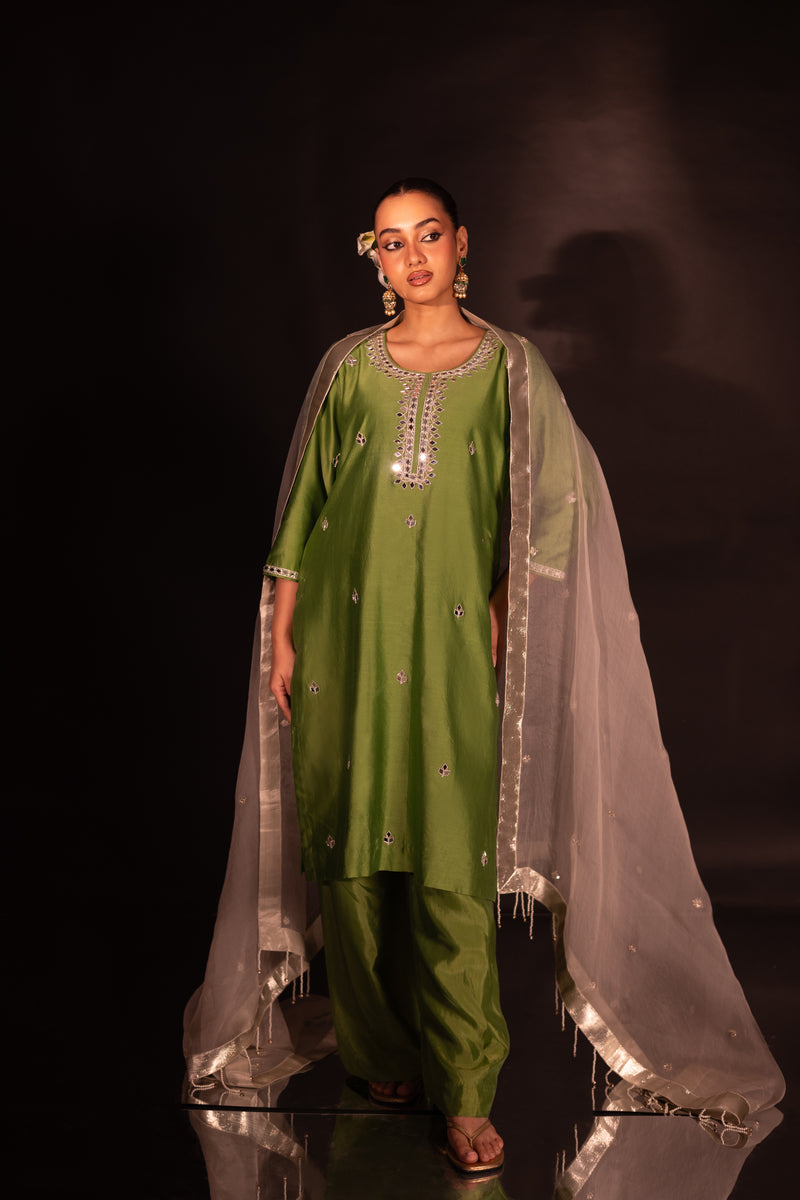
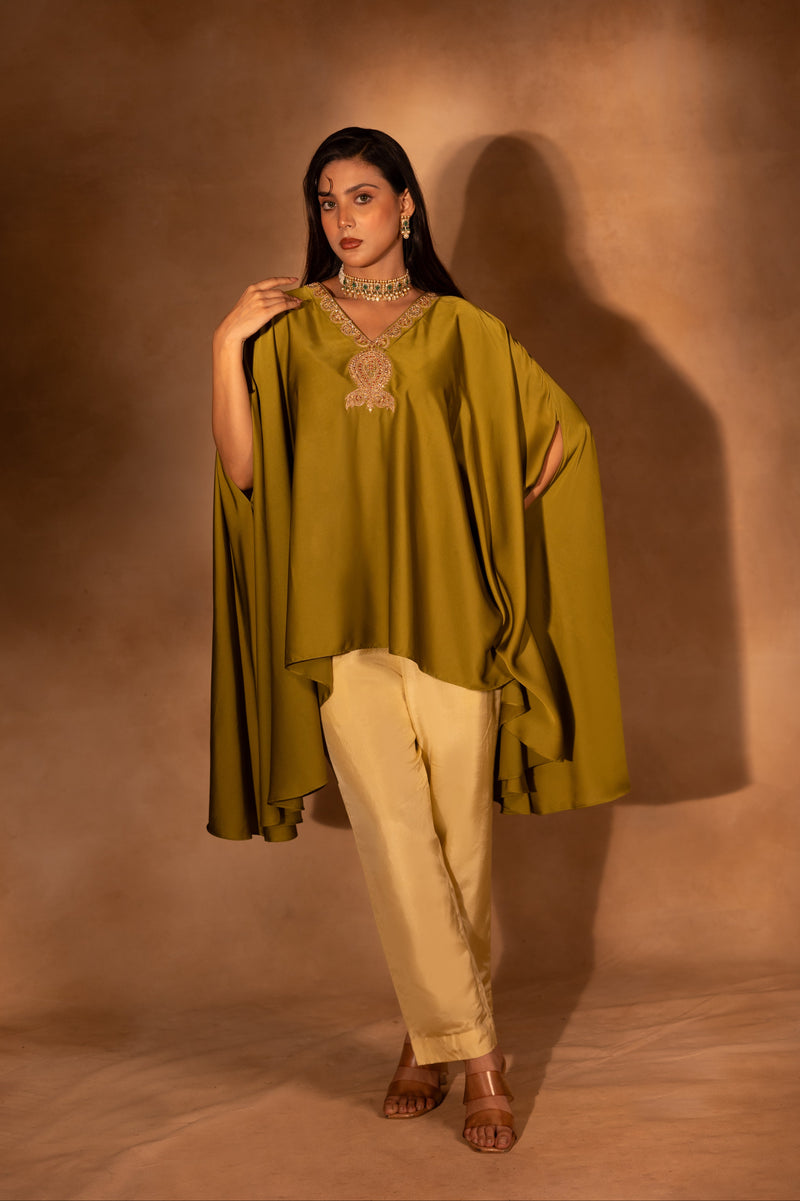
If the warm shades are the heart of Haseena, the greens are its backbone. Two pieces use the same name for their colour: mehendi green. The Mehrab kurta set (₹23,500) is mehendi green Chanderi with mirror work along the round neckline and front placket, scattered mirror motifs across the kurta and mirror work on the sleeve borders, with coordinating Chanderi pants. The Zarnoon cape set (₹18,500) is a mehendi green satin cape with gold-toned Marodi embroidery along the V-neckline and a statement motif at the centre, worn over straight-fit lemon yellow satin pants.
"Mehendi green" is the colour of the henna leaf and the fresh paste, not the stain, which develops into orange and red-brown on the skin. Green has its own associations at weddings and in married life, though they are regional rather than universal. In Maharashtra and parts of Goa, brides traditionally wear the hirva chuda, green glass bangles; The Goan (September 2026) describes green as "traditionally associated with growth, fertility, prosperity and renewal" and records a bangle seller noting that green bangles and mehndi both sell more during the month of Shravan. In Rajasthan and Haryana, Wikipedia's entry on Teej notes a green theme on Hariyali Teej, when women apply henna to their hands and feet. Other communities read green differently; these are examples, not rules.


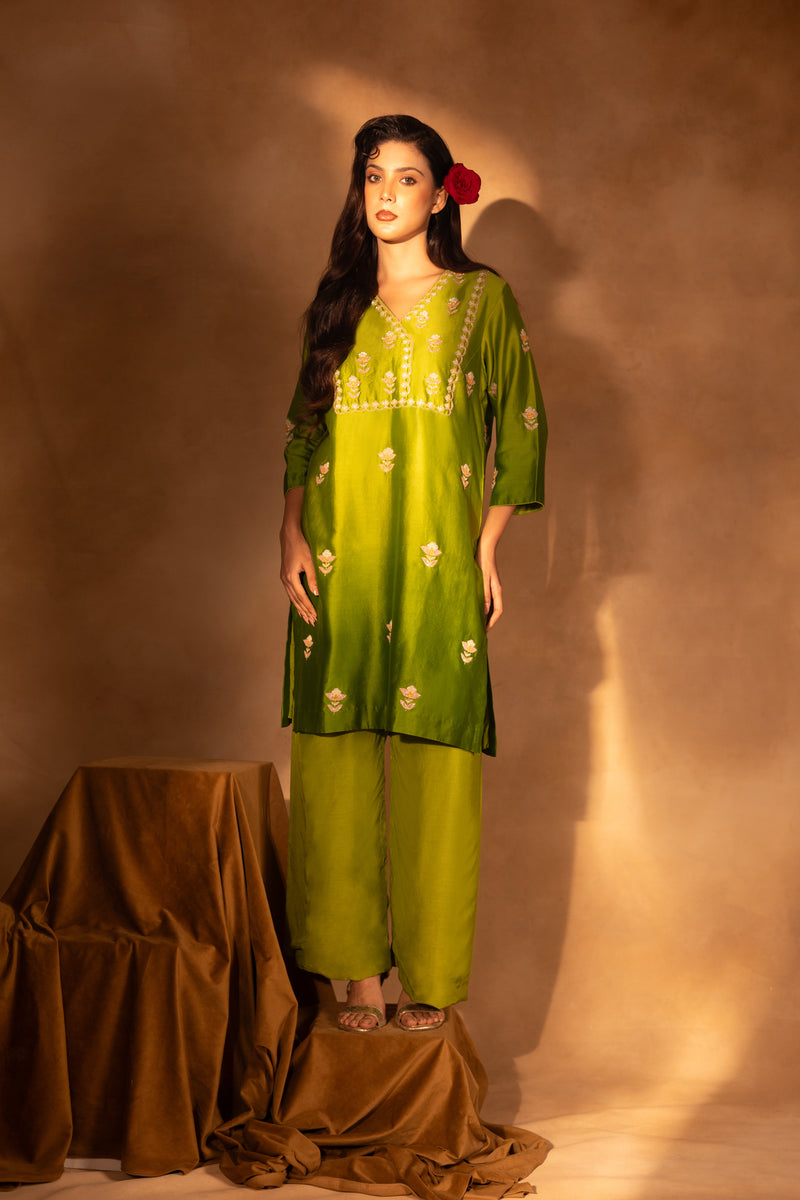
The Saba kurta set (₹25,500) is the brightest green: parrot green Chanderi with floral embroidery in soft pink and gold tones, worked in moti, cutdana and resham, over pista green pants. Two greens, one sharp and one milky, keep it from looking loud.
The deepest greens arrive as dupattas, made to be thrown against the warm sets. The Panna dupatta (₹18,500) is emerald green organza with delicate linear embroidery in a geometric pattern and scattered bootis in contrasting colours. The Mayura dupatta (₹18,500) is teal Chanderi with scattered floral motifs and a scalloped border. Emerald with marigold, teal with tangerine: these are the two pairings we would point to if anyone asked what Haseena looks like. Our guide to emerald and deep green goes further into the colour itself.
Berry, Rose and Fuchsia
Our atelier is in Jaipur, so pink comes with the address. According to Wikipedia, the city was painted pink during the rule of Sawai Ram Singh II to welcome Albert Edward, Prince of Wales, in 1876, and many of its avenues are still pink, hence the "Pink City". Pink is often said to have been chosen because it stands for hospitality; that is the usual explanation, though accounts of the story differ in the details.
The Haseena pinks run from deep to dusty. The Rangmahal sharara set (₹32,500) is berry pink brocade: a sleeveless kurta with a scoop neckline and mirror work embroidery across the front, over a voluminous sharara in matching brocade. Rangmahal means a palace of colour.

The Gulbadan kurta set (₹27,500) is the opposite mood: dusty rose Chanderi with gold-toned embroidery in a flowing vine pattern across the front and sleeves, a round neckline and matching dusty rose pants, a tonal look. Its description styles it with the taupe brown Mitti dupatta, sold separately, a soft earthy contrast rather than a bright one. And the Shokh dupatta (₹12,500) is the loudest pink: fuchsia pink organza with scattered bootis, an embellished border and tassels. Shokh is an Urdu word for playful, and in Hindustani a shokh rang is a bright, vivid colour, which is about right.
Beige, Silver and Copper
Every palette needs somewhere for the eye to rest. The Gaurika kurta set (₹26,500) is beige silk with gold-toned embroidery along the notched neckline, geometric detailing, a statement floral motif at the centre and side tassels, worn with sunshine yellow satin pants, so even our neutral has a flash of the warm palette in it.
The Chaandi dupatta (₹16,500) is silver organza with scattered motifs, a silver gota border and fine tassels. It is the dupatta the Mehrab description styles with its mehendi green set, and silver against green is a cooler, quieter metallic than the usual gold.
The Dastaan kurta set (₹29,500) is the collection's one metallic garment: copper coin tissue with paisley embroidery along the neckline, single-colour patchwork and gold-toned embellishments, a matching paisley boota on the sleeve, and pants in pure handwoven brocade. Tissue is a thin, light cloth whose shimmer is woven in rather than embroidered on (our tissue fabric guide explains how), and in copper it glows rather than glitters.


And One Blue
There is exactly one blue in Haseena. The Meghna kurta set (₹24,500) is dusty blue Chanderi with V-neckline embroidery in beads, sequins, Aari and cutdana, delicate floral motifs across the front, embroidered sleeve borders and powder blue silk pants. Megh means cloud, and the shade has that soft, overcast quality. Even here the warm palette comes back: its description styles it with the Sonchampa dupatta, a vibrant yellow, sold separately.
How the Palette Works: Warm Against Cool
Lay the pieces side by side and a pattern appears. Most warm sets are styled with a cool or contrasting dupatta, and the cool ones are lifted with something warm or metallic:
- Marigold with emerald: Gulal with Panna.
- Tangerine with teal: Morbagh with Mayura.
- Mehendi green with silver: Mehrab with Chaandi.
- Dusty blue with yellow: Meghna with Sonchampa.
- Dusty rose with taupe: Gulbadan with Mitti, the one tonal, earthy pairing.
Orange and blue-green sit opposite each other on a colour wheel, which is why marigold and teal make each other look brighter. The pastel partners (dusty coral pants under Gulal, pista under Saba, powder blue under Meghna) are what stop those contrasts from shouting. If you want to build your own combinations from the collection, our Haseena dupatta pairing guide lists every pairing the descriptions name with the total price of each look, and the colour combinations guide covers the general principles. Remember that the dupattas named in the kurta set descriptions are sold separately.
A Note on Colour, Cloth and Screens
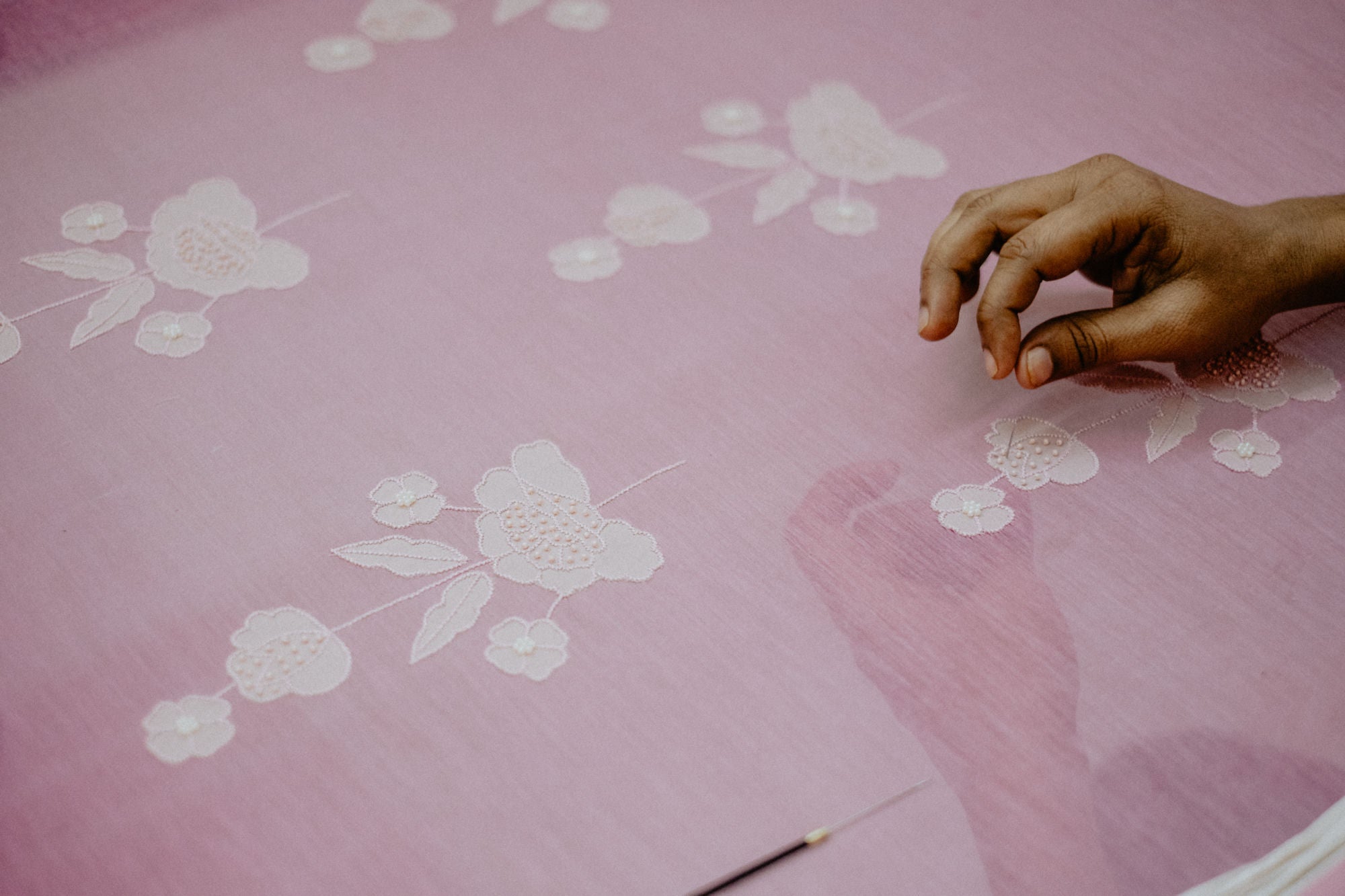
We don't weave; we buy handwoven cloth and our karigars embroider it by hand in our Jaipur atelier. That matters for colour. The Rangmahal and Dastaan descriptions both note that, because the brocade is handwoven, the weave pattern and colour can vary with availability; if the original fabric runs out, we share alternatives for your approval before going ahead. Handcrafted embroidery and fabric also vary slightly, and a screen never shows Chanderi or tissue quite as daylight does. If you want a different shade on a design, ask us on WhatsApp what is possible on that piece; colour changes aren't automatic.
On timing: everything here is made to order in 4–5 weeks, plus 3–7 days of shipping, so a piece ordered now (late October 2026) arrives around the first week of December at the earliest. That is too late for Diwali on 8 November, but comfortable for December to February weddings. Express is sometimes possible, depending on the piece and the month, so ask us on WhatsApp. Custom measurements are free, and domestic orders above ₹30,000 ship free, which a set plus its dupatta often crosses. How the colours are embroidered is the subject of our Haseena handwork explainer.
Find Your Haseena Colour
Nineteen sets and twelve dupattas, from ₹12,500 to ₹32,500, each hand-embroidered in Jaipur, made to order in 4–5 weeks and cut to your measurements at no extra charge. Tell us on WhatsApp which shades you're drawn to and we'll help you put a look together.
Shop HaseenaMore from Haseena: Introducing Haseena · The fashion of Hindi cinema's golden age · The handwork · The dupatta pairing guide
Frequently Asked Questions
What colours are in the Haseena collection?
Five families: marigold, saffron, tangerine and sunshine yellow; mehendi, parrot and emerald greens with teal; berry, coral and dusty rose pinks with fuchsia; beige, silver and copper tissue; and one dusty blue. Most sets are styled with a contrasting dupatta, such as marigold with emerald or tangerine with teal.
What does mehendi green mean?
It is the green of the henna leaf and fresh paste, not the orange-red stain. Green is linked with growth and renewal in several Indian traditions, such as the green bridal bangles (hirva chuda) of Maharashtra and parts of Goa, but meanings vary by region and family.
Why is yellow so important in Indian celebrations?
Turmeric paste is central to the haldi, and many families dress in yellow for it. Yellow is also the colour of Vasant Panchami, which celebrates the blooming mustard fields of spring. Customs differ between communities, so no single rule applies everywhere.
Are the Haseena dupattas sold with the sets?
No. The dupattas named in the set descriptions are sold separately, so you can take the suggested pairing or choose another colour. Domestic orders above ₹30,000 ship free, which a set and its dupatta often cross.
Can I get a Haseena piece in a different colour?
Colour changes aren't automatic, so ask us on WhatsApp what is possible on that design before you order. Custom measurements are free. Pieces in handwoven brocade can also vary in colour with fabric availability, and we share alternatives for approval if the original cloth runs out.
Made to order in 4–5 weeks
Have an event date? We’ll tell you exactly when to order by.
We take a limited number of orders each month — secure your slot early.
WhatsApp me my order-by date + a shortlistNot sure where to start?
Tell us what you're dressing for and we'll help you choose — fabric, fit, colour, and timeline — over WhatsApp or on a video call.
Your Cart
Pieces from this story
All pieces →Not sure which piece, or need it by a date? Book a video consultation Ask us on WhatsApp
Keep reading
The journal →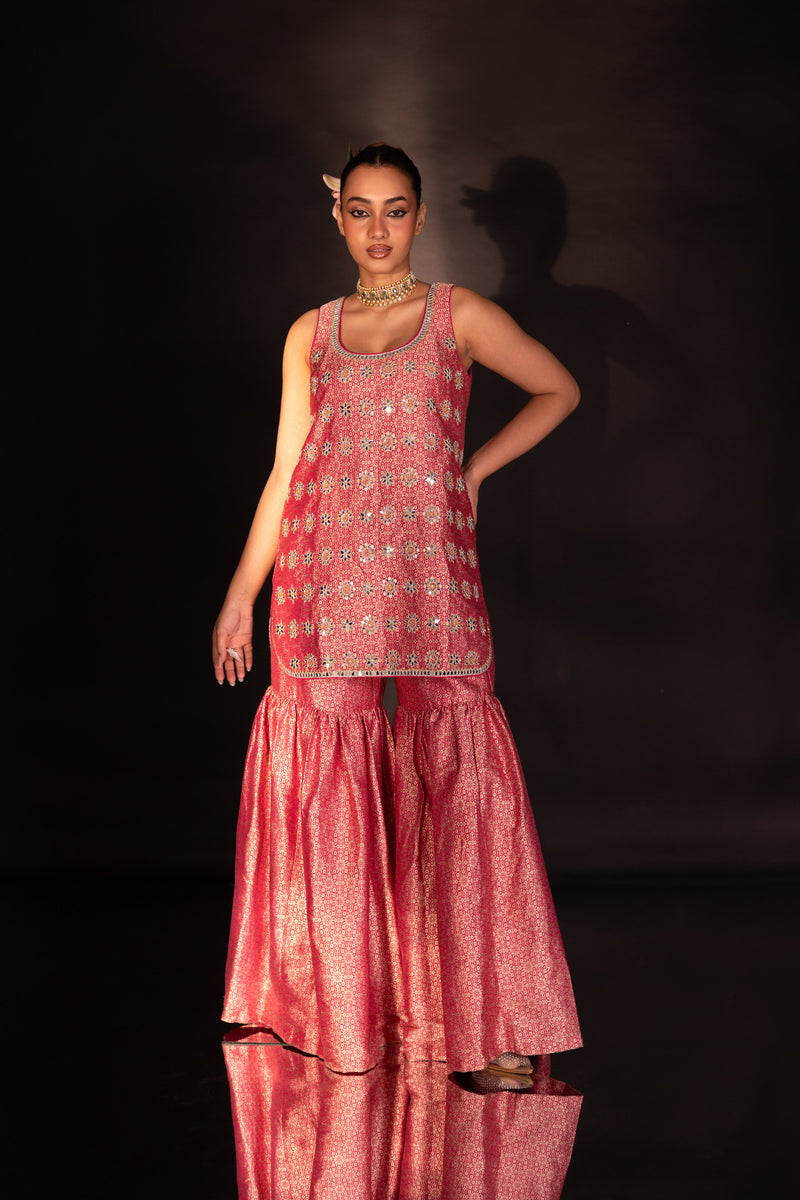
Introducing Haseena: A Collection for the Woman You Remember
Haseena is our new collection: kurta sets, sharara sets, a cape set and dupattas in Chanderi, silk and organza, inspi...
28 October 2026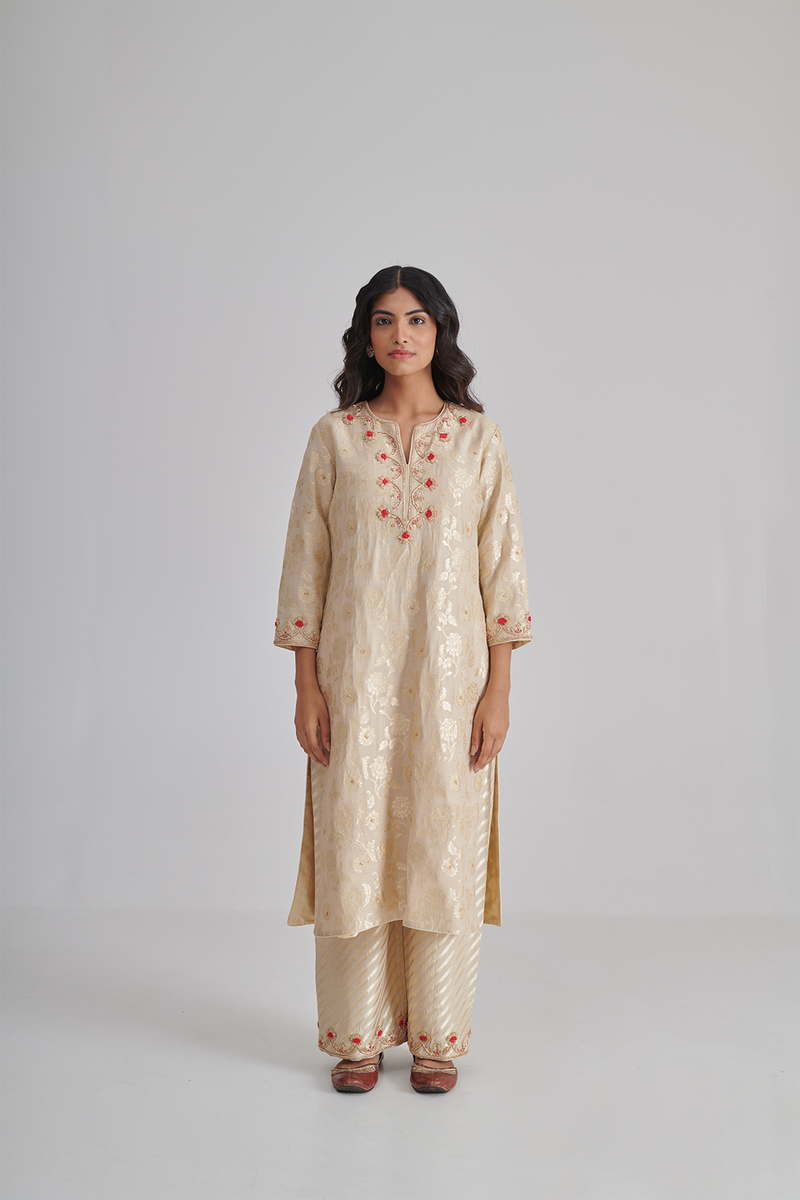
Haldi Ceremony Dress Code: Yellow Outfits, Alternatives & What to Wear
Complete haldi dress code guide - best yellow shades, alternative colours, outfit ideas for bride, sisters & guests, ...
19 May 2026
Emerald & Deep Green Indian Outfits: The Richest Colour in the Palette
How to wear emerald and deep green in Indian fashion — the richest colour for weddings and evening events. Styling ti...
8 June 2026