
The Meaning of Colours in Indian Culture: Red, Yellow, White, Saffron, Green, Blue, Black and More
In Indian culture, colours carry meaning. Red is the colour of marriage, sindoor and the goddess; yellow is turmeric, spring and Vishnu's garment; saffron is renunciation; white is purity and, in many Hindu communities, mourning and widowhood, yet it is bridal for Parsis and festive in Kerala; green is new life, mehendi and, for many, Islam; blue is Krishna and Shiva; black wards off the evil eye and is worn on purpose on a few special days; pink is Jaipur's welcome; and gold is prosperity and Lakshmi. None of these is a single rule for all of India. Region, religion and family change them, and a few are much younger than they look.
This page is our colour hub. It explains what each colour has traditionally meant, where communities disagree, and which "ancient" colour customs are in fact modern. Each section links to our deeper guide on that colour or festival, and to one handmade piece from our Jaipur atelier in that shade, because in India the first question about any outfit is usually "what colour?"
Indian Colour Meanings at a Glance
| Colour | Traditional meanings | Where it changes |
|---|---|---|
| Red | Marriage, sindoor, fertility, Shakti and the goddess | Not every bride wears it: Parsi, Kerala Hindu and Christian brides often wear white |
| Yellow | Turmeric and haldi, spring (Vasant), Vishnu's pitambara, auspiciousness | Few disagreements; it is welcome almost everywhere |
| Saffron / bhagwa | Renunciation, the robes of Hindu ascetics, sacrifice | Also the top band of the national flag; today it carries political meaning too |
| White | Purity, peace, learning (Saraswati); mourning and widowhood in many Hindu communities | Bridal for Parsis; white and gold for Kerala's festivals and weddings; red-bordered white in Bengal; worn by Shvetambara Jain monastics |
| Green | New beginnings, soil and harvest, mehendi; strongly linked with Islam | Also Budh's colour on Wednesdays in Hindu astrology |
| Blue | Krishna and Vishnu, Shiva's blue throat, the sky; indigo's long history | Tamil Sabarimala pilgrims may wear blue instead of black |
| Black | Protection from nazar; Shani's colour; often avoided at weddings and pujas | Worn on purpose at Makar Sankranti in Maharashtra and for the Sabarimala vratham |
| Pink | Celebration, rani pink, hospitality in Jaipur | The "Pink City" story dates to 1876, and even that is debated |
| Gold | Wealth, prosperity, Lakshmi, Dhanteras | Gold as metal more than gold as dyed cloth |
Red: Marriage, Sindoor and the Goddess
Red is the colour most people think of first, and for good reason. In much of North India it is the colour of the bride, of the sindoor a married Hindu woman wears in her hair parting, and of the red chunri offered to the goddess. Writing about Holi in The Conversation (March 2024), Rina Arya, Professor of Critical and Cultural Theory at the University of Hull, puts it simply: "Red, which is popularly used in marriage celebrations, is the colour of fertility." Devotional writers add a second layer, linking red to Shakti, the creative power of the goddess, which is why Durga is so often shown in red.
Red is also a reminder that marriage colours are not the same everywhere. In Bengal the bride traditionally wears a red Banarasi with red-and-white shakha pola bangles, and on Vijayadashami married women in red-bordered white sarees, the laal paar shada, smear each other with sindoor in the sindoor khela that bids Durga farewell. Further south and west, as you'll see under white, the bridal colour can be something else entirely. Our guide to red in Indian weddings goes deeper into shades, from tomato to maroon, and our maroon and burgundy guide covers red's quieter cousin.
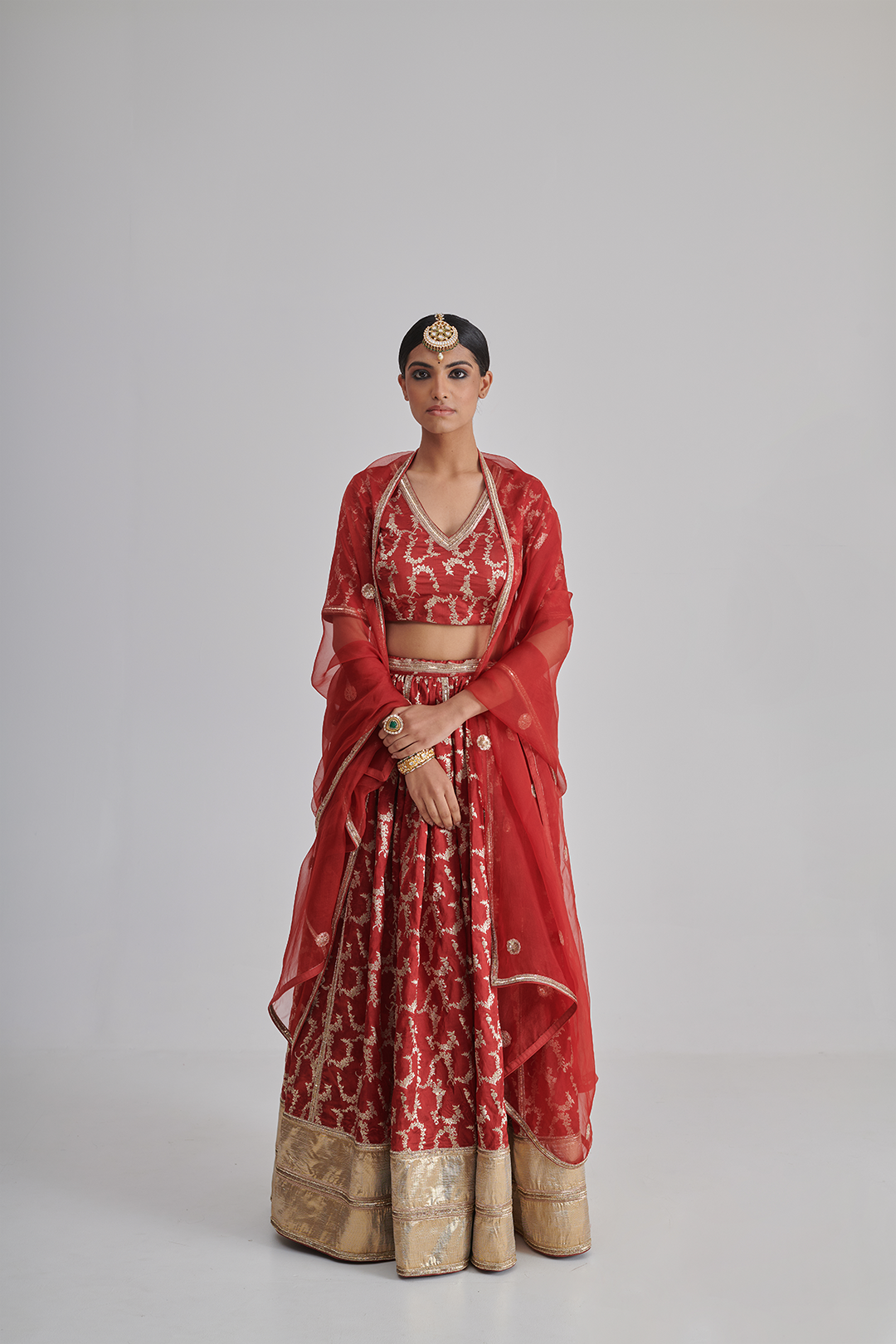
Red in handwork today: the Sakhi saree (₹25,000) is deep sindoori red organza, hand-embroidered with sequin, cutdana and gota work, with floral butis and a bold scalloped border that its description says echoes traditional bridal motifs. For red with gold in the old manner, the Rehmat and Vasl lehenga set (₹42,500) is rich red Varanasi silk brocade with intricate gold zari work all over and a broad gold border at the hem.

Yellow: Turmeric, Spring and Vishnu's Pitambara
Yellow is the most consistently "good" colour in Indian life. Arya calls it simply "an auspicious colour". It is the colour of turmeric, which is why the haldi ceremony before a wedding turns everybody yellow: the paste is applied to bride and groom as a blessing and a cleanse before the new life begins. It is the colour of spring, when the mustard fields of the north flower and people wear yellow for Basant Panchami, the festival of Saraswati. And it is a god's colour: Vishnu and Krishna are called Pitambara, from the Sanskrit for "yellow garment", because they are shown dressed in yellow. That link is why Thursday, Vishnu's and Brihaspati's day, is yellow in our weekday colours guide.
Our yellow and mustard colour guide covers how to wear it, and our haldi dress code guide covers the ceremony itself. Yellow today: the Phalgun and Myra saree (₹27,500) is yellow Banarasi silk with floral motifs woven in silver thread and a rich lace border, paired with an ivory blouse embroidered with floral butis and sequins. Phalgun is the spring month of Holi, which feels right.
Saffron: Renunciation, Fire and the Flag
Saffron, bhagwa or kesari, is the colour of the Hindu ascetic. Sannyasis who have renounced worldly life wear robes in saffron or ochre, traditionally dyed with an ochre earth, and the colour is read as fire: the fire that burns away attachment. That meaning made it into the Constitution's era too. When the tricolour was adopted on 22 July 1947, Sarvepalli Radhakrishnan explained its colours to the Constituent Assembly: "Bhagwa or the Saffron denotes renunciation or disinterestedness."
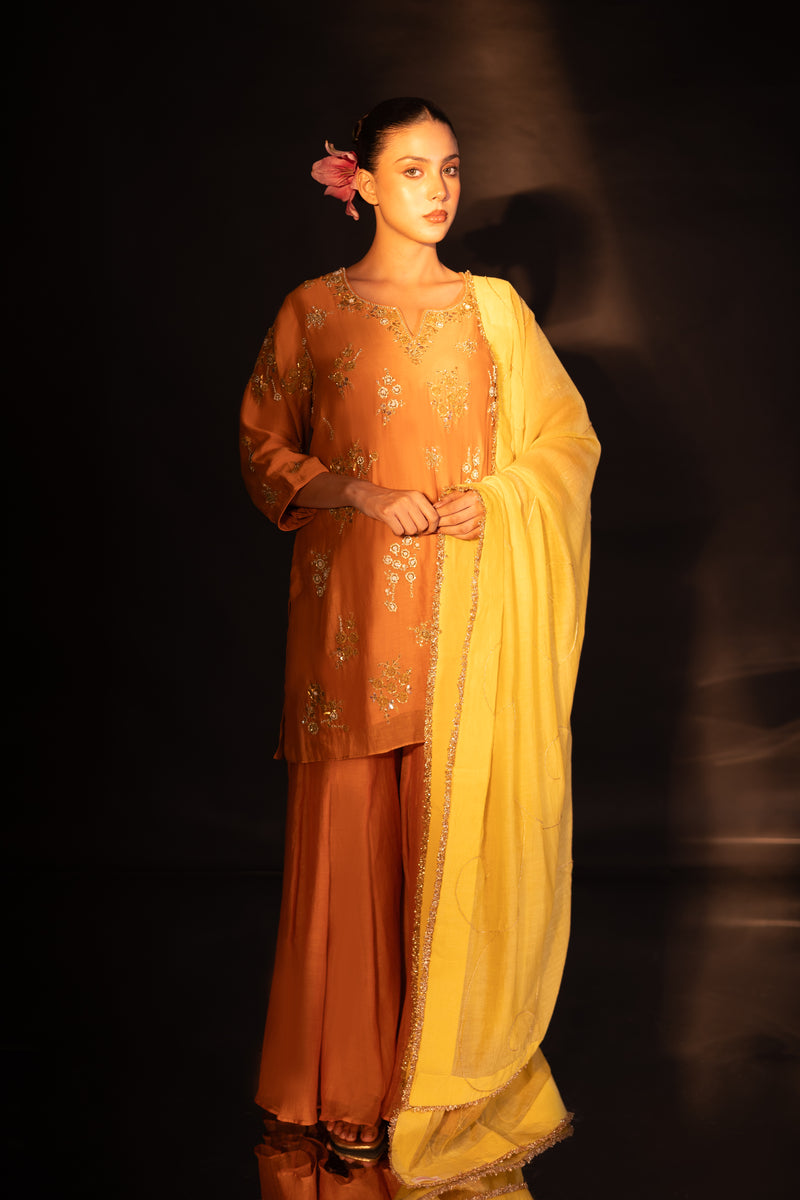
That is worth sitting with, because it means saffron is not, at root, a party colour or a wedding colour. It is the colour of giving things up. Today it also carries strong political associations, which are beyond the scope of this guide. In everyday dress, the warmer saffron-oranges of marigold and kesar are festival colours, worn at Navratri, Diwali and Sankranti without any ascetic meaning. Saffron today: the Basanti sharara set (₹25,500) is a burnt saffron Chanderi kurta with gold-toned floral embroidery across the front and sleeves, a notched neckline and a matching flowy sharara.


White: Mourning for Some, a Wedding for Others
White has the most divided meaning of any colour in India. In many Hindu communities it is the colour of mourning: family members wear white at a funeral, and for generations widows were expected to wear only white and stay away from festivals. Vrindavan, home to thousands of widows, made this visible. In March 2013, with Sulabh International, which the Supreme Court had asked to help the city's widows, around 800 widows played Holi together for the first time, as PTI reported. Many still wear white, but the colour is no longer a wall around them.
Yet white is also purity, peace and learning. Saraswati is usually shown dressed in white, and Radhakrishnan called the white band of the flag "light, the path of truth to guide our conduct". Jain monks and nuns of the Shvetambara tradition, whose name means "white-clad", wear simple white robes. And for some brides white is the wedding colour. A Parsi bride traditionally wears a white sari, often an embroidered gara, gifted by her parents. In Kerala, the off-white kasavu with its gold border is worn at Onam and by many Hindu brides. Christian brides across India often wear white. In Bengal, the red-bordered white laal paar is a puja saree, worn by married women at Durga Puja. So "never wear white to an Indian wedding" is good advice in Delhi and wrong in Kochi or among Parsi families in Mumbai. Ask the hosts.
White today: the Bano and Siya saree (₹32,500) is an ivory moonga zari silk saree with fine sequin work in floral motifs, delicate gold embroidery and a rich border, paired with a blouse with golden polka dots. Ivory with gold is the same pairing that makes the kasavu so loved, though this is not a kasavu, which is a Kerala handloom.
Green: New Beginnings, Mehendi and Islam
Green is the colour of growth. Arya notes that at Holi "Green symbolises new beginnings", and Radhakrishnan said the green of the flag "shows our relation to (the) soil, our relation to the plant life here, on which all other life depends". At a wedding it is the colour of fresh henna paste, which is why green, alongside yellow and pink, is the classic mehendi palette; our mehndi colours guide has more. In Hindu astrology it belongs to Budh, Mercury, whose gem is the emerald, the panna.
Green is also strongly associated with Islam. The Quran describes the people of Paradise in green garments of fine silk and brocade (18:31, 76:21), hadith describe the Prophet wearing green, and Islamic dynasties later made it their colour. Green today: the Panna dupatta (₹18,500) is emerald green organza with delicate linear embroidery in a geometric pattern and scattered bootis in contrasting colours, an easy way to add green to an ivory or pink outfit. For deeper greens, read our emerald and deep green guide.
Blue: Krishna, Shiva's Throat and India's Indigo
Blue is a god's colour in India. The name Krishna comes from the Sanskrit kṛṣṇa, meaning black, dark or dark blue, and he, like Vishnu, is usually shown with black, dark or blue skin; his other name, Shyam, also means dark. Shiva is Neelkantha, the blue-throated: when the gods and demons churned the ocean, a poison called halahala rose that could destroy creation, and Shiva drank it, which turned his throat blue. Blue, in this telling, is the colour of the infinite, and of taking on poison so others don't have to.
India also gave the world its blue dye. The word indigo comes from the Greek indikon, "Indian", because the dye came from India. That history has a dark chapter. Under British planters, Bengal's farmers were forced to grow indigo, and in March 1859 ryots in Nadia district refused, starting what Britannica calls the Indigo Revolt; Dinabandhu Mitra's 1860 play Nil Darpan carried their story to India and Europe. In 1917 Gandhi's first satyagraha in India, at Champaran in Bihar, was also against indigo planters. Blue, in other words, is a devotional colour and a political one.
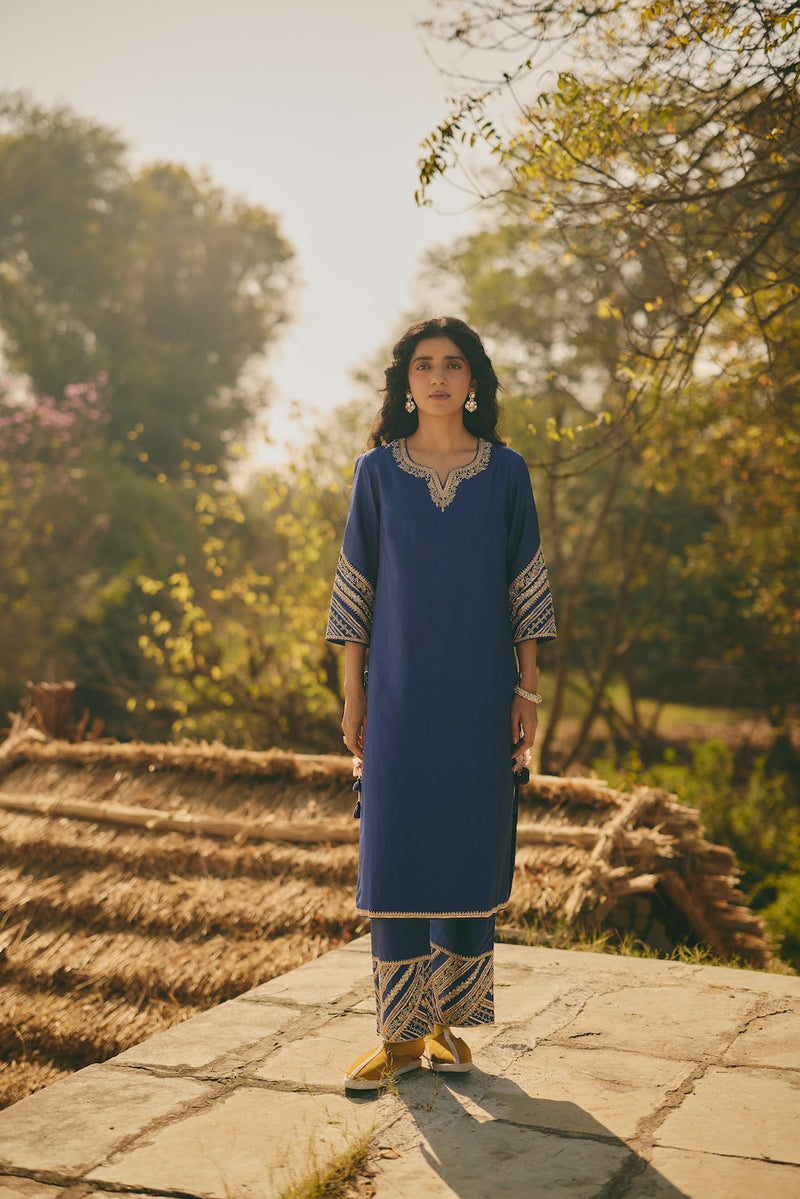
Blue today: the Ameera and Hoorain set (₹32,500) is deep sapphire blue silk, with marodi, resham, sequin, cutdana, bead and aari embroidery at the neckline, sleeve hems and hemline, and linear placements at the pant hem. For the greener blues, our teal and turquoise guide picks up the thread.

Black: The Evil Eye, Shani, and the Days It Is Worn on Purpose
Many Hindu families avoid black at weddings and pujas, and Saturday's planet Shani, depicted dark, gives it a heavy reputation. But black also protects. The kala tika, a small dot of kajal behind a baby's ear or on the cheek, and the black thread on a wrist or ankle are meant to turn away nazar, the evil eye, by spoiling perfection just enough.
And on a few days black is the right colour. In Maharashtra women wear black sarees for Makar Sankranti, and a new bride wears black with white sugar-crystal jewellery for her first Sankranti; our Makar Sankranti colours guide explains the reasons usually given. In Kerala, devotees keeping the 41-day vratham before the Sabarimala pilgrimage dress in black, which Kerala Tourism describes as "denoting detachment from material things", though some pilgrims, especially from Tamil Nadu, wear blue instead. Black in fashion is a newer story, told in our black in Indian fashion guide. Black today: the Ayesha and Mehr set (₹28,500) is deep black silk, hand-embroidered with marodi, sequins and thread work in jaali-inspired borders, with a medallion at the back framed in plum silk.
Pink: Jaipur's Welcome and the Rani of Colours
Pink is our home colour. The popular story, retold by Mental Floss and many guidebooks, is that Maharaja Sawai Ram Singh II had Jaipur's old city painted pink, a colour of hospitality, to welcome the Prince of Wales in 1876, and later made pink compulsory for buildings there. The historian Giles Tillotson argues the city was already pink before the 19th century and was only repainted for the visit, so the date is the start of the name, not necessarily the colour.
Rani pink, the hot fuchsia of so many Indian festive wardrobes, is just as hard to pin down. Writing in The Juggernaut (July 2023), Mehr Singh notes that some say the name comes from the queen in carrom and others from the raat ki rani flower; neither is proven. The fashion editor Diana Vreeland is reported to have called pink "the navy of India", which says something about how basic it is to Indian dress. Our pink colour guide goes from blush to rani. Pink today: the Gulzaib blouse (₹19,250) is rani pink silk with broad straps, fully covered front and back in multicolour resham embroidery, florals and paisleys in yellow, orange, blue and magenta.
Gold: Prosperity and Lakshmi
Gold is less a dye than a metal, and its meaning is wealth. In the same churning of the ocean that blued Shiva's throat, Lakshmi, the goddess of prosperity, rose from the waters. On Dhanteras, two days before Diwali, families buy gold, silver or new utensils to welcome her, which is why our Diwali colours guide leans gold on that day. In clothes, gold arrives as zari, the metallic thread of brocades and borders, and as tissue, a cloth with a metallic sheen.
Gold today: the Taraana saree (₹51,800) is tissue in a soft antique gold, embroidered entirely in vibrant resham threads in floral and paisley-inspired vines along the borders and pallu, with a thin line of sequins along the edge of the border.


Which Colour Customs Are Modern?
Some colour traditions feel ancient and are not. The nine Navratri colours, one per day, are widely reported to have started as a Maharashtra Times campaign in the early 2000s; the colours are set by the weekday Navratri begins on, as we explain in our Navratri colours guide. "Lucky colours" for each zodiac sign mix very old planetary associations with modern astrology columns (see our zodiac colours guide). The name rani pink cannot be dated with any confidence, and the Pink City, as we saw, is a 19th-century name. Holi's colours were once made from flowers such as tesu; our Holi colours guide covers that story. None of this makes the customs less joyful. It just means the honest answer to "what does this colour mean?" is often "it depends who's asking, and where".
What we do and don't make: we embroider by hand in our Jaipur atelier; we don't weave, so we make no kasavu, Kanjivaram or Banarasi on the loom, and we buy handwoven cloth to work on. We don't make leheriya, phulkari, jewellery or menswear, so for the gold of Dhanteras or a black Sabarimala mundu, look elsewhere. If you want a piece above in a different colour, ask us on WhatsApp what is possible on that design. For how the drape itself came to be, read our history of the saree.
Sources: Rina Arya, "Holi: what the clouds of colour in the Hindu festival mean", The Conversation (25 March 2024); Radhakrishnan's description of the flag colours, Constituent Assembly, 22 July 1947 (via Wikipedia's Flag of India entry); pitambara, Wikipedia (citing Gopinatha Rao, Elements of Hindu Iconography); Krishna's name and iconography and the Samudra Manthan, Wikipedia; Vrindavan widows' Holi, PTI via Business Standard (March 2013); Parsi bridal white, Avesta Zoroastrian archives and Heritage Institute; laal paar and sindoor khela, Free Press Journal and Wikipedia; green in the Quran, Dar al-Ifta al-Misriyyah; indigo etymology, Merriam-Webster and Etymonline; Indigo Revolt and Champaran, Britannica; Sabarimala vratham, Kerala Tourism; Jaipur's pink, Mental Floss (Emily Petsko, 8 May 2018, citing Giles Tillotson); rani pink, The Juggernaut (Mehr Singh, 20 July 2023); Dhanteras, The Quint. Colour customs vary by region, religion and family.
Every Colour, Hand-Embroidered in Jaipur
Every piece is made to order in our Jaipur atelier and tailored to your measurements at no extra charge. Making takes 4–5 weeks plus 3–7 days of shipping, so an order placed today arrives around mid-December at the earliest: in time for late-December and new-year weddings, not for anything in November. Free shipping on domestic orders above ₹30,000. Express is sometimes possible, depending on the piece and the month: ask on WhatsApp. Browse our sarees, dupattas, lehengas and the full collection.
Shop AllFrequently Asked Questions
What do colours mean in Indian culture?
Broadly: red stands for marriage, fertility and the goddess; yellow for turmeric, spring and auspiciousness; saffron for renunciation; white for purity, and in many Hindu communities for mourning; green for new beginnings and, for many, Islam; blue for Krishna and Shiva; black for protection from the evil eye; and gold for prosperity and Lakshmi. Meanings vary by region, religion and family.
Why do Indian brides wear red?
Red is linked with marriage, fertility and Shakti, the power of the goddess, and with sindoor, the red mark of a married Hindu woman. It is the usual bridal colour in much of North India and Bengal, but not everywhere: Parsi brides traditionally wear white, and many Kerala Hindu brides wear white and gold.
Is white a mourning colour in India?
In many Hindu communities, yes: mourners wear white to funerals, and widows were traditionally expected to wear white. But white is also the bridal colour for Parsis, a festival and wedding colour in Kerala, and the colour of purity and learning, so it is not unlucky everywhere.
What does saffron mean in Hinduism?
Saffron, or bhagwa, is the colour of renunciation, worn by Hindu ascetics who have given up worldly life, and is often read as the colour of fire. When the national flag was adopted in 1947, Sarvepalli Radhakrishnan said its saffron "denotes renunciation or disinterestedness".
Is black unlucky in Indian culture?
Many Hindu families avoid black at weddings and pujas, but black is also protective: a black dot or thread is used against the evil eye. It is worn on purpose on Makar Sankranti in Maharashtra and by many devotees during the Sabarimala vratham.
Why is Jaipur called the Pink City?
The popular account is that Maharaja Sawai Ram Singh II had the old city painted pink, a colour of hospitality, for the Prince of Wales's visit in 1876. Some historians, including Giles Tillotson, argue it was already pink and only repainted for the visit.
More colour and culture: Weekday colours · Navratri nine colours · Holi colours and their meaning · The history of the saree
Made to order in 4–5 weeks
Have an event date? We’ll tell you exactly when to order by.
We take a limited number of orders each month — secure your slot early.
WhatsApp me my order-by date + a shortlistNot sure where to start?
Tell us what you're dressing for and we'll help you choose — fabric, fit, colour, and timeline — over WhatsApp or on a video call.
Your Cart
Pieces from this story
All pieces →Not sure which piece, or need it by a date? Book a video consultation Ask us on WhatsApp




Keep reading
The journal →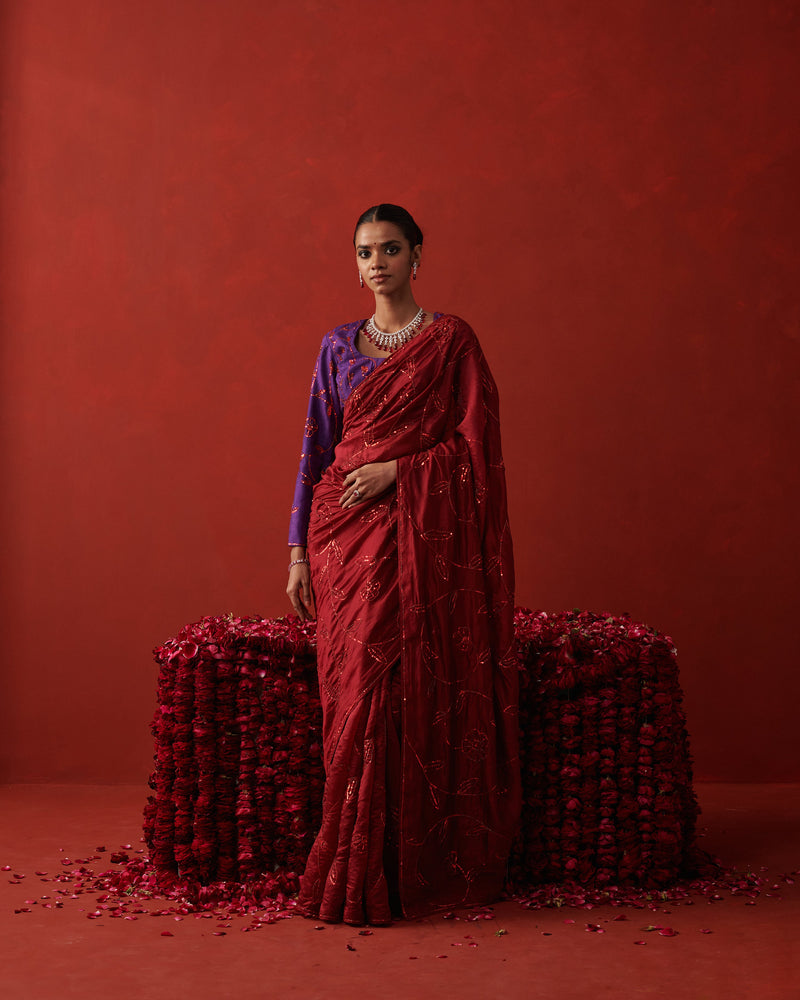
Red Indian Wedding Outfits: A Guide to the Most Powerful Colour in Indian Fashion
The complete guide to red outfits for Indian weddings — red lehengas, sarees, kurta sets, shararas, and dupattas. How...
16 March 2026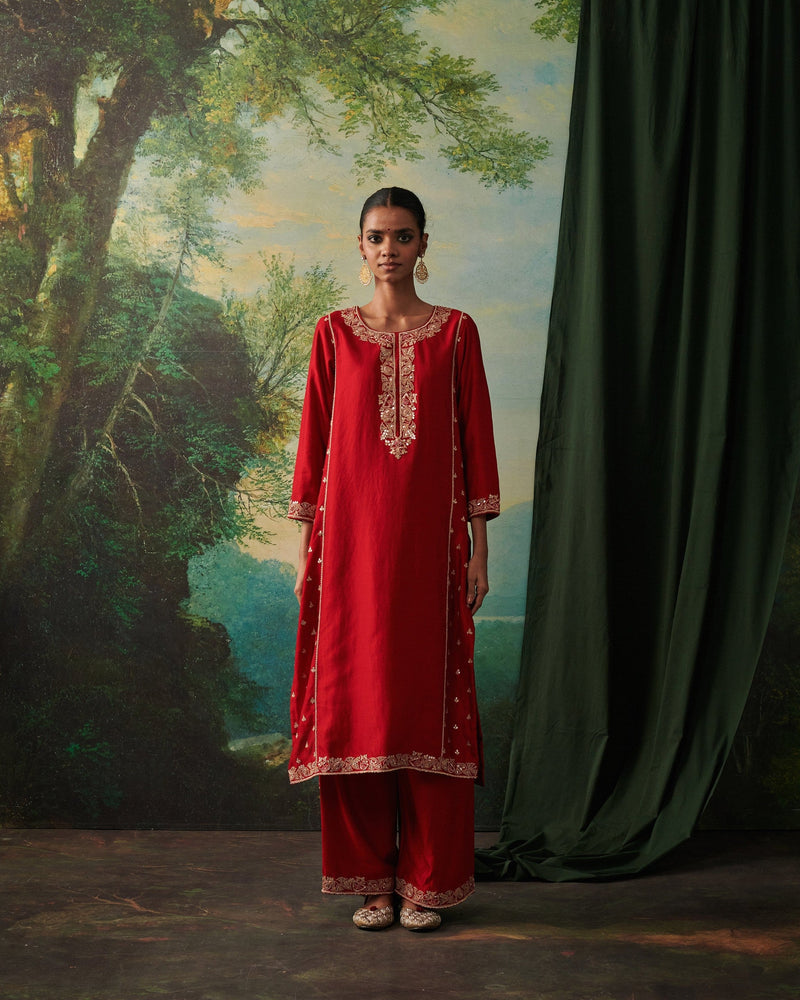
Maroon & Burgundy Indian Outfits: The Colour of Quiet Luxury
How to wear maroon and burgundy Indian outfits. Styling tips for wine-coloured sarees, kurtas, and lehengas. The soph...
23 April 2026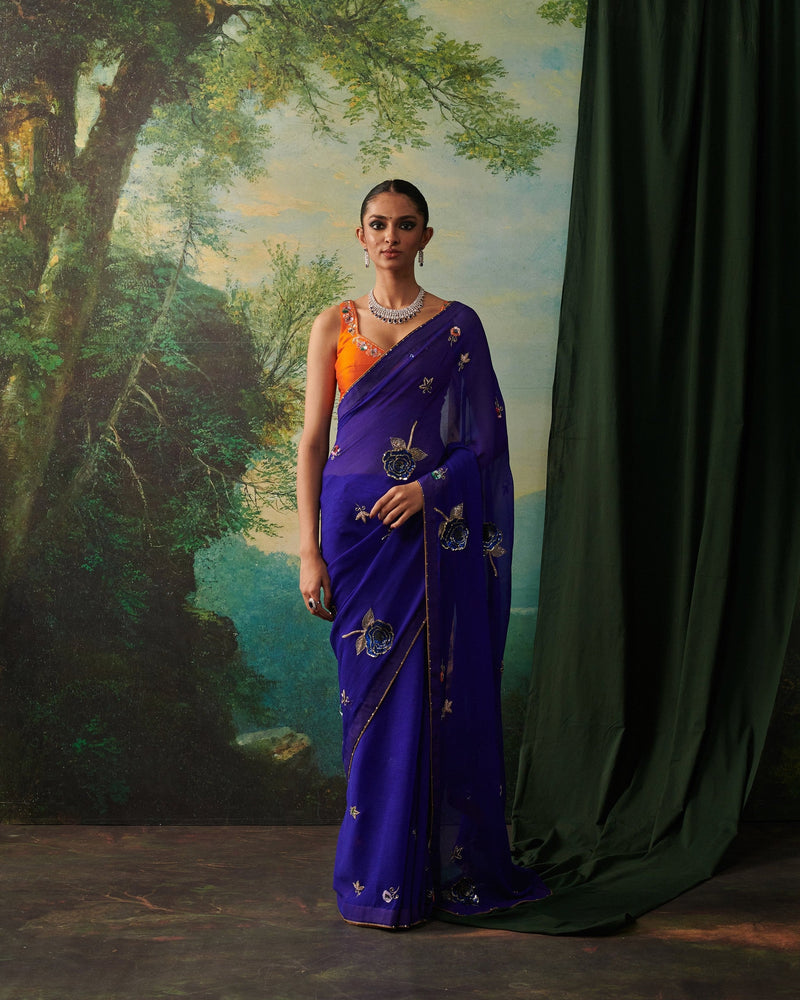
What Colour to Wear on Each Day of the Week: The Weekday Colours of Hindu Tradition, Explained
Sunday orange, Monday white, Tuesday red, Wednesday green, Thursday yellow, Friday white or pink, Saturday black or b...
5 November 2026