
The Paisley Guide: The Story of the Keri Motif
You know the shape the moment you see it — a teardrop with a curling tail, half seed, half flame. In the West it's called paisley, after a Scottish mill town that copied it; in India, where it was born centuries earlier, it's the keri or ambi, the mango motif. It curls across borders, anchors the corners of dupattas, and blooms through the vines of hand-embroidery. Here's the story of the paisley, what it means, and how karigars bring it to life.
Where the Paisley Comes From
The motif's Indian names give away its origin: ambi comes from aam, the mango, and keri from the raw green mango — the shape is a stylised mango, or by some accounts a curled leaf or a cypress bent in the wind. It has been woven and printed on Indian textiles for centuries, a symbol of fertility, abundance, and life, long before it travelled to Persia and then to Europe. When you wear a keri, you're wearing one of the oldest and most enduring designs in the subcontinent's textile language.
The Paisley in Hand-Embroidery
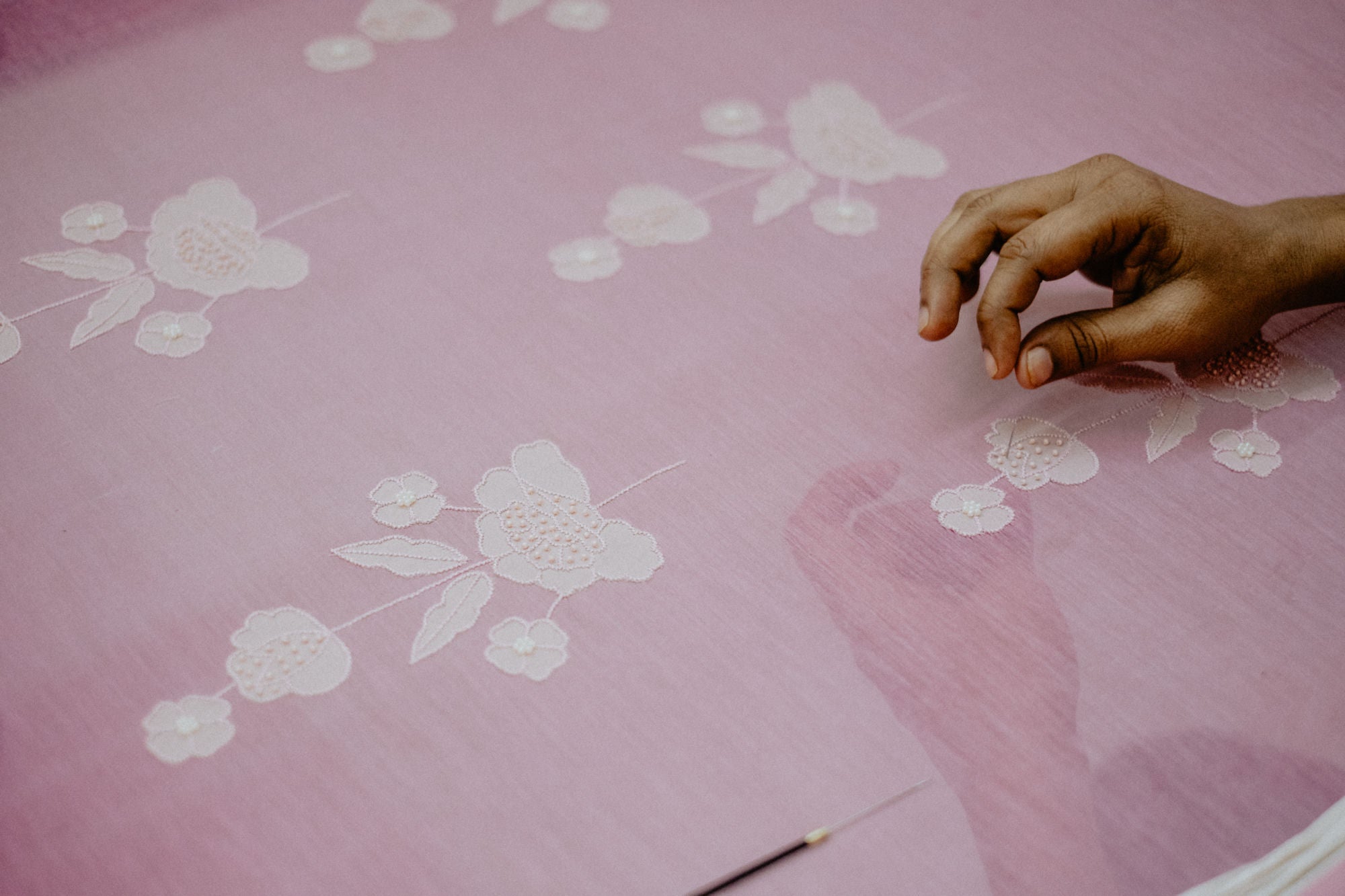
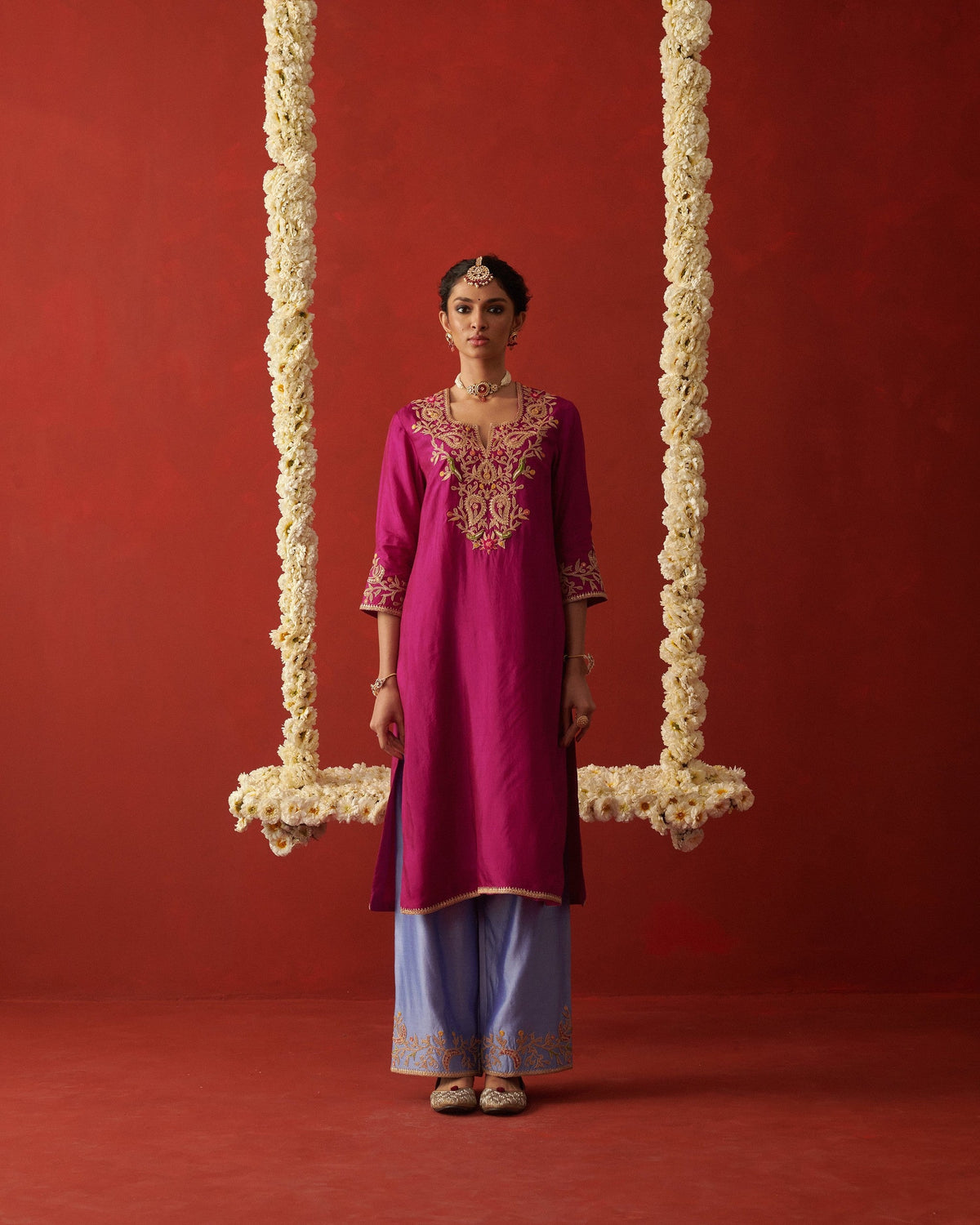
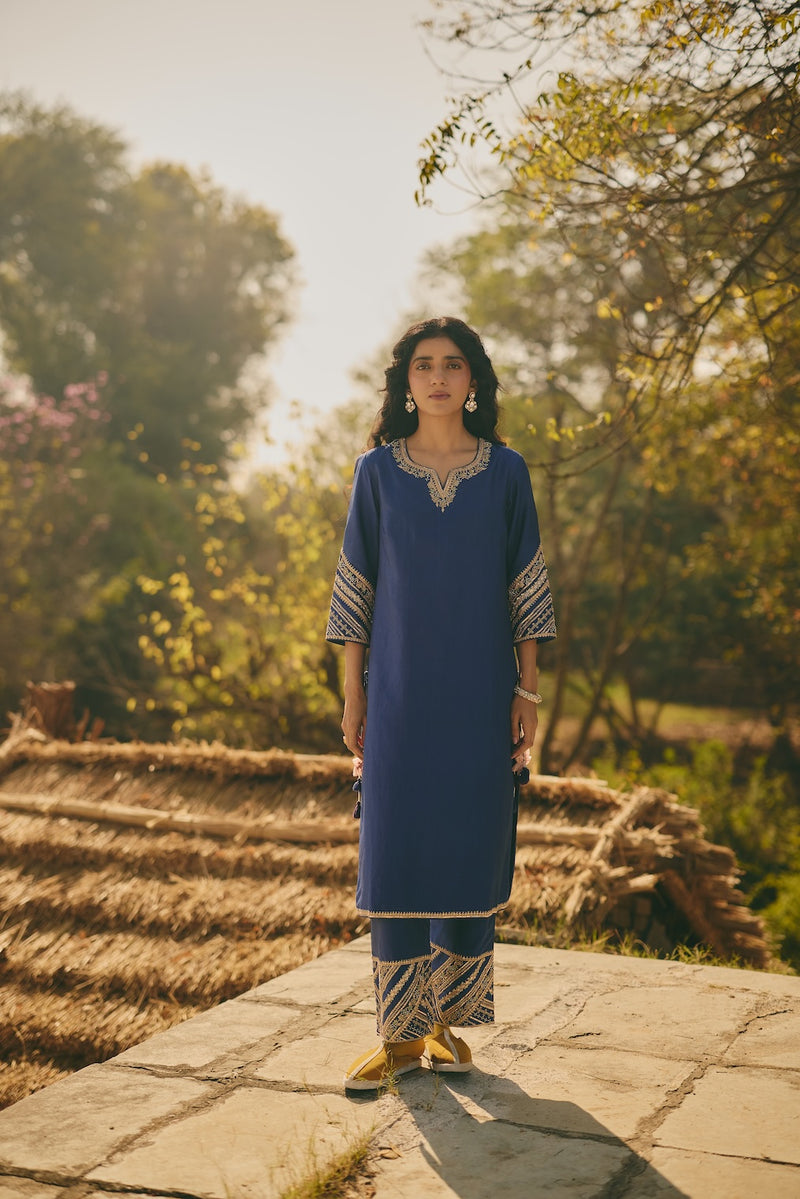
Karigars love the keri because its curving form suits the flow of the needle. On the Raabia kurta set in silk, the neckline and sleeves carry an arrangement of floral vines, paisleys, and parrots — each motif drawn from old miniature paintings and garden textiles — worked in raised marodi embroidery with sequins and resham for depth. The paisley here isn't a print; it's built stitch by stitch, its outline traced and its body filled with fine thread and shimmer.

Paisleys on the Border and in the Corner
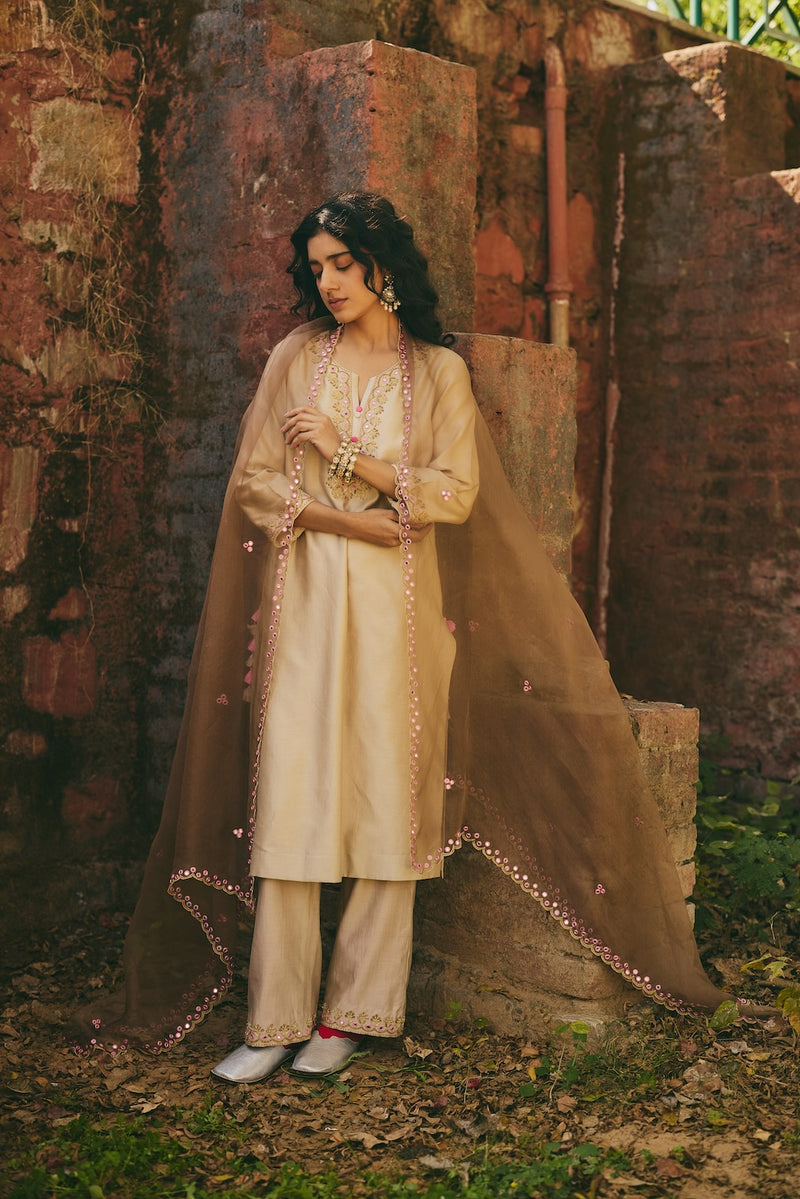
The keri has two classic homes: trailing along a border, and anchoring the corners of a drape. On the Aafira dupatta in soft tissue, elaborate paisley motifs and floral jaals are worked in marodi, sequins, and a hand-embroidered zari border that shimmers in gold and silver. On the Gulnaaz dupatta in muted-brown bandhani silk, bold paisley motifs anchor the corners in zardozi, sequins, and cutdana — a soft contrast against the dotted resist-dye texture. Placed at the corners, the keri frames the whole drape; run along a border, it leads the eye down its length.


The Paisley, Modernised
The motif is endlessly adaptable, which is why it never dates. On the Saibo shirt in modal satin, delicate paisley bootas are hand-embroidered in teal resham with fern-like textures around them and bright pink floral centres lifted with dabka and cutdana — a heritage motif on a contemporary everyday silhouette. On the Mehfil saree in deep sindoori-red chiffon, trailing paisleys run along the embroidered border in soft gold. From a weekday shirt to a festive drape, the keri sits comfortably in both worlds.
How to Style Paisley Pieces
- Let the motif lead — a paisley border or corner is a statement; keep the rest of the look clean so it reads.
- Match the metal — gold jewellery for zari and zardozi paisleys, silver or pearl for cooler, thread-worked keris.
- Mix scale, not chaos — a bold corner paisley pairs well with fine floral bootis; avoid competing large prints.
- Everyday to festive — a paisley shirt dresses down; a paisley-bordered saree or dupatta dresses all the way up.
A Centuries-Old Motif, Hand-Made Today
Every keri on a Rashika Mittal piece is traced and filled by hand by karigars in Jaipur, on outfits made to your measurements over 4–5 weeks. Explore our kurta sets, sarees, and dupattas.
Shop Hand-Embroidered WearFrequently Asked Questions
What is the paisley motif called in India?
In India the paisley is called the keri or ambi — the mango motif. Ambi comes from aam (mango) and keri from the raw green mango, and the teardrop-with-a-curling-tail shape is a stylised mango or curled leaf. It's one of the oldest designs in Indian textiles, symbolising fertility, abundance, and life.
Is paisley originally Indian?
Yes. The motif was woven and printed on Indian textiles for centuries before it travelled to Persia and then Europe. The English name "paisley" comes from a Scottish mill town that mass-produced copies of the design, but the keri or ambi originated in the Indian subcontinent long before.
Where is the paisley usually placed on an outfit?
The keri has two classic homes — trailing along a border, where it leads the eye down the length, and anchoring the corners of a dupatta or drape, where it frames the whole piece. It's also scattered as small bootas across a body, and worked into vines alongside florals in hand-embroidery.
Made to order in 4–5 weeks
Have an event date? We’ll tell you exactly when to order by.
We take a limited number of orders each month — secure your slot early.
Not sure where to start?
Tell us what you're dressing for and we'll help you choose — fabric, fit, colour, and timeline — over WhatsApp.
Your Cart
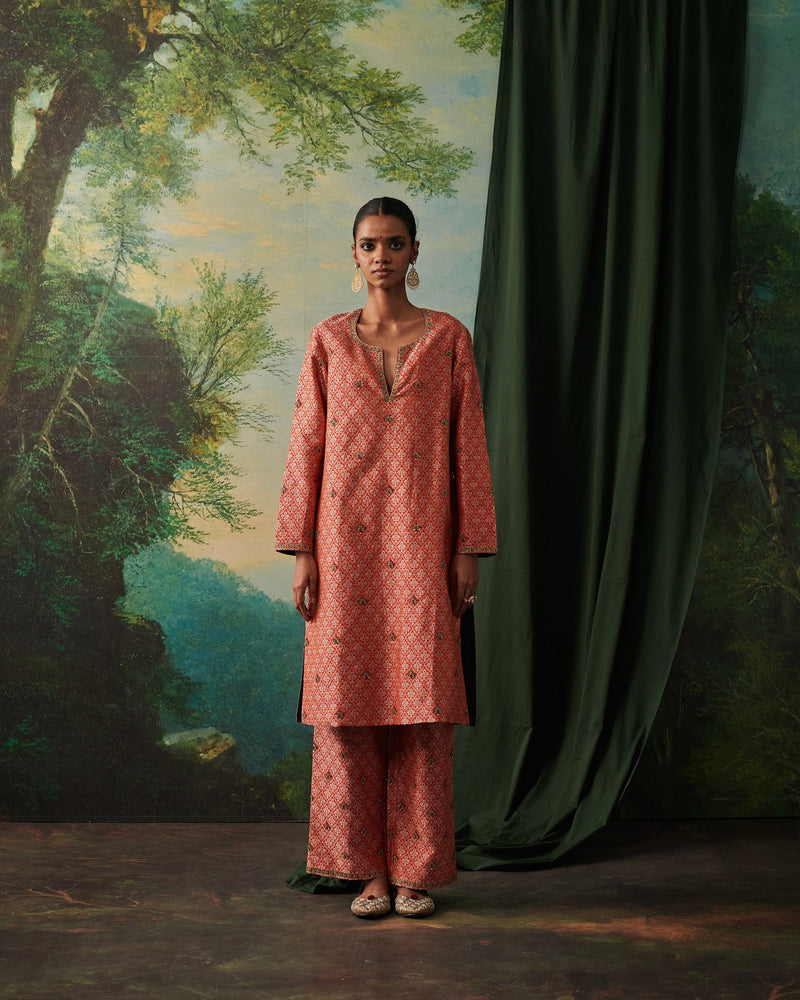
Pieces from this story
All pieces →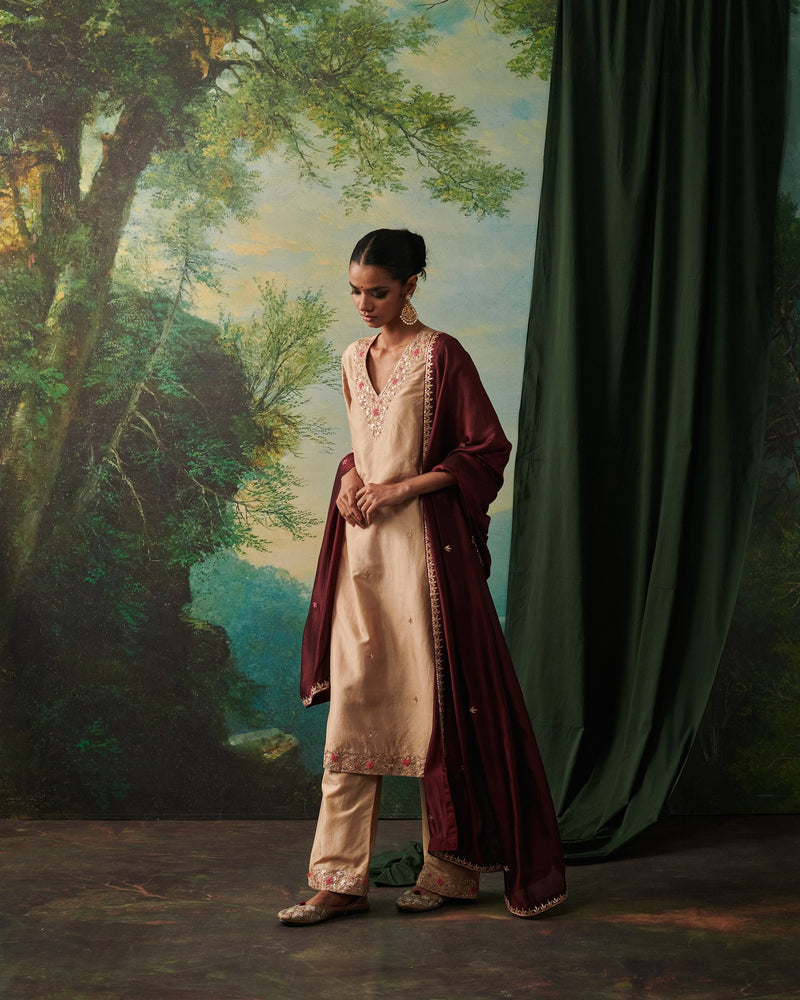
Keep reading
The journal →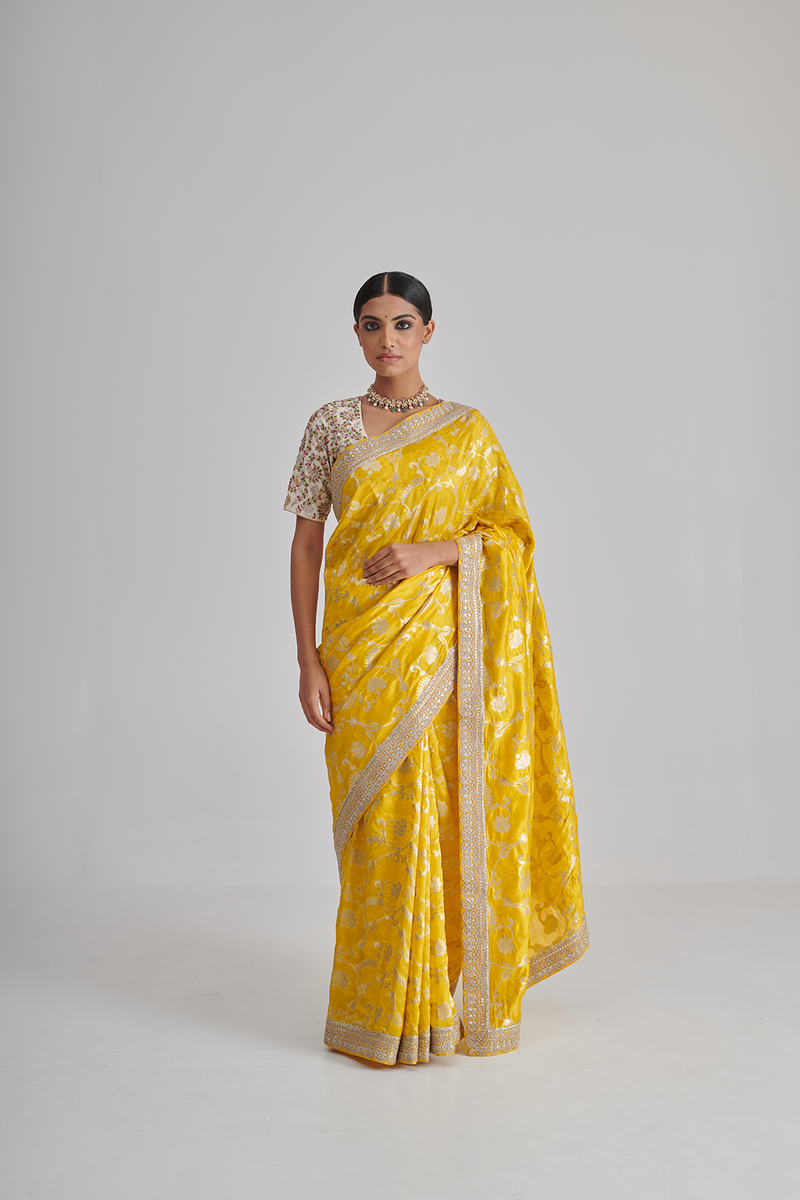
Best Banarasi Saree Brands in India 2026: Where to Buy an Authentic Banarasi
Handmade by karigars Made to your measurements Fit guarantee Ships worldwide As seen in GraziaElle Graduat...
14 September 2026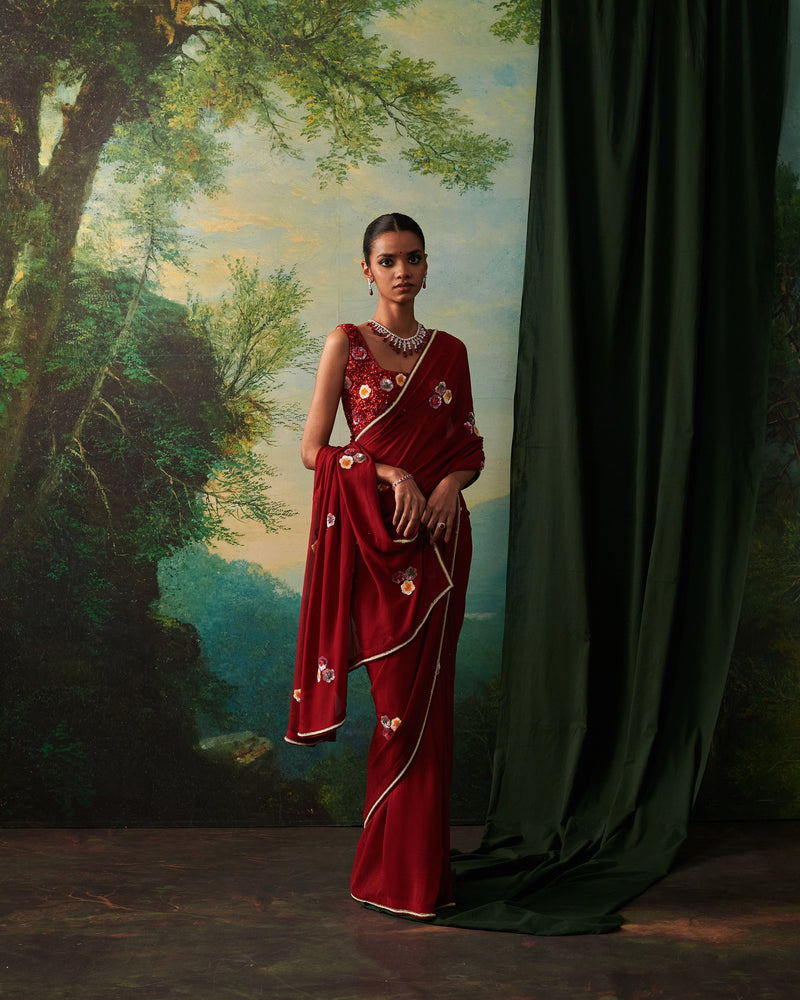
Gifts for Your Wife She'll Actually Wear: Indian Outfits for Karva Chauth, Diwali & Anniversaries
Handmade by karigars Made to your measurements Fit guarantee Ships worldwide As seen in GraziaElle Graduat...
14 September 2026
Designer Lehenga for Girls: A Parent's Buying Guide to Kids' Lehengas
Handmade by karigars Made to your measurements Fit guarantee Ships worldwide As seen in GraziaElle Graduat...
14 September 2026