
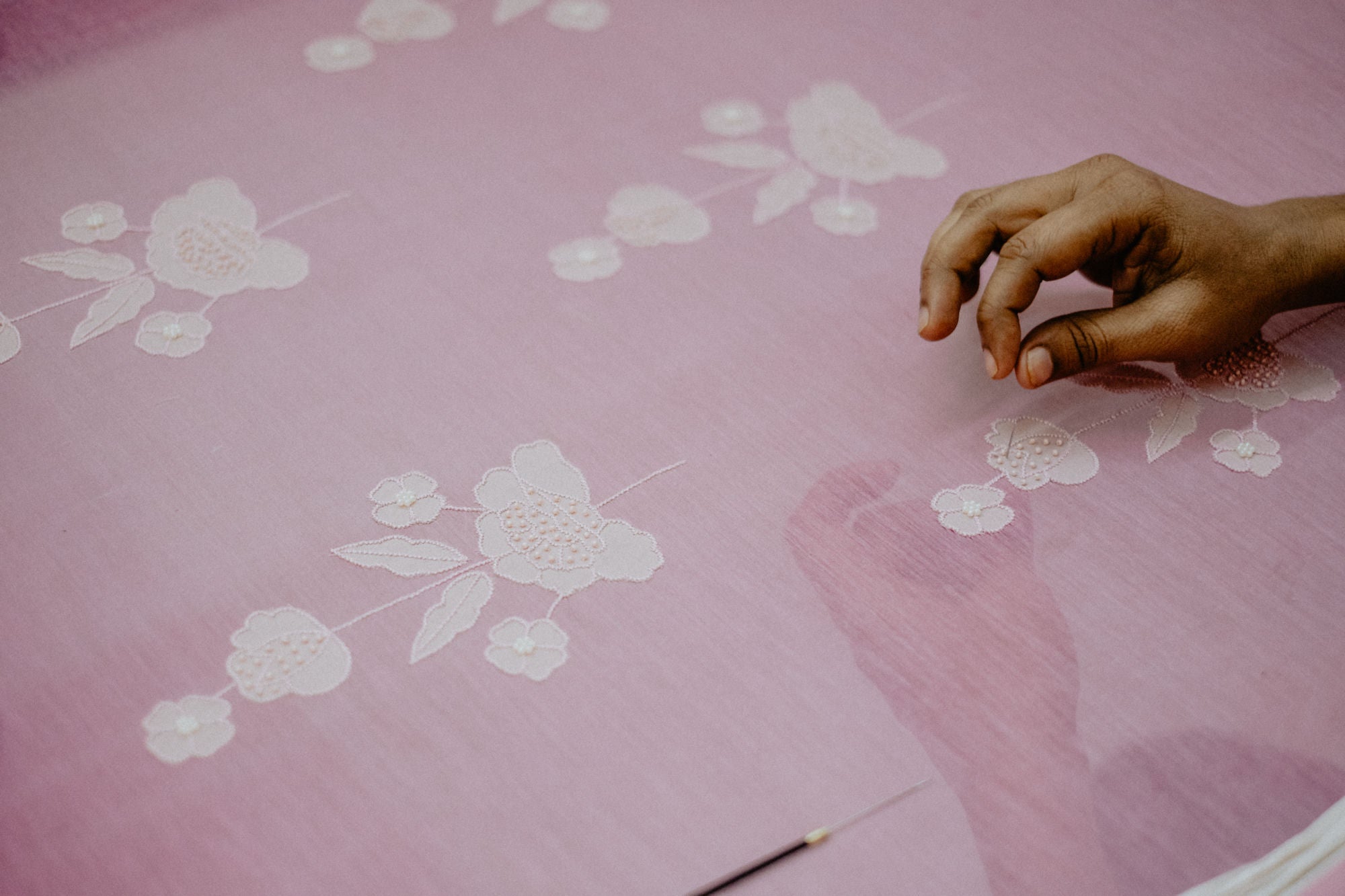
Dabka, Nakshi, Cutdana: A Glossary of Hand Embroidery Materials
Read enough product descriptions and the same words keep appearing: dabka, nakshi, cutdana, marodi, resham, gota. Most people scroll past them. But these aren't decorative adjectives — they're the actual physical materials being stitched onto the cloth, and knowing what each one is tells you more about a garment's weight, price and durability than any amount of styling copy. This is the glossary.
Technique Versus Material
First, a distinction that clears up most of the confusion. Zardozi, aari and chikankari are techniques — ways of working, defined by the tool and the stitch. Dabka, cutdana, resham and sequins are materials — the things being attached. A single zardozi piece might use five different materials at once.
So when a description reads "hand-embroidered using zardozi and aari techniques in dabka, cutdana and resham", it's telling you both how the work was done and what it was done with. Our comparison of the major techniques covers the first half; this covers the second.
The Metal Wires
Dabka
A fine metal wire coiled into a tight, springy tube — like a miniature spring. The karigar cuts it into short lengths and threads them like beads, so a line of dabka reads as a continuous raised cord of metal. It comes in matte and shiny finishes, and it's the workhorse of raised metallic embroidery: outlines, stems, borders and the structural lines of a motif.
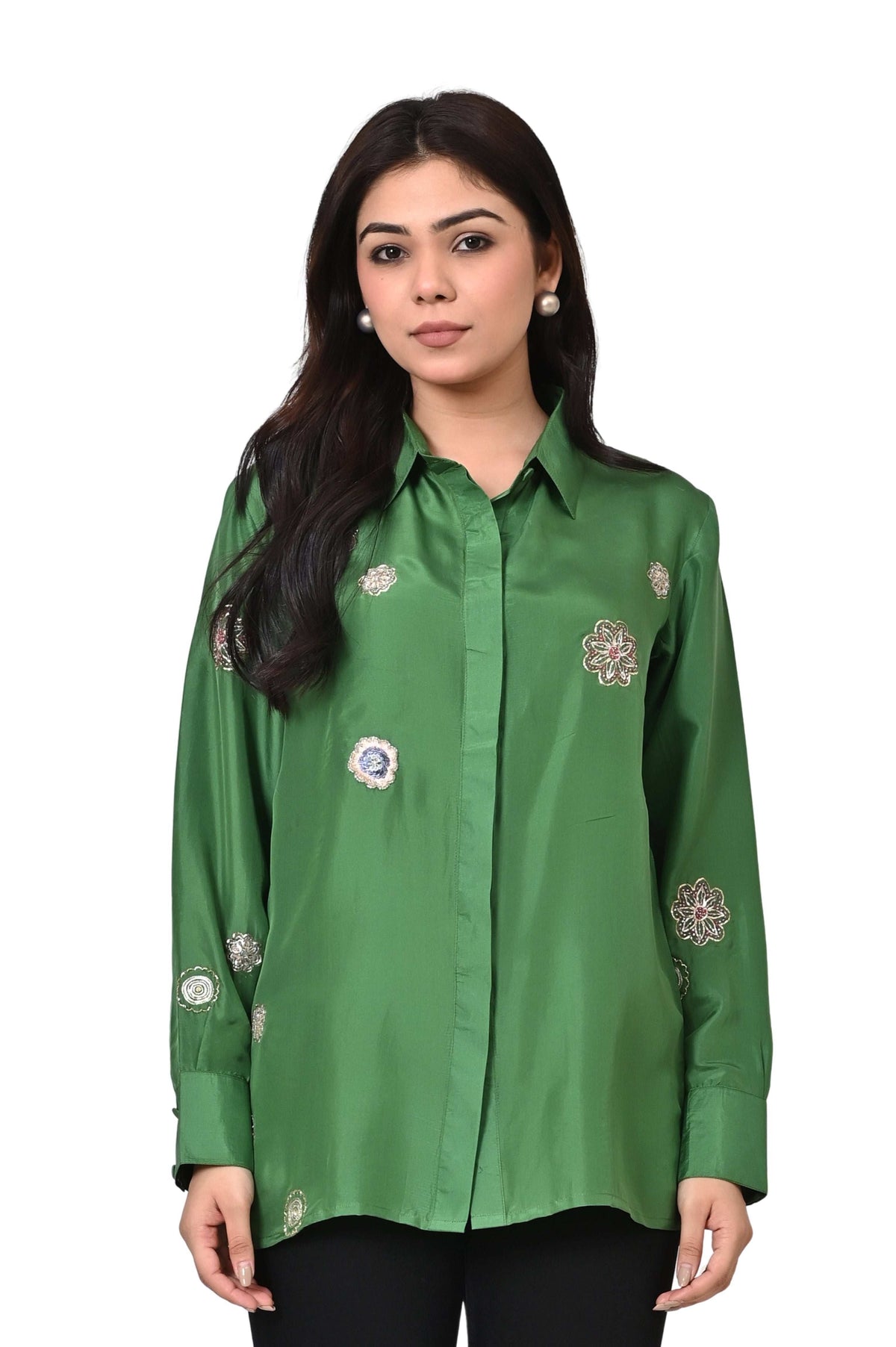
The Illahi shirt shows it well — floral medallion motifs on a rich emerald modal satin base, hand-embroidered in a mix of dabka, cutdana, sequins and resham threads, with layered colours from soft golds and silvers to hints of pink. The Dhoop shirt in mustard-gold dupion silk uses dabka and cutdana for vertical lines of gold bootis connected with sequin trails.


Nakshi
Dabka's faceted cousin. Where plain dabka is a smooth coil, nakshi wire is twisted or cut with flat faces so it catches light from multiple angles — the difference between a matte gold line and one that glitters as you move. Used where a piece needs sparkle without adding sequins.
The Banni kurta with Aayat pant in soft Chanderi uses nakshi alongside sequins, cutdana and thread work in floral and paisley detailing on the yoke, cuffs and hem.
Salma and Sitara
Traditional terms you'll still hear in workshops. Salma is a very fine metal wire, thinner than dabka; sitara — literally "star" — is the small metal disc that became the modern sequin. Together they form the oldest vocabulary of Indian metal embroidery.
Zari
Metal-wrapped thread, historically real gold or silver over a silk core. Zari is woven into fabric on the loom as well as embroidered onto it, which is why Banarasi silks and hand embroidery both speak the same material language. Our guides to zari work and real zari versus imitation cover it properly.
The Beads and Discs
Cutdana
Faceted cut-glass or crystal beads, small and highly reflective, stitched individually. Cutdana gives depth and dimensional sparkle that a flat sequin can't — it sits proud of the surface and throws light in several directions. Almost every festive piece in our collection uses it somewhere. Our full cutdana guide goes deeper.
Sequins
Flat discs, in every size from pinhead to coin, and the fastest way to add shine. Used well they read as light on water; used badly they read as a costume. The sequin embroidery guide covers the difference.
Moti
Pearls, real or simulated, which give a softer and more matte glow than glass or metal. The Savera shirt in warm cinnamon brown modal satin uses pearls with sequins and zari accents in scattered floral bootis. Our moti work guide covers the craft.

The Threads
Resham
Silk floss thread — the material behind almost all coloured, non-metallic hand embroidery. Resham is what allows a karigar to build a flower petal by petal in twelve shades, effectively painting with a needle. The Saibo shirt in modal satin uses resham to form fern-like textures around hand-embroidered paisley bootas in shades of teal. See our resham work guide.
Marodi
Twisted thread work, producing a fine raised line with a rope-like texture. It's used for outlines, vines and delicate borders where dabka would be too heavy and flat thread too soft. The Noorejhan Chanderi dupatta is finished with hand-done marodi embroidery and delicate sequin and thread work, its border carrying vine motifs in a zardozi-inspired technique. Our marodi guide covers it in full.
French Knots
Not an Indian term, but a stitch used constantly in Indian hand embroidery — thread wound around the needle and pulled through to leave a tiny raised dot. Used in clusters for flower centres, texture and pollen-like detail. The Chandbeli sharara set in soft ivory satin combines aari work vines with multicolour resham threadwork, fine French knots, sequin highlights and cutdana.
The Ribbons and Edgings
Gota
Flat gold or silver ribbon, folded and appliquéd into leaves, flowers and borders. Gota patti is Rajasthan's signature craft and behaves completely differently from wire or bead work — it covers area rather than drawing lines, which is why gota pieces read as bold from a distance. See our gota patti guide.
Kiran, Lappa and Lace
The finishing edges. Kiran is a fine fringed metallic edging run along a border; lappa is a broader flat gold lace. Both are what make a hem read as finished rather than simply cut. The Fida saree in pure chiffon is finished with a broad gold lappa lace border and sequins scattered like dew across its length.
Why This Matters When You're Buying
- Weight. Metal materials — dabka, nakshi, zari, gota — add real weight. A densely dabka-worked lehenga is genuinely heavy to wear for six hours.
- Price. Metal and glass work costs more than thread work, both in material and in the hours it takes to attach each piece individually.
- Care. Metal tarnishes with moisture, glass and sequins shear off in a washing machine, and pearls dislike alcohol. Our stain guide covers the consequences.
- Repair. Hand-attached materials can be individually replaced by a karigar. Machine-applied embellishment usually can't.
- Reading a description properly. "Sequin work" and "dabka, nakshi and cutdana" describe very different garments at very different prices.
Every Bead Attached by Hand
Our pieces are hand-embroidered by karigars in Jaipur and made to your measurements over 4–5 weeks — each dabka length cut, each cutdana placed, one at a time. Explore the full collection.
Shop the CollectionFrequently Asked Questions
What is dabka embroidery?
Dabka is a fine metal wire coiled into a tight, springy tube, cut into short lengths and threaded like beads so it forms a continuous raised cord of metal. It comes in matte and shiny finishes and is used for outlines, stems, borders and the structural lines of a motif.
What is the difference between dabka and nakshi?
Plain dabka is a smooth coil that reads as a matte or softly shiny metal line. Nakshi wire is twisted or cut with flat faces so it catches light from multiple angles and glitters as you move — used where a piece needs sparkle without adding sequins.
What is cutdana in embroidery?
Cutdana are faceted cut-glass or crystal beads, small and highly reflective, stitched on individually. They sit proud of the fabric and throw light in several directions, giving dimensional sparkle that a flat sequin can't achieve.
Is zardozi a material or a technique?
A technique. Zardozi, aari and chikankari describe ways of working, defined by the tool and the stitch. Dabka, cutdana, resham, gota and sequins are the materials being attached — and a single zardozi piece may use five different materials at once.
Made to order in 4–5 weeks
Have an event date? We’ll tell you exactly when to order by.
We take a limited number of orders each month — secure your slot early.
Not sure where to start?
Tell us what you're dressing for and we'll help you choose — fabric, fit, colour, and timeline — over WhatsApp.
Your Cart
Pieces from this story
All pieces →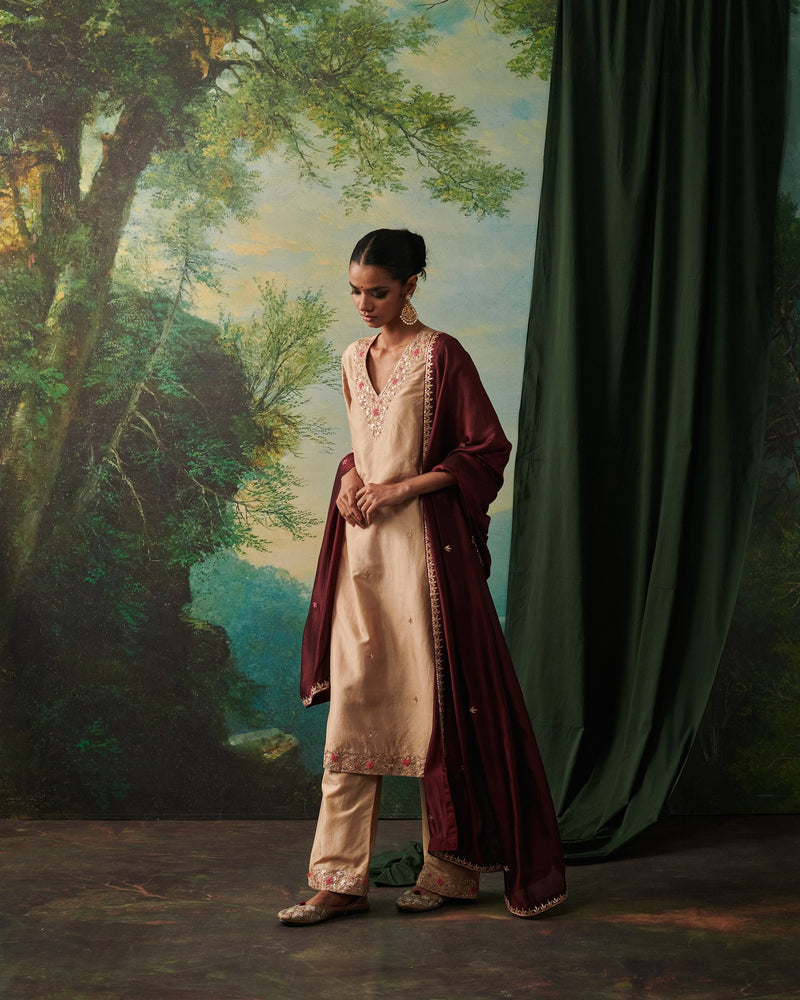
Keep reading
The journal →
Gangaur Outfit Ideas: What to Wear for Rajasthan's Festival of Gauri
Handmade by karigars Made to your measurements Fit guarantee Ships worldwide As seen in GraziaElle Graduat...
22 August 2026
Kids at a Destination Wedding: What to Pack and How to Survive It
Handmade by karigars Made to your measurements Fit guarantee Ships worldwide As seen in GraziaElle Graduat...
22 August 2026
A Baby's First Festival: How to Dress an Infant for Diwali and Family Functions
Handmade by karigars Made to your measurements Fit guarantee Ships worldwide As seen in GraziaElle Graduat...
22 August 2026