
Saree Draping Styles: 15 Ways to Drape a Saree for Different Occasions
The saree is one garment, but the ways to wear it are endless. From the classic Nivi to dramatic Bengali to modern pre-draped styles, how you drape your saree completely transforms your look. This guide covers 15 different draping styles—when to wear each, how they photograph, and which body types they flatter best.
Looking for a saree that drapes beautifully? We create custom pieces in flowing fabrics. WhatsApp us →
Understanding Saree Draping Basics
Before exploring styles, it helps to understand the key elements:
- Pallu: The decorated end that drapes over the shoulder or is pinned
- Pleats: The folded section at the front that determines silhouette
- Fall/Can-Can: Optional inner lining for better drape
- Petticoat: The underskirt that anchors the saree
Different draping styles manipulate these elements to create distinct silhouettes and aesthetics.
Classic North Indian Drapes
1. Nivi Style (Standard Drape)
The most common style across India. The pallu is pleated and draped over the left shoulder.
Best For: Everyday wear, office, casual occasions
Flatters: All body types
Fabric: Works with any fabric
This is the "default" saree drape that most tutorials teach. Master this before attempting others.

2. Gujarati Style (Front Pallu)
The pallu is brought from the back, across the chest, and pinned at the right shoulder. The decorated end displays prominently at the front.
Best For: Weddings, festivals, Navratri
Flatters: Shows off intricate pallu work beautifully
Fabric: Works best with decorated pallus
3. Rajasthani/Marwari Style
Similar to Gujarati but the pallu is pulled over the head and often covers the face partially. Traditional for married women in Rajasthan.
Best For: Traditional ceremonies, religious functions
Flatters: Creates an elegant, demure silhouette
Fabric: Lightweight fabrics work best
South Indian Drapes
4. Madisar (Tamil Brahmin)
A nine-yard saree draped in a specific way that resembles dhoti pants. Traditional for Tamil Brahmin weddings and religious ceremonies.
Best For: Traditional South Indian ceremonies
Flatters: Creates a unique traditional silhouette
Fabric: Requires nine-yard Kanjivaram or silk
5. Kerala Mundum Neriyathum
A two-piece drape—the mundu (bottom) and neriyathu (top piece over shoulder). Traditional for Kerala's Onam celebrations.
Best For: Onam, Kerala weddings, cultural events
Flatters: Simple, elegant silhouette
Fabric: Kasavu (cream with gold border)
6. Coorgi Style
The pallu is pleated and pinned at the back shoulder rather than the front. Distinctive to Karnataka's Kodagu region.
Best For: Coorgi weddings, cultural celebrations
Flatters: Showcases the back and creates height
Fabric: Traditional Coorgi silk


Bengali Drapes
7. Bengali Style
The most distinctive regional drape. The pallu is not pleated but fanned across the front and then taken over the left shoulder, with the decorative end hanging down the back. Creates a romantic, flowing look.
Best For: Durga Puja, Bengali weddings, festive occasions
Flatters: Creates beautiful movement, very photogenic
Fabric: Flowing fabrics like georgette, chiffon, or fine silk
8. Atpoure (Homely Bengali)
A simpler Bengali style for daily wear. The pallu is draped without elaborate fanning, creating an easy, comfortable look.
Best For: Daily wear, casual occasions
Flatters: Relaxed, artistic aesthetic
Fabric: Cotton, linen, light silk
Free Download
Get Our Measurement Guide
Step-by-step instructions with photos to measure yourself accurately for custom Indian wear.
Download Free GuideModern & Contemporary Drapes
9. Dhoti Style
The saree is draped to resemble dhoti pants—fabric gathered between the legs and tucked at the back. Modern and edgy.
Best For: Sangeet, cocktail parties, fashion events
Flatters: Taller frames; can shorten appearance on petite figures
Fabric: Structured fabrics that hold shape
10. Pant Style
An evolution of dhoti style with more fitted, trouser-like draping. Very contemporary.
Best For: Fashion-forward events, modern receptions
Flatters: Creates a sleek, elongated silhouette
Fabric: Needs fabrics with good drape and structure
11. Butterfly Drape
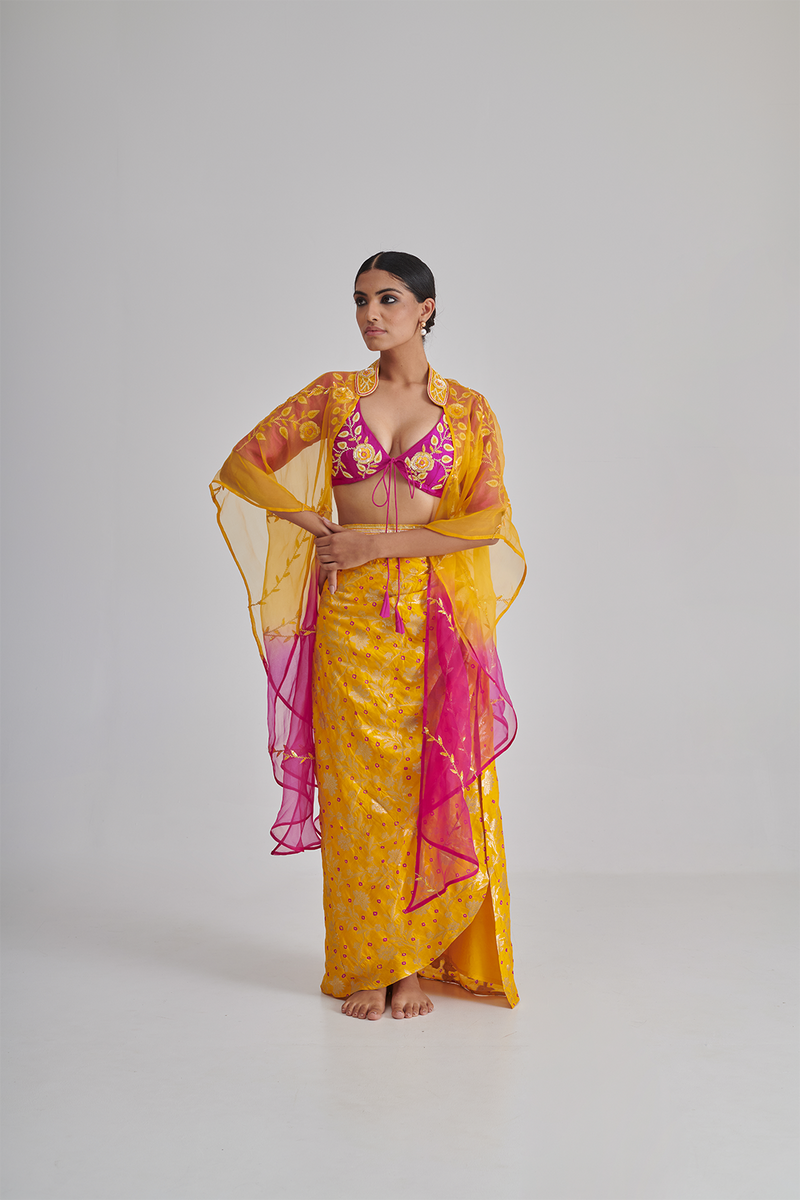
The pallu is spread wide like butterfly wings rather than pleated. Creates a dramatic, cape-like effect.
Best For: Red carpet events, photoshoots, fashion parties
Flatters: Very photogenic, dramatic from all angles
Fabric: Lightweight, flowing fabrics only

12. Lehenga Style
The saree is pleated and worn like a lehenga skirt, with the pallu draped separately like a dupatta. Popular for heavy wedding sarees.
Best For: Weddings, receptions, when you want lehenga ease with saree
Flatters: Gives structure to heavy sarees, easier to manage
Fabric: Heavy silks, embroidered sarees
13. Mermaid/Fishtail Drape
The saree is draped very fitted through the hips and flares out at the bottom. Glamorous and figure-hugging.
Best For: Evening events, receptions, glamorous occasions
Flatters: Hourglass figures; requires confidence
Fabric: Fabrics with slight stretch or very fine drape
Practical Drapes
14. Seedha Pallu (Straight Pallu)
The pallu hangs straight down the back rather than being draped over the shoulder. Practical and common in Maharashtra.
Best For: Work, daily wear, when you need freedom of movement
Flatters: Creates a neat, professional silhouette
Fabric: Any, especially cotton for daily wear
15. Pre-Draped/Ready-to-Wear
Not technically a draping "style," but increasingly popular. The saree comes pre-stitched for easy wearing.
Best For: Those new to sarees, events where you need ease of movement
Flatters: Depends on how it's pre-draped
Fabric: Usually lighter fabrics that pre-drape well


Choosing Your Drape by Occasion
Weddings
- As bride: Bengali style for romance, Lehenga style for heavy sarees
- As guest: Nivi for elegance, Gujarati to show off pallu
Work/Office
- Nivi or Seedha Pallu—professional and easy to manage
- Avoid elaborate drapes that require constant adjustment
Festivals
- Regional drapes matching your heritage
- Bengali for Durga Puja, Gujarati for Navratri, Kerala for Onam
Cocktail Parties
- Dhoti style, Mermaid drape, or Butterfly drape
- Modern, dramatic styles that photograph well
Want a saree that drapes perfectly?
Our sarees are chosen for their beautiful drape and movement. +91 70423 11214
Made-to-order blouses available
Draping Tips for Different Body Types
Petite Frames
- Avoid very heavy pallu styles that overwhelm
- Vertical draping lines elongate
- Nivi style with narrow pleats works well
Tall Frames
- Can carry elaborate drapes like Bengali and Butterfly
- Dhoti and pant styles look proportionate
- Heavy pallus balance height
Curvy Figures
- Nivi style is universally flattering
- Front pallu (Gujarati) highlights curves beautifully
- Avoid very tight mermaid drapes unless comfortable
Apple Shapes
- Styles with draping across the middle add camouflage
- Bengali style with flowing pallu is forgiving
- Lehenga style with a loose pallu works well
Frequently Asked Questions
Which drape is easiest to learn?
Nivi style. It's the foundation for most other drapes. Once you master Nivi, variations become easier.
How do I keep my drape in place?
Safety pins are essential—at the pleats, at the shoulder, and at the waist. A good petticoat tie also helps. Some people use fashion tape for extra security.
Can any saree be draped in any style?
Not always. Heavy silks work better for Lehenga style. Flowing fabrics suit Bengali style. Very stiff fabrics won't work for Dhoti drape. Match your fabric to your intended style.
How long should my saree be for different drapes?
Standard sarees (5.5-6 metres) work for most drapes. Madisar requires 9 yards. Some modern drapes work better with slightly longer sarees.
Can I mix regional drapes?
Yes, fusion draping is increasingly popular. Just ensure it looks intentional rather than accidental.
Made to order in 4–5 weeks
Have an event date? We’ll tell you exactly when to order by.
We take a limited number of orders each month — secure your slot early.
Not sure where to start?
Tell us what you're dressing for and we'll help you choose — fabric, fit, colour, and timeline — over WhatsApp.
Your Cart
Pieces from this story
All pieces →
Keep reading
The journal →
Dholki Night Outfit Ideas: What to Wear to the Ladies' Dhol
Handmade by karigars Made to your measurements Fit guarantee Ships worldwide As seen in GraziaElle Graduat...
27 July 2026
Mayra & Bhaat Outfit Ideas: Dressing for the Maternal Gift Ceremony
Handmade by karigars Made to your measurements Fit guarantee Ships worldwide As seen in GraziaElle Graduat...
27 July 2026
Pag Phera Outfit Ideas: What to Wear for the Bride's Homecoming
Handmade by karigars Made to your measurements Fit guarantee Ships worldwide As seen in GraziaElle Graduat...
27 July 2026