

What to Wear to a UP Wedding: A Guest's Guide to Lucknow, Kanpur, Varanasi & Prayagraj Weddings
There is a word Lucknow uses about itself: tehzeeb. It means manners, but it also means a way of carrying yourself — unhurried, gracious, never showing off harder than you need to. That idea shapes how people dress for weddings across Awadh and much of Uttar Pradesh. The richest outfit in the room is rarely the loudest one. It is the ivory kurta with the gold worked so finely you only see it up close, the Banarasi drape that everyone recognises without being told, the sharara that moves beautifully when you walk in.
This guide walks a guest through a Hindu wedding in Uttar Pradesh — Lucknow, Kanpur, Varanasi, Prayagraj and the towns in between — function by function. Customs vary a great deal across the state, from family to family and between western UP and Purvanchal in the east, so treat this as a map rather than a rulebook, and when in doubt ask the family which functions you are invited to and how formal each one is.
First, an Honest Note About Chikankari
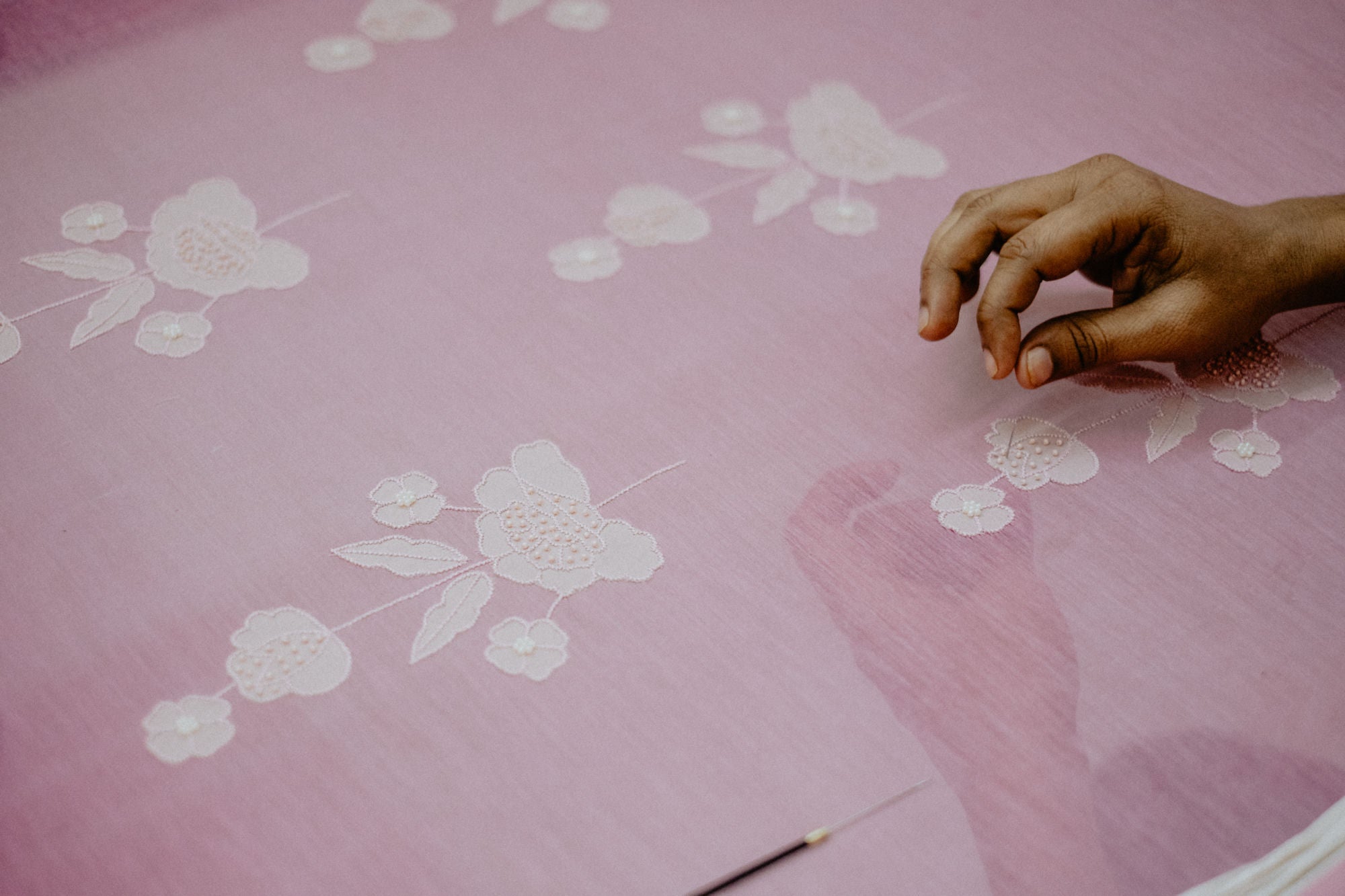
Lucknow is the home of chikankari, the white-on-white shadow embroidery that has become shorthand for the city. If you want a chikankari piece for a Lucknow wedding, buy it from the craft's own karigars in Lucknow — it is their tradition, and we do not make it. What we do make draws on the same Awadhi vocabulary of fine, patient handwork: zardozi, aari, marodi, gota patti and Mukesh — the flattened metal-wire embroidery that flourished in Lucknow under the Nawabs of Awadh. Everything below is chosen from pieces we actually make.
Tilak
The tilak is one of the defining pre-wedding ceremonies in Uttar Pradesh. The bride's father, brothers and elders travel to the groom's home, apply a tilak of kumkum and rice to his forehead and present gifts — the formal moment the bride's family accepts him. In many UP families it has traditionally been a largely male gathering and the bride does not attend, though plenty of families now invite everyone. Our tilak ceremony guide covers it in more depth.
If you are invited, dress as you would for a formal family puja: covered, polished and not too bright. Ivory with gold is the classic Lucknowi choice. The Mirza & Raina set (₹21,500) is an ivory silk kurta with floral and vine motifs in gold and pink zardozi, a rounded split neckline and embroidered 3/4 sleeves, over matching silk pants. Add a coloured dupatta so the look reads festive rather than plain white.

Haldi and Matkor
The haldi is the paste of turmeric, oil, milk, sandalwood and gram flour applied to the bride and groom by family. It is messy by design, so wear something you are happy to have marked, and keep it light. In eastern UP especially, the matkor may come before it: the women of the family go out to dig earth — matti — with songs, and that clay is used to build the ritual altar for the wedding fire. If you are part of the matkor procession, choose something you can walk outdoors in, with a hem that clears the ground. The customs in Purvanchal overlap closely with those across the border, which our Bihari wedding guest guide explains.
Yellow is the obvious colour, and it is obvious for a reason. The Afreen & Maahi set (₹15,875) is sunshine-yellow Chanderi with hand-embroidered flowers in cutdana and bead work — light enough for a daytime function and simple enough not to mind a smear of haldi. For something with more ceremony, the Roshni & Nazreen set (₹31,800) pairs a mustard-yellow Chanderi kurta, covered in an aari trellis of vines with pink resham flowers, sequins, nakshi and moti, with a soft pink Chanderi sharara.
Mehendi and Sangeet: Where Awadh Shows
This is where the Lucknowi sensibility really comes through. The gharara — the flared trouser with its seam at the knee — was the formal dress of aristocratic women in Nawabi Lucknow and is still worn to weddings across Awadh. A true gharara is a specialist cut; the sharara is its close cousin, flared from the hip without the knee joint, and it gives you almost the same movement. (Our sharara vs gharara guide explains the difference.) To be clear, what we make are shararas.
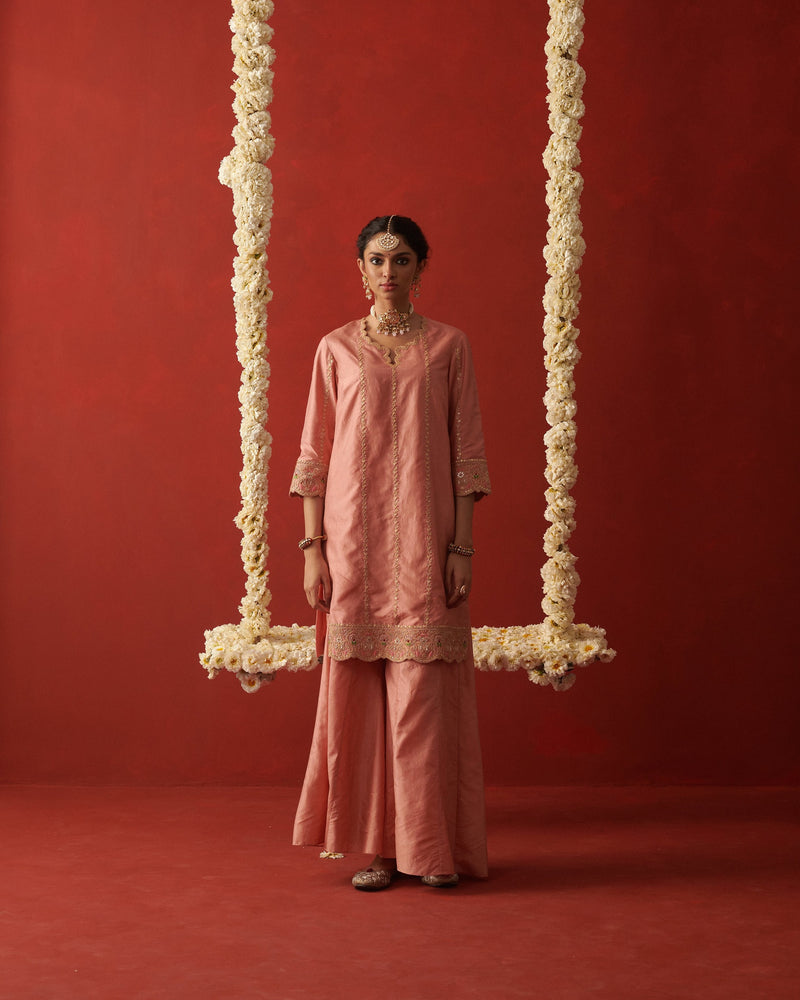
The Chanbeli & Badli set (₹32,850) is the most Lucknowi thing we make in spirit: a soft ivory satin kurta covered in an aari floral jaal with multicolour resham, French knots, sequins and cutdana, over a sheer organza sharara. It is detailed, not loud — exactly the register this city likes. If you want colour for the sangeet, the Ruhma & Rabaab set (₹32,500) is coral-pink silk with marodi, resham and sequins at the neckline, cuffs and scalloped hem, with a matching flared sharara that moves well on a dance floor.


For a mehendi where you would rather not manage a flared bottom, the Noor & Ahana anarkali (₹14,500) is an ivory woven anarkali worked in Mukesh with hand-embroidered floral motifs and sequins, over churidar pants — a small nod to the city's own metal-wire embroidery.
The Baraat and Dwar Puja
The baraat arrives with the band and the dancing, and at the bride's door the groom is formally received — in many UP homes this welcome is called the dwar puja or dwarchar, with the bride's mother doing aarti and tilak and offering him sweets. If you are with the groom's side, you will be dancing in the street before this, so wear shoes you can move in and a dupatta you can pin. If you are with the bride's side, you will be standing at the door as hosts, and this is one of the most photographed moments of the evening. Our guide to baraat welcome outfits has more.
Jaimala and the Wedding: Wear Banaras
There is one fabric that belongs to Uttar Pradesh above all others. Varanasi is in UP, and a Banarasi silk sari at a UP wedding is a quiet statement of home ground. It suits the jaimala stage and the long wedding night that follows. (Our jaimala outfit guide covers the stage moment itself.)
The Rahi & Amara sari (₹24,500) is fuchsia-pink Banarasi silk with floral motifs woven in gold thread and a detailed gold lace border, with a champagne-stripe silk blouse embroidered with florals and sequins. For a softer palette, the Phalgun & Myra sari (₹27,500) is yellow Banarasi silk with floral motifs woven in silver thread and a rich lace border, paired with an ivory blouse scattered with embroidered floral butis. To be accurate: we do not weave Banarasi — the cloth is handwoven, and our work is the blouse and the embroidery around it.


Pheras and Kanyadaan: Dressing for the Small Hours
In many UP weddings the pheras follow the muhurat, and the muhurat is often late — midnight or well after is common. The wedding season across the state runs mostly through the winter months, and on a foggy Lucknow or Kanpur night the temperature can fall close to single digits. If you are close family and will sit through the kanyadaan and the seven rounds, dress for three or four hours in the cold, not for the entrance.
That favours a silk sari or a full-sleeved set over anything sheer, with a shawl you actually intend to wear. The Humrahi & Faridah sari (₹34,500) is green silk jacquard with an all-over jaal, hand-embroidered floral butas and a densely embroidered palla and border, with a contrasting pink mulberry silk brocade blouse — substantial enough for a cold night and rich enough for the mandap. Our guides to winter wedding outfits and what to wear underneath cover the thermals question honestly.
Vidaai
The vidaai usually comes in the early morning, after a night without much sleep. It is emotional and quick, and nobody is judging your outfit — but you will be in the photographs. Change into something soft and comfortable. The Ruhani & Nilofer set (₹17,500) is soft pink silk with zardozi, sequins and cutdana at the neckline and scattered bootis across the body, over a straight matching pant — easy to wear after a long night, still appropriate for the moment. Our vidaai guide has more.
Five Things Worth Knowing
- Understated reads as expensive here. Fine handwork in a restrained palette will be noticed more than volume.
- Leave true bridal red to the bride unless the family tells you otherwise; deep jewel tones, pinks, greens and golds are safe.
- Avoid all-white and all-black. Ivory with gold or colour is festive; plain white and head-to-toe black are still avoided by many families at a wedding.
- Cover your head where the family does. Keep a dupatta or sari pallu handy for the pheras and any puja.
- Plan for cold, late nights. Most of the serious ceremony happens after dark in winter.
Dressing for a UP Wedding This Season?
Every piece is made to order in our Jaipur atelier in 4–5 weeks, plus shipping, and cut to your measurements at no extra charge. Message us on WhatsApp with the wedding dates and which functions you are attending, and we will tell you honestly what can reach you in time.
Browse the CollectionMore regional guides: Bihari · Punjabi · Rajasthani · Bengali
Frequently Asked Questions
What should a guest wear to a wedding in Uttar Pradesh?
Something covered, festive and finely made. Silk and Banarasi saris, embroidered kurta sets and sharara sets all work. Yellow suits the haldi, a sharara or anarkali suits the mehendi and sangeet, and a silk sari or full-sleeved set is best for the late-night pheras in winter.
What is the tilak ceremony in a UP wedding?
A pre-wedding ceremony in which the bride's father, brothers and elders visit the groom's home, apply a tilak of kumkum and rice to his forehead and give gifts, marking the bride's family's acceptance of him. In many families it has traditionally been a largely male gathering.
What is dwar puja?
The formal welcome of the groom and baraat at the bride's door, also called dwarchar in parts of UP. The bride's family receives him with aarti, tilak and sweets before the jaimala.
Can I wear chikankari to a Lucknow wedding?
Yes, and it is a lovely gesture to the city — just make sure it is dressed up for the function, with colour or a festive dupatta so it does not read as all-white. Buy it from Lucknow's own chikan karigars; we do not make chikankari.
Is a sharara the same as a Lucknowi gharara?
No. A gharara is fitted to the knee, where a seam — often covered with a decorative band — releases the flare. A sharara flares from the hip without that joint. Both came through the same Awadhi and Mughal courtly tradition and both work well at a Lucknow wedding.
Made to order in 4–5 weeks
Have an event date? We’ll tell you exactly when to order by.
We take a limited number of orders each month — secure your slot early.
WhatsApp me my order-by date + a shortlistNot sure where to start?
Tell us what you're dressing for and we'll help you choose — fabric, fit, colour, and timeline — over WhatsApp or on a video call.
Your Cart
Pieces from this story
All pieces →Not sure which piece, or need it by a date? Book a video consultation Ask us on WhatsApp




Keep reading
The journal →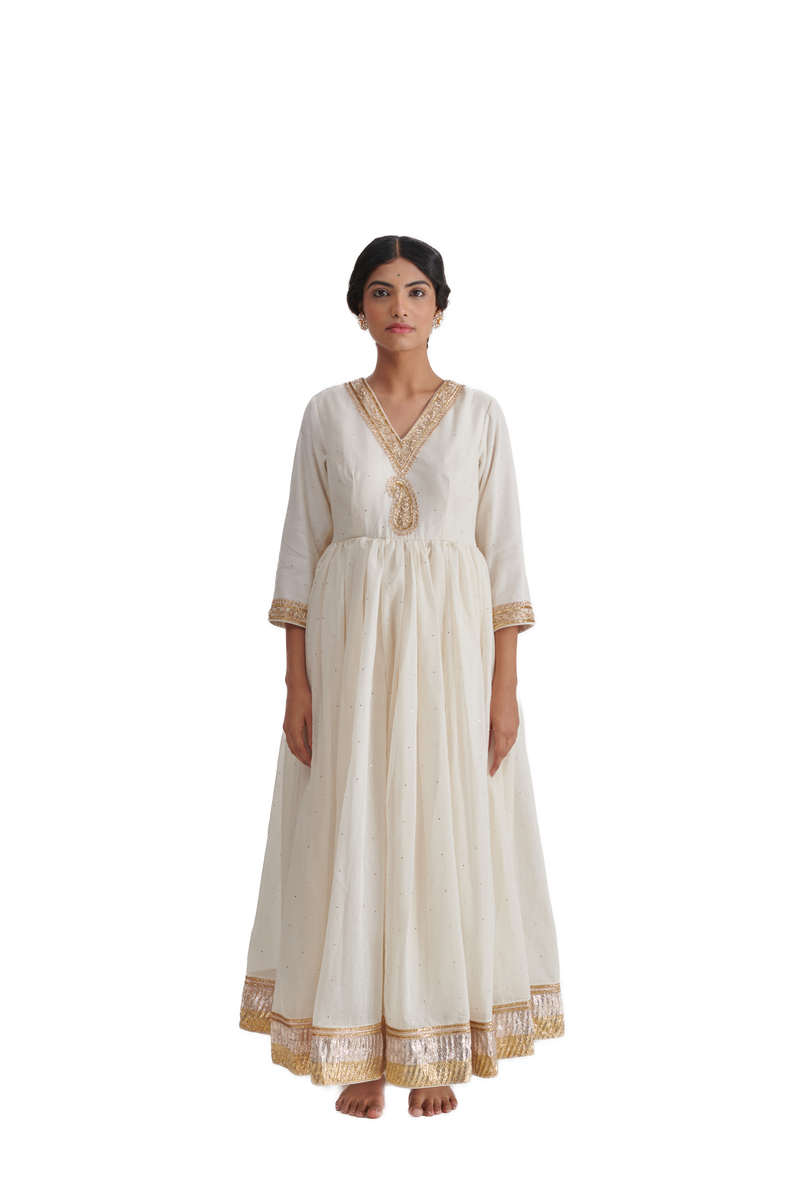
Mukesh Work: The Shimmering Embroidery Craft of Lucknow
Discover mukesh work — Lucknow's shimmering embroidery technique using tiny metallic pieces. Learn its history, how i...
4 March 2026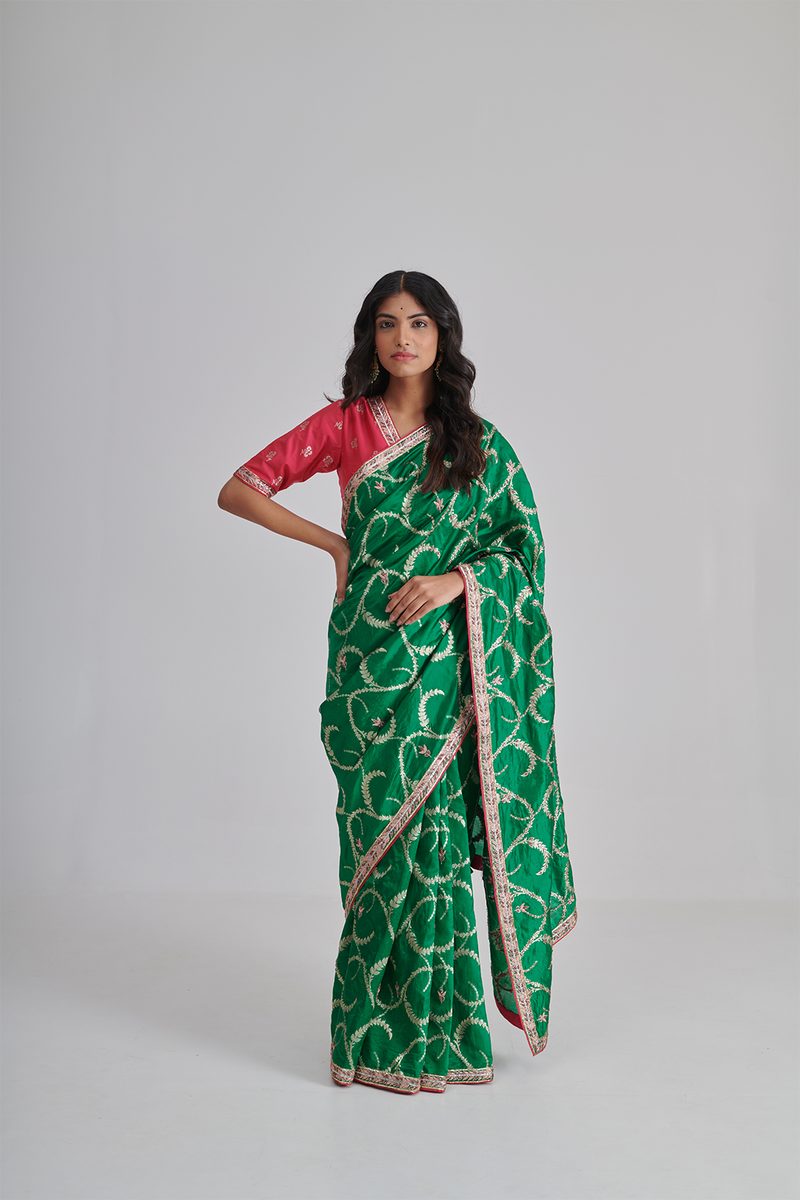
Tilak Ceremony Outfit Ideas: What the Groom's Family Wears
Tilak ceremony outfit ideas for the groom's family — elegant sarees and suits in auspicious, festive colours for the ...
2 July 2026
What to Wear to a Bihari Wedding: A Guest's Guide
What to wear to a Bihari wedding — tilak, matkor, haldi, parichhavan, kohbar and khoichha, with outfit ideas for each...
5 September 2026