
Where to Shop for Wedding & Festive Clothes in Jaipur: A Complete Guide
People fly into Jaipur for two days, buy a suitcase of things they don't need on MI Road, and go home having missed the city entirely. Jaipur is arguably the best place in India to shop for wedding and festive clothes — not because it's cheap, but because the crafts are made here rather than merely sold here. Gota patti, bandhani, leheriya, block print, kundan and meenakari all have their workshops within an hour of the old city. Here's how to shop it properly.
Start With What Jaipur Is Actually Good At
Before the geography, the shopping list. These are the things worth buying here rather than anywhere else:
- Gota patti — the Rajasthani craft of appliquéing gold and silver ribbon into floral and leaf forms. Jaipur is its home.
- Bandhani and leheriya — tie-and-dye and the diagonal-striped Rajasthani variant, both traditionally worn here for Teej and Gangaur.
- Hand block print — from Sanganer and Bagru, on the city's southern edge.
- Kundan, meenakari and polki jewellery — the old city's speciality for centuries.
- Mojris and juttis — hand-stitched leather footwear, embroidered.
- Made-to-measure tailoring — the reason the couture industry quietly runs on Jaipur karigars.
The Old City Bazaars
Johari Bazaar
The jewellery street, and the best place in the city for traditional textiles alongside it. Kundan, meenakari and polki work sit in the lanes off the main road, and the fabric shops here carry bandhani, leheriya and gota-worked pieces. Come for a wedding jewellery set and a bandhani odhni; expect to spend hours.
Bapu Bazaar
Textiles, mojris and everyday shopping, and considerably more relaxed than Johari. This is where most visitors buy juttis, printed cotton and quilts. Prices are negotiable and quality varies enormously within a hundred metres — look at stitching on footwear and the reverse of any embroidery before you commit.
Tripolia Bazaar
Lac bangles, brass and ironwork. Worth the detour for the lac bangle workshops alone, where you can watch sets being made and sized to your wrist while you wait — the traditional accompaniment to a bandhani or gota outfit.
Kishanpole Bazaar
Textiles and the wooden hand-carved printing blocks themselves. If you want to understand block printing before you buy any, spend twenty minutes here looking at the blocks.
Sanganer and Bagru: Go to the Source
Both are short drives from the city and both are working printing villages rather than markets. Sanganer is known for fine, delicate block prints on white or pale grounds — the floral bootis and jaals most people picture when they think of Jaipuri print. Bagru is known for dabu, the mud-resist technique that produces deeper, earthier prints in indigo, madder red and black.
Visiting a printing unit is the single best hour you can spend if you're buying block print seriously. You'll never mistake a screen print for a hand block again once you've watched a printer register a block by eye across a twenty-metre run.
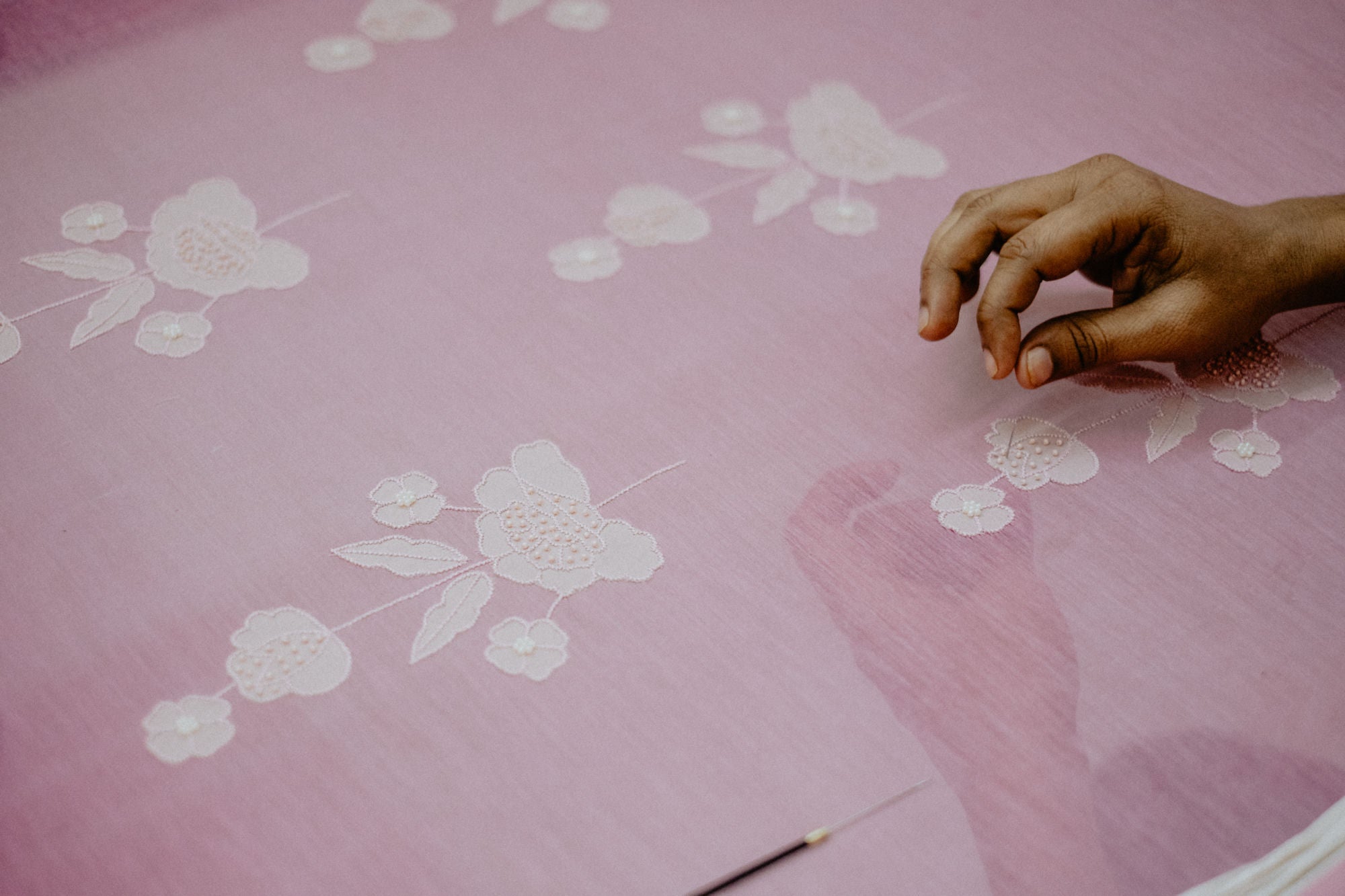
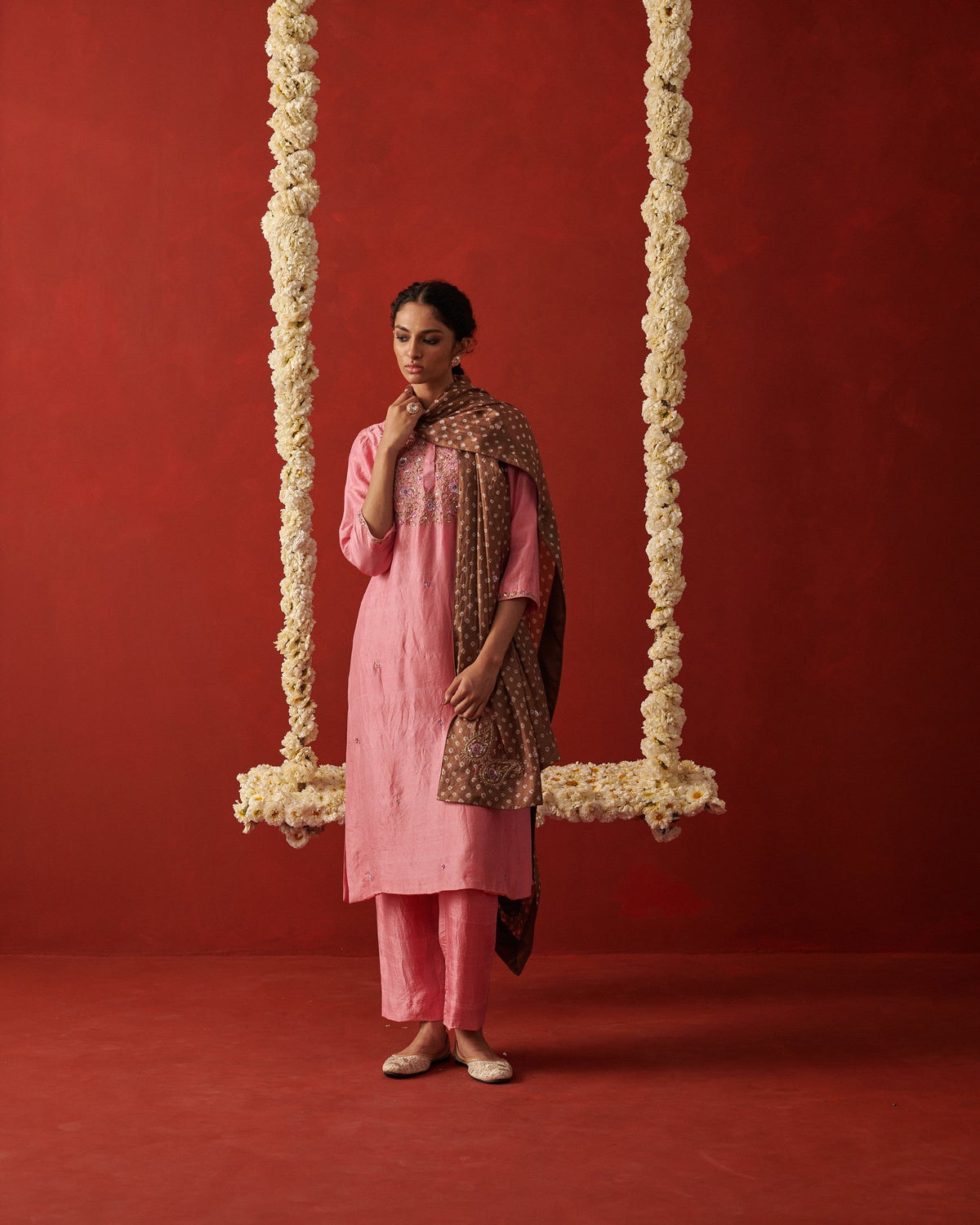
Our own hand-embroidered pieces come out of this tradition — the Humsafar & Aayat set in ivory silk carries fine hand-embroidered floral motifs in gold, and the Ruhani & Nilofer set is a soft pink silk set with a zardozi and cutdana floral neckline and scattered bootis.


MI Road, C-Scheme and the Designer End
If you're shopping for a wedding rather than for souvenirs, the designer boutiques and ateliers cluster around MI Road, C-Scheme and Civil Lines. This is where you'll find flagship jewellery houses and the studios of designers who actually produce in the city.
It is also where the made-to-measure conversation happens. Jaipur's real advantage over shopping anywhere else in India is that the karigars are here — which means a piece can be embroidered for your measurements rather than fitted to a size chart afterwards. Our own studio works this way: every piece is hand-embroidered here over four to five weeks. Pieces like the Jazabah kurta with Saiyan pant in deep red silk, with tonal embroidery along the neckline, hem and sleeves blending traditional gota patti, marodi, resham and bead work, are exactly the kind of thing the city does better than anywhere else.

The Gulnaaz bandhani silk dupatta — dyed in a muted brown and hand-embroidered with zardozi, sequins and cutdana, with bold paisley motifs anchoring the corners — shows the other half of the Rajasthani vocabulary. So does the Suki blouse in silk bandhej, in soft pista green with gota, marodi and resham threadwork along the neckline, hem and back.
How to Shop Without Getting It Wrong
- Check the reverse of everything. Hand embroidery shows thread paths, knots and small irregularities on the back. Machine work is uniform to the millimetre. Our buyer's guide covers the tells.
- Ask whether zari is real. Real zari is metal-wrapped thread and behaves differently from metallic polyester — our guide to real zari versus imitation explains how to check.
- Rub a corner of block print with a damp cloth. Natural dyes on hand block work bleed slightly and evenly at first wash; a screen print sits flat on the surface and the reverse is noticeably paler.
- Bargain in the bazaars, not in the studios. Negotiation is expected on the street and slightly insulting in an atelier where the price reflects karigar hours.
- Take a proper bill. For anything significant, and certainly for jewellery — you'll want it for customs, insurance and any later resale.
- Don't buy a lehenga off the rack in two days. Anything that needs fitting needs time, and rushed alterations on embroidered fabric are how good pieces get ruined.
When to Come
October to March is the sensible window — the weather is workable, and the old city is bearable on foot. April to June is genuinely punishing, and July to September brings the monsoon. If you're shopping for a winter wedding, come in October and give yourself a week rather than a weekend, so anything made to measure has time to be finished and shipped.
And if you can't come at all, that's increasingly fine. Most serious Jaipur studios now work remotely with measurements sent from anywhere — our guide to remote custom ordering covers how that works in practice.
Made in Jaipur, Made for You
Every piece we make is hand-embroidered by karigars in Jaipur and produced to your measurements over 4–5 weeks. Explore the full collection, or read about visiting our atelier.
Shop the CollectionFrequently Asked Questions
Where is the best place to buy wedding clothes in Jaipur?
Johari Bazaar for traditional textiles and jewellery, Bapu Bazaar for mojris and printed cotton, and the designer studios around MI Road, C-Scheme and Civil Lines for made-to-measure occasion wear. For block print, go to the source at Sanganer or Bagru.
What is Jaipur famous for shopping?
Gota patti embroidery, bandhani and leheriya tie-dye, hand block print from Sanganer and Bagru, kundan and meenakari jewellery, lac bangles, and hand-stitched mojris. It is also where much of India's couture embroidery is actually produced.
What is the difference between Sanganer and Bagru block print?
Sanganer is known for fine, delicate prints on white or pale grounds — the floral bootis and jaals most people associate with Jaipuri print. Bagru is known for dabu, a mud-resist technique producing deeper, earthier prints in indigo, madder red and black.
When is the best time to shop in Jaipur?
October to March, when the weather makes the old city walkable. Avoid April to June, which is extremely hot, and July to September during the monsoon. Allow a week rather than a weekend if you want anything made to measure and finished before you leave.
Made to order in 4–5 weeks
Have an event date? We’ll tell you exactly when to order by.
We take a limited number of orders each month — secure your slot early.
WhatsApp me my order-by date + a shortlistNot sure where to start?
Tell us what you're dressing for and we'll help you choose — fabric, fit, colour, and timeline — over WhatsApp or on a video call.
Your Cart
Pieces from this story
All pieces →Not sure which piece, or need it by a date? Book a video consultation Ask us on WhatsApp


Keep reading
The journal →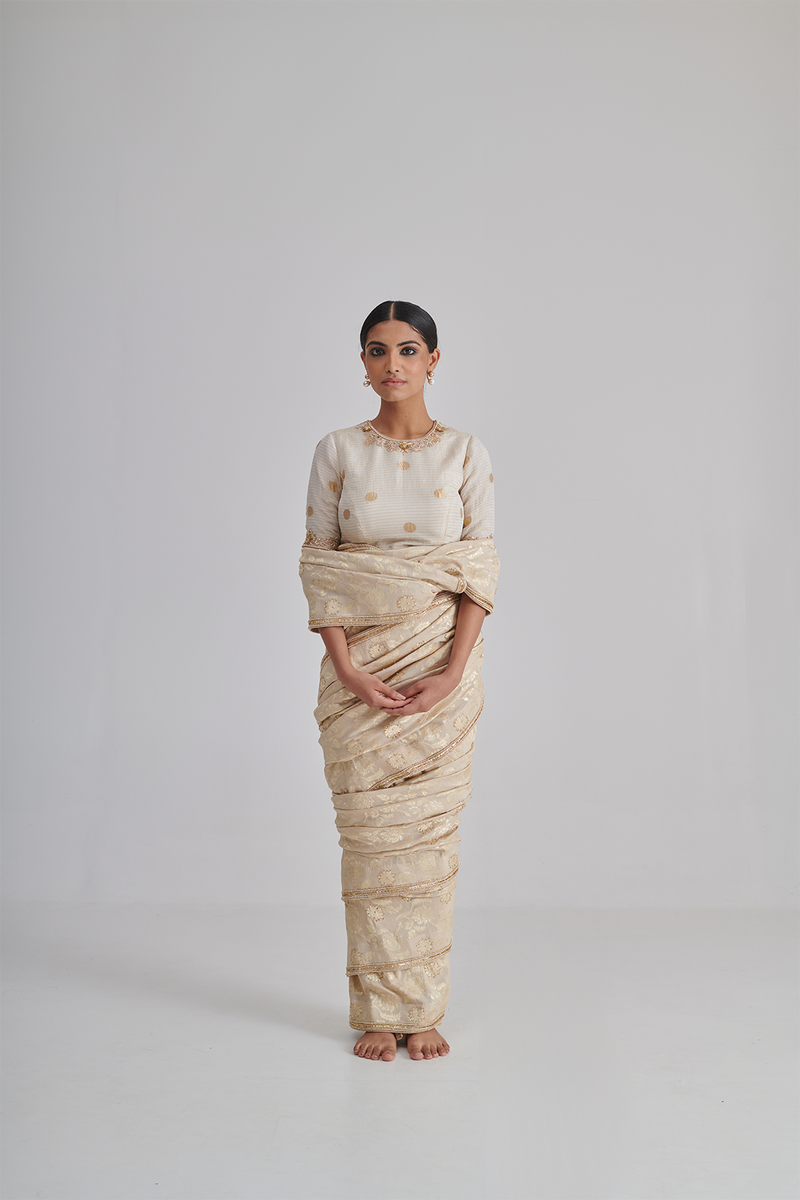
How to Tell Hand Embroidery From Machine Work: A Buyer's Guide
How to tell genuine hand embroidery from machine work — what to look for in the stitches, the back of the fabric and ...
30 June 2026
Real Zari vs Imitation: How to Tell the Difference When You Buy
How to tell real zari from imitation — the weight, sheen, thread and burn tests, what tested zari means, and why genu...
2 July 2026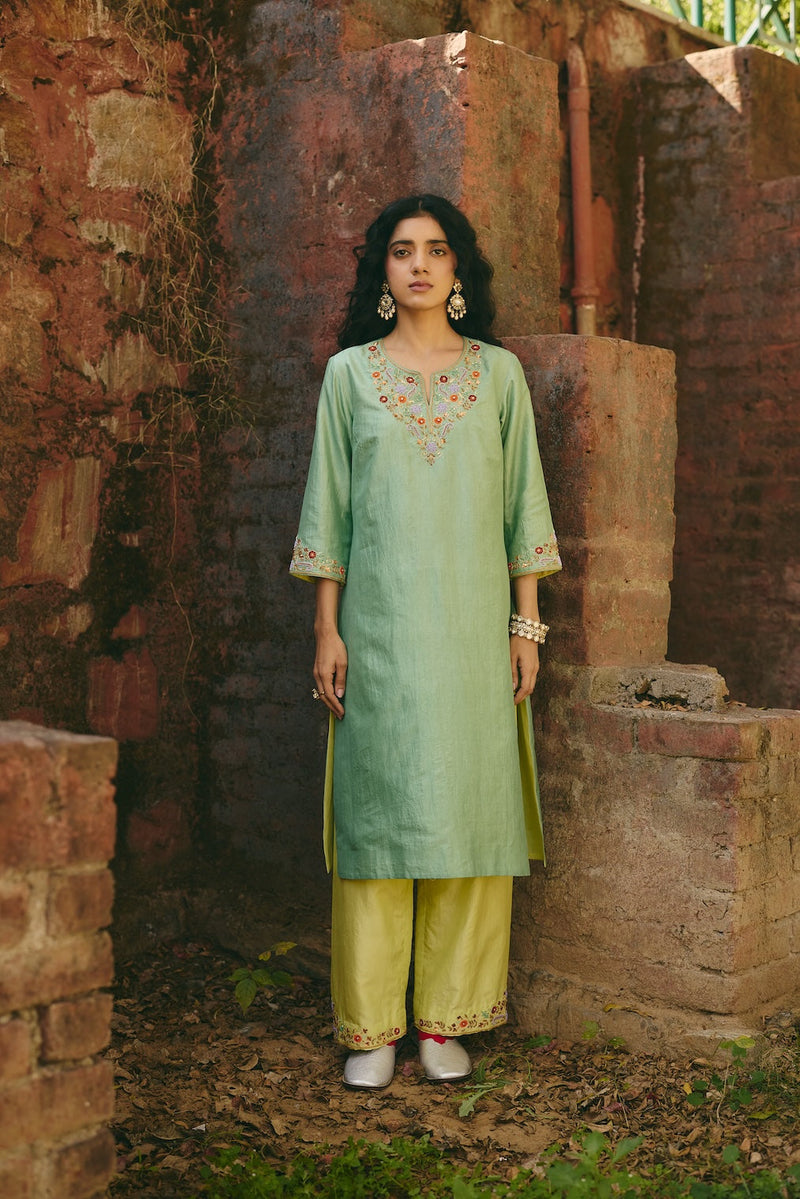
Virtual Consultation Guide: How Remote Custom Ordering Works
How to order custom Indian wear remotely. Step-by-step virtual consultation process—from first contact to delivery, w...
18 May 2026