

Best Dupatta Brands in India 2026: Handloom, Embroidered & Made to Measure
The dupatta is the most under-bought garment in the Indian wardrobe. Most people own dozens that came attached to something else and almost none they chose on purpose — which is odd, because it is the single cheapest way to make an outfit you already own look like a different outfit. A plain kurta and pant with three good dupattas is three looks. This is a guide to where to actually buy one in 2026, sorted by what you want it to do.
First: What Kind of Dupatta Are You Buying?
Almost every buying mistake comes from skipping this question. There are really only three briefs:
- The matcher. Bought to complete a specific outfit, in its exact colour. Hardest to buy remotely, because screen colour lies. Worth buying in person or from a studio that will colour-match to a swatch.
- The contrast. Bought to disrupt a plain suit — a rani pink over ivory, a forest green over gold. This is where most of the value sits, and where a single good piece earns its price across a dozen outfits.
- The standalone. A heavily worked piece bought as the star of the look, with the outfit underneath deliberately quiet. Usually organza, tissue or a fine chanderi, and usually the most expensive of the three.
Our guide to matching, contrasting and standalone dupattas goes deeper on choosing between them, and ten draping styles covers what to do with it once it arrives.
Handloom and Weave-Led Labels
Buy here when the fabric is the point — a Banarasi tissue, a real chanderi, an unembellished silk in a colour you cannot find anywhere else.
Ekaya Banaras
The reference point for contemporary Banarasi. Woven dupattas and odhnis in tissue, katan silk and brocade, in a colour palette far more modern than the traditional trade allows. If you want a heirloom-grade woven dupatta rather than an embroidered one, start here.
Indicative price: ₹15,000 upwards
Best for: Banarasi tissue and brocade, gifting.
Raw Mango
Handloom in saturated, unfussy colour — mashru, chanderi and silk in plains and small woven patterns. The dupattas read as textile rather than accessory, which is exactly why they work over the plainest possible kurta.
Indicative price: ₹12,000 upwards
Best for: Colour-led minimalism.
Taneira
The Titan-backed handloom retailer, with stores in most metros. Wide, dependable range across weaves and regions at mid-market prices, and the advantage of being able to see the colour in person before you commit.
Indicative price: ₹3,000–15,000
Best for: Buying handloom offline without a hunt.
Jaypore
Craft-cluster sourcing across the country — ajrakh, kalamkari, block print, ikat, mul cotton. The most reliable place to buy an everyday cotton dupatta that does not look like everyone else's.
Indicative price: ₹1,500–8,000
Best for: Everyday cotton and print.
Regional Craft Specialists
For a specific technique, go to the people who only do that technique.
Gamthiwala, Ahmedabad — bandhani
Generations-old bandhani and gharchola specialists. A real bandhani odhni has thousands of individually tied points and a price that reflects the hours; this is where you learn what that actually looks like.
Indicative price: ₹4,000 upwards, steeply higher for fine work
Best for: Bandhani, gharchola, Gujarati and Rajasthani wedding wear.
Lucknow chikankari studios
Chikankari dupattas in mul, cotton and georgette are Lucknow's great everyday luxury, and labels like Ada have made the good end of it buyable online. Check the reverse: hand chikankari shows the shadow-work float and knots that machine embroidery cannot fake.
Indicative price: ₹2,000–25,000 depending on stitch density
Best for: White-on-white, summer, understatement.
1469 and Punjab's phulkari labels
Phulkari — the darn-stitch floral embroidery of Punjab — is a dupatta craft first and foremost. Buy from Punjab-rooted labels rather than generic marketplaces, where machine imitations dominate.
Indicative price: ₹2,500–20,000
Best for: Phulkari, bagh, Punjabi occasion wear.
Designer and Couture
Anita Dongre
Gota patti and Rajasthani craft in a wearable, wedding-guest register, widely stocked and easy to try on. Dupattas mostly sell as part of sets rather than standalone.
Indicative price: ₹20,000 upwards within ensembles
Best for: Gota patti, pastel wedding wear.
Torani
Romantic, layered, heavily storied collections with organza and tissue dupattas that function as the whole look. Bought when you want the dupatta to be the outfit.
Indicative price: ₹25,000 upwards
Best for: Statement standalone dupattas.
Sabyasachi
The bridal universe, where a dupatta is rarely sold alone and the odhni is part of a much larger commitment. Included here for completeness rather than as a practical route to one good dupatta.
Indicative price: Within bridal ensembles only
Best for: Bridal, heirloom intent.
Made to Measure: Where We Come In
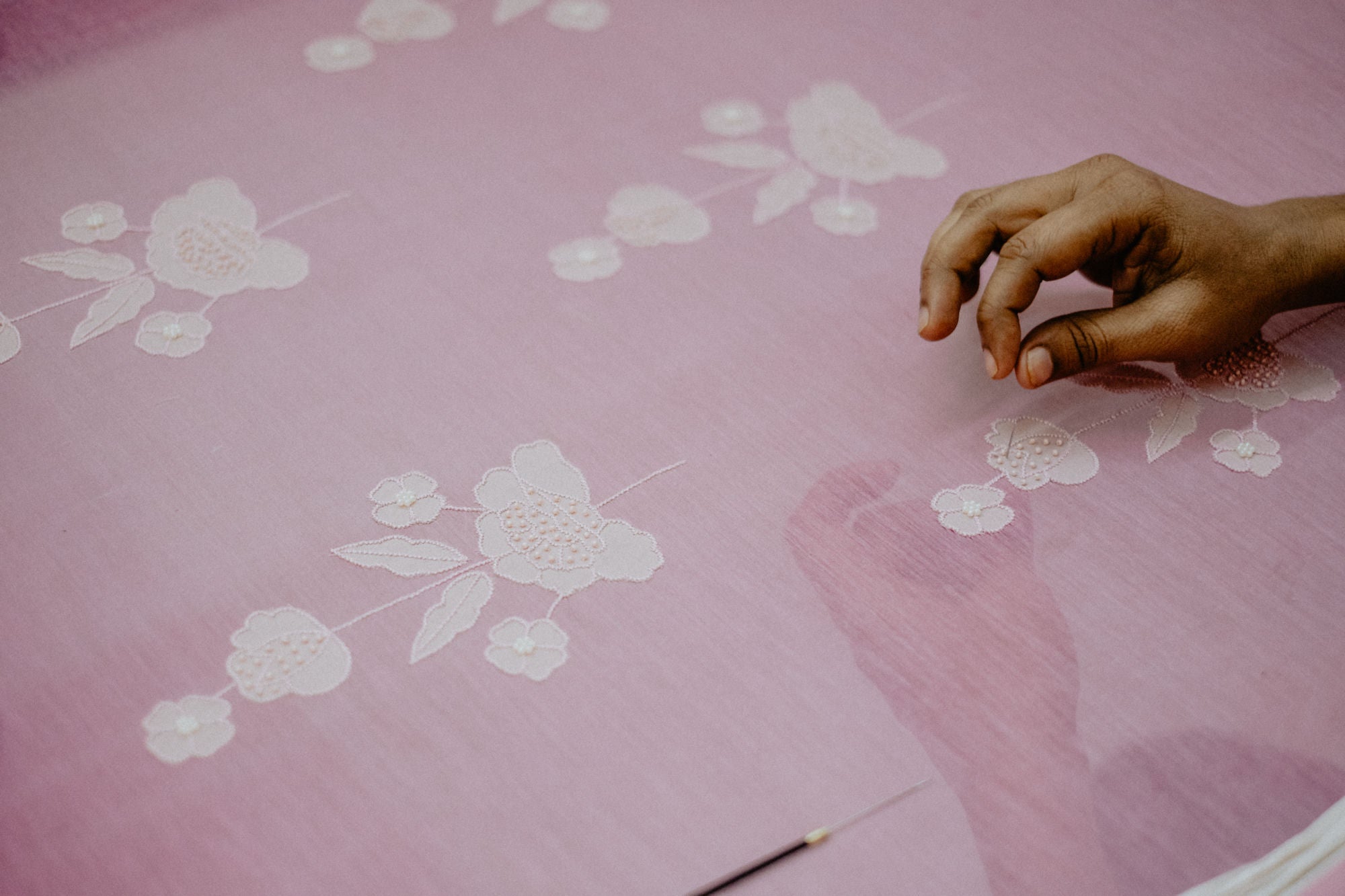
We will state our interest plainly: dupattas are one of the largest parts of what our Jaipur workshop makes, and they are the piece we most often recommend when someone wants to change their wardrobe without replacing it. Every one is hand-embroidered by karigars over 4–5 weeks, which means length, colour and the density of the border are all decisions rather than defaults.
The Zaira dupatta is luminous tissue in antique gold, worked with gota patti, zari, resham and sequins — the standalone piece, bought to be the loudest thing in the room over a plain kurta. The Noorejhan chanderi dupatta carries hand-done marodi with sequin and thread work, its border tracing vine motifs in a zardozi-inspired vocabulary.


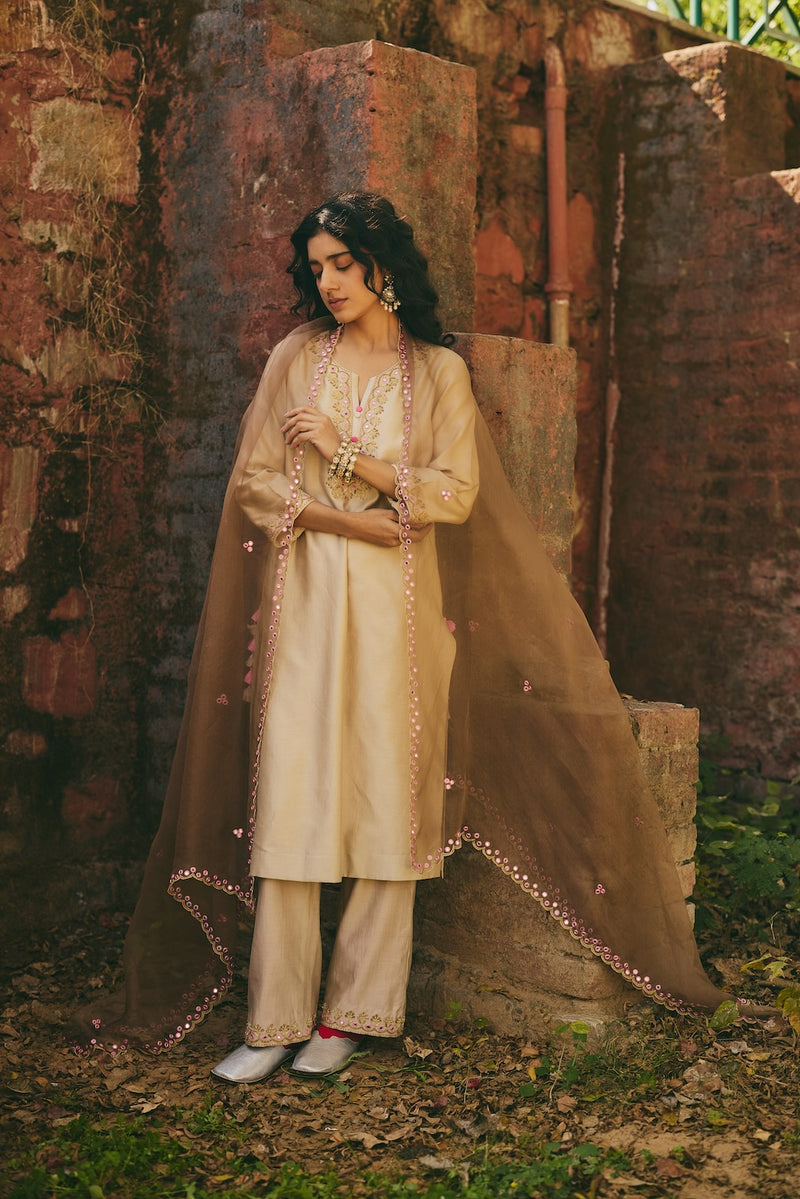
For the contrast brief, the Falak dupatta in deep forest green organza silk brings a colour almost nothing in a standard wardrobe already has, and the Aftaab dupatta in rich maroon organza silk is hand-embroidered along the border with delicate gota and thread work. The Gulnaaz dupatta is bandhani silk in a muted brown, hand-embroidered with zardozi, sequins and cutdana — bandhani for people who do not want the usual bandhani colours.


And for the sheer, everything-goes-with-it end, the Adhira dupatta in ivory organza carries mirror work and resham thread work, while the Rimza chanderi dupatta does the quiet, luminous version of the same idea. The full dupatta collection runs to thirty-seven pieces across organza, chanderi, tissue and silk.

How to Judge a Dupatta Before You Pay
- Check the length and width. A dupatta under 2.25 metres will not drape over the head or pleat on the shoulder properly. Width matters as much as length for the over-the-head drape.
- Look at the reverse. Hand embroidery shows thread paths and small irregularities; machine work is identical to the millimetre. Our buyer's guide covers the tells.
- Ask whether the zari is real. Metal-wrapped thread ages differently from metallic polyester — see real zari versus imitation.
- Check the finish on the edges. A rolled or piped edge on organza is the difference between a piece that survives five years and one that frays in a season.
- Weight the drape, not the photo. Organza holds a shape; chanderi falls softly; tissue does both and creases. Choose by how you want it to sit, not by how it photographs flat.
Dupattas, Hand-Embroidered to Order
Thirty-seven pieces across organza, chanderi, tissue and silk — each one hand-embroidered in Jaipur over 4–5 weeks. Browse the dupatta collection, or read our guide to ordering custom for the first time.
Shop DupattasFrequently Asked Questions
Which brand is best for dupattas in India?
It depends on the brief. Ekaya Banaras and Raw Mango for handloom weaves, Jaypore for everyday cotton and print, Gamthiwala for bandhani, Lucknow studios for chikankari, and made-to-measure studios for hand-embroidered occasion dupattas cut and coloured to your outfit.
How much should a good dupatta cost?
An everyday cotton or block print dupatta sits around ₹1,500–4,000. Handloom silk and chanderi run ₹5,000–15,000. Hand-embroidered occasion dupattas in organza or tissue typically start around ₹15,000 and rise with the density of the embroidery, because the price is mostly karigar hours.
What length should a dupatta be?
2.25 to 2.5 metres is the usable range for most drapes. Anything shorter will not sit over the head or pleat on the shoulder without pulling. If you drape over the head regularly, width matters as much as length.
Can you buy a dupatta on its own?
Yes, and it is usually the smartest purchase in Indian wear. Handloom labels, craft retailers and made-to-measure studios all sell dupattas standalone. Couture houses generally do not — there the dupatta comes with the ensemble.
Made to order in 4–5 weeks
Have an event date? We’ll tell you exactly when to order by.
We take a limited number of orders each month — secure your slot early.
Not sure where to start?
Tell us what you're dressing for and we'll help you choose — fabric, fit, colour, and timeline — over WhatsApp.
Your Cart
Pieces from this story
All pieces →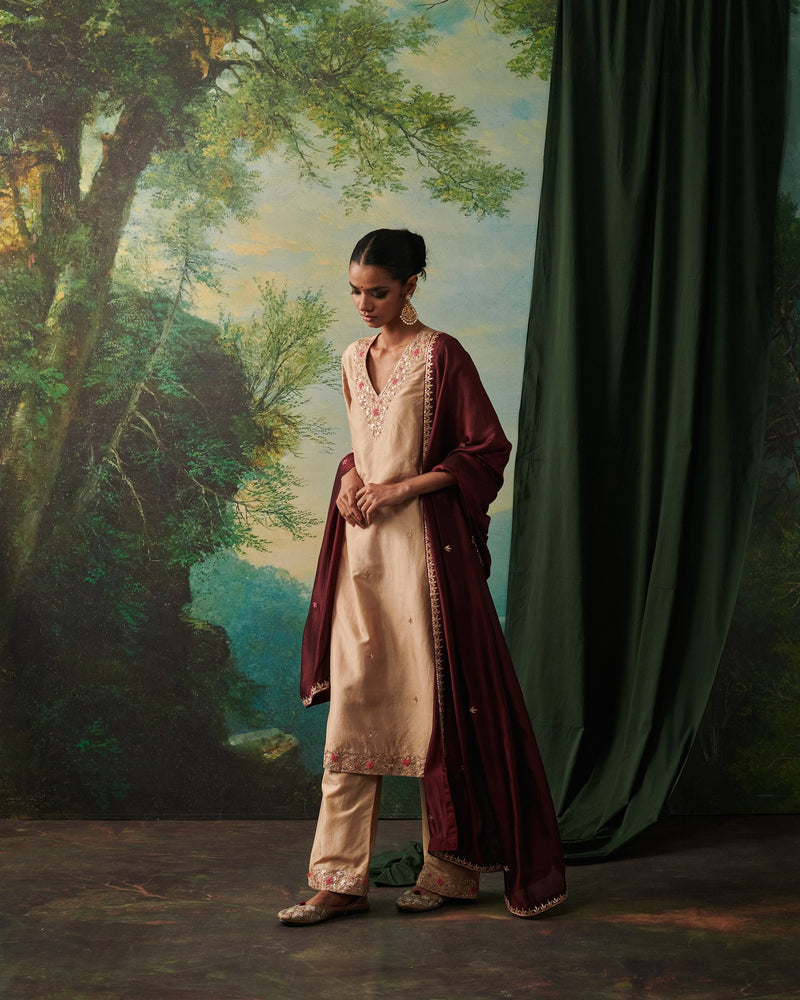
Keep reading
The journal →
Kids' Bhai Dooj Outfit Ideas: What to Dress Them In for Tika Day
Handmade by karigars Made to your measurements Fit guarantee Ships worldwide As seen in GraziaElle Graduat...
7 September 2026
Kids at Chhath Puja: What to Dress Them In for the Ghat
Handmade by karigars Made to your measurements Fit guarantee Ships worldwide As seen in GraziaElle Graduat...
7 September 2026
Kids' Ganesh Chaturthi Outfit Ideas: What to Dress Them In for Ganpati
Handmade by karigars Made to your measurements Fit guarantee Ships worldwide As seen in GraziaElle Graduat...
7 September 2026