
What to Wear to a Dawoodi Bohra Wedding: A Guest's Guide to the Nikah, the Thaal and the Rida
If you are not a Bohra and you have been invited to a Dawoodi Bohra wedding, you do not need to wear a rida. The rida is the community's own garment of faith. What you do need is modest coverage: sleeves, a long hemline, nothing sheer or low-cut, and a dupatta you can lift over your head. You will want it for the thaal, the shared meal, because heads are covered while eating. A kurta set, an anarkali or a sharara set in a warm, festive colour is exactly right. Keep your heaviest piece for the evening reception.
The Dawoodi Bohras are a close-knit Muslim community within the Ismaili branch of Shia Islam, with deep roots in Gujarat and their spiritual centre in Mumbai, and families from Surat to Karachi, East Africa and the Gulf. Their weddings have a look all their own, and much of it comes down to what the women wear and how everyone eats. Customs differ from family to family and city to city, so treat this as a map rather than a rulebook. If you are unsure, ask the person who invited you.
First, an Honest Note on What We Make
We do not make ridas, and we would not try to. A rida is made within the community, for women who have taken an oath of faith, and it carries a meaning that is not ours to borrow. We do not make menswear either, so if you are shopping for the men in your family, look elsewhere. What we make are hand-embroidered kurta sets, anarkalis, sharara sets, lehengas and dupattas. They suit a non-Bohra guest at the nikah, the meal and the reception. Everything below is a piece we actually make, described as it is.
The Rida, Explained
You will notice the ridas the moment you walk in. A rida is a two-piece garment. The pardi covers the head and the upper body to the waist, leaving the face open. The ghagra is a loose skirt that falls from the waist to the ankles. Most modest garments are dark. Ridas are famous for the opposite: bright colours, prints and patterns, often trimmed with lace, embroidery or crochet. At a wedding, the room is a garden of pinks, greens, blues and florals.
A Bohra girl begins wearing the rida after her misaq. This is the oath of allegiance to the community's faith and its spiritual leader, the Da'i al-Mutlaq, and it is taken on reaching adulthood. In community practice, the bride and groom will both have taken their misaq long before the nikah. The men wear the community's own dress too. It is a white three-piece outfit of kurta, saya (a long overcoat) and izar (loose trousers), finished with a white crocheted topi with a gold border.
For a guest, that means two things. Colour is welcome, so you do not need to dress quietly. And coverage matters more than anything: a sleeveless blouse will stand out in a room where most women are covered from head to ankle.
The Nikah
The nikah is the marriage itself, solemnised under Islamic law with the consent of the bride, her guardian and two witnesses. Among Dawoodi Bohras it is usually performed by a religious officiant of the community. Many couples marry at a Rasme Saifee, a collective wedding where many nikahs are solemnised together. The tradition began in Jamnagar in 1960 under Syedna Taher Saifuddin, to keep weddings simple and affordable.
One practical point: some Bohra masjids have historically admitted only community members. If the nikah is at a masjid, ask the family where guests should be, and when. Depending on the venue, guests may be invited to the meal and the reception rather than the nikah itself.
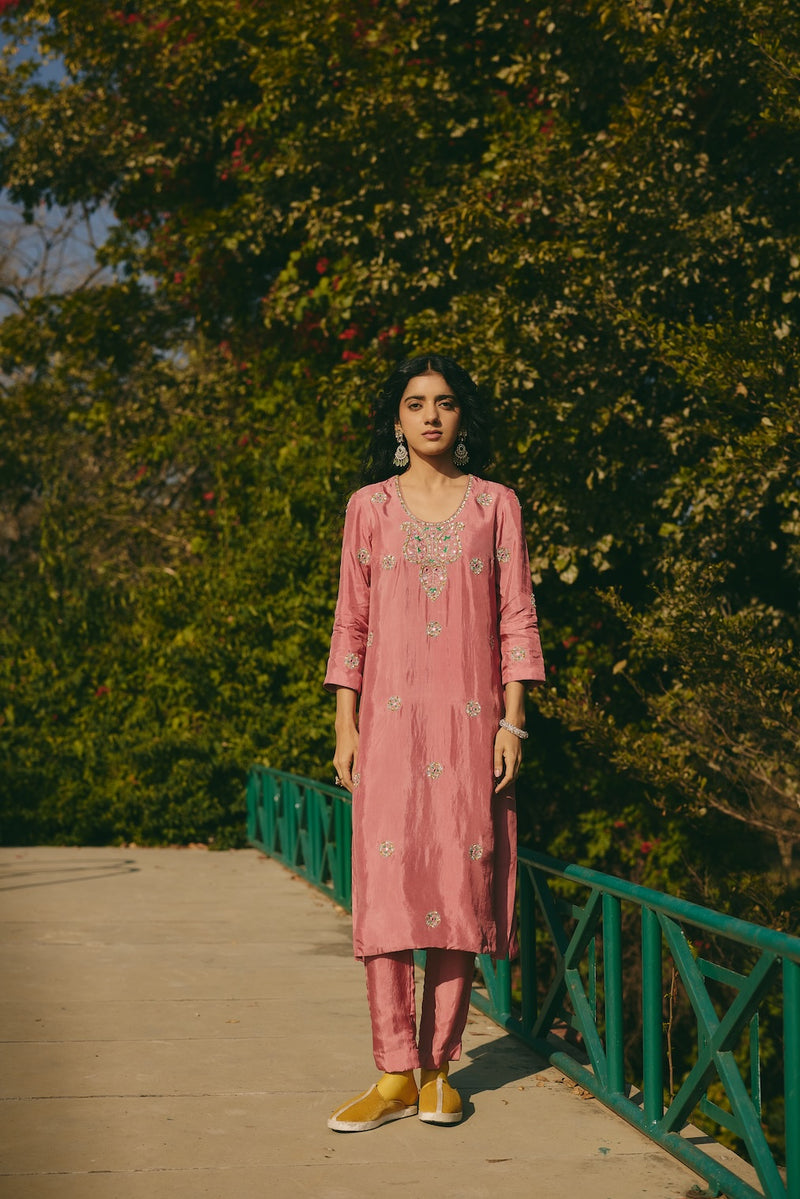
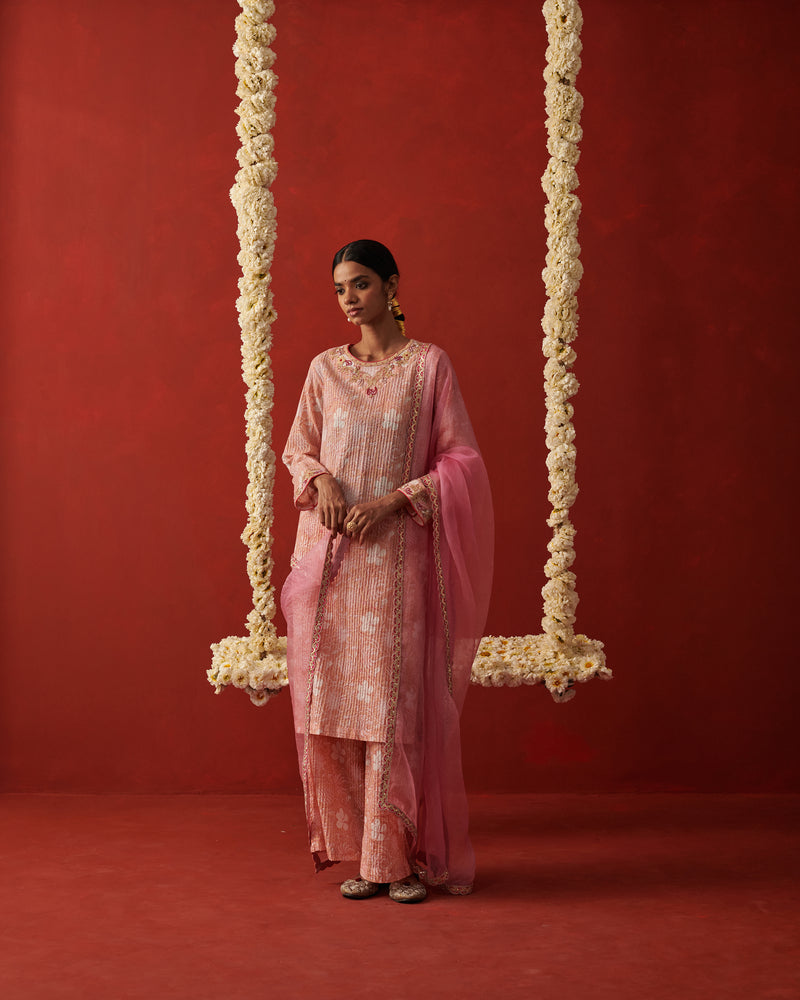
If you are at the nikah, dress as you would for any mosque or religious gathering. Wear sleeves to the wrist or at least three-quarter length, a hem to the ankle, and a dupatta ready to cover your hair. Soft festive colour works well in daylight. The Saher & Naazli set (₹32,500) is a soft rose-pink silk kurta with a scoop neckline and three-quarter sleeves. An ornate medallion sits on the bodice, and circular floral butis in green, orange and pink resham are scattered across it, with mirror work, sequins and fine bead work. It comes with a matching straight pant.

For something quieter, the Vanya & Bani set (₹23,425) is warm beige silk, also with a scoop neckline and three-quarter sleeves. Its neckline has appliqué guldasta (bouquet) motifs in dusty rose and peach resham, with nakshi and zardozi on the stems and borders. The Oshani & Vritika set (₹23,500) is champagne-gold satin with a split V-neckline and three-quarter sleeves. Its embroidered yoke has mirror work, nakshi, bead, cutdana and aari, with pink accents.
Our nikah outfit guide covers the ceremony across communities.
The Thaal: How to Dress for the Meal
This is the part non-Bohra guests talk about afterwards. A Bohra meal is eaten from a thaal, a large round steel platter shared by about eight people. Traditionally it sits on a stand called a tarakti, on a square cloth called a safra, and everyone sits on the floor around it. A server comes round with a chelamchi lota, a basin and jug, so each person can wash their hands. The meal begins with a pinch of salt, which everyone tastes before the first dish arrives. It also ends with salt.
The order surprises newcomers. A sweet dish comes first, then courses of savoury (kharaas) and sweet (mithaas) take turns. At celebrations there may be sodannu, rice cooked with ghee and sugar. Food is served only when everyone at the thaal is seated, because the portions are measured for that table. Nothing should be left on the platter; in 2016 the community's leadership even trimmed the dishes allowed at wedding feasts to cut waste.
Every part of that shapes what you should wear:
- You will sit on the floor. Choose a silhouette with room to sit cross-legged: a flared anarkali, a sharara, or a straight kurta with relaxed pants. A narrow skirt or a heavy, structured lehenga is hard work at floor level. Some wedding venues now set thaals at tables, but do not count on it.
- Heads are covered while eating. Bohra women already have the pardi. As a guest, bring a dupatta that stays on your head while you lean over a platter.
- You eat with your right hand, from a shared plate. Avoid wide bell sleeves, trailing tassels and heavily beaded cuffs that dip towards the food. Three-quarter sleeves are ideal here.
- Wait for everyone. Do not start, or leave, before the rest of your thaal. It is the whole point of the meal.
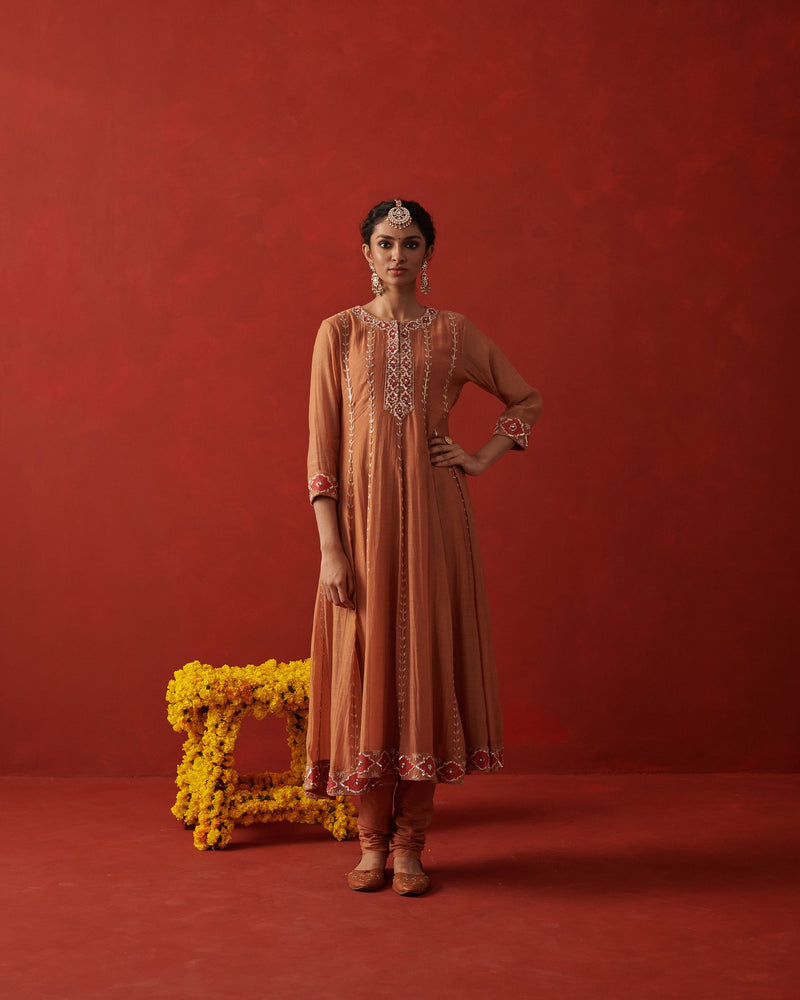
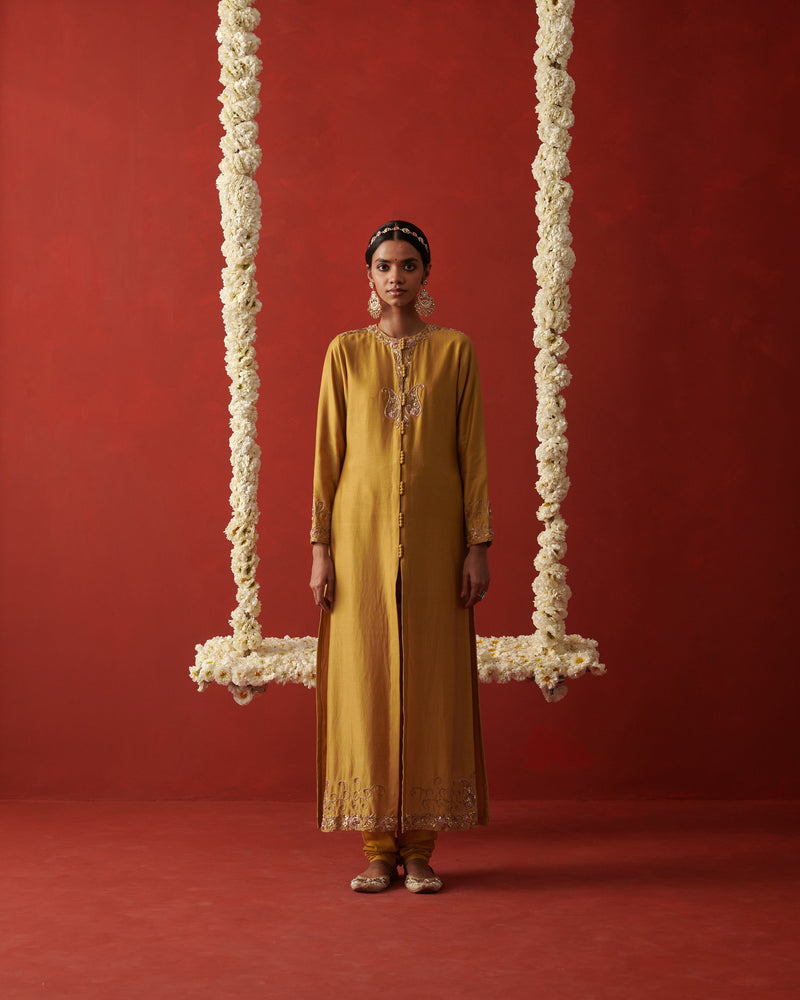
Anarkalis are the easiest choice for floor seating. The Heeriye & Reva set (₹19,500) is a rich cinnamon-brown anarkali in Chanderi with a tonal churidaar. Its yoke has delicate florals in resham, cutdana and sequins, and the flared hem has a contrast border in scarlet and ivory. The Suroor anarkali (₹22,775) is cut from bandhej Banarasi silk with woven gold bootis. It has sequin work at the neckline and sleeves, and full-length gathers that sit easily when you are seated. If you prefer a kurta, the Banni & Aayat set (₹19,350) is soft Chanderi with a full-length kurta. It has floral and paisley embroidery on the yoke, cuffs and hem, hand-covered buttons down the front and churidar-style pants.


The Dupatta Does the Work
Your dupatta will go over your head at the nikah and at the thaal, so choose it for how it behaves as well as how it looks. Crisp organza and tissue slide off hair; a softer, lighter fabric stays put more easily, and a pin or two at the back helps. Our guide to draping a dupatta over your head shows several secure ways to do it.
- The Zarveen dupatta (₹9,500) is sheer Chanderi in soft sage green with a delicate zari border.
- The Ishq dupatta (₹5,200) is plain organza with a scalloped lace border. It is a quiet nod to the lace you will see all round the room, without imitating a pardi.
- The Afsana dupatta (₹10,500) is periwinkle organza silk with scattered bootis and a border in marodi, resham and sequins.


Browse all our dupattas to match yours to the outfit.
The Procession and the Reception
The community describes wedding processions in which the groom, and often the families' young children, ride on horseback to music. The evening reception is where a guest can dress up most: same coverage, richer fabrics.
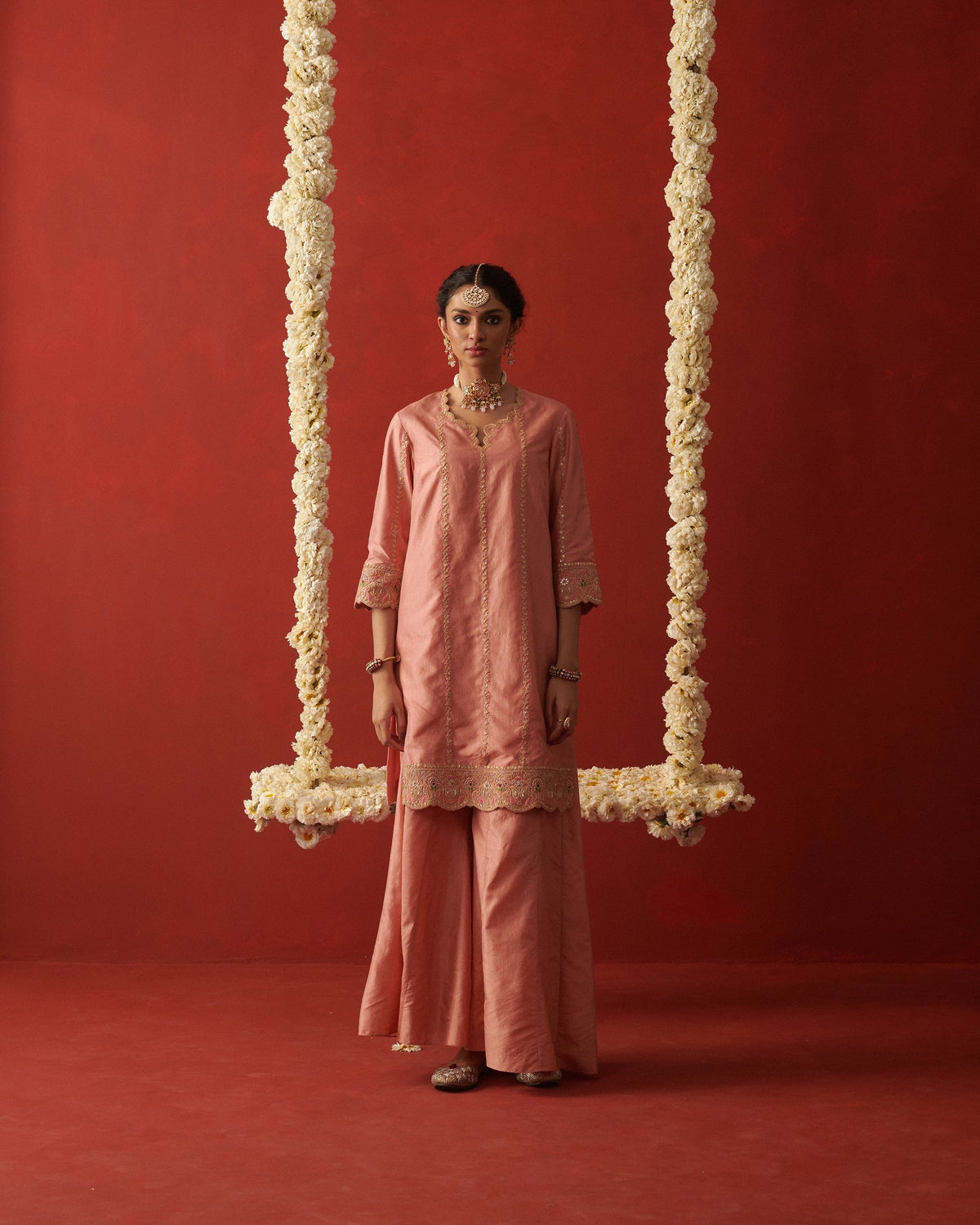
A sharara set moves well and sits well, which makes it perfect if the evening has a thaal as well as a stage. The Ruhma & Rabaab set (₹32,500) is a coral-pink silk kurta embroidered in marodi, resham and sequins. Paisley and floral vines run along the neckline, cuffs and hem, with scalloped borders, and it comes over a flared, fluid sharara. The Rohi & Zoey set (₹25,795) pairs a luminous yellow tissue-silk kurta with a pale mint sharara in wide pleats. It is embroidered at the neckline and sleeves in rose gold and pistachio, with zardozi, sequins, cutdana and bead work. Our sharara collection has more.

For a deeper evening colour, the Ameera & Hoorain set (₹32,500) is rich sapphire-blue silk. It has florals at the neckline and geometric, linear embroidery along the sleeve hems and pant hem, in marodi, resham, sequins, cutdana, bead and aari.
The traditional Bohra festive and bridal ensemble is itself a skirt-based one. It is the ghaghra badan, also called the jori: a long flowing skirt, a blouse and a dupatta with a decorated border. So a lehenga with a sleeved blouse is at home at the reception. The Raanisa & Mahira set (₹35,500) is a vibrant sindoori-orange lehenga in woven booti silk, finished at the hem with gota, marodi, bead and thread work. Its matching blouse is hand-embroidered at the neckline, sleeves and waist. Wear it with a full dupatta, and skip it if you will be eating on the floor.
Our walima outfit guide covers the groom's family's reception at Muslim weddings more broadly. If you have a Hyderabadi wedding on the calendar too, our Hyderabadi wedding guest guide explains how differently that city dresses.
If There Are Home Functions Before the Wedding
Bohra families hold their own pre-wedding rituals at home, and these vary between families and towns; published accounts do not agree, so we have not named them. If you are invited to a home gathering or family dinner, dress as you would for the nikah, a little lighter and brighter.
Three Things Worth Knowing
- Do not wear a rida unless a Bohra host offers you one. It is a garment of faith, not a costume.
- Sleeves and length first, then colour. A blouse that breaks the rules can wait for another wedding.
- Get your sleeves made. We cut every adult piece to your measurements at no extra charge, so you can ask for longer sleeves, a higher neckline or a longer kurta. Our custom modest wear guide explains what is possible.
Going to a Bohra Wedding This Season?
Every piece is made to order in our Jaipur atelier in 4–5 weeks, plus 3–7 days for shipping. We cut it to your measurements at no extra charge, including longer sleeves, a higher neckline or a longer hem. An order placed today will reach you in the third or fourth week of November at the earliest, so a December or winter wedding is comfortably in range. Message us on WhatsApp with the date and the functions you are attending, and we will tell you honestly what can reach you in time.
Browse the CollectionMore guides: Nikah · Walima · Hyderabadi weddings · Gujarati weddings · Modest wear
Frequently Asked Questions
What should a non-Bohra woman wear to a Dawoodi Bohra wedding?
Wear something modest and festive: sleeves to at least three-quarter length, an ankle-length hem, nothing sheer or low-cut, and a dupatta you can wear over your head. A kurta set, an anarkali or a sharara set in a warm colour is ideal. You are not expected to wear a rida.
What is a rida?
The rida is the two-piece garment worn by Dawoodi Bohra women. The pardi covers the head and upper body to the waist, leaving the face open, and the ghagra is a loose skirt from waist to ankle. Unlike most modest garments, it is known for bright colours, patterns and lace. Bohra girls begin wearing it after their misaq, the oath taken on reaching adulthood.
What is the etiquette at a Bohra thaal?
Around eight people share one large platter, traditionally sitting on the floor. Hands are washed at the table, heads are covered, and the meal begins and ends with a pinch of salt. A sweet dish comes first, then savoury and sweet courses alternate. Wait until everyone at your thaal is seated, eat with your right hand, and try to leave nothing on the platter.
Can I wear a lehenga to a Bohra wedding?
Yes, at the reception, with a sleeved blouse and a full dupatta. The traditional Bohra festive ensemble, the ghaghra badan, is itself skirt-based. For a meal eaten on the floor, though, an anarkali or a sharara set is far easier to sit in.
Do I need to cover my head at a Bohra wedding?
Carry a dupatta and expect to use it. Heads are covered during a Bohra meal, and at the nikah or any religious part of the day it is respectful to cover your hair. A light, soft dupatta stays in place more easily than a crisp one.
Made to order in 4–5 weeks
Have an event date? We’ll tell you exactly when to order by.
We take a limited number of orders each month — secure your slot early.
WhatsApp me my order-by date + a shortlistNot sure where to start?
Tell us what you're dressing for and we'll help you choose — fabric, fit, colour, and timeline — over WhatsApp or on a video call.
Your Cart
Pieces from this story
All pieces →Not sure which piece, or need it by a date? Book a video consultation Ask us on WhatsApp




Keep reading
The journal →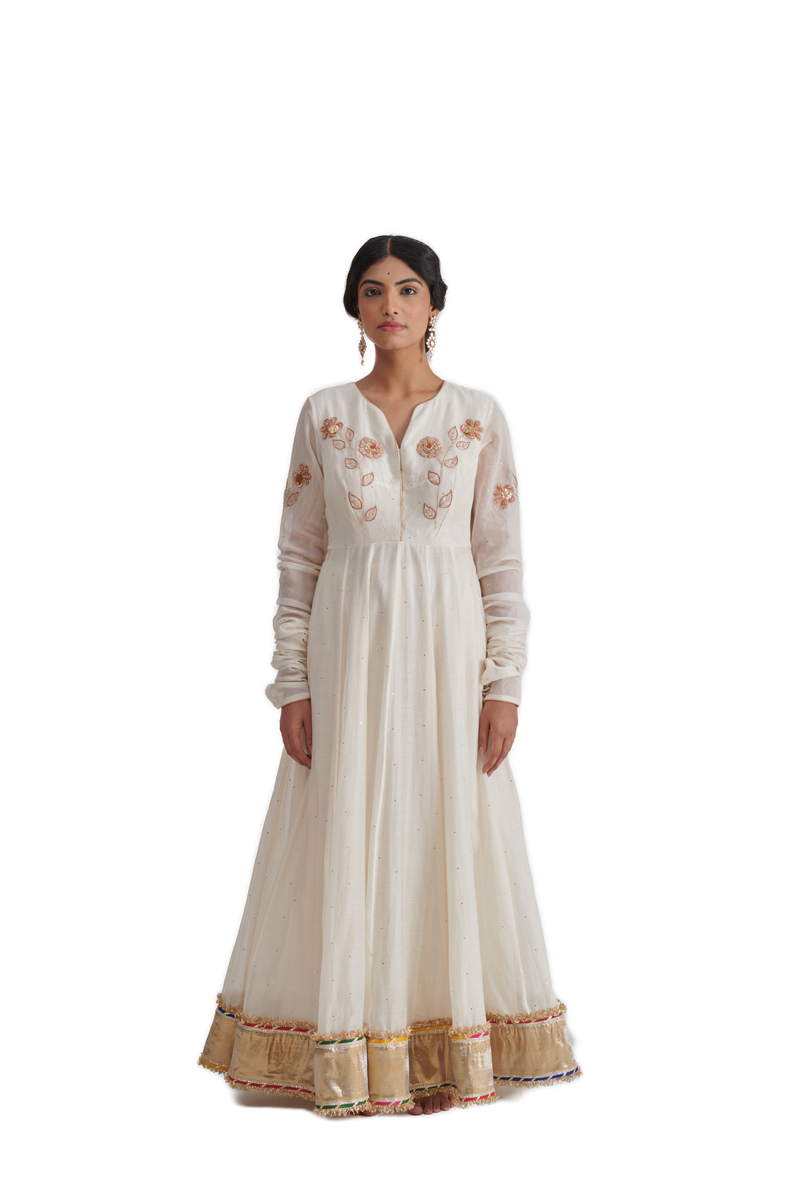
Nikah Outfit Ideas: What to Wear to a Nikah Ceremony
Beautiful nikah outfit ideas for brides and guests — from white and ivory to pastels and jewel tones. Sarees, sharara...
5 March 2026
How to Drape a Dupatta Over Your Head: A Styling Guide
How to drape a dupatta over your head elegantly for a pooja, gurudwara, temple, or wedding — draping styles, how to p...
29 July 2026
Walima Outfit Ideas: What to Wear to a Walima Reception 2026
What to wear to a walima reception — outfit ideas for the bride and guests. Handcrafted sarees, kurta sets, and shara...
10 March 2026