

What to Wear to a Haryanvi Wedding: A Guest's Guide, Function by Function
A Haryanvi wedding is, above all, big. Big families, big baraats, big pots of food, and a guest list where "close relatives" can run into the hundreds. It is also a wedding that looks completely different depending on where it happens. The same family might hold the sagai at a farmhouse off the Gurugram expressway and the pheras in the courtyard of the ancestral house in a village outside Rohtak or Bhiwani — and an outfit that works perfectly at one can be wrong at the other.
This guide walks through the main functions of a Haryanvi wedding, what each one asks of a guest, and how to dress for the farmhouse version and the village version of the same day. One honest note before we start: the traditional dress of Haryanvi women — the daaman (a long, heavily flared skirt), the kurti and the chunder (a long, bordered head-covering) — is regional costume we do not make. What we can do is point you towards pieces that carry the same spirit: saturated colour, gota patti, bandhani and a dupatta generous enough to go over your head.
Customs vary between communities — Jat, Ahir, Bania, Brahmin and Punjabi-origin families all do things a little differently — and between districts. Treat the order below as a common pattern, not a rulebook, and ask the family if you are unsure.
Sagai and Roka
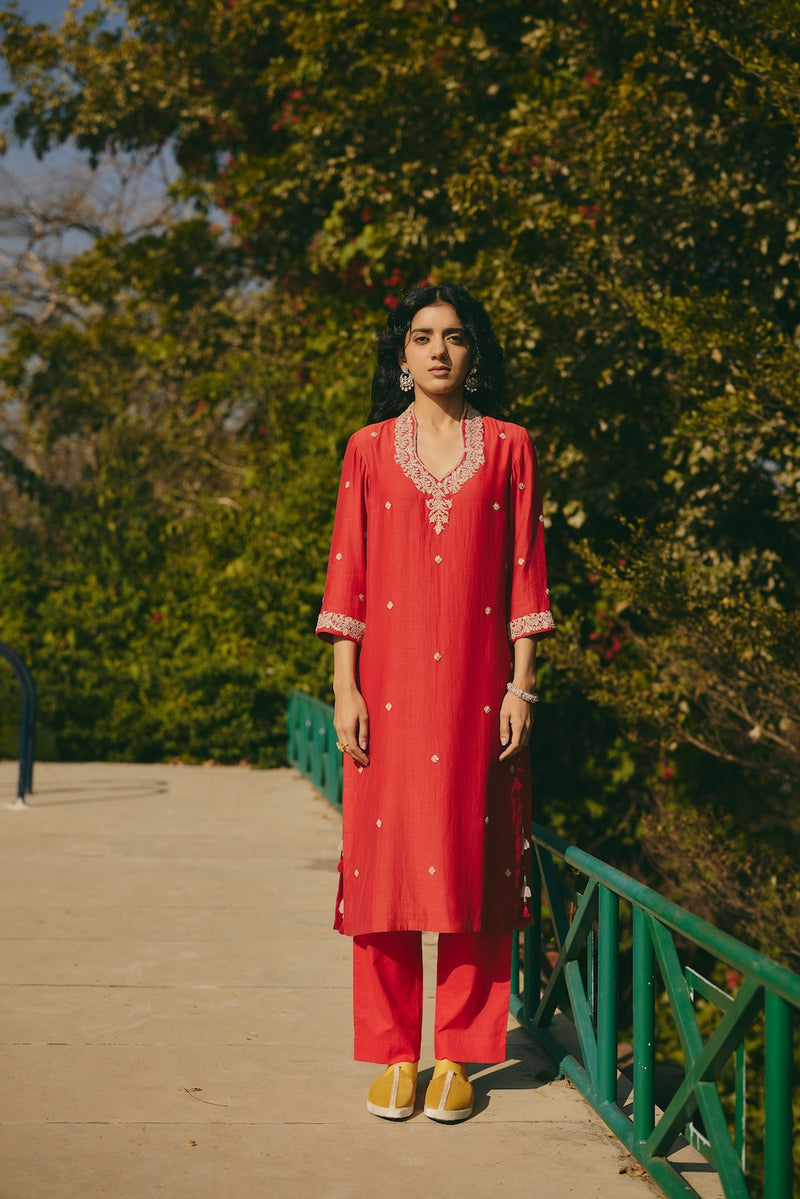
The formal engagement is usually a family affair — gifts exchanged, elders seated, a meal. Dress as you would for any north Indian engagement: festive but not bridal. A rich kurta set in a warm colour is exactly right. The Fariha & Nazeera set (₹28,395) is crimson Chanderi with a deep V-neck framed by a dense yoke of aari and marodi embroidery in golden vines — formal enough for the elders, light enough for a daytime function. For more ideas see our roka outfit guide.
Bhaat Nyotna and the Bhaat
Around a month before the wedding, the mother of the bride or groom goes to her own brothers' home to invite them to bring the bhaat — the gifts of clothes, jewellery and money from the maternal side. On the day itself, the arrival of the bhaat is one of the most emotional moments of the whole wedding. We have written about this ritual in detail in our mayra and bhaat ceremony guide, so we won't repeat it here — except to say that if you are the mother receiving the bhaat, this is your moment, and a statement dupatta is the traditional way to mark it.
The Meeka dupatta (₹16,500) is fiery orange organza silk with panels of gota patti and marodi embroidery framing the corners — the closest thing we make to the bright, bordered chunder of a Haryanvi wedding, and light enough to wear over the head for hours.

Ban Baithana, Chak Puja and Ubtan
In the days before the wedding, both families hold small pujas at home. Ban baithana begins with worship of Lord Ganesha; in many families the women also perform chak puja, worshipping the potter's wheel. Then comes the ubtan — a paste of turmeric, besan and mustard oil (sandalwood and barley flour appear in some recipes) — applied to the bride or groom by the women of the family while folk songs are sung.
These are home functions: floor seating, close quarters and turmeric everywhere. Wear something you can sit cross-legged in and do not mind getting marked. Yellow is the natural choice and forgives a stray smear. The Zuhra & Reha set (₹28,450) is sunshine-yellow Chanderi with all-over floral bouquets hand-embroidered in hot pink and orange resham — cheerful, relaxed in cut, and made for a daytime gathering. Our haldi outfit guide has more on dressing for turmeric.
Ghudchadi
On the wedding day, the groom's turban is tied, the sehra placed over his face, and he rides a mare — the ghudchadi (also spelt ghurchari) — often to offer prayers at the family deity or local temple before the baraat sets off. The women of the family follow on foot, singing.
For a guest on the groom's side, this means walking on a road or village lane, in daylight or early evening, possibly for a while. Keep your hem off the ground, wear shoes you can walk in, and make sure your dupatta is pinned. A kurta set works better than a lehenga here.
The Baraat and the Welcome
The baraat is loud, long and joyful — dhol, dancing, and a procession that can take far longer than the distance suggests. At the bride's door the groom touches the toran with a sword or a neem stick before entering. If you are with the bride's family, you will be part of the welcome; our guide to the milni and baraat welcome covers what to wear to receive the groom's side.
This is the function to go bright. Haryanvi weddings are not the place for quiet beige; sindoori orange, red and rani pink are what the day looks like. The Raanisa & Mahira lehenga (₹35,500) is vibrant sindoori orange woven booti silk with gota, marodi, bead and thread work along the hem, and a pleated lining that adds volume when you dance. The Mehergul & Abroo lehenga (₹25,000) is rani-pink silk with a hand-embroidered blouse in sequins, cutdana and thread work, and fluid gathers in the skirt.


Khoriya Night
When the men leave with the baraat, the women of the groom's household stay behind — and in central Haryana, that night traditionally belongs to khoriya. It is a women-only evening of song, dance and role-play, in which the women act out their own version of the wedding: someone dresses as the groom, someone as the new bride, someone as the mother-in-law, and nothing about the script is predictable.
If you are invited, you are family. The costume for khoriya is often the traditional daaman and chunder, borrowed from an aunt's trunk; under it, or instead of it, wear something comfortable enough to dance in on a floor. The Jazabah & Saiyan set (₹27,500) — deep red silk with tonal gota patti, marodi, resham and bead work along the neckline, sleeves and hem — is the kind of piece that looks festive in a photograph and moves easily at midnight.
Pheras and Kanyadaan
The ceremony itself — jaimala, gotra puja, kanyadaan, the seven pheras and sindoor daan — often runs late into the night. Two things matter for guests. First, head covering: in many Haryanvi families, particularly in the village, married women cover their heads in front of elders and during the rituals. A dupatta that stays put is essential — see our guide to draping a dupatta over the head. Second, cold: the Haryana wedding season runs through the winter, and a courtyard at 2 a.m. in January is properly cold.
The Sahiba kurta set (₹27,500) solves both. It is deep maroon velvet, hand-embroidered in antique gold with kasab dori, metal sequins and zardozi, with a matching velvet palazzo and a sheer maroon organza dupatta finished with a kinari border. For a lighter base, add a bandhani dupatta over your shoulders: the Gulnaaz dupatta (₹8,500) is bandhani silk in a muted brown with zardozi, sequin and cutdana paisleys at the corners.


Vidaai
The bride's farewell is emotional and usually happens in the early morning after the pheras. If you have stayed up all night, the outfit you wore to the ceremony is fine — no one changes for vidaai. If you are arriving fresh, choose something softer than the night before. Our vidaai outfit guide goes further.
Farmhouse or Village? Dressing for the Venue
Many Haryanvi families now split the wedding between an NCR venue and home. The two ask for different things:
- Gurugram or Delhi farmhouse: evening functions, lawns, a cocktail-leaning crowd. Lehengas, shararas and statement sarees all work. Watch for stiletto heels sinking into grass — a block heel is kinder.
- Village home: courtyards, floor seating, uneven ground, and many elders. Head covering is more likely to be expected, sleeveless blouses may draw attention, and flat juttis beat heels every time (see our footwear guide). Choose sleeves, a dupatta that covers, and a fabric that will survive dust.
If you are attending both, a kurta set with a large dupatta is the most adaptable choice. The Suroor anarkali (₹22,775) is another: it is Bandhej Banarasi silk with softly glimmering woven gold bootis and sequin work at the neckline and sleeves, and its full-length gathers look as right in a courtyard as on a lawn. For winter layering ideas, see our winter wedding guide.
Colours to Wear and Avoid
Go warm and bright: red, orange, rani pink, yellow, magenta. Bandhani and gota patti feel instantly at home. Many north Indian families still avoid all-black and all-white at the main ceremony, so keep those for the farmhouse cocktail evening if at all. And leave the heaviest red lehenga to the bride — a red kurta set or a red dupatta is plenty.
Going to a Haryanvi Wedding This Season?
Every piece is made to order in 4–5 weeks, plus shipping, and cut to your measurements at no extra charge. Message us on WhatsApp with the wedding date and we'll tell you honestly what can reach you in time — and which piece will work for both the farmhouse and the village.
Browse Lehengas Browse DupattasMore regional wedding guides: Punjabi · Rajasthani · Sindhi & Marwari
Frequently Asked Questions
What should a guest wear to a Haryanvi wedding?
Bright, festive Indian wear — kurta sets, anarkalis, lehengas or sarees in red, orange, pink or yellow — with a dupatta large enough to cover your head during the rituals. Choose lighter, comfortable pieces for home functions like the ubtan, and your most festive outfit for the baraat and wedding night.
What is the ghudchadi ceremony?
Ghudchadi (also spelt ghurchari) is the ritual in which the groom, wearing his turban and sehra, rides a mare — often to pray at the family deity or local temple — before the baraat leaves for the bride's home. Women of the family usually follow on foot, singing.
What is khoriya in a Haryanvi wedding?
Khoriya is a women-only night of song, dance and role-play held at the groom's home after the men leave with the baraat. The women act out their own playful version of the wedding, often dressed in traditional daaman and chunder. It is especially associated with central Haryana.
What is the traditional dress of Haryanvi women?
The daaman (a long, heavily flared skirt), a kurti (a blouse-like shirt) and the chunder, a long, colourful head-covering with shiny borders. Styles vary by community — Ahir women, for example, traditionally wear an angia and lehenga with the chunder.
Do I need to cover my head at a Haryanvi wedding?
In many families, especially in villages, married women cover their heads in front of elders and during the rituals. It is rarely demanded of guests, but carrying a dupatta that can go over your head is always a respectful choice.
Made to order in 4–5 weeks
Have an event date? We’ll tell you exactly when to order by.
We take a limited number of orders each month — secure your slot early.
WhatsApp me my order-by date + a shortlistNot sure where to start?
Tell us what you're dressing for and we'll help you choose — fabric, fit, colour, and timeline — over WhatsApp or on a video call.
Your Cart
Pieces from this story
All pieces →Not sure which piece, or need it by a date? Book a video consultation Ask us on WhatsApp


Keep reading
The journal →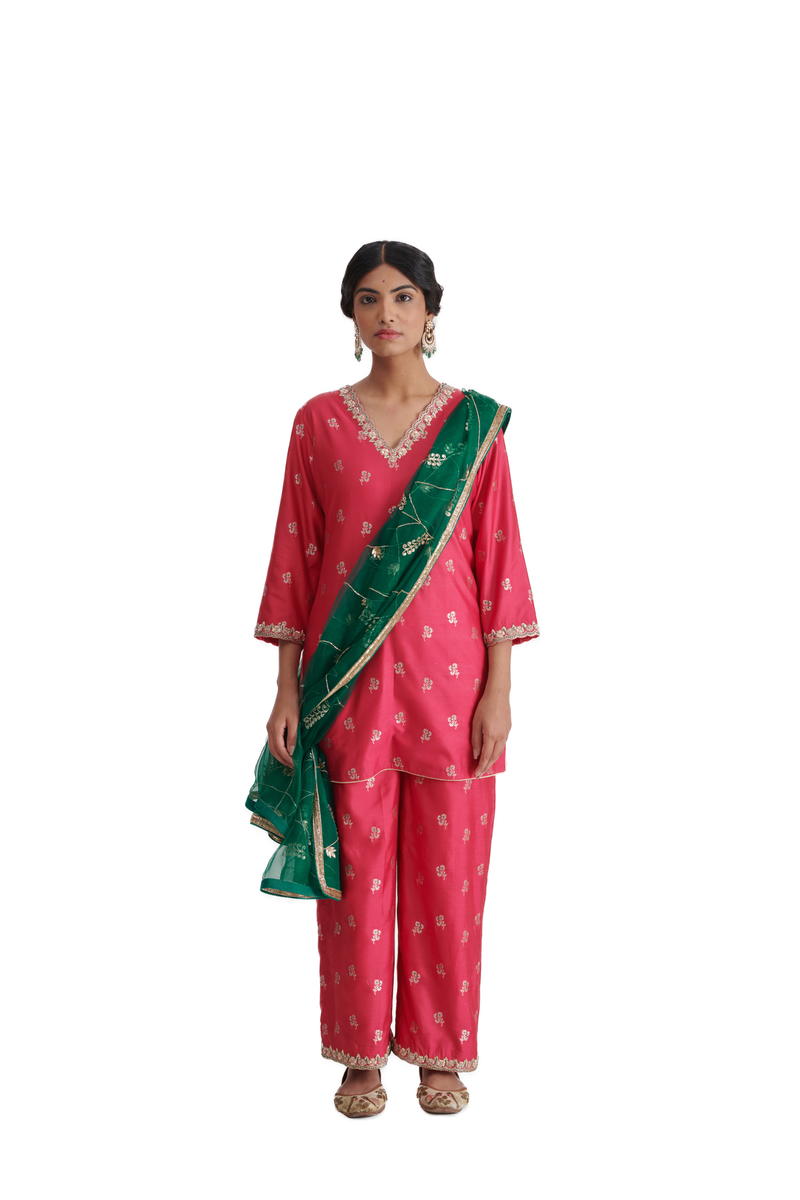
Roka Ceremony Outfit Ideas: What to Wear to Your Roka
What to wear to a roka ceremony — elegant outfit ideas for brides, mothers, and guests. From silk kurta sets to saree...
5 March 2026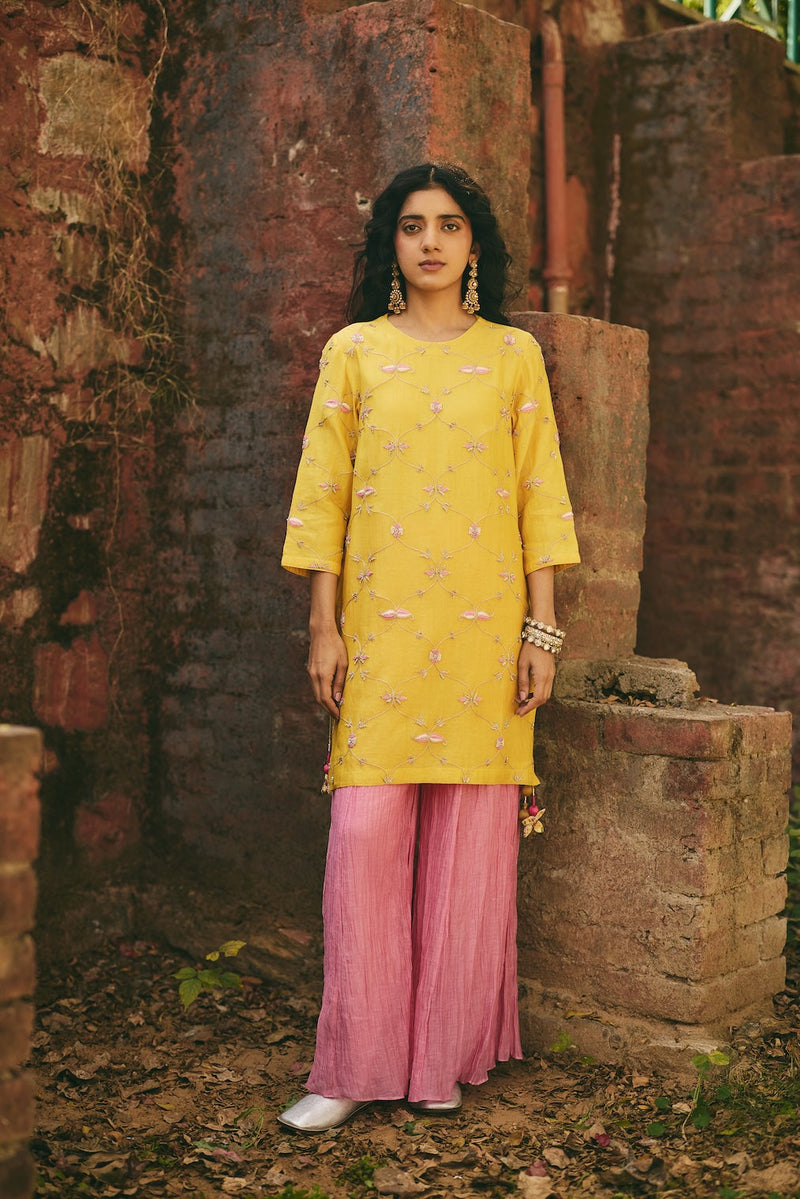
Mayra & Bhaat Outfit Ideas: Dressing for the Maternal Gift Ceremony
Mayra (bhaat) outfit ideas — what the family wears to the maternal uncle's gift-giving ceremony before a wedding, wit...
27 July 2026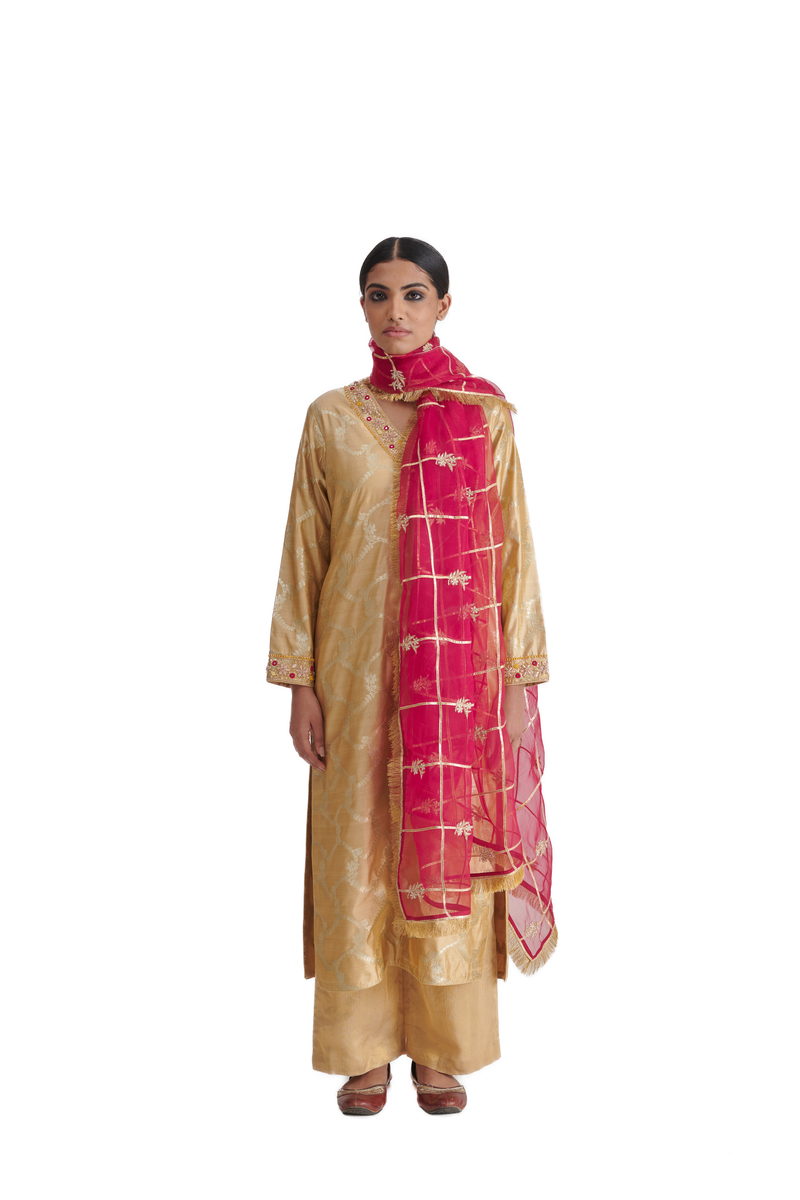
Haldi Outfit Ideas: What to Wear to a Haldi Ceremony
The best haldi ceremony outfits — yellow kurtas, sarees, and lehengas for brides, sisters, and guests. Styling tips, ...
5 March 2026