
Vintage Bollywood Fashion: The Golden-Age Looks That Still Shape How We Dress
Vintage Bollywood fashion usually means the look of Hindi cinema from roughly the 1950s to the early 1970s, and a handful of costumes define it. Madhubala's anarkali in Mughal-e-Azam (1960) gave the garment its name; Sadhana's fitted churidar and knee-length kurta in Waqt (1965) changed how the salwar kameez was cut; Waheeda Rehman's light, moving sarees in Guide (1965) and Mumtaz's pre-pleated orange saree in Brahmachari (1968) showed what a saree could do on a dancing body; and Meena Kumari's courtesan wardrobe in Pakeezah (1972), which she designed herself, still feeds the anarkali today. Several of these looks came from one costume designer, Bhanu Athaiya, India's first Oscar winner.
On Sunday 18 October 2026, a 4K restoration of Pakeezah by the Film Heritage Foundation closed the BFI London Film Festival at BFI IMAX, with tickets selling out within a day of booking opening (The Pioneer, 19 October 2026). And today we launch Haseena, a collection inspired by the mood of those films. Below is the history, sourced, then what we took from it.
Mughal-e-Azam (1960): The Anarkali That Named a Garment
K. Asif's Mughal-e-Azam was released on 5 August 1960, and its costumes were sourced from across India. According to the film's production history, the costumes were designed by Makhanlal and Company, Delhi-based tailors skilled in zardozi stitched the Mughal costumes, more zardozi came from embroiderers in Surat, the jewellery was made by goldsmiths in Hyderabad, the crowns in Kolhapur and the footwear in Agra.
The costume everyone remembers is Madhubala's as Anarkali in the song "Pyar Kiya To Darna Kya". The flared, floor-length kurta that every Indian woman knows as an anarkali owes its name to her character, and India Today later described the embellished blue-and-red costume as "a fashion staple for Indian women across ages". The fashion writer Sujata Assomull included it in her book 100 Iconic Bollywood Costumes (2020). If you want the garment's own story, our anarkali history and styling guide picks it up from there.
Waqt (1965): Sadhana Tightens the Salwar Kameez
Sadhana had already given India a haircut. For her debut as a leading lady in R. K. Nayyar's Love in Simla (1960), the director gave her an Audrey Hepburn-style fringe to narrow her forehead, and the "Sadhana cut" was copied all through the 1960s (ThePrint).
Five years later, in Yash Chopra's Waqt, she changed the kurta. Writing in Scroll on 15 October 2020, Nandini Ramnath described Bhanu Athaiya's "tight cut" churidar worn with a knee-length tunic, and traced a line from it to the Lycra-legging-style churidar later sold in department stores. Accounts of the look give Sadhana a share of the credit: she worked out the fitted version with Athaiya and showed it to Chopra, who was unsure audiences would accept it. They did; the fitted churidar-kurta stayed popular well into the 1970s.
Guide (1965): Waheeda Rehman and the Saree That Could Dance
In Vijay Anand's Guide, Waheeda Rehman plays Rosie, a woman who leaves a stifling marriage to become a dancer, and her clothes follow her. An essay published by Prinseps, the auction house that has exhibited Athaiya's archive, notes that as Rosie reclaims her identity, "the fabrics lighten. The palette warms. The drape loosens," and Athaiya brings in chiffon and georgette, "materials that breathe, that allow movement".
The practical genius was in the construction. For the song "Aaj Phir Jeene Ki Tamanna Hai", Harper's Bazaar India reported in 2024, Athaiya gave Waheeda Rehman "a pre-stitched sari that could be zipped up", so the drape would hold through the dancing. Today's pre-draped saree descends from that idea; our Gen Z Indian wear report follows where it has gone since.
Brahmachari (1968): Mumtaz's Orange Saree
If one costume stands for late-1960s Hindi film glamour, it is the orange saree Mumtaz dances in during "Aaj Kal Tere Mere Pyar Ke Charche". Athaiya designed it too. Scroll's 2020 obituary describes a candy-orange, pre-pleated saree with a side zip, cut so she could move her hips through the dance, and quotes Athaiya: "I wanted to do full justice to Mumtaz's attractive and free spirit." It became known simply as the Mumtaz sari, and Harper's Bazaar India's 2024 piece on Athaiya credits it with inspiring today's saree gowns.
Pakeezah (1972): Meena Kumari Designs Her Own Wardrobe
Kamal Amrohi's Pakeezah premiered on 4 February 1972 at Maratha Mandir in Bombay. Meena Kumari did not only star in it: she was also the film's costume designer, drawing on the dress of Mughal-era courtesans. Reviewing the restoration from London, Nandita Joshi of Filmhounds (27 October 2026) wrote: "From the elegant emerald anarkali to the captivating carmine sari, every look leaves your mouth wider agape."
Its influence on Indian fashion is usually traced to 1988, when Abu Jani and Sandeep Khosla showed a floor-length anarkali, often described as the Indian ball gown, in their first fashion show; fashion histories commonly credit Meena Kumari's Pakeezah costumes as the inspiration. The restoration matters because the film nearly didn't survive: Shivendra Singh Dungarpur told Outlook India that the original camera negative "had almost melted", with faded colour, scratches and mould, and the work took two years.
The Woman Behind Many of These Wardrobes
Bhanu Athaiya's name runs through this story. She dressed Guru Dutt's Pyaasa (1957), Chaudhvin Ka Chand (1960) and Sahib Bibi Aur Ghulam (1962), and Raj Kapoor's Shree 420 (1955), as well as Waqt, Guide, Amrapali (1966) and Brahmachari. In 1983 she shared the Academy Award for Best Costume Design with John Mollo for Gandhi, the first Oscar won by an Indian. In 2010 she published The Art of Costume Design (HarperCollins), and she died in Mumbai on 15 October 2020, aged 91.
Each of her costumes for Sadhana, Waheeda Rehman and Mumtaz solved a problem, fitting a traditional garment to a modern character and a dance. That is why they still look current.
Why the Golden Age Is Back in 2026
Nostalgia is the loudest mood in fashion this year. The signals, each from a named source:
- The films themselves are back on screen. The Pakeezah restoration had its world premiere at Festival Lumière in Lyon before London (Outlook India, 2 September 2026), and sold out its London gala in a day.
- Archival dressing on the red carpet. The Free Press Journal (18 April 2026) called nostalgia fashion the biggest trend of 2026, citing Kajol in an archival Manish Malhotra saree, Alia Bhatt in archival Tom Ford for Gucci and Kareena Kapoor Khan in archival Valentino. The designer Abhishek Sharma told the paper that "nostalgia works only when designers reinterpret it with relevance."
- The 1970s on the runway. Aneeth Arora's Péro opened Lakmé Fashion Week in New Delhi on 14 October 2026 with a Spring/Summer 2027 collection that The Tribune said was "full of retro styling" and carried "a distinct vintage mood".
- Vintage searches at a record. Google's India blog reported on 1 October 2026 that searches for "thrifting" hit an all-time high in the past year, and that searches for vintage sarees, among other things, had surged in the past month.
- The almirah as archive. ELLE India (31 August 2026) wrote that for Gen Z, "the most original, most textured, most unrepeatable pieces of clothing were never on a rack", but in a mother's or grandmother's steel almirah.
Our reading: the appetite is less for costume than for the feeling of clothes chosen with intention and worn with poise. We set out the wider forecast in Indian fashion trends 2027, and the family-wardrobe side of it in the heirloom revival.
How Haseena Takes the Mood, Not the Costume
Haseena, launched today, is our ode to that era. In our own words: "HASEENA — a woman you remember"; "Vintage romance. Modern confidence."; or, as we put it in Hindi, «पुरानी फ़िल्मों का जादू, आज की हसीना का अंदाज़।» (the magic of old films, the style of today's haseena). To be completely clear: no piece in it reproduces a film costume, and no actress named in this article has worn it. It is inspired by a mood, the ada and quiet confidence of those heroines, and the clothes are kurta sets, sharara sets, one cape set and dupattas you would wear now. There is no anarkali in Haseena. You can see all 31 pieces in the Haseena collection, and our launch story explains how it came together.
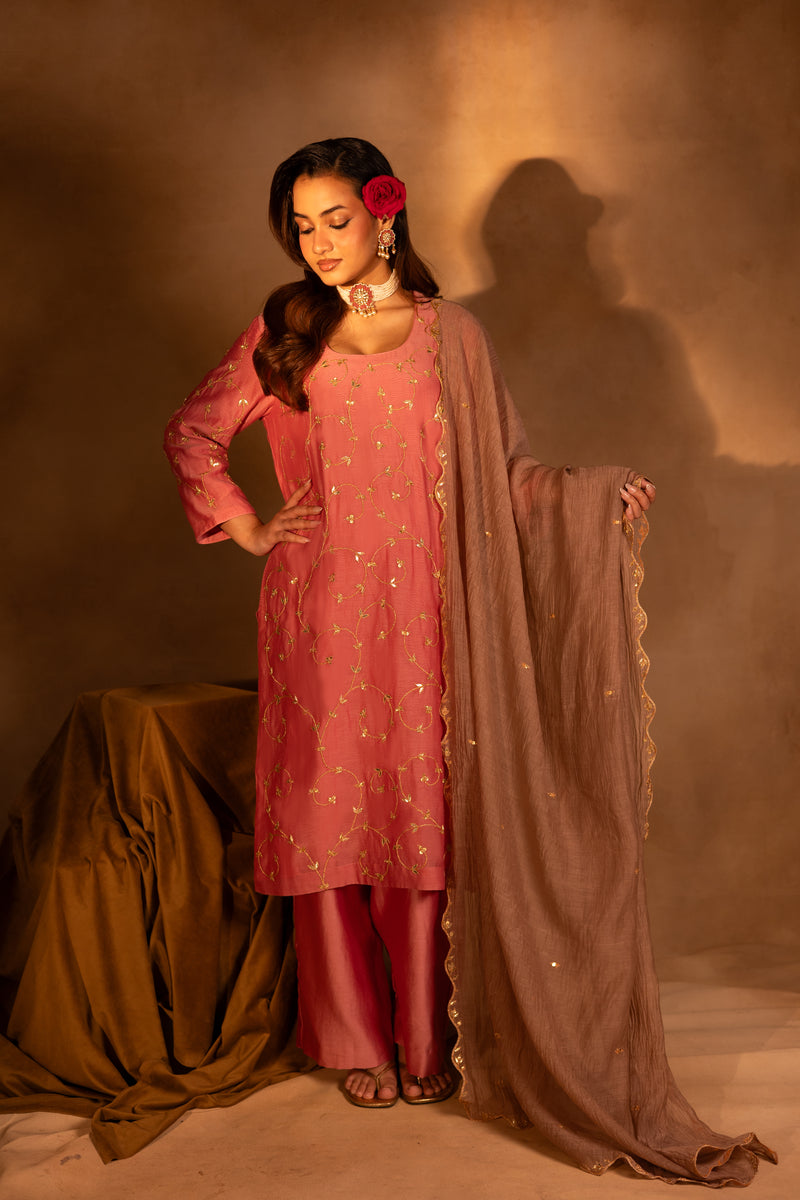
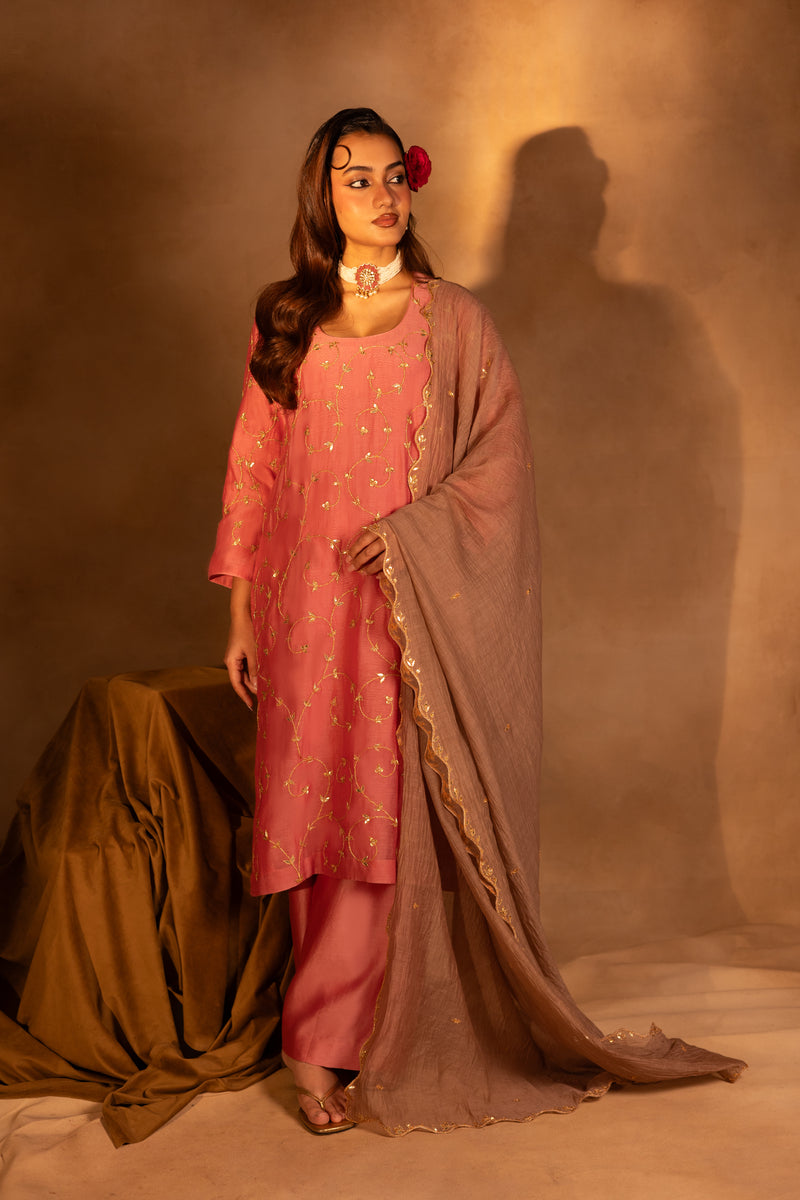
Tonal softness. Golden-age close-ups loved a soft, single colour. The Gulbadan kurta set (₹27,500) is dusty rose Chanderi with gold-toned embroidery in a flowing vine pattern across the front and sleeves, a classic round neckline and a straight silhouette, over matching dusty rose Chanderi pants. It is styled with the Mitti dupatta (₹17,500), taupe brown Chanderi with scattered embellishments and a scalloped border, which is sold separately.

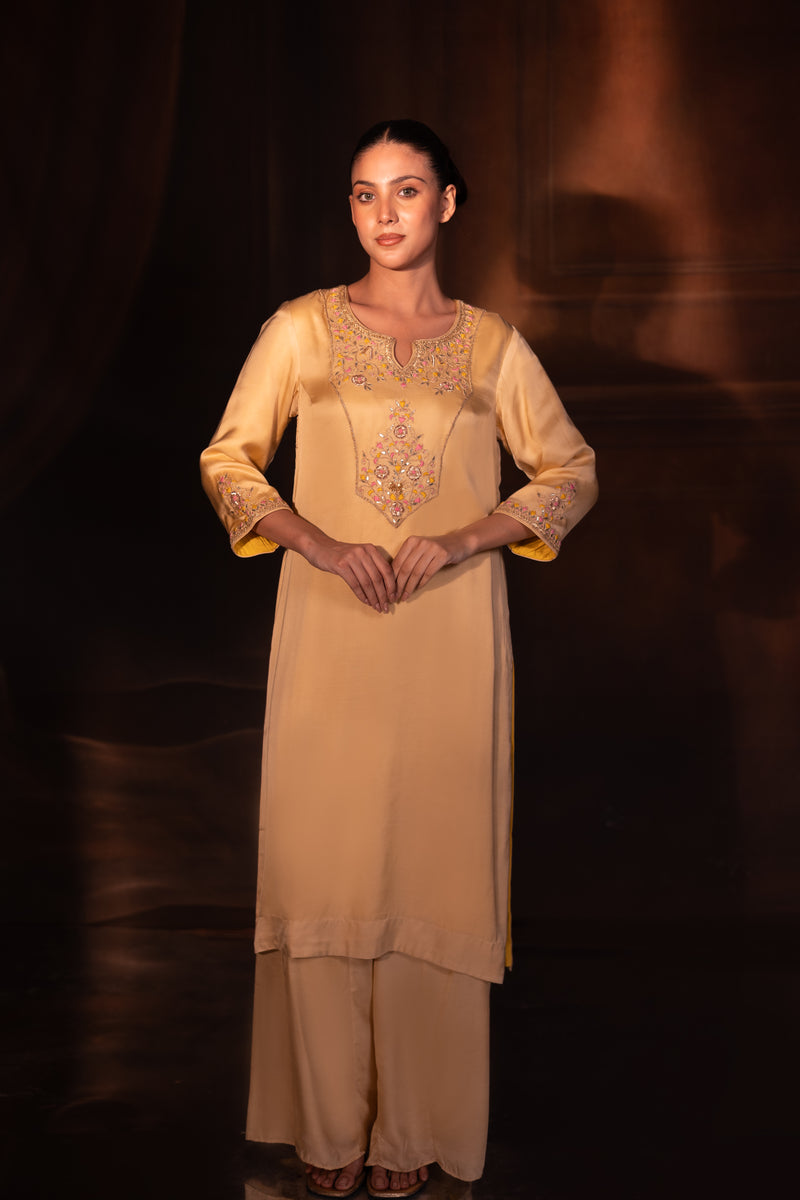
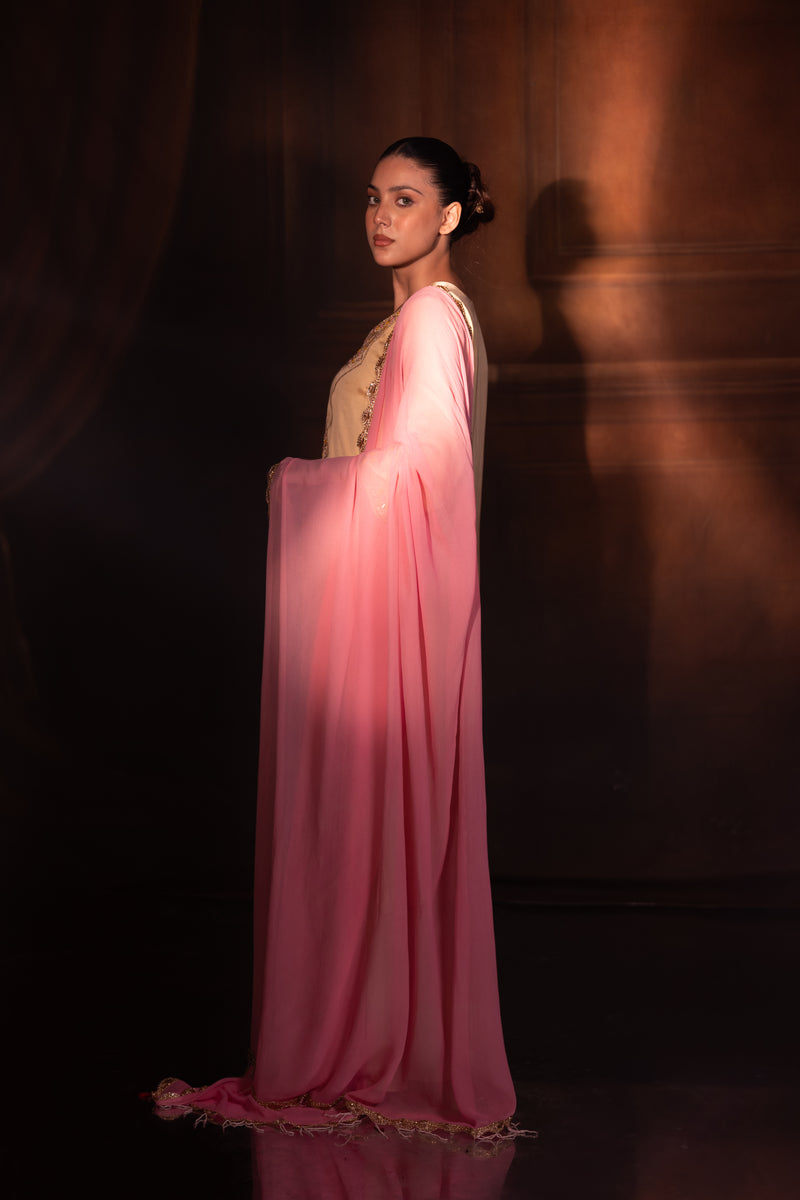
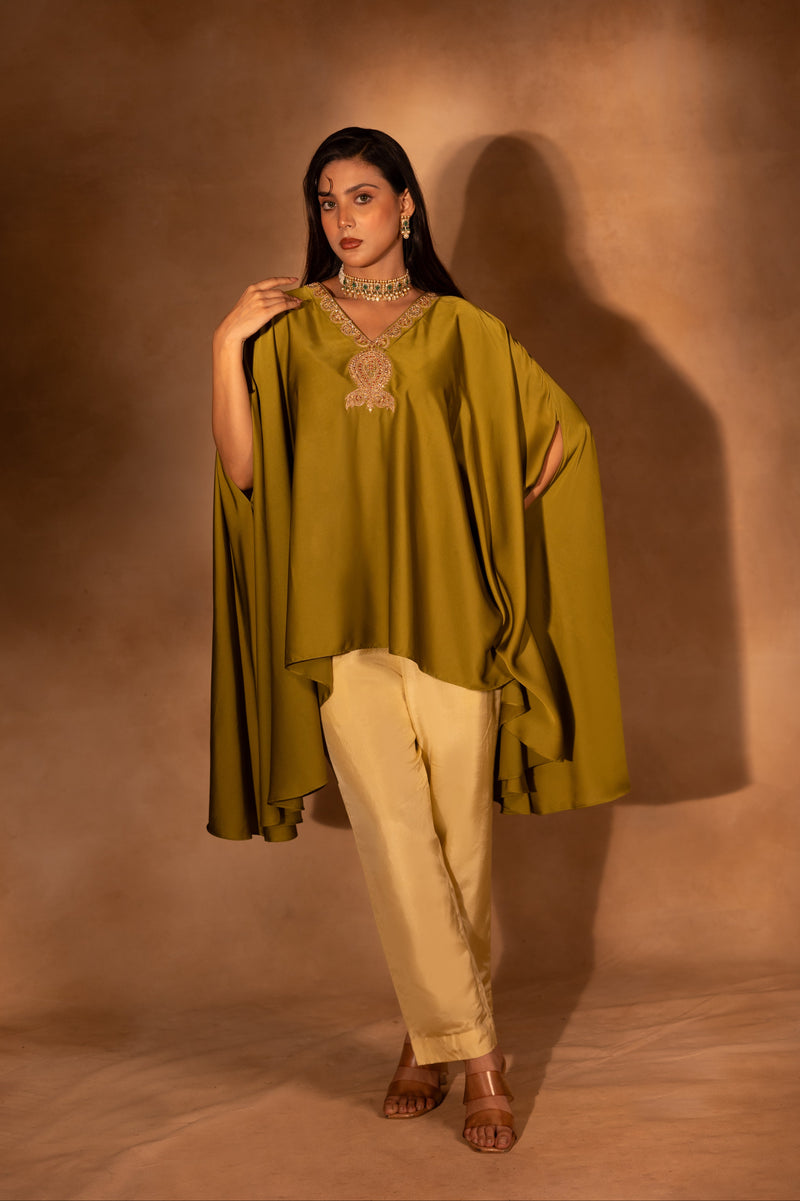
Fabric that moves. Athaiya's point in Guide was that the cloth should move with the woman. The Sonali sharara set (₹27,500) is soft beige satin, with floral embroidery at the neckline, a statement motif running down the front, embroidered cuffs and a matching satin sharara with a fluid silhouette. Its styled dupatta, Mahru (₹12,500), is blush pink georgette with an embellished border and tassels, sold separately. For a draped line without a dupatta at all, the Zarnoon cape set (₹18,500) is a mehendi green satin cape with cascading layers and gold-toned marodi embroidery along the V-neckline, over straight-fit lemon yellow satin pants.


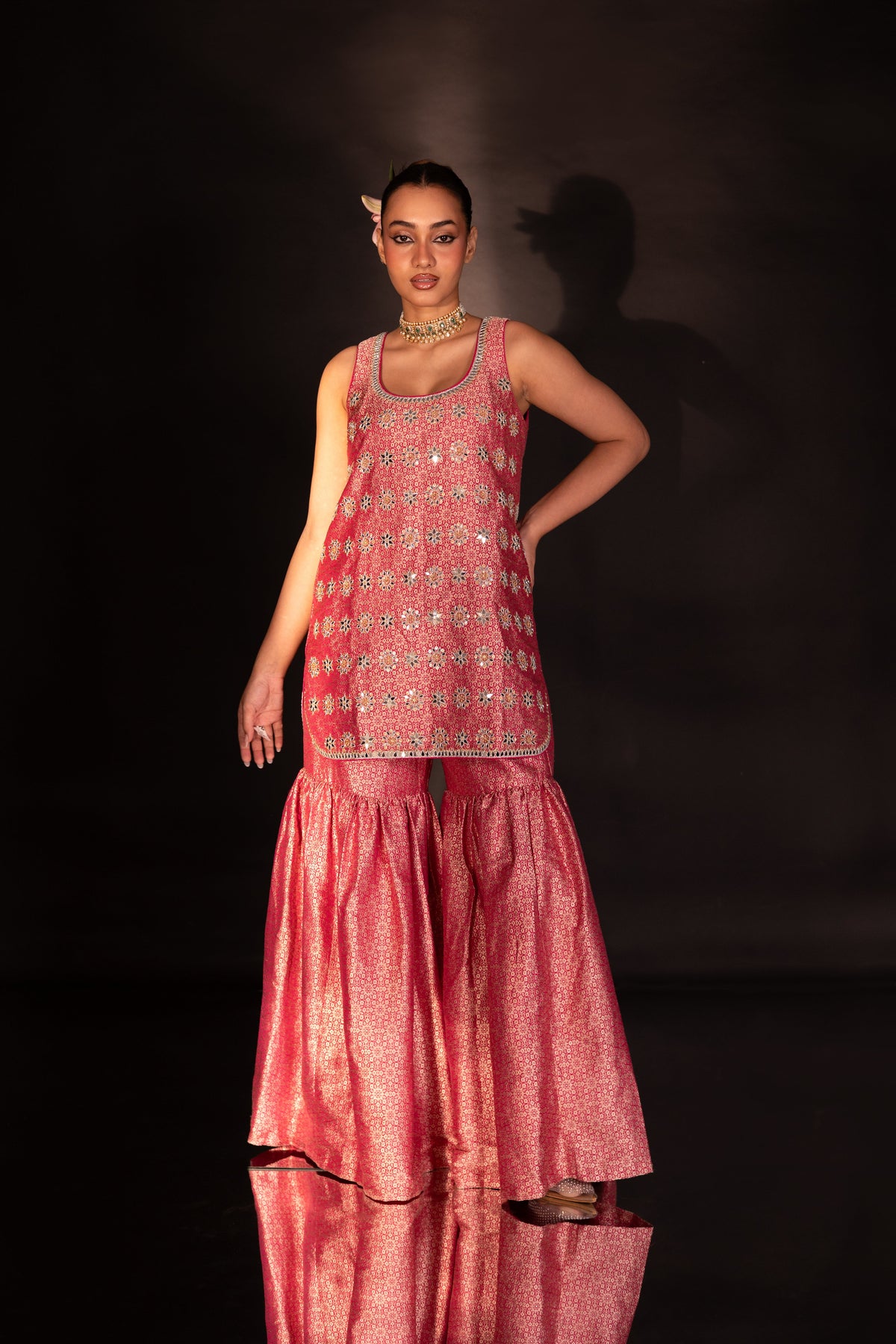
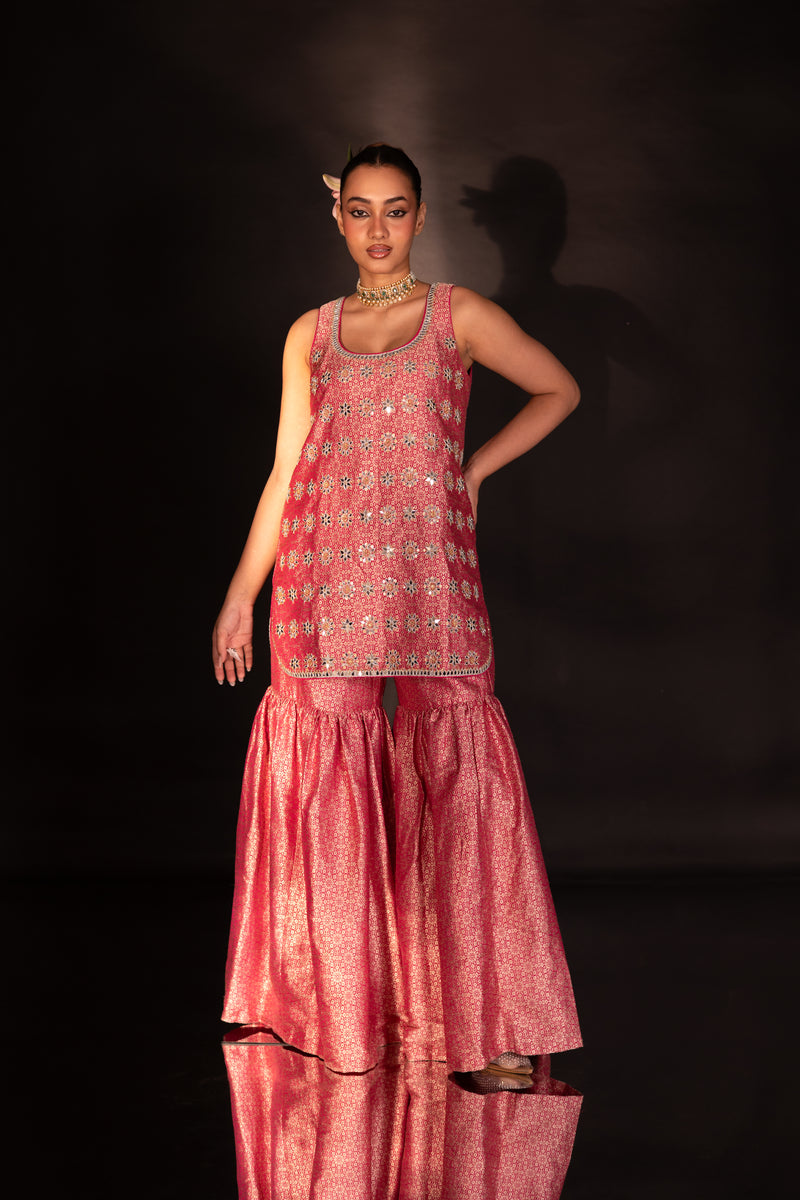
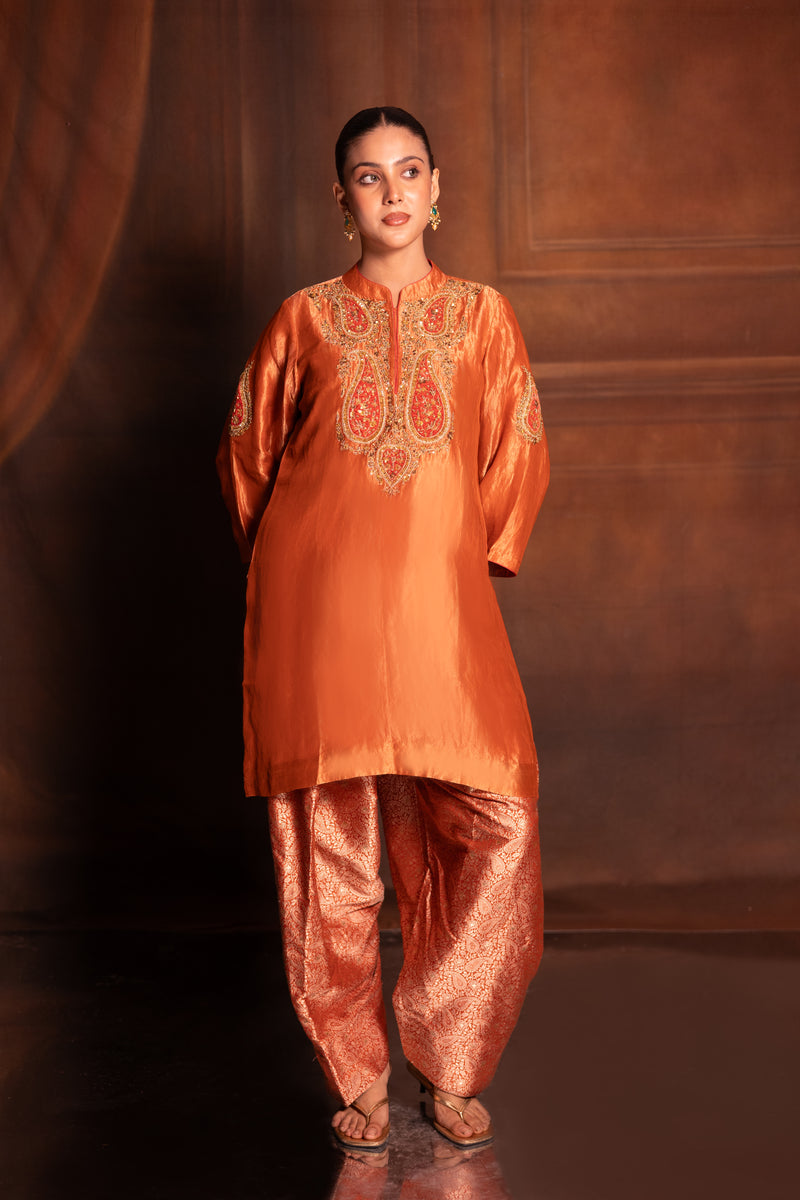
Woven richness. The courtly films were built on heavy, luminous cloth. The Rangmahal sharara set (₹32,500) is berry pink handwoven brocade: a sleeveless kurta with a scoop neckline and mirror work across the front, over a voluminous brocade sharara. Because the brocade is handwoven, the weave and colour can vary with availability, and if the original cloth runs out we share alternatives for your approval first. The Dastaan kurta set (₹29,500) is copper coin tissue with paisley embroidery along the neckline, single-colour patchwork, gold-toned embellishments and a paisley boota on the sleeve, worn with handwoven brocade pants.
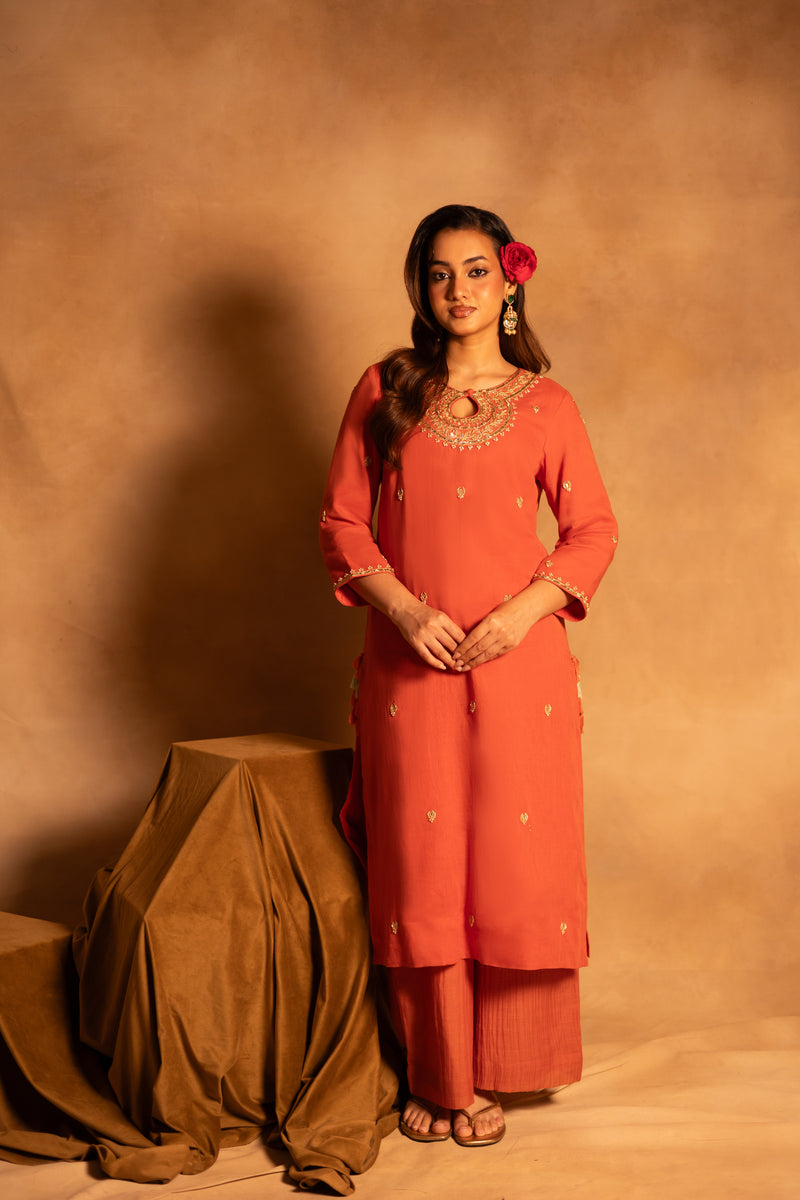
A colour with nerve. Mumtaz made a single bright colour unforgettable. Our nod to that confidence, not to her saree, is the Angaar kurta set (₹22,500): rust orange Chanderi with gold-toned embroidery and a keyhole at the neckline, scattered motifs, embroidered sleeve borders and colourful tassels along the sides, with matching rust orange pants. It is styled with the deep pink georgette Gulfaam dupatta, sold separately.


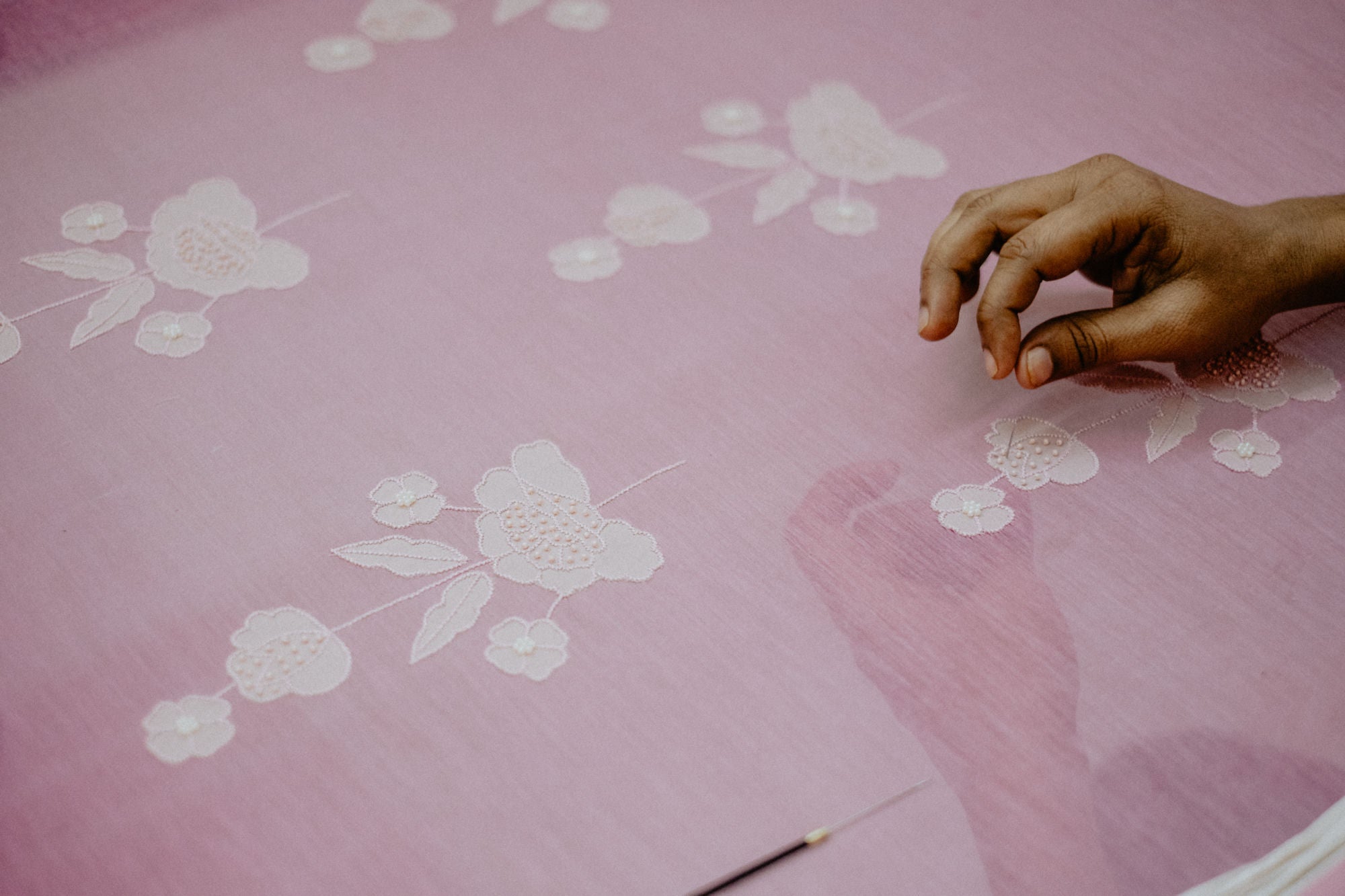
A note on cloth and craft, since this era is so tied to both: we don't weave. We buy handwoven fabric such as the brocade above and our karigars embroider it by hand in our Jaipur atelier in Vaishali Nagar. The colour story behind these pieces is in our Haseena colour palette, the techniques in our Haseena handwork guide, and which dupatta goes with which set in our Haseena dupatta pairing guide.
Ordering, Honestly
Every Haseena piece is made to order in 4–5 weeks, plus 3–7 days of shipping, and cut to your measurements at no extra charge. Design changes, such as a different sleeve or neckline, aren't automatic; ask us on WhatsApp what is possible on that design. Ordered now, in late October 2026, a piece arrives around the first week of December at the earliest, so it won't make Diwali on 8 November, but it is comfortably in time for December to February weddings. Express is sometimes possible, depending on the piece and the month, so ask us on WhatsApp. We ship worldwide; shipping is free on domestic orders above ₹30,000, which a set with its styled dupatta (Gulbadan with Mitti, for instance, comes to ₹45,000) will cross.
Your Own Golden-Age Moment
Tell us which film, scene or colour you can't stop thinking about, and we'll tell you which Haseena piece carries that mood and what's possible on it. Every piece is hand-embroidered in Jaipur, made to order in 4–5 weeks and cut to your measurements at no extra charge.
Shop HaseenaMore Haseena stories: Introducing Haseena · The handwork · The colour palette · The dupatta pairing guide
Frequently Asked Questions
What is vintage Bollywood fashion?
The look of Hindi cinema's golden age, roughly the 1950s to the early 1970s. Its best-known pieces are Madhubala's anarkali in Mughal-e-Azam (1960), Sadhana's fitted churidar-kurta in Waqt (1965), Waheeda Rehman's light, zip-up saree in Guide (1965), Mumtaz's pre-pleated orange saree in Brahmachari (1968) and Meena Kumari's courtesan costumes in Pakeezah (1972).
Who designed the costumes in old Bollywood films?
Many of the most famous were by Bhanu Athaiya, including Sadhana's look in Waqt, Waheeda Rehman's in Guide and Mumtaz's orange saree in Brahmachari; she later shared the 1983 Oscar for Gandhi. Mughal-e-Azam's costumes were by Makhanlal and Company, and Meena Kumari designed her own costumes for Pakeezah.
Why is the anarkali called an anarkali?
The name comes from Anarkali, the character Madhubala played in Mughal-e-Azam (1960). Her embellished costume in the song Pyar Kiya To Darna Kya made the flared, floor-length kurta famous.
Is the Haseena collection a copy of film costumes?
No. Haseena is inspired by the mood of old Hindi cinema, its romance and quiet confidence, not by any specific costume. It is a collection of kurta sets, sharara sets, a cape set and dupattas, hand-embroidered in our Jaipur atelier and made to order.
Will a Haseena piece ordered now arrive before Diwali?
Unlikely. Pieces are made to order in 4 to 5 weeks plus 3 to 7 days of shipping, so an order placed in late October 2026 arrives around the first week of December at the earliest, in good time for December to February weddings. Express is sometimes possible depending on the piece and month, so ask us on WhatsApp.
Made to order in 4–5 weeks
Have an event date? We’ll tell you exactly when to order by.
We take a limited number of orders each month — secure your slot early.
WhatsApp me my order-by date + a shortlistNot sure where to start?
Tell us what you're dressing for and we'll help you choose — fabric, fit, colour, and timeline — over WhatsApp or on a video call.
Your Cart
Pieces from this story
All pieces →Not sure which piece, or need it by a date? Book a video consultation Ask us on WhatsApp
Keep reading
The journal →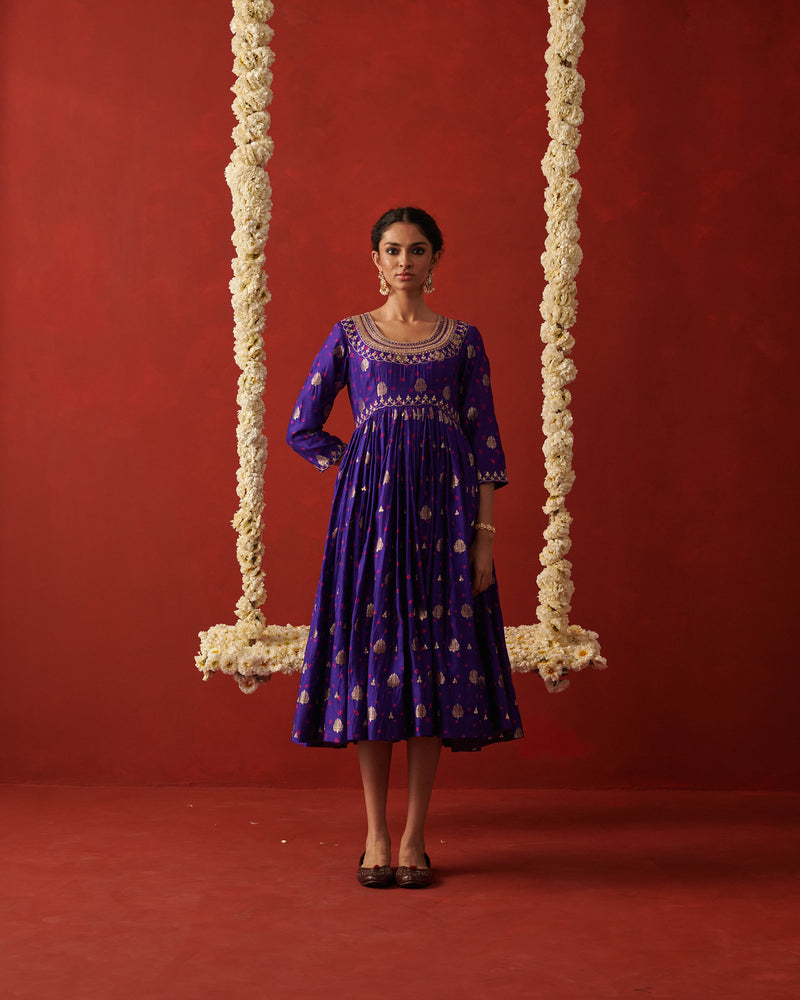
Anarkali Suit: History, Types & How to Style for Every Occasion
Everything about anarkali suits — history, types, fabrics, and how to style them for weddings, festivals, and parties...
4 March 2026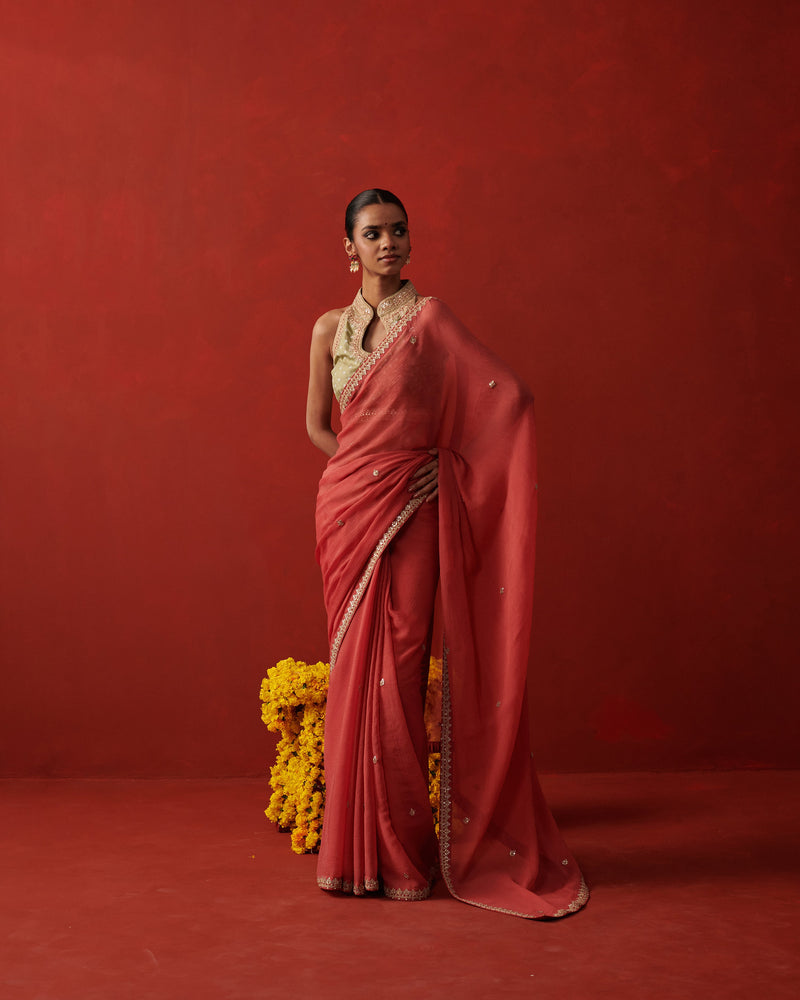
How Gen Z Is Reinventing Indian Wear: Sneaker Sarees, Mum's Almirah and Thrift
How Gen Z is wearing Indian clothes: sarees with sneakers, mum's sarees reworn, thrift, handloom, chatpata dressing a...
27 October 2026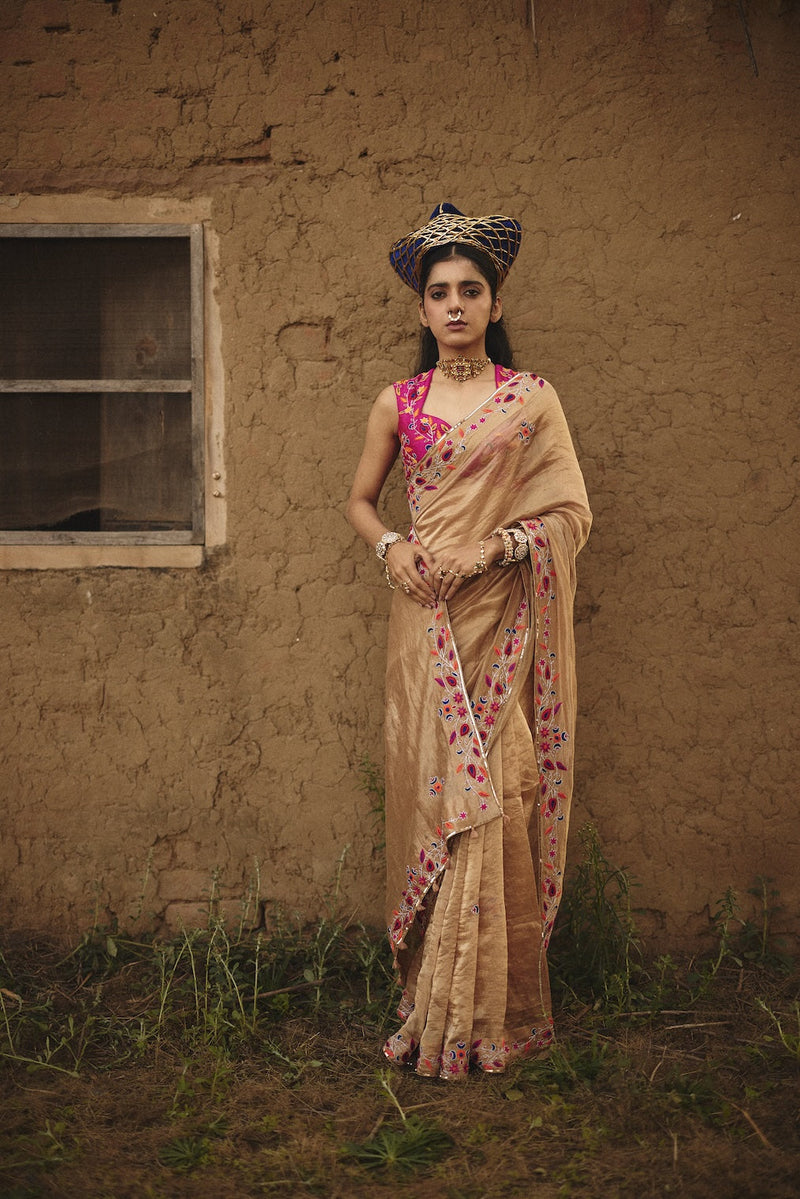
Indian Fashion Trends 2027: 9 Forecasts From the 2026 Runways
Indian fashion trends for 2027, forecast from India Couture Week and Lakmé Fashion Week 2026: corsets, deeper reds, l...
27 October 2026