
Where to Shop for Indian Clothes in London: A Complete Guide
London has one of the largest concentrations of Indian clothing retail outside India, and almost all of it is clustered into four or five areas that each do one thing well. The mistake people make is treating them interchangeably — going to Southall for a couture lehenga, or to a Mayfair boutique for a ₹4,000-equivalent everyday kurta. Knowing which area does what is the whole skill.
This guide sits alongside our city guides to Jaipur, Delhi and Mumbai, for anyone doing their shopping without a flight.
Southall: The Broadway and South Road
The oldest and largest of London's Indian shopping districts, and still the default for most of the city's Punjabi community. The Broadway and South Road are lined with sari houses, suit shops, fabric merchants and jewellers, and the range runs from very cheap to genuinely good.
What Southall is best at: volume and choice at the mid-market. Ready-made suits, sarees across every price point, lehengas for a family wedding, and the one thing that is hard to find anywhere else in the UK — a proper fabric-and-trims ecosystem, where you can buy material by the metre and have it made up locally.
What to watch for: a great deal of what is sold as hand embroidery is machine work, and the difference is not always disclosed. Look at the reverse of the piece before you believe the front — our buyer's guide covers the tells. Saturdays are extremely busy; go on a weekday if you want anyone's attention.
Green Street, Newham
East London's answer to Southall, running through Upton Park and Forest Gate, and generally the better bet for bridal. Green Street's shops skew a little more towards occasion wear and a little less towards everyday, with a strong Gujarati and East African Asian retail tradition behind them.
Best for: bridal lehengas and heavy occasion wear, jewellery, and the full apparatus of a big wedding under one roof. Also the most likely place in London to find someone who will alter a heavily embroidered piece properly.
Wembley and Ealing Road
Ealing Road in Alperton, and the streets around Wembley Central, form the third of the big three. The character here is strongly Gujarati, and it shows in the stock: more chaniya cholis, more bandhani, more of the specific things a Navratri or a Gujarati wedding needs.
Best for: Navratri and garba wear, bandhani, Gujarati wedding pieces, and a good concentration of jewellers. Around September and October it is the most useful street in London.
Tooting, Wembley High Road and the Smaller Clusters
South London's Indian retail is thinner but real — Tooting High Street and Upper Tooting Road carry a handful of sari and fabric shops alongside the food. Useful if you are south of the river and need something serviceable without crossing London. Not the place for a wedding wardrobe.
The Designer End
London's designer Indian retail sits in a completely different part of the city and operates on a different model: multi-designer boutiques carrying Indian labels, usually by appointment, usually in west or central London.
Aashni + Co in Notting Hill is the best-known of them — a multi-floor concept store on Ledbury Road carrying couture and ready-to-wear from Indian designers, open since 2012. We are stocked there, so we will declare the interest, but it is genuinely the reference point for buying Indian designer wear in the UK without ordering from India.
Beyond that, several Indian couture houses now run London trunk shows and seasonal pop-ups, particularly in the run-up to the autumn wedding season. If you are buying at that level it is worth getting on the mailing lists rather than waiting to walk in.
Best for: designer pieces you can see and try on in the UK, with UK returns and no customs to navigate. Expect to pay a meaningful premium over Indian retail for exactly that convenience.
Or Skip the Trip: Ordering Direct From India
We will state our interest plainly. The reason a great many people in London order direct rather than buying on Green Street is fit. Almost everything sold ready-made in the UK is cut to a standard size chart and then altered, and heavily embroidered garments do not alter well — you cannot take in a bodice through a dense zardozi panel without disturbing the work.
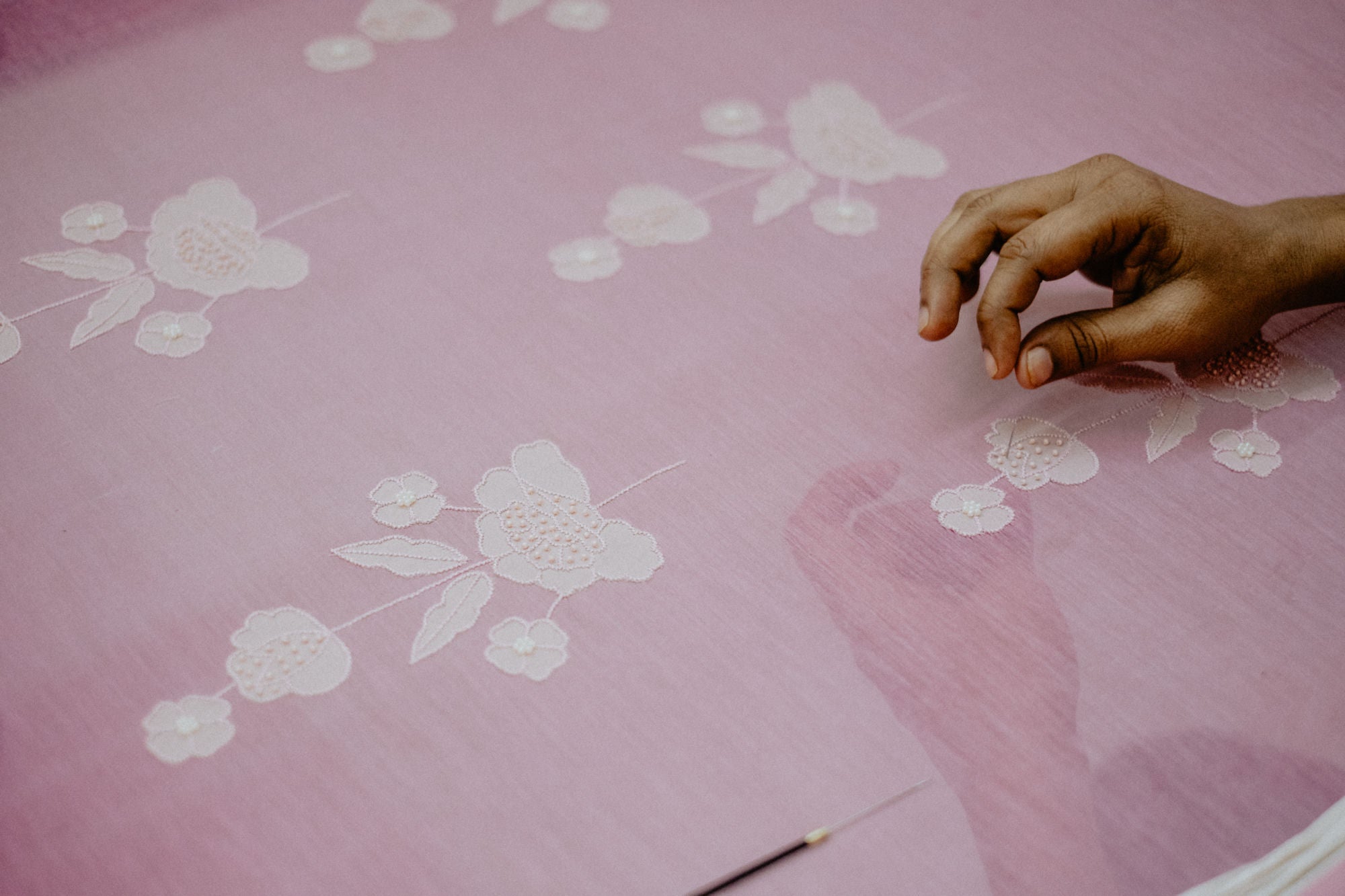
Everything we make is hand-embroidered in Jaipur and cut to your measurements at no extra charge, over four to five weeks, then shipped worldwide insured and tracked. Measurements go over WhatsApp before the order is placed. The honest caveat is that because each piece is made for one order there is no off-the-rack exchange, so the measurements conversation matters more than it would on a high street.
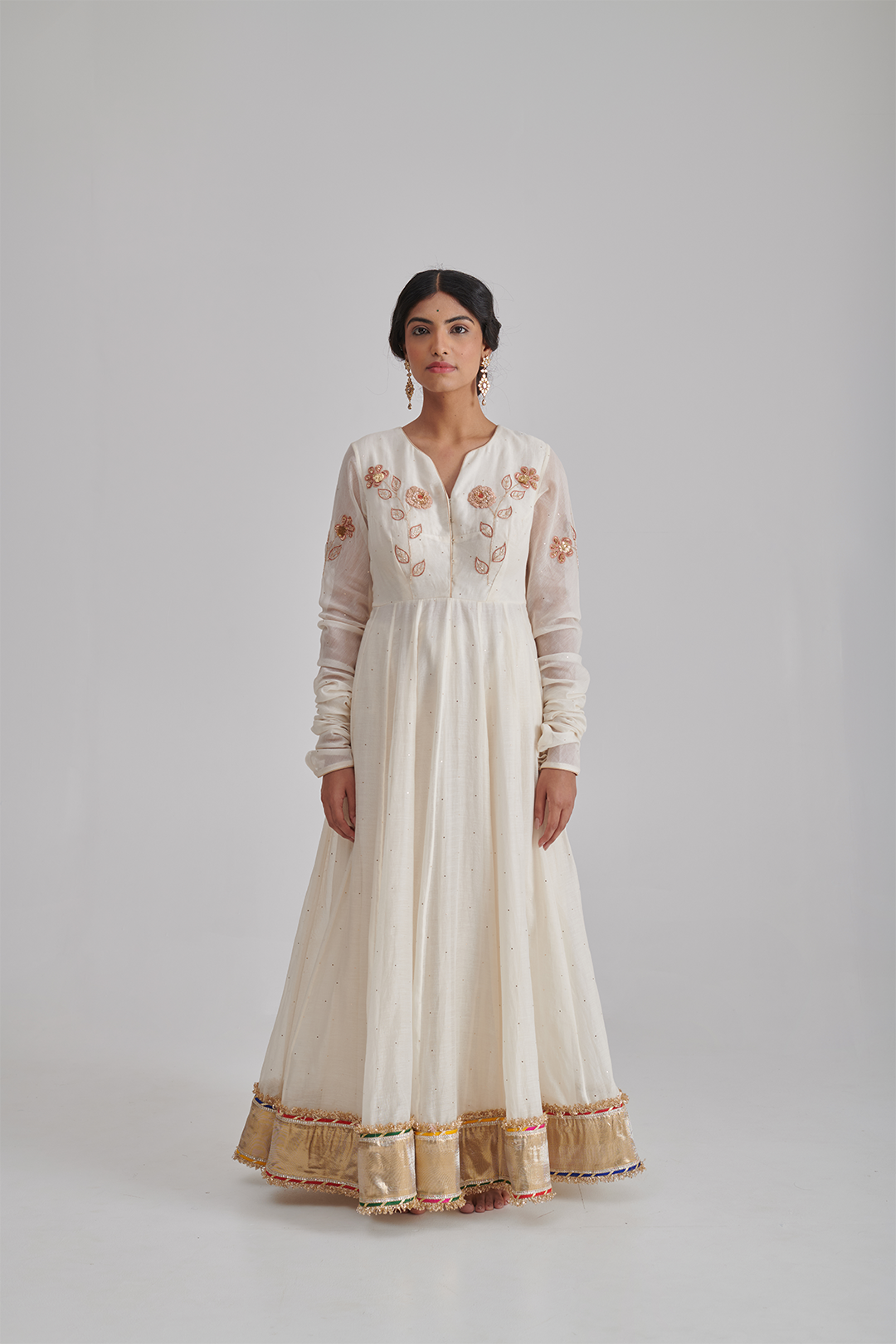
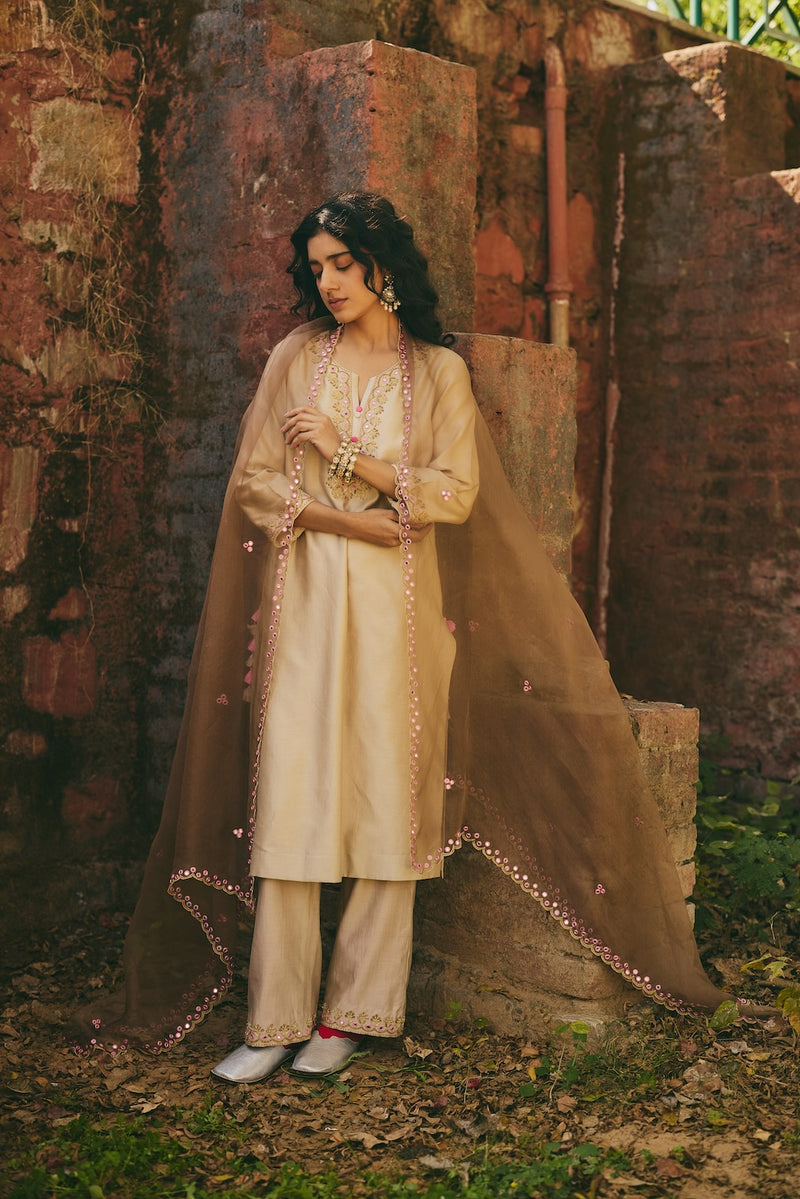
The Noor ivory anarkali with Ahana churidar carries Mukesh work — the shimmering Lucknawi craft — in hand-embroidered floral motifs with fine sequin detailing. The Ferozaan anarkali with Gulraaz churidar draws on vintage Persian tapestries in a striking jewel-toned palette.


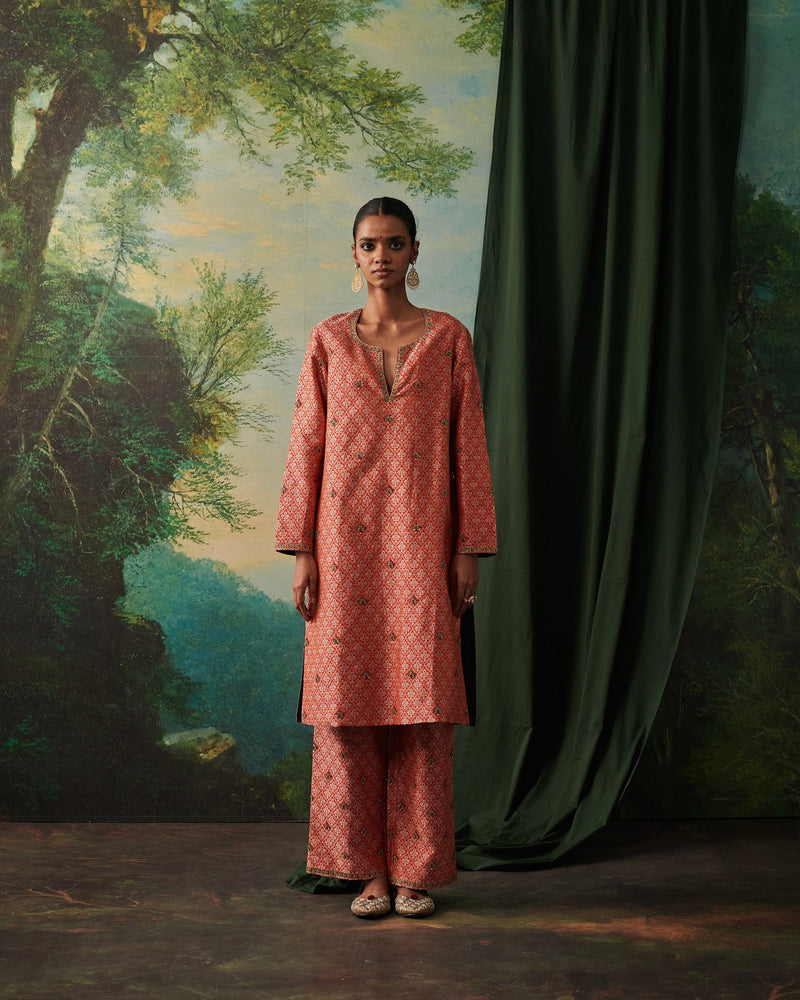
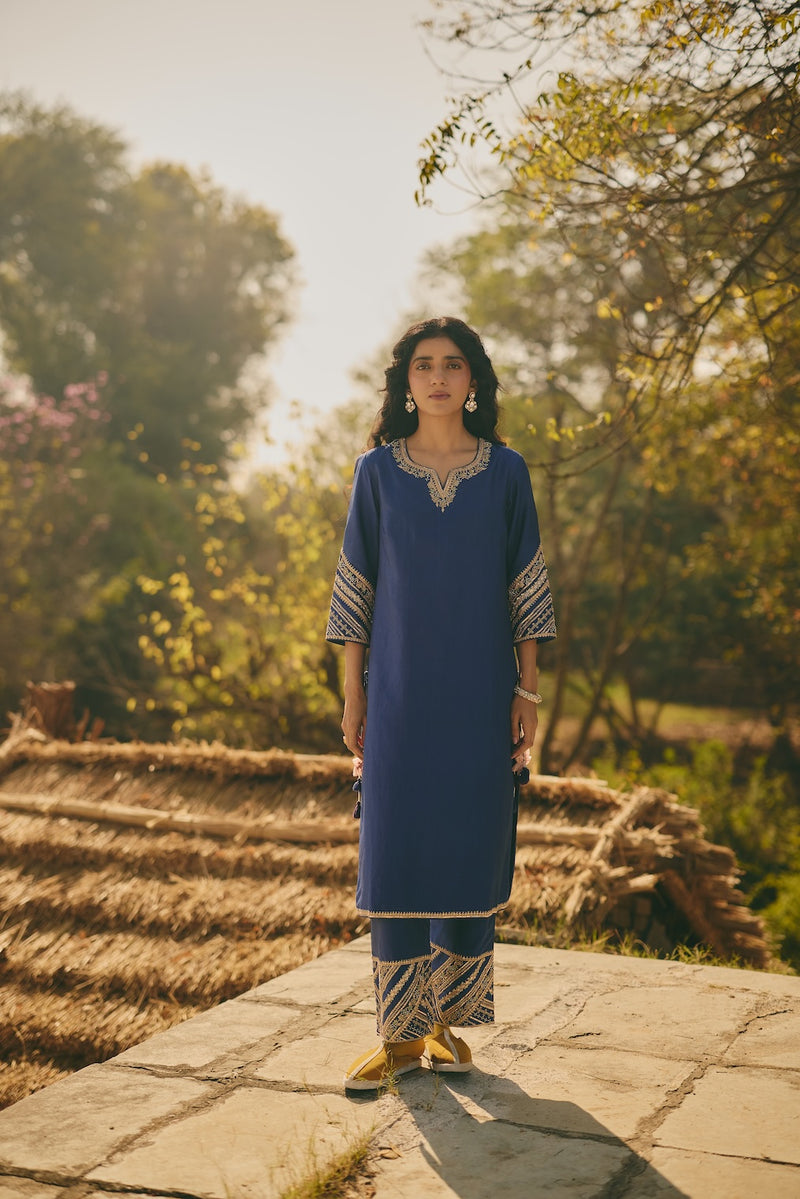
For the pieces that get worn more than once — which is what actually matters when you are buying from four thousand miles away — the Salima saree in light chiffon with a soft gold gota border, and the Inara kurta with Nazm pant in silk with gota, marodi and fine threadwork, both cross from a wedding function to a Diwali party to a family dinner without looking like the same outfit twice.


Seven Practical Notes for Shopping in London
- Go on a weekday. Southall, Green Street and Ealing Road on a Saturday in wedding season are not places to make considered decisions.
- Bring a swatch or a photograph. Screen colour lies, shop lighting lies harder, and matching a dupatta to an existing kurta is the single hardest thing to do from memory.
- Ask what the fabric actually is. "Silk" on a UK high street frequently means art silk or polyester. Ask, and feel the weight.
- Check the reverse of the embroidery. Hand work shows thread paths and small irregularities; machine work repeats to the millimetre.
- Factor in alteration time. Good alteration tailors in these areas are booked out through wedding season. Do not assume a week is enough.
- Compare the real cost of buying direct. UK retail carries import duty, shipping and margin already baked in. Ordering from India adds duty at your end but removes two layers of markup — for a heavier piece the arithmetic often favours ordering direct.
- Start early for an autumn wedding. Whether you are buying in London or ordering from Jaipur, September to December is the crunch. Our ordering-early guide covers the calendar.
Shipped to the UK, Insured and Tracked
Hand-embroidered in Jaipur, cut to your measurements at no extra charge. Message us and we arrange shipping directly, including duties and timelines for the UK. Browse the full collection, or read our guide to ordering custom from abroad.
Shop the CollectionFrequently Asked Questions
Where is the best place to buy Indian clothes in London?
It depends on the brief. Southall's Broadway and South Road for mid-market range and fabric by the metre; Green Street in Newham for bridal and heavy occasion wear; Ealing Road and Wembley for Navratri, garba and Gujarati wedding pieces; and the Notting Hill designer boutiques for Indian couture you can try on in the UK.
Is it cheaper to buy Indian clothes in London or order from India?
For inexpensive everyday pieces, London is usually simpler and the difference is small. For a heavily embroidered occasion piece, ordering direct from India often works out better even after duty, because UK retail already carries import costs, shipping and two layers of margin — and you get a garment cut to your measurements rather than altered to fit.
Where do you buy Navratri and garba outfits in London?
Ealing Road in Alperton and the streets around Wembley Central are the strongest for chaniya cholis, bandhani and Gujarati festive wear, reflecting the area's Gujarati retail tradition. Stock builds from late summer, so September is when the choice is widest.
How long does it take to get Indian clothes shipped to the UK?
For a made-to-order piece, four to five weeks of hand embroidery and tailoring, then three to seven days in transit, plus a buffer for customs clearance. Plan on at least three months before a wedding, and closer to four if it falls in the October to February season.
Made to order in 4–5 weeks
Have an event date? We’ll tell you exactly when to order by.
We take a limited number of orders each month — secure your slot early.
Not sure where to start?
Tell us what you're dressing for and we'll help you choose — fabric, fit, colour, and timeline — over WhatsApp.
Your Cart
Pieces from this story
All pieces →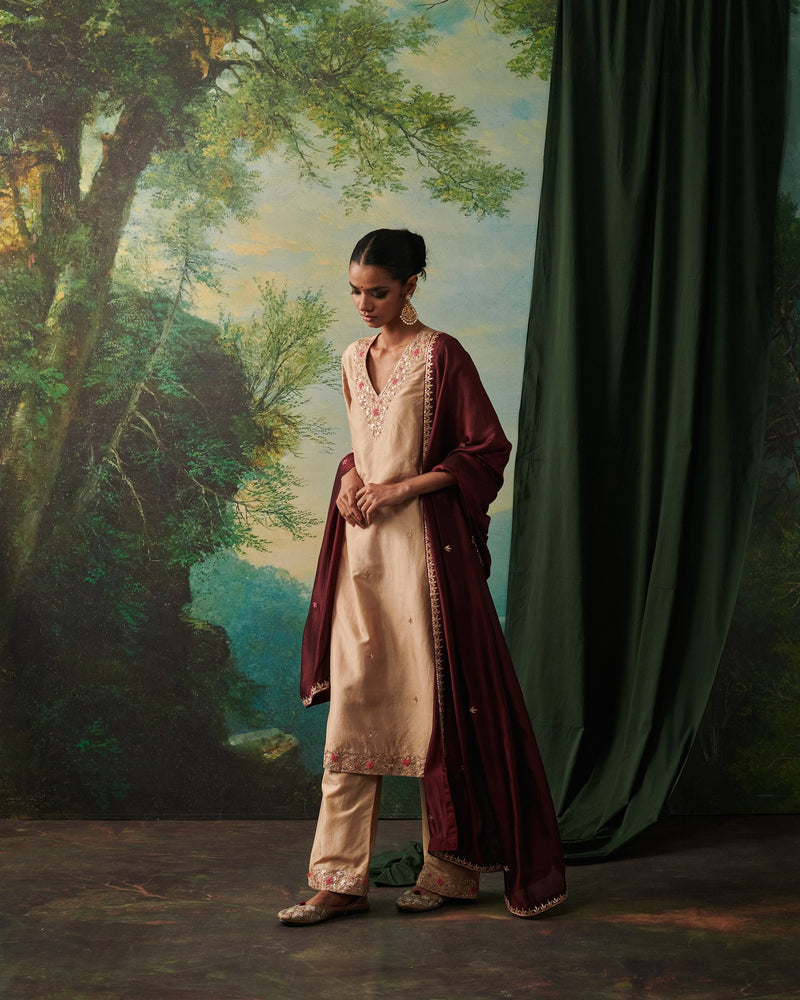
Keep reading
The journal →
Best Banarasi Saree Brands in India 2026: Where to Buy an Authentic Banarasi
Handmade by karigars Made to your measurements Fit guarantee Ships worldwide As seen in GraziaElle Graduat...
14 September 2026
Gifts for Your Wife She'll Actually Wear: Indian Outfits for Karva Chauth, Diwali & Anniversaries
Handmade by karigars Made to your measurements Fit guarantee Ships worldwide As seen in GraziaElle Graduat...
14 September 2026
Designer Lehenga for Girls: A Parent's Buying Guide to Kids' Lehengas
Handmade by karigars Made to your measurements Fit guarantee Ships worldwide As seen in GraziaElle Graduat...
14 September 2026