

How to Identify a Pure Silk Saree: 8 Tests That Work (and 2 That Don't)
Pure silk is a fibre spun by a silkworm. "Art silk" is rayon. "Silk blend", "soft silk", "semi silk", "silk-feel" and "Banarasi silk-look" can mean almost anything, and usually mean polyester. All of them are sold on the same shelf, in the same colours, photographed under the same flattering light — and the price gap between the real thing and the imitation can be ten times.
So it is worth knowing how to tell. This guide covers the tests that genuinely work, in the order you can actually use them in a shop, and the two popular ones that do not.
The Short Answer
Pure silk burns like hair and leaves a soft ash; synthetic melts like plastic and leaves a hard bead. That single test, done on a loose thread, is the most reliable check available to a buyer. Everything else below helps you narrow things down before you ever ask for a thread.
8 Tests That Work
1. The burn test
Ask for a loose thread from the inside edge or the fall — a reputable seller will give you one. Hold it with tweezers and bring a flame to it. Pure silk burns slowly, smells of burnt hair, goes out when the flame is removed, and leaves a dark ash you can crush to powder between your fingers. Polyester melts and shrinks from the flame, smells chemical or sweet, may drip, and leaves a hard, glassy bead. Rayon (art silk) burns fast like paper, smells of burning leaves, and leaves a light grey ash.
2. The Silk Mark label
Silk Mark is a certification run by the Silk Mark Organisation of India, under the Central Silk Board. A genuine Silk Mark tag is attached to the product and carries a unique number. It certifies that the item is pure silk — it does not grade the quality of the weave. Many excellent small weavers and ateliers are not enrolled, so its absence proves nothing; its presence, on a genuine tag, is reassuring.
3. The lustre test
Silk fibre is roughly triangular in cross-section, so it refracts light. Hold the saree under a lamp and move it: real silk changes shade as the angle changes, with a soft, deep glow. Synthetic silk has a flat white shine that looks identical from every direction.
4. The touch and warmth test
Rub the fabric between your fingers for a few seconds. Pure silk warms quickly and feels smooth but slightly "dry" and grippy. Polyester stays cool and slippery. Scrunch a corner in your fist: silk makes a soft crunching sound — traders call it the scroop — and releases its creases slowly.
5. The weave test
Turn the saree over. Handwoven silk shows small irregularities — a slightly thicker thread here, a slub there, tiny variations in the pattern. A flawless, perfectly uniform reverse usually means a powerloom and frequently a synthetic yarn. On brocades, look at the back of the motifs too: our guide to hand versus machine work covers what to look for.
6. The zari test
If the saree has zari, check it separately — a pure silk saree can carry imitation zari, and that changes the price enormously. Our guide to real versus imitation zari explains the scratch and colour checks.
7. The price-floor test
Silk yarn has a cost, and a saree uses five and a half to six and a half metres of it. As a rough guide in 2026, a genuinely pure silk saree is very unlikely under ₹4,000–5,000, and handwoven pure silk with zari rarely starts below ₹10,000–15,000. A "pure Kanjeevaram silk" at ₹1,499 is not one.
8. The paperwork test
Ask the seller to write the fibre composition on the bill: "100% pure silk", "silk by cotton", "art silk". A seller who is confident will do it without fuss. Hesitation is an answer. For expensive purchases, textile testing labs — including those of the Textiles Committee — will test a sample for a modest fee.
2 Popular Tests That Don't Work
- The ring test. Pulling a saree through a finger ring proves only that the fabric is thin. Fine polyester chiffon passes easily; a heavy pure-silk Kanjeevaram or a richly brocaded Banarasi will never pass, and both are real.
- The "it's heavy, so it's pure" test. Weight comes from the weave and the zari, not the fibre. Some of the finest silks are nearly weightless, and some of the cheapest synthetics are dense.
Know Your Silks
"Silk" covers several fibres and many weaves. Mulberry is the smooth, lustrous standard; tussar, eri and muga (moonga) are wild silks with more texture and a natural gold tone. Banarasi, Kanjeevaram, Chanderi, Paithani and Patola are weaves, not fibres — and each can be made in pure silk or in a blend. Our guide to types of silk in Indian fashion sets them side by side, and Banarasi versus Kanjeevaram compares the two most counterfeited.
Silk Sarees From Our Atelier
We hand-embroider sarees in Jaipur and state the base fabric on every product page — and if the exact composition matters to you, for religious, ethical or allergy reasons, ask us on WhatsApp before ordering and we will confirm it for that piece. A few of our silks:
The Bano & Siya saree (₹32,500) is ivory moonga zari silk with fine sequin work in floral motifs, delicate gold embroidery and a rich border, paired with the Siya blouse in golden polka dots. The Phalgun & Myra saree (₹27,500) is yellow Banarasi silk with floral motifs woven in silver thread and a lace border, with an ivory embroidered blouse. The Humrahi & Faridah saree (₹34,500) is green silk jacquard with an all-over jaal, hand-embroidered floral butas and a densely worked pallu, with a pink mulberry silk brocade blouse.


The Rahi & Amara saree (₹24,500) is fuchsia-pink Banarasi silk with floral motifs woven in gold thread, and the Zariya saree (₹22,595) sets diagonal bands of sequins and gota in antique gold on a soft mint-green Banarasi base. Browse them all in the saree collection.
Once You Own It
Pure silk rewards care: dry clean, store in muslin rather than plastic, refold every few months, and keep naphthalene away from zari. Our guide to storing and caring for Indian clothes covers the routine, and the saree buying guide covers everything else to check before you pay.
Want the Fabric Confirmed Before You Order?
Every piece we make is hand-embroidered in Jaipur and made to order over 4–5 weeks. Message us the saree you are considering and we will tell you exactly what it is woven from.
Shop SareesFrequently Asked Questions
How can I check if a saree is pure silk at home?
Pull a loose thread from the inner edge and burn it. Pure silk burns slowly, smells like burnt hair, stops burning when the flame is removed and leaves a soft ash that crushes to powder. Polyester melts, smells chemical and leaves a hard bead. Rayon burns quickly like paper and smells of burning leaves.
What is the Silk Mark?
Silk Mark is a purity certification from the Silk Mark Organisation of India, under the Central Silk Board. A genuine tag carries a unique number and certifies that the product is pure silk. It does not grade weaving quality, and many good small weavers are not enrolled, so a missing tag is not proof of a fake.
Does the ring test prove a saree is pure silk?
No. Passing through a ring shows only that a fabric is thin. Fine polyester passes easily, while a heavy pure-silk Kanjeevaram or brocaded Banarasi never will. Use the burn, lustre and touch tests instead.
What is the difference between pure silk and art silk?
Pure silk is a natural protein fibre from the silkworm. Art silk — artificial silk — is rayon or another manufactured fibre made to imitate it. Art silk is far cheaper, shinier in a flat way, weaker when wet and does not age as well. It is a legitimate product when sold honestly as art silk.
What is the minimum price of a pure silk saree?
As a rough guide in 2026, plain pure silk sarees rarely start below ₹4,000–5,000, and handwoven pure silk with zari rarely below ₹10,000–15,000. Prices far below that, described as pure silk, almost always indicate a blend or a synthetic.
Made to order in 4–5 weeks
Have an event date? We’ll tell you exactly when to order by.
We take a limited number of orders each month — secure your slot early.
WhatsApp me my order-by date + a shortlistNot sure where to start?
Tell us what you're dressing for and we'll help you choose — fabric, fit, colour, and timeline — over WhatsApp or on a video call.
Your Cart
Pieces from this story
All pieces →Not sure which piece, or need it by a date? Book a video consultation Ask us on WhatsApp


Keep reading
The journal →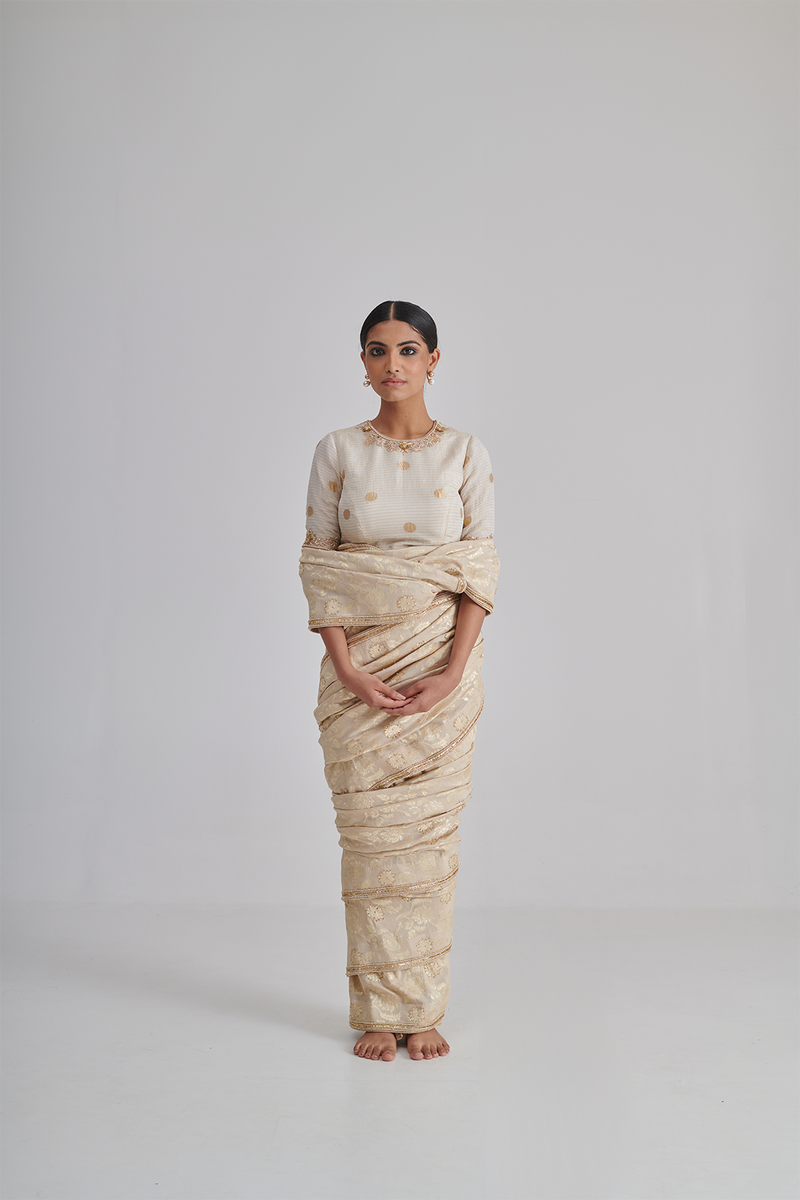
How to Tell Hand Embroidery From Machine Work: A Buyer's Guide
How to tell genuine hand embroidery from machine work — what to look for in the stitches, the back of the fabric and ...
30 June 2026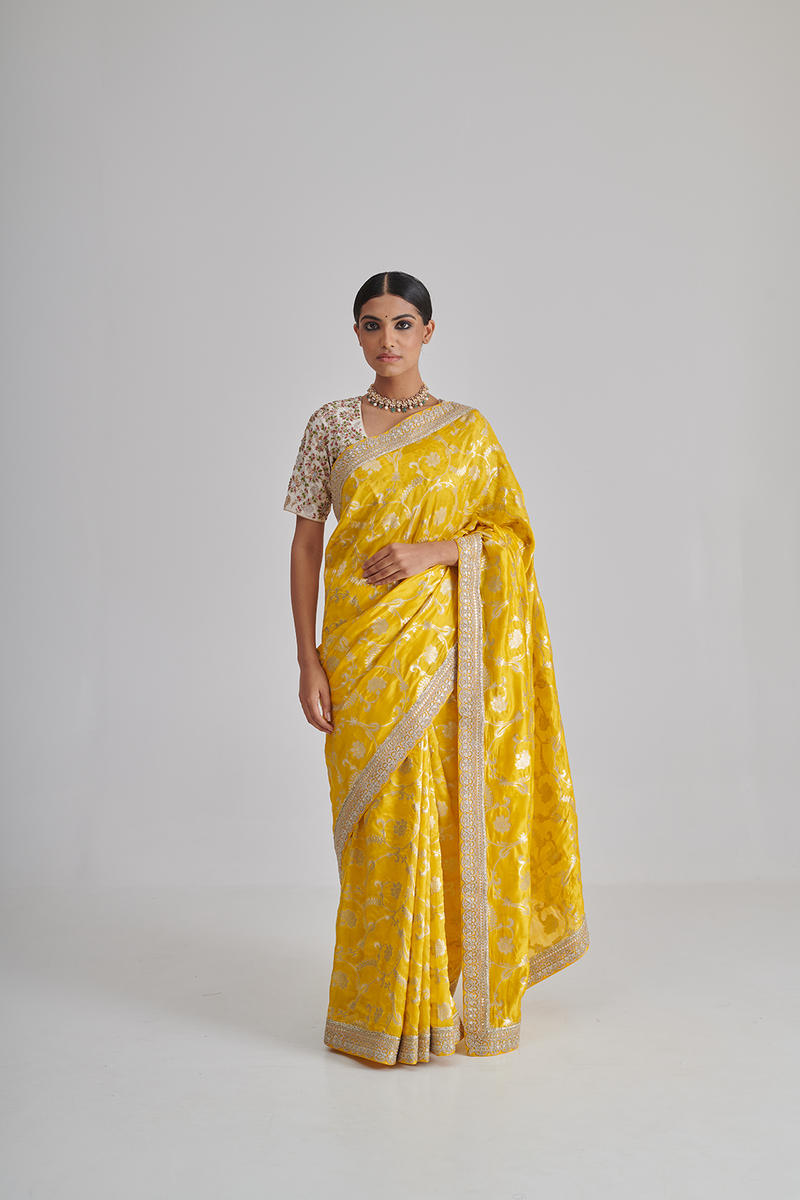
Real Zari vs Imitation: How to Tell the Difference When You Buy
How to tell real zari from imitation — the weight, sheen, thread and burn tests, what tested zari means, and why genu...
2 July 2026
Types of Silk in Indian Fashion: Banarasi, Chanderi, Dupion, Organza & More
A guide to types of silk in Indian fashion — Banarasi, Chanderi, Dupion, Organza, Tissue, Jacquard, and more. What ea...
10 March 2026