

What to Wear to an Indian Wedding Abroad: A Guest's Guide for the US, UK & Canada
An Indian wedding in New Jersey is not a smaller version of an Indian wedding in Delhi. It is a different event with the same name. The five-day calendar gets compressed into a long weekend because people have taken leave from work. The functions happen in a hotel ballroom or a banquet hall rather than across four homes. Half the guest list has never worn Indian clothes before and is quietly panicking. And somewhere between the ceremony and the reception there is a car park in February.
This guide is for that wedding — the one held in the US, the UK, Canada, Australia or the Gulf, where the rituals are Indian and the logistics are not.
The Compressed Format
Most diaspora weddings collapse into two or three days, and the collapse follows a predictable pattern:
- Friday evening: mehendi and sangeet merged into one event, often at a smaller hall or a family home, usually the most relaxed and most colourful of the weekend.
- Saturday morning: baraat in the hotel driveway, then the ceremony in a ballroom with a mandap built that morning and dismantled that night.
- Saturday evening: the reception, which is the most formal event of the weekend and often the most Western in its staging — seated dinner, speeches, a first dance, a DJ.
- Sunday: a brunch or a puja, informal, and frequently the event guests forget to pack for.
The practical consequence is that you need three outfits, not seven, and one of them has to be genuinely formal. That is a very different shopping brief from a wedding in India, and it argues for fewer, better pieces rather than a suitcase full of single-wear ones.
The Venue Is a Ballroom, and That Changes the Maths
A hotel ballroom is lit from above with warm downlights and photographed with flash. This does two things. It flattens texture — a subtly textured woven silk that looks beautiful in daylight can read as flat and plain in a ballroom — and it rewards anything that catches light: sequins, cutdana, zari, tissue, mirror work.
It also means the temperature is controlled, which removes the single biggest constraint on Indian wedding dressing back home. You can wear the heavy piece. Nobody is going to make you stand in 40°C sun in it.
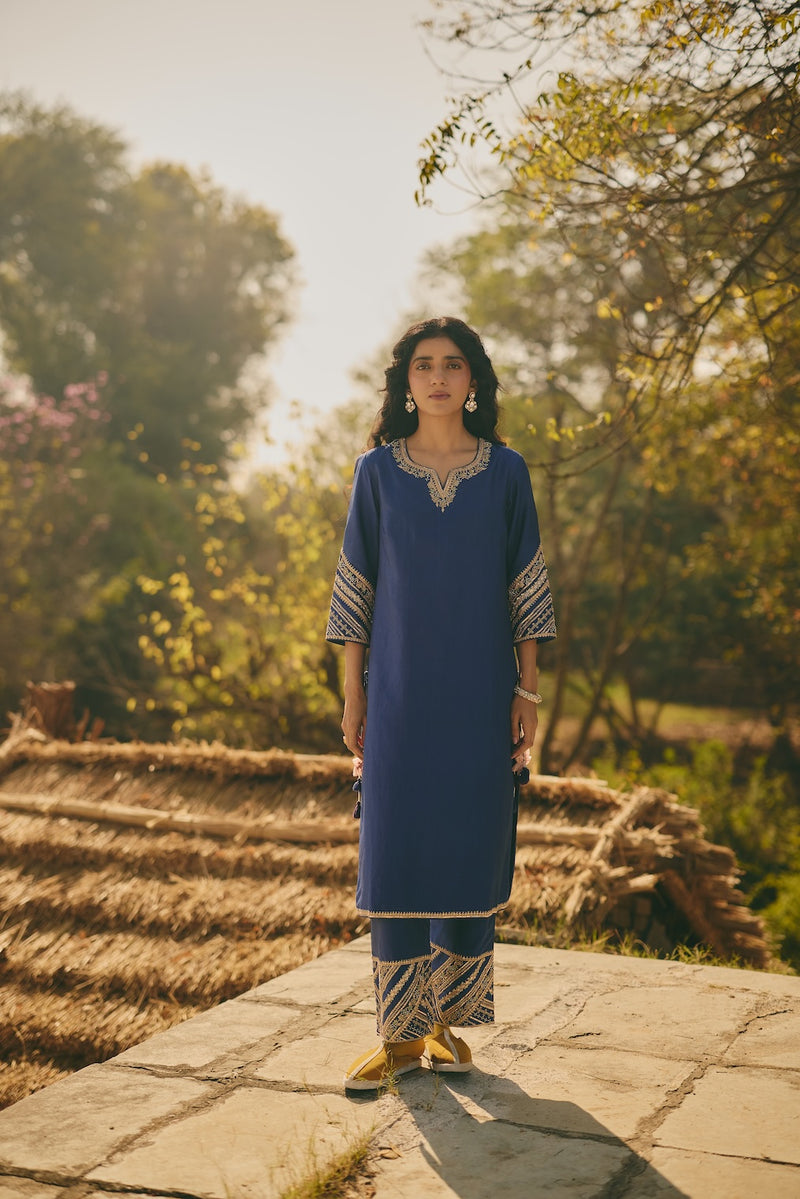
The Ferozaan anarkali with Gulraaz churidar, drawing on the rhythm of vintage Persian tapestries in a striking jewel-toned palette, is exactly the register a ballroom ceremony wants — colour that holds up under warm lighting, and a silhouette that photographs from any angle in a room where you never know which side the camera is on.

The Outfit-by-Outfit Plan
Mehendi and sangeet: the colour one
The most relaxed event of the weekend and the one where you can be loudest. It usually involves dancing, sitting on the floor for mehendi, and being on your feet for hours. Choose a silhouette you can move in.
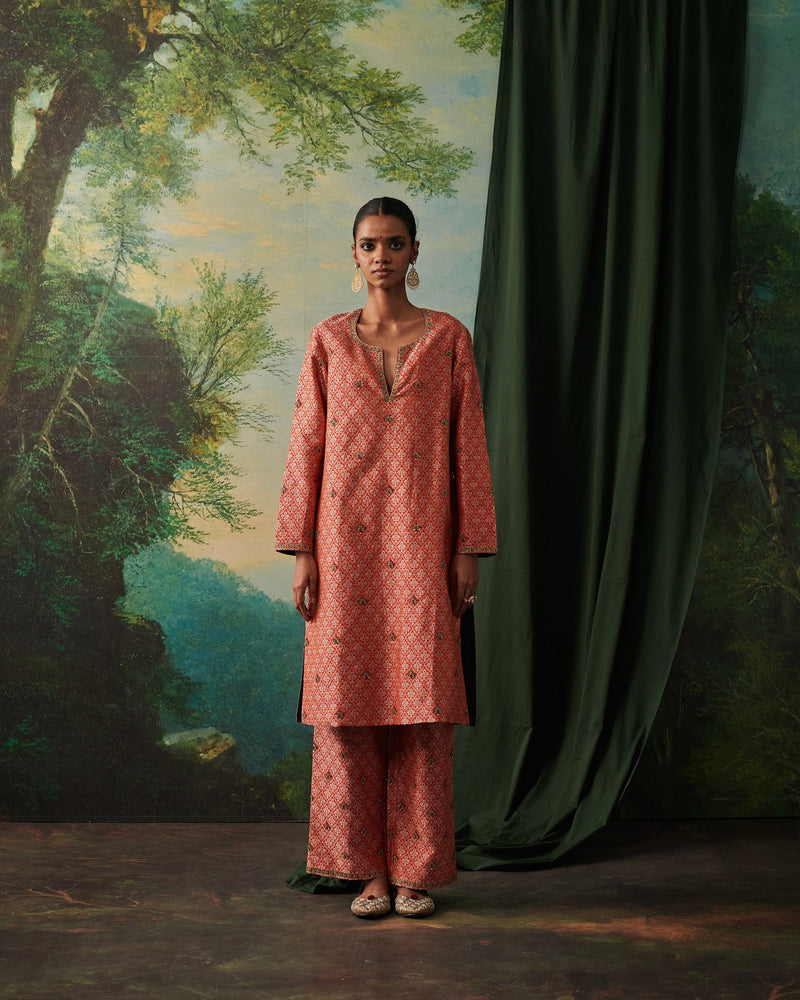
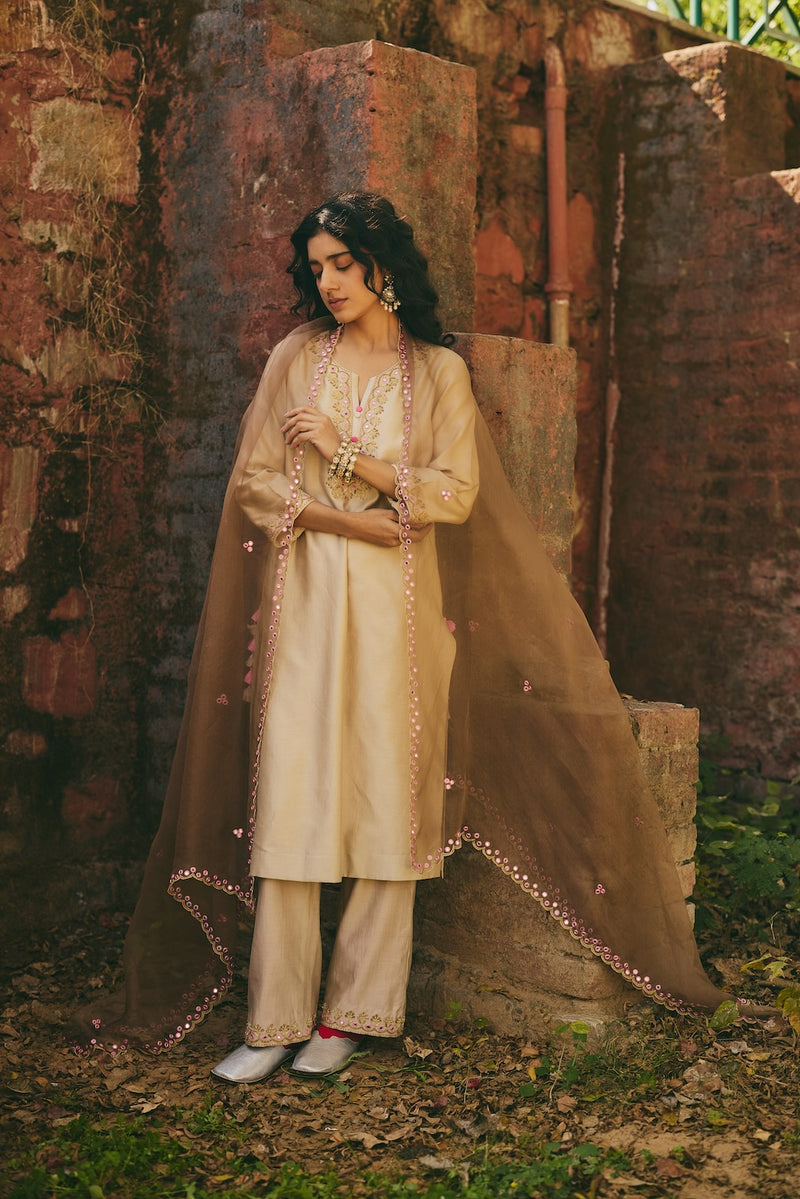
The Roshni kurta with Nazreen sharara pairs cheerful mustard yellow with soft blossom pink, built for daytime festivities. The Gulrukh set puts a soft blossom pink against a bold multi-hued bottom for anyone who would rather not match. A sharara handles a diaspora sangeet better than a lehenga does, because there is almost always less floor space than you expect.


The ceremony: the traditional one
Morning, seated, long, and photographed formally. This is the function where traditional reads best, and where the ivory-and-gold register works particularly well against a ballroom mandap.
The Noor ivory anarkali with Ahana churidar carries Mukesh work in hand-embroidered floral motifs with sequin detailing — Lucknawi craft, formal, covered, and comfortable through a two-hour ceremony. The Zariya saree on a mint green Banarasi base with antique-gold sequin and gota bands is the saree option that will not defeat you if you are draping it yourself in a hotel room.


The reception: the formal one
This is the event that earns the budget. Evening, seated dinner, speeches, photographs against a backdrop. It is also the one where a Western black-tie sensibility creeps in, so a structured or slightly contemporary silhouette often lands better than at a wedding in India.
The Rafia anarkali in classic black silk, with a square neckline and an all-over arrangement of floral sprays in soft pink and peach resham, does the thing a black evening dress does at a Western reception while remaining unmistakably Indian. The Nyassa blouse with Elina lehenga in luminous rose tissue is the full-lehenga answer for close family.


The Things That Are Different Abroad
- The car park is the venue's weak point. You will walk from car to lobby in whatever the weather is doing. A February wedding in Toronto or Chicago means a coat over a lehenga, and a coat that will not crush the embroidery. Plan it as part of the outfit. Our guide to layering with capes and jackets covers doing it deliberately.
- Half the room may be non-Indian. Colleagues, in-laws, university friends. Nobody will notice if your outfit is not perfectly ritual-correct, but everyone will notice if you look uncomfortable in it. Choose something you can actually wear.
- Alcohol is usually present and the dancing starts earlier. Diaspora receptions run to a venue's closing time rather than to dawn. Floor-length and unpinned is a risk.
- There is no last-minute tailor. This is the big one. In India you can have a blouse altered overnight. In most of the US, UK and Canada you cannot — or you can, at a price, with a two-week wait. Whatever you bring has to already fit.
- Nobody is going to iron it for you. Hotel irons and embroidered fabric are a bad combination. Our guide to steaming embroidered clothes covers how to do it without damage.
- Red is still the bride's. Every rule from an Indian wedding about bridal colours still applies, and in a smaller guest list it is more visible, not less.
Ordering From Abroad: The Honest Timeline
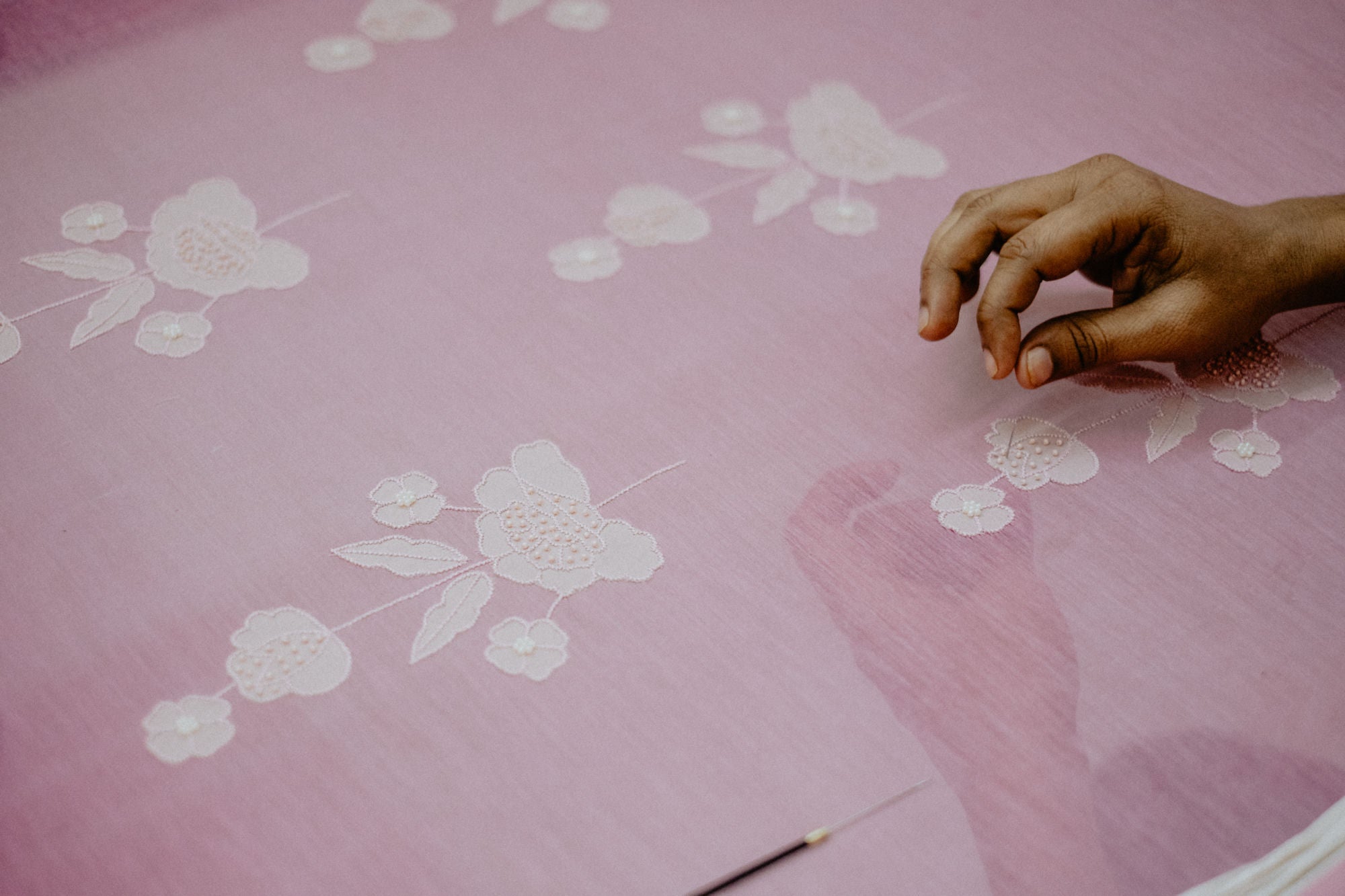
Everything we make is hand-embroidered in Jaipur and cut to your measurements, which takes four to five weeks, and then three to seven days to ship. Add a buffer for customs clearance in your country and the working rule is simple: start at least three months before the wedding, and closer to four if it falls in the October–February season when every karigar in Jaipur is booked.
Two things worth being straightforward about. Custom measurements cost nothing extra — send them on WhatsApp before you order and the piece is cut to them, which matters enormously when there is no tailor at the other end. And because every piece is made for one order, there is no off-the-rack exchange; if something is wrong we will work it out with you, but this is not a returns-friendly way to shop, so the measurements conversation is the one to get right. Our guide to measuring yourself properly walks through it, and ordering custom from abroad covers the rest of the process.
Shipped Worldwide, Insured and Tracked
Hand-embroidered in Jaipur, cut to your measurements at no extra charge, and shipped worldwide — message us and we arrange it directly, including duties and timelines for your country. Browse the wedding guest collection, or read our NRI wedding outfit guide.
Shop Wedding GuestFrequently Asked Questions
How many outfits do I need for an Indian wedding abroad?
Usually three. Diaspora weddings compress into a long weekend — a merged mehendi and sangeet on the Friday, the ceremony on Saturday morning and the reception on Saturday evening, with an informal brunch or puja on Sunday. That argues for three good outfits rather than the six or seven a wedding in India would need.
What should a non-Indian guest wear to an Indian wedding?
Indian clothes are welcomed rather than expected — a kurta set or anarkali is the easiest place to start, since it needs no draping. Avoid red and white as the primary colour, cover your shoulders for the ceremony, and choose something you can sit and move in. Nobody will mind an imperfectly ritual-correct outfit; everyone notices discomfort.
How far in advance should I order an outfit from India?
At least three months, and closer to four for a wedding between October and February. Hand embroidery and made-to-measure tailoring take four to five weeks, shipping adds three to seven days, and customs clearance in your country needs a buffer on top of that.
What do you wear over a lehenga in cold weather?
A structured coat or a long wool wrap that sits over the top without crushing the embroidery, taken off at the door. Avoid anything that has to be pulled over the head. For the room itself, a cape or embroidered jacket layered as part of the outfit is a better answer than a coat you have to keep track of all evening.
Made to order in 4–5 weeks
Have an event date? We’ll tell you exactly when to order by.
We take a limited number of orders each month — secure your slot early.
Not sure where to start?
Tell us what you're dressing for and we'll help you choose — fabric, fit, colour, and timeline — over WhatsApp.
Your Cart
Pieces from this story
All pieces →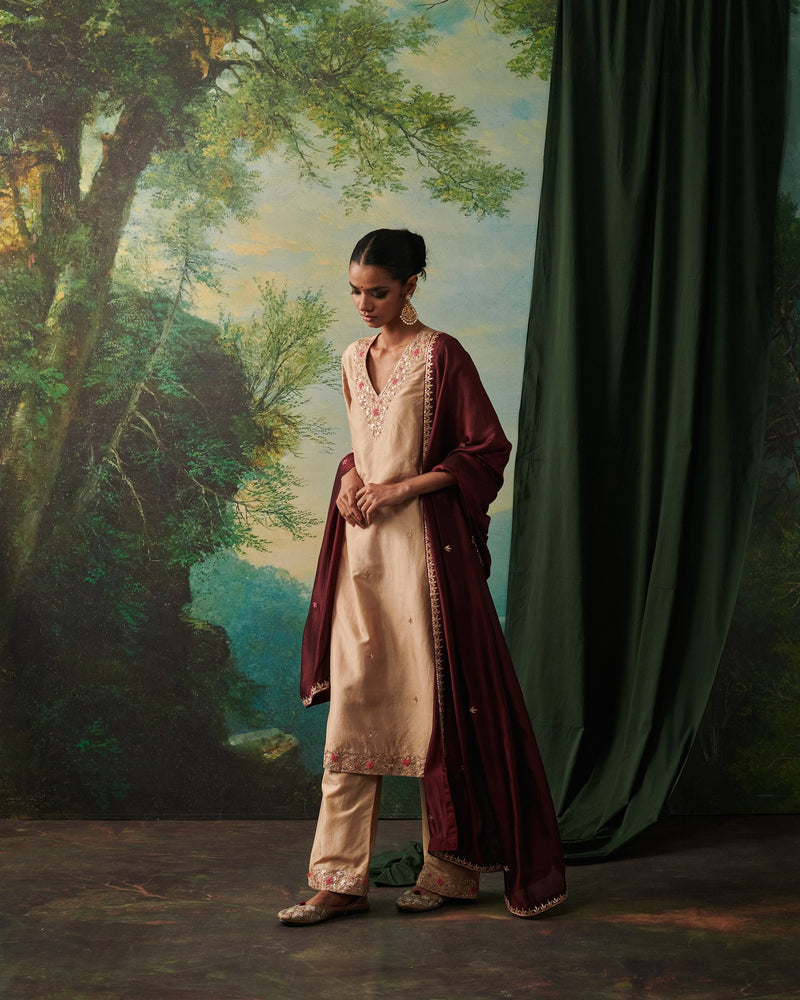
Keep reading
The journal →
Best Banarasi Saree Brands in India 2026: Where to Buy an Authentic Banarasi
Handmade by karigars Made to your measurements Fit guarantee Ships worldwide As seen in GraziaElle Graduat...
14 September 2026
Gifts for Your Wife She'll Actually Wear: Indian Outfits for Karva Chauth, Diwali & Anniversaries
Handmade by karigars Made to your measurements Fit guarantee Ships worldwide As seen in GraziaElle Graduat...
14 September 2026
Designer Lehenga for Girls: A Parent's Buying Guide to Kids' Lehengas
Handmade by karigars Made to your measurements Fit guarantee Ships worldwide As seen in GraziaElle Graduat...
14 September 2026