
What to Wear to a Rajput Wedding: A Guest's Guide from the Tilak and the Baan to the Baraat, the Toran and the Pheras
For a Rajput wedding, dress the way the women of the family will: in a lehenga, a saree or a long kurta set in warm, saturated colour, with gota or bandhani if you like, and always with a dupatta you can draw over your head. Leave deep red to the bride, avoid all-white, and save your heaviest piece for the baraat and the pheras. You do not need to own a Rajputi poshak. You do need to know that the tilak is traditionally a men's ceremony, that the baraat arrives with a sword and a safa, and that the women's evenings are where the dancing happens.
Rajput families live across Rajasthan and well beyond it, in Gujarat, Madhya Pradesh, Uttar Pradesh, Himachal Pradesh, Uttarakhand and elsewhere, and the clans do not all share one rulebook. Wedding writers note that Sisodia, Rathore, Kachhwaha, Chauhan, Bhati and Shekhawat families do not all perform the same rites in the same order. It is also worth remembering that most Rajput families were never royal, so a Rajput wedding is not automatically a palace wedding. This guide follows the Rajasthani form. For the wider regional picture, see our Rajasthani wedding guide; if the venue is a heritage hotel, our palace wedding guide covers the setting. Ask your hosts which functions you are invited to.
First, an Honest Note on What We Make
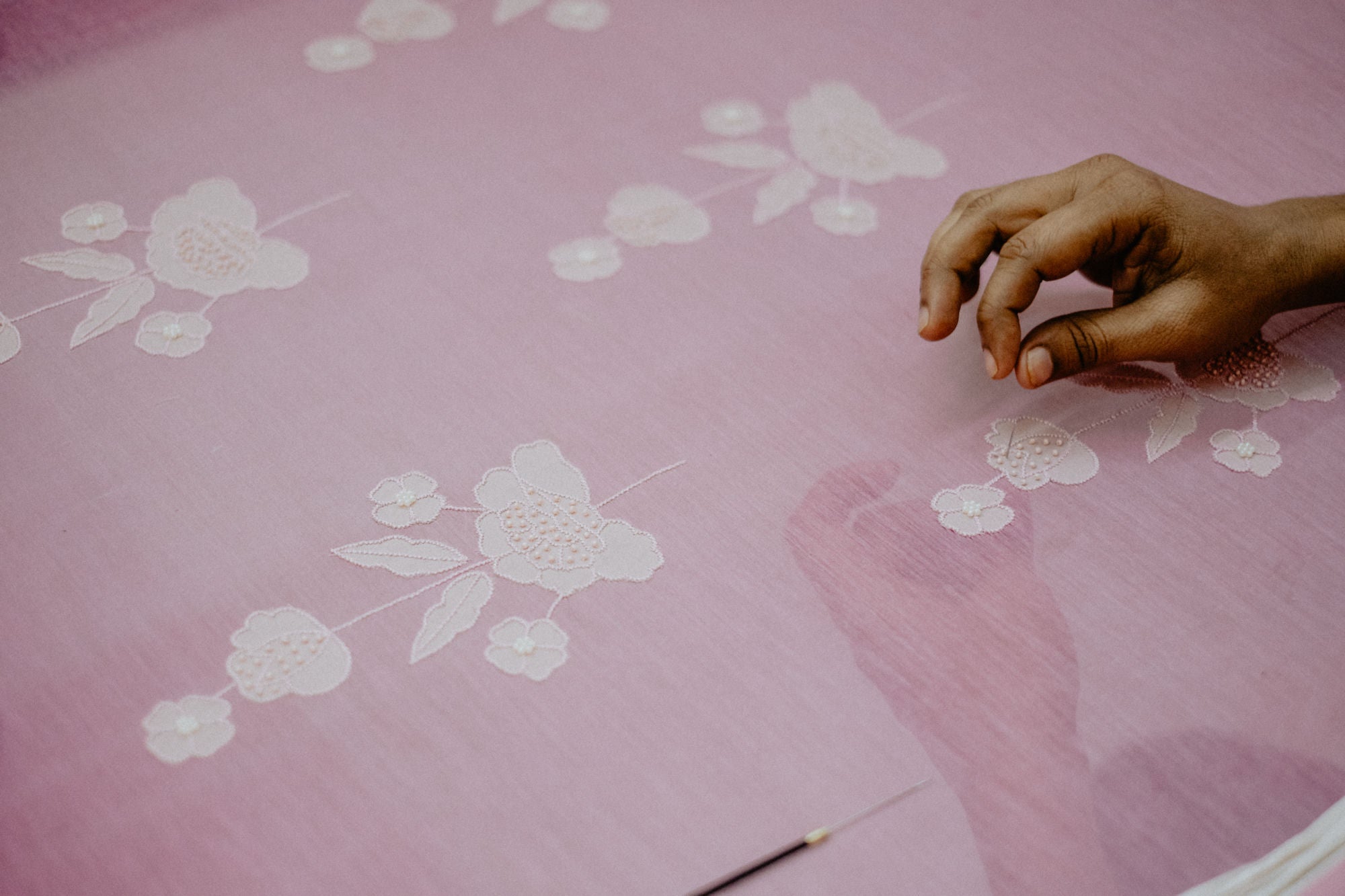
We do not make the Rajputi poshak, and we would not pretend to. We do not make leheriya, velvet, jewellery, safas or menswear either. We do not weave: we buy handwoven cloth and embroider it by hand in our Jaipur atelier. What we make are lehengas, sarees, kurta sets, blouses and dupattas, many of them finished in gota, the folded metallic ribbon work Jaipur is known for, and a few cut from bandhani or bandhej cloth. Those sit naturally beside the poshaks you will see. Everything below is described exactly as it is.
The Rajputi Poshak: What You Will See
The poshak is the traditional dress of Rajput women, and at a family wedding you will see a great many of them. It has four parts: the kanchli, a fitted inner blouse; the kurti, a loose sleeveless over-layer (some accounts call it the futai); the ghagra, a long, full, pleated skirt; and the odhni, a long veil worn over the head as a mark of respect. Wedding poshaks are typically worked in gota patti and zari, and brides usually wear red, maroon or pink, though orange, yellow and gold poshaks appear too.
The jewellery is just as distinctive. The borla is a round, bell-like ornament worn at the centre of the forehead, and the rakhdi is a closely related forehead piece; families use the two names slightly differently, and both are treated as signs of a married woman. With them come the aad at the throat and the bajuband on the arm. A day or two before the wedding, or sometimes that morning, the groom's family sends the bride her wedding outfit and jewellery in the palla dastoor, so the poshak she wears for the pheras often comes from her new home.
For a guest, the lesson is simple: warm colour, metallic work, and an odhni that does real work. Our guide to gota patti explains the craft, and our roundup of the best gota patti brands shows who else does it well.
The Tilak: Usually a Men's Ceremony
The tilak marks the formal start of a Rajput wedding. Traditionally, the bride's father, brothers and male relatives travel to the groom's home, where her brother or maternal uncle applies a tilak of roli and rice to the groom's forehead. The gifts traditionally include clothes, dry fruit, sweets and a sword. Accounts agree that only the men of the bride's side go. If you are a woman and you are invited, the family has chosen a more modern format: a silk kurta set is exactly right.
The Baan: Turmeric, Songs and Staying In
After the Ganesh puja (our guide to the pre-wedding home ceremonies covers it), the bride and groom are anointed at their own homes with ubtan, a paste of turmeric and sandalwood. In Rajasthan this is the baan, also called tel baan or pithi dastoor. Once it begins, the bride and groom traditionally do not leave home until the wedding. The women of the family sing and dance to the dholak, so expect a courtyard, a floor and a lot of turmeric.
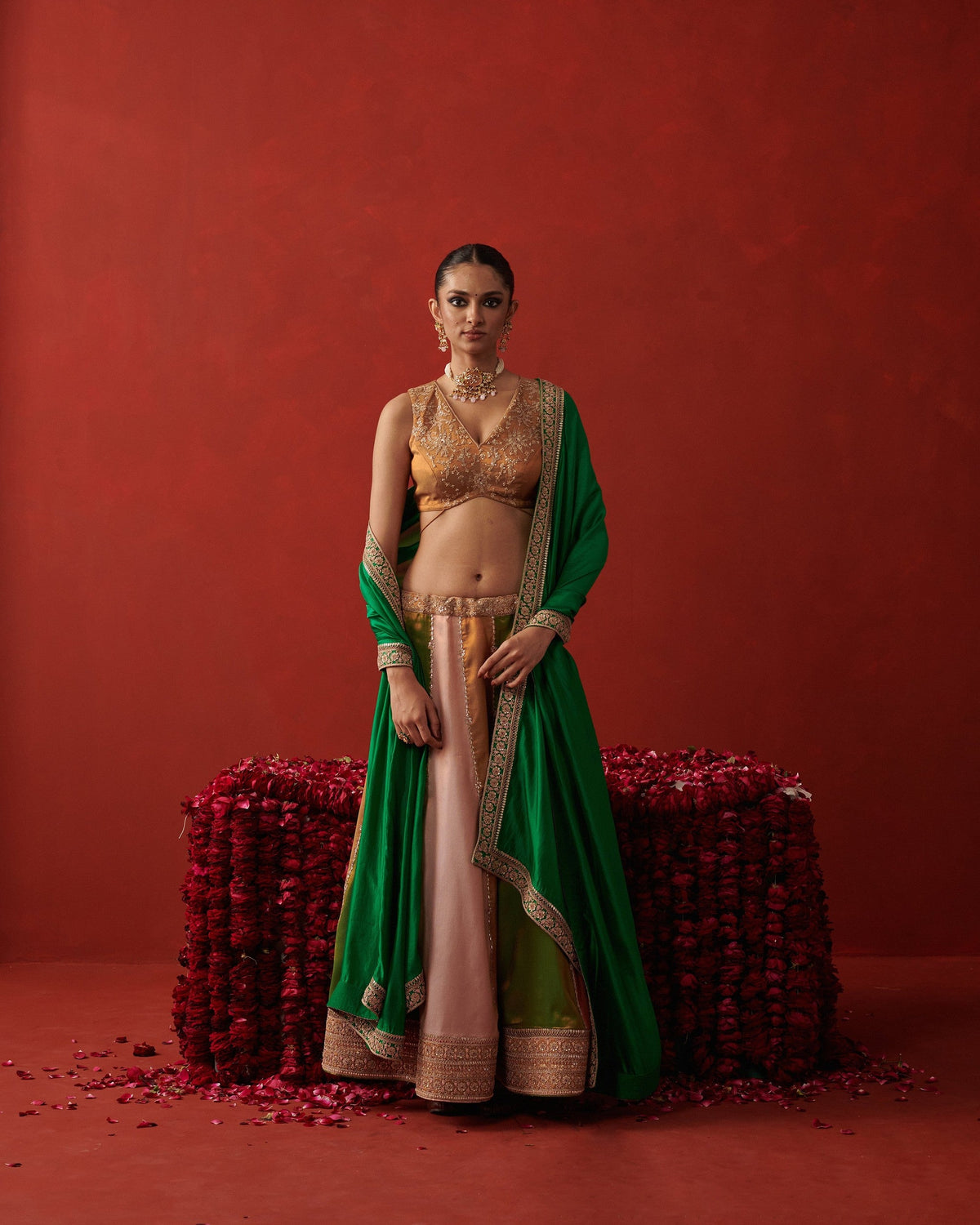
Wear something light that you are willing to see stained. The Gia & Cyraa set (₹28,500) is a lime-green silk kurta with straight pants, its neckline, sleeves and hem embroidered in rose gold and deep fuchsia florals using marodi, gota, sequins and thread work. The Inara & Nazm set (₹25,500) is a silk kurta with gota-patti motifs on the front placket and cuffs, outlined in resham and sequins, over a pant finished with a gota border. Our haldi dress code guide has more ideas.


The maternal uncle's arrival with gifts, the mahira dastoor, usually falls in these days as well. If you are on the maternal side, dress properly for it; our mayra and bhaat guide explains the family roles.
The Women's Evenings: Dress to Spin
The ghoomar is the dance to know. It began with the Bhil community and was taken up by Rajput courts, and it is performed by women at weddings and festivals, turning in a circle so that every ghagra flares out. Tradition also holds that a new bride dances ghoomar when she is welcomed into her marital home. At a ladies' sangeet, go bright: a full lehenga earns its keep.
The Driti & Hesyra set (₹75,000) is radiant yellow silk. The blouse is embroidered all over in zari, resham, marodi, gota patti, sequins, cutdana, bead and aari work, and the voluminous lehenga carries an ornate scalloped floral border of gota patti appliqué at the hem.

The Ishq-e-Gul & Inara set (₹37,500) is a panelled tissue-jacquard lehenga in strokes of pink, gold, peach, ivory and green, each panel edged with sequin-lined gota and finished with a gota-patti and marodi border in gold, over an antique-gold blouse with sequin and resham vines. If you prefer a saree, the Laal Ishq saree (₹19,500) is deep vermilion organza silk embroidered with sequin vines and abstract florals, shown with a violet silk blouse in a pairing that draws on vintage Rajput aesthetics. Red is fine at the sangeet; keep it away from the pheras.


The Baraat: Safa, Sword and a Mare
On the wedding day the groom ties his safa, carries a sword at his waist and rides out on a mare (or, at grander weddings, an elephant), usually in an achkan or sherwani. Traditionally the Rajput baraat was an all-male affair, and accounts describe the women of the groom's house staying behind to celebrate on their own. Many families now have everyone dancing in the baraat together, so ask.
At the bride's door the groom strikes the toran, a carved emblem often shaped like a bird, with his sword or a neem stick. The bride's side then welcomes the baraat; in Rajasthan this welcome and meeting of the two families is often called the samela, and the bride's mother performs the aarti and applies a tilak to the groom. You will be standing outdoors after dark, so wear your richest piece and shoes that can handle gravel. Our milni and baraat welcome guide has more.
The Nazma & Ahana set (₹45,100) is a soft blue silk kurta over a warm honey-gold silk pant, with gota patti and sequins at the neckline, sleeve and hem borders.
The Pheras: Cover Your Head
The ceremony brings the gathjoda, in which the groom's sash is tied to the bride's chunari, the joining of hands (often called the hathleva in Rajasthan), the seven circles of the fire and the sindoor. It is seated, long and frequently late. Many women of the family will have their odhnis over their heads, and a guest should be ready to do the same.
That makes the dupatta the most important piece you bring. Our guide to draping a dupatta over your head shows how to keep it in place.
- The Kainaat dupatta (₹9,750) is sheer organza with circular medallions of gota patti, sequins, resham and beadwork along its length, drawn from archival motifs once seen on phool jhaal odhanis, with a gota-finished border.
- The Mishti dupatta (₹9,500) is vibrant pink silk crossed by shimmering horizontal stripes of gota along its whole length, with a fine golden trim and multicoloured silk tassels at the corners.
- The Meeka dupatta (₹16,500) is fiery orange organza silk, with panels of gota patti and marodi framing the corners, finished with thread and bead work in paisley-inspired motifs.
- The Gulnaaz dupatta (₹8,500) is bandhani silk in a muted brown, embroidered with zardozi, sequins and cutdana, with bold paisleys at the corners against the dotted resist-dye texture.


Browse all our dupattas to match one to your outfit. Organza slides, so pin it.
A Saree for the Reception
Many families now end with a reception, and a saree is rarely wrong there. The Zariya saree (₹22,595) is soft mint-green Banarasi with diagonal bands of sequins and gota in antique gold and a fine pink selvedge. Pair it with the Abeer blouse (₹11,495), cut from bandhani Banarasi silk with a wide V-neckline and short sleeves, embroidered in sequins, cutdana and resham. Our bandhani guide explains how real tie-dye is made.
The Feast
Rajput wedding menus can include dal baati churma, gatte ki sabzi, and ghevar and malpua for dessert. You may also hear about laal maas, the fiery red mutton curry coloured with Mathania chillies, which began as a dish cooked by Rajput hunting parties. Some wedding menus feature it; plenty of families serve only vegetarian food. Menus vary from family to family, so do not assume either way.
Colour and Practical Notes
- Red is for the bride. Red is the traditional wedding colour of the poshak. Wear it at the sangeet if you like, but not to the pheras.
- Avoid all-white. In Rajput dress tradition, white has been associated with mourning and widowhood. Yellow, pink, orange, green and gold are all safe.
- Plan for the cold. Winter nights in Rajasthan are genuinely cold. Bring a shawl, and see our winter wedding guide.
- Get the fit right. We cut every adult piece to your measurements at no extra charge. Design changes such as sleeve length or a different neckline are not automatically possible, so ask us on WhatsApp what can be done on the piece you like.
If the family is Marwari rather than Rajput, the customs shift; our Sindhi and Marwari wedding guide covers the differences. Browse our lehengas for the big nights.
Going to a Rajput Wedding This Winter?
Every piece is made to order in our Jaipur atelier in 4–5 weeks, plus 3–7 days for shipping, and cut to your measurements at no extra charge. An order placed today will reach you around the first week of December at the earliest. That is too late for anything in November, but a December, January or February wedding is comfortably in range. Express making is sometimes possible, depending on the piece and the month. Shipping is free on domestic orders above ₹30,000. Message us on WhatsApp with the date and the functions you are attending, and we will tell you honestly what can reach you in time.
Browse the CollectionMore regional wedding guides: Rajasthani · Sindhi and Marwari · Palace weddings in Udaipur and Jaipur · Dogra
Frequently Asked Questions
What should a female guest wear to a Rajput wedding?
A lehenga, saree or long kurta set in a warm, saturated colour such as yellow, pink, orange or green, with gota or bandhani if you like, and a dupatta you can wear over your head at the pheras. Leave deep red to the bride and avoid all-white.
Do I need to wear a Rajputi poshak as a guest?
No. The poshak (kanchli, kurti, ghagra and odhni) is the traditional dress of Rajput women, and you will see many at the wedding, but a lehenga, saree or kurta set in the same warm palette is entirely appropriate for a guest. What matters most is having a dupatta to cover your head.
Do women attend the tilak at a Rajput wedding?
Traditionally, no. The bride's father, brothers and male relatives go to the groom's home, where her brother or maternal uncle applies the tilak and the family presents gifts, including a sword. Some families now hold a mixed tilak, so check your invitation.
Why does a Rajput groom carry a sword?
The sword is part of Rajput martial heritage, and a sword is traditionally among the tilak gifts. On the wedding day the groom wears it at his waist with his safa, rides to the bride's home on a mare, and strikes the toran above her door with it, or with a neem stick, before the bride's family welcomes him.
What is the difference between a Rajput wedding and a Rajasthani wedding?
Rajput weddings share the Rajasthani ritual spine of baan, toran and pheras, but add their own emphasis: a tilak traditionally attended only by men, a sword-carrying groom, the palla dastoor, and women of the family in Rajputi poshaks. Customs also vary by clan and region.
Made to order in 4–5 weeks
Have an event date? We’ll tell you exactly when to order by.
We take a limited number of orders each month — secure your slot early.
WhatsApp me my order-by date + a shortlistNot sure where to start?
Tell us what you're dressing for and we'll help you choose — fabric, fit, colour, and timeline — over WhatsApp or on a video call.
Your Cart
Pieces from this story
All pieces →Not sure which piece, or need it by a date? Book a video consultation Ask us on WhatsApp


Keep reading
The journal →
What to Wear to a Rajasthani Wedding: A Guest's Guide
What to wear to a Rajasthani wedding — pithi, mahira, baraat, toran and pheras, with outfit ideas for each function a...
7 September 2026
What to Wear to a Palace Wedding in Udaipur or Jaipur
What to wear to a palace wedding in Udaipur or Jaipur — courtyards, boat transfers, marble stairs and a dress code th...
12 September 2026
Gota Patti Work: History, Techniques & How to Style This Rajasthani Craft
Complete guide to Gota Patti embroidery - history, types (kinari, sitara, lapeta), how to identify authentic handwork...
20 May 2026