
Best Jaipur Designer Labels for Ethnic Wear in 2026: Block Print, Bridal and Contemporary
The short answer: for hand block print, the Jaipur names to know are Anokhi, Soma and Gulabo Jaipur. For bridal and trousseau wear, look at Nidhi Tholia and Faabiiana. For contemporary occasion wear built on Rajasthani craft, Punit Balana, Pallavi Jaipur and Nangalia Ruchira. Every label below is based in Jaipur, which we checked before including it. We are a Jaipur label too, so we have added ourselves at the end, clearly marked, for anyone who wants hand embroidery made to their own measurements.
This guide is about labels, not markets. If you want the bazaars (Johari, Bapu, Tripolia, Kishanpole) and the printing villages, our Jaipur shopping guide walks through them area by area. And if you want the national picture rather than one city, see our roundup of the best Indian designer brands for handcrafted ethnic wear.
Why So Many Good Labels Come From Jaipur
A label in Jaipur sits close to the people who make its clothes. That is the city's real advantage, and it shows in how many designers choose to stay here rather than move to Mumbai or Delhi.
- Block printing, on the city's edge. Hand block printing took root in Sanganer, just south of Jaipur, and spread to the village of Bagru. Sanganer is known for direct printing, colour pressed straight onto pale grounds; Bagru for dabu, a mud-resist paste applied before dyeing, and for its black-and-ochre syahi-begar prints. Both carry a Geographical Indication: Sanganer from 2010, Bagru from 2011.
- Gota patti. Gota ribbon is woven mainly in Ajmer and Jaipur, and craft researchers name Nayla, a village in Jaipur district, as a major centre for stitching it onto cloth.
- Embroidery workshops. Small workshops across the city specialise in gota, zardozi, aari and sequin work, often passed down within a family. Labels based elsewhere often source embroidery here too.
- Bandhej. Rajasthani tie-dye is part of the city's everyday festive dress, and it often turns up as the base cloth for embroidered pieces.
Our Jaipur handcraft heritage guide goes deeper into each craft, and the hand block printing guide explains how to tell a hand block from a screen print.
Hand Block Print Labels
This is the group Jaipur is best known for, and the right place to start if you want cotton, everyday kurtas, or printed sarees and dupattas rather than heavy occasion wear.
Anokhi
The original. Anokhi was founded in Jaipur in 1970 by John and Faith Singh, at a time when hand block printing with natural dyes needed reviving. Its clothes and home textiles still lead with block print, and its founders also set up the Anokhi Museum of Hand Printing, which opened in 2005 in a restored haveli in Amber, just outside the city. If you have half a day in Jaipur, the museum is the best introduction to the craft there is.
Best for: Classic block-printed cotton, and understanding the craft before you buy.
Soma
Founded in Jaipur in 1984 by Radhakrishnan Nair and Andrée Pouliot to keep hand block printing in daily use. Soma sells block-printed clothing, sarees and scarves alongside bed linen and home textiles, and now has several stores across India plus an online shop. It is often mentioned in the same breath as Anokhi, and the two are easy to visit on the same day.
Best for: Block-printed basics and home textiles in one place.
Gulabo Jaipur
The younger name in this group. Gulabo Jaipur was founded in 2014 by Saloni Panwar and Salman Malawat, and hand block prints its pieces on natural fabrics in small batches, from everyday cotton kurtas up to occasion sets. It is also stocked on Pernia's Pop-Up Shop and Aza, and appeared on Shark Tank India.
Best for: Contemporary block-print kurta sets with a brighter palette.
Bridal and Couture Labels
Nidhi Tholia
Nidhi Tholia grew up in Jaipur and launched her label there in 2006. It is known for vivid colour and for mixing several crafts on one piece: gota patti, bandhani, marodi and zardozi together. Peplum short kurtas and flared sharara sets have become signatures, and the label is widely stocked by multi-designer stores, including Aza.
Best for: Colourful gota-led festive and wedding wear.
Faabiiana
A Jaipur label run by mother and daughter Kusum and Karishma Luharuwala, focused on bridal and trousseau wear, with saris at the centre of the line. It showed its debut collection at Lakmé Fashion Week in 2023, and its saris have been worn by several well-known actors.
Best for: Trousseau saris and contemporary bridal sets.
Contemporary Labels Built on Rajasthani Craft
Punit Balana
Raised in Bikaner and based in Jaipur, Punit Balana launched his label in 2015 after many years working with Jaipur's crafts. The work draws on Rajasthani folk and village traditions (gota, Bagru and block prints, zardozi, and a signature silver chandi tilla work) and keeps the shapes simple and easy to wear. There is also a menswear line, and stores in Jaipur, Delhi and Mumbai.
Best for: Pared-back occasion wear that still reads as Rajasthani.
Pallavi Jaipur
Launched at Lakmé Fashion Week in 2009, Pallavi Jaipur pairs hand embroidery, block printing and screen printing with flowing chiffons and handloom fabrics. The look is softer and more global than traditional Rajasthani dress, while still drawing on the city's crafts.
Best for: Light, fluid pieces for travel weddings and evening functions.
Nangalia Ruchira
Founded in Jaipur in 2013 by Ruchira Nangalia, this label works in cotton and natural fabrics, using Sanganeri and other block prints, bandhani and leheriya in contemporary, often fusion, shapes. It is known for an unusually wide size range, which makes it worth knowing if standard size charts rarely suit you.
Best for: Everyday craft-led cotton in an extended size range.
For newer names from across the country, see our list of emerging Indian fashion designers to watch.
Rashika Mittal: Where We Fit
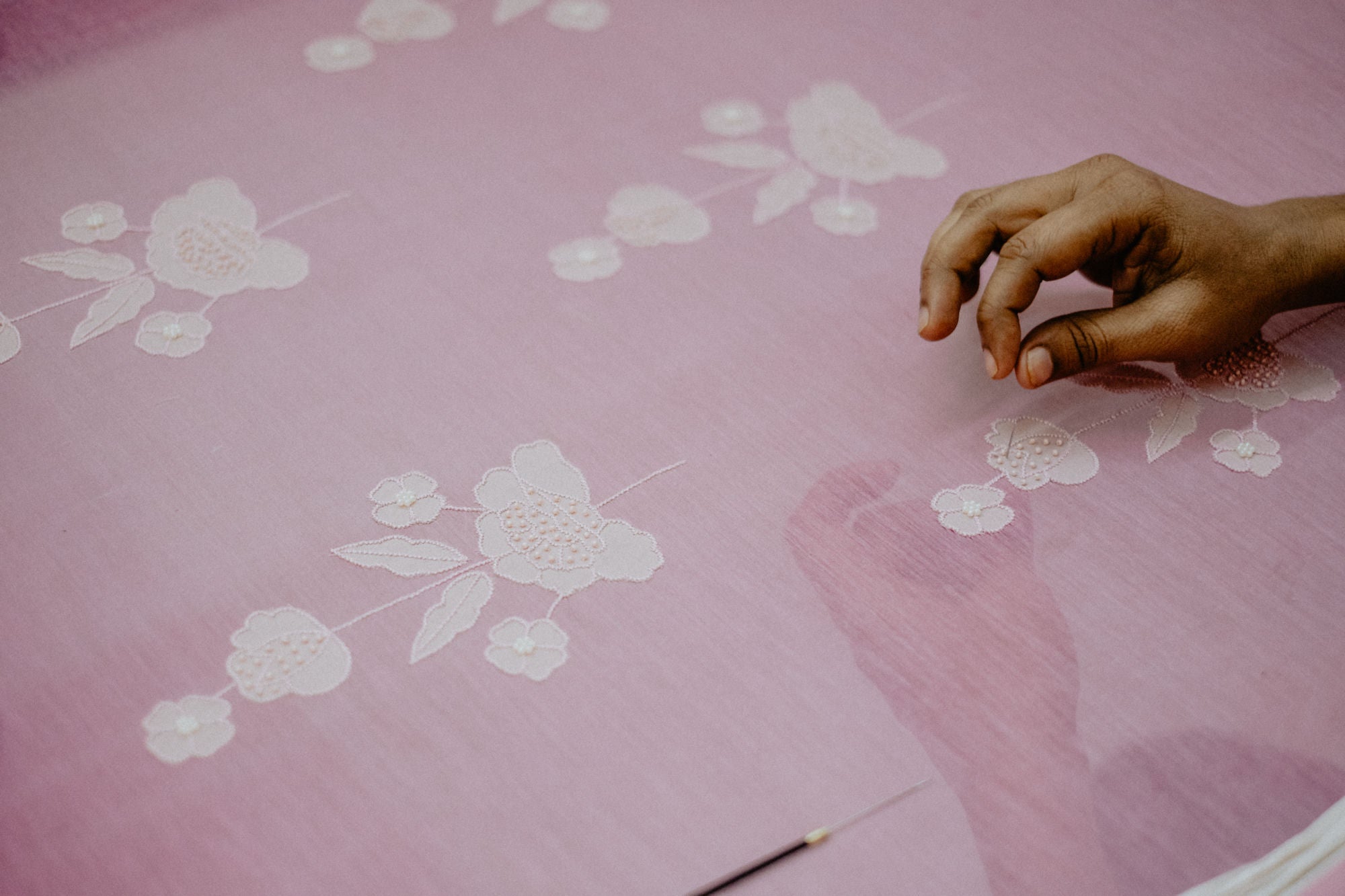
We will state our interest plainly. We are a small label with our atelier in Vaishali Nagar, Jaipur. Rashika grew up in Tinsukia in Upper Assam, studied design, and set up here because the karigars are here. Everything we make is hand-embroidered in our atelier and made to order over 4–5 weeks, with custom measurements at no extra charge. We are not a block-print label: we buy handwoven and hand-dyed cloth and embroider it, and we do not currently offer block-printed pieces. If block print is what you want, the first three labels above are where to go. We also do not make leheriya, chikankari or velvet.
Where we sit is embroidered occasion wear: gota, marodi, resham, sequins, cutdana and moti on silk, chanderi, organza, tissue and bandhej. You can see our pieces in person at fifteen multi-designer stores across India, Singapore and Dubai, among them Pernia's Pop-Up Shop and Aashni + Co, or book an appointment at the atelier, or over video from anywhere. Appointments are free, and there is no obligation to order. Our guide to visiting the atelier explains what happens at a fitting.
Gota, the most Jaipur of our crafts
The Zehan kurta with Aabha sharara (₹62,250) is the most traditional piece we make: majestic purple silk carrying a dense landscape of hand-done gota appliqué, each metallic ribbon folded and stitched into rhombus and floral shapes to form a shimmering trellis across the bodice, layered with sequins, resham and moti, over a contrasting gold tissue sharara.

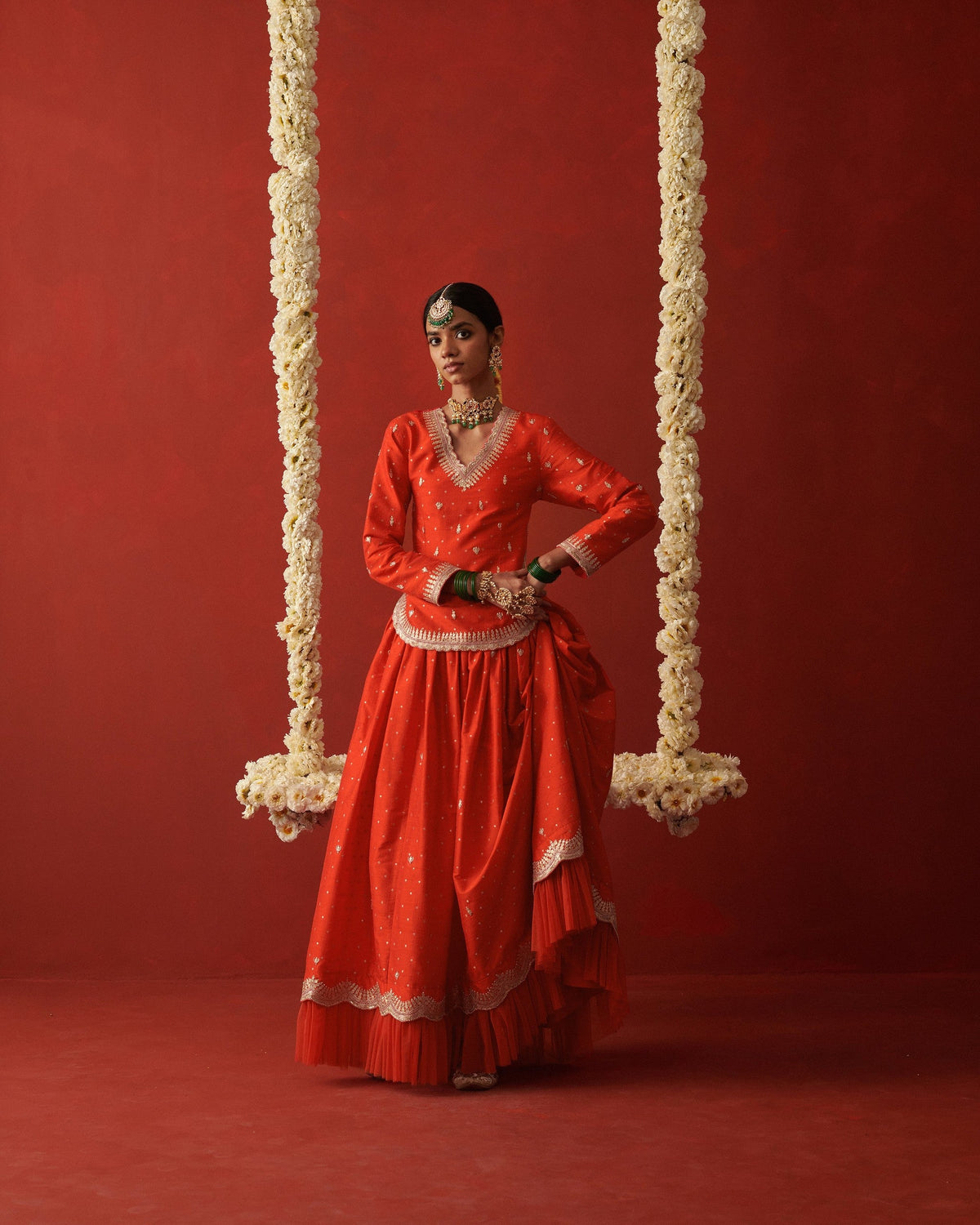
For a lehenga, the Raanisa blouse with Mahira lehenga (₹35,500) is vibrant sindoori orange woven booti silk, finished along the hem with gota, marodi, bead and thread work, with hand embroidery on the blouse's neckline, sleeves and waist and a pleated lining under the lehenga for volume. The Inara kurta with Nazm pant (₹25,500) is the easier daytime version: silk, with gota-patti motifs on the placket and cuffs outlined in resham and sequins, and a gota border on the pant. The Sakhi saree (₹25,000) is deep sindoori red organza with sequin, cutdana and gota floral butis and a bold scalloped border in the old bridal manner; the blouse is sold separately.


Two gota dupattas are the easiest way in. The Kainaat dupatta (₹9,750) is sheer organza with circular medallions of gota patti, sequins, resham and beadwork, drawn from the phool jhaal odhnis of old Rajasthan, inside a gota-finished border. The Mishti dupatta (₹9,500) is vibrant pink silk crossed by shimmering gold gota stripes along its whole length, with multi-coloured silk tassels at the corners. More on how we compare with other gota specialists in our gota patti brands guide.
Bandhej as the base cloth
Bandhej is where Rajasthani dyeing meets our embroidery. The Suki blouse (₹7,500) is soft pista green silk bandhej with a cutout neckline and halter back, edged in gota, marodi and resham. The Gulnaaz dupatta (₹8,500) is bandhani silk in a muted brown, hand-embroidered with zardozi, sequins and cutdana, with bold paisleys anchoring the corners against the dotted resist-dye texture.
Two pieces use bandhej Banarasi silk. The Suroor anarkali (₹22,775) has woven gold bootis across the cloth and sequin work at the neckline and sleeves in motifs inspired by vintage temple jewellery. The Abeer blouse (₹11,495) is pure handwoven bandhani Banarasi silk with a wide V-neck and paisley and floral motifs in sequins, cutdana and resham. Because each length is woven by hand on traditional looms, the weave can vary slightly from the photograph; if the original is unavailable we offer the two closest alternatives.


Marodi, for something quieter
Marodi is a raised, coiled thread embroidery that gives texture without much shine. The Ayesha kurta with Mehr pant (₹28,500) is deep black silk with jaali-inspired borders in marodi, sequins and thread work, and a statement medallion at the back, framed in plum silk, that nods to the royal insignia on vintage Rajasthani garments. The Raabia kurta with Zareen pant (₹28,500) is silk worked in marodi, sequins and resham, with floral vines, paisleys and parrots at the neckline and sleeves drawn from old miniature paintings and garden textiles, over soft blue pants. Our marodi embroidery guide explains the technique. See more in the kurta collection.
How to Choose Between Jaipur Labels
- Start with the craft, not the name. Block print, gota, bandhej and heavy bridal embroidery are different trades. Decide which one you want, then look at the labels in that group.
- Ask what is done by hand. "Hand block printed", "screen printed", "hand embroidered" and "machine embroidered" are all used in Jaipur. A good label will tell you plainly which applies to the piece in front of you.
- Ask about the gota and zari. Metal or polyester, real or imitation zari. Both are legitimate; the price should match the answer.
- Check the made-to-order timeline. Most embroidered occasion wear in Jaipur is made after you order. Ask for the production time and the shipping time separately.
- See it in person if you can. Several of these labels have their own stores in Jaipur, and most are stocked by multi-designer retailers in other cities. Photographs flatter metal work.
- Plan Jaipur trips for October to March. The old city is walkable then; April to June is very hot.
A timing note on ordering from us: made to order over 4–5 weeks plus 3–7 days shipping, anything ordered today arrives around the third or fourth week of November at the earliest. That is too late for Karva Chauth (29 October) and Diwali (8 November), but in time for the winter wedding season. Express making is sometimes possible, depending on the piece and the month, so ask on WhatsApp before you rule it out. Shipping is free on domestic orders above ₹30,000.
Made by Hand in Our Jaipur Atelier
Kurta sets, shararas, lehengas, sarees, blouses and dupattas with gota, marodi and bandhej, each made to order in Vaishali Nagar over 4–5 weeks, with custom measurements at no extra charge. Book a visit or message us on WhatsApp with your dates, and we will tell you honestly what is possible. Browse everything we make.
Shop the CollectionMore brand and Jaipur guides: best Indian designer brands · best gota patti brands · where to shop in Jaipur
Frequently Asked Questions
Which are the best designer labels in Jaipur?
It depends on what you want. For hand block print, Anokhi, Soma and Gulabo Jaipur. For bridal and trousseau wear, Nidhi Tholia and Faabiiana. For contemporary occasion wear rooted in Rajasthani craft, Punit Balana, Pallavi Jaipur and Nangalia Ruchira. For hand-embroidered pieces made to your measurements, smaller made-to-order ateliers, ours included, are another route.
Which Jaipur brand is best for block print?
Anokhi, founded in Jaipur in 1970, is the best-known name and helped revive hand block printing with natural dyes. Soma, founded in Jaipur in 1984, is a close alternative with clothing and home textiles. Gulabo Jaipur, founded in 2014, offers more contemporary block-printed kurta sets.
What is the difference between Sanganer and Bagru prints?
Sanganer is known for direct printing, with colour pressed onto pale grounds. Bagru is known for dabu, a mud-resist paste applied before dyeing, and for black-and-ochre syahi-begar prints. Both are towns near Jaipur, and both prints hold a Geographical Indication.
Can I visit a designer atelier in Jaipur?
Many Jaipur labels have stores or studios you can visit; check each label's site before you go. Our atelier in Vaishali Nagar is open by appointment, Monday to Saturday, 10 to 6. Appointments are free and carry no obligation to order, and video appointments are available if you cannot travel.
Does Rashika Mittal make block-printed clothes?
Not currently. We are a hand-embroidery label: we buy handwoven and hand-dyed cloth, including bandhej, and embroider it in gota, marodi, resham, sequins, cutdana and moti. For block print, Anokhi, Soma and Gulabo Jaipur are the Jaipur labels to look at.
Made to order in 4–5 weeks
Have an event date? We’ll tell you exactly when to order by.
We take a limited number of orders each month — secure your slot early.
WhatsApp me my order-by date + a shortlistNot sure where to start?
Tell us what you're dressing for and we'll help you choose — fabric, fit, colour, and timeline — over WhatsApp or on a video call.
Your Cart
Pieces from this story
All pieces →Not sure which piece, or need it by a date? Book a video consultation Ask us on WhatsApp


Keep reading
The journal →
Where to Shop for Wedding & Festive Clothes in Jaipur: A Complete Guide
A complete Jaipur shopping guide for wedding and festive clothes — Johari Bazaar, Bapu Bazaar, Sanganer and Bagru blo...
21 August 2026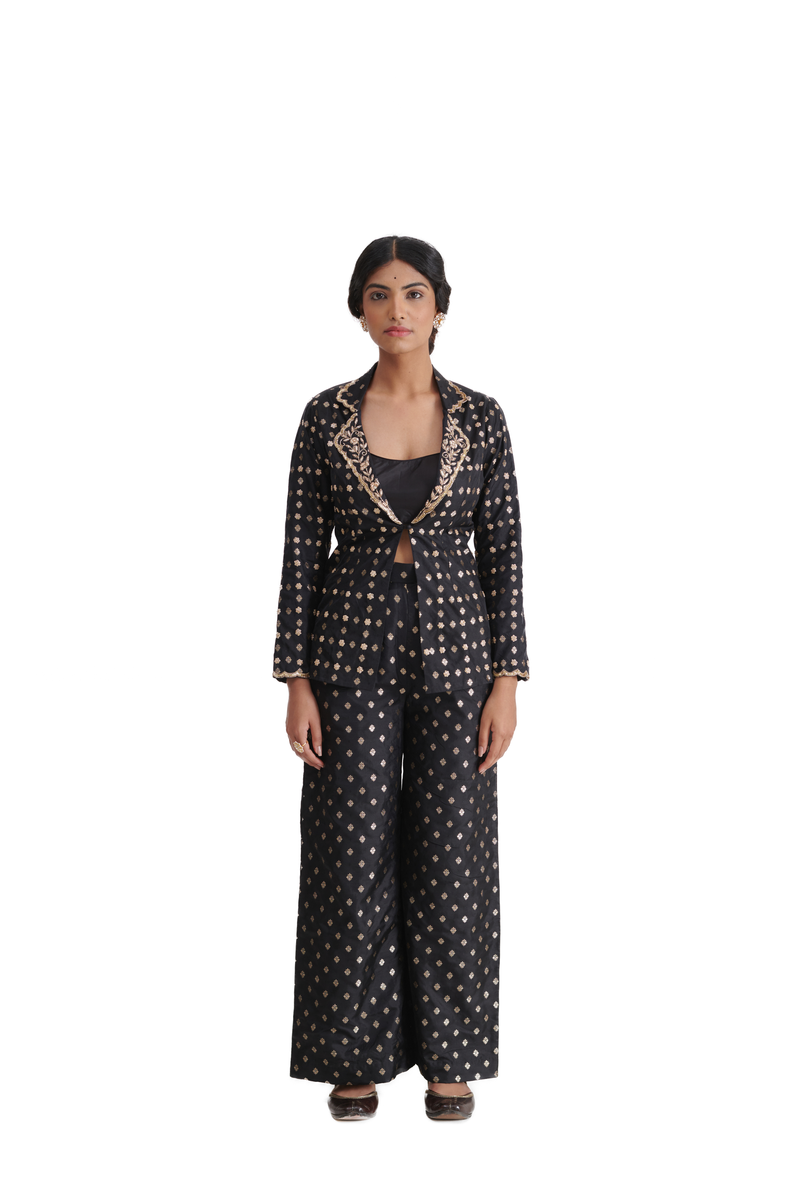
15 Best Indian Designer Brands for Handcrafted Ethnic Wear
Discover the best Indian designer brands for handcrafted ethnic wear — from heritage couture houses to handcraft spec...
6 March 2026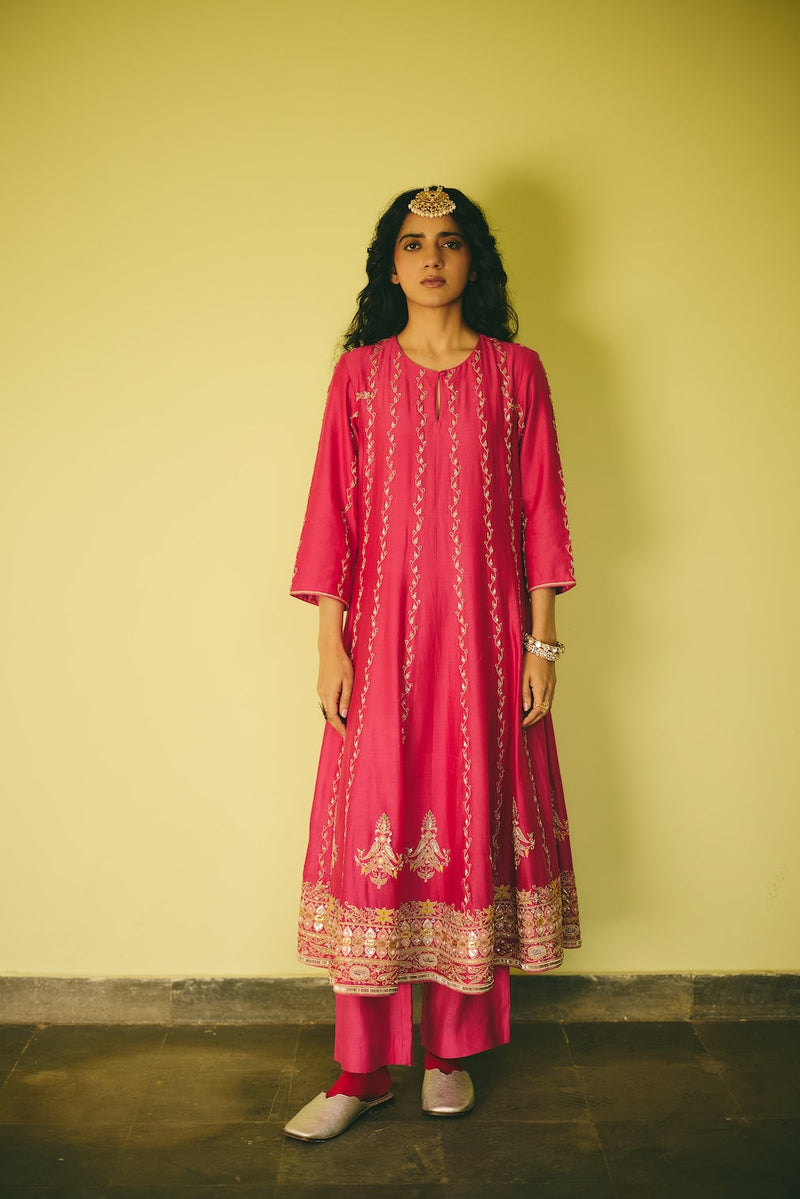
Jaipur Handcraft Heritage: The Art Behind Handmade Indian Fashion
Explore Jaipur handcraft heritage — Gota Patti, Aari, Zardozi, Bandhani, and the karigar tradition behind luxury hand...
12 March 2026