

What to Wear to a Wedding in Varanasi: Ghats, Galis, the Ganga Aarti and Banarasi on Home Turf
For a wedding in Varanasi, wear Banarasi if you own it or have ever wanted to: this is the city the weave is named after. Beyond that, dress for three things the city asks of you. Keep shoulders covered and a dupatta to hand for the evening Ganga aarti and any temple visit. Choose ankle-length hems and flat shoes you can slip off, because ghat steps and old-city lanes punish trailing skirts and heels. And plan a warm layer: in December and January, Varanasi averages roughly 22–24°C by day and 9–11°C at night, with fog on many mornings and evenings.
Our UP wedding guide walks through the rituals themselves, from the tilak to the pheras. This guide is about the city: the river, the steps, the lanes, the cold, and the cloth.
Where Varanasi Weddings Happen
Varanasi, also called Banaras and Kashi, sits on the west bank of the Ganga, and its riverfront is a continuous run of more than eighty ghats, stone steps leading down to the water. A few you will hear about all weekend:
- Dashashwamedh Ghat, the busiest, where the best-known evening Ganga aarti is held.
- Assi Ghat at the southern end, where the Assi meets the Ganga, quieter, with a sunrise programme known as Subah-e-Banaras.
- Lalita Ghat, where the Kashi Vishwanath Dham corridor, opened in December 2021, now runs up from the river to the temple.
- Manikarnika Ghat, the main cremation ghat, where pyres burn day and night. You may pass it by boat. Do not photograph it.
Wedding venues fall into two broad kinds. Some are restored havelis and palace buildings on or just above the ghats, reached on foot through the old city or by boat. Others are hotels, lawns and banquet venues away from the river, where a Varanasi wedding looks much like one anywhere in North India. Ask which is which before you pack: the riverside events decide most of what follows.
Winter in Banaras: Fog, Cold Steps and a Colder River
The wedding season runs through the cool, dry months. Published climate averages for Varanasi:
- November: about 29–30°C by day, 16°C at night.
- December: about 24°C by day, 11°C at night.
- January: the coolest month, about 22°C by day and 9°C at night.
- February: about 27°C by day, 13°C at night.
Two things make it feel colder than those numbers. Fog can form at night and in the early morning from November to January, and from roughly mid-December to mid-January it can hang on for days, holding afternoons well below average. In harsh years, January nights have dropped to 1–2°C. And riverside evenings, on stone beside open water, are the coldest place in the city. Plan a layer for every evening, and see our winter wedding guide for fabrics that hold warmth.
The Boat to the Ganga Aarti
Many wedding itineraries include an evening on the river for the aarti at Dashashwamedh. It begins just after sunset, around 6 pm in winter, and runs for about 45 minutes. The steps fill up early, so families often take guests out by boat to watch from the water.
Dress for this as you would for a temple, then add warmth:
- Covered shoulders and a modest neckline, with a dupatta you can draw over your head when the aarti begins.
- No trailing hems. Stepping from wet stone into a rocking wooden boat is no place for a floor-length lehenga or a loose pallu.
- Something warm. The river is several degrees colder than the lanes, and you will sit still for an hour.
- Keep sheer, flowing layers clear of the lamps. Open flames are everywhere at aarti time.
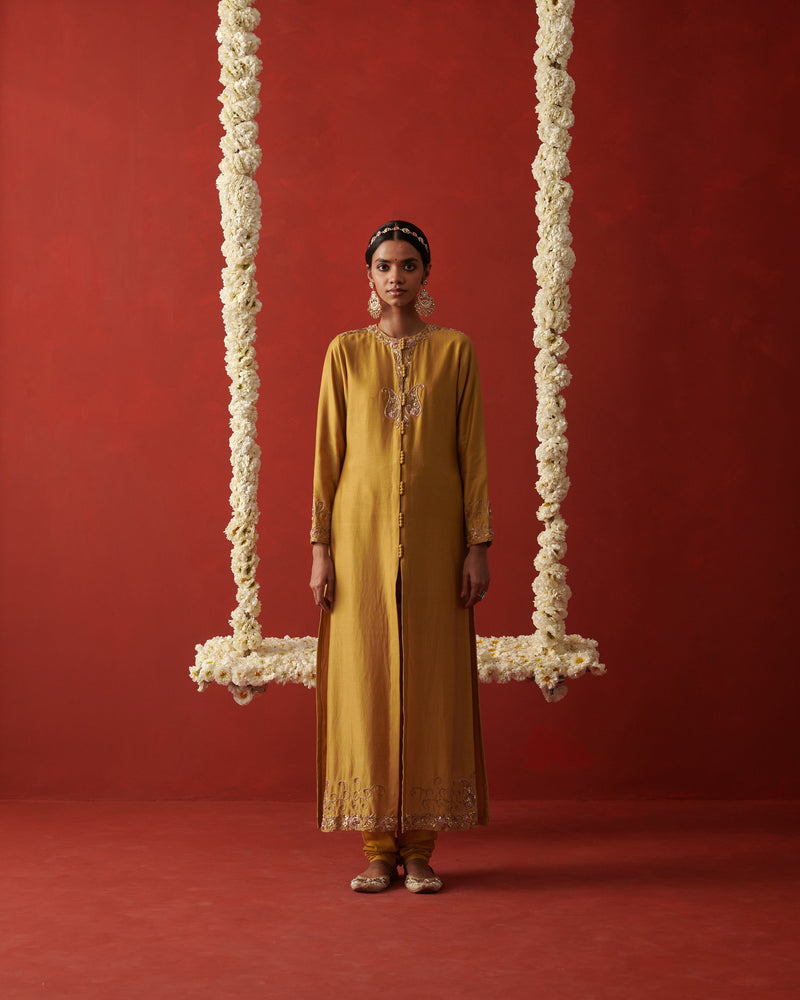
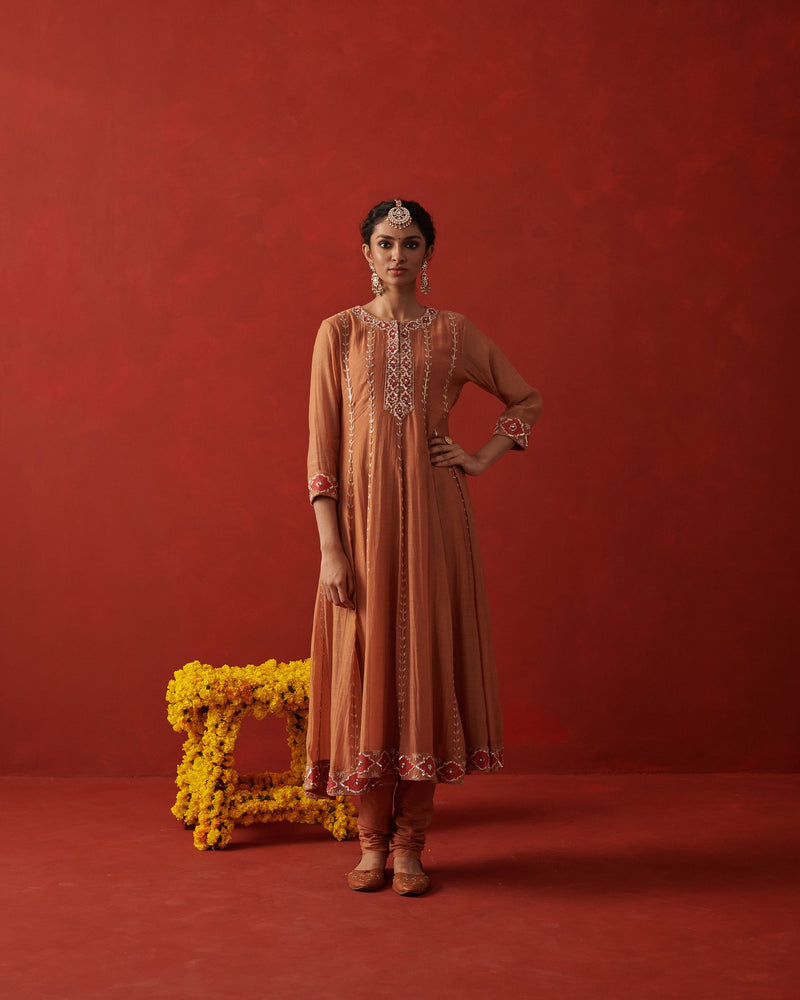
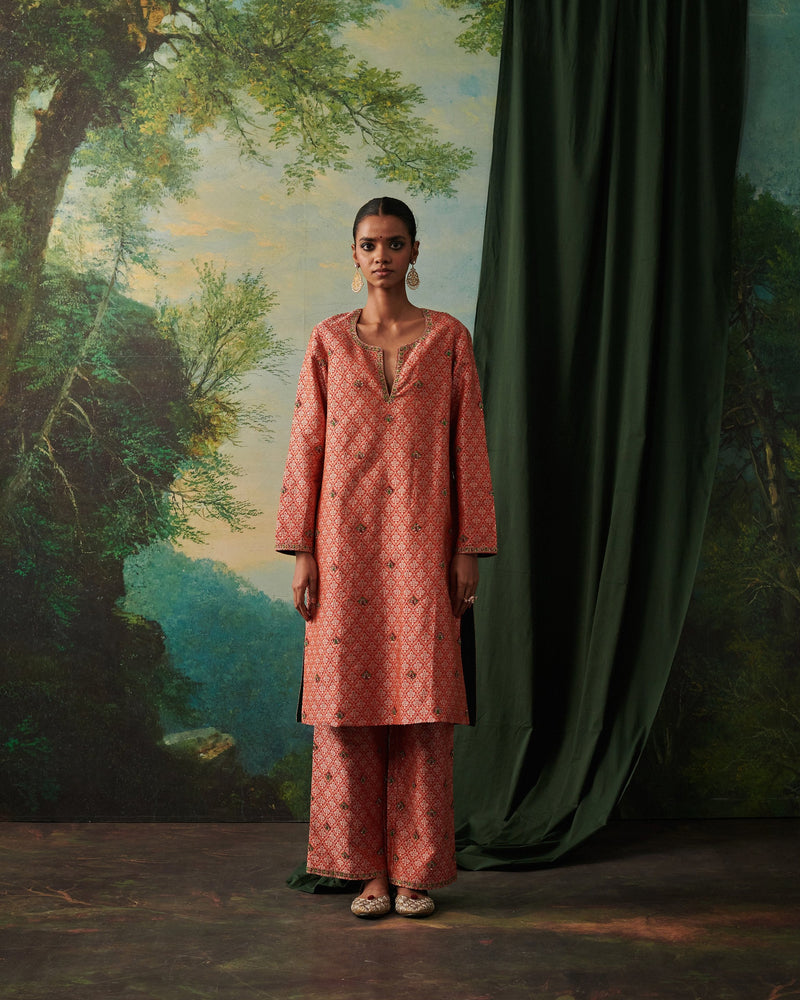
A kurta set or a churidaar anarkali is the easiest answer. The Banni kurta with Aayat pant (₹19,350) is soft chanderi, a full-length kurta with floral and paisley detailing at the yoke, cuffs and hem in sequins, nakshi, cutdana and thread, hand-covered buttons down the front, and churidar-style pants. The Heeriye anarkali with Reva churidaar (₹19,500) is rich cinnamon-brown chanderi with florals in resham, cutdana and sequins at the yoke, and a scarlet and ivory contrast border at the flared hem. Over either, the Zarveen dupatta (₹9,500), sheer sage-green chanderi with a delicate zari border, is light enough to keep over your head for the whole aarti.


Visiting Kashi Vishwanath and Other Temples
Many guests fit in a darshan at Kashi Vishwanath, one of the twelve jyotirlingas. Three things to know:
- Phones stay outside. Mobile phones, cameras and many other items are not allowed inside the temple precinct. Lockers are available near the gates.
- Shoes come off, and you may walk some distance barefoot on stone, which is cold on a winter morning.
- The dress code question. There have been repeated reports since 2017 of a proposed dress code for the inner sanctum: dhoti-kurta for men and saree for women. In October 2023 the temple trust said it would discuss such a proposal, while its spokesperson said no dress code applied to visitors at that time. Some travel guides now say a saree is required for sparsh darshan, where devotees touch the jyotirlinga. We could not confirm a current official rule, so check before you go.
The practical answer: modest, covered clothing works for general darshan, and if you hope to go into the sanctum, a saree is the safe choice. See also our guides to temple weddings and Dev Diwali on the ghats.
Banarasi in Banaras
Banarasi is the cloth of this city. Brocades woven with gold and silver thread became a speciality of Banaras centuries ago, and the weaving is still done in neighbourhoods like Madanpura, Lallapura and Peeli Kothi, and across neighbouring districts. In 2009, "Banaras Brocades and Sarees" was registered as a Geographical Indication, which is meant to protect the handloom work of the region from power-loom and imported copies. Depending on the design, one handloom sari can take from about fifteen days to several months to weave.
Wearing it here is a quiet compliment to the place. Our Banarasi styling guide covers drapes and jewellery, and Banarasi versus Kanjivaram explains how it differs from the southern silk. Buying in the city? Our Banarasi brands roundup explains how to tell handloom from power loom.
To be clear about our part: we do not weave. The Banarasi pieces below are handwoven Banarasi or Varanasi silk that we buy, and our karigars in Jaipur add the hand embroidery and make the blouses and sets. The Rahi sari with Amara blouse (₹24,500) is fuchsia-pink Banarasi silk with floral motifs woven in gold thread and a detailed gold lace border, with a champagne-stripe silk blouse embroidered with florals and sequins. The Phalgun sari with Myra blouse (₹27,500) is yellow Banarasi silk with florals woven in silver thread and a rich lace border, with an ivory blouse scattered with embroidered floral butis. The Zariya saree (₹22,595) is a soft mint-green Banarasi base with diagonal bands of sequins and gota in antique gold and a fine pink selvedge. The blouse is not included.


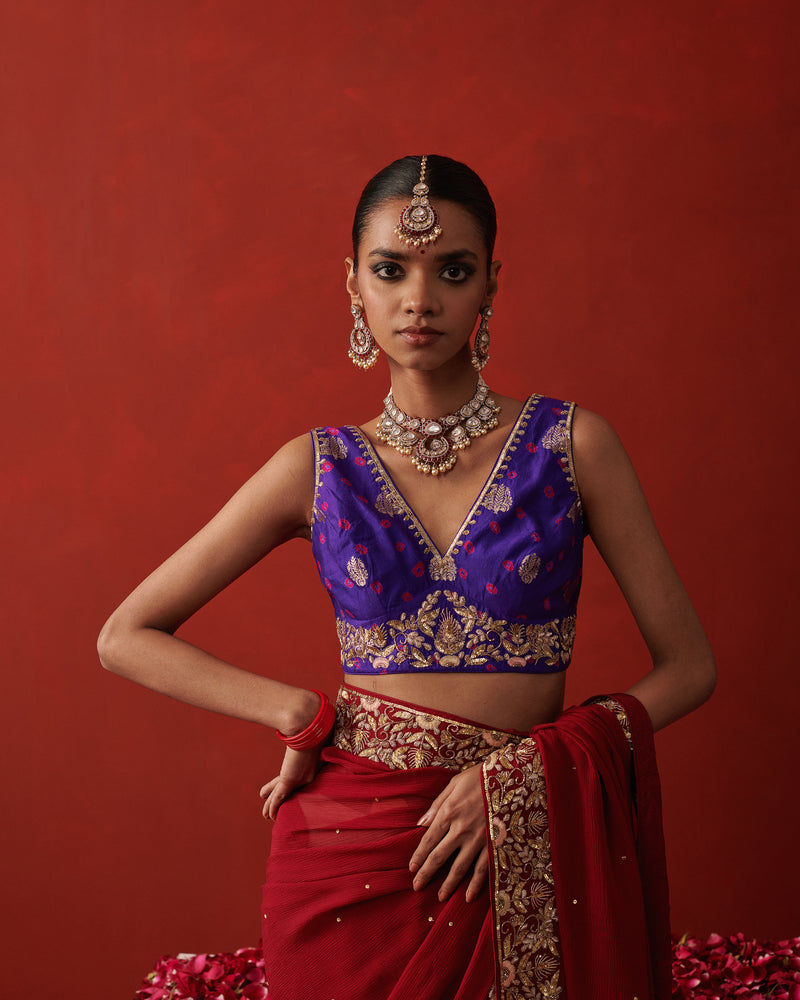
Already own a plain Banarasi? A new blouse changes it completely. The Abeer blouse (₹11,495) is itself cut from bandhani Banarasi silk, with a wide V-neckline, short sleeves, and paisley and floral motifs hand-embroidered in sequins, cutdana and resham.
Outfits by Function
Haldi, mehendi and daytime events by the river
Daytime is the warm part of a winter day. Keep hems off the ground and choose something you can sit on the floor in. The Alfia kurta with Ruhab pant (₹33,750) is rich Banarasi fabric with gold floral bootis, cut in a relaxed silhouette with a wide, rounded neckline, and embroidered at the neckline, cuffs and back in sequins, cutdana and thread in green and gold. The pant is in the same Banarasi weave. The Suroor anarkali (₹22,775) is bandhej Banarasi silk with softly glimmering woven gold bootis, and sequin embroidery at the neckline and sleeves in motifs inspired by vintage temple jewellery, which feels right in this city. It is the anarkali alone, so add your own churidaar and dupatta.

The wedding night
The pheras often run late into a cold night, which suits heavier cloth. A Banarasi sari with a warm wrap is the classic choice. For a lehenga, the Rehmat lehenga with Vasl choli (₹42,500) is rich red Varanasi silk brocade with gold zari all over, in floral motifs drawn from inlay designs in Rajputana and Mughal architecture, with a broad gold border at the hem. The matching dupatta is not included. Red is the bride's colour at many weddings, so check with the family before wearing it to the ceremony itself; it is usually fine for the reception.
A cocktail or bonfire evening
Wear a layer that belongs to the outfit. The Raat Rani blazer with Vani bustier and Kiyara pants (₹16,500) is black Varanasi silk brocade with an all-over jaal of gold motifs: a fitted blazer with a hand-embroidered collar and borders, wide-leg pants, and a dupion silk bustier. The blazer also works alone over a plain kurta. Some families avoid black at the pheras, so keep it for the evening party.

Galis, Steps and Your Feet
The old city behind the ghats is a maze of narrow lanes, or galis, often too narrow for cars. If your venue is on the river, expect to walk the last stretch and climb steep, uneven steps that are wet in places. That shapes what you wear more than any dress code:
- Hems at the ankle, not the floor. We cut every adult piece to your measurements at no extra charge, so ask for a lehenga or anarkali an inch or two shorter for the riverside events.
- Flat, grippy shoes you can slip off. Temples, some ghats and many home rituals mean shoes off, often. Keep heels for the banquet hall.
- Pin the pallu and dupatta, and carry a small cross-body bag. You will want both hands for steps and boats.
- Do not photograph cremations. If your boat passes Manikarnika, put the camera down.
- Leave slack for fog. Winter fog often delays flights and trains across North India, so carry one outfit in your hand luggage. Our Rishikesh and Haridwar guide covers the same problem upstream.
- Order with the calendar in mind. Everything we make takes 4–5 weeks, plus 3–7 days to ship. Ordered today, a piece arrives around the end of November or the first week of December at the earliest, so it will not reach you for Dev Diwali on 24 November. December to February weddings are comfortable. Express is sometimes possible, depending on the piece and month, so ask on WhatsApp.
What We Make, and What We Don't
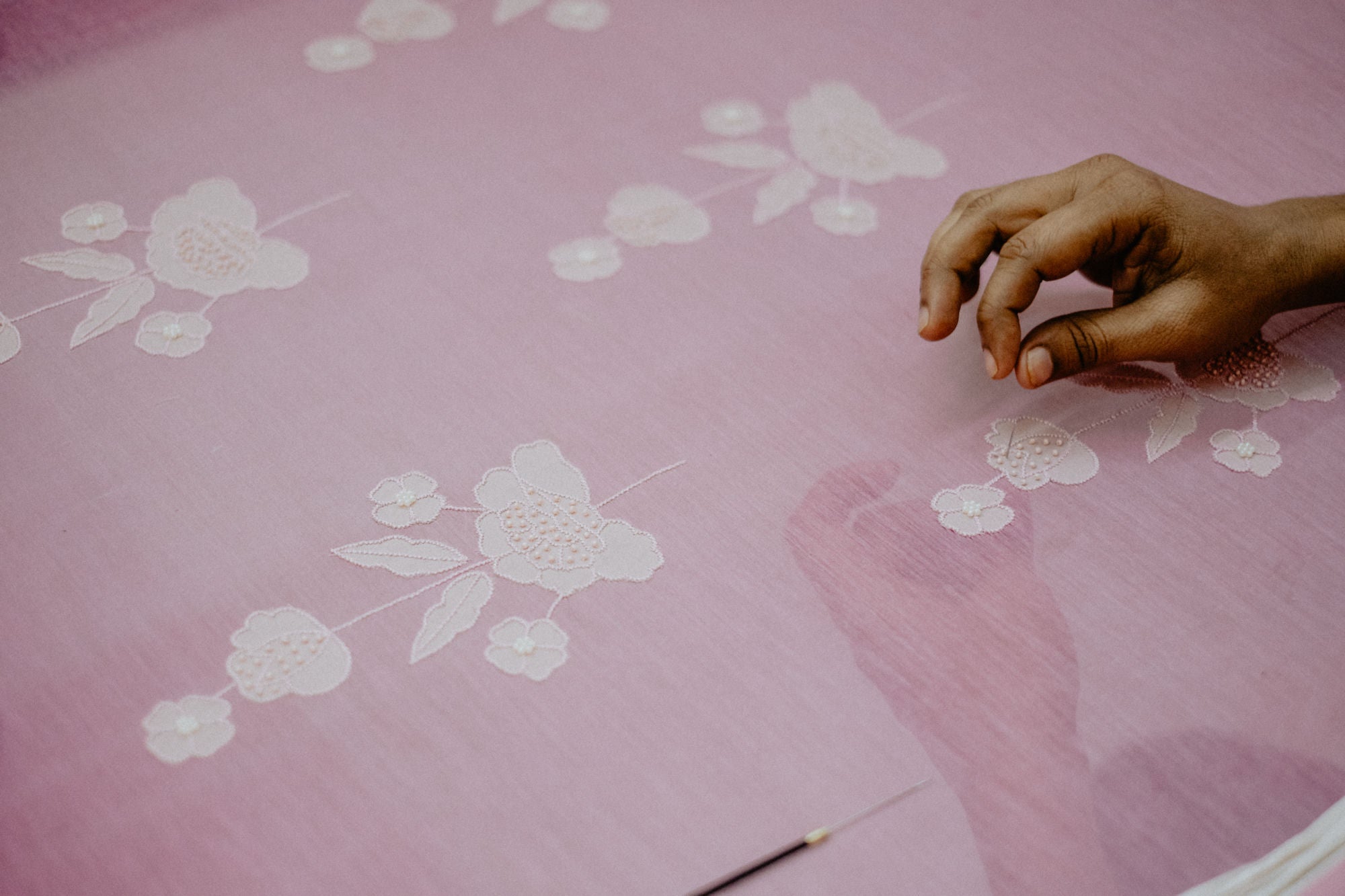
We hand-embroider sarees, blouses, kurta sets, anarkalis, lehengas and dupattas in our Jaipur atelier. We do not weave Banarasi or anything else: the Banarasi and brocade pieces above are handwoven cloth that we buy and then embroider. We do not make shawls, velvet, footwear or jewellery, so for the winter wrap a pashmina or fine wool shawl from elsewhere is the right call. And if you buy a handloom sari in Varanasi itself, we are happy to make the blouse.
Going to a Wedding in Banaras This Season?
Every piece is hand-embroidered in our Jaipur atelier and made to order in 4–5 weeks, plus 3–7 days for shipping, cut to your measurements at no extra charge, including an ankle-length hem for the ghats. Browse the saree collection, kurta sets, lehengas and blouses, or message us on WhatsApp with your dates and functions, and we will tell you honestly what can reach you in time.
Browse the CollectionMore Banaras and UP guides: UP weddings · Best Banarasi saree brands · Dev Diwali on the ghats · Rishikesh and Haridwar weddings
Frequently Asked Questions
What should a guest wear to a wedding in Varanasi?
A Banarasi sari or Banarasi set is the natural choice in the city the weave comes from. For riverside events, the Ganga aarti and temple visits, wear covered shoulders, a dupatta you can put over your head, ankle-length hems and flat shoes you can slip off. Add a warm layer for winter evenings.
How cold is Varanasi in the wedding season?
In December and January, published averages are roughly 22–24°C by day and 9–11°C at night. Fog forms on many nights and mornings from November to January and can persist from mid-December to mid-January, keeping days colder. Plan a shawl or jacket.
Is there a dress code at Kashi Vishwanath temple?
A dress code of dhoti-kurta for men and saree for women in the inner sanctum has been proposed and reported several times. In October 2023 the temple said no dress code applied to visitors and that a proposal would be discussed, and some guides now say a saree is required for sparsh darshan. Check before you go; a saree is the safe choice for the sanctum, and phones are not allowed inside.
What should I wear for the Ganga aarti boat ride?
Dress as for a temple: covered shoulders and a dupatta for your head. Choose a kurta set or a churidaar anarkali rather than a floor-length lehenga, since you will step from wet ghat stones into a wooden boat, and bring a warm layer, because the river is cold after sunset in winter.
Does Rashika Mittal weave Banarasi saris?
No. We buy handwoven Banarasi and Varanasi silk, and our karigars in Jaipur hand-embroider it and make the blouses and sets. Banarasi weaving itself happens in and around Varanasi, where "Banaras Brocades and Sarees" was registered as a Geographical Indication in 2009.
Made to order in 4–5 weeks
Have an event date? We’ll tell you exactly when to order by.
We take a limited number of orders each month — secure your slot early.
WhatsApp me my order-by date + a shortlistNot sure where to start?
Tell us what you're dressing for and we'll help you choose — fabric, fit, colour, and timeline — over WhatsApp or on a video call.
Your Cart
Pieces from this story
All pieces →Not sure which piece, or need it by a date? Book a video consultation Ask us on WhatsApp


Keep reading
The journal →
What to Wear to a UP Wedding: A Guest's Guide to Lucknow, Kanpur, Varanasi & Prayagraj Weddings
Guest outfits for a Uttar Pradesh wedding, from tilak and haldi to dwar puja, jaimala and late-night pheras, with Luc...
25 September 2026
Winter Wedding Outfit Ideas: Luxe Indian Outfits for Cold Weather Celebrations
What to wear to a winter wedding in India. Heavy silk, brocade, and velvet outfit ideas with layering tips — jackets,...
12 March 2026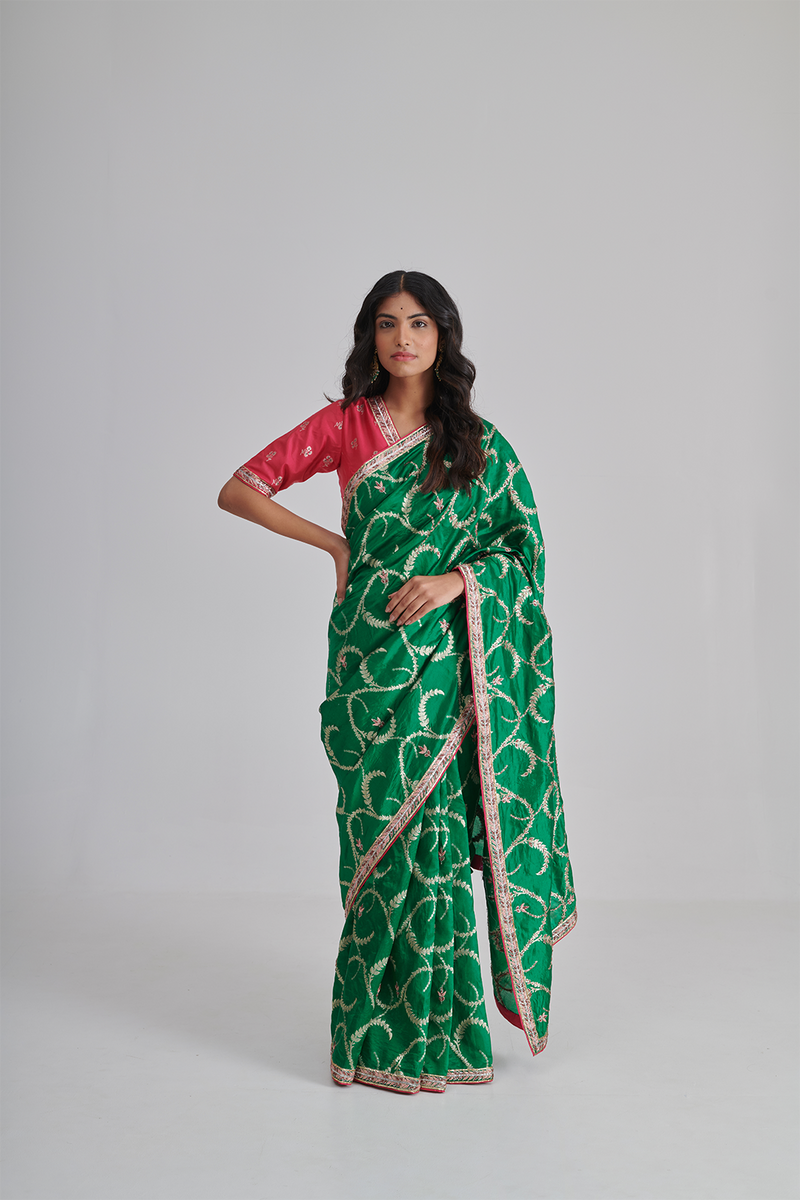
Temple Wedding Outfit Ideas: What to Wear as Bride or Guest
What to wear to a temple wedding — dress codes at famous temples, modest silk outfit ideas for brides and guests, and...
31 August 2026