
Best Organza Saree Brands in India 2026: Where to Buy a Real One
No fabric has climbed as fast in Indian occasion wear as organza. Ten years ago it was a lining and a trim. Today it is the saree women buy when they want to look festive in forty-degree heat, the dupatta that turns a plain kurta into an outfit, and the cape that has quietly replaced the dupatta altogether. It photographs beautifully, it weighs nothing, and because it is sheer, there is nowhere for bad embroidery to hide.
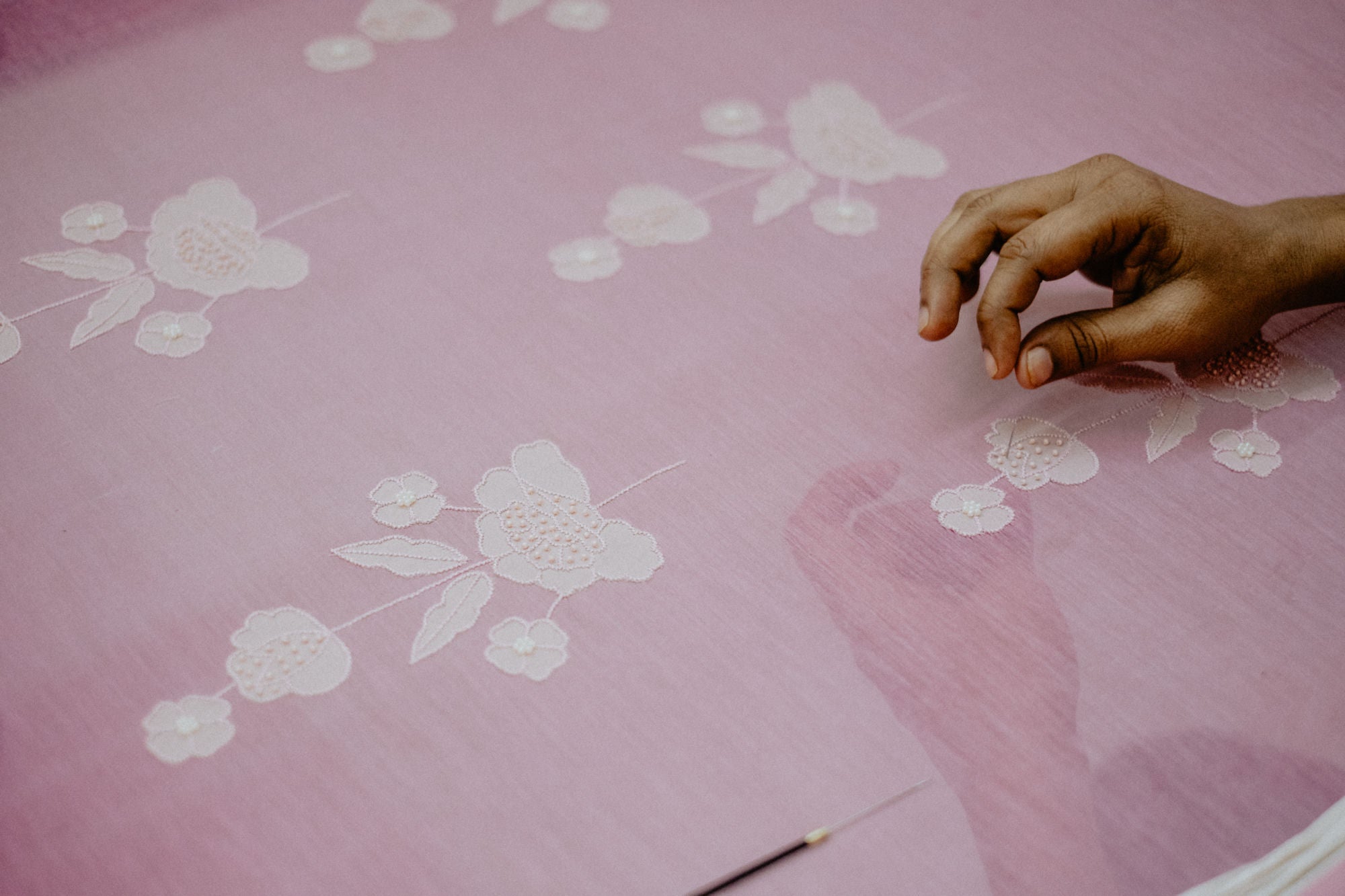
That last point is the whole story. On a heavy brocade, poor workmanship disappears into the weave. On organza you can see the back of every stitch through the front. This is a guide to the best organza saree brands in India in 2026, how to tell a real silk organza from the polyester sold under the same name, and — our interest stated plainly — the hand-embroidered organza we make in Jaipur.
First: Silk Organza, Organza Silk or Polyester?
- Pure silk organza is woven from tightly twisted silk yarns. It is sheer and crisp, with a soft, dry lustre rather than a shine, and it creases — the creases are a feature of the real thing, not a flaw.
- Organza silk usually means a silk blend, or a silk-look base with some synthetic content. Perfectly good, more forgiving, and far cheaper. Most embroidered "organza" sarees in the market sit here.
- Polyester or nylon organza is stiff in a plasticky way, bounces back rather than falling, and reflects light with a hard shine. Its crispness is often a chemical finish that softens and never returns after the first dry clean.
None of these is wrong. They are different price points for different lives. The problem is only when one is sold as another — and "organza" on a label is not a fibre, it is a weave. Our complete guide to organza fabric goes into how it is made, and types of silk in Indian fashion places it next to the other silks.
Designer Labels
Torani
Probably the label most responsible for the organza moment — soft, romantic, deliberately old-fashioned prints and hand embroidery on sheer bases, styled with a lot of layering. The register is poetic rather than grand.
Indicative price: ₹25,000–1,00,000
Best for: Day weddings, mehendi, a young and romantic aesthetic.
Anita Dongre
Pastel organza with floral prints and gota work, sold through a wide store network, which matters with a sheer fabric — you want to hold it before you pay. Sizing and after-sales are more dependable than most of the category.
Indicative price: ₹30,000–1,50,000
Best for: Daytime functions, seeing the fabric in person first.
Manish Malhotra
The sheer sequinned saree is a house signature, and organza takes sequin and mirror work well. Glamorous, evening-weighted, priced accordingly.
Indicative price: ₹1,00,000 upwards
Best for: Cocktail and reception evenings.
Masaba
Graphic prints on sheer bases for women who find the floral-organza look too soft. Easy to wear, widely stocked, and distinctive in photographs.
Indicative price: ₹20,000–70,000
Best for: Printed organza, a bolder, more modern look.
Multi-Brand Stores and the High Street
Pernia's Pop-Up Shop, Aza, Ogaan
The fastest way to compare organza across dozens of labels in one sitting. Filter by fabric, then read the composition line rather than trusting the photograph — sheer fabrics all look the same on a screen.
Indicative price: ₹15,000–2,00,000
Best for: Comparing labels quickly.
City markets and saree houses
Surat is where most of India's organza is woven and printed, and the large family saree stores in every city carry plain and bordered organzas alongside their silks. Excellent value for an unembellished organza you intend to pair with a statement blouse. Our Delhi and Mumbai shopping guides cover which markets to walk.
Indicative price: ₹2,000–20,000
Best for: Plain organzas, better fabric per rupee.
Online high street
Thousands of organza sarees under ₹3,000, nearly all polyester with digital prints or glued embellishment. Fine for one event or a performance. Do not expect the drape, and do not expect glued work to survive a dry clean.
Indicative price: ₹800–4,000
Best for: Single-use, budget, costume.
Hand-Embroidered Organza: Where We Come In
We are a small made-to-order label in Jaipur, and organza is the base we use most, for the reason above — it shows hand embroidery honestly. Everything below is hand-embroidered by our karigars and made over 4–5 weeks. One thing to know up front: our sarees are sold as the drape alone, so the blouse in the photograph is not included, and you should budget for one.
The organza sarees
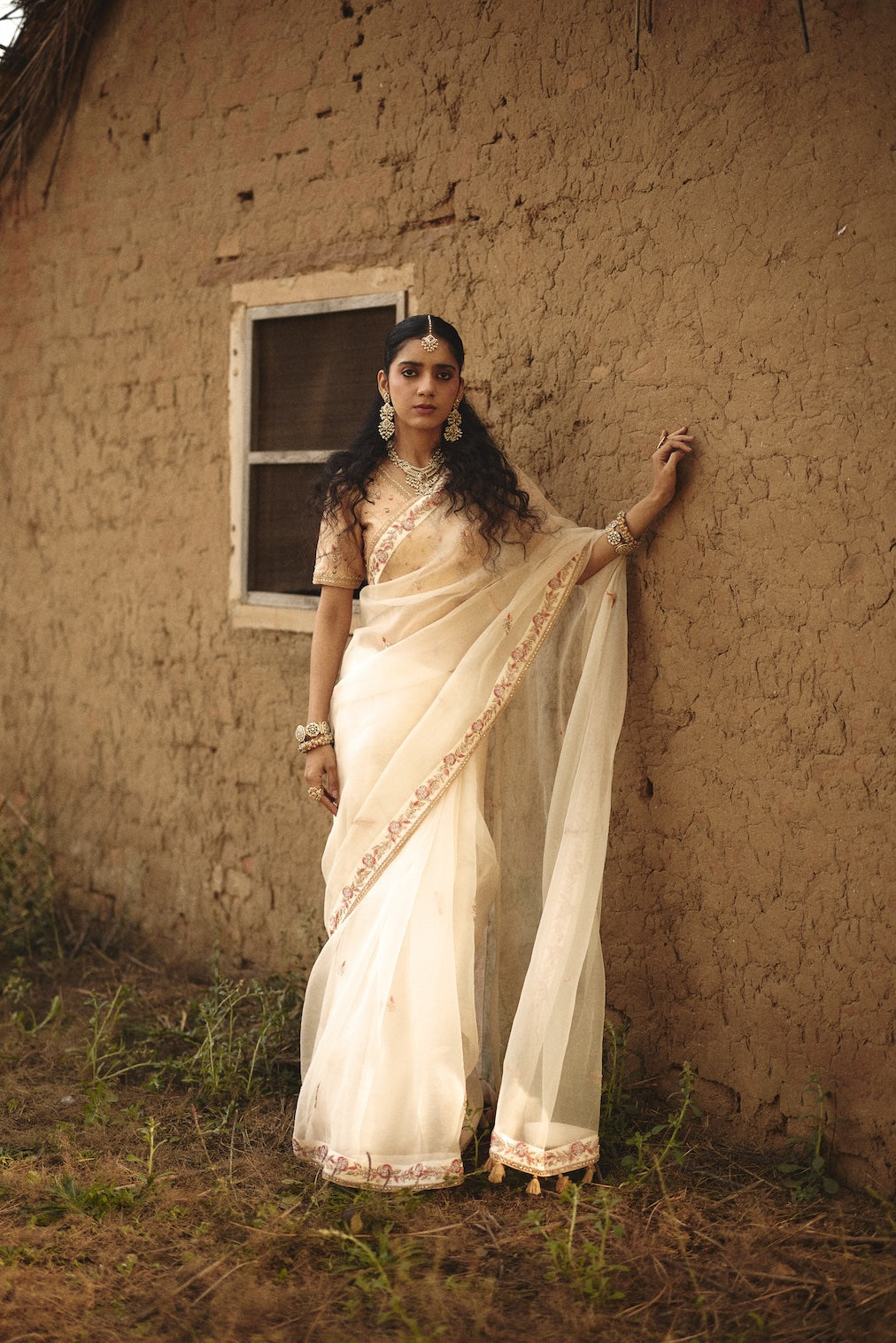
The Shanvi saree (₹38,675) is soft ivory organza with a hand-embroidered border running the full length of the drape — floral and vine motifs in marodi, gold zari, resham and fine beadwork in coral and gold, with a metallic trim, tassels at the pallu corners and dainty butis scattered across the body. It is the one for a daytime wedding where you want to be luminous rather than loud.
The Sakhi saree (₹25,000) is deep sindoori red organza, hand-embroidered in sequin, cutdana and gota work with floral butis and a bold scalloped border drawn from traditional bridal motifs — a trousseau saree that is not heavy. And the Laal Ishq saree (₹19,500) is deep vermillion organza silk, embroidered with sequin vines and abstract florals trailing along the body, photographed with a violet silk blouse in a deliberately vintage Rajput pairing.


The organza dupattas — where our range really sits
If you want to try organza without committing to a saree, the dupatta is the honest answer, and it is the deepest part of what we make. The Mirai dupatta (₹19,500) is radiant yellow organza with a finely embroidered border on all four sides in zari, resham, sequins and aari, softly scalloped, with floral motifs across the body. The Amoli dupatta (₹18,500) is a deep earth-toned organza with a scalloped border in vivid pink mirror work and gold aari. The Meeka dupatta (₹16,500) is fiery orange organza silk with panels of gota patti and marodi framing the corners.


Lower down the range, the Shayra dupatta (₹14,500) is lush green organza silk with gota, marodi, sequin and thread work in an old-rose and gold palette; the Bageecha dupatta (₹12,500) blocks yellow against rani pink with a silver zari border and aari work; the Aqsaa dupatta (₹11,875) is sheer pink with swirling naqshi, sequin and cutdana lines; and the Kainaat dupatta (₹9,750) carries circular medallions of gota patti, sequins, resham and beadwork drawn from archival phool jhaal odhanis. See the whole range in the dupatta collection — and our guide to styling a sheer organza dupatta covers how to wear one.


Organza capes, if you would rather not drape
The Saadgi cape set (₹21,500) is a sheer black organza cape with scalloped edges, hand-embroidered in sequins and beadwork, over the Naaz gathered georgette halter blouse and the voluminous Arzoo sharara. The Madhubala cape set (₹19,750) is dusty plum organza and silk — a sheer cape embroidered with floral bootis in ivory, rose, turquoise and gold over a ruched blouse and fluid dhoti pant.


How to Judge an Organza Saree Before You Pay
- Ask for the fibre, not the weave. "Organza" describes how it is woven. Ask whether it is silk, a silk blend or polyester, and expect the price to follow the answer.
- Crush a corner in your fist. Silk organza creases softly and the crease relaxes. Polyester springs back with a hard, shiny memory line.
- Hold it to the light and look at the back of the embroidery. You can do this without turning a sheer saree over. Hand work shows small irregularities and visible thread paths; machine work is perfectly uniform; glued stones show adhesive haloes. Our buyer's guide covers the tells.
- Check the weight of the work against the base. Heavy all-over embroidery on a fine organza will eventually pull and pucker. Border-and-buti placement lasts far longer.
- Ask whether the blouse and fall are included. Most embroidered organza sarees are sold as the drape alone. A fall and edge finishing are not optional on a fabric that frays.
- Plan the lining before you buy. Organza is sheer. You will need a well-made petticoat in a matched shade, and a blouse that is designed to be seen.
Hand-Embroidered Organza, Made to Order
Three organza sarees from ₹19,500 and a deep range of organza dupattas from ₹4,500 — each hand-embroidered in Jaipur and made to order over 4–5 weeks. Browse the saree collection or the dupattas, and if you are new to draping, start with our beginner's guide to wearing a saree.
Shop SareesFrequently Asked Questions
Which brand is best for organza sarees in India?
It depends on the look. Torani and Anita Dongre lead the soft, romantic printed and gota-worked organza; Manish Malhotra owns the sequinned evening saree; Masaba is the pick for graphic prints. For hand-embroidered organza made to your measurements, smaller made-to-order labels — ours included — usually give you more craft per rupee because you are not paying for unsold stock.
How much does a good organza saree cost?
Under ₹4,000 you are almost certainly buying polyester organza with printed or glued work. ₹5,000–15,000 buys a decent blended organza with light embroidery. ₹15,000–50,000 is where silk organza with real hand embroidery begins, and above that you are paying for embroidery density and a designer name.
How can I tell if an organza saree is pure silk?
Crush a corner in your fist and release it. Silk organza creases softly and the crease relaxes over time; polyester springs back with a hard shine and keeps a sharp memory line. Silk organza also has a dry, matte lustre rather than a bright gloss, and feels cool and papery rather than slippery. Ask the seller for the fibre composition in writing.
Is an organza saree good for a wedding?
Very much so, for guests and family — especially at daytime and outdoor functions, where it is the most comfortable formal fabric you can wear. It is less suited to the bride at the main ceremony, where heavier weaves carry more presence, and it needs care at a mehendi or a haldi because it snags and stains easily.
How do you care for an organza saree?
Dry clean only, and tell the cleaner it is embroidered organza. Store it rolled or loosely folded in a muslin cloth rather than on a hanger — the weight of the embroidery stretches a sheer base. Iron on the lowest setting through a cotton cloth, never directly on the embroidery. Our steaming and ironing guide covers this in detail.
Made to order in 4–5 weeks
Have an event date? We’ll tell you exactly when to order by.
We take a limited number of orders each month — secure your slot early.
Not sure where to start?
Tell us what you're dressing for and we'll help you choose — fabric, fit, colour, and timeline — over WhatsApp.
Your Cart
Pieces from this story
All pieces →
Keep reading
The journal →
Best Plus-Size Ethnic Wear Brands in India 2026: Where to Actually Find Your Size
Handmade by karigars Made to your measurements Fit guarantee Ships worldwide As seen in GraziaElle Graduat...
17 September 2026
Kurta Sets for Girls: A Parent's Buying Guide to Kids' Kurta Sets
Handmade by karigars Made to your measurements Fit guarantee Ships worldwide As seen in GraziaElle Graduat...
17 September 2026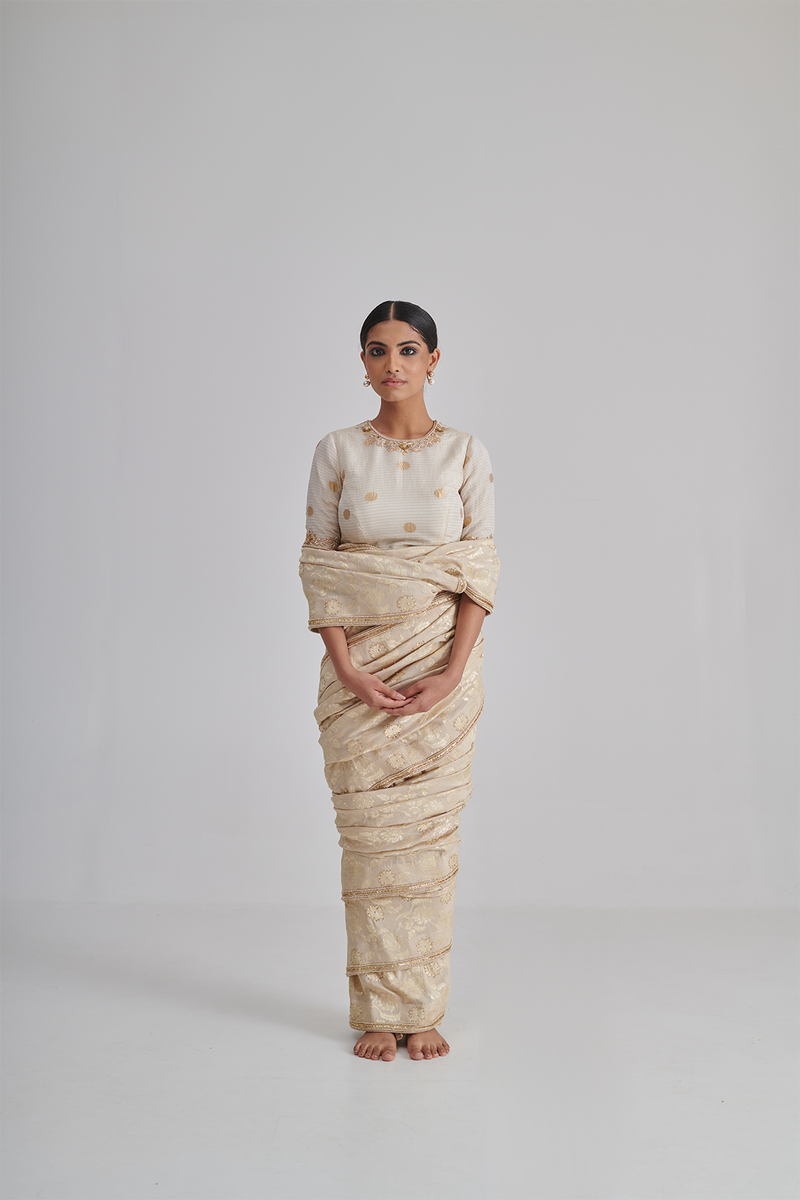
Gifts for Your Mother-in-Law: Indian Outfits That Don't Feel Like a Formality
Handmade by karigars Made to your measurements Fit guarantee Ships worldwide As seen in GraziaElle Graduat...
17 September 2026