

Best Zardozi Work Brands in India 2026: Designers, Lucknow & Bareilly Craft, and How to Judge It
The short answer: for couture zardozi, the names most associated with the craft are Ritu Kumar, Abu Jani Sandeep Khosla, Sabyasachi, JJ Valaya and Rimple & Harpreet Narula. For traditional work closer to the source, go to Lucknow's Chowk and Aminabad, where "Lucknow Zardozi" carries a Geographical Indication. And for zardozi used as an accent on silk, chanderi and tissue kurta sets, sarees and dupattas, cut to your measurements, a made-to-order atelier like ours in Jaipur is a third route. This guide also covers how to read the work before you pay.
Zardozi is the most regal of India's hand embroideries: metal wire coiled and couched onto cloth so that it stands up from the surface and catches the light. Its name is also attached to everything from bridal lehengas worked over months to machine-stitched gold thread, so knowing the vocabulary is your best protection.
First: What Zardozi Actually Is
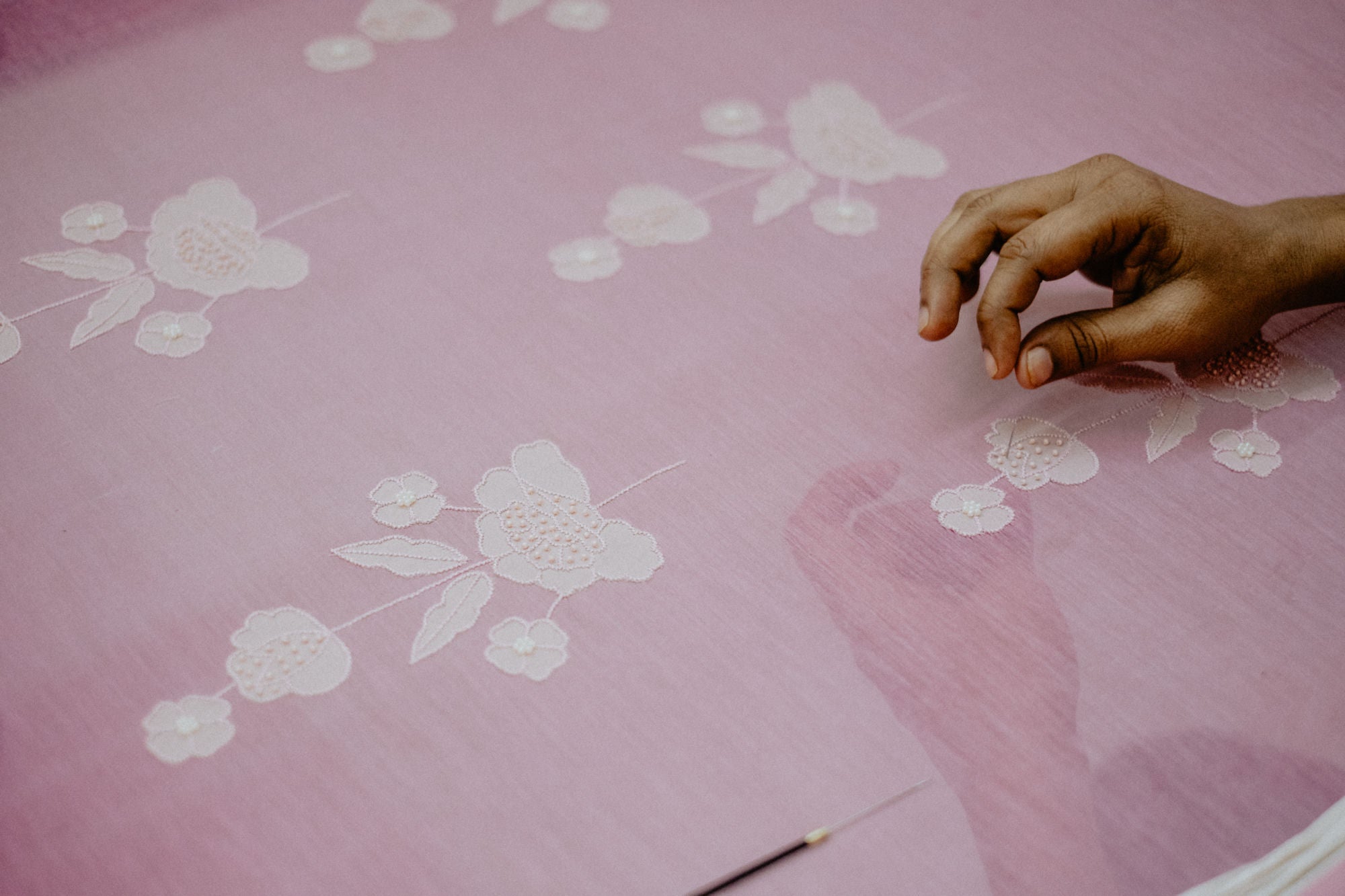
The word is Persian: zar for gold and dozi for embroidery. The craft came to India from Persia and reached its height under Mughal patronage, when royal workshops (karkhanas) employed embroiderers to dress the court. Karigars still sit around a wooden frame called an adda, with the cloth stretched tight and the design traced on before the first stitch. Much of the metal never passes through the cloth: coils are threaded on like beads, and flat wire is laid on the surface and held down with fine stitches. Our zardozi craft guide goes deeper into the history, and the aari, zardozi and resham guide explains how the three are often combined on one piece.
The vocabulary: dabka, salma, naqshi and the rest
One zardozi flower can use five or six metal elements. The terms worth knowing:
- Dabka. A light, soft, flexible coiled wire, cut into short lengths and stitched down like a bead. It gives the springy, textured look most people picture.
- Salma. Very fine, soft wire wound into a spiral with no thread at the centre, used for outlines and fine fillings.
- Naqshi (nakshi). A flat metal wire coiled in an angular way, like dabka but thicker, so it reads as sharper and more faceted.
- Badla and kasab. Badla is flattened plain wire laid on the surface; wound around a thread, it becomes kasab.
- Tilla. Flat wire that cannot be threaded, stitched directly onto the cloth.
- Sitara and mukaish. Sitara are small spangles with a hole at the centre; mukaish are tiny dots made from badla.
Real metal vs imitation
The wire itself comes in grades, the same grades used for woven zari. Real zari is fine silver wire plated with gold; "tested" zari is copper electroplated with silver and gold, with far less precious metal; imitation zari is metallised polyester with none at all. None of these is fraudulent in itself. Real zari is rare and expensive today, so much contemporary zardozi uses tested or imitation wire, which is why it is affordable at all. The problem is only a price that assumes one grade for a piece made in another. Our guide to real zari vs imitation covers the tests in detail.
Couture Labels Known for Zardozi
Ritu Kumar
Widely credited with bringing zardozi back into mainstream Indian fashion in the 1970s, working directly with artisans when the craft had lost its royal patrons. She was later awarded the Padma Shri for her contribution to fashion and textile crafts.
Best for: Heritage zardozi with a long craft pedigree.
Abu Jani Sandeep Khosla
The Mumbai couture house, founded in 1986, built its reputation on reviving chikan and zardozi, and is known for pairing the two, gold metal work over white thread work.
Best for: Grand couture and chikan-meets-zardozi pieces.
Sabyasachi
The Kolkata label's heritage bridal work sets dense zardozi, tilla and gota on silks, organzas, velvets and brocades.
Best for: Heirloom-style bridal zardozi.
JJ Valaya
Since 1992 the label has been known for rich fabrics, zardozi and a signature mixed-metal embroidery, drawing on Indian royal, Persian, Ottoman and Art Deco references.
Best for: Architectural, statement zardozi.
Rimple & Harpreet Narula
A Delhi duo whose label dates to 2000, inspired by vintage textiles and old motifs. Zardozi sits alongside marodi, kasab and gota patti in their bridal and couture work, with a deliberately antique finish.
Best for: Vintage-looking bridal zardozi.
Where Zardozi Is Made: Lucknow, Bareilly and Delhi
Lucknow: Chowk and Aminabad
"Lucknow Zardozi" received a Geographical Indication in 2013, covering Lucknow and the six surrounding districts of Barabanki, Unnao, Sitapur, Rae Bareli, Hardoi and Amethi. In the city, the old lanes of Chowk are known for zardozi and kamdani alongside chikan, and Aminabad, one of Lucknow's oldest markets, sells zardozi pieces, wedding wear and dress materials. Quality varies widely; turn pieces over. Our UP wedding guest guide covers where zardozi fits the functions there.
Best for: Traditional work, comparing in person.
Bareilly and the zari-zardozi districts of UP
Under Uttar Pradesh's One District One Product scheme, zari-zardozi is the designated craft of Bareilly, and also of Badaun and Chandauli, with Farrukhabad listed for textile printing and zari-zardozi. Much of this is workshop and export production rather than retail, and Bareilly's zari artisans have spoken publicly about falling wages.
Best for: Understanding where much of India's zardozi is stitched.
Kinari Bazaar, Old Delhi
A narrow lane off Chandni Chowk lined with tiny shops selling zari and gota borders, laces, sequins and embroidered trims, often called the wedding bazaar. Come here for a border to lift an old dupatta, not a finished outfit. Many shops in the area shut on Sundays. Our Delhi shopping guide maps the surrounding markets.
Best for: Borders, trims and DIY upgrades.
Pernia's Pop-Up Shop and Aza
Both carry zardozi from dozens of labels (Pernia's stocks us too, in full disclosure). Read the embellishment line: "zari embroidery", "zardozi" and "zardozi-inspired" mean different things.
Best for: Comparing many designers in one sitting.
Zardozi from Our Jaipur Atelier
We will state our interest plainly, and our limits. We are a small made-to-order label in Vaishali Nagar, Jaipur, and our zardozi is accent work: necklines, borders, bootis and medallions, combined with resham, nakshi, sequins and cutdana on silk, chanderi, tissue and satin. We do not currently make a heavy all-over zardozi bridal lehenga of the kind the couture houses above are known for. If that is what you want, they are the place to go. Every piece below names zardozi in its description; pieces that are only "zardozi-inspired" are left out. Our product pages do not state the metal grade of the wire, so if it matters to you, ask us on WhatsApp before ordering.
Kurta sets where the zardozi does the work
The Vanya kurta with Bani pant (₹23,425) is the clearest lesson in how zardozi and naqshi work together: warm beige silk with guldasta motifs in dusty rose and peach resham appliqué at the neckline, and extensive nakshi and zardosi giving the floral stems and borders a structured, regal shimmer. The Sana kurta with Ria pant (₹25,175) uses the same blend more boldly, on mustard satin with a deep structured yoke and an ornate teardrop medallion on the bodice, worked in nakshi, zardosi and sequins against a bold pink satin pant.

For something lighter, the Mirza kurta with Raina pant (₹21,500) is ivory silk with floral and vine motifs in gold and pink, embroidered in zardozi with gold threads and zari work, and matching borders at the split neckline and three-quarter sleeves. The Ruhani kurta with Nilofer pant (₹17,500) in soft pink silk has a floral neckline in zardozi, sequins and cutdana, layered with vines and scattered bootis. The Nazakat kurta with Saanwli pant (₹24,475) is chanderi with bold paisleys on the sleeves and wide-leg pant hem in zardozi, cutdana, sequins and beads, under a fine Mughal-inspired neckline bel.


Two more for daytime: the Saavan kurta with Nimrah pant (₹20,375), sage-toned tissue in an asymmetrical cut with florals in thread work, zardozi, sequins and cutdana, and the Naveli kurta with Ruhi pant (₹38,500), dusty rose chanderi embroidered in aari, zardozi, sequins and thread. See the full kurta collection.
A sharara set, a saree and a blouse
The Rohi kurta with Zoey sharara (₹25,795) pairs a luminous yellow tissue silk kurta with a pale mint sharara, the neckline and sleeves embroidered in rose gold and pistachio and the hem in Mughal floral motifs, all in zardozi, sequins, cutdana and beads. The Zohra saree (₹39,550) is soft tissue with borders of mirror work, cutdana, sequins and zardozi in a floral bel; it is designed to go with the Haseena blouse (₹15,475), ivory silk cut as a structured halter with a floral neckline in the same four techniques. As with all our sarees, the blouse is sold separately.


Dupattas and shirts: the easy way in
A zardozi dupatta is the quickest way to bring metal work to a plain suit. The Qurbaan dupatta (₹12,500) is sheer organza with zardozi, cutdana and sequins in floral bootis and ornate corners. The Gulnaaz dupatta (₹8,500) is muted brown bandhani silk with zardozi, sequins and cutdana and bold paisleys at the corners, set against the dotted resist-dye texture. More in the dupatta collection.
And for something unexpected, the Heeriye cape shirt with Avika pant (₹15,000) is a silk zari-stripe cape shirt with a vertical floral design and scattered flowers in zardozi and aari, in gold and silver threads, over tissue silver-zari pants. More shirts pairing the two techniques are in our aari work brands guide.
For children
Zardozi on children's wear should be light and lined. The Nazakat and Saanwli kids set (₹17,500) is the kids' version of the adult chanderi set, with zardozi, cutdana, sequin and bead paisleys, and a mulmul lining between the embroidery and the skin. Sizes run from 0–3 months to 15–16 years; a custom size adds ₹2,000. See the kidswear collection.
How to Judge Zardozi Before You Pay
- Run a finger over it. Hand zardozi is raised: you can feel coils of dabka and the edges of naqshi. Flat, smooth gold thread that lies level with the cloth is usually machine embroidery with metallic yarn.
- Look for the individual pieces. Dabka and naqshi are cut and stitched down piece by piece, so you can see the joins. A continuous, perfectly even line is a different technique.
- Turn it over. Hand-stitched work shows anchor points, small knots and slight irregularities on the reverse. Machine work shows uniform, repeating stitch paths and often a stabiliser backing. Our hand vs machine embroidery guide has photographs of the tells.
- Ask for the metal grade in writing. Real, tested or imitation. Any honest seller can answer.
- Match density to the cloth. Heavy zardozi on fine chiffon or organza drags the fabric over time. On light cloth, borders and bootis last best; all-over work needs silk, velvet or a firm brocade.
- Compare motifs. No two hand-worked motifs are identical; exact repeats suggest a machine. Unsure whether it is zardozi, mukesh or gota? See our embroidery types comparison.
Caring for Zardozi
Dry clean only, and tell the cleaner it is metal work. Store it folded in muslin rather than plastic, with soft cloth between the folds so the raised work does not press into the fabric; store heavy pieces flat rather than on a hanger. Keep perfume, damp and direct sunlight away from it, since metal wire can tarnish. To press, iron on the reverse over a cloth on low heat, never directly on the embroidery. Our guides to storing Indian clothes and steaming embroidered clothes go into more detail.
A timing note: made to order over 4–5 weeks plus 3–7 days shipping, anything ordered today arrives mid-to-late November at the earliest: after Diwali (8 November), but in time for the winter wedding season.
Zardozi, Made to Order in Jaipur
Kurta sets, a sharara set, sarees, blouses, dupattas and kids' sets with hand-embroidered zardozi, each made in our Jaipur atelier over 4–5 weeks, with custom measurements at no extra charge. Message us on WhatsApp with your dates and we will tell you honestly what is possible. Browse everything we make.
Shop the CollectionMore craft and brand guides: best aari work brands · best gota patti brands · best mirror work brands
Frequently Asked Questions
Which brand is best for zardozi work in India?
For couture zardozi, the best-known names are Ritu Kumar, Abu Jani Sandeep Khosla, Sabyasachi, JJ Valaya and Rimple & Harpreet Narula. For traditional work, shop Lucknow's Chowk and Aminabad. For zardozi as an accent on kurta sets, sarees and dupattas made to your measurements, made-to-order ateliers, ours in Jaipur included, are another route.
Where is zardozi made in India?
Uttar Pradesh is the heart of it. Lucknow Zardozi has had a Geographical Indication since 2013, covering Lucknow and six surrounding districts, and zari-zardozi is the One District One Product craft of Bareilly, Badaun and Chandauli.
What is the difference between dabka, salma and naqshi?
All three are coiled metal wire. Dabka is light, soft and flexible; salma is very fine soft wire wound spirally with no thread at the centre; naqshi is a flat wire coiled angularly, like dabka but thicker, so it looks sharper and more faceted.
How can I tell hand zardozi from machine work?
Hand zardozi is raised and textured, built from individually stitched pieces of dabka, naqshi and sitara, with slight variations between motifs and visible anchor points on the reverse. Machine work with metallic thread lies flat, repeats exactly and shows uniform stitching on the back.
How should I care for zardozi?
Dry clean only. Store folded in muslin with soft cloth between folds, heavy pieces flat, and keep perfume and damp away because metal can tarnish. Press only on the reverse over a cloth on low heat, never directly on the embroidery.
Made to order in 4–5 weeks
Have an event date? We’ll tell you exactly when to order by.
We take a limited number of orders each month — secure your slot early.
WhatsApp me my order-by date + a shortlistNot sure where to start?
Tell us what you're dressing for and we'll help you choose — fabric, fit, colour, and timeline — over WhatsApp or on a video call.
Your Cart
Pieces from this story
All pieces →Not sure which piece, or need it by a date? Book a video consultation Ask us on WhatsApp


Keep reading
The journal →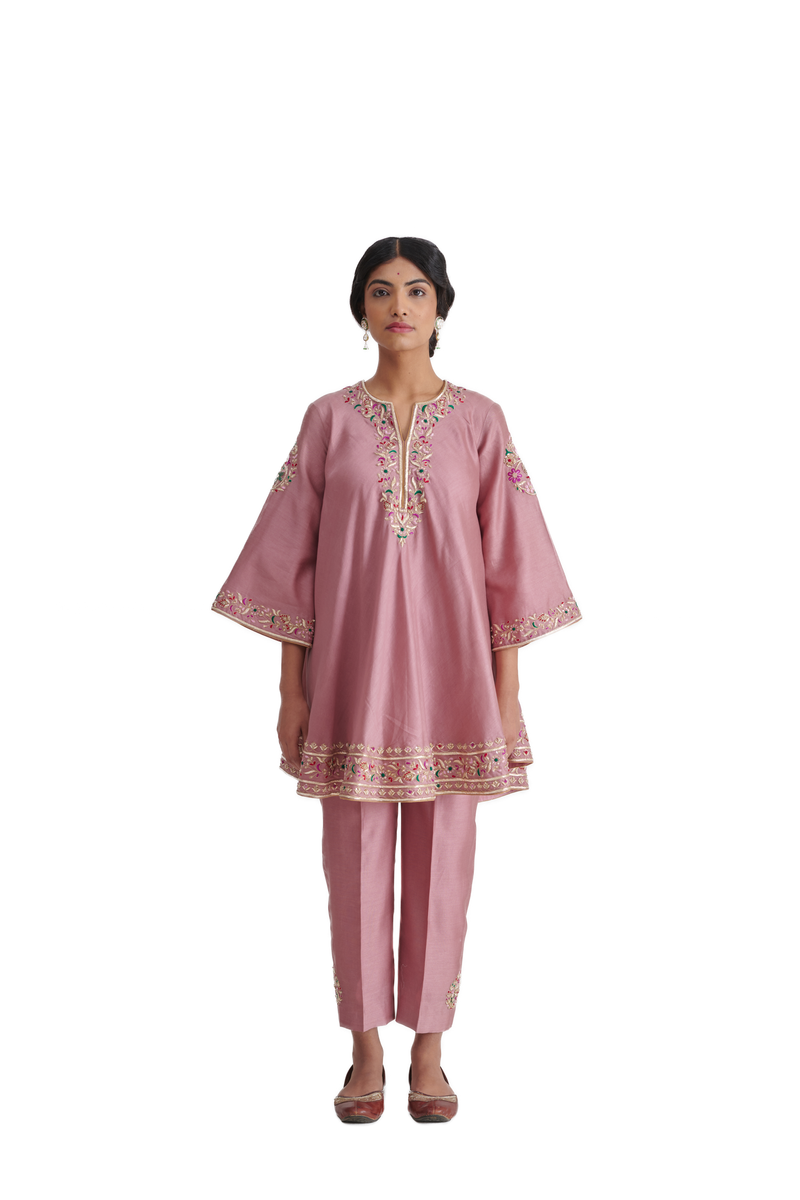
Zardozi Embroidery: Complete Guide to India's Royal Embroidery Art
Discover zardozi — India's royal gold embroidery. Learn its Mughal history, techniques (dabka, salma, sitara), types,...
5 March 2026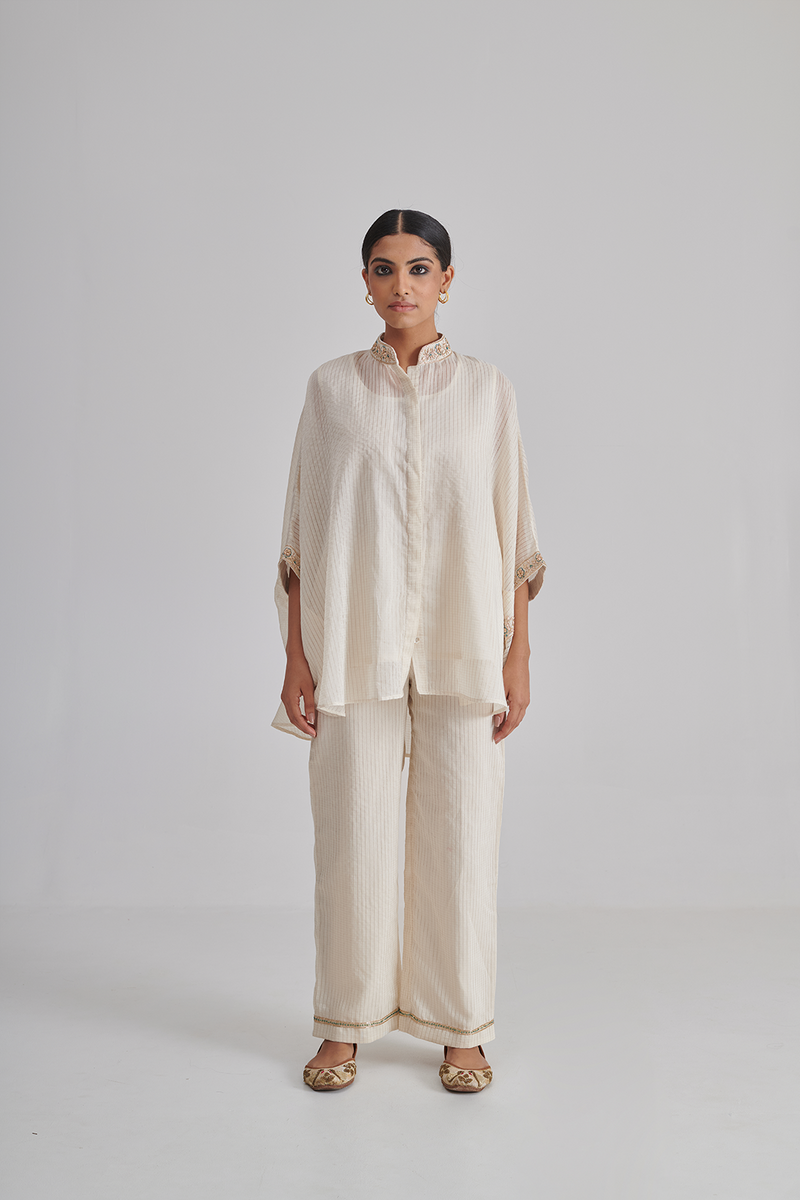
Aari, Zardozi & Resham: A Guide to Hand-Embroidery Techniques
What aari, zardozi and resham embroidery are, how they differ, and how to choose the right technique for your occasio...
8 June 2026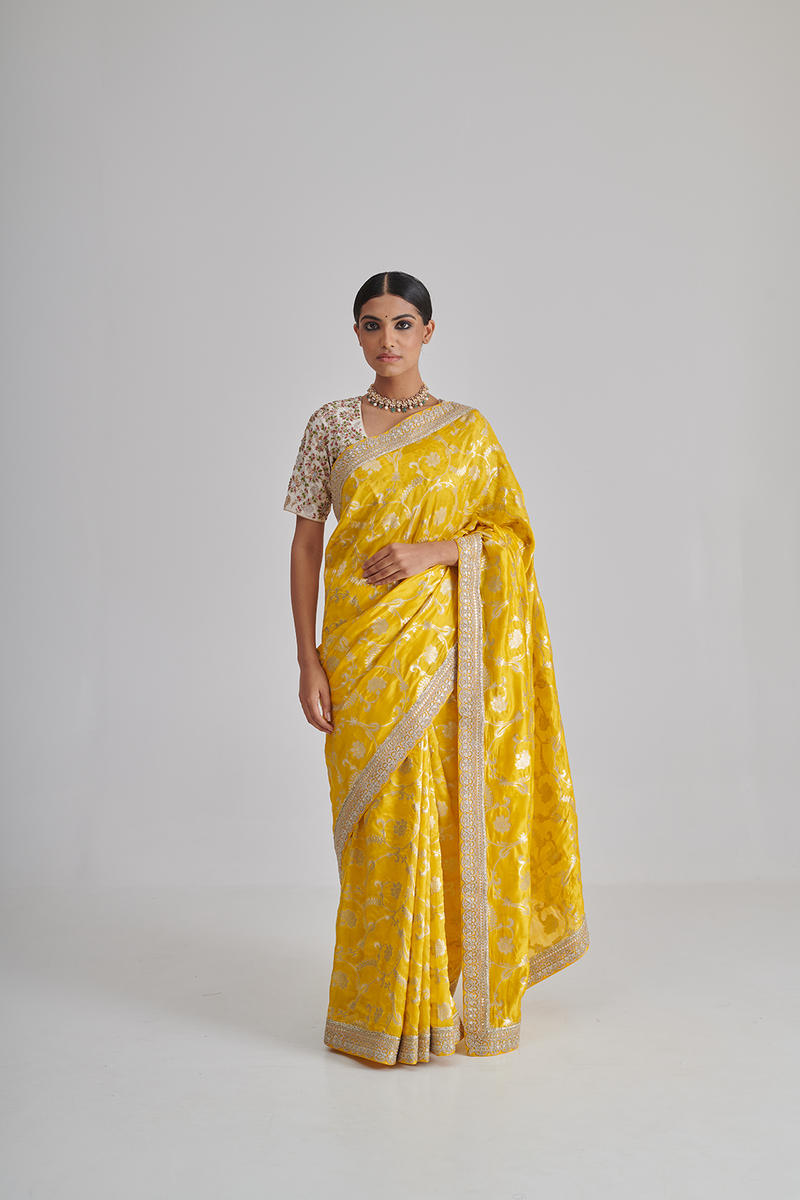
Real Zari vs Imitation: How to Tell the Difference When You Buy
How to tell real zari from imitation — the weight, sheen, thread and burn tests, what tested zari means, and why genu...
2 July 2026